Dog Paws Red Between Toes: 5 Causes & 7 Home Remedies

Dog paws red between toes? Identify the 5 main causes (allergies, yeast, infection, cyst) plus 7 home remedies (ACV, Epsom salt, oatmeal). When to see a vet.

Published 2026-04-18 ยท Updated 2026-05-09

Share:
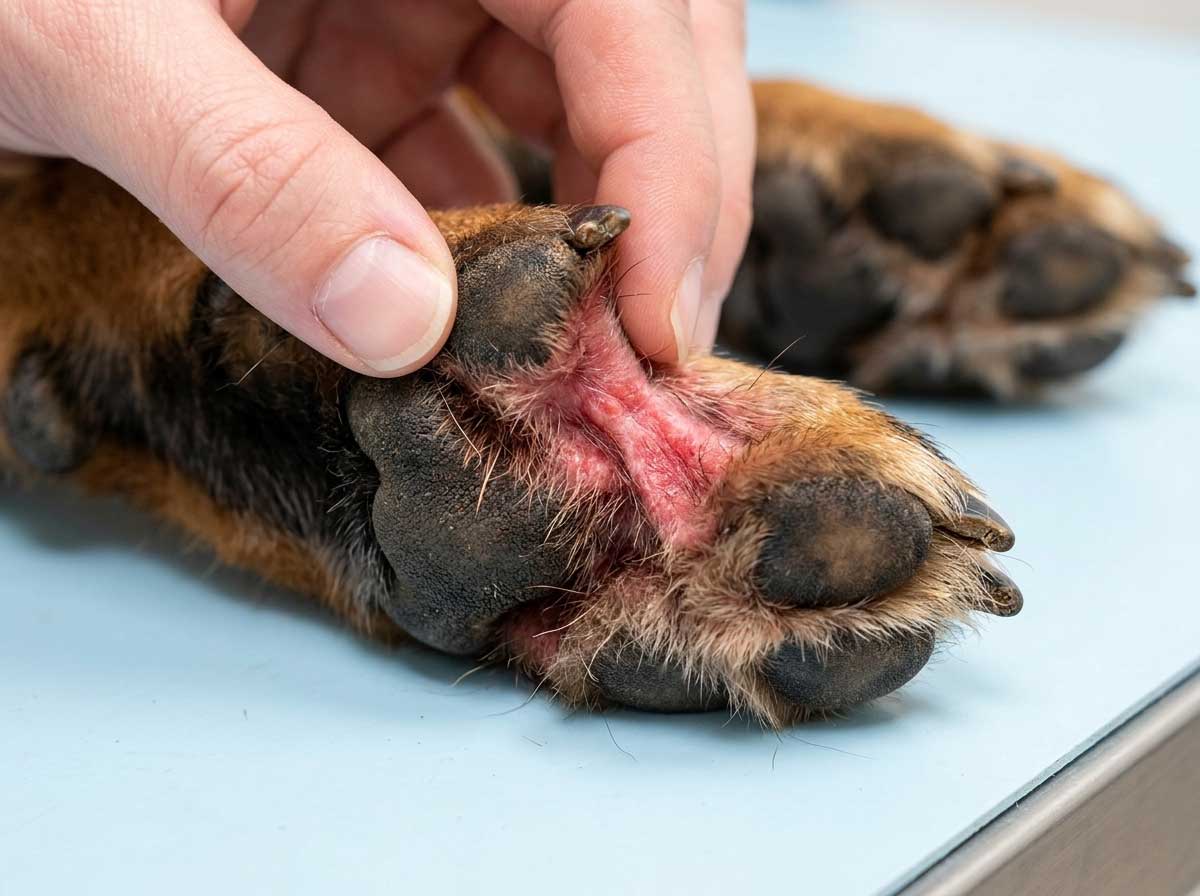
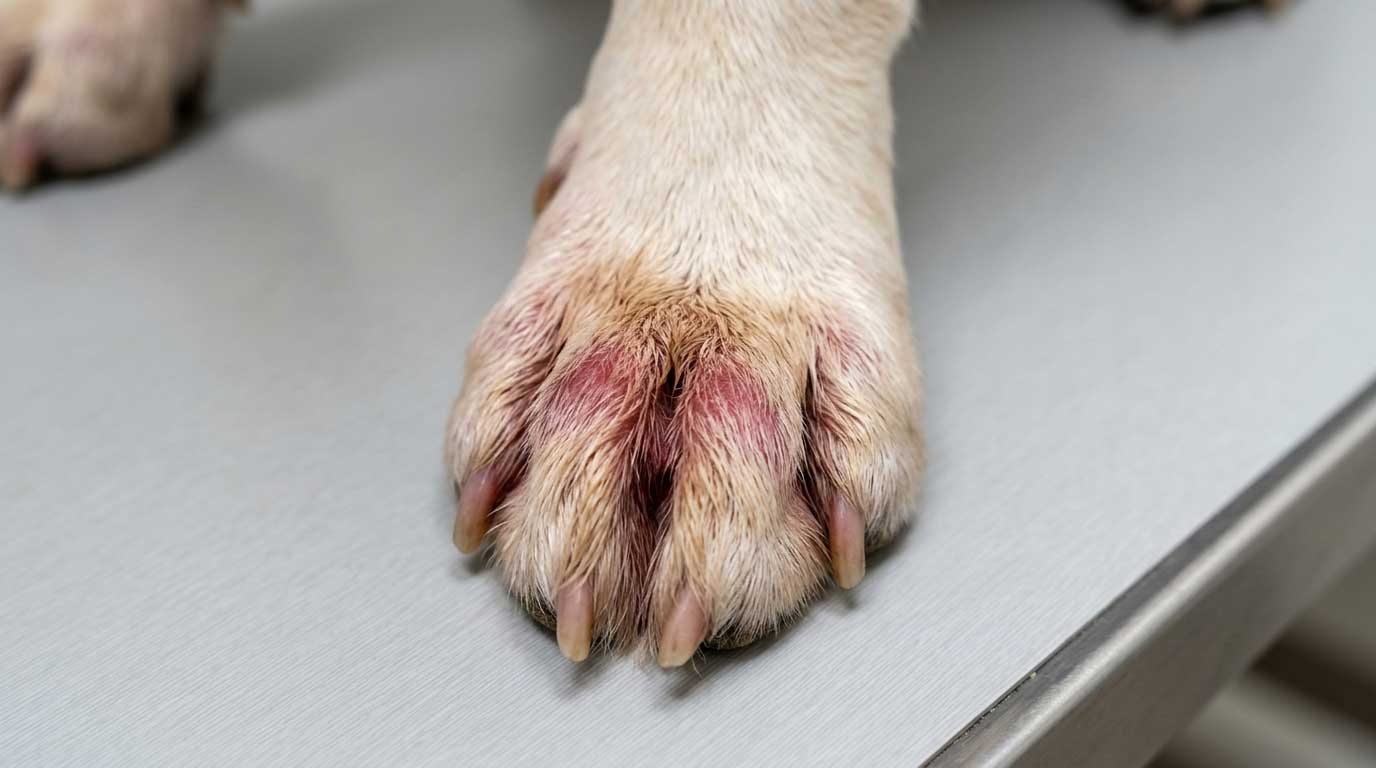
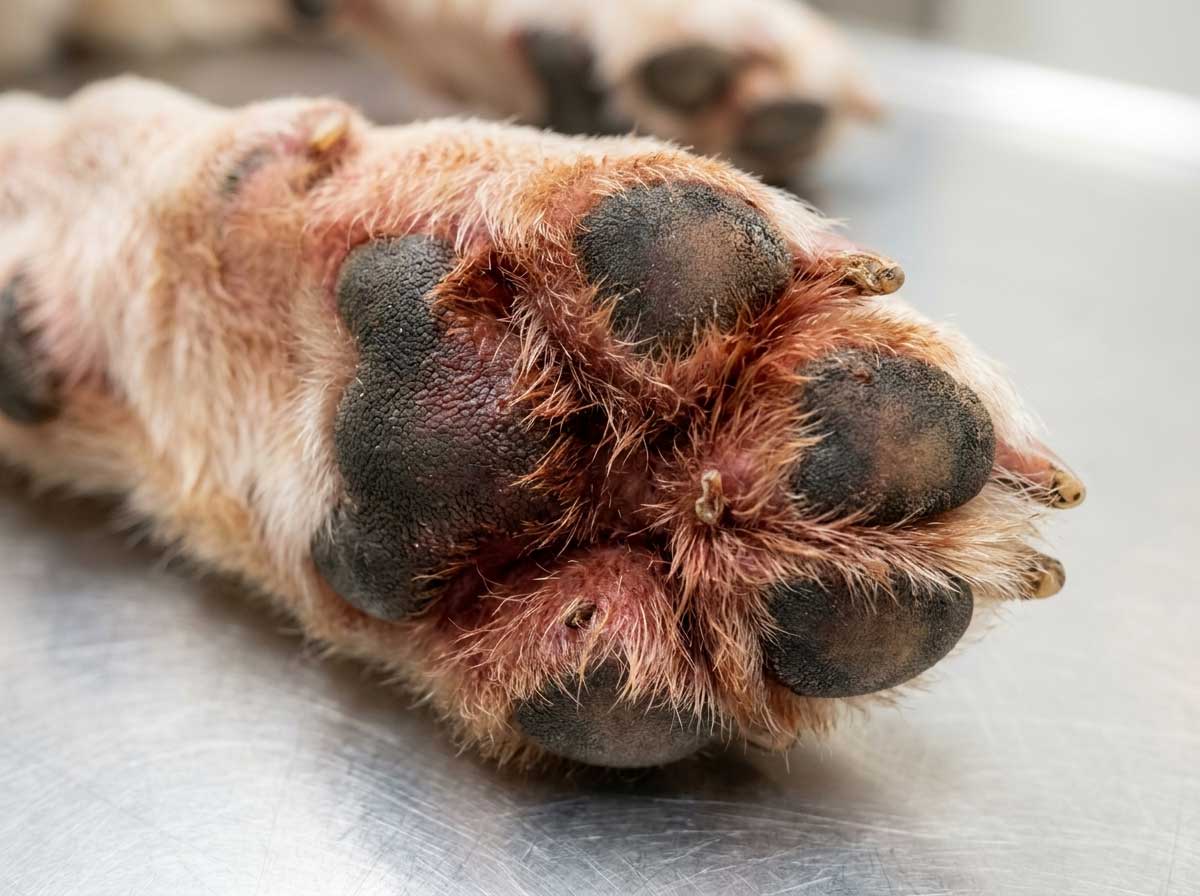
Close-up of red inflamed skin between a dog's toes โ€” common signs of allergies, yeast, or infection

Not Sure Which Cause It Is?

Upload a photo of your dog's paw and get AI photo analysis โ€” it compares against the 5 main causes and tells you whether home care is appropriate or a vet visit is recommended.

Get Paw Photo Analysis โ†’

By Yipara Veterinary Content Team ยท Reviewed against the Merck Veterinary Manual ยท Updated May 9, 2026

Spread your dog's toes. See pink, red, or inflamed skin between them? Dog paws red between toes is one of the most common โ€” and most confusing โ€” paw problems pet owners face. The same redness can have 5 completely different causes: allergies, yeast, bacterial infection, foreign body, or interdigital cyst. Each looks similar at first glance, but each needs a completely different treatment. Get the cause right, and home care often works in 5-7 days. Get it wrong, and you waste weeks while the underlying issue gets worse.

This guide breaks down the 5 main causes (with a 30-second decision tree to tell them apart), 7 home remedies you can try for mild cases, and the exact red flags that mean it's time for a vet visit. Plus a breed-by-breed risk table and a home-care-vs-vet-visit cost comparison so you know exactly what to expect.

๐Ÿ“‹ This article is for general educational purposes only. It is not a substitute for veterinary diagnosis or treatment. If your dog shows severe symptoms โ€” pus, deep wounds, limping, fever, or rapid worsening โ€” contact your veterinarian immediately.

Quick Symptom Comparison โ€” Tell the 5 Causes Apart in 30 Seconds

Use this comparison to describe symptoms to your vet. It does not replace diagnostic testing. Compare across 6 dimensions: how many paws affected, smell, presence of a lump, pain level, onset speed, and bleeding.

Symptom๐ŸŒฟ Allergies๐Ÿงซ Yeast๐Ÿฆ  Bacterial๐ŸŒพ Foreign Body๐Ÿ’ข Cyst
Paws affectedAll 4 (symmetric)All 41-4 (broken skin)1 paw, 1 spot1-2 (recurrent)
SmellNone or mildMusty / corn-chipFoul / rottenNone initiallyNone or mild
LumpNoNoPossibleYes โ€” small bumpYes โ€” raised lump
PainMild itchMild itch + scratchSevereSudden, sharpModerate
OnsetGradual, seasonalGradualDays, after rawHours after walkDays to weeks
BleedingNoRareYellow/green pusPossible punctureMay rupture
Quick reference: cross your dog's symptoms against the 5 main causes. Detailed breakdown below.

๐ŸŒฟ Allergies

  • โœ“Paws affected: All 4 (symmetric)
  • โœ“Smell: None or mild
  • โœ“Lump: No
  • โœ“Pain: Mild itch
  • โœ“Onset: Gradual, often seasonal
  • โœ“Bleeding: No (unless dog licks raw)

๐Ÿงซ Yeast Overgrowth

  • โœ“Paws affected: All 4 (often worse on 1-2)
  • โœ“Smell: Musty, corn-chip / "Frito foot"
  • โœ“Lump: No
  • โœ“Pain: Mild itch, intense scratching
  • โœ“Onset: Gradual, often after allergies
  • โœ“Bleeding: Rare

๐Ÿฆ  Bacterial Infection

  • โœ“Paws affected: 1-4 (where licking broke skin)
  • โœ“Smell: Foul, rotten, sour
  • โœ“Lump: Possible
  • โœ“Pain: Severe
  • โœ“Onset: Days, after raw skin
  • โœ“Bleeding: Yellow or green discharge

๐ŸŒพ Foreign Body (Grass Awn, Splinter)

  • โœ“Paws affected: 1 paw, 1 spot
  • โœ“Smell: None (until infection sets in)
  • โœ“Lump: Yes โ€” small swollen bump
  • โœ“Pain: Sudden and sharp
  • โœ“Onset: Hours after a walk
  • โœ“Bleeding: Possible puncture wound

๐Ÿ’ข Interdigital Cyst / Furuncle

  • โœ“Paws affected: 1-2 (often recurrent)
  • โœ“Smell: None or mild
  • โœ“Lump: Yes โ€” raised, red, painful bump
  • โœ“Pain: Moderate
  • โœ“Onset: Days to weeks
  • โœ“Bleeding: May rupture and drain
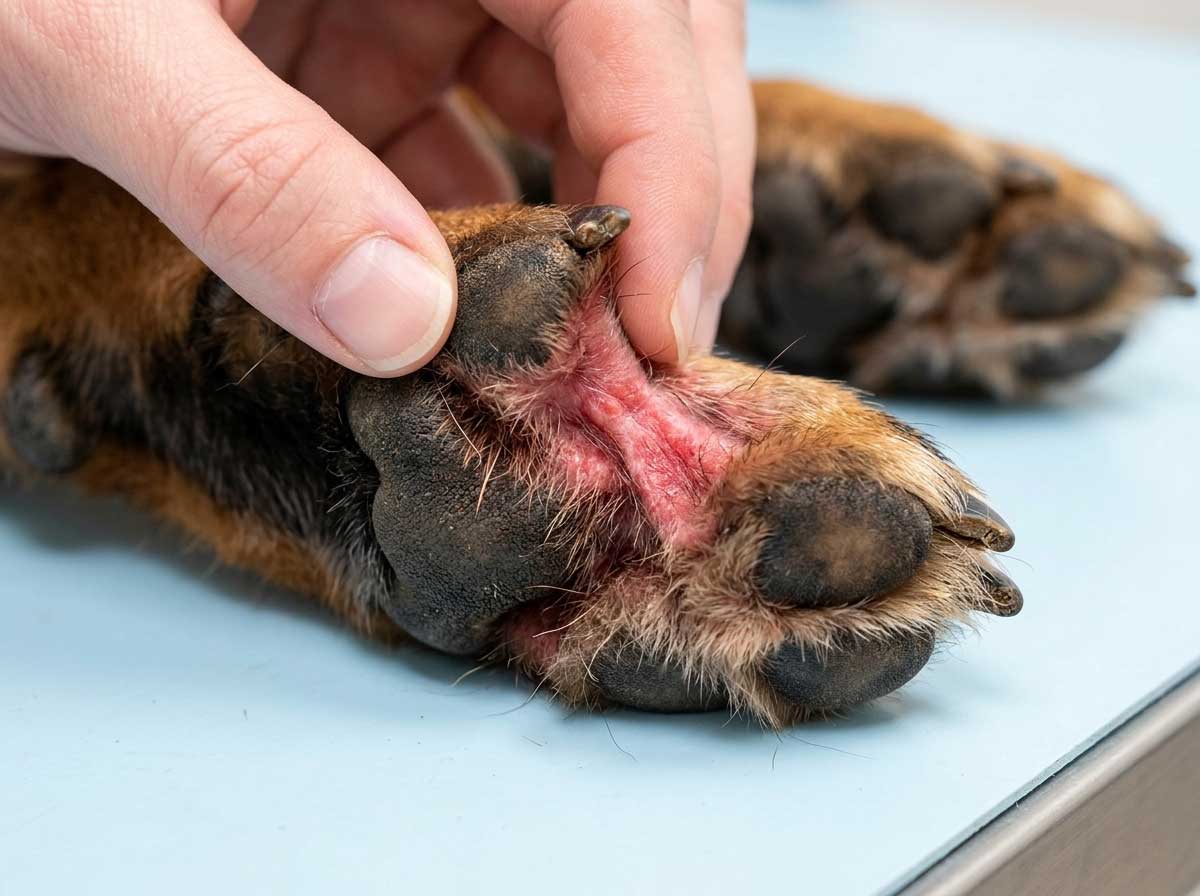
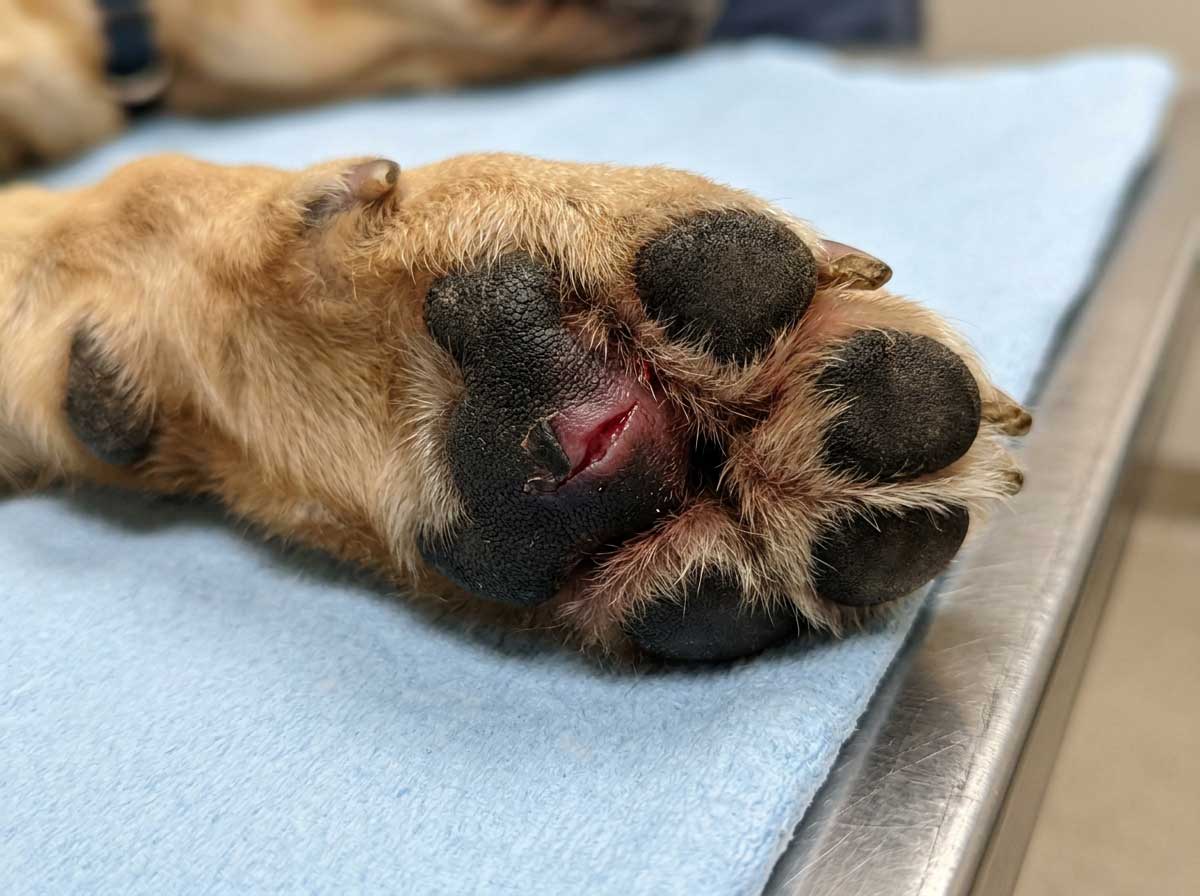
Dog paw with red inflamed skin between the toes
Classic redness between the toes โ€” could be allergies, yeast, or bacterial. The smell, lump check, and which paws are affected tell them apart.

60-Second Decision Tree โ€” Narrow It Down Fast

Use these 3 questions to narrow possibilities quickly. This is decision logic to help you think clearly โ€” not a substitute for veterinary diagnosis.

Question 1: How many paws are affected?

  • โœ“1 paw โ†’ Likely Foreign Body or Cyst (jump to Question 2)
  • โœ“All 4 paws (symmetric) โ†’ Likely Allergies or Yeast (jump to Question 3)

Question 2 (if 1 paw): Sudden onset after a walk?

  • โœ“Yes โ€” sudden, sharp pain โ†’ ๐ŸŒพ Foxtail / Splinter โ€” vet within 24h to prevent migration
  • โœ“No โ€” gradual lump appearing โ†’ ๐Ÿ’ข Interdigital Cyst โ€” home care + monitor 7 days

Question 3 (if all 4 paws): What does it smell like?

  • โœ“Musty / corn-chip / "Frito foot" โ†’ ๐Ÿงซ Yeast โ€” try ACV soak (1:3 dilution)
  • โœ“Foul / rotten / sour โ†’ ๐Ÿฆ  Bacterial โ€” vet now (likely needs antibiotics)
  • โœ“No distinct smell โ†’ ๐ŸŒฟ Allergies โ€” try post-walk wipes + monitor

When in doubt, or when home care isn't working after 7 days, see a vet โ€” diagnostics like skin cytology and culture confirm the cause definitively.

The 5 Main Causes โ€” In Detail

1. Allergies (Environmental or Food)

The most common cause by far. Up to 30% of dogs develop atopic dermatitis (environmental allergies) at some point. Pollen, grass, mold, and dust mites land on paws during walks. Food allergies (beef, chicken, dairy, wheat) trigger similar paw inflammation but year-round. Allergic redness shows on all four paws. Dogs lick, chew, and develop secondary yeast or bacterial issues. Our full guide on dog paw allergies covers treatment options in depth.

2. Yeast Infection (Malassezia)

Yeast naturally lives on dog skin. When allergies or moisture upset the balance, it overgrows. Hallmark sign: musty corn-chip smell, red-brown saliva staining, and greasy skin. If your dog's paws smell like Fritos, yeast is involved. Our yeast paw infection guide covers the full home treatment protocol.

3. Bacterial Infection (Pododermatitis)

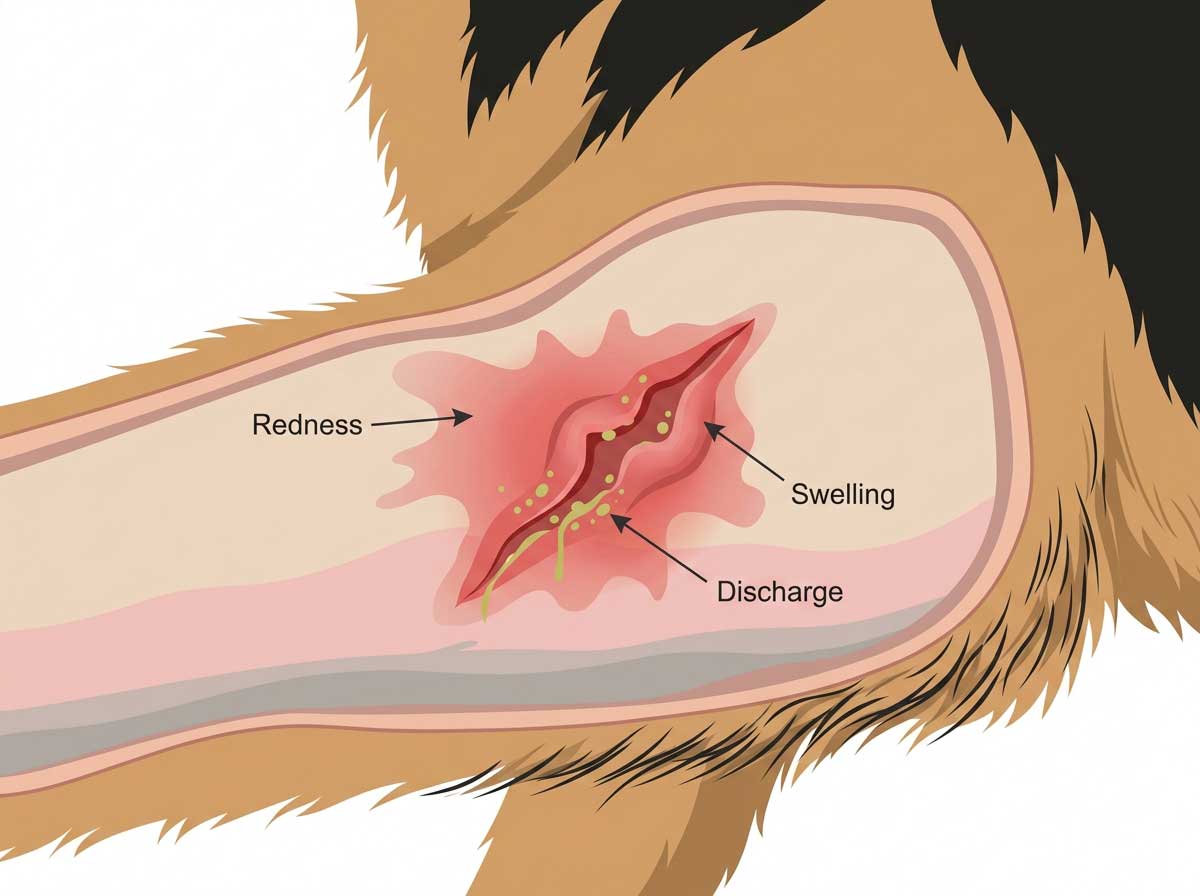
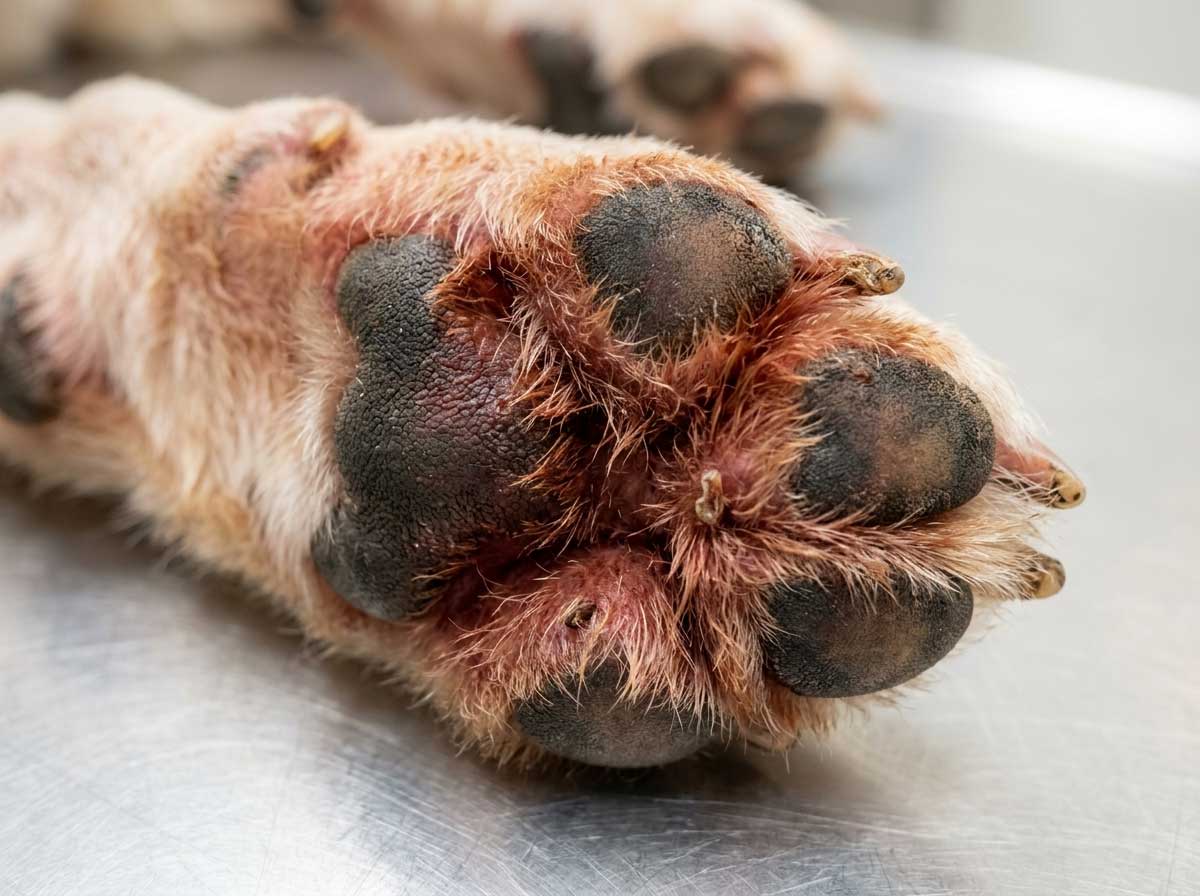
When licking breaks the skin barrier, bacteria like Staphylococcus pseudintermedius invade. Signs: deep red or raw skin, foul rotten smell (different from yeast), yellow or green pus, intense pain. Bacterial infections often need oral antibiotics โ€” topical treatment alone rarely clears established cases.
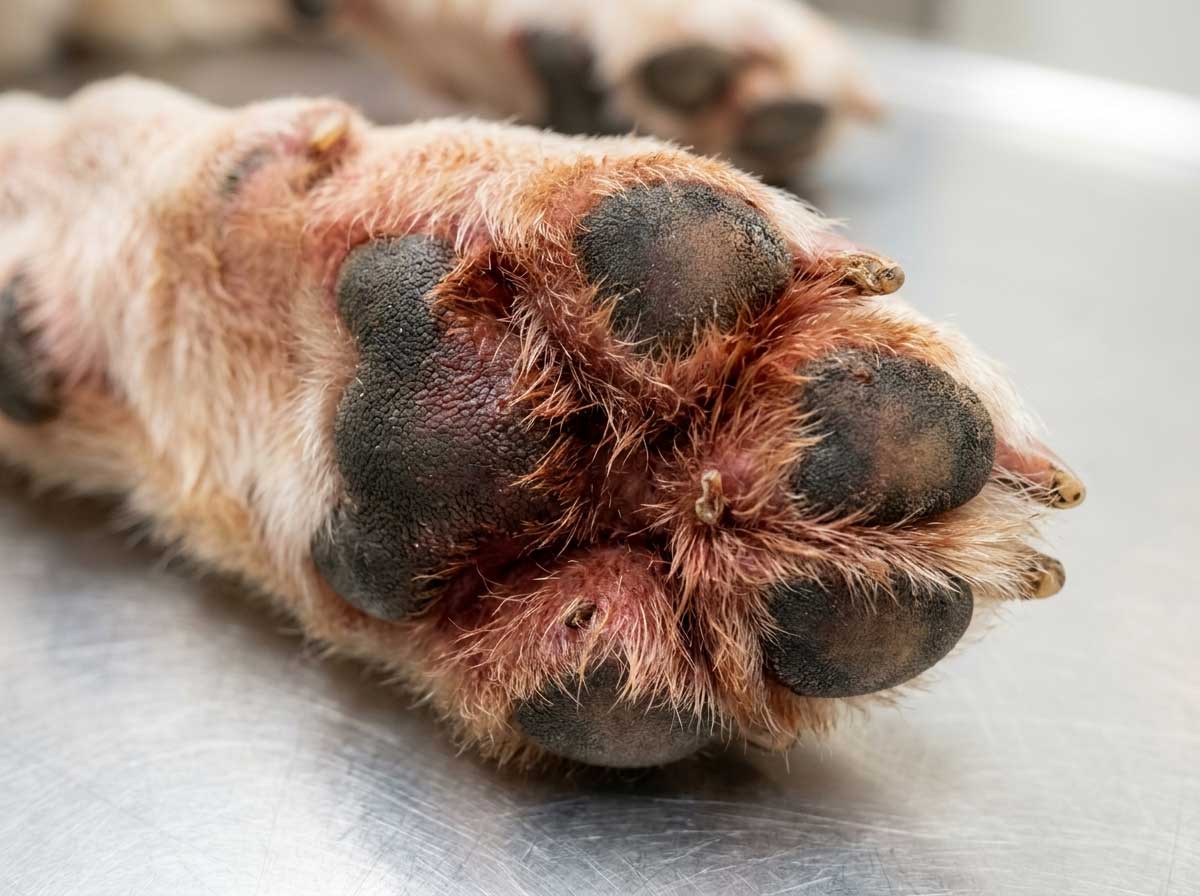
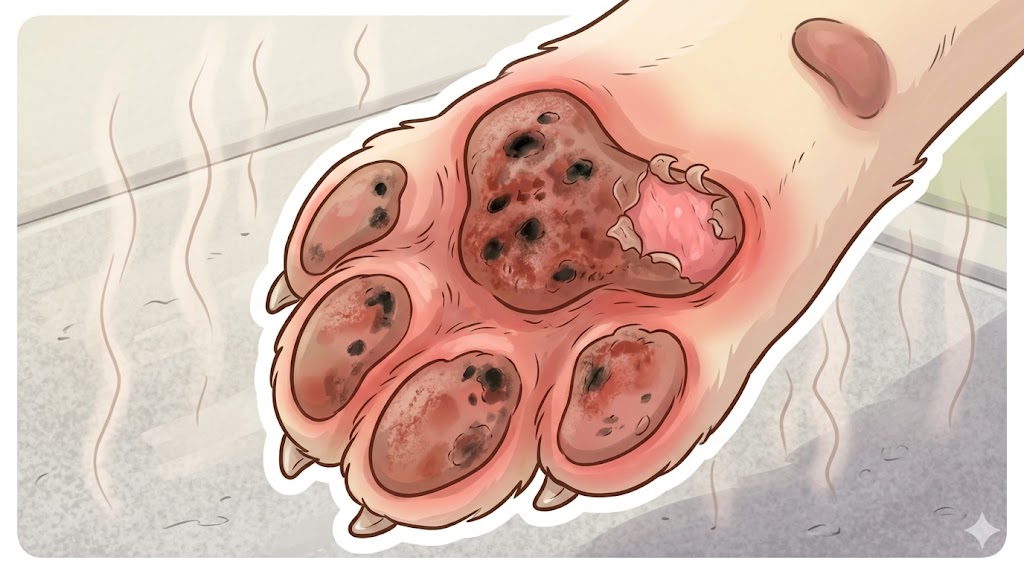
Dog paw with bacterial infection showing red raw skin and discharge
Bacterial infection: deep red, raw skin with possible discharge โ€” needs vet attention

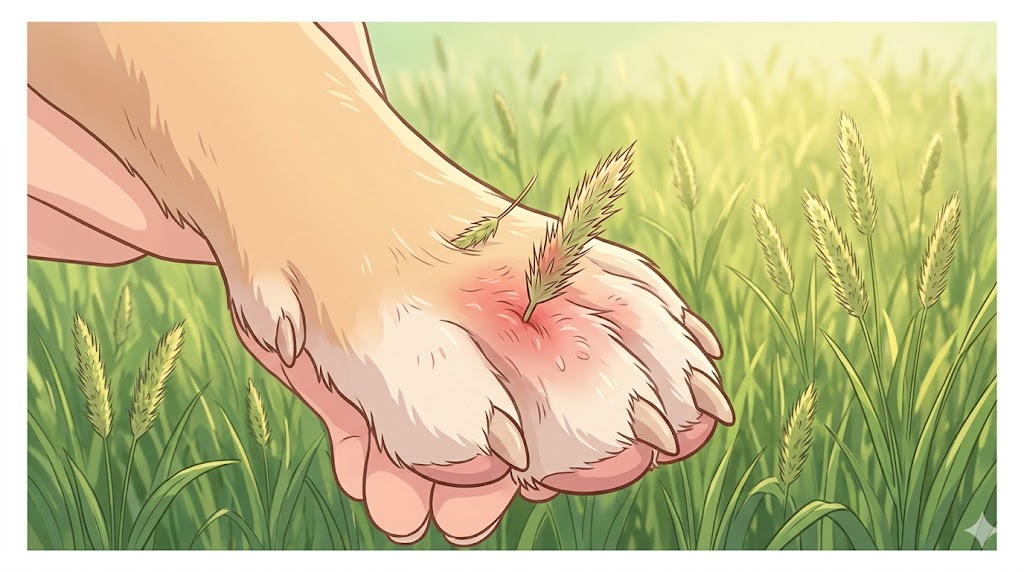
4. Foreign Body โ€” Grass Awn, Foxtail, or Splinter

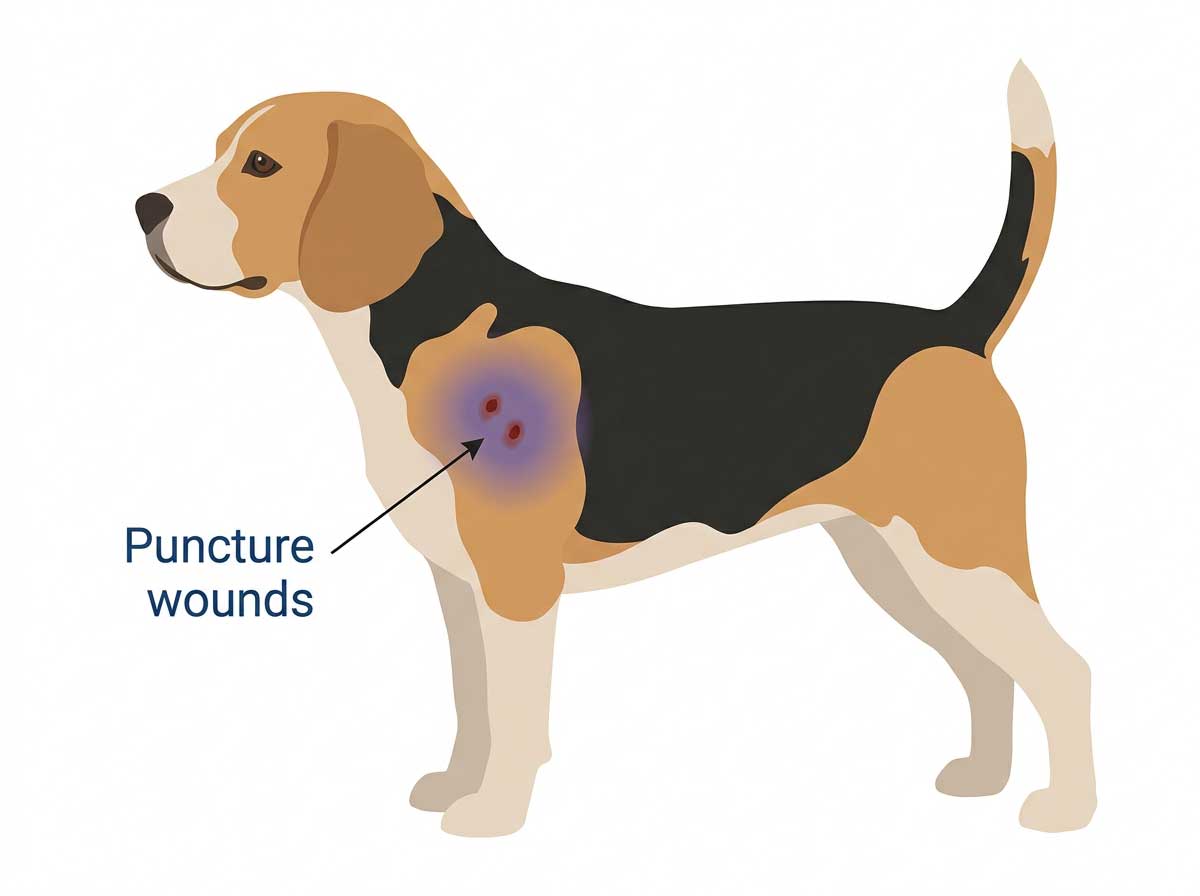
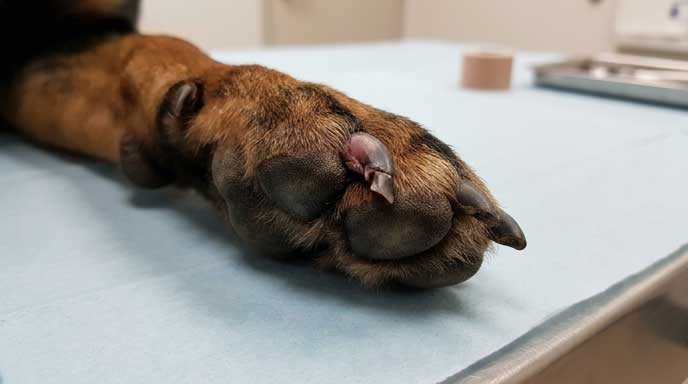
Only one paw red? Suspect something stuck. Foxtails (grass awns) are particularly dangerous โ€” they burrow under the skin and migrate inward. Look for a small swollen spot, a puncture mark, or a bump that wasn't there before. Your dog yelps when you touch that exact location. Don't try to dig it out at home โ€” see a vet within 24 hours to prevent migration.

5. Interdigital Cyst or Furuncle

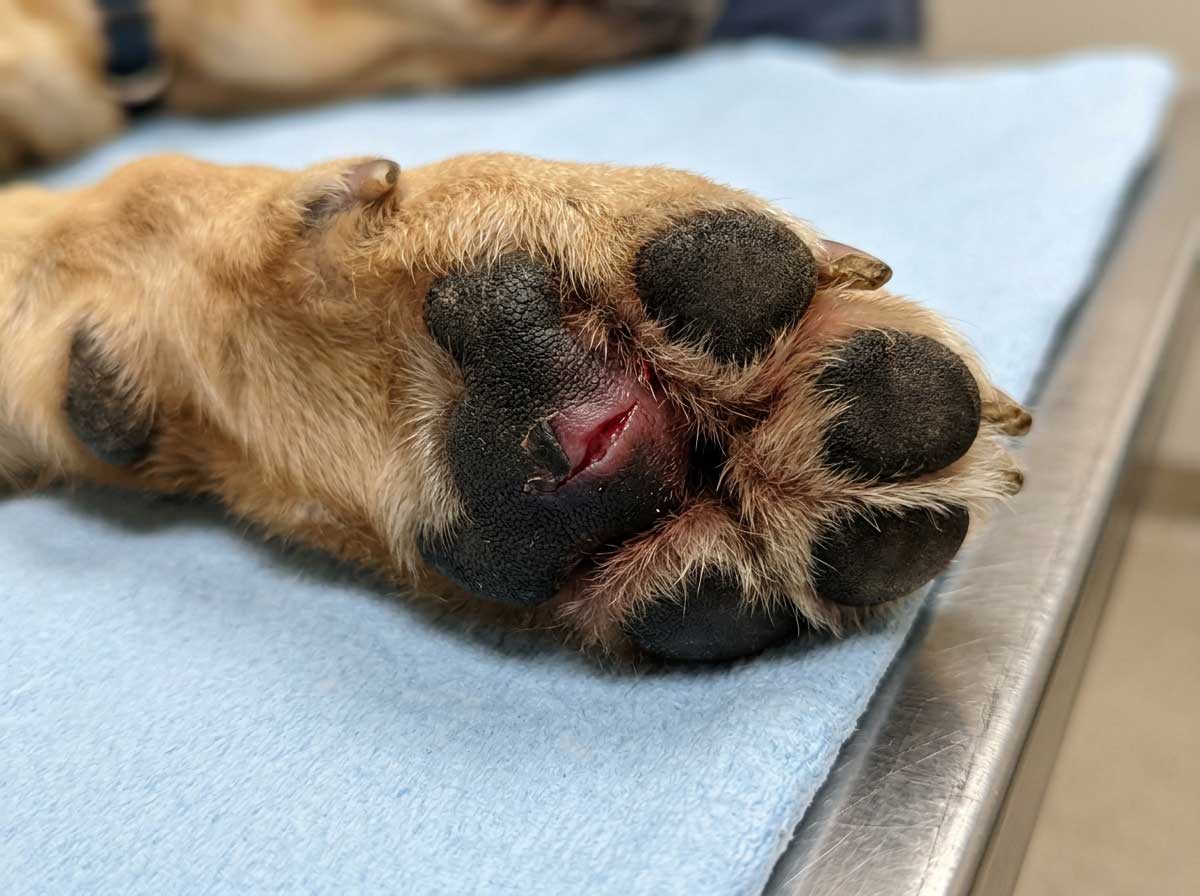
A raised, red, painful lump between the toes โ€” usually one or two at a time, often recurrent. According to the Merck Veterinary Manual, these are inflamed (often infected) hair follicles. Short-haired wide-pawed breeds โ€” Bulldogs, Shar-Peis, Labradors, Pit Bull Terriers โ€” are predisposed. Chronic cases may need vet-prescribed antibiotics or laser treatment.

Home Remedies for Itchy & Irritated Paws (Mild Cases Only)

These can help if redness is mild, your dog isn't in significant pain, you don't see pus or a lump, and the affected area is small. For anything else, see a vet first.

Apple Cider Vinegar (ACV) Rinse

Mix 1 part ACV with 2-3 parts water. Soak paws for 2-5 minutes once daily for up to 7 days. ACV has natural antifungal and antibacterial properties โ€” useful when yeast is suspected. Important: never use on broken or raw skin (it stings badly). Always pat paws dry afterward.

โš ๏ธ Stop ACV and see a vet if you see: open wounds, increased redness, pus, or your dog flinches in pain.

Epsom Salt Soak

Dissolve 1 tablespoon Epsom salt in 1 cup warm water. Soak paws for 10-15 minutes once daily. Epsom salt may help reduce inflammation and draw out debris. Safe on most skin conditions, but rinse with plain water afterward to prevent ingestion if your dog licks.

โš ๏ธ Stop Epsom salt soaks and see a vet if: redness worsens after 48 hours, you see new swelling, or your dog limps.

Cooled Chamomile or Green Tea Soak

Brew strong chamomile or green tea, let cool to lukewarm. Soak paws for 5-10 minutes, 1-2 times daily. Both contain natural anti-inflammatory compounds. Gentle enough for sensitive skin and safe if your dog licks. May help soothe mild allergic irritation.

โš ๏ธ See a vet if: no improvement after 48-72 hours.

Oatmeal Bath

Grind 1/2 cup plain rolled oats into a fine powder. Mix with warm water to make a paste, and apply to paws for 5-10 minutes. Oatmeal contains avenanthramides โ€” natural compounds that may calm itchy skin. Rinse afterward and dry thoroughly. Safe even if licked.

โš ๏ธ Stop and see a vet if: your dog develops new symptoms or oatmeal residue triggers more itching (rare oat allergy).

100% Pure Aloe Vera Gel (No Alcohol)

Apply a thin layer of pure aloe vera gel (not commercial green gel โ€” it often contains alcohol) to red areas. Aloe may soothe mild redness and support skin healing. Use 2-3 times daily for up to 5 days. Make sure your dog doesn't lick large amounts.

โš ๏ธ Stop and see a vet if: your dog develops vomiting (toxic ingestion) or skin worsens.

Daily Povidone-Iodine or Chlorhexidine Soak

For mild infection or yeast suspicion, dilute povidone-iodine to iced-tea color or use 2% chlorhexidine. Soak 5 minutes, 1-2 times daily for up to 7 days. These are vet-recommended antiseptics that fight both bacteria and yeast.

โš ๏ธ See a vet if: no improvement in 5-7 days, or skin becomes more raw or painful.

Post-Walk Paw Wipes

For allergy dogs, wiping paws with a damp cloth or pet-safe chlorhexidine wipe after every walk removes pollen and contact allergens before they trigger inflammation. According to veterinary research, this single habit can reduce allergy flare-ups by up to 50%. Make sure to dry between toes thoroughly.

Home Remedies for Dry, Cracked, or Burning Paw Pads

If the issue is rough or peeling pads (not redness between toes), try these. Cracked pads often come from hot pavement burns, ice-melt salt, or chronic dryness. Our paw pad injury guide covers severe cuts and flaps in detail.

Coconut Oil (Organic, Unrefined)

Massage a small amount of organic, unrefined coconut oil into paw pads and between toes. Coconut oil is a natural moisturizer, mild antifungal, and safe if licked. Use once or twice daily. Especially useful for dry winter pads or dogs prone to mild yeast.

โš ๏ธ Stop and see a vet if: pads worsen, become greasy/red (yeast escalating), or develop a new smell.

DIY Paw Balm Recipe

Mix 1 oz beeswax, 3 tbsp coconut oil, 3 tbsp shea butter, and 3 tbsp olive or calendula oil. Melt gently, pour into a small jar, let cool. Apply a thin layer to dry pads as needed. Creates a protective barrier against salt, hot pavement, and dryness. Lasts 3-6 months in storage.

โš ๏ธ Stop using if: your dog has a skin reaction, redness worsens, or pad cracks deepen.

Shea Butter or Vitamin E Oil

Pure shea butter or vitamin E oil can hydrate severely dry pads. Apply a thin layer 1-2 times daily. These are intensive moisturizers โ€” useful for chronic dryness or post-burn recovery. Make sure your dog doesn't consume large quantities (small licks are fine).

โš ๏ธ See a vet if: cracks bleed, pads peel deeply, or your dog limps.
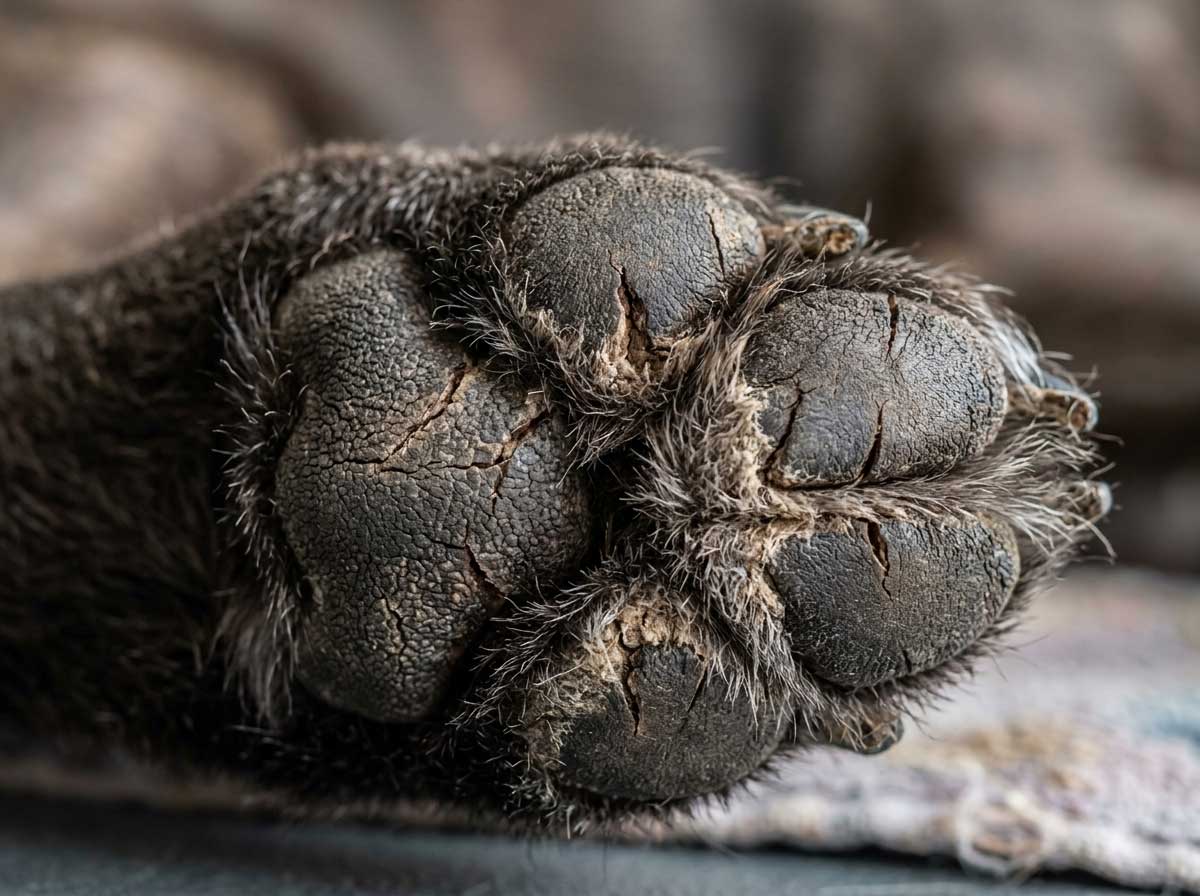
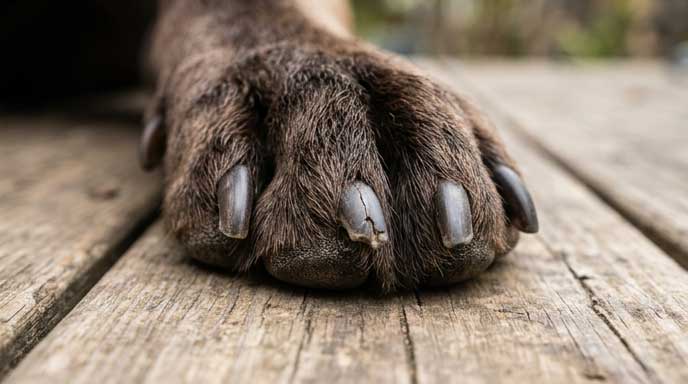
Dog paw pad with cracked surface from chronic dryness
Cracked pads need moisturizing remedies (coconut oil, shea butter) โ€” different from inflammation between toes

Protection & Prevention Strategies

Treating today's flare-up is half the battle. The other half is preventing the next one.

Dog Booties for Outdoor Walks

Booties protect against hot pavement (anything over 130ยฐF / 55ยฐC burns paws within 60 seconds), ice-melt chemicals, allergens, and rough terrain. Worth using during peak allergy season, in extreme weather, or for dogs with chronic paw issues.

Keep Paws Dry After Every Wet Exposure

Yeast needs moisture to grow. After walks in damp grass, after baths, after swimming โ€” towel-dry between every toe. This single habit shift can dramatically reduce yeast recurrence rates.

HEPA Filter at Home

For dogs with environmental allergies, a HEPA filter reduces indoor pollen, dust mites, and mold spores. Combined with weekly washing of dog bedding in hot water, this can substantially cut indoor allergen exposure.

Use a Cone Collar to Stop the Lick Cycle

Without breaking the itch-lick-inflame cycle, no home remedy will work. An e-collar (cone) or recovery boot prevents licking while remedies do their job. Bitter-apple spray is a milder alternative for low-key lickers.

Seasonal Paw Care Calendar โ€” When to Watch Out for What

Different seasons bring different paw redness triggers. Knowing the seasonal pattern helps you intervene before symptoms appear, not after.

๐ŸŒธ Spring (March-May)

Pollen allergy season peaks. Approximately 70% of atopic dogs flare worst in spring. Wipe paws after every walk to remove pollen, run a HEPA filter indoors, and consider preventive Apoquel or Cytopoint for chronic atopic dogs. Watch for: redness emerging on all 4 paws + itchy ears appearing simultaneously + post-walk licking spike.

โ˜€๏ธ Summer (June-August)

Hot pavement burns + foxtail season + chlorinated pools. Test pavement with bare hand for 7 seconds before walks (anything painful for you = burns dog paws). Foxtail risk peaks May-September; check between toes after every grass walk. Pool dogs need thorough toe drying โ€” chlorine residue + trapped moisture = yeast within 48 hours.

๐Ÿ‚ Fall (September-November)

Ragweed allergy peaks (different trigger from spring pollen). Indoor heating turns on โ†’ dust mites bloom in bedding. Foxtail still active until first frost. Maintenance schedule: weekly chlorhexidine wipes, apply paw balm before cold weather sets in, vacuum bedding 2x weekly.

โ„๏ธ Winter (December-February)

Ice-melt salt is corrosive to pads. DIY paw balm (recipe above) creates a protective barrier. Booties for snow walks longer than 30 minutes. Indoor heating dries pads โ€” apply coconut oil 2x per week. Watch for: cracked pads, white patches (frostbite warning), salt-induced redness between toes after walks on treated sidewalks.

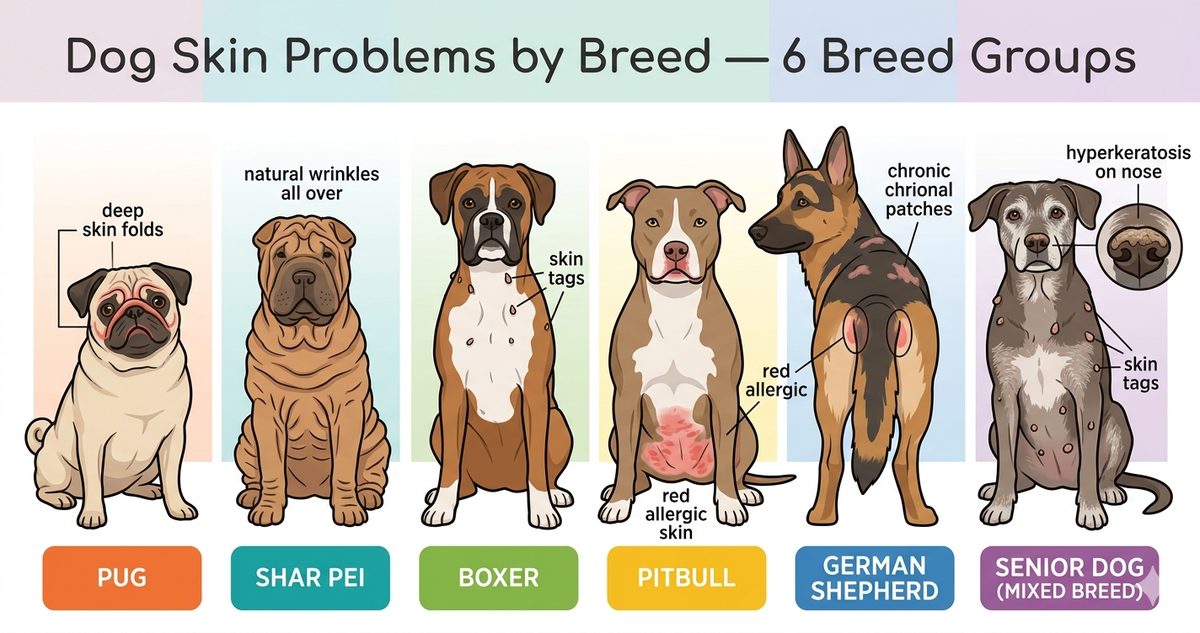
Which Breeds Are Most at Risk? (Per Merck Vet Manual & AKC)

Some dog breeds are genetically predisposed to specific paw issues. According to the Merck Veterinary Manual and AKC breed health data, here are the highest-risk groups:

BreedHighest Risk ForWhy
English BulldogInterdigital cystWide paws, short coat, prone to ingrown follicles
Shar-PeiInterdigital cystSkin folds, immune dysregulation
Pit Bull TerrierInterdigital cystShort coat, walks on rough surfaces
Labrador RetrieverCyst + allergiesGenetic predisposition + active outdoor lifestyle
West Highland TerrierRecurrent yeastBreed-specific Malassezia overgrowth
Cocker SpanielRecurrent yeastLong ears, dense paw fur, traps moisture
Basset HoundRecurrent yeastDroopy ears, skin folds
Shih TzuRecurrent yeastLong coat between toes
Golden RetrieverAtopic dermatitisCommon atopic breed
BoxerAtopic + food allergySensitive skin, food allergy prevalence
Bull TerrierAtopic dermatitisGenetic predisposition
French BulldogMultiple allergiesSensitive skin + multiple susceptibilities
Source: Merck Veterinary Manual & AKC breed health data. Probability, not diagnosis.

If you have one of these breeds and notice paw redness, the cause is statistically more likely to be the breed-typical condition. But this is probability, not diagnosis โ€” confirm with your vet.

โš ๏ธ 3 "Home Remedies" That Make It Worse โ€” Avoid These

These are common internet recommendations that veterinary research shows can harm rather than help.

  • โœ“Hydrogen Peroxide (3%) โ€” Damages healthy tissue, slows healing by 50% or more. Veterinary research warns against use on open wounds.
  • โœ“Apple Cider Vinegar on Broken Skin โ€” While ACV diluted on intact skin can help yeast, applying it to raw or cracked skin causes severe pain and chemical burn.
  • โœ“Baking Soda Paste โ€” The high pH (around 9) actively damages canine skin (which is naturally pH 6-7) and can worsen inflamed tissue.
  • โœ“Human Lotions or Steroid Creams โ€” Most contain ingredients toxic to dogs if licked (xylitol, zinc). Never apply human Neosporin with pain reliever (lidocaine is toxic).

How Long Should Home Treatment Take?

Knowing when to escalate prevents minor issues from becoming serious. Use this timeline:

  • โœ“24 hours: You should see no worsening (redness same or slightly better)
  • โœ“48-72 hours: Visible improvement (less redness, less licking)
  • โœ“5-7 days: Substantial improvement or near-resolution
  • โœ“No improvement after 7 days: Stop home treatment, see a vet
  • โœ“Sudden worsening at any point: Stop immediately, call your vet

When to See a Vet โ€” Red Flag Checklist

Skip home remedies and book a vet visit if any of these apply:

  • โœ“A raised lump or swelling between the toes that wasn't there before
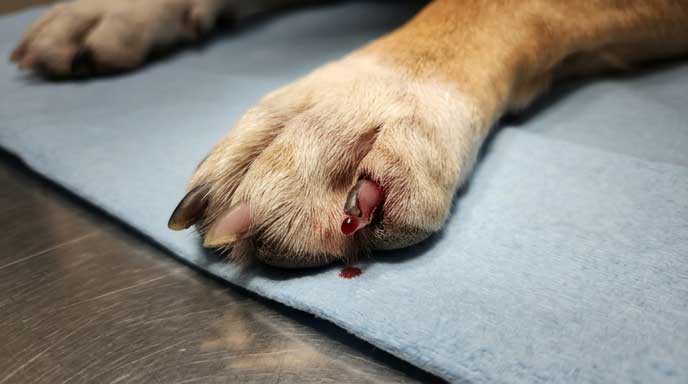
  • โœ“Visible pus, bleeding, or a wound
  • โœ“Your dog limps or yelps when you touch the paw
  • โœ“Foul rotten smell (bacterial infection signal) or extremely strong musty smell (severe yeast)
  • โœ“Redness on only one paw with sudden onset โ€” possible foreign body or foxtail
  • โœ“No improvement after 7 days of home treatment
  • โœ“Recurrence within weeks of clearing โ€” points to underlying allergy needing diagnosis
  • โœ“Multiple paws affected with severe pain or your dog refuses to walk
  • โœ“Fever, lethargy, or loss of appetite alongside paw symptoms
  • โœ“Spreading swelling up the leg
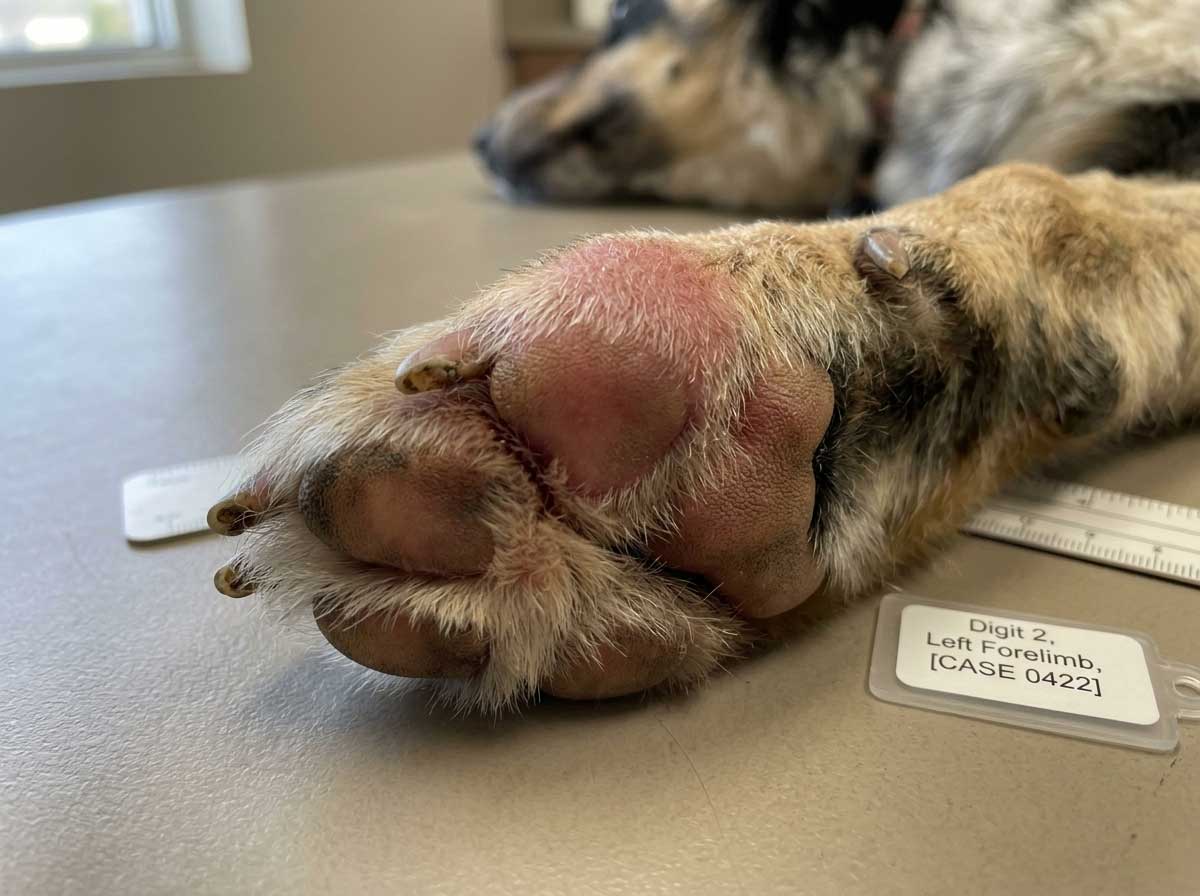
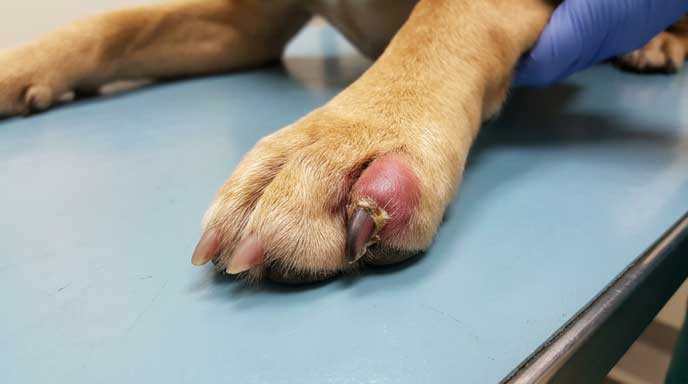
Dog paw with significant swelling indicating need for veterinary care
Swelling that spreads or persists is a red flag โ€” needs a vet, not home remedies

Home Care vs Vet Visit โ€” Cost & Time Comparison

Knowing typical costs helps you make informed decisions. These are US average ranges (2026); costs vary by region and clinic.

TreatmentCost (USD)Time to ResultsWhen to Choose
Apple Cider Vinegar soak (DIY)$4-8 / 16oz5-7 daysMild yeast on intact skin
Epsom Salt soak (DIY)$5-10 / 3lb5-7 daysMild inflammation
Coconut Oil topical (DIY)$8-15 / 16oz3-7 daysDry pads, mild yeast
Oatmeal bath (DIY)$3-6 / 2lb3-5 daysMild itch / inflammation
Chlorhexidine wipes (DIY)$15-25 / 50pkDaily preventionAllergy maintenance
Dog booties (DIY prevention)$15-40 / setImmediateHot pavement / allergens
Basic vet visit + paw exam$80-150Same dayPersistent past 7 days
Skin cytology / culture$40-802-3 daysRecurrent / mixed infection
Skin scrape (mites)$30-60Same daySuspected parasites
Allergy testing (intradermal/blood)$200-4001-2 weeksChronic recurrent
Apoquel (Rx, 1 month)$60-1004 hoursChronic atopic allergy
Cytopoint (Rx injection)$80-15024-48 hoursChronic, can't take Apoquel
Antibiotic course$40-1007-14 daysConfirmed bacterial
Emergency vet (foxtail removal)$200-500Same dayAcute foreign body
US average ranges, 2026. Prices vary by region. Source: VCA Animal Hospitals & PetMD pricing surveys.

๐Ÿค” When Home Care Saves Money vs Wastes It

  • โœ“Saves money when: mild redness, no pain, allergies suspected, you catch it within 24-48h
  • โœ“Wastes money when: persistent past 7 days, lump or pus visible, foxtail suspected (delaying = expensive complications), recurrent (needs underlying allergy diagnosis)

Yipara AI photo analysis is designed for this gap โ€” when you're unsure whether the situation is "home-care-mild" or "needs-vet-now," uploading a photo for AI analysis helps you decide without an unnecessary vet trip or a delayed urgent one.

Special Cases โ€” Adjustments for Senior Dogs, Puppies, and Immunocompromised

Standard home remedies need adjusting for dogs with specific health profiles. Default thresholds for "see a vet" shift earlier in these groups.

๐Ÿ‘ด Senior Dogs (8+ years)

Slower healing (about 50% slower than adult dogs), thinner skin, often on existing medications. Avoid alcohol-based products entirely. Reduce ACV concentration to 1:5 (vs standard 1:2-3). Vet visit threshold lower โ€” see a vet at 5 days no improvement instead of 7. Watch for slow-healing minor injuries that may signal underlying immune or endocrine issues (Cushing's disease, hypothyroidism).

๐Ÿถ Puppies (Under 12 Months)

Sensitive skin, small body weight matters for any topical absorption. Always vet-confirm before home remedies. Avoid Epsom salt soaks until 4 months old. Avoid ACV entirely on puppies under 6 months. Most paw redness in puppies = environmental adjustment (new home, new diet, new walking surface), not a chronic condition. See a vet sooner โ€” 3-day threshold instead of 7.

๐Ÿฉน Immunocompromised Dogs

Dogs on long-term steroids, chemotherapy, or with autoimmune conditions need vet-supervised care for any paw redness. Home remedies may delay critical treatment. Bacterial infections progress faster (12-24 hours instead of days). Default to vet visit, not home care. Always alert your treating vet about any new symptom โ€” even mild redness.

Common Misconceptions About Paw Redness

"It will go away on its own"

Most paw redness has an underlying cause that won't self-resolve โ€” allergies, yeast, infection, or trauma. Without addressing the underlying cause, mild cases can progress to severe ones. Watch for 48-72 hours; if no improvement, intervene.

"I can just give my dog Benadryl"

Benadryl helps some allergy dogs but is far less effective than prescription options (Apoquel, Cytopoint). It does nothing for yeast, bacterial, foreign body, or cyst causes. Always check dosing with your vet first.

"All paw redness is allergies"

Allergies are the most common cause but not the only one. The smell test, lump check, and "which paws affected" question separate them in 30 seconds. Treating yeast like allergies (or vice versa) wastes weeks.

Most cases of dog paws red between toes are mild allergies or early yeast โ€” manageable with consistent home care and the prevention strategies above. The key is matching the remedy to the cause and watching for the red flags that signal it's time for veterinary attention.

๐Ÿ“‹ Yipara provides AI-powered photo analysis as a triage tool to help you decide whether home treatment is appropriate or a vet visit is needed. It is not a substitute for veterinary diagnosis or care. For any severe, worsening, or persistent symptoms, please consult your veterinarian.

Frequently Asked Questions

How long does it take for dog paw redness to go away?

+
For mild cases responding to home remedies, expect substantial improvement within 5-7 days. Stubborn cases or those needing prescription antifungals or antibiotics typically clear in 2-4 weeks. Recurrence within weeks signals an unaddressed underlying cause (usually allergies). This is general guidance โ€” consult your vet if symptoms persist.

Can I use Apple Cider Vinegar on my dog's paws?

+
Yes, with caveats: dilute to 1 part ACV : 2-3 parts water, apply only to intact skin (not broken or raw), use 2-5 minutes max, once daily. ACV has mild antifungal/antibacterial properties useful for yeast suspicion. Never use undiluted or on open wounds โ€” it stings severely. This is general guidance โ€” consult your vet for severe cases.

Is coconut oil safe for dogs to lick?

+
Yes, organic unrefined coconut oil is generally safe in small amounts. It is mildly antifungal and may benefit gut health. Avoid feeding more than 1 teaspoon per day for medium dogs (calorie dense). For topical paw use, normal licking is fine. This is general guidance โ€” consult your vet.

What if home remedies don't work after 7 days?

+
Stop home treatment and book a vet visit. Persistent redness usually indicates: (a) a more severe infection needing prescription antibiotics or antifungals, (b) an undiagnosed allergy needing comprehensive workup, or (c) something not in the 5 main causes (autoimmune, contact dermatitis, parasites). A vet visit avoids weeks of trial-and-error.

How do I tell if it's allergies or yeast?

+
The smell test: musty corn-chip / Frito foot smell = yeast. No distinct smell = likely allergies. Yeast also leaves rusty saliva staining on the fur. Allergies often show seasonal patterns; yeast doesn't. They frequently coexist (allergies cause licking โ†’ moisture โ†’ yeast). When unclear, a photo analysis can help narrow possibilities.

What's the difference between environmental and food allergies?

+
Environmental allergies (atopy) trigger seasonally โ€” usually spring, summer, or fall โ€” and respond to pollen, grass, mold, or dust mites. Food allergies show year-round, often with digestive issues (chronic loose stool, gas) alongside paw redness. The only reliable way to distinguish them: an 8-12 week elimination diet with novel protein. Both look similar on paws (red, itchy, all 4 paws), but the trigger pattern differs. This is general guidance โ€” vet allergy testing confirms which you're dealing with.

Can I use my dog's old prescription antibiotic ointment for new redness?

+
Generally not recommended. Prescription antibiotics target specific bacteria identified by your vet at that time. Using them for a different infection (or wrong bacteria type) can cause antibiotic resistance, mask diagnosis, or treat the wrong condition. Some prescription ointments expire โ€” check the date. Always confirm with your vet before reusing prescription medications, even for a similar-looking issue.

Is Epsom salt safe for puppies?

+
Avoid Epsom salt soaks until your puppy is at least 4 months old. Younger puppies have more sensitive skin and absorb topical substances more readily. For puppy paw redness, stick to plain warm water rinses or cooled chamomile tea soaks (gentler), and consult your vet earlier than for adult dogs (3-day threshold instead of 7). This is general guidance โ€” your vet knows your puppy's specific needs.

Not Sure Which Cause It Is?

Upload a photo of your dog's paw and get AI photo analysis โ€” it compares against the 5 main causes and tells you whether home care is appropriate or a vet visit is recommended.

Share:

Disclaimer: This article is for informational purposes only and is not a substitute for professional veterinary advice. Always consult a licensed veterinarian for diagnosis and treatment of your pet's health conditions.

More Articles

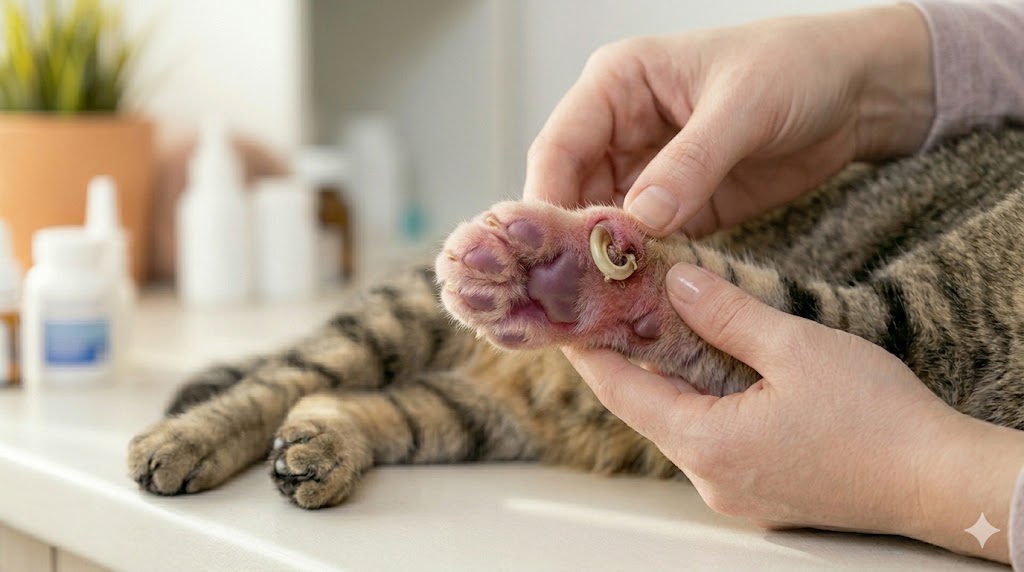
Dog eye infection showing redness and discharge in a Golden Retriever

Dog Eye Infection: Symptoms, Causes & When to See a Vet

How to identify a dog eye infection, what causes it, common types like conjunctivitis and corneal ulcers, home care tips, and when you need to see a vet.

Hot spot on a Labrador Retriever showing red moist oozing skin patch

Dog Hot Spots: What They Look Like, Causes & How to Treat Them

Everything you need to know about hot spots on dogs โ€” how to identify them, what causes them, home treatment options, and when you need a vet.

Dog ear showing brown discharge and wax buildup indicating ear problems

Why Do My Dog's Ears Smell Bad? 7 Causes and What to Do

Dogs ears smell bad for a reason. Learn the 7 most common causes of smelly dog ears, what the smell and discharge color mean, and when you need a vet.

Dermatitis on Golden Retriever belly showing red inflamed flaky skin

My Dog Has a Rash: How to Identify Common Skin Problems

Found a rash on your dog? Learn how to identify dermatitis, hot spots, mange, flea allergy, and other common skin infections from appearance and symptoms.

Dog shaking head and scratching ear showing signs of ear discomfort

Dog Keeps Shaking Head? Here's What It Means and What to Do

Why does your dog keep shaking their head? Learn the most common causes including ear infections, ear mites, and allergies, plus when to see a vet.

Dog skin allergy showing red irritated skin from flea allergy dermatitis

Dog Skin Allergy: Symptoms, Types & What Your Dog's Skin Is Telling You

Learn how to identify dog skin allergies from rashes, bumps, and itching. Understand flea allergy dermatitis, food allergies, and environmental allergies in dogs.

Dog scratching ear from food allergy showing redness and discomfort

Dog Food Allergy Symptoms: How to Tell If Your Dog's Food Is the Problem

How to identify food allergy symptoms in dogs vs food intolerance. Learn about elimination diets, common allergens like chicken and beef, and when to see a vet.

Cat with skin allergy showing patchy hair loss and irritated skin

Cat Skin Allergies & Flea Dermatitis: Signs, Causes & What to Do

How to identify cat skin allergies, flea allergy dermatitis in cats, food allergy rashes, and environmental allergies. Learn what your cat's skin is telling you.

Dog wound showing redness and swelling that needs proper care

Dog Wound Care: How to Clean, Treat & Monitor Wounds at Home

Complete guide to dog wound care at home. Learn how to clean a wound, what to put on it, signs of infection to watch for, and when to see a vet.

Dog wound in healing stage showing healthy pink tissue forming

How to Heal a Dog Wound Fast at Home: 7 Vet-Approved Tips

Want to help your dog's wound heal faster? 7 proven tips for faster wound healing in dogs โ€” from proper cleaning to nutrition to preventing licking.

Open wound on dog that needs proper cleaning

How to Clean a Dog Wound: Step-by-Step Guide (With What to Avoid)

Learn the right way to clean a dog wound at home. Step-by-step instructions, what solutions to use, what to avoid, and when cleaning isn't enough.

Dog bite wound that needs proper cleaning โ€” not hydrogen peroxide

Can You Put Hydrogen Peroxide on a Dog Wound? (Why Vets Say No)

Should you use hydrogen peroxide on your dog's wound? Learn why most vets no longer recommend it, what to use instead, and how to clean dog wounds safely.

Cat wound being gently cleaned at home with saline solution

Cat Wound Care at Home: How to Clean, Treat & Know When to See a Vet

Learn how to care for your cat's wound at home โ€” cleaning, safe ointments, what to avoid, healing stages, and when a wound needs emergency vet care.

Cat abscess that has burst showing drainage and surrounding area

Cat Abscess Burst: What to Do, What It Looks Like & When to See a Vet

Your cat's abscess burst? Don't panic. Learn what a burst abscess looks like, what to do immediately, home care steps, healing timeline, and when it's an emergency.

Close-up of flea dirt on dog skin showing tiny black specks among fur

Flea Dirt, Flea Eggs & Black Specks on Your Dog โ€” What They Mean

Found black specks or tiny white dots on your dog? Learn how to identify flea dirt vs regular dirt, flea eggs vs dandruff, and what black specks on dog skin mean.

Comparison of deer tick and American dog tick on dog skin

Dog Tick Identification: Deer Tick vs Dog Tick, Embedded & Engorged Ticks

How to identify ticks on your dog โ€” deer tick vs dog tick differences, what embedded and engorged ticks look like, tick vs skin tag, and which ticks carry disease.

Cat ear showing dark brown discharge from ear mites vs normal clean ear

Cat Ear Mites: Signs, How to Tell vs Dirty Ears & Treatment Guide

How to tell if your cat has ear mites vs just dirty ears, signs and symptoms, how indoor cats get ear mites, home remedies, and when to see a vet.

Black specks on cat chin showing comparison of flea dirt vs feline acne

Black Specks on Your Cat: Flea Dirt vs Cat Acne โ€” How to Tell & What to Do

Black specks on your cat's chin, fur, or skin? Learn how to tell flea dirt from cat acne, what black dots mean, and when to worry.

Dog licking and chewing their paw on a couch

Why Do Dogs Lick and Chew Their Paws? 8 Common Causes

Why is your dog licking or chewing their paws? Here are the 8 most common causes โ€” from allergies and yeast infections to anxiety and pain โ€” plus what to do about each.

Owner applying paw balm to stop dog from licking paws

How to Stop a Dog from Licking Their Paws: Home Remedies That Actually Work

Practical home remedies to stop compulsive paw licking in dogs โ€” soaks, e-collars, topical treatments, and long-term fixes. Plus when home care isn't enough.

Dog paw with brown yeast staining between the toes

Dog Paw Yeast Infection: Signs, Treatment & Home Remedies

How to spot a dog paw yeast infection (the "Frito foot" smell), what causes it, and how to treat it at home โ€” plus when you need prescription antifungals.

Dog paw with allergic dermatitis showing redness between toes

Dog Paw Allergies: Symptoms, Treatment & Prevention

Why do allergies hit dogs' paws so hard? Here's what paw allergies look like, the 3 main types (environmental, food, contact), and how to treat them.

Dog paw with a cut or injury on the pad

Dog Paw Pad Injury: First Aid, Flap Treatment & Healing Time

How to treat a dog paw pad injury at home โ€” stopping bleeding, handling a paw pad flap, bandaging, and what the healing timeline looks like. Plus when you need a vet.

Cat paw showing pillow foot with puffy enlarged central pad

What is Pillow Foot in Cats? Causes, Signs & Pictures

Pillow foot in cats (plasma cell pododermatitis) causes soft puffy paw pads. Learn the signs, causes, whether it's contagious, and what to do about it.

Hand holding a cat paw showing pillow foot condition during vet examination

Pillow Foot Treatment in Cats: Home Remedies & Vet Options

How to treat pillow foot (plasma cell pododermatitis) in cats โ€” doxycycline, steroids, home care, litter changes, and how long treatment takes.

Close-up of a swollen cat paw showing enlarged toes and redness

Swollen Cat Paw: 7 Causes + When It's an Emergency

Why is your cat's paw swollen? 7 common causes, how to tell an emergency, home remedies, and when you must see a vet โ€” including the "silent pain" trap.

Close-up of a cat paw with an ingrown nail curling into the pad

Cat Ingrown Nail Removal at Home: Step-by-Step + When to See a Vet

How to safely trim an ingrown cat nail at home โ€” step-by-step guide, when it's too risky, vet costs, and prevention tips. Most common in elderly cats.

Cat paw with nail bed infection showing redness and swelling around the claw base

Cat Nail Bed Infection (Paronychia): Signs, Treatment & Home Remedies

Cat nail bed infection (paronychia) causes redness, swelling, and nail discoloration. Learn to spot it, treat mild cases at home, and when antibiotics are needed.

Cat chewing on its paw while sitting on a couch

Why Is My Cat Chewing or Licking Their Paws? 6 Causes

Why your cat is obsessively chewing or licking their paws โ€” 6 common causes, from allergies to post-declaw chewing, and when you need to see a vet.

Cat chin with black specks that could be acne, flea dirt, or mites

Black Dots on Cat Chin: Acne, Flea Dirt, or Mites?

Black specks on your cat's chin can be feline acne, flea dirt, or mites โ€” here's how to tell them apart with a simple wet-tissue test and visual clues.

Hand applying medicated wipe to cat chin for acne treatment

Cat Acne Treatment at Home: Step-by-Step Guide + What NOT to Do

How to treat mild to moderate cat chin acne at home โ€” bowl changes, chlorhexidine cleaning, warm compresses. Plus the home remedies you should avoid.

Cat eating from plastic bowl showing chin contact with rim

How Plastic Bowls Cause Cat Acne (and What to Use Instead)

Notice black specks or red bumps on your cat's chin? Plastic bowls are a common trigger for feline chin acne. See which bowl materials vets recommend instead.

Cat relaxing after acne treatment showing clearer chin

Can Cat Acne Clear Up on Its Own? When to Wait vs Treat

Mild cat acne can clear on its own once the trigger is removed. Learn which cases need treatment, how long to wait, and when to see a vet.

Pet dermatology wipes and chlorhexidine solution for cat acne treatment

Chlorhexidine for Cat Acne: How to Use It Safely

Chlorhexidine is the vet-recommended antiseptic for cat chin acne. Learn the right concentration, how to apply it, and common mistakes to avoid.

Cat with new acne on chin looking at new plastic food bowl

Why Did My Cat Get Acne All of a Sudden? 6 Triggers to Check

Cat acne rarely appears for no reason. Here are 6 common triggers that cause sudden feline acne โ€” and how to find the cause in your cat.

Dog with red pimples and bumps on chin and lower lip

Why Does My Dog Have Pimples? 6 Causes of Canine Acne

Small red bumps or pimples on your dog's chin? Here are the 6 most common causes of canine acne, plus how to tell acne from mange and other skin problems.

Hand applying pet-safe wipe to dog chin for acne treatment

How to Treat Dog Chin Acne at Home: Step-by-Step Guide

Treat mild to moderate dog chin acne at home โ€” step-by-step plan with bowl hygiene, chlorhexidine, and pet-safe benzoyl peroxide. Plus what NOT to do.

Young puppy with pimples on chin during adolescent puppy acne phase

Puppy Acne: When It Starts, What It Looks Like, When It Clears

Puppy acne shows up between 5-12 months of age, especially in Boxers, Bulldogs, and other short-haired breeds. Here's what to expect and how to help.

Dog urine sample showing blood on white paper towel for owner examination

Why Is My Dog Peeing Blood? 8 Causes + When It's an Emergency

Blood in your dog's urine is alarming. Here are the 8 most common causes โ€” UTI, stones, prostate, pyometra โ€” plus how to tell when it's a true emergency.

Dog urine color chart showing healthy pale yellow through concerning dark and red shades

Dog Urine Color Chart: What Each Color Means (with Pictures)

A visual guide to dog urine colors โ€” from healthy pale yellow to emergency red and brown. Learn what each shade tells you about your dog's health.

Dog showing UTI symptoms with frequent urination attempts

Dog UTI: Symptoms, Treatment & Home Care vs When to See a Vet

Urinary tract infections are the #1 cause of blood in dog urine. Learn the symptoms, when home remedies help, and when antibiotics are required.

Diagram showing differences between male and female dog urinary tract issues

Blood in Dog Urine: Male vs Female โ€” Different Causes

Male and female dogs get blood in urine from different conditions. Here's what to check based on your dog's sex and neuter status.
Cat straining in litter box showing signs of urinary blockage

Cat Urinary Blockage: Signs, Survival Rate & Emergency Actions

Cat urinary blockage is a life-threatening emergency โ€” especially in male cats. Learn the signs, cost, survival rate, and why every hour matters.

Cat drinking water with owner checking for UTI symptoms

Cat UTI Symptoms: How to Tell What's Really a UTI (and What's Not)

Cat UTIs are actually less common than people think. Here's how to tell a true UTI from FIC, crystals, blockage, and other conditions that mimic it.

Stressed cat hiding showing signs of feline idiopathic cystitis

Blood in Cat Urine But No UTI: FIC and Stress Cystitis Explained

Your vet says no UTI but there's blood in your cat's urine. It's probably Feline Idiopathic Cystitis (FIC) โ€” a stress-related condition. Here's how to manage it.

Cat urine crystals under microscope showing struvite and oxalate types

Cat Urine Crystals: Struvite vs Oxalate, Diet & Treatment

Struvite and calcium oxalate crystals are the most common types in cat urine. Learn the differences, prevention, diet strategies, and when surgery is needed.

Owner noticing strong ammonia smell from cat litter box

Cat Urine Smells Like Ammonia: 5 Causes & What to Do

A strong ammonia smell from cat urine can signal concentrated urine, UTI, kidney disease, or just an intact male. Here's what each smell pattern means.

Dog with pale or white gums โ€” anemia or shock warning sign

Dog Has Pale Gums But Acting Normal โ€” Should You Still Worry?

Your dog's gums are pale but they seem fine? Here's why "acting normal" can be dangerously misleading, and when pale gums need an ER trip regardless of behavior.

Dog gum color chart showing healthy pink vs pale, blue, red, yellow, black gum variations

Normal vs Unhealthy Dog Gum Color Chart (With What Each Means)

Complete dog gum color chart โ€” pink, pale, white, blue, red, yellow, black. What healthy looks like, what's dangerous, and exactly when to go to the vet.

Pale dog gums โ€” early warning sign of silent killer conditions

Silent Killers in Dogs: 5 Warning Signs You Can Spot on the Gums

Five "silent killer" conditions that kill dogs before owners notice โ€” and each one shows up on the gums first. How to do the 5-second check that could save your dog.

Dog with blue or purple gums indicating hypoxia emergency

Why Are My Dog's Gums Turning Blue? Causes + Emergency Action

Blue or purple gums on a dog always mean hypoxia โ€” tissues are not getting enough oxygen. 7 causes, how to identify which, and exactly what to do in the next 30 minutes.

Dog gums showing benign lentigo pigmentation versus oral melanoma comparison

Sudden Black Gums on Your Dog: Harmless Lentigo or Melanoma?

Black spots on a dog's gums can be benign lentigo or dangerous melanoma. Here's how to tell them apart and when to biopsy.

Cat with severe stomatitis showing bright red inflamed gums and mouth

Feline Stomatitis: Symptoms, Treatment, and Why Full-Mouth Extraction Works

Feline stomatitis (FCGS) causes severe, painful mouth inflammation in cats. Here's what it is, why cats cry yawning, and why many cats need full-mouth extraction for relief.

Cat showing signs of feline tooth resorption with red gum line at tooth base

Feline Tooth Resorption: The Painful Cat Disease Most Owners Miss

Feline tooth resorption (FORL) affects 30-70% of cats and causes severe pain โ€” yet most owners don't know it exists. Symptoms, stages, treatment, and cost.

Dog tongue showing normal black pigment spots from benign lentigo

Black Spots on Dog Tongue: Normal Breed Pigmentation or Something Worse?

Black spots on your dog's tongue? Usually completely normal in Labs, Goldens, GSDs, and many breeds. Here's how to tell benign lentigo from rare concerning changes.

Dog with circular bald patch โ€” non-itchy hair loss pattern

Dog Losing Hair But Not Itchy? 7 Non-Inflammatory Causes

Hair loss without itching narrows the possibilities โ€” it's probably NOT flea allergy or mange. Here are the 7 causes of non-itchy dog hair loss and when to see a vet.

Boxer dog with seasonal flank alopecia showing bilateral symmetric bald patches on both sides

Seasonal Flank Alopecia in Dogs (Boxers, Bulldogs, Schnauzers) โ€” The Bilateral Bald Patch Explained

Seasonal flank alopecia causes symmetric hair loss on both sides in fall/winter โ€” common in Boxers, Bulldogs, Schnauzers. Here's how to recognize it and treatment options.

Dog with symmetric body-wide hair thinning from Cushing's or hypothyroidism

Cushing's vs Hypothyroidism Hair Loss in Dogs: How to Tell Them Apart

Both Cushing's and hypothyroidism cause symmetric hair loss in dogs โ€” but they're very different diseases. Here's how to tell them apart and what bloodwork confirms.
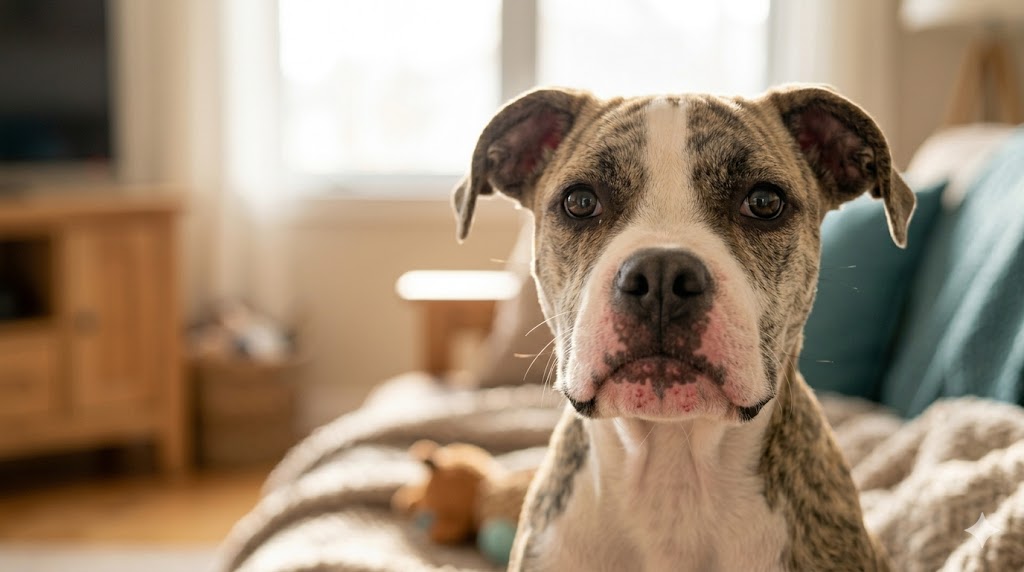
Young dog with hair loss around the eyes suggesting demodex or allergies

Why Is My Dog Losing Hair Around the Eyes? Demodex, Allergies & More

Hair loss around a dog's eyes has 6 common causes โ€” Demodex mange is #1 in puppies, but allergies, hypothyroidism, and infection are possible in older dogs.
Owner parting dog fur to examine hair loss area at home

Dog Hair Loss Home Remedies: What Actually Works (And What Doesn't)

Home remedies for dog hair loss โ€” which ones help, which are dangerous. The truth about coconut oil, fish oil, and other popular treatments.
Cat showing bilateral hair loss on belly and inner thighs with psychogenic or paraneoplastic pattern

Cat Losing Hair on Belly and Back Legs โ€” Psychogenic Alopecia vs Cancer Warning

Bilateral belly + back leg hair loss in cats has two very different causes. In young cats, usually overgrooming. In seniors, it can be a cancer marker (paraneoplastic alopecia).

Cat overgrooming her belly showing classic psychogenic alopecia pattern

Is My Cat Overgrooming? How to Tell + What Actually Stops It

Overgrooming affects up to 10% of cats. Here's how to tell if your cat is overgrooming, why it happens, and what actually stops it โ€” not just "reduce stress."

Cat with miliary dermatitis showing scattered small scabs across the back

Feline Miliary Dermatitis: The Cat-Specific Flea Allergy Signature

Tiny scattered scabs on your cat's back + itching = feline miliary dermatitis. It's the classic sign of flea allergy in cats, even without visible fleas.

Cat with stud tail showing greasy waxy patch at base of tail

Stud Tail in Cats: Treatment and Prevention That Actually Works

Stud tail is a greasy patch at the base of a cat's tail caused by overactive oil glands. Here's what actually works to treat it โ€” shampoos, neutering, and what doesn't help.

Senior cat with poor coat and hair loss showing signs suggestive of feline leukemia virus

Is Hair Loss a Sign of Feline Leukemia (FeLV)?

Feline leukemia virus (FeLV) can cause hair loss through multiple mechanisms. Here are the warning signs combined with hair loss that should prompt FeLV testing.

Owner applying styptic powder to dog broken nail to stop bleeding

How to Stop a Dog's Broken Nail from Bleeding (Step-by-Step)

Dog broken nail won't stop bleeding? Here's the exact step-by-step method using styptic powder, cornstarch, or flour โ€” plus when to go to the vet.

Dog owner treating a broken nail at home with proper supplies

Dog Broken Nail Home Treatment: What Actually Works (And What Doesn't)

Complete home treatment guide for dog broken nails โ€” step-by-step, what supplies to have, common mistakes to avoid, and when home care isn't enough.

Dog paw with nail broken but still partially attached and hanging

Dog's Nail Broken But Still Attached โ€” What to Do

Dog nail partially broken and hanging? Should you pull it off or leave it? Here's the right approach โ€” and why pulling it yourself usually makes things worse.

Dog nail with exposed pink quick tissue requiring immediate treatment

Dog Exposed Quick on Nail: Treatment and Pain Relief

Exposed quick on a dog nail = extremely painful. Here's exactly how to treat it, stop the bleeding, relieve pain, and prevent infection โ€” plus when to see a vet.

Dog paw with infected swollen toe around nail bed showing paronychia

Infected Dog Nail Bed: Signs, Treatment, and Recovery Time

Swollen toe, discharge, bad smell around a dog's nail? It's likely paronychia โ€” nail bed infection. Here's how to recognize it, treat it, and when to see a vet.

Dog with yellow or green eye discharge indicating bacterial infection

What Does Yellow or Green Discharge from a Dog's Eye Mean?

Yellow or green eye discharge in dogs is almost always bacterial infection. Here's what it means, home care, and why antibiotic eye drops are usually needed.

Maltese dog with tear stains under eyes showing porphyrin fur discoloration

How to Remove Dog Tear Stains Naturally (Complete Guide)

Reddish-brown tear stains on your Maltese, Shih Tzu, or Poodle? Here's the complete evidence-based guide to removing them naturally โ€” filtered water, probiotics, diet, and more.

Owner gently cleaning dog eye discharge with warm damp cloth

How to Clean Dog Eye Discharge at Home (Step-by-Step Guide)

Complete guide to cleaning your dog's eye discharge โ€” what supplies to use, step-by-step technique, what NOT to do, and how often to clean based on severity.

Dog with sudden onset eye discharge that appeared overnight

Why Does My Dog Have Eye Boogers All of a Sudden? 7 Causes

Dog suddenly developed eye discharge or goopy eyes? Here are the 7 most common causes of sudden onset dog eye boogers โ€” and how to tell which one.

Cavalier King Charles Spaniel with dry eye showing thick white discharge

Dog Dry Eye (KCS): Symptoms, Treatment, and Why It's Lifelong

Thick white-gray discharge, constant squinting, predisposed breeds โ€” here's the complete guide to canine dry eye (keratoconjunctivitis sicca/KCS) and its lifelong treatment.

Cat with eye infection showing yellow-green discharge and squinting

Cat Eye Infection: Feline Herpesvirus, Chlamydia & Treatment

Cat eye infection isn't like dog eye infection โ€” it's usually herpesvirus or chlamydia. Here's what causes it, how to treat it, and why herpesvirus can be lifelong.

Cat with watery eyes and sneezing showing upper respiratory infection signs

Cat Watery Eyes and Sneezing โ€” Upper Respiratory Infection Guide

Watery eyes + sneezing = cat URI ("cat cold"). Here's how to recognize it, when to go to the vet, and what home supportive care actually helps.

Persian cat with black crust around eyes from accumulated porphyrin

Black Crust Around Cat's Eyes โ€” What It Means and How to Clean

Black crust or "black boogers" around your cat's eyes? Here's what causes it, how to clean it properly, and when it's a concern.

Persian cat with brown tear staining under eyes from blocked tear ducts

Cat Brown Eye Discharge: Persian Tear Staining & Blocked Tear Ducts

Brown or reddish-brown cat eye discharge often means blocked tear duct, especially in Persian, Himalayan, and Exotic Shorthair breeds. Here's what to do.

Cat owner gently cleaning cat eye at home with pet-safe solution

How to Treat Cat Conjunctivitis at Home โ€” Realistic Guide

You want to treat cat conjunctivitis at home without a vet visit? Here's the honest truth about what works, what doesn't, and when home treatment is dangerous.

Overweight labrador showing no waist definition โ€” how to tell if a dog is fat

How to Tell If Your Dog Is Fat: 3 Simple Checks at Home

Is your dog overweight or just fluffy? Learn the 3 home checks vets use to assess dog body condition โ€” the rib test, waist check, and belly tuck โ€” with no scale required.

Fluffy golden retriever โ€” hard to tell if fat or just fluffy coat

Is My Dog Fat or Just Fluffy? How to Tell the Difference

Long coat hiding your dog's body? Learn how to tell if your fluffy dog is actually overweight โ€” the rib test works regardless of coat length, and the results may surprise you.

Obese dog with swollen belly โ€” is it fat accumulation or something more serious

Is My Dog Fat or Bloated? How to Tell the Difference Fast

A swollen belly in a dog can be fat accumulation โ€” or a medical emergency. Learn the key differences between a fat dog belly and dangerous bloat (GDV), ascites, and other causes of abdominal distension.

Underweight dog on vet table with visible spine and thin body condition

Underweight Dog: Causes, Signs, and What to Do

Why is my dog so skinny? Underweight dogs have many causes โ€” from parasites to serious illness. Learn how to assess body condition score, identify the cause, and help your dog gain healthy weight.

Severely underweight dog being examined at vet โ€” too skinny despite eating

My Dog Is Too Skinny: 8 Reasons and How to Help

Your dog looks too skinny despite eating โ€” find out why. From parasites to picky eating to serious illness, here are 8 reasons dogs stay thin and what to do about each.

Obese senior dog at vet โ€” excess weight significantly reduces life expectancy

Overweight Dogs Life Expectancy: How Much Does Extra Weight Cost?

Overweight dogs live significantly shorter lives. A landmark study found obese dogs live up to 2.5 years less than dogs kept at ideal weight. Here's what the science says and what you can do.

Healthy tabby cat photographed from the side at body height for body condition assessment

How to Tell If My Cat Is Fat (Vet-Approved 3-Step Check)

Three reliable at-home tests to find out if your cat is overweight โ€” and why the scale alone is not enough. Includes the rib test, waist check, and belly profile explained with photos.

Cat showing primordial pouch while walking โ€” loose belly skin that swings

Is My Cat Fat or Is It a Primordial Pouch? (How to Tell the Difference)

The primordial pouch is normal cat anatomy โ€” not fat. Learn what it is, why all cats have it, and how to actually tell if your cat is overweight beyond the swinging belly flap.

Veterinarian examining cat with swollen distended belly to determine cause

Is My Cat Fat or Bloated? How to Tell the Difference (And When It's Serious)

A swollen cat belly can mean simple weight gain or a serious medical emergency. Learn to tell the difference between feline obesity, ascites, FIP, and other dangerous causes of cat belly distension.

Overweight cat at BCS 7 showing rounded body and absent waist definition

Why Is My Cat Fat Even on a Diet? 6 Real Reasons

Your cat eats less than ever but still gains weight. The problem isn't always portion size. Here are 6 overlooked reasons cats stay fat โ€” and what to do about each one.

Severely underweight cat on veterinary examination table with visible rib and spine outline

Underweight Cat: Causes, Warning Signs, and What to Do

Is your cat too skinny? Learn the most common causes of underweight cats โ€” from hyperthyroidism to dental pain โ€” how to assess body condition, and when to see a vet urgently.

Obese cat at BCS 8-9 on examination table showing the health consequences of feline obesity

Overweight Cat Life Expectancy: What the Research Actually Shows

Obese cats live shorter lives and suffer more during the years they do have. Here is what the research shows about feline obesity and lifespan โ€” and what you can do about it.

Female Golden Retriever beside a row of six glass sample bottles showing pale yellow, medium yellow, amber, brown, pink, and cloudy urine shades

Female Dog Urine Color Chart: What Each Shade Means (with Pictures)

A female-specific guide to dog urine colors. Learn how heat cycle, UTIs, pregnancy, and life stage change what is normal โ€” and which shades mean call the vet.