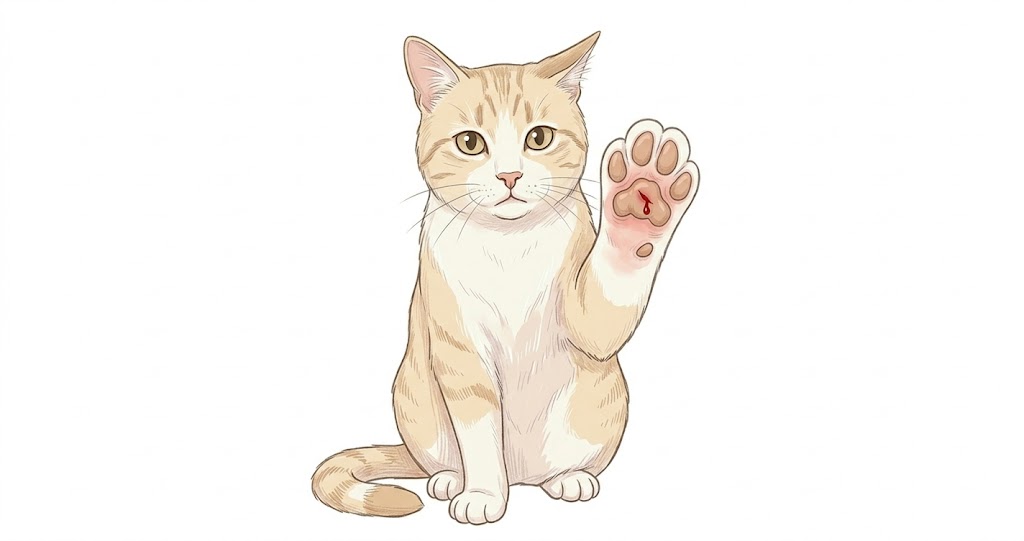
Hot Spots on Dogs: Causes, Treatment, Pictures & Home Remedies
Hot spots on dogs (acute moist dermatitis) — pictures, causes, home treatment steps, how long they last, whether Benadryl helps, and when to see the vet.
Published 2026-03-20 · Updated 2026-06-18
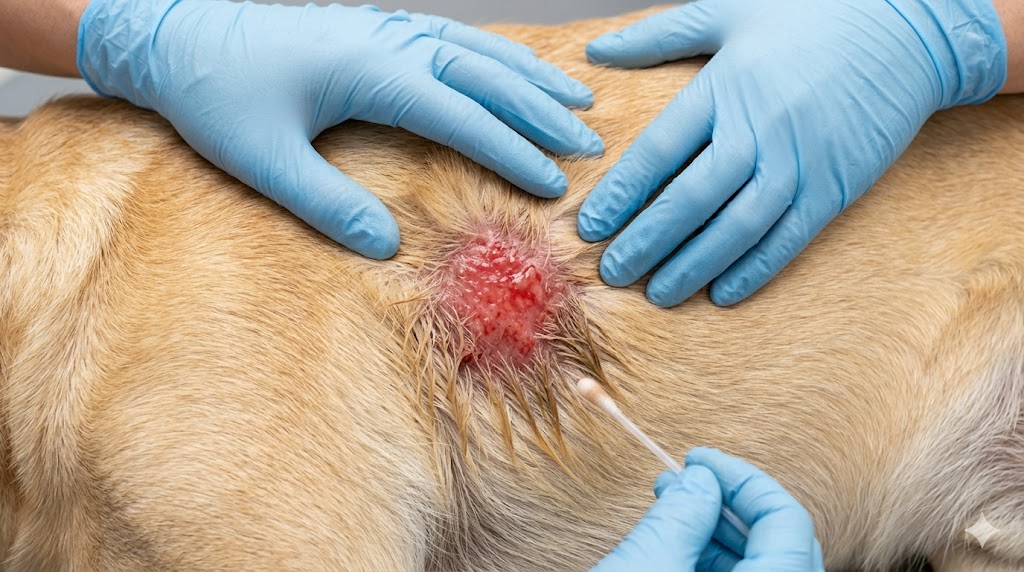
Spotted Something on Your Dog's Skin?
Upload a clear photo and get an instant AI health report. Detect hot spots, skin irritation, ringworm, and more.
You're petting your dog and suddenly discover a red, moist, angry-looking patch of skin that wasn't there yesterday. Welcome to the world of hot spots — one of the most common and frustrating skin problems dogs get. Hot spots can appear seemingly overnight, double in size within hours, and drive your dog crazy with itching. This guide covers what hot spots look like (with pictures), what causes them, how to tell them from ringworm and mange, the 5-step home treatment process, when home care is dangerous, the truth about Benadryl, and whether hot spots are contagious.
This article is for general educational purposes only. It is not a substitute for veterinary diagnosis or treatment. Hot spots can double in size in hours and may need same-day vet attention if large or rapidly spreading.
Spotted a red moist patch on your dog? Upload a photo for AI pattern check — hot spot vs ringworm vs mange.
Start Skin AnalysisWhat Does a Hot Spot Look Like?
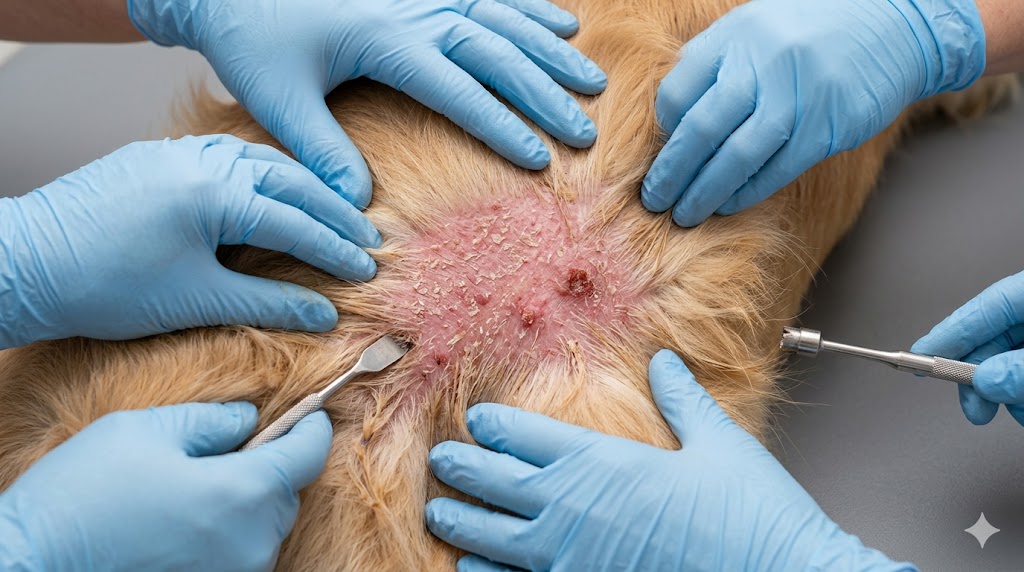
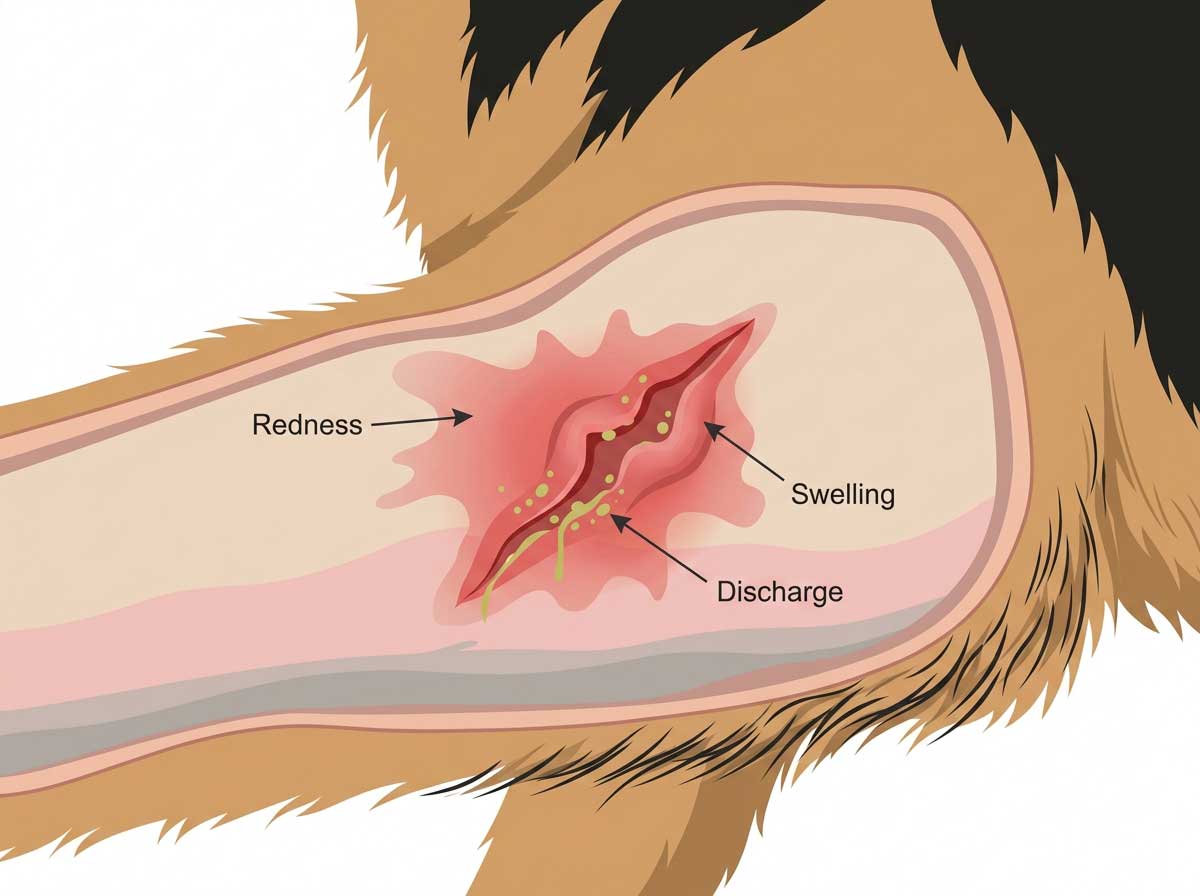
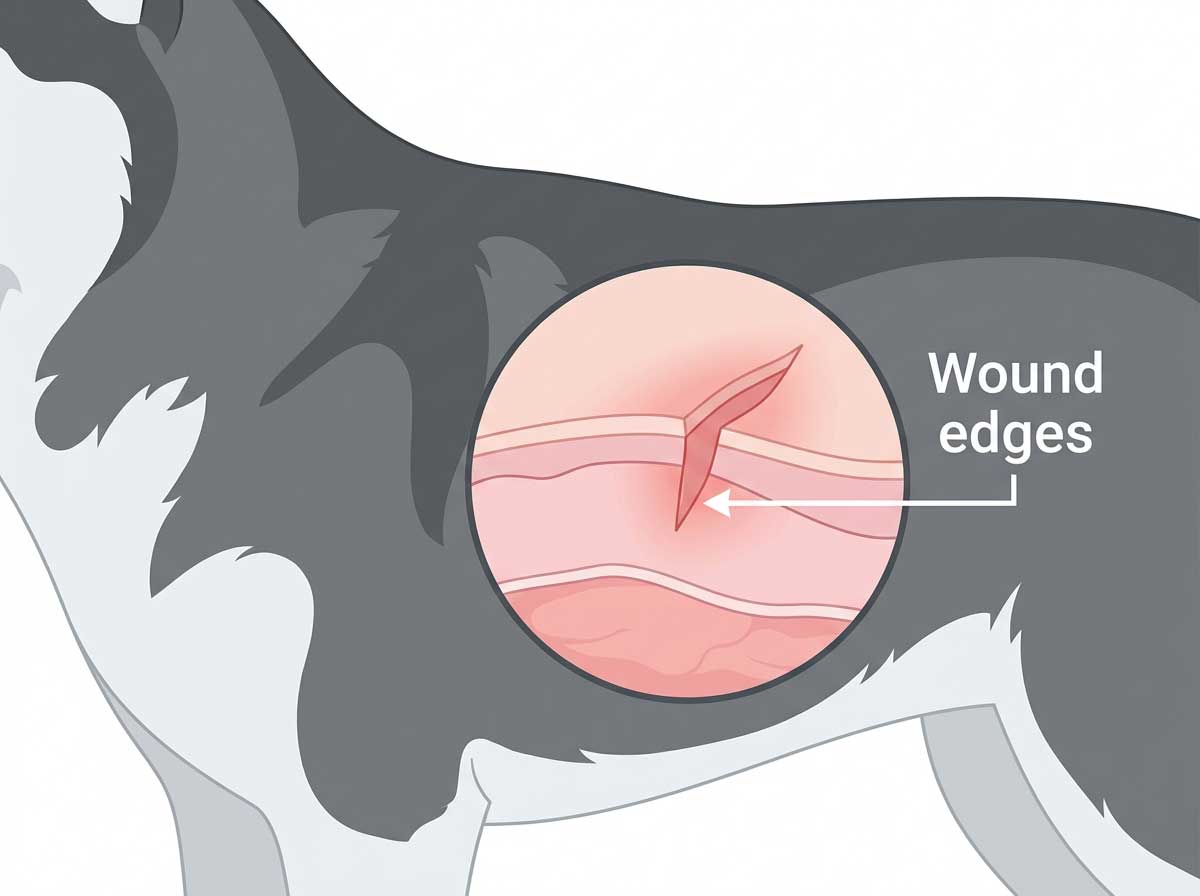
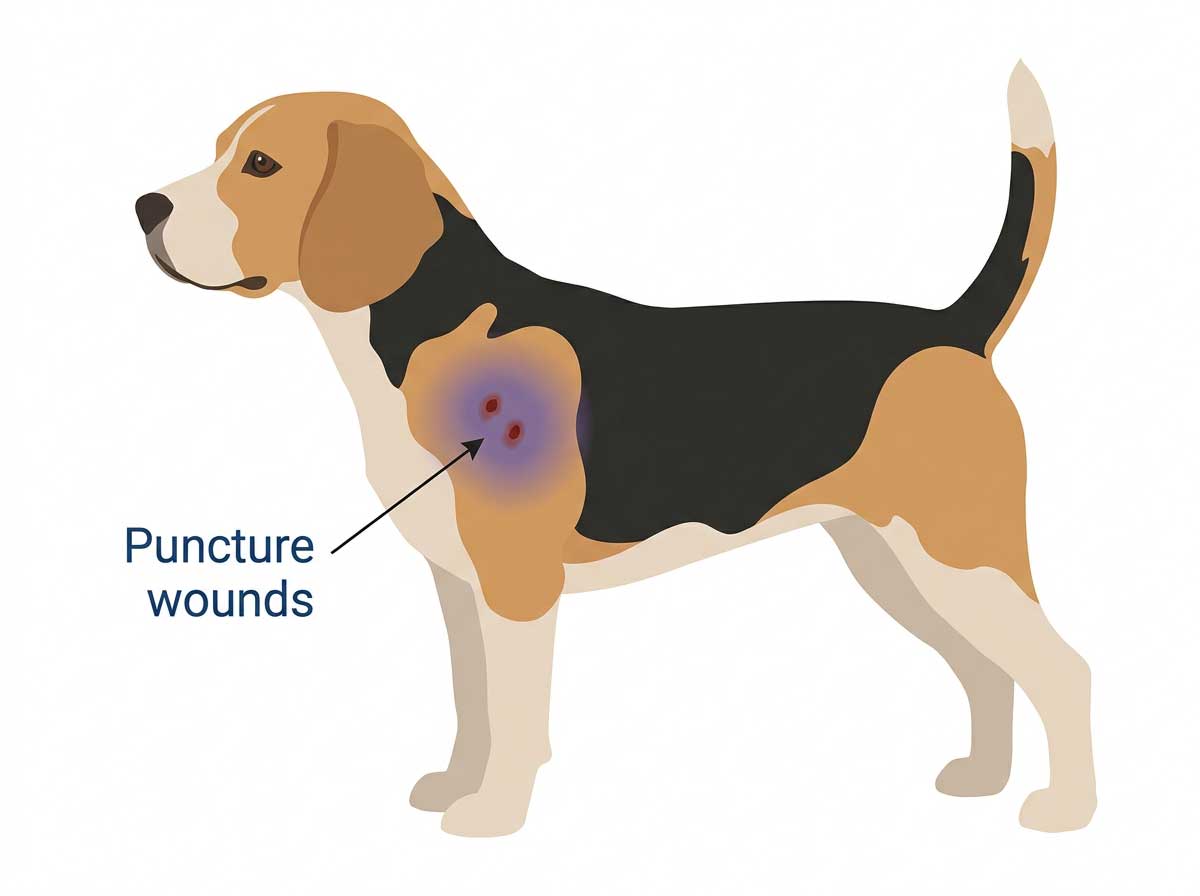
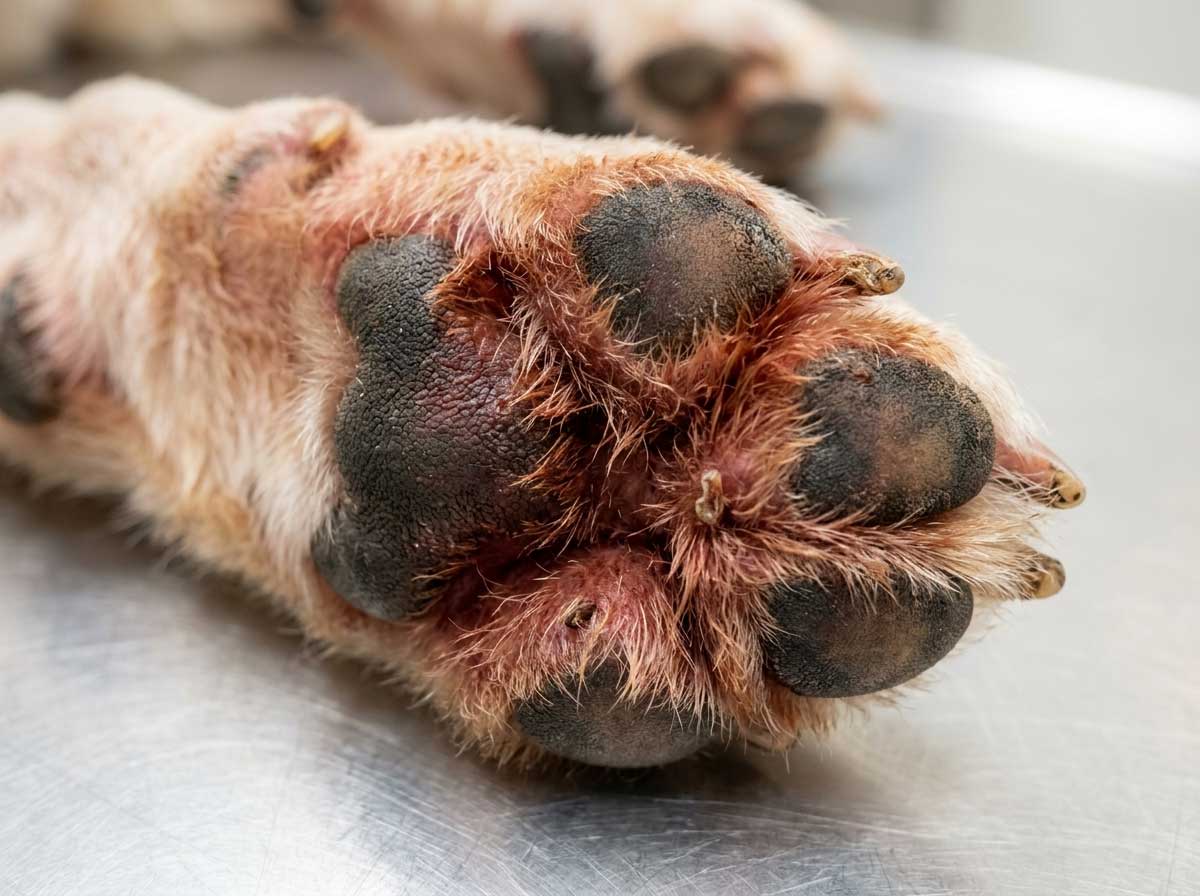
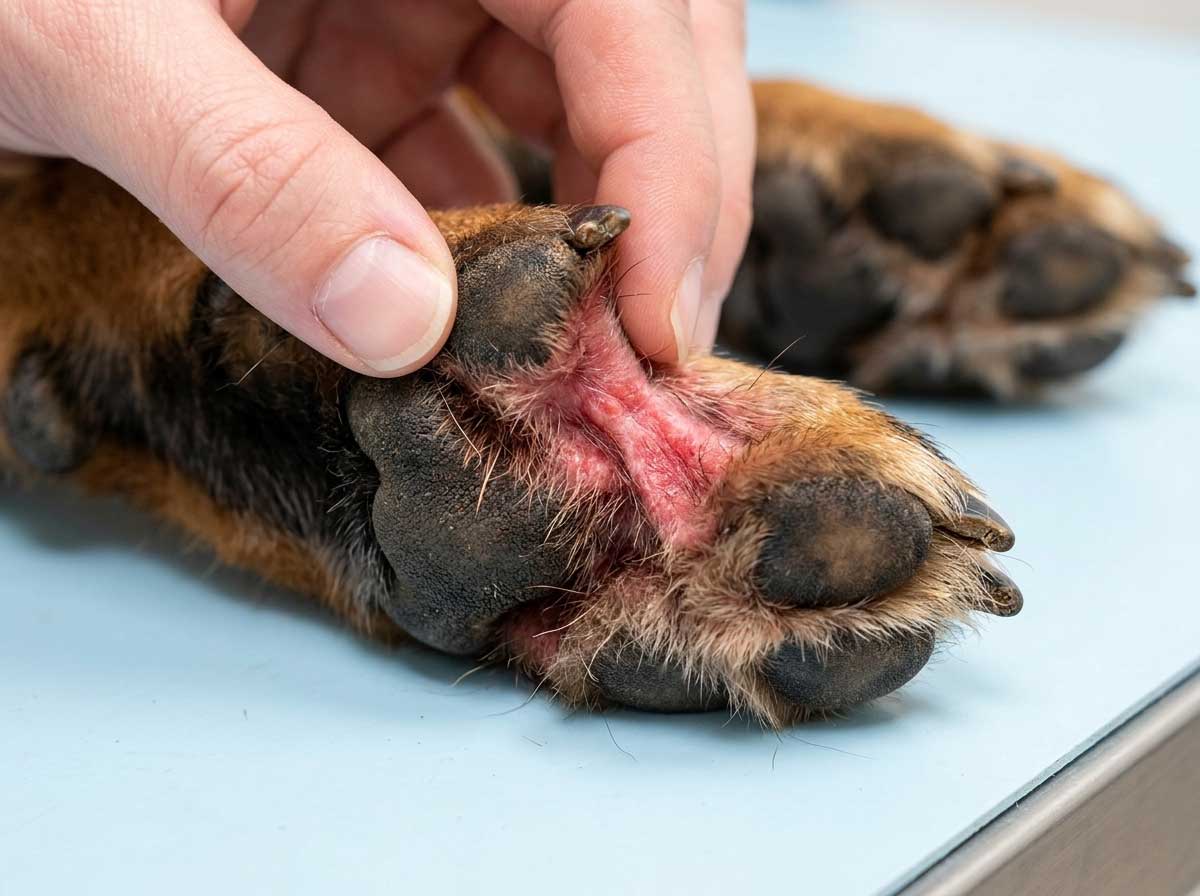
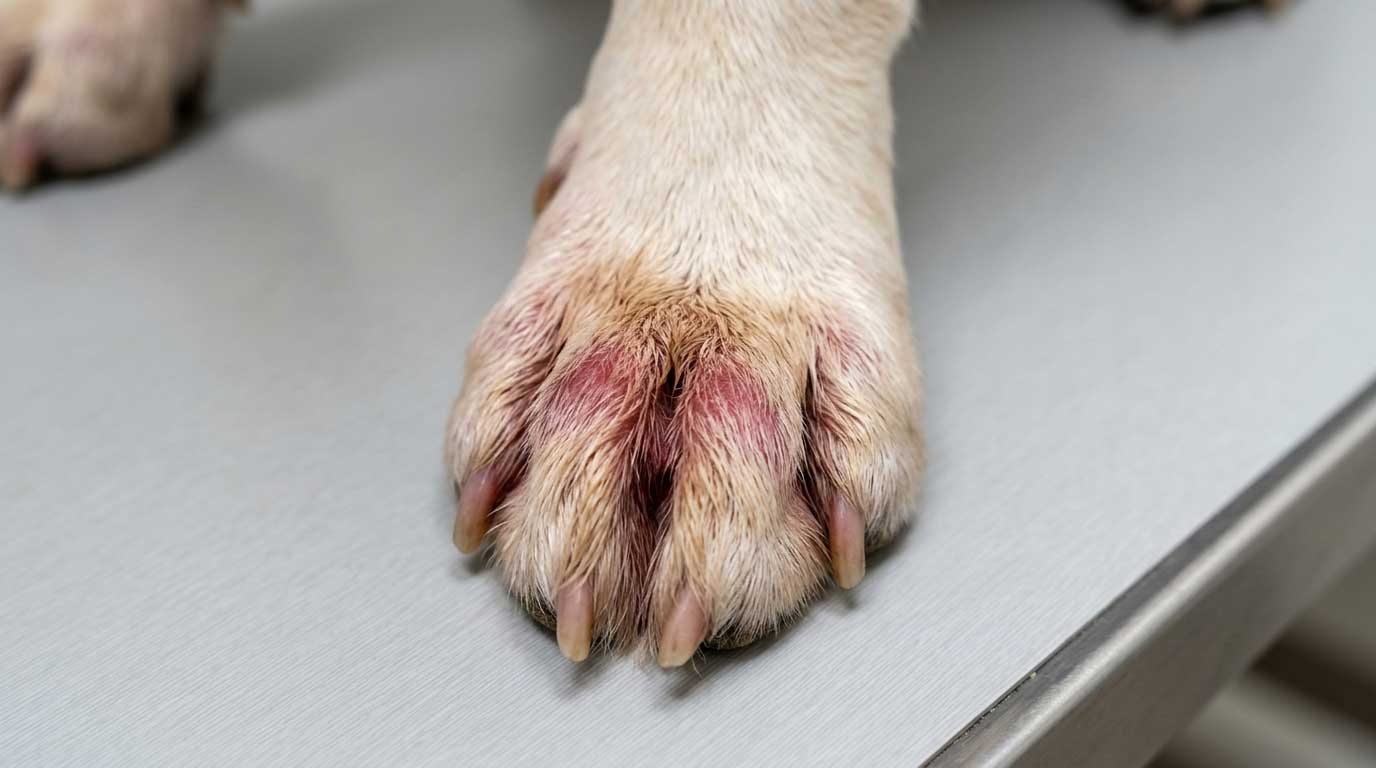
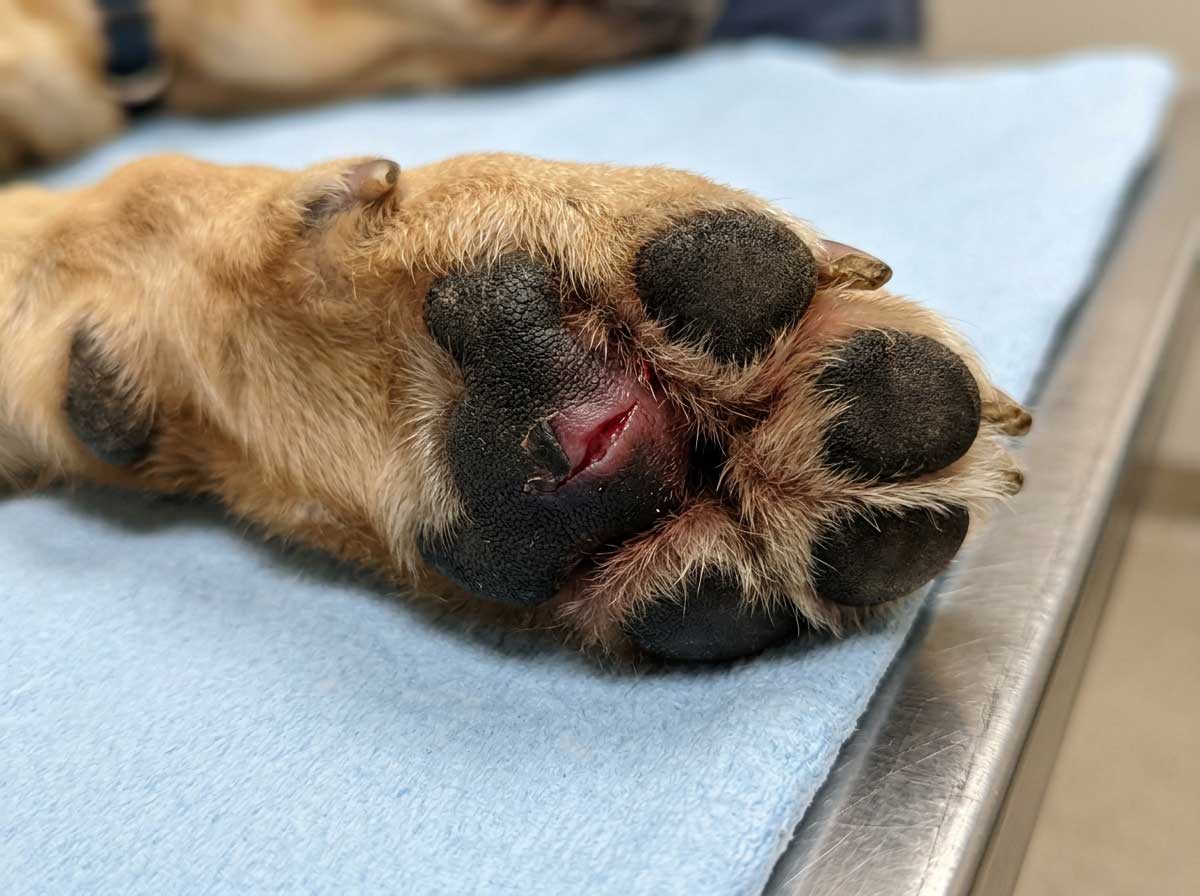
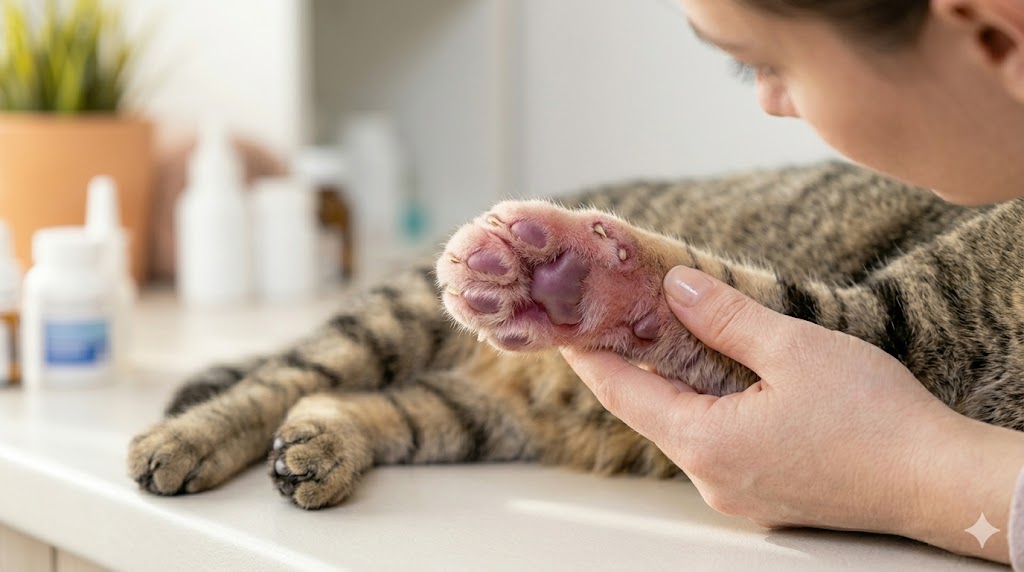
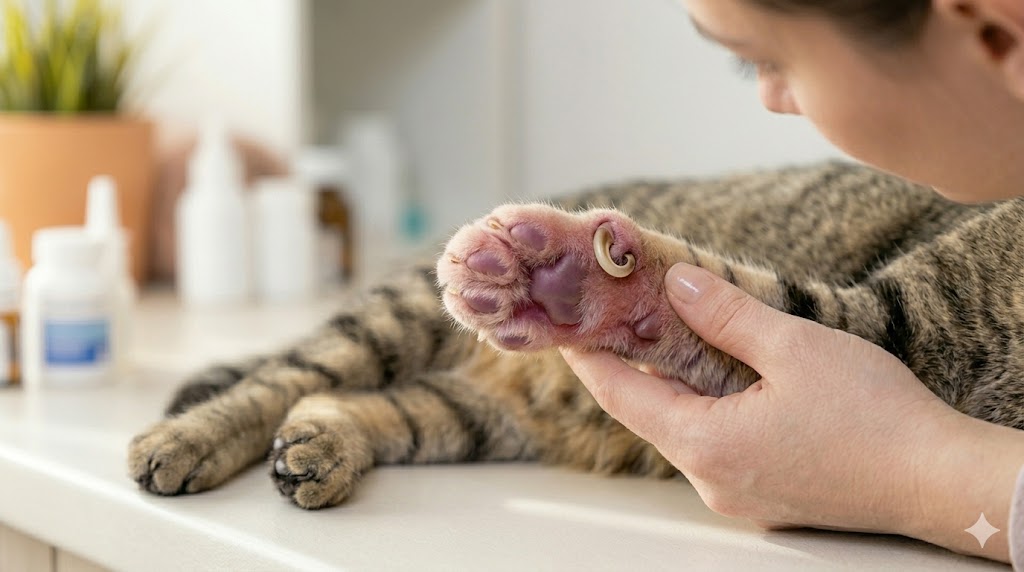
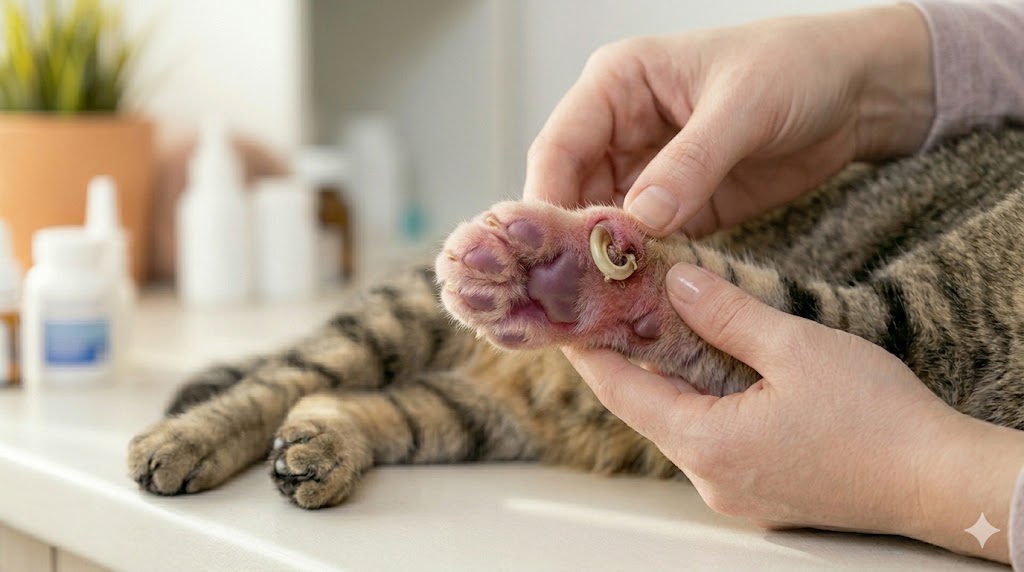
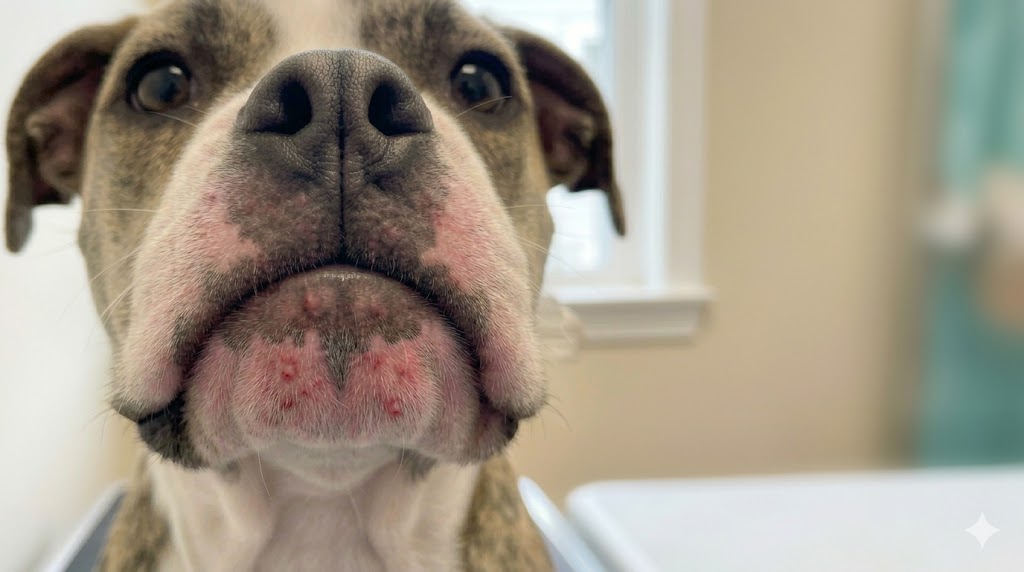
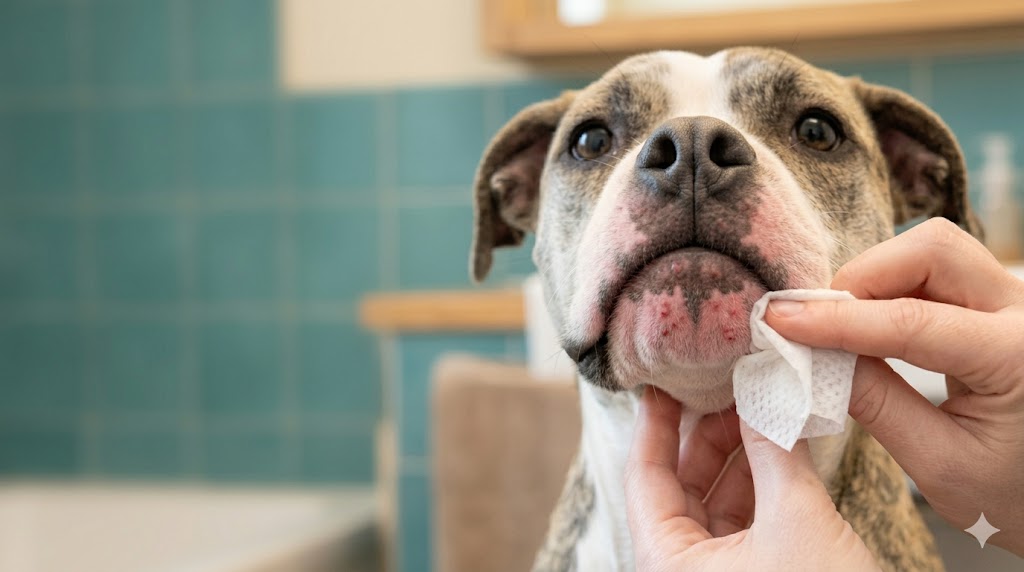
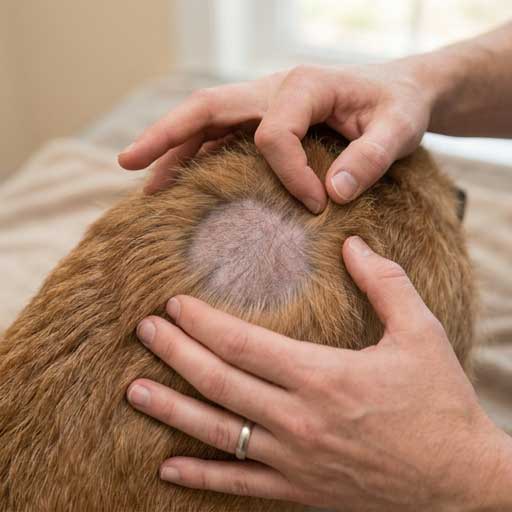
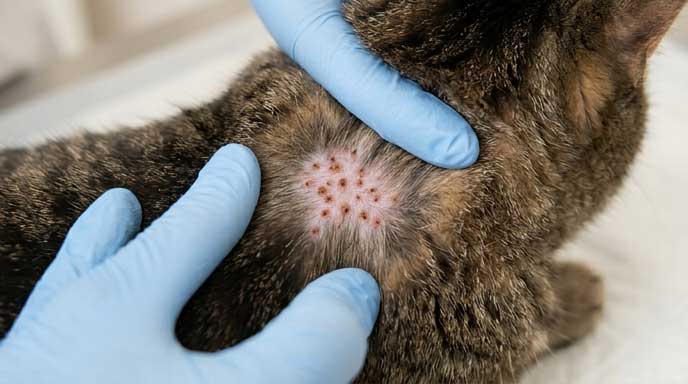
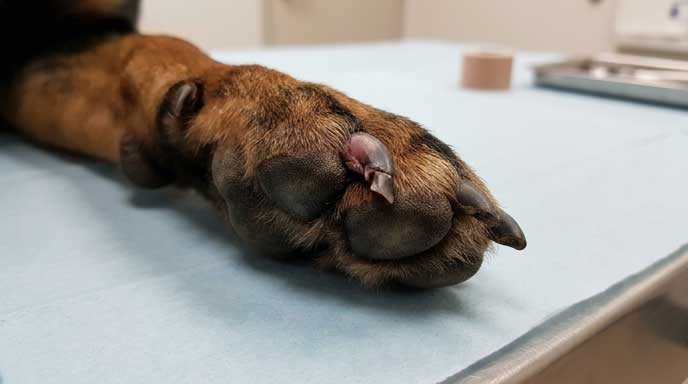
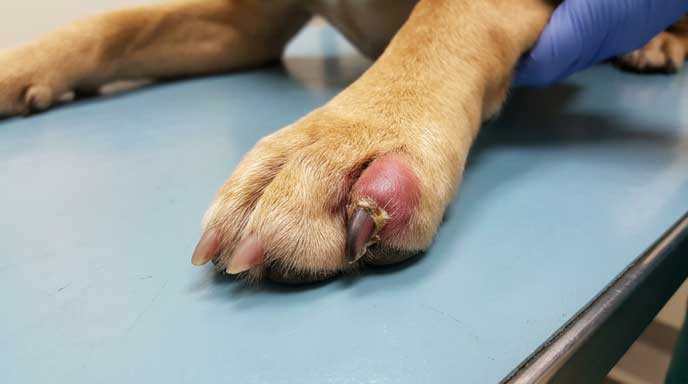
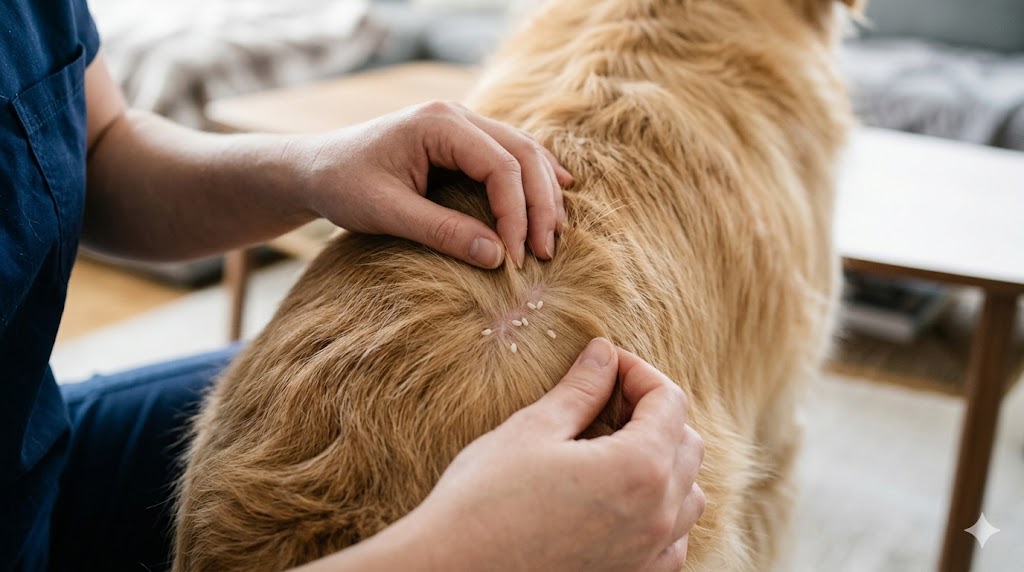
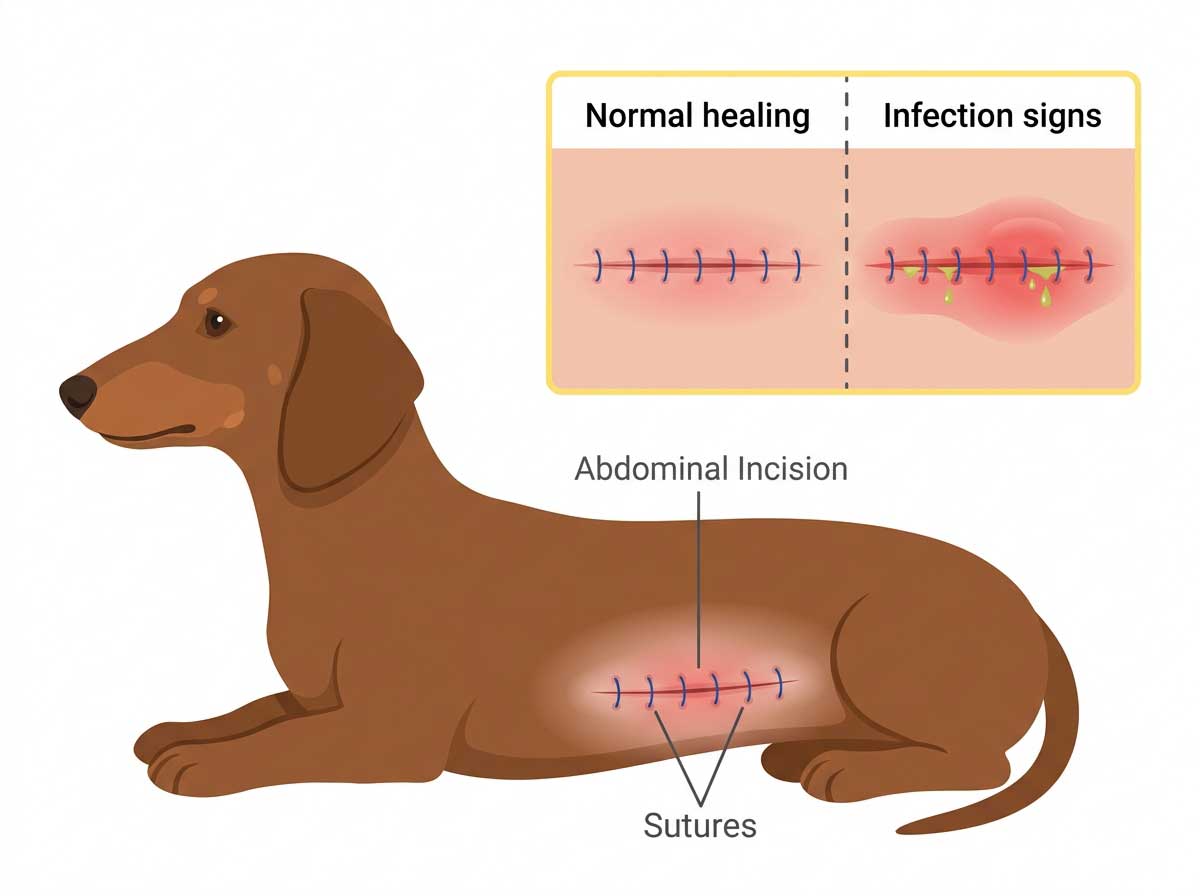
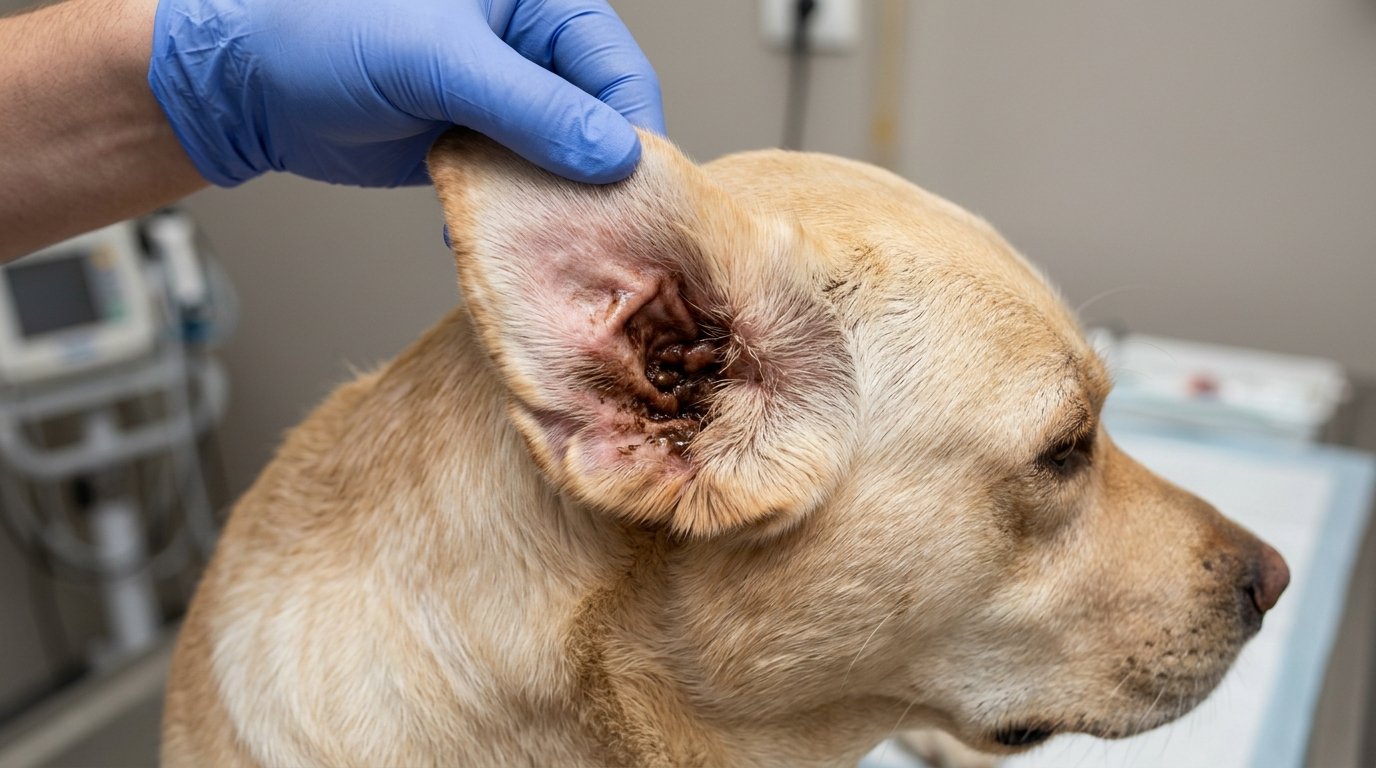
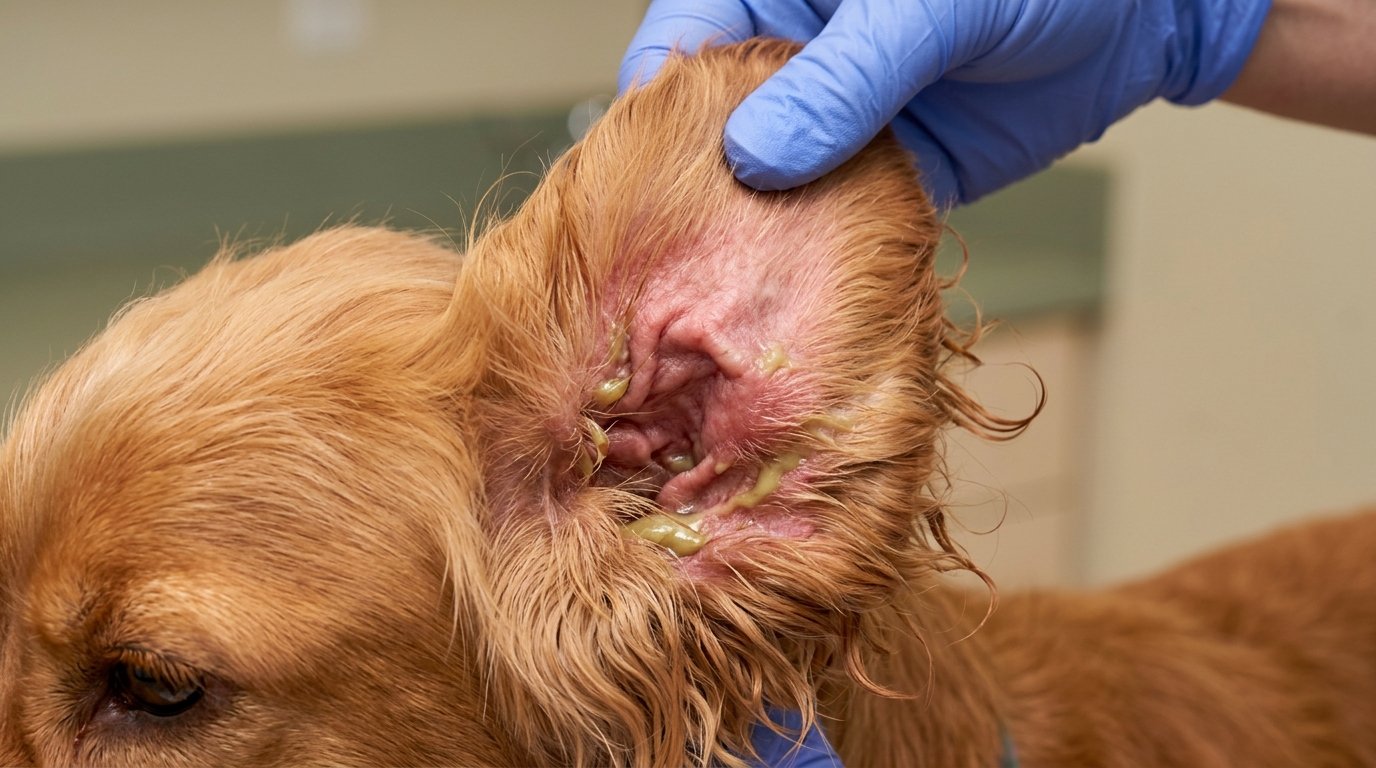
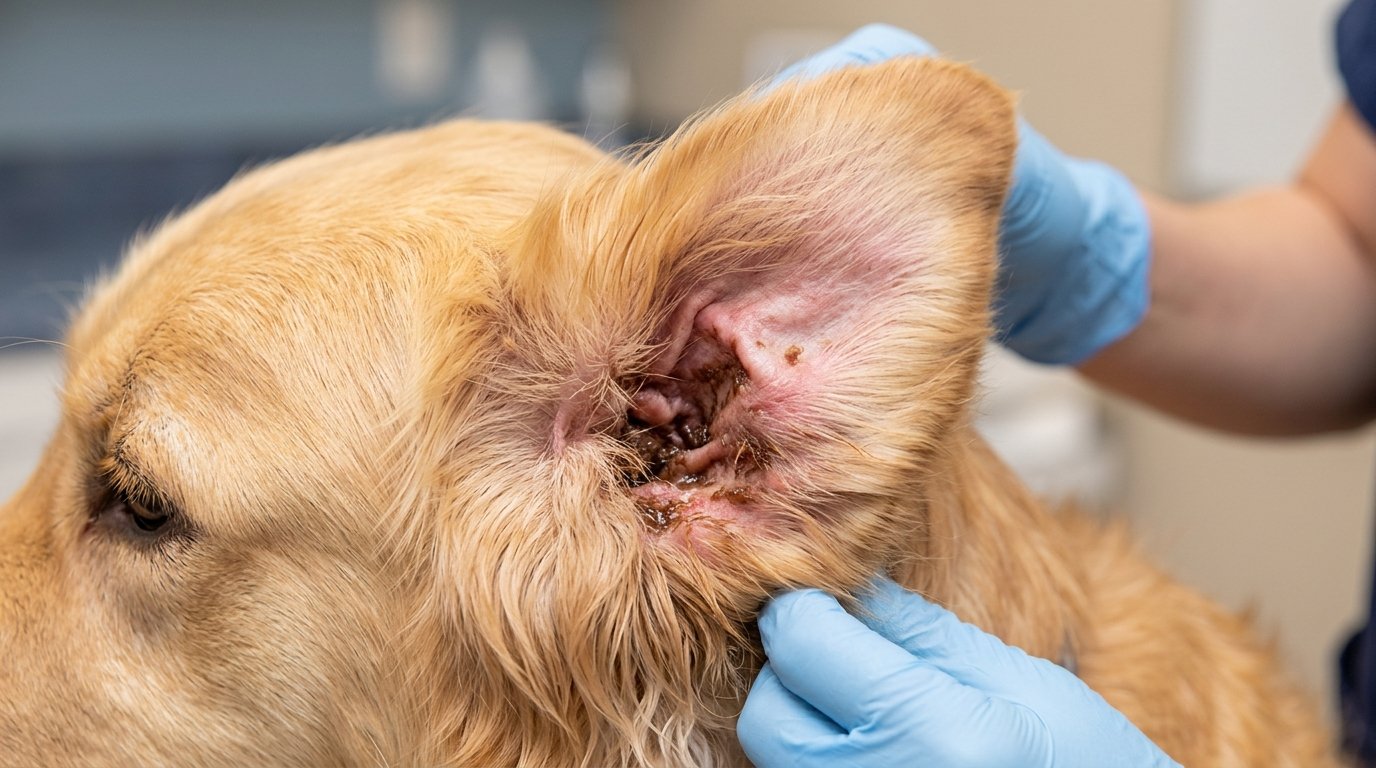
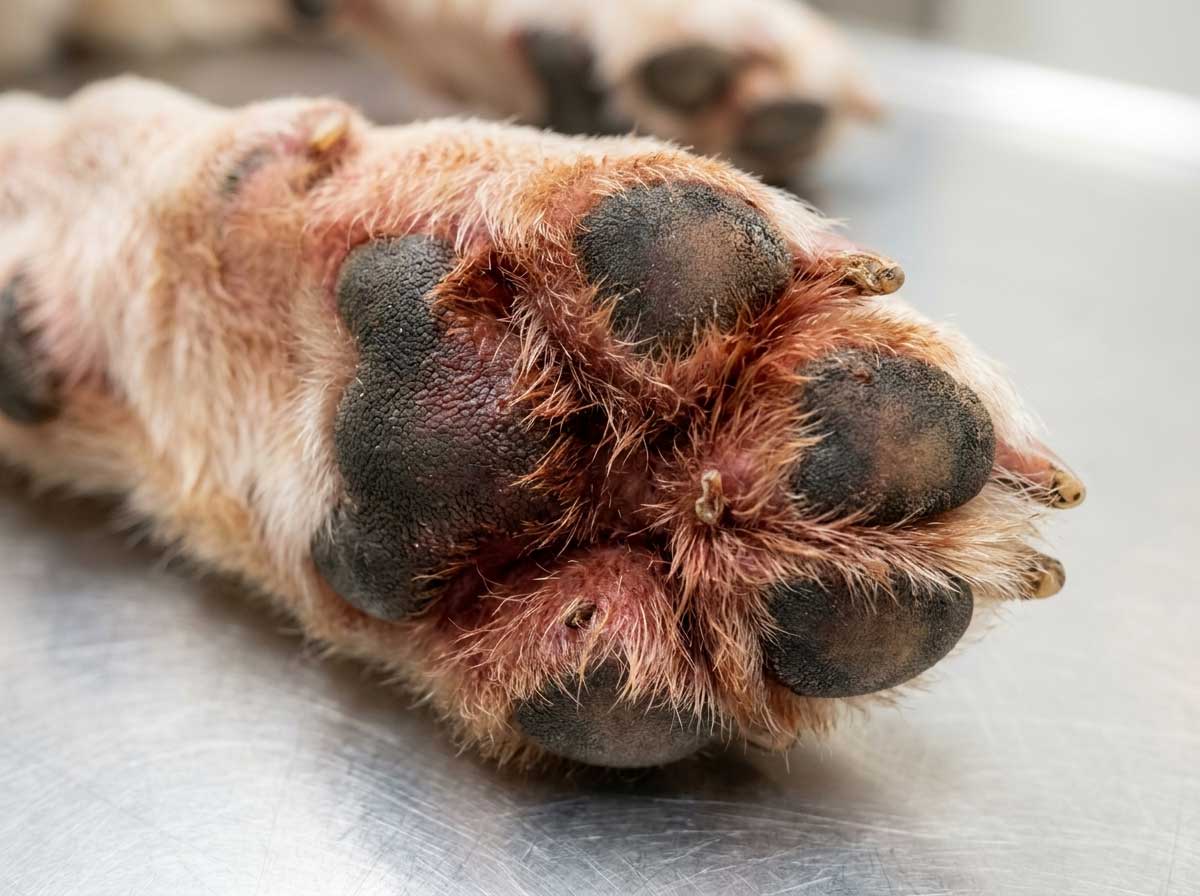
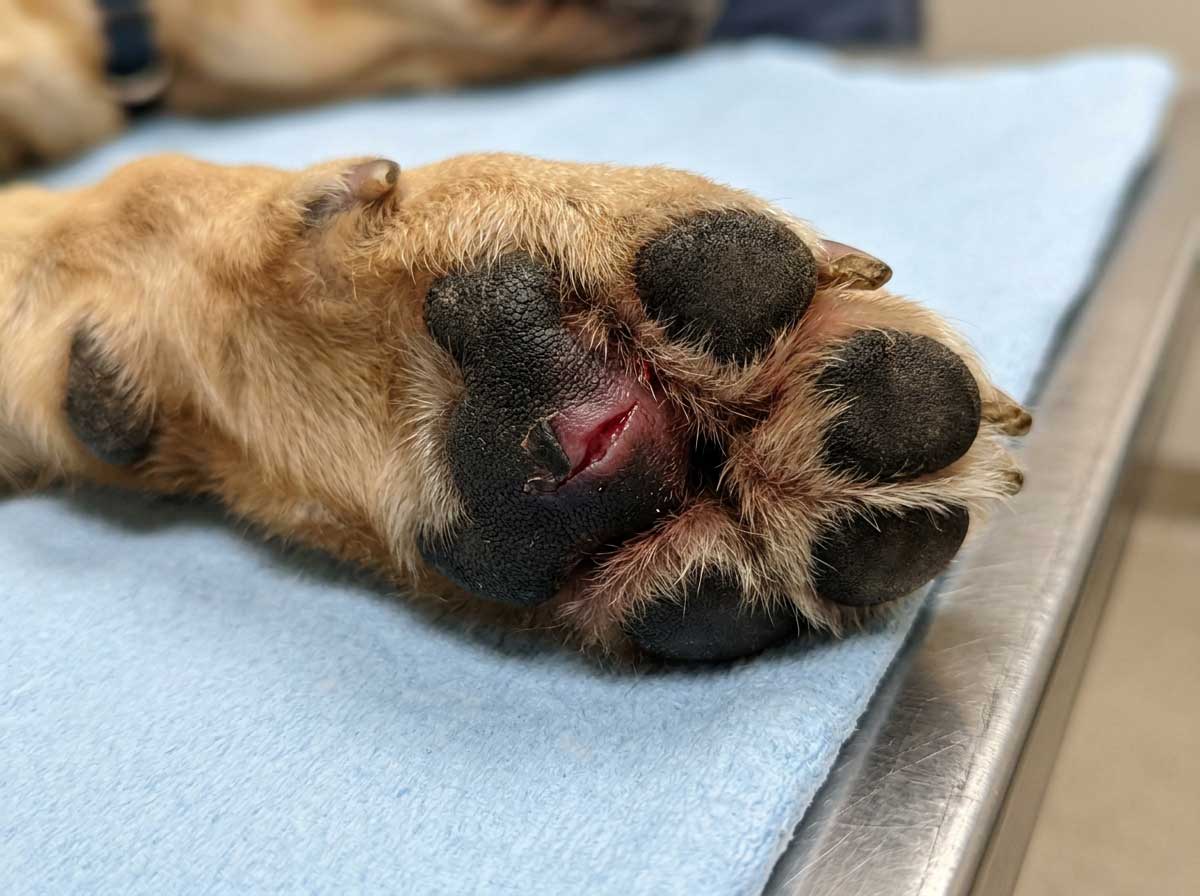
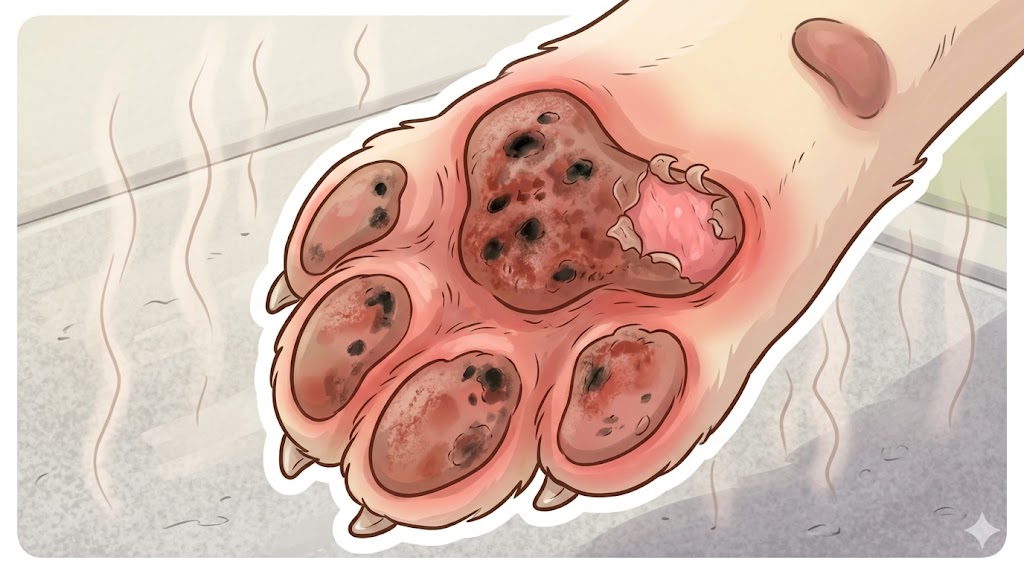
A hot spot (officially called "acute hot spot") is a patch of inflamed, infected skin. It usually looks like:
- ✓A red, raw, moist patch of skin — often oozing or weeping
- ✓Hair loss around the affected area
- ✓Crusty or matted fur stuck to the skin
- ✓A foul smell coming from the area
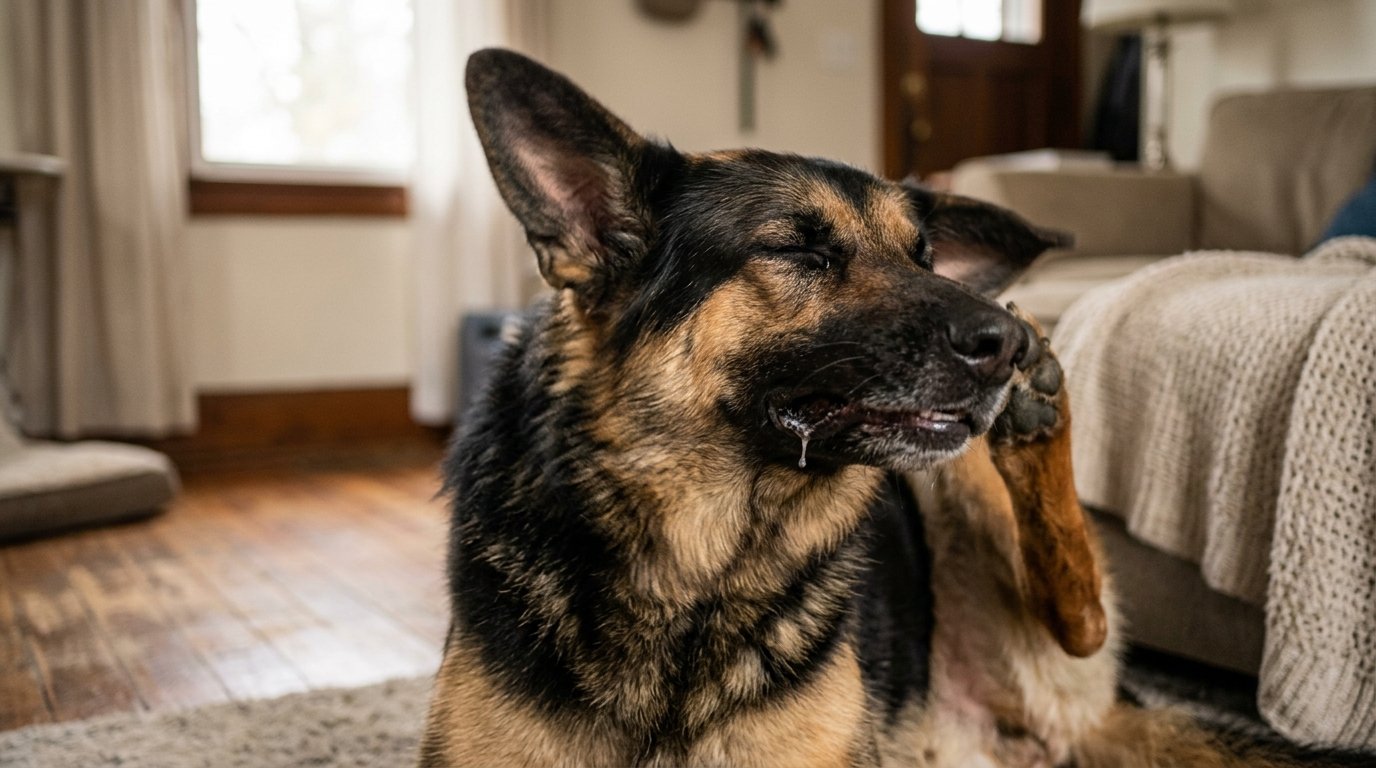
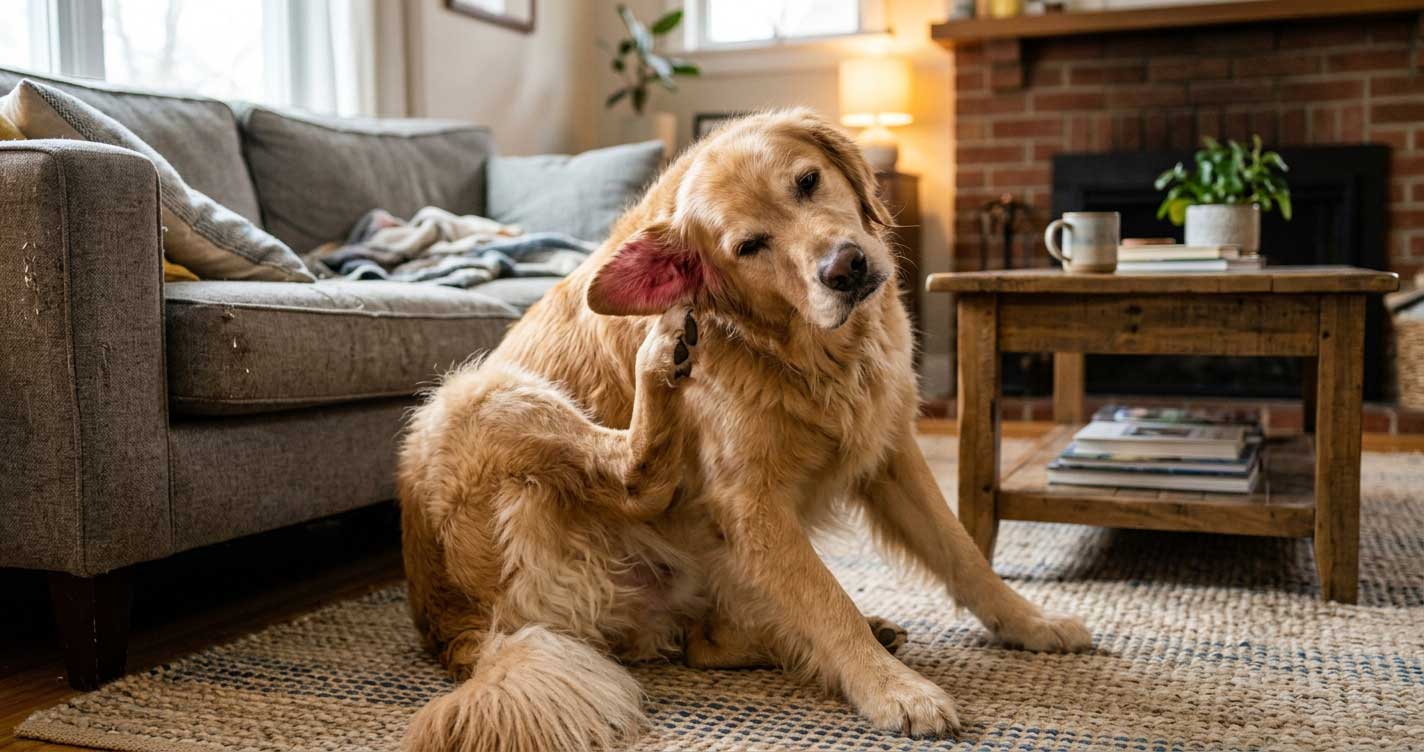
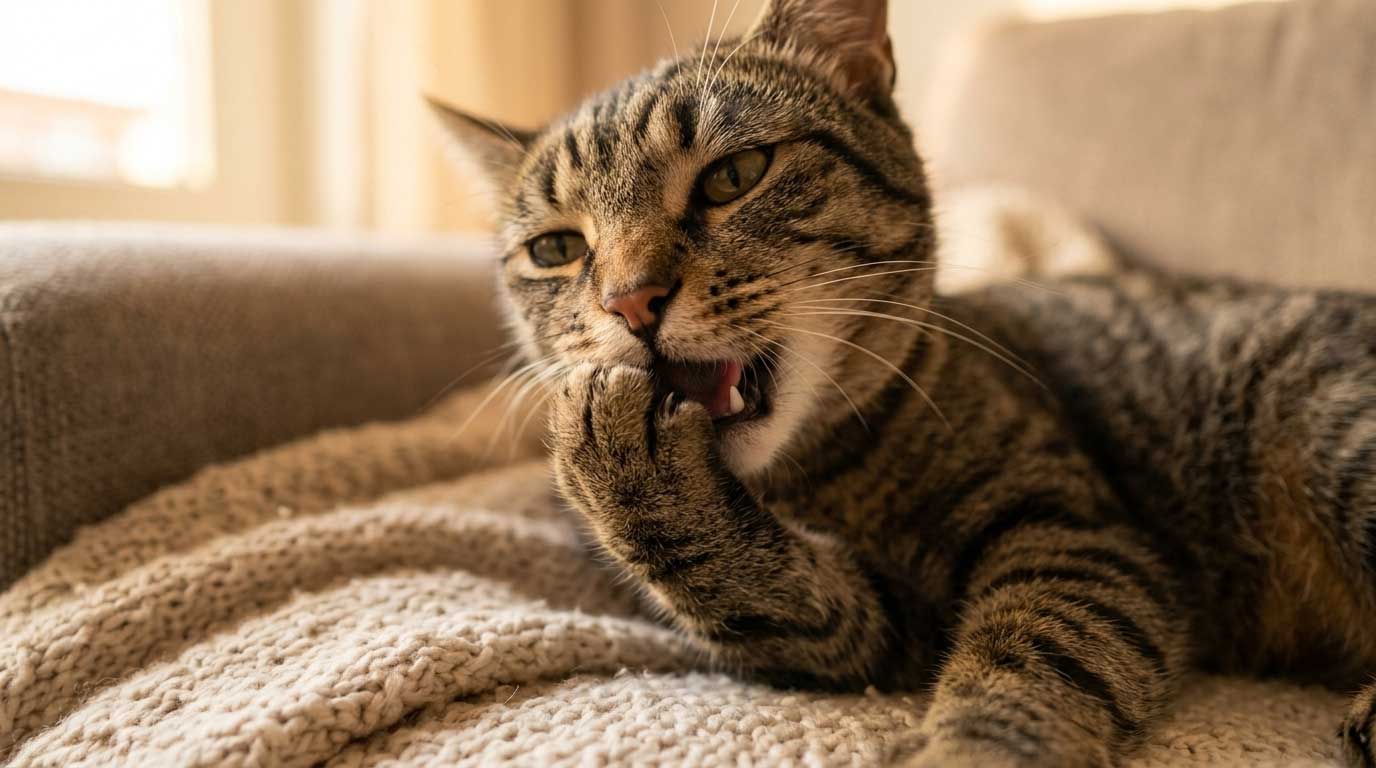
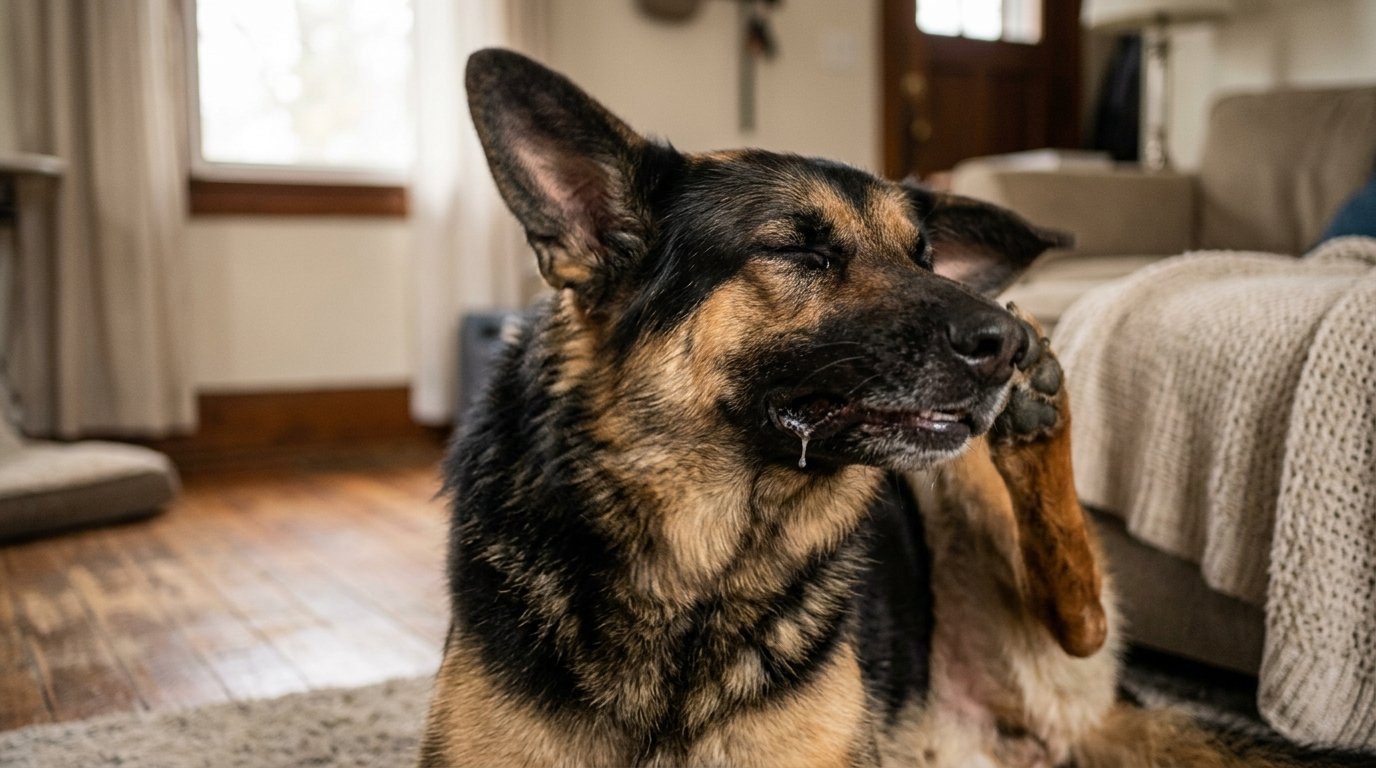
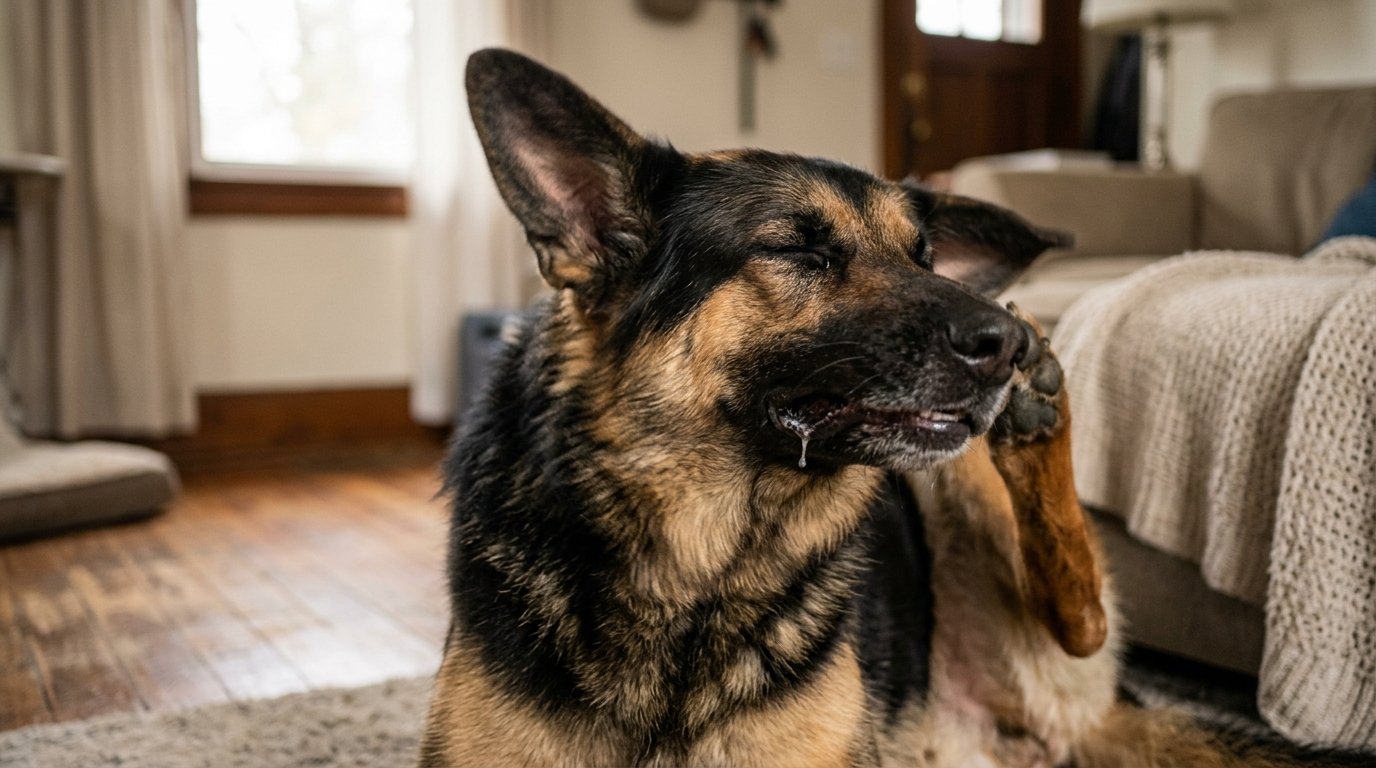
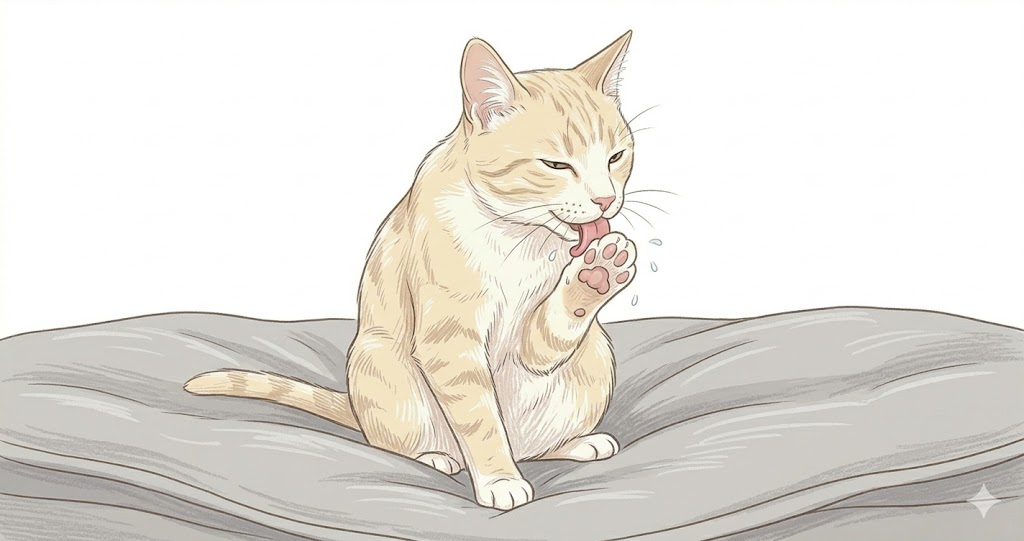
- ✓Your dog obsessively licking, scratching, or chewing at one spot
Hot spots can range from a small coin-sized area to a large patch that covers a significant portion of your dog's body. They grow fast — what starts as a small irritated area in the morning can be the size of your palm by evening.
What Causes Hot Spots on Dogs?
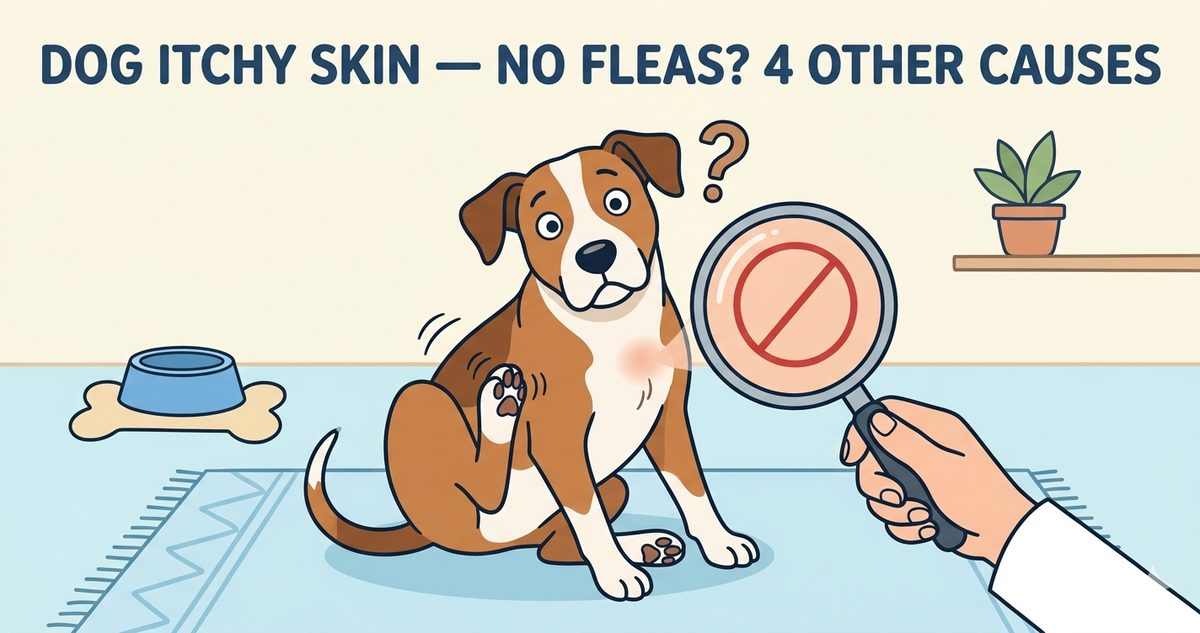
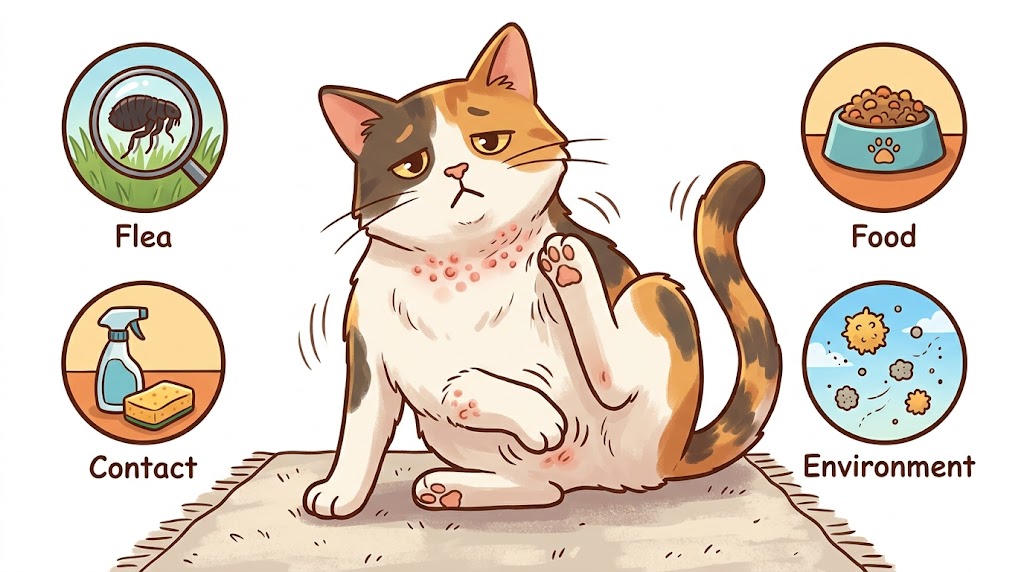
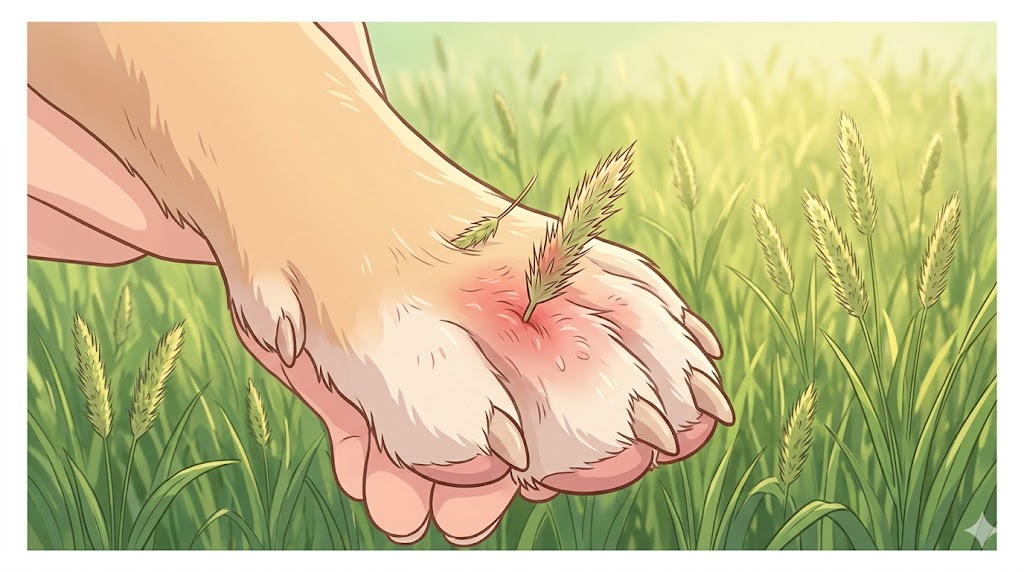
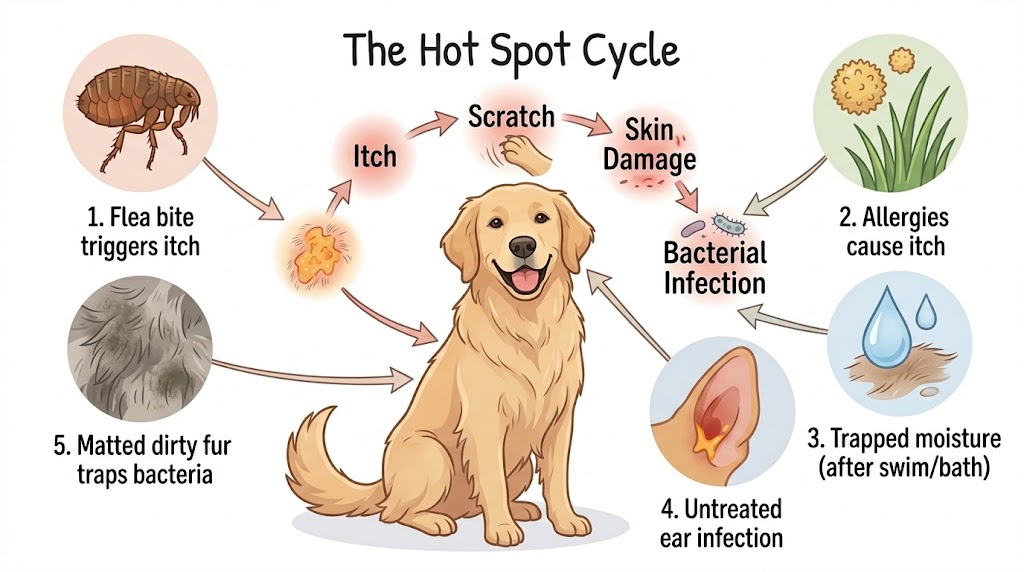
Hot spots almost always start with something that makes your dog itch or irritates the skin. Your dog then licks, scratches, or chews at the area, damaging the skin and creating the perfect environment for bacteria. Common triggers include:
- ✓Flea bites — even a single flea can trigger a hot spot in sensitive dogs
- ✓Allergies — food allergies, environmental allergens (pollen, mold), or contact allergies
- ✓Moisture trapped in the fur — after swimming, bathing, or getting rained on
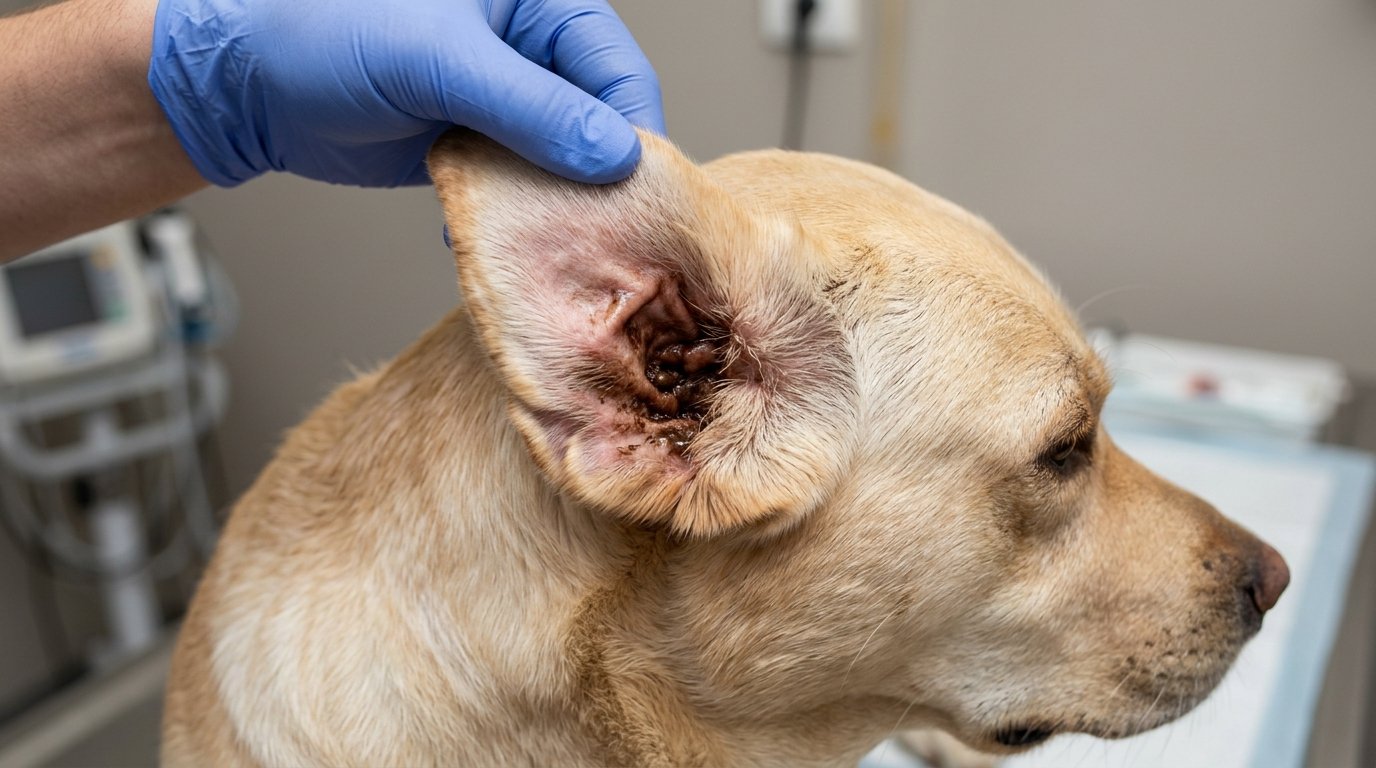
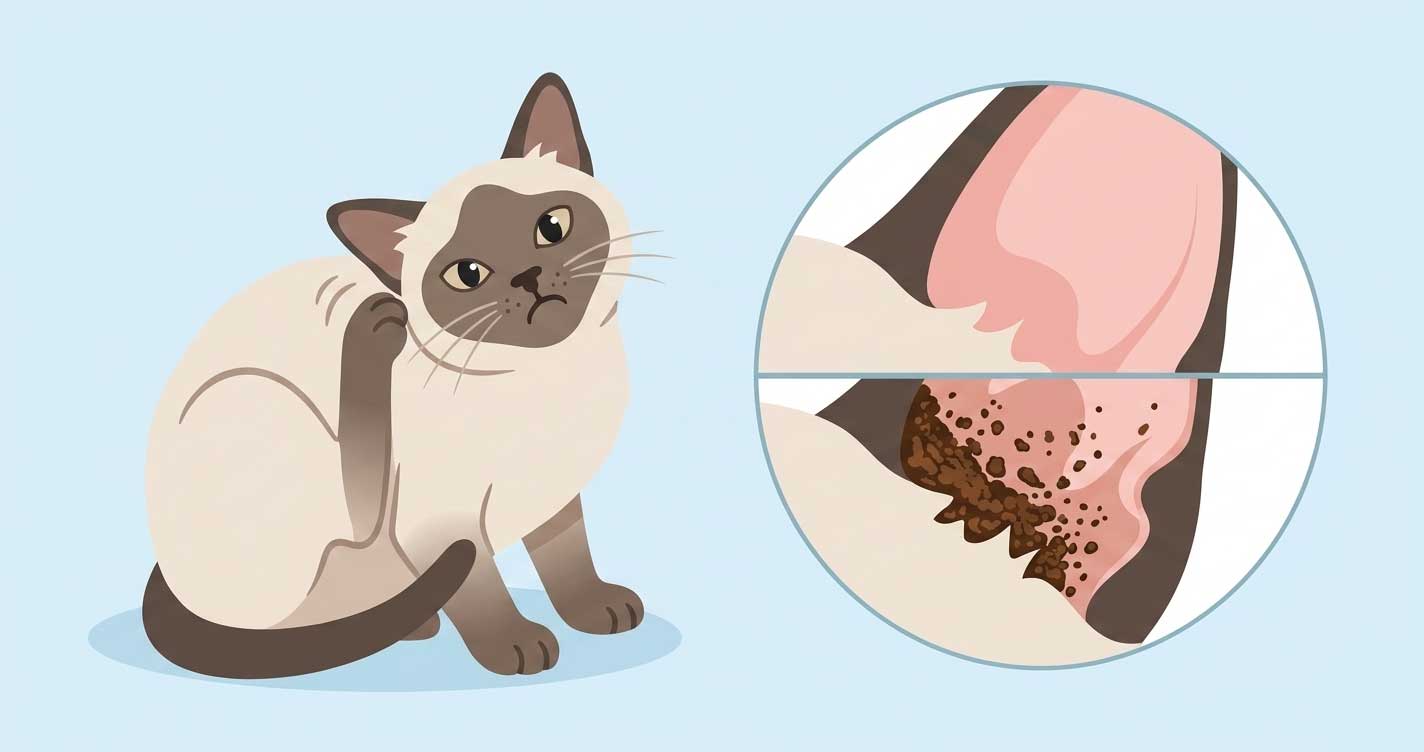
- ✓Ear infections — dogs scratch at their ears and create hot spots on the neck and face
- ✓Matted or dirty fur — traps moisture and bacteria against the skin
- ✓Insect bites or stings
- ✓Stress or boredom — some dogs develop compulsive licking habits
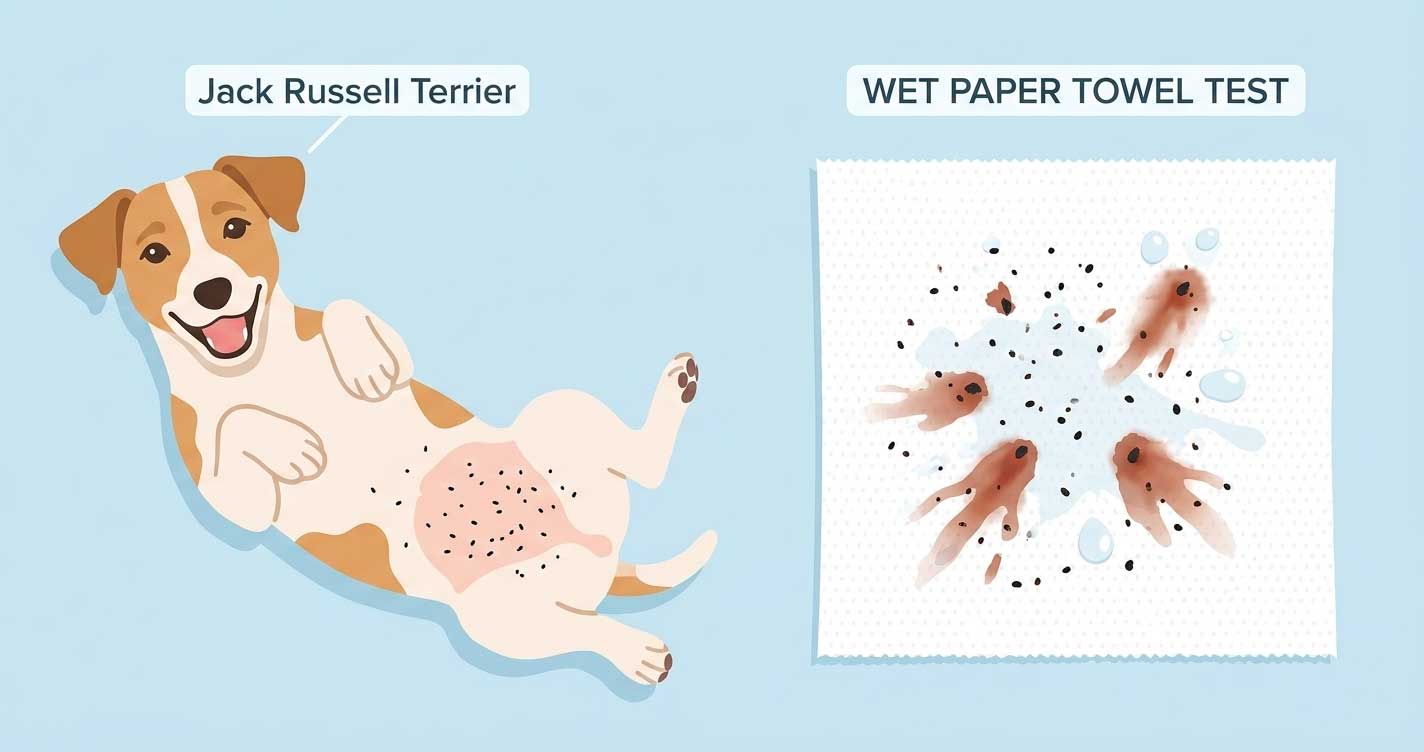
- ✓Underlying skin conditions — mange, skin irritation, or yeast infections
Certain breeds are more prone to hot spots, especially those with thick, dense coats. Golden Retrievers, Labradors, German Shepherds, Newfoundlands and Saint Bernards are frequent sufferers, particularly in warm and humid weather.
Hot Spot vs. Other Skin Conditions
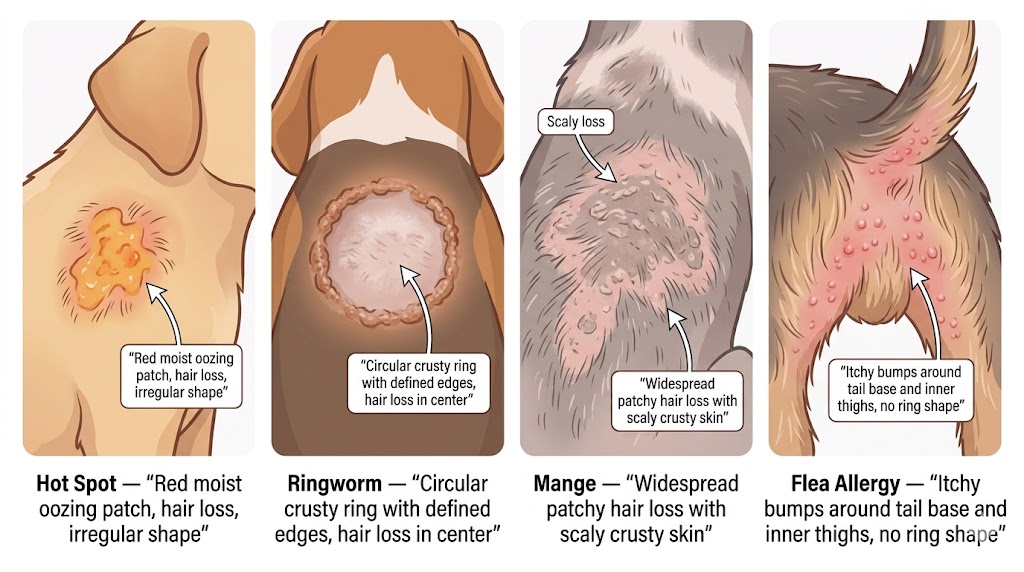
Hot spots can look similar to other skin problems. Here's how to tell them apart:
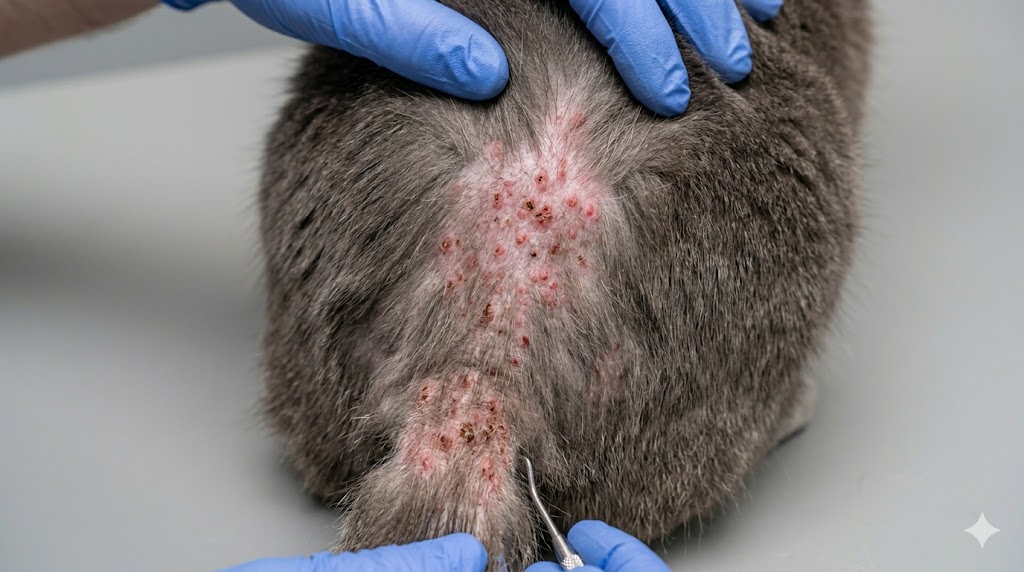
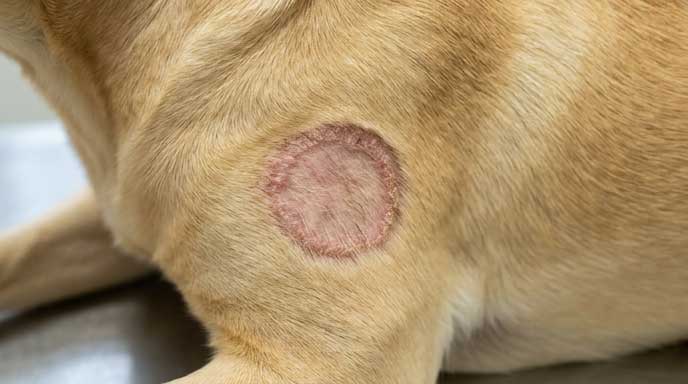
- ✓Hot spots vs. ringworm — ringworm creates circular, crusty patches with a defined ring shape. Hot spots are more irregular and moist.
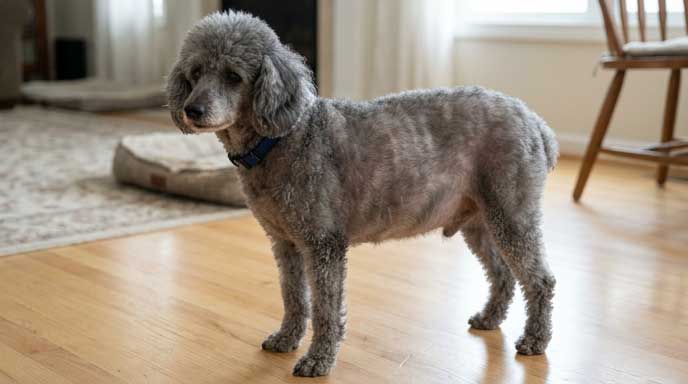
- ✓Hot spots vs. mange — mange causes widespread hair loss and intense itching. Hot spots are usually localized to one area.
- ✓Hot spots vs. flea allergy skin reaction — flea allergies cause itching mainly around the tail base and inner thighs, while hot spots can appear anywhere.
Not sure what you're looking at? Upload a photo to our AI skin concerns photo analysis tool — it can help distinguish between hot spots, skin irritation, ringworm, and other common skin conditions.
Hot spot vs ringworm vs mange? Upload a photo for AI comparison against all 4 visual patterns.
Start Skin AnalysisHow to Treat Hot Spots at Home
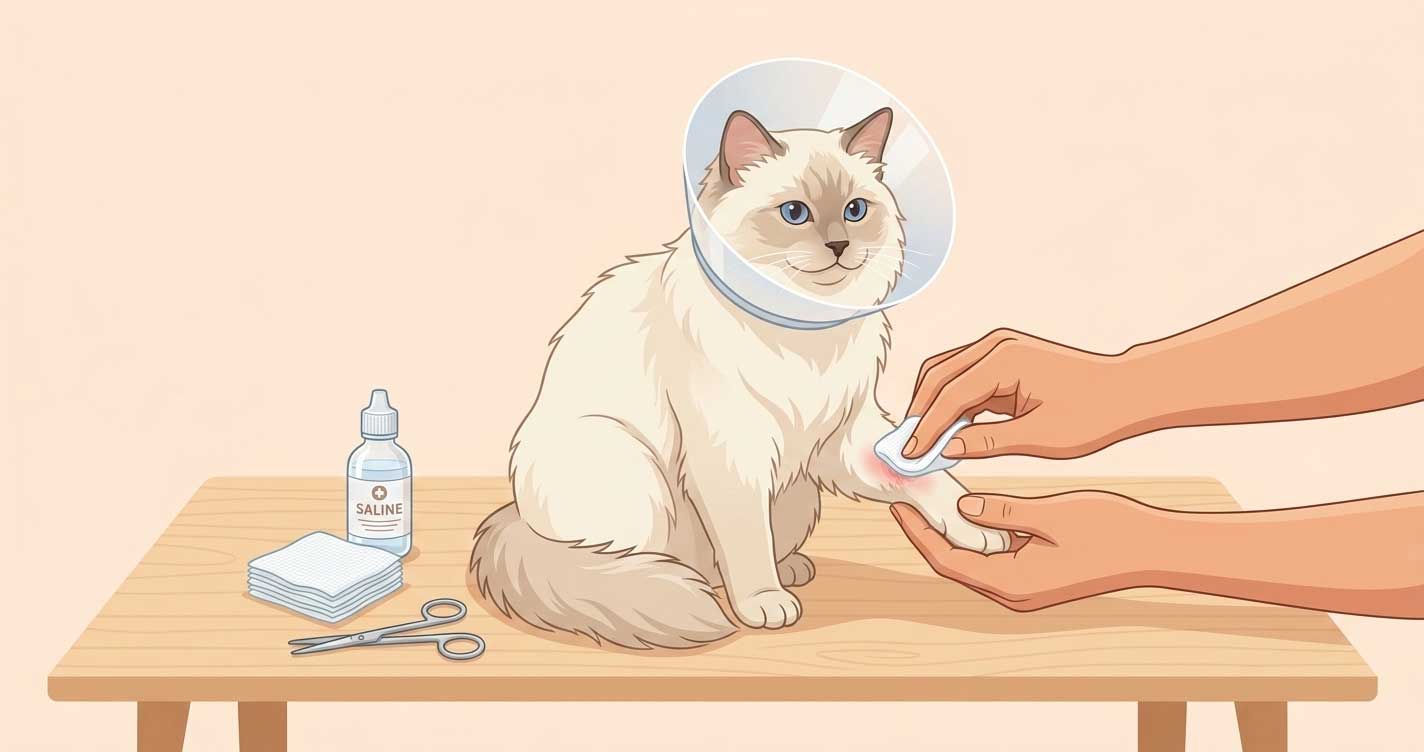
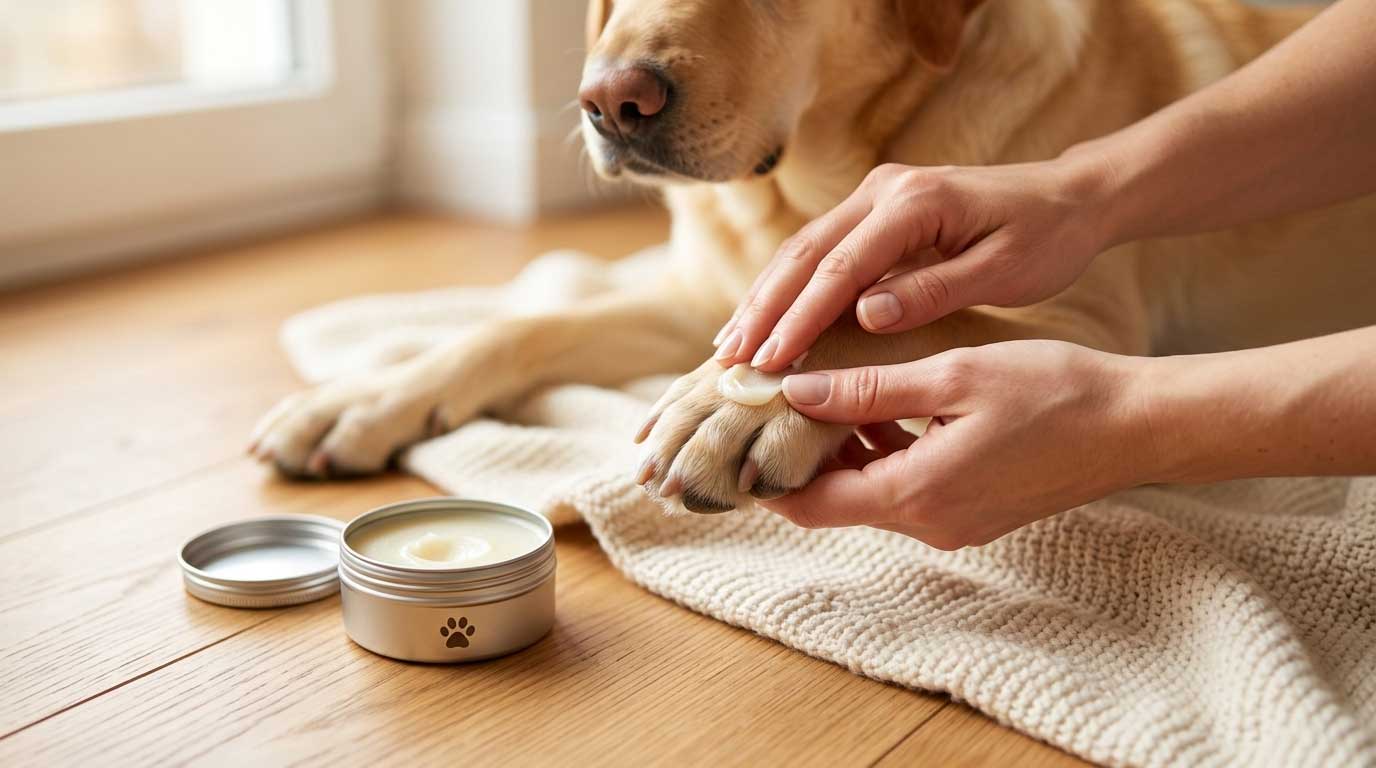
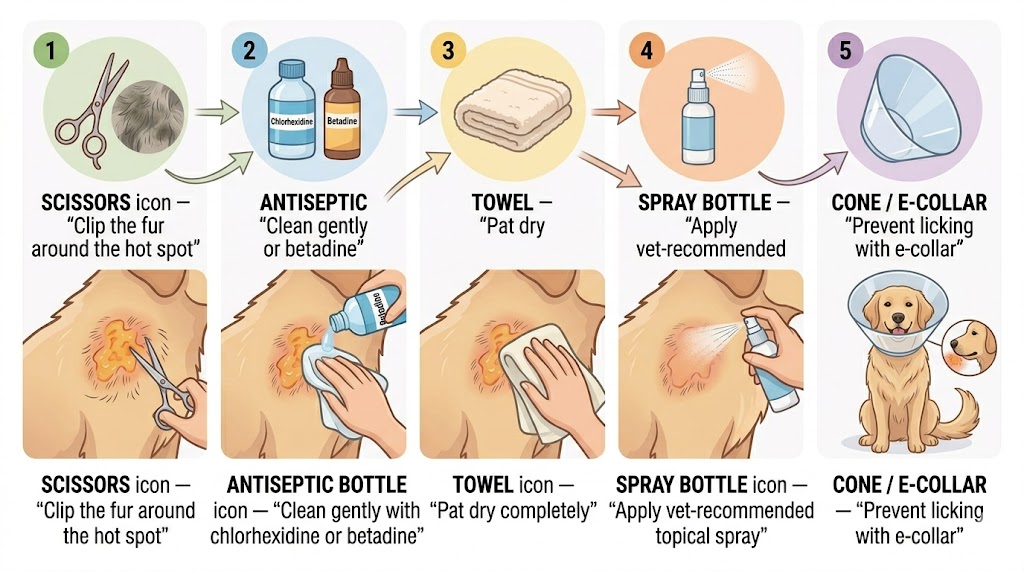
Mild hot spots can sometimes be managed at home. Here's a step-by-step approach:
- ✓1. Carefully clip the fur around the hot spot to expose it to air — this is essential for healing
- ✓2. Clean the area gently with a mild antiseptic (diluted vet-recommended antiseptic or betadine)
- ✓3. Pat dry completely — moisture makes hot spots worse
- ✓4. Apply a vet-recommended topical spray or cream
- ✓5. Prevent your dog from licking the area — use an e-collar (cone of shame)
- ✓6. Keep the area clean and dry — check it twice daily
Important: do NOT apply hydrogen peroxide, alcohol, or tea tree oil directly on the hot spot. These can further irritate the skin and delay healing.
When to See a Vet for Hot Spots
Home treatment works for mild cases, but you should see your vet if:
- ✓The hot spot is larger than a golf ball or spreading despite treatment
- ✓Your dog is in significant pain or won't let you touch the area
- ✓The area has a strong, foul odor (indicating deep infection)
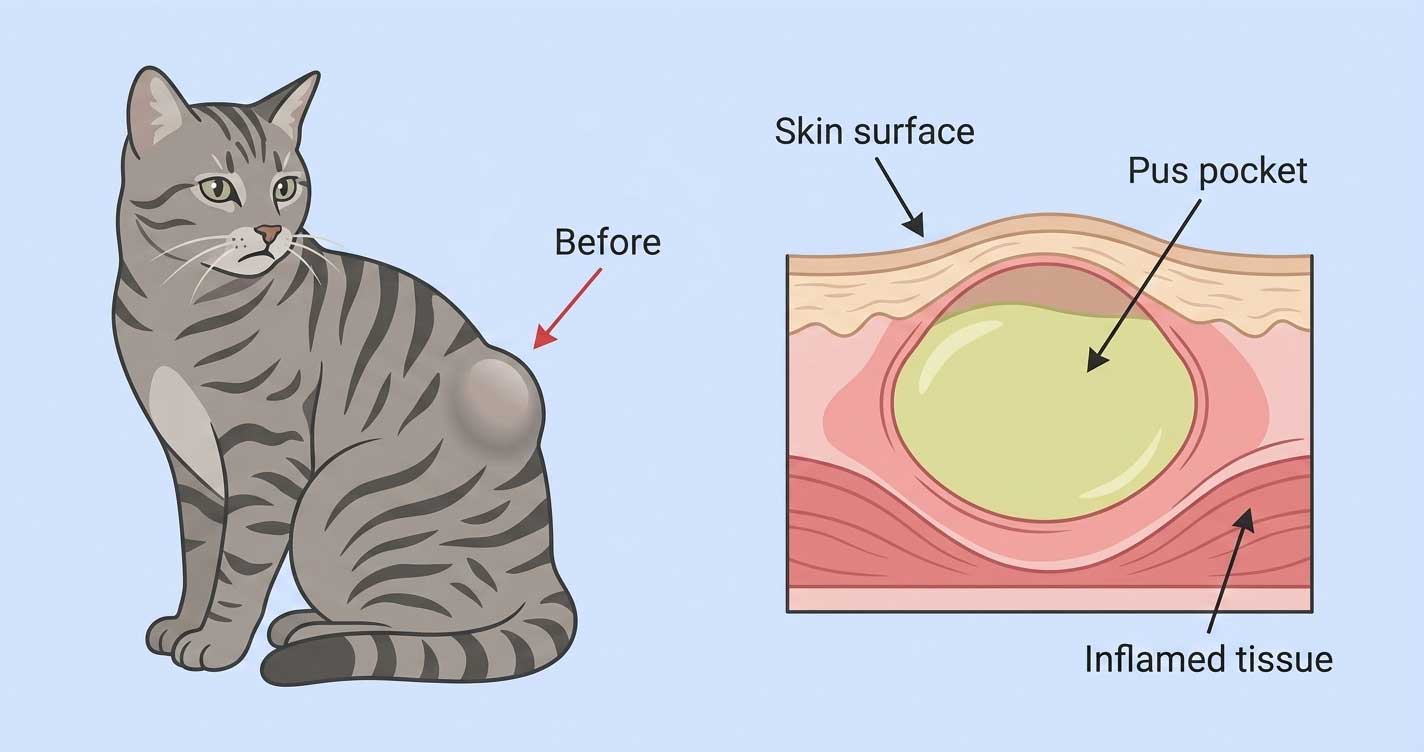
- ✓You see signs of swelling beneath the skin surface
- ✓The hot spot hasn't improved after 2-3 days of home care
- ✓Your dog gets recurring hot spots — this suggests an underlying cause that needs investigation
Your vet may prescribe oral vet-prescribed medication, anti-inflammatory medication, and investigate underlying causes like allergies or hormonal imbalances.
How to Prevent Hot Spots
- ✓Keep your dog's coat clean, dry, and well-groomed — especially after swimming
- ✓Use flea prevention year-round
- ✓Address allergies with your vet (food trials, allergy testing)
- ✓Dry your dog thoroughly after baths or swimming
- ✓Check your dog's skin regularly, especially in warm weather
- ✓Keep your dog mentally stimulated to prevent stress-related licking
Can Dog Hot Spots Heal on Their Own?
Sometimes — but it's risky. A very mild hot spot caught in the first few hours, where the dog stops licking after the initial irritation removes itself, can occasionally resolve on its own in 5-7 days. However, hot spots are infections by definition, and the lick-scratch cycle that creates them rarely stops without intervention (cone + treatment). Most untreated hot spots double in size within 24 hours and progress to deeper bacterial skin infection (pyoderma) within 3-5 days. Safe rule: if the hot spot is bigger than a quarter, has any odor, or your dog won't stop licking — do NOT wait it out.
How Long Do Hot Spots Last?
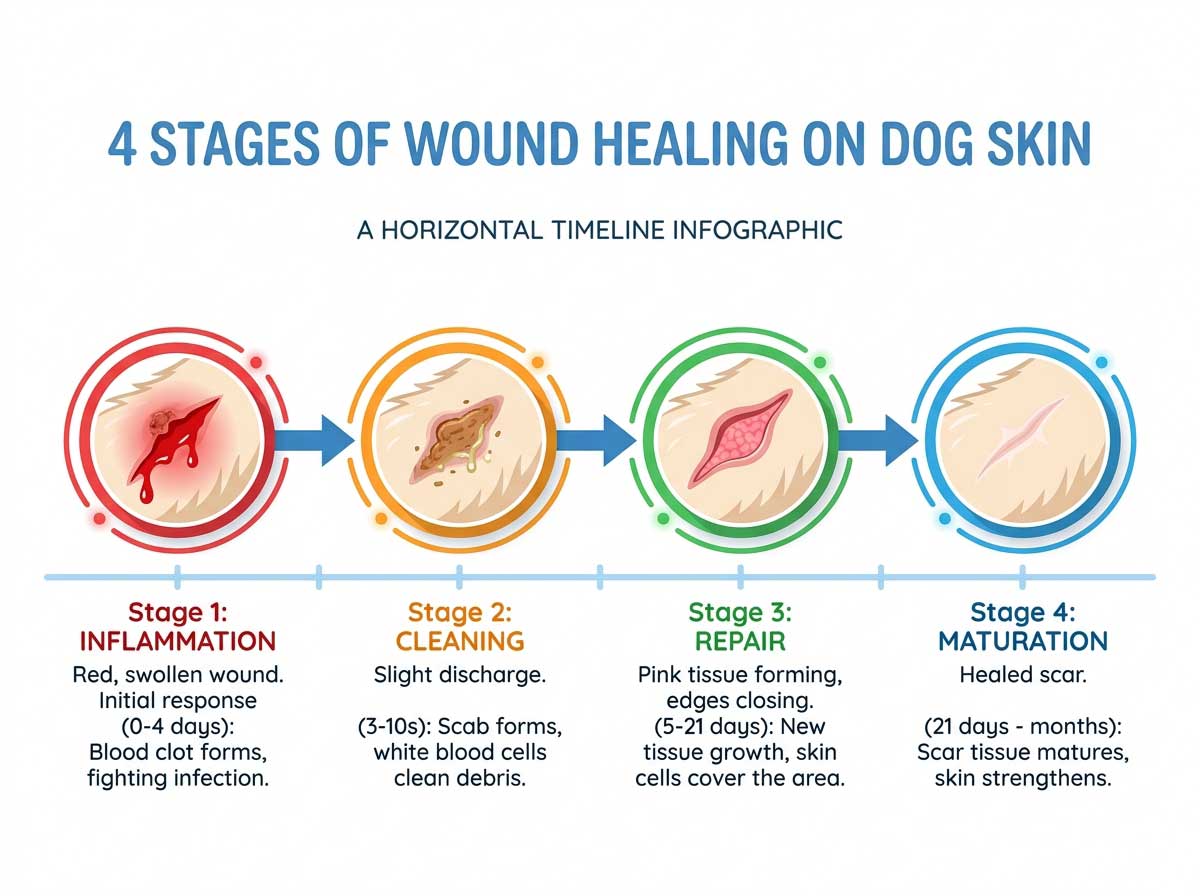
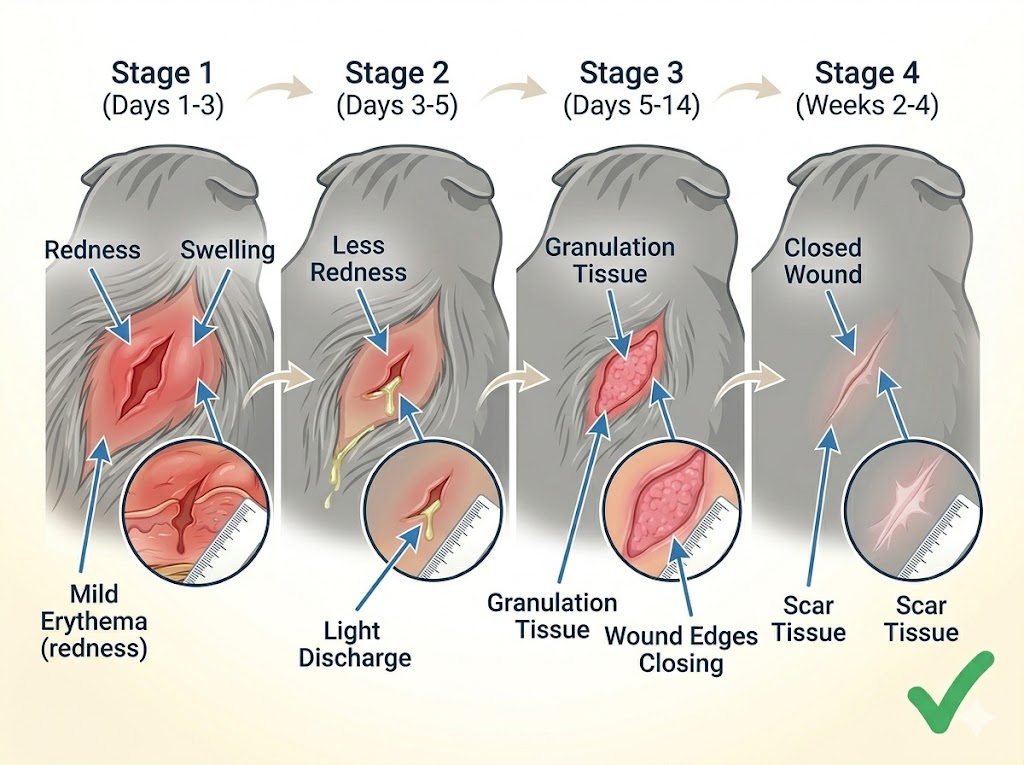
With proper treatment, most uncomplicated hot spots heal in 7-10 days. With vet-prescribed antibiotics, anti-inflammatories, and a cone, you'll usually see visible improvement within 2-3 days. Without treatment (or with home-only treatment that doesn't fully stop the lick cycle), they can drag on for 3-4 weeks and frequently recur. The single biggest determinant of healing speed is whether you keep the e-collar on 24/7 — without it, even prescription medication can't outpace the dog's tongue.
Will Benadryl Help My Dog's Hot Spot?
Benadryl (diphenhydramine) helps with the underlying allergic itch in some dogs, but it does NOT treat the hot spot itself. Once a hot spot has formed, it is an active bacterial skin infection that needs topical (and often oral) antibiotic treatment — Benadryl can't touch that. Benadryl may be useful as a supportive measure for the original allergy trigger that caused the dog to scratch in the first place. Dose is typically 1 mg per pound of body weight, but always check with your vet first — Benadryl is not safe for dogs with glaucoma, high blood pressure, or certain heart conditions.
Are Hot Spots Contagious to Other Dogs or to Humans?
No — hot spots themselves are NOT contagious. The bacteria involved (usually Staphylococcus pseudintermedius) are normal skin inhabitants that only cause problems when the skin barrier is damaged by scratching. You cannot "catch" a hot spot from your dog, and your dog cannot give one to another dog. However, the underlying triggers can be shared — if fleas caused your dog's hot spot, the other dogs in the household are likely flea-infested too. If ringworm is misdiagnosed as a hot spot, that is highly contagious (to other pets AND to humans). When in doubt, get a vet diagnosis to distinguish them.
Best Antibiotics & Medications for Hot Spots
For mild hot spots: vet-prescribed topical sprays containing chlorhexidine, hydrocortisone (mild steroid), or mupirocin are the most commonly prescribed. For moderate to severe hot spots: oral antibiotics like cephalexin or clindamycin for 14-21 days, often combined with oral anti-inflammatory medication (prednisone short course or Apoquel) to break the itch cycle. Some vets use Cytopoint injection (an anti-itch immunotherapy) for dogs with recurring hot spots driven by chronic atopic allergy. Do not use leftover antibiotic ointments from previous prescriptions — the wrong antibiotic creates resistance and may not target the bacteria present.
Decision time: home care or vet visit? Upload a photo for AI urgency assessment.
Start Skin AnalysisQuick Check with AI
Spotted something on your dog's skin and not sure if it's a hot spot? Our AI skin concerns photo analysis tool can analyze a photo and help you identify the condition in seconds. It can detect hot spots, skin irritation, ringworm, mange, flea allergy skin reaction, and bacterial skin infections — giving you useful information to share with your vet.
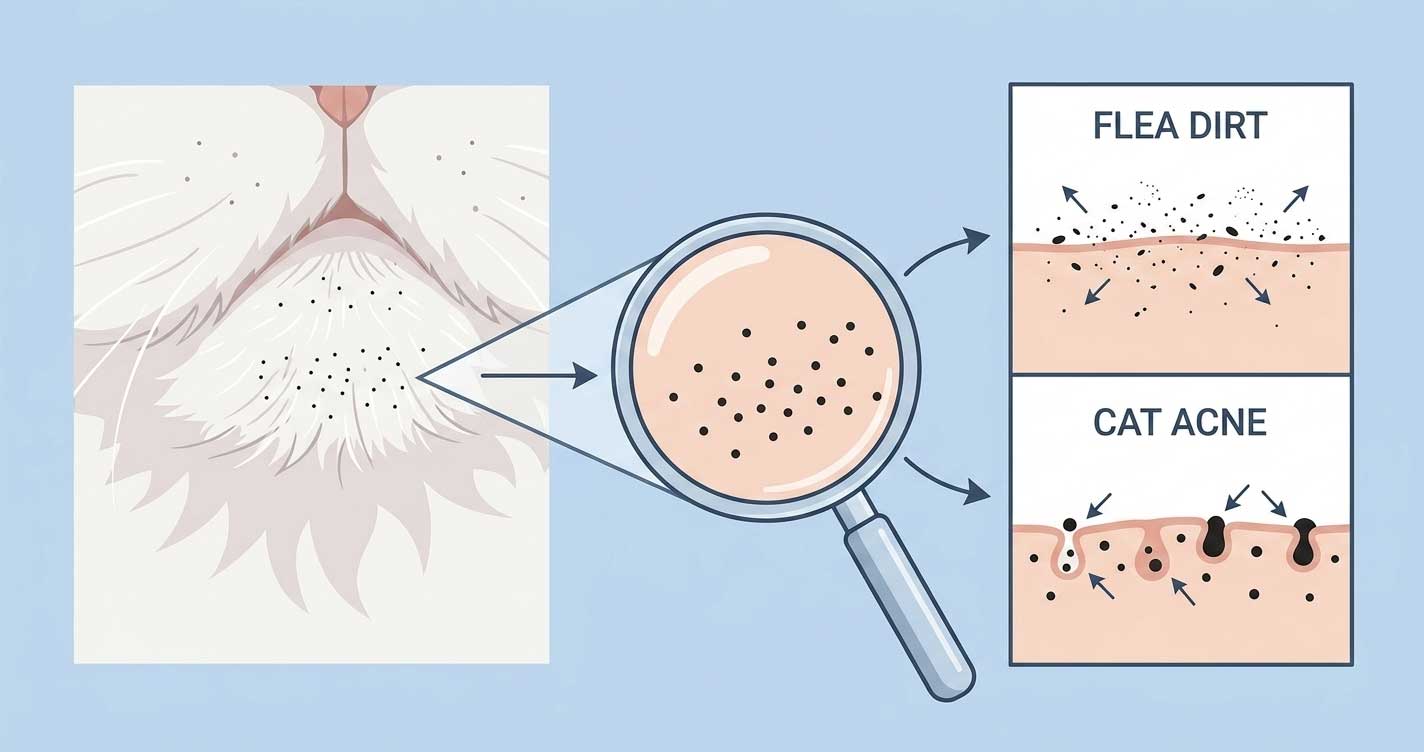
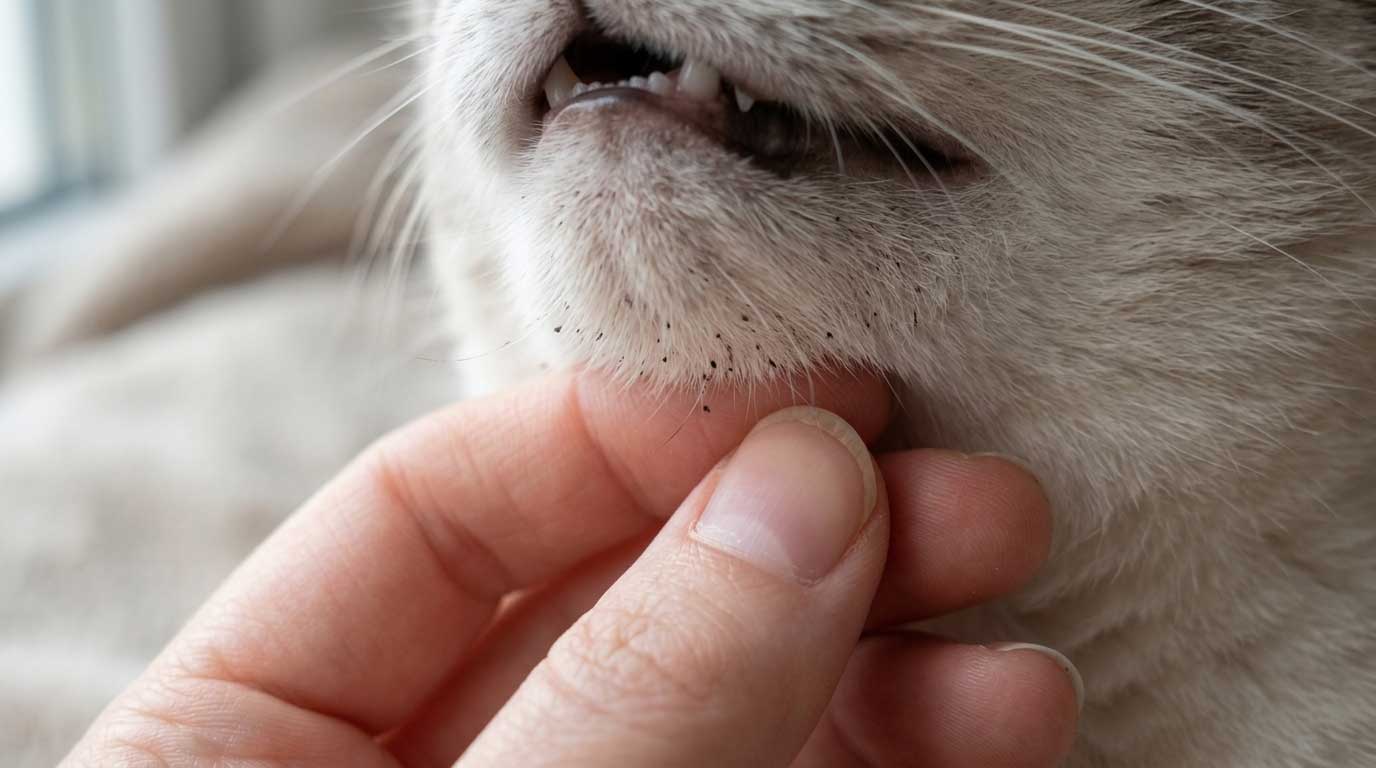
For deeper reading on related conditions, see our guides on dog skin allergy, my dog has a rash — how to identify common skin problems, and black specks on dog skin not fleas — 6 causes & pictures. For external veterinary references see PetMD's hot spots guide, Cornell Vet on hot spots, and AKC's "Hot Spots on Dogs: Signs, Treatment, and Prevention".
Want to compare your dog's hot spot to mild vs severe pictures? Our new AI tool identifies the severity stage and rules out ringworm from your actual dog photo.
Try Hot Spots Pictures AI ToolHot spot is one of 5 dog skin scab causes. Our new AI dog skin scabs pictures tool identifies hot spot vs chronic allergy scratch scabs vs mange (some contagious) vs Flea Allergy Dermatitis vs injury scab.
Try Dog Skin Scabs AI ToolFrequently Asked Questions
How do you treat hot spots on dogs?
+
What is a good home remedy for hotspots on dogs?
+
Can dog hotspots heal on their own?
+
Will Benadryl help dog hot spots?
+
How long do hot spots on dogs last?
+
Are hot spots on dogs contagious to other dogs or to humans?
+
Spotted Something on Your Dog's Skin?
Upload a clear photo and get an instant AI health report. Detect hot spots, skin irritation, ringworm, and more.
Disclaimer: This article is for informational purposes only and is not a substitute for professional veterinary advice. Always consult a licensed veterinarian for diagnosis and treatment of your pet's health conditions.