Dog Keeps Shaking Head: 6 Causes, Home Remedies & When to Worry
Dog keeps shaking head? Learn the 6 main causes, when it means an ear infection, how to soothe at home, head tilt vs tremor warning signs, and when to call the vet.
Published 2026-04-14 · Updated 2026-06-18
Worried About Your Dog's Ears?
Upload a photo of the inside of your dog's ear and get an educational AI pattern analysis. Identify visual signs of infections, ear mites, and more. Not a veterinary diagnosis.
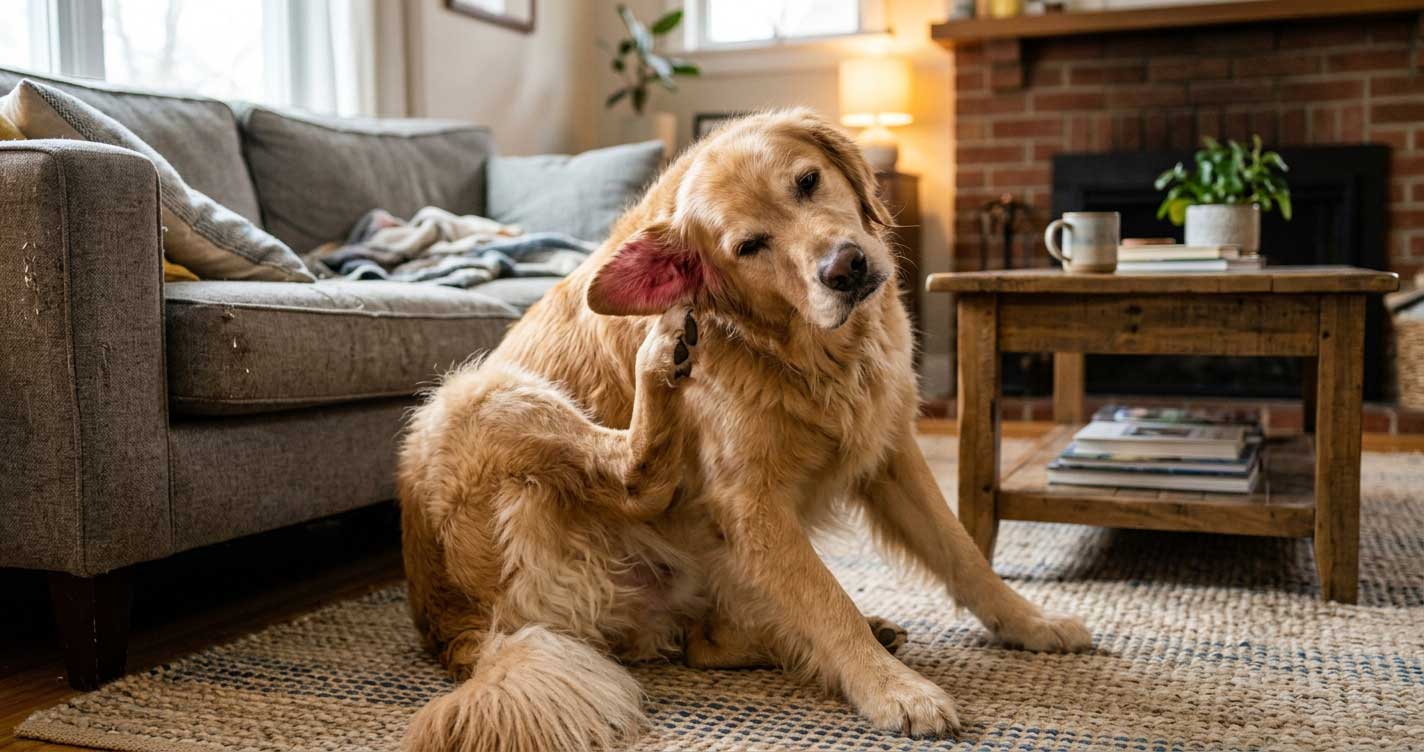
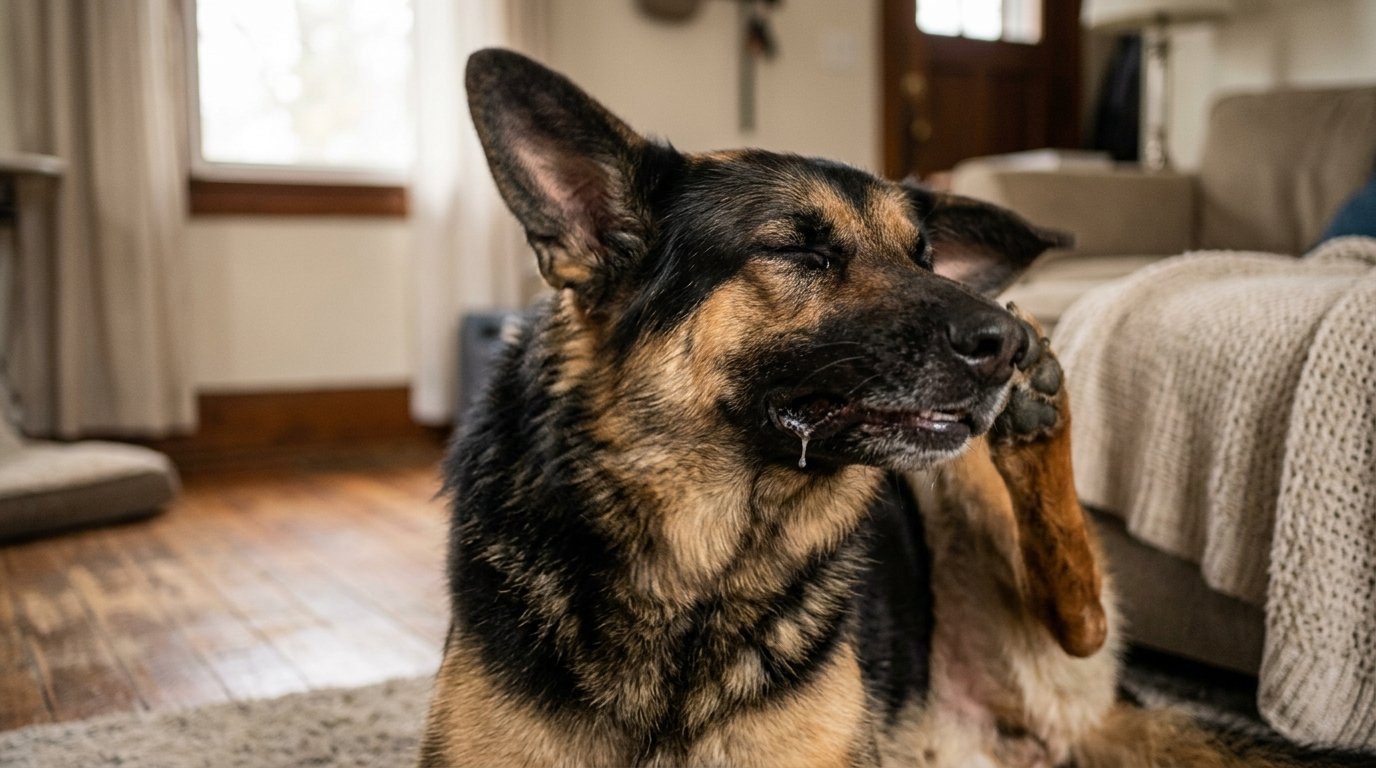
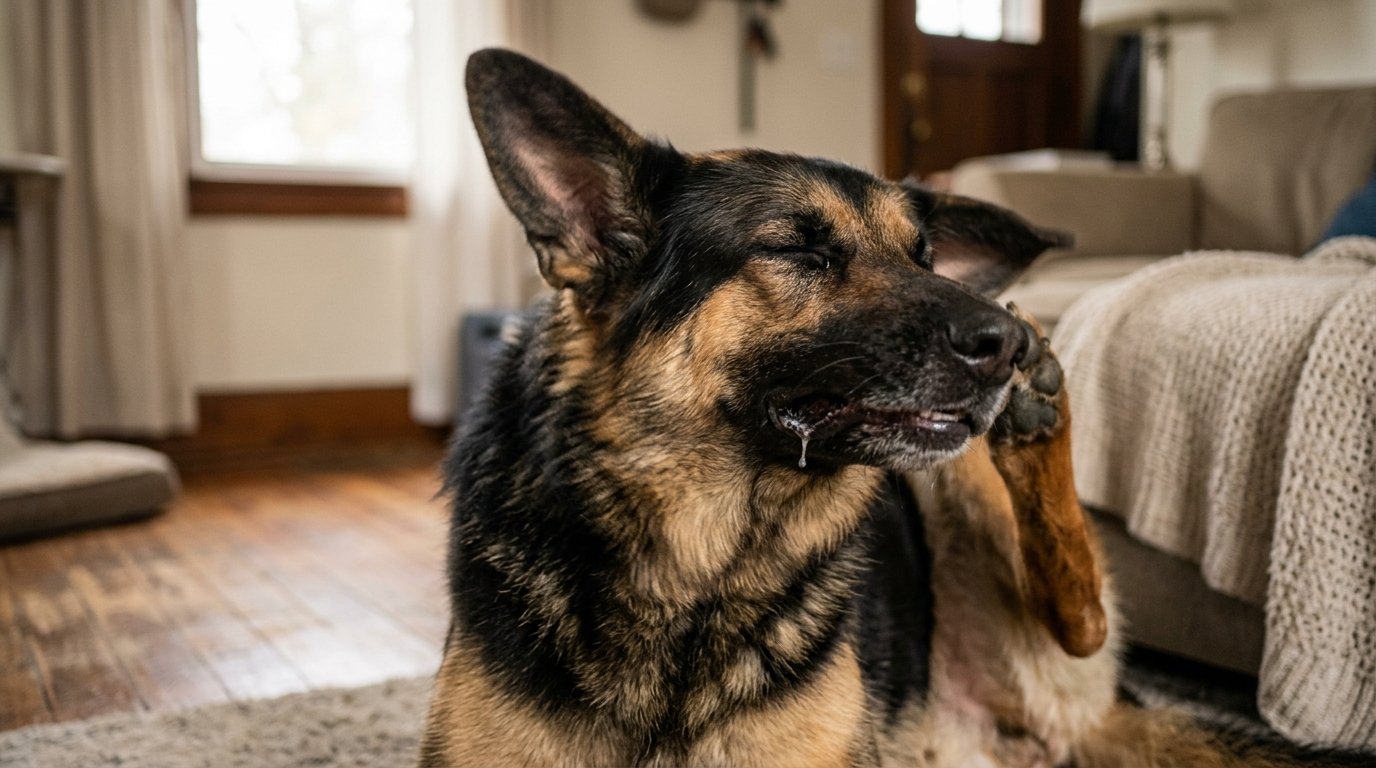
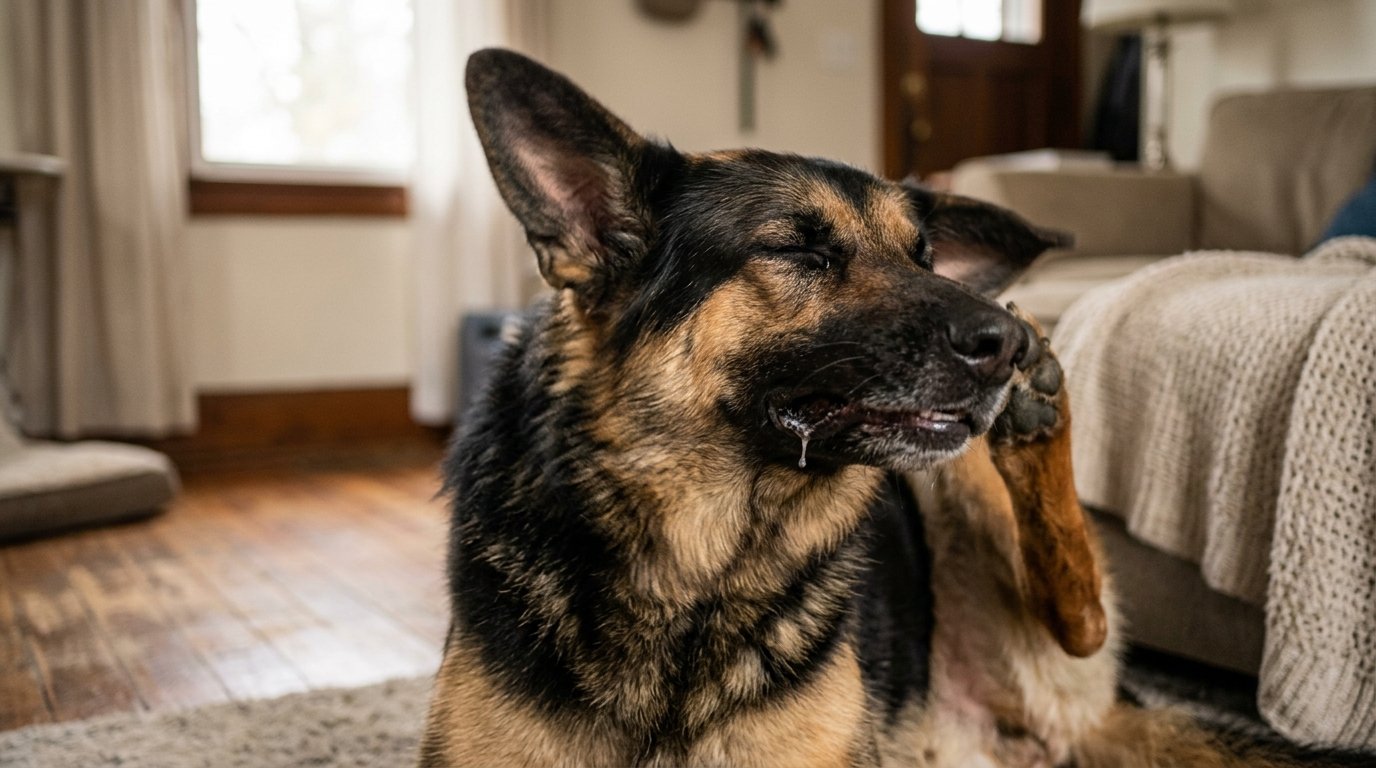
Your dog keeps shaking their head — again and again. Maybe they're also scratching at one ear, tilting their head, or whimpering. Head shaking is one of the clearest signals that something is bothering your dog's ears. While an occasional shake is normal (dogs do it to clear water or debris), persistent head shaking almost always means there is a problem that needs attention. This guide covers the 6 main causes, how to tell normal shaking from a neurological head tilt or tremor (both vet emergencies), home soothing steps, puppy vs senior considerations, and when home care has crossed into vet territory.
This article is for general educational purposes only and is not a substitute for veterinary diagnosis. Head shaking with a head tilt, loss of balance, or involuntary tremors is a same-day vet emergency — do not wait.
Your dog keeps shaking head and you don't know why? Upload a photo for AI pattern check.
Start Ear AnalysisWhy Does My Dog Keep Shaking His Head?
When a dog is shaking their head a lot, the most common causes are:
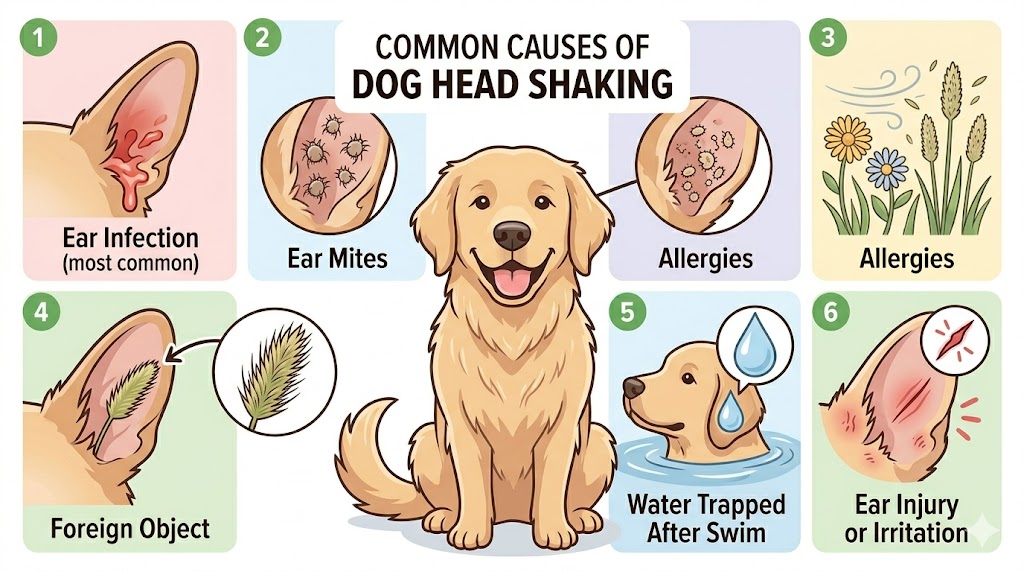
1. Ear Infection (Most Common)
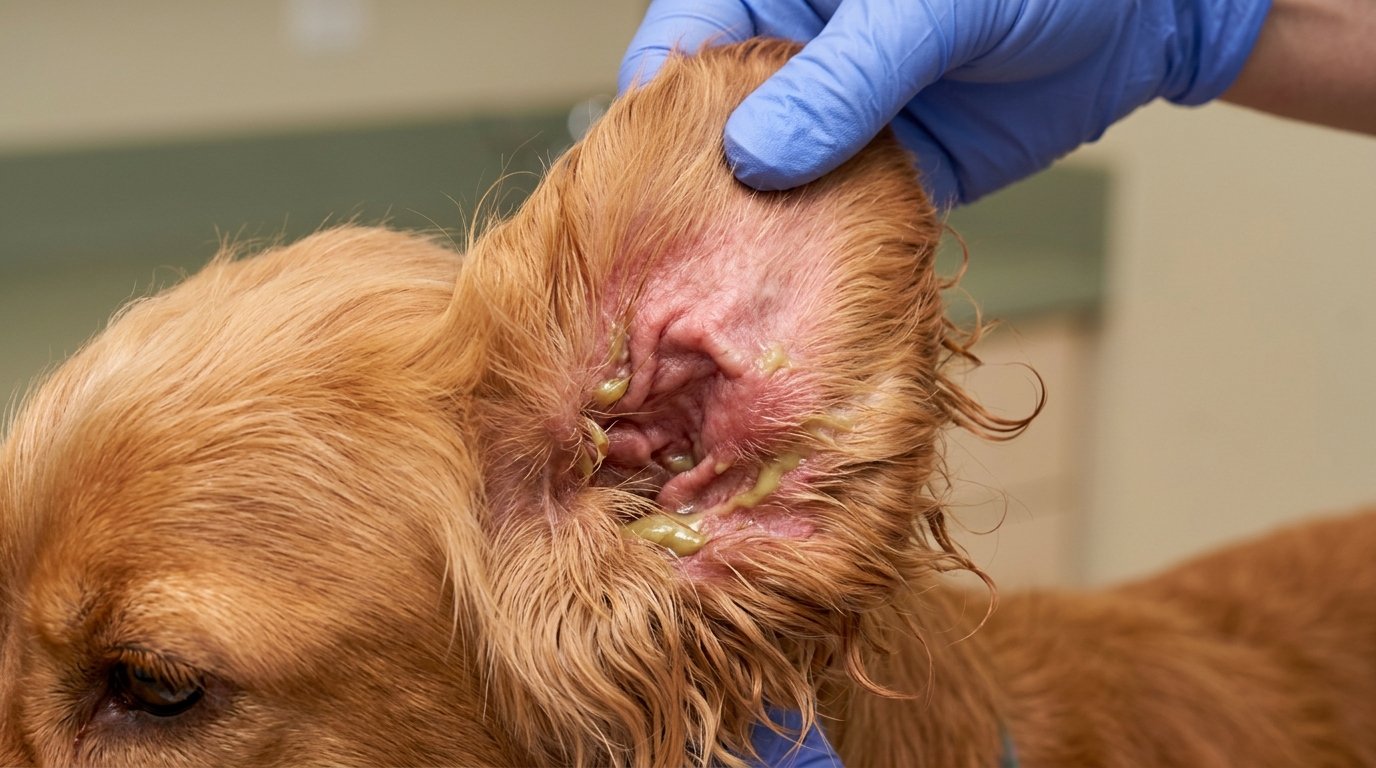
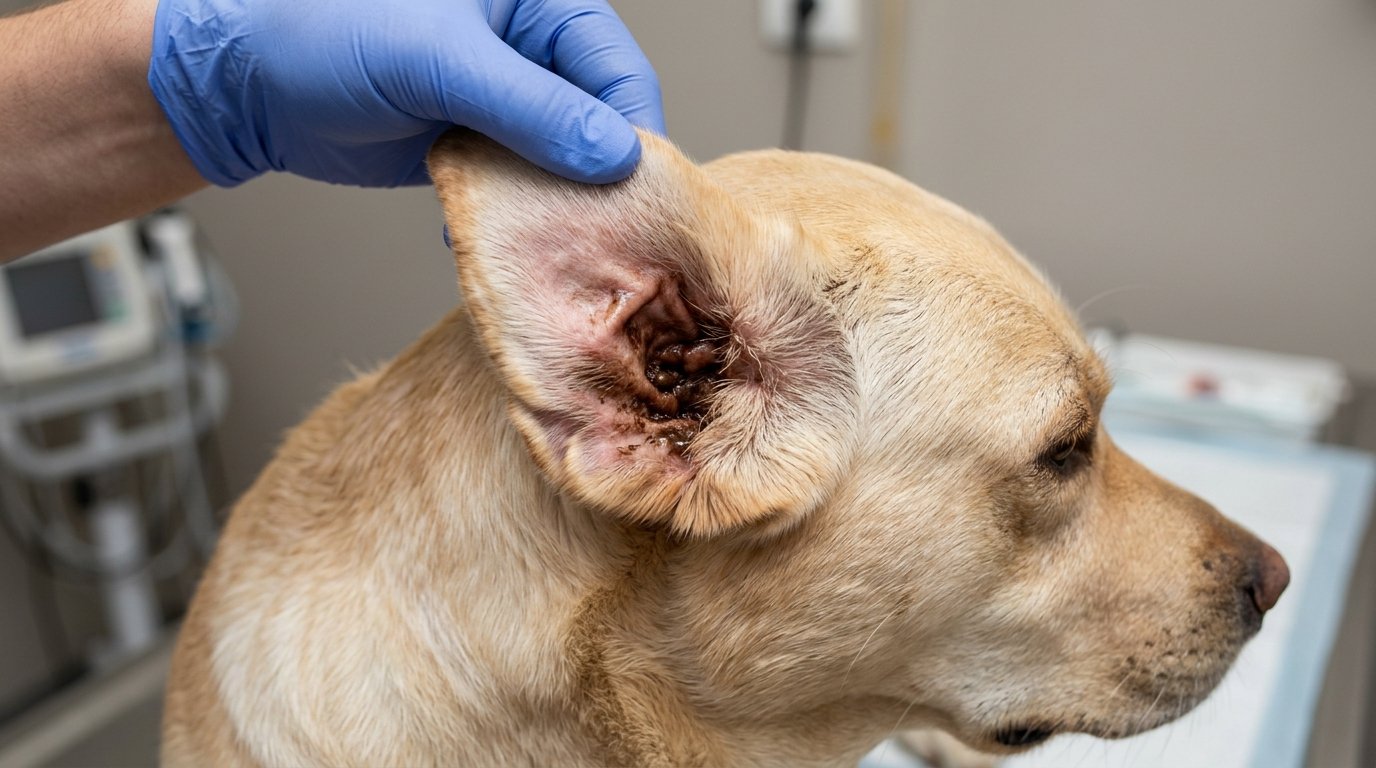
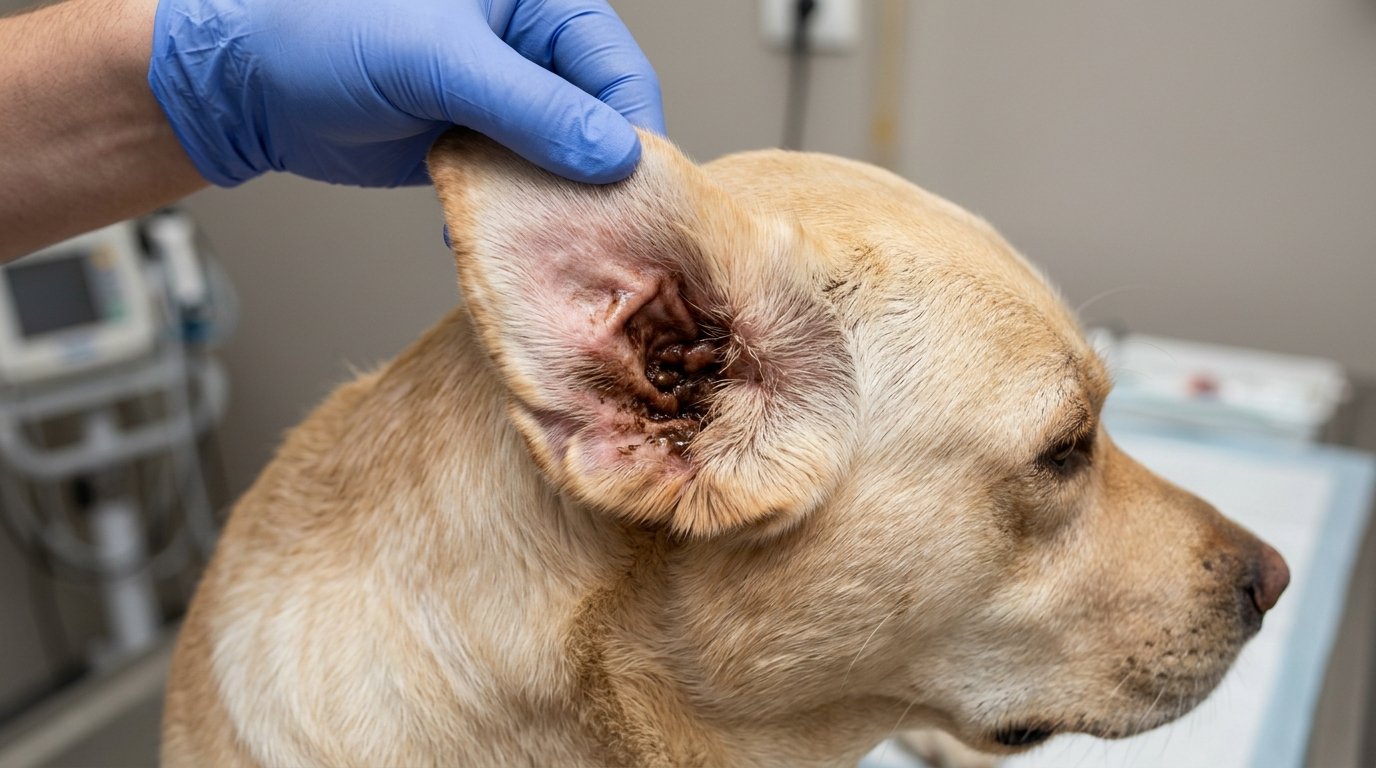
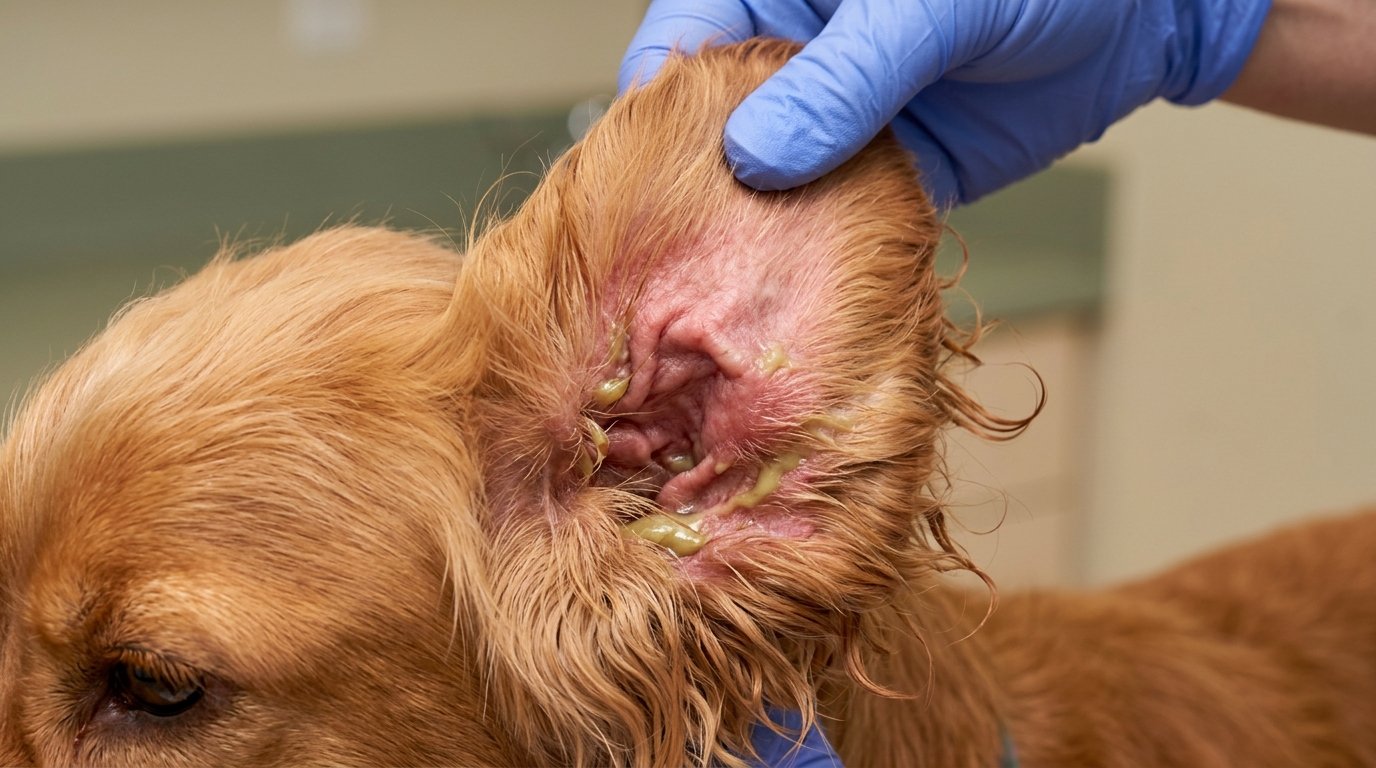
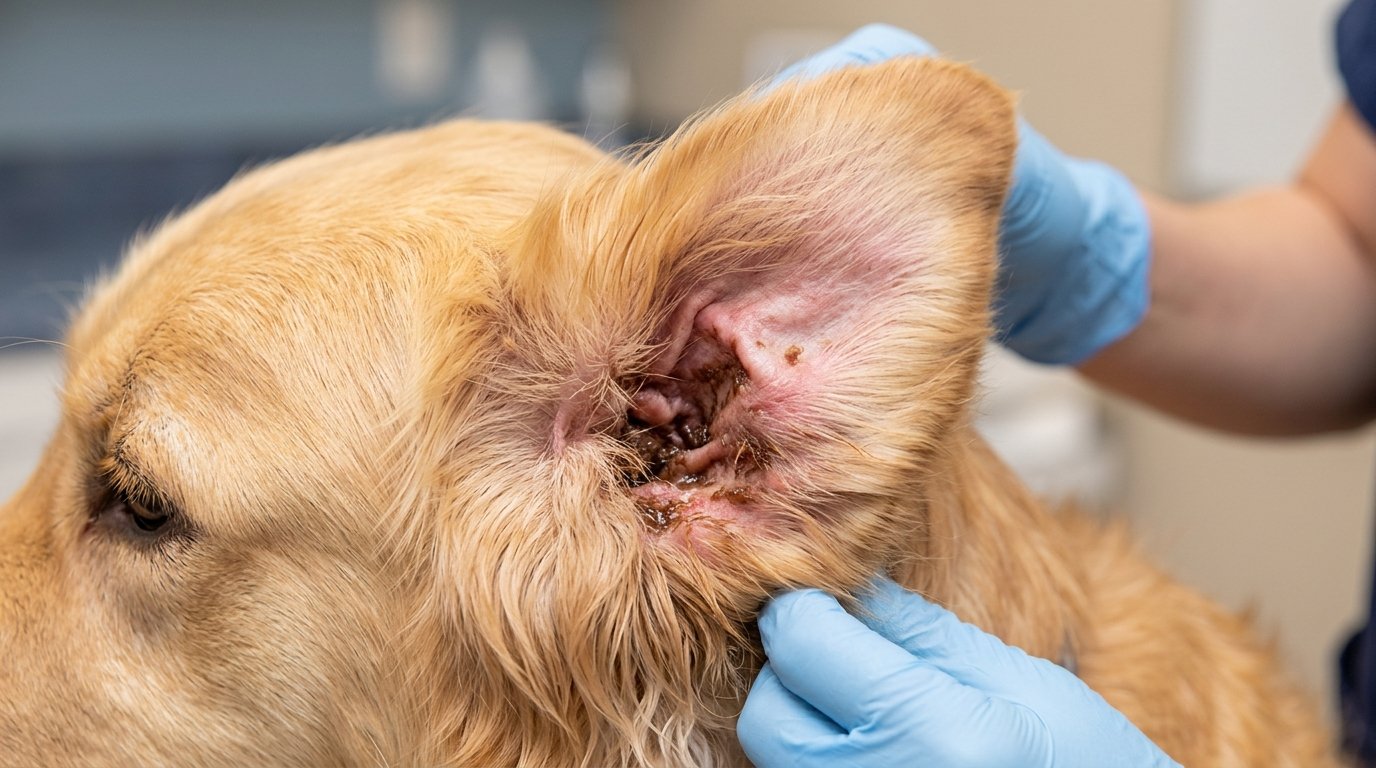
A dog ear infection is the #1 reason dogs shake their heads. The infection causes inflammation and discomfort deep in the ear canal, and shaking is your dog's way of trying to relieve it. Look for redness inside the ear, discharge (brown, yellow, or black), and a bad smell. Your dog may also be scratching at the affected ear constantly. Ear infections can be bacterial or yeast-based — bacterial infections produce a pungent smell with yellow-green discharge, while yeast infections have a musty, sweet smell with brown waxy buildup.
2. Ear Mites
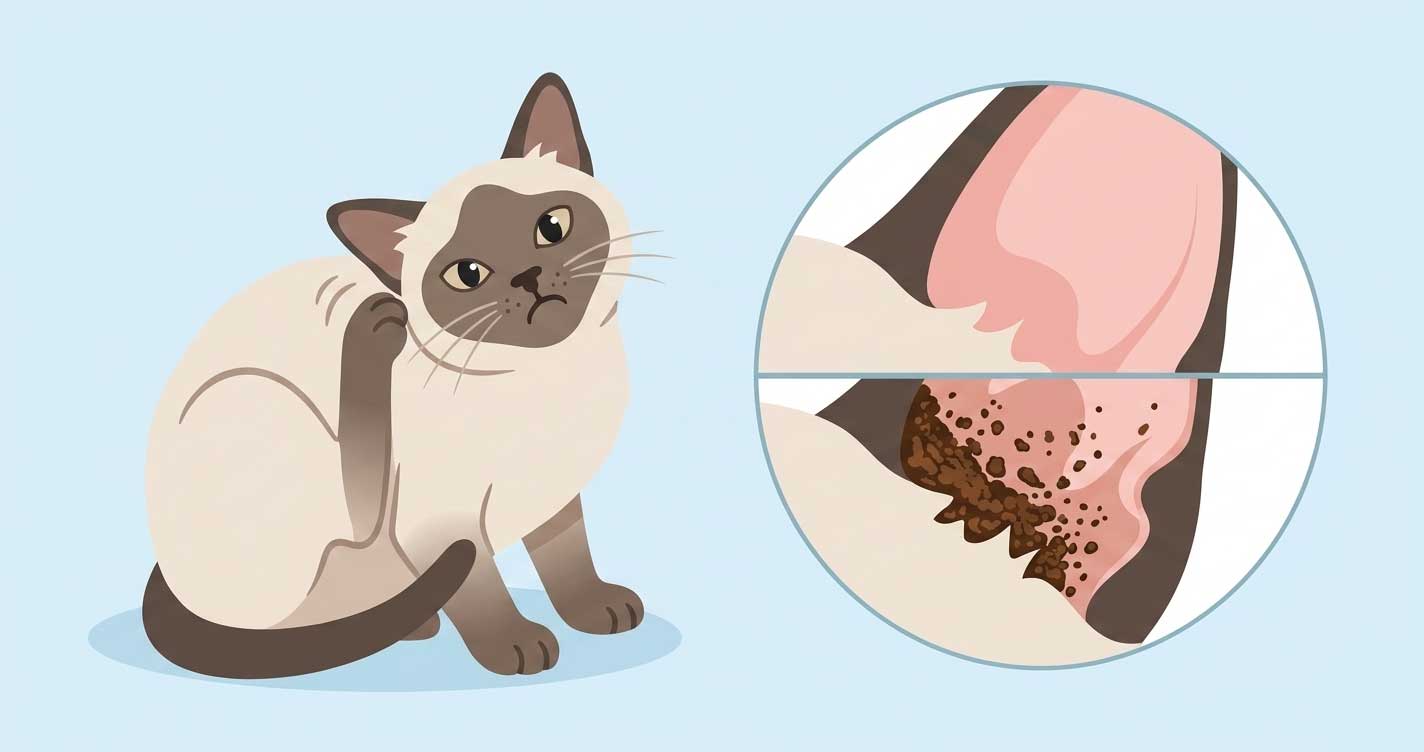
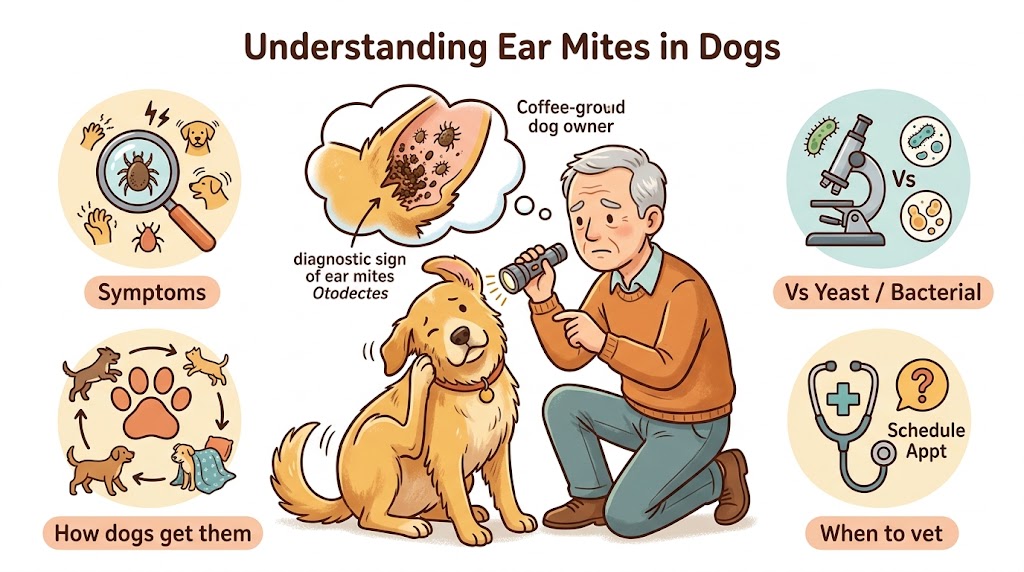
Ear mites in dogs cause intense itching inside the ear canal. Your dog will shake their head violently and scratch at their ears. The telltale sign is dark, crumbly discharge that looks like coffee grounds. Ear mites are extremely contagious — if one pet has them, all your animals probably do. They're more common in puppies and in dogs that live with cats.
3. Allergies
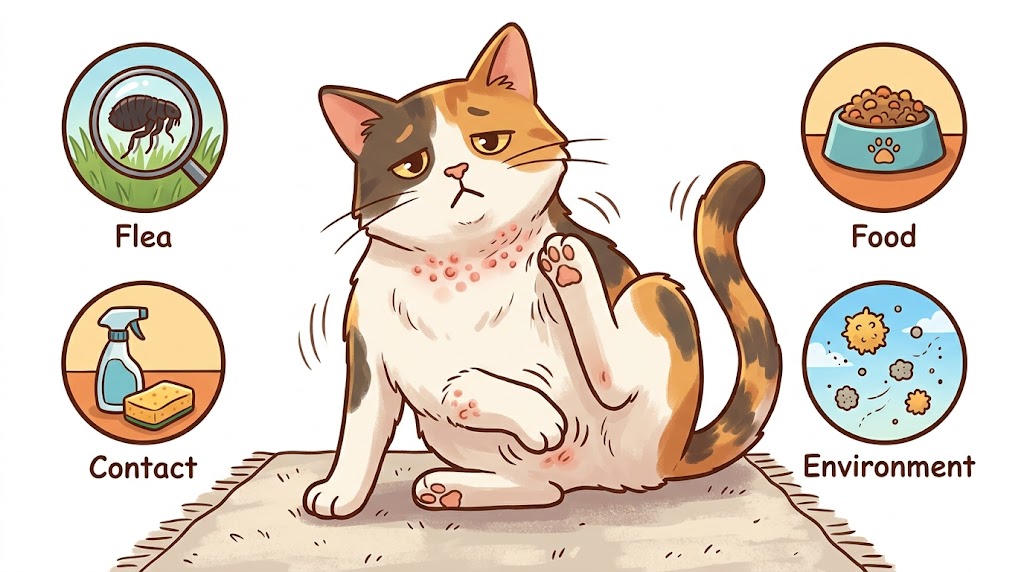
Allergies cause inflammation in the ear canal, which leads to itching and head shaking. Food allergies, environmental allergies (pollen, dust mites, mold), and contact allergies can all affect the ears. If your dog has seasonal head shaking (worse in spring/summer), environmental allergies are likely. If it's year-round, food allergies or dust mites could be the culprit.
4. Foreign Object in the Ear
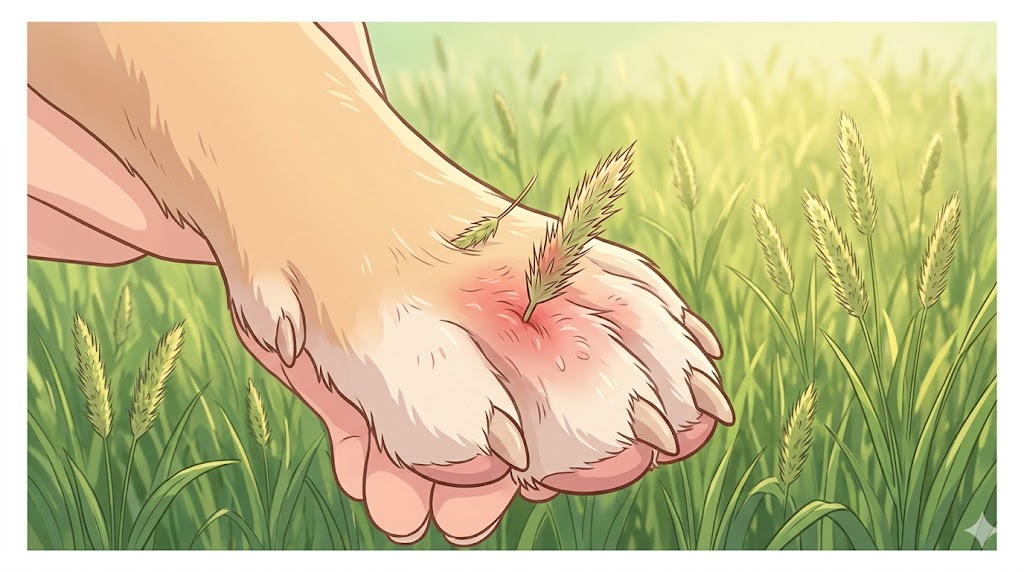
A grass seed, foxtail, or piece of debris lodged in the ear will cause sudden, frantic head shaking — usually focused on one side. Your dog may paw at the ear and seem very distressed. This is more common after walks through tall grass or fields. Don't try to remove it yourself — you could push it deeper. See your vet.
5. Water in the Ear
After swimming or a bath, dogs shake their heads to get water out — that's normal. But if water gets trapped deep in the ear canal, it creates a warm, moist environment perfect for infection. If your dog is still shaking their head hours after getting wet, an infection may be developing. This is especially common in dogs with floppy ears.
6. Ear Injury or Irritation
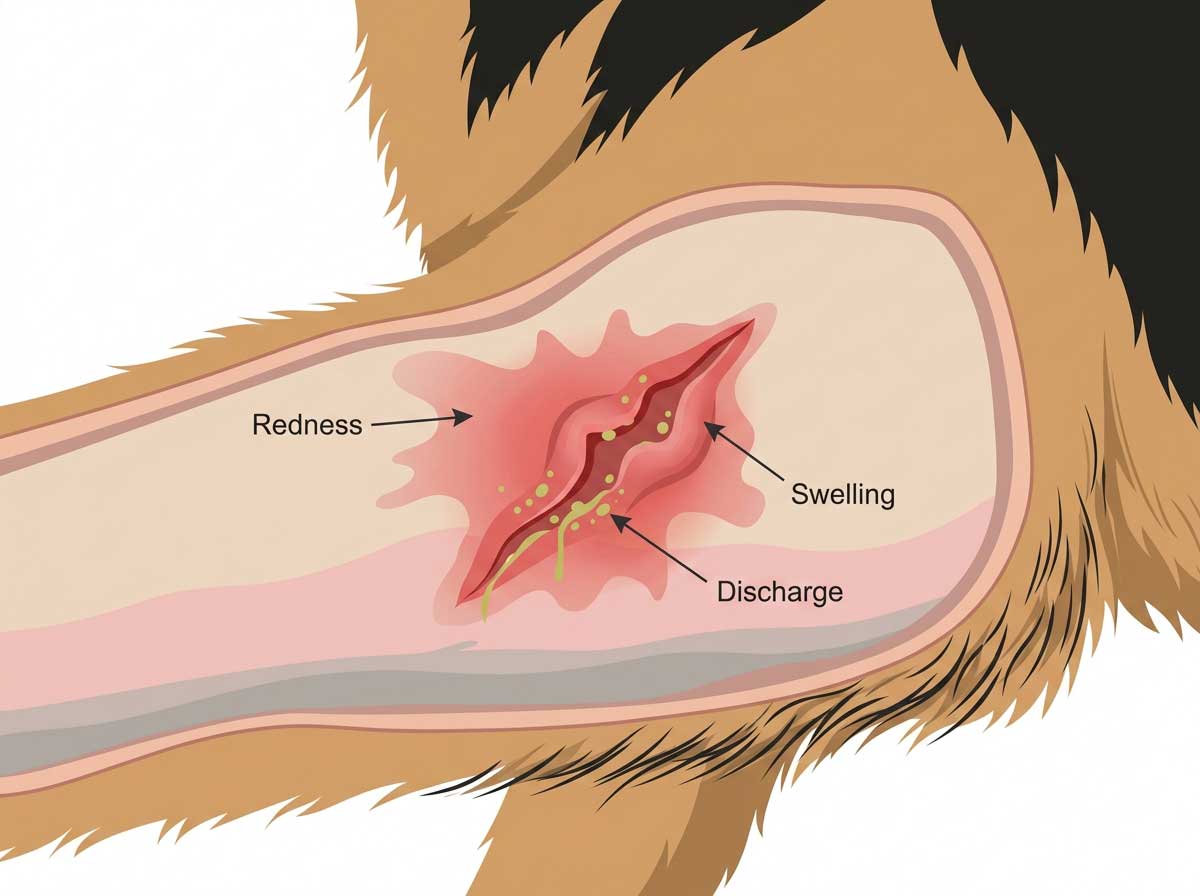
A scratch inside the ear, an insect bite, or irritation from overly aggressive ear cleaning can all cause head shaking. Check for visible cuts, swelling, or blood. If you recently cleaned your dog's ears and they started shaking afterward, you may have irritated the canal or pushed debris deeper.
Smell or discharge from the ear? Upload a photo for AI yeast vs bacterial vs mites check.
Start Ear AnalysisHead Shaking + Head Tilt = A Different Problem
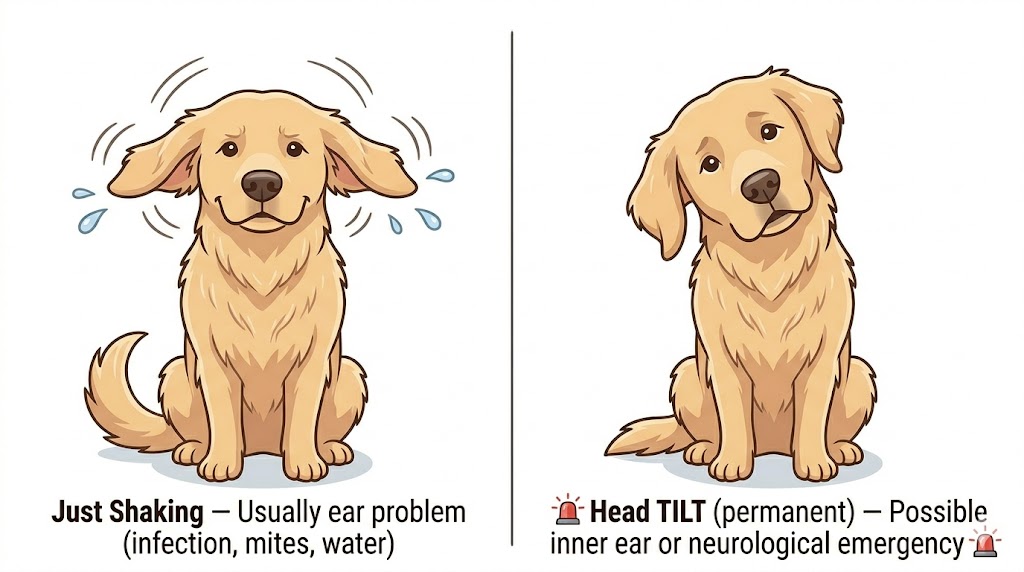
There is an important difference between a dog shaking their head and a dog holding their head permanently tilted to one side. Active head shaking comes from ear irritation. A persistent head tilt — where the dog can't hold their head straight — points to something deeper:
- ✓Middle or inner ear infection (otitis interna) — the infection has progressed past the outer canal
- ✓Vestibular disease — affects balance organs in the inner ear, common in senior dogs
- ✓Brain or nerve problem (rare but serious — stroke, tumor, idiopathic vestibular syndrome)
- ✓Severe ear pain forcing the dog to favor one side
A persistent head tilt is a same-day vet emergency, especially if combined with loss of balance, falling over, walking in circles, or rapid eye movements (nystagmus). These are signs of vestibular involvement that need immediate attention.
Head Tremors vs Head Shaking — How to Tell
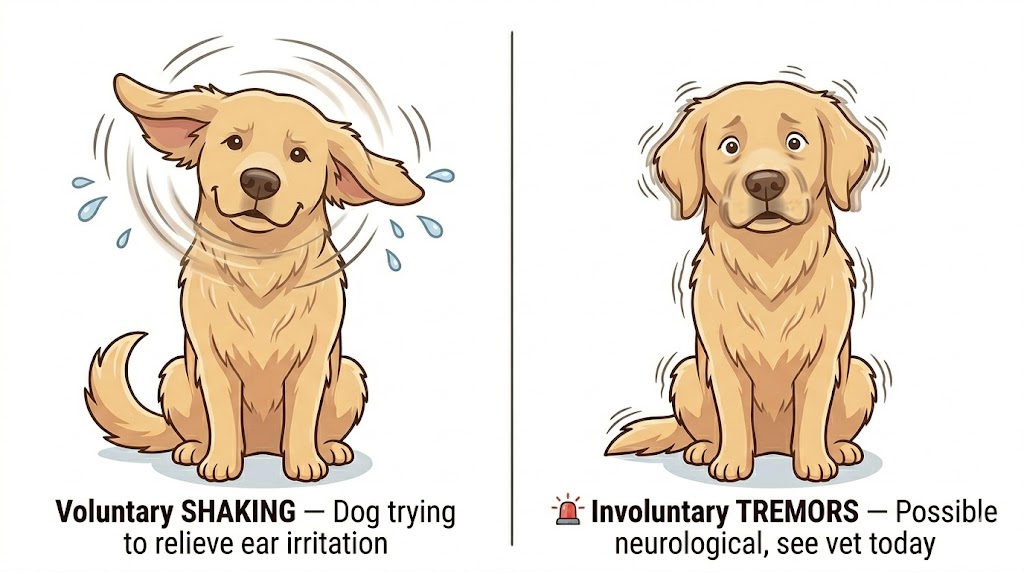
Owners often confuse rapid involuntary head tremors with normal head shaking. The difference matters because head tremors point to a neurological issue, not an ear problem.
- ✓🐶 **Voluntary head shaking**: Dog actively moves head side-to-side or up-and-down to relieve irritation. Dog is alert and engaged. Stops when distracted with food or a toy.
- ✓🚨 **Involuntary head tremors**: Small rapid back-and-forth twitches that the dog cannot control. Dog often looks confused or scared. Continues even when distracted. Sometimes triggered by excitement or stress (idiopathic head tremor syndrome, common in Bulldogs and Boxers).
If you can't tell which one you're seeing, record a video and show it to your vet — the vet can usually identify the pattern within seconds. Idiopathic head tremors are sometimes benign, but seizures, low blood sugar, toxin exposure, and other conditions can mimic them. Always have a tremor evaluated.
Dog Scratching Ear and Shaking Head at Night
If your dog scratching ear and shaking head at night is keeping you both awake, it's likely because the irritation feels worse when they're lying down. Blood flow to the ear increases when the head is level with the body, and gravity can cause fluid and discharge to shift in the ear canal. Night-time scratching is a strong indicator of an active ear infection or ear mites that needs treatment.
Dog Keeps Shaking Head But Ears Are Clean?
Sometimes the problem isn't visible from the outside. If your dog keeps shaking head but ears look clean, the issue could be:
- ✓A middle or inner ear infection — deeper than what you can see by looking in
- ✓Allergies causing inflammation without visible discharge yet
- ✓A foreign object lodged deep in the canal
- ✓Pain from a dental problem (referred pain to the ear area)
- ✓Neurological issues (less common, but worth ruling out if other causes are excluded)
If your dog has been shaking their head for more than a day or two with no visible cause, a vet visit is warranted.
Puppy Shaking Head — Different Risks
Puppies under 6 months that keep shaking their heads should be checked sooner than adult dogs. Reasons: 1) Ear mites are far more common in puppies, especially shelter or breeder-origin puppies, and they are easily transmitted to other pets. 2) The narrow puppy ear canal is more prone to deep impaction of foreign bodies. 3) Untreated infections in a developing ear canal can cause permanent damage that affects hearing for life. Threshold: if puppy head shaking lasts more than 24 hours, see a vet — do not wait the 2-3 days you might wait with an adult dog.
Senior Dog Shaking Head — Special Considerations
In senior dogs (10+ years), persistent head shaking — especially with ears that look clean — points to different concerns than in adult dogs:
- ✓Idiopathic vestibular syndrome (sometimes called "old dog vestibular disease") — causes sudden head tilt, falling to one side, and rapid eye movements. Usually resolves on its own in 1-2 weeks but needs vet confirmation
- ✓Dental disease — abscessed back teeth can cause referred pain to the ear area without any visible ear problem
- ✓Brain tumor — rare but more common in seniors, often presents with subtle head shaking + behavior changes
- ✓Atypical ear infections — senior immune systems sometimes produce mild signs that mask a deeper problem
Senior dog head shaking with clean-looking ears = vet visit within 1-2 days, not "wait and see."
How to Soothe Your Dog's Irritated Ears at Home
While you wait for the vet appointment or after a vet has confirmed a mild case, these home steps actually help reduce discomfort:
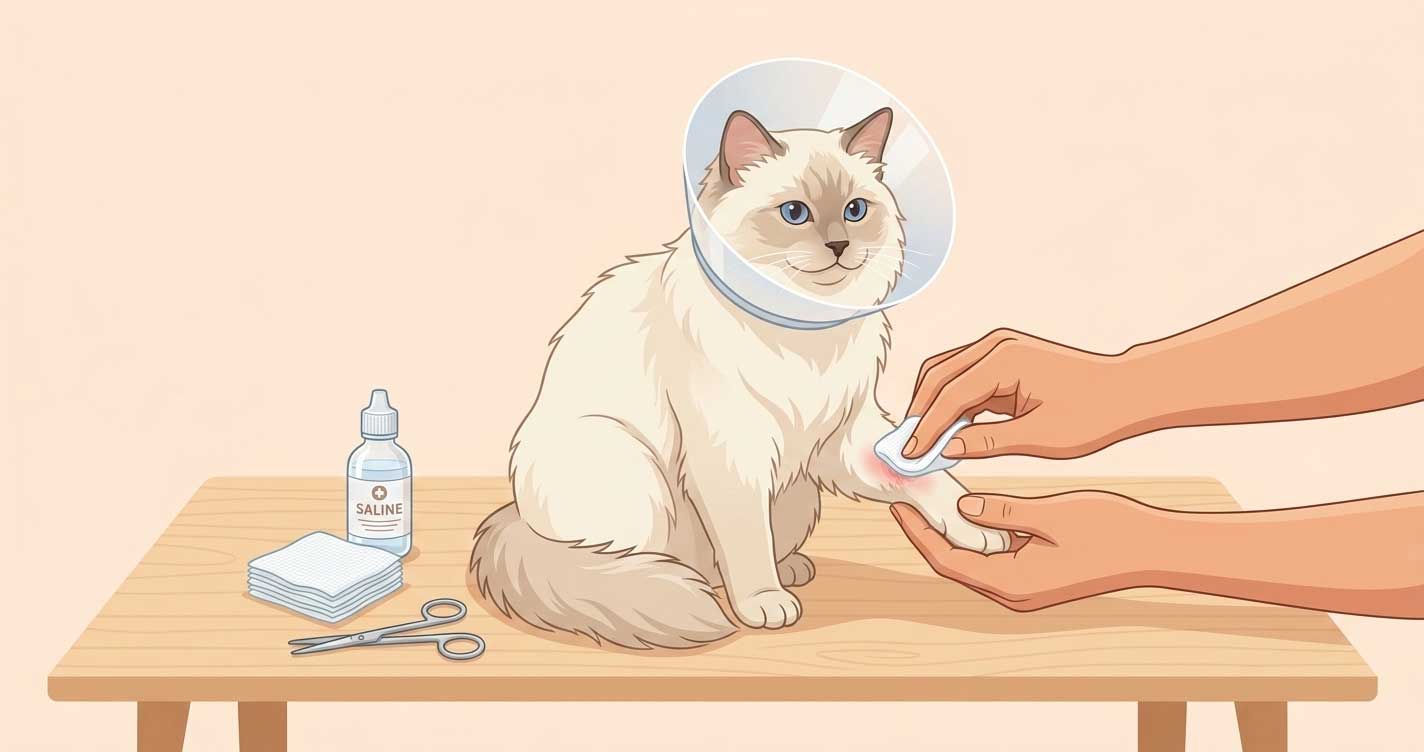
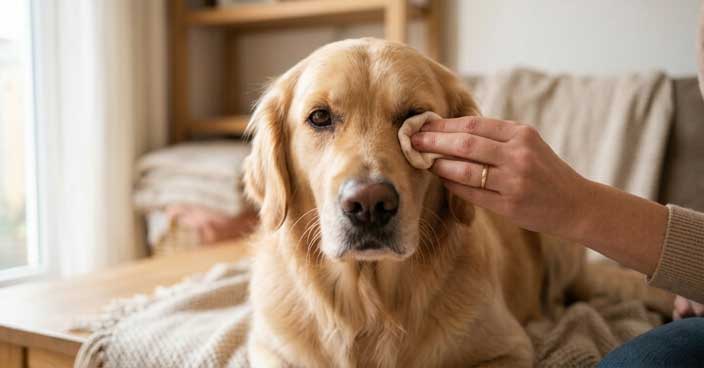
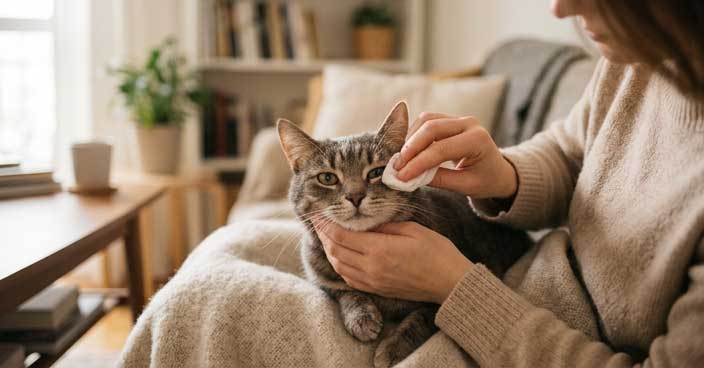
- ✓Gently clean the outer ear flap (NOT inside the canal) with a soft damp cloth — never use cotton swabs deep into the ear
- ✓Apply a vet-approved ear cleaner per the bottle directions (Epi-Otic, OticBerry, or similar) — squeeze in, massage the base for 30 seconds, let dog shake, wipe with cotton
- ✓Keep the ears dry — after baths or swimming, towel-dry the visible canal
- ✓Reduce allergens — vacuum more, wash bedding weekly, switch to low-dust environments if seasonal allergies are suspected
- ✓Use an e-collar (cone) if your dog is scratching the ear raw — preventing further damage is critical
- ✓Do NOT use hydrogen peroxide, rubbing alcohol, vinegar, or human ear drops — they damage the canal lining
These steps soothe; they do not cure infections. If shaking persists past 2-3 days with home soothing, see a vet.
Want a quick AI assessment of whether home soothing is enough or you need a vet today?
Start Ear AnalysisWhat to Do When Your Dog Keeps Shaking Their Head
- ✓Inspect the ear — gently fold back the flap and look for redness, discharge, debris, or swelling
- ✓Take a photo — upload it to our AI ear photo analysis tool for a quick assessment of what might be going on
- ✓Don't stick anything in the ear — no cotton swabs, no fingers probing deep into the canal
- ✓Gently clean with a vet-approved ear cleaner if there's visible wax or debris on the outer ear
- ✓Keep the ear dry — if your dog swam or got wet recently, dry the ears thoroughly
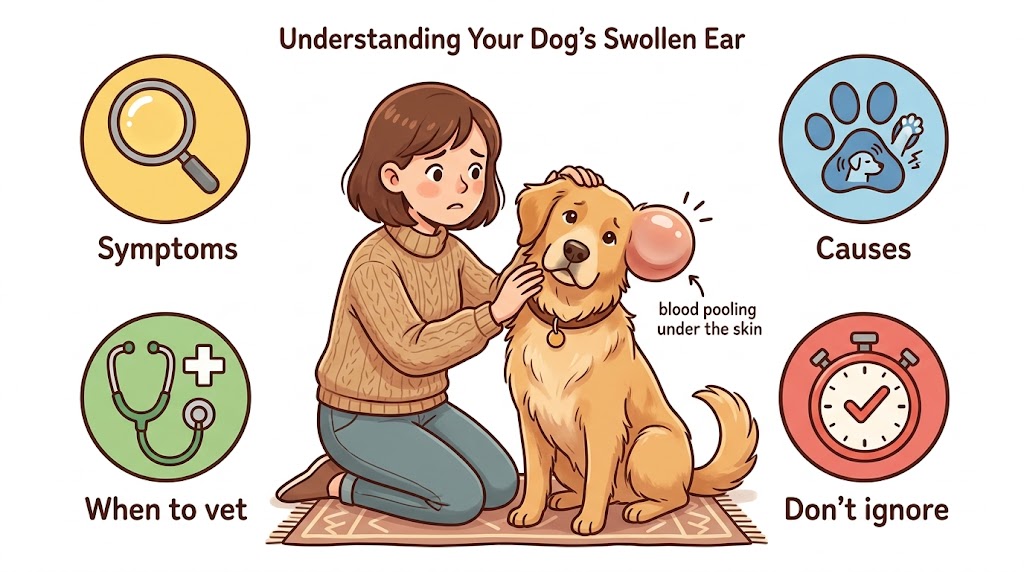
- ✓Don't delay — ear problems get worse quickly, and the shaking itself can cause a painful ear hematoma (blood blister on the ear flap)
When to See a Vet
See your vet promptly if:
- ✓Head shaking has been going on for more than 1-2 days
- ✓You see discharge, redness, or swelling in the ear
- ✓Your dog is in pain or won't let you touch the ear
- ✓The ear flap is swollen (possible hematoma from shaking)
- ✓Your dog is tilting their head to one side or losing balance
- ✓There's a sudden onset of violent shaking (foreign object)
- ✓Your dog gets recurring ear problems — this suggests an underlying cause like allergies
Ear problems are one of the most treatable conditions in dogs, but they rarely resolve on their own. The sooner you identify the cause, the faster your dog gets relief.
For deeper reading see our related guides: why do my dog's ears smell, cat ear mites vs dirty ears, and dog skin allergy. For external veterinary references see PetMD's "Dog Shaking Head: When to Worry" and AKC's guide on ear infections in dogs.
Head shaking + visible wax or discharge in the ear? Our new AI tool identifies yeast vs bacterial vs ear mites from the actual ear photo.
Try Severe Ear Wax AI ToolPersistent head shaking often signals brown chunky yeast wax building up. Our new AI dog ear yeast infection pictures tool identifies Malassezia yeast vs bacterial vs ear mites from your dog's ear photo.
Try Dog Ear Yeast Pictures AI ToolFrequently Asked Questions
How can I soothe my dog's irritated ears at home?
+
Does dog shaking head always mean an ear infection?
+
How can I get rid of my dog's ear infection without going to the vet?
+
What can I do for a dog with persistent head shaking?
+
My senior dog keeps shaking his head but his ears look clean — what could it be?
+
How do I tell head shaking from head tremors in my dog?
+
Worried About Your Dog's Ears?
Upload a photo of the inside of your dog's ear and get an educational AI pattern analysis. Identify visual signs of infections, ear mites, and more. Not a veterinary diagnosis.
Disclaimer: This article is for informational purposes only and is not a substitute for professional veterinary advice. Always consult a licensed veterinarian for diagnosis and treatment of your pet's health conditions.