Dog Skin Allergies: 3 Types, Best Treatment & Home Remedies That Work
Dog skin allergies — flea, environmental, food. Best medications (Apoquel/Cytopoint), home treatment, what natural remedies actually work, and when severe.
Published 2026-04-15 · Updated 2026-06-18
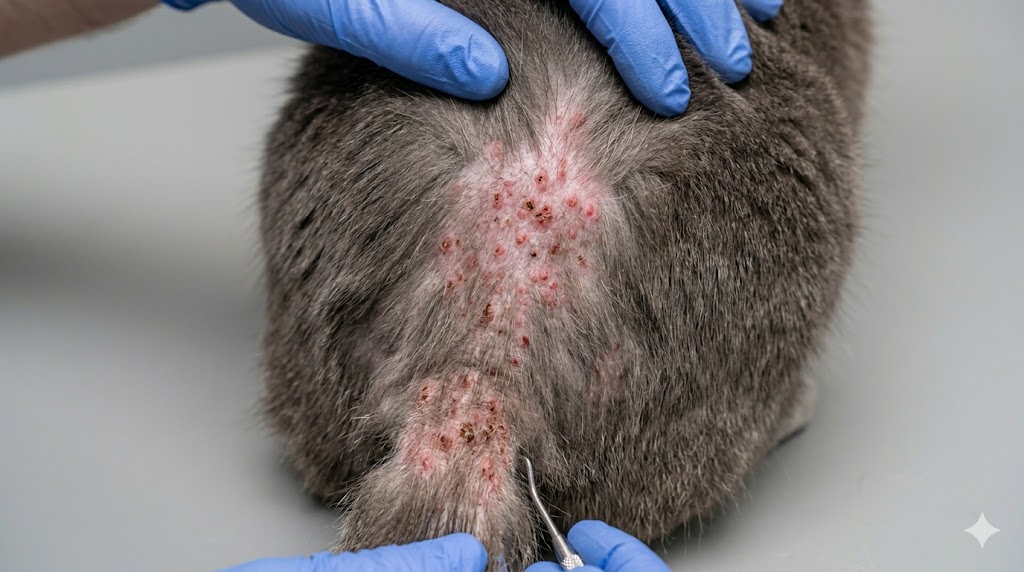
Is Your Dog's Skin Itchy or Irritated?
Upload a photo of the affected area and get an instant AI health assessment. Detect allergic reactions, rashes, hot spots, and more.
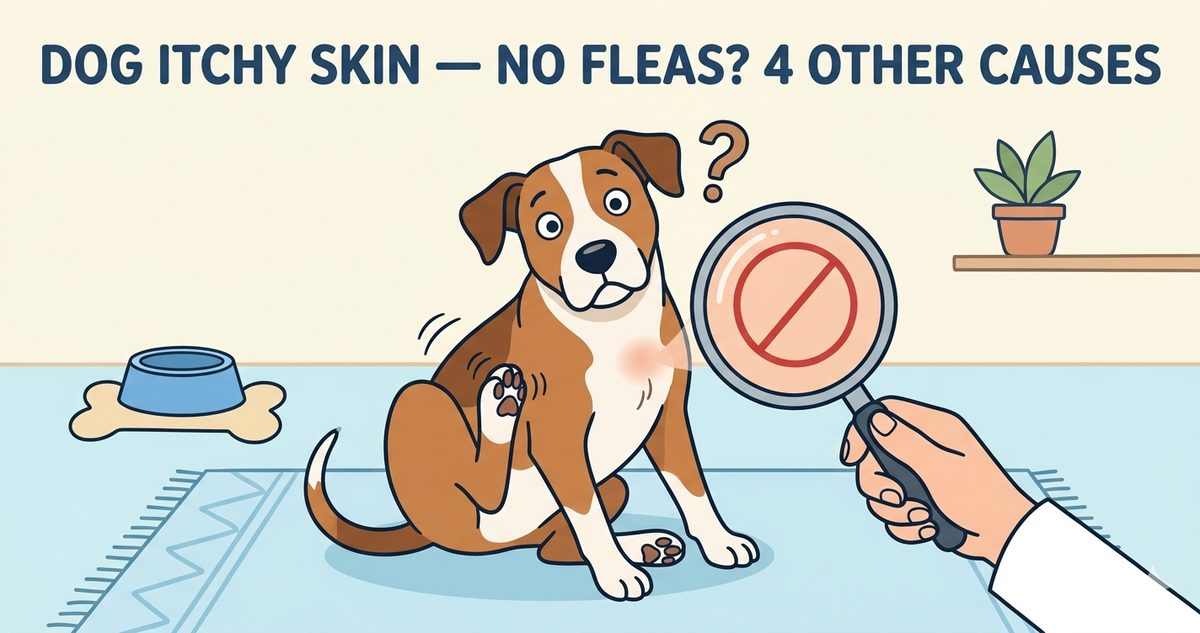
Your dog won't stop scratching. Their skin is red, bumpy, maybe even losing fur in patches. If this sounds familiar, there's a good chance your dog is dealing with a skin allergy. Dog skin allergies (allergic dermatitis) are one of the most common reasons pet owners visit the vet — and one of the most frustrating conditions to manage. This guide covers the 3 main allergy types with pictures, the best prescription treatments (Apoquel, Cytopoint, allergy shots), home care steps that actually help, the truth about natural remedies (which work, which are myths), and what to do when allergies become severe.
This article is for general educational purposes only and is not a substitute for professional veterinary diagnosis. Severe skin allergies can progress to systemic infections — when in doubt, see your vet.
Not sure what kind of allergy you're seeing? Upload a photo for AI pattern check against the 3 main types.
Start Skin AnalysisHow to Recognize Dog Skin Allergy Symptoms
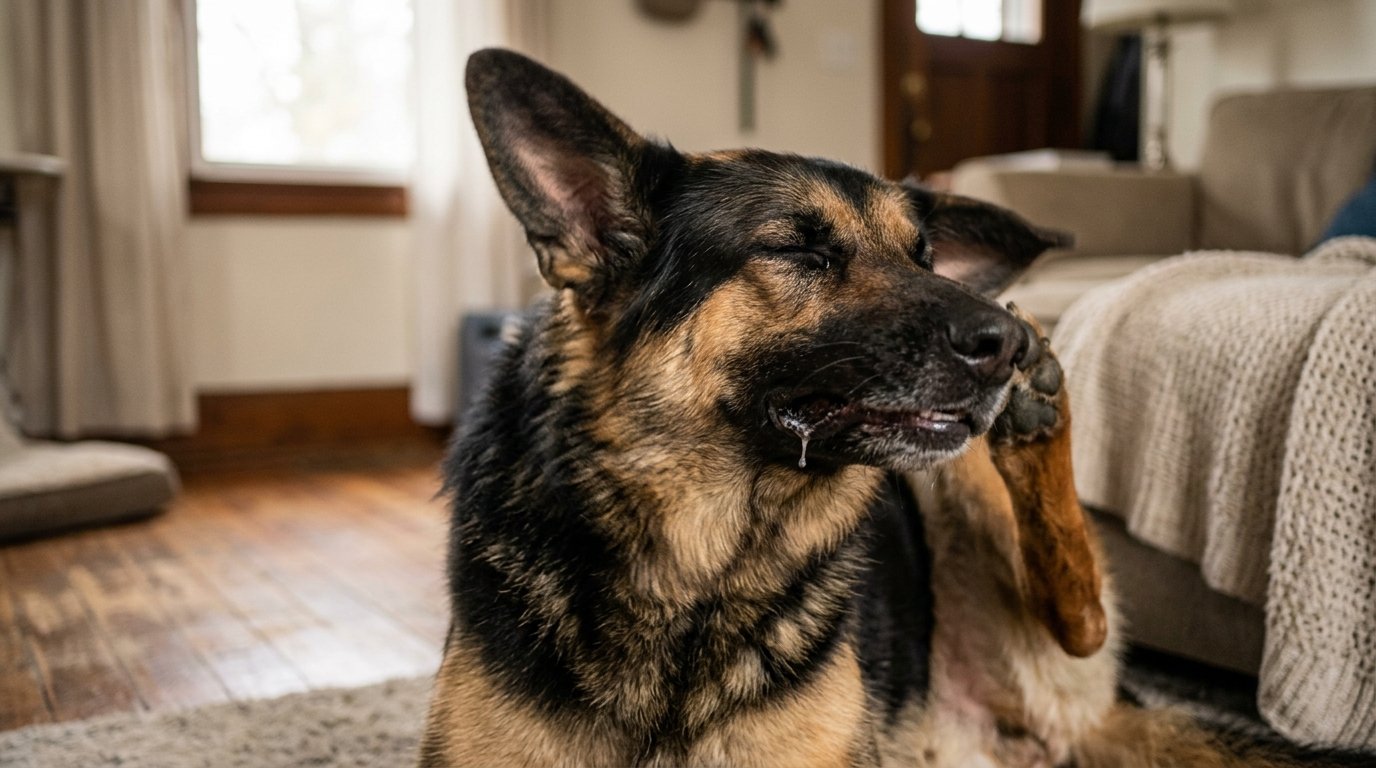
Dog skin allergy symptoms can look like many things, but there are patterns to watch for:
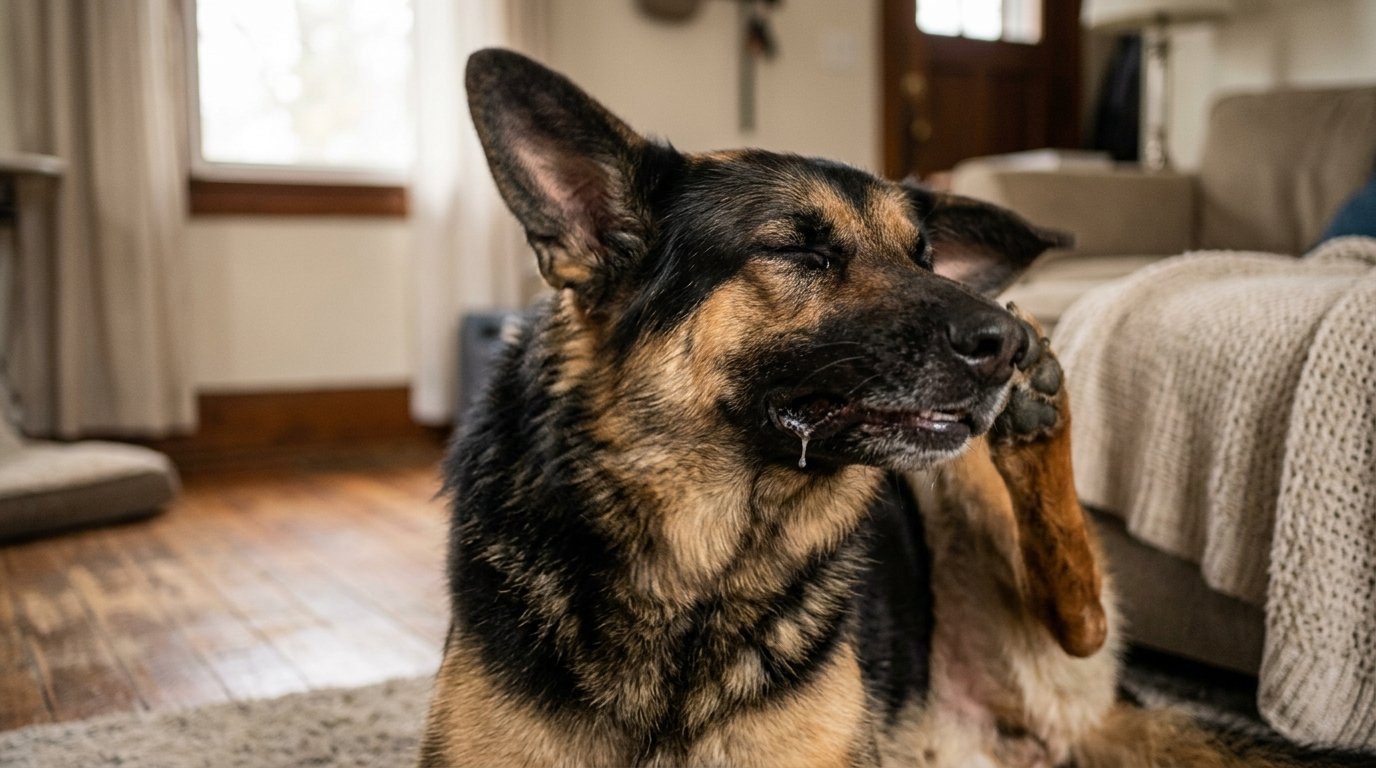
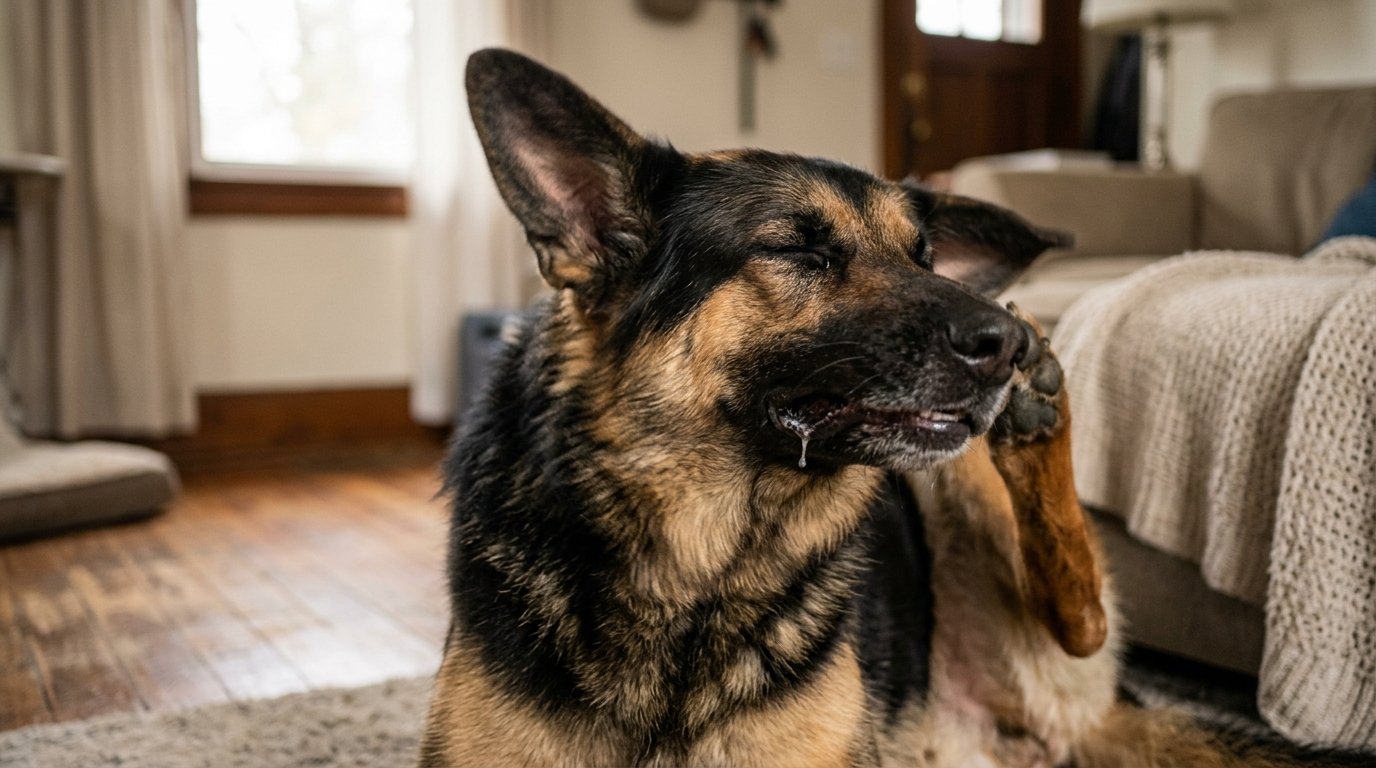
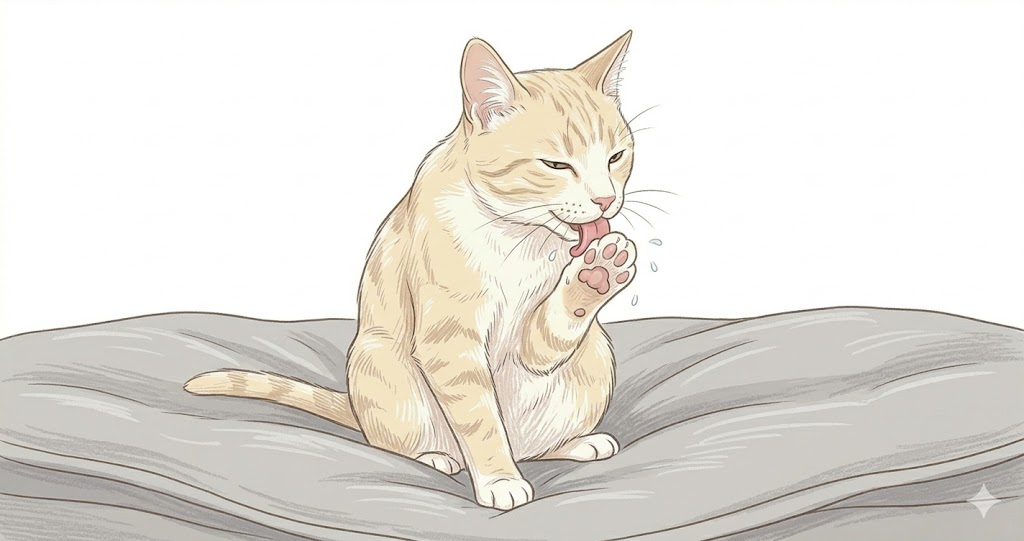
- ✓Persistent scratching, licking, or chewing — especially paws, belly, armpits, and ears
- ✓Red, inflamed skin or rashes
- ✓Bumps, hives, or raised welts (dog allergic reaction bumps)
- ✓Hair loss in patches or thinning coat
- ✓Hot spots — moist, raw, red areas that appear suddenly
- ✓Flaky, dry, or scaly skin
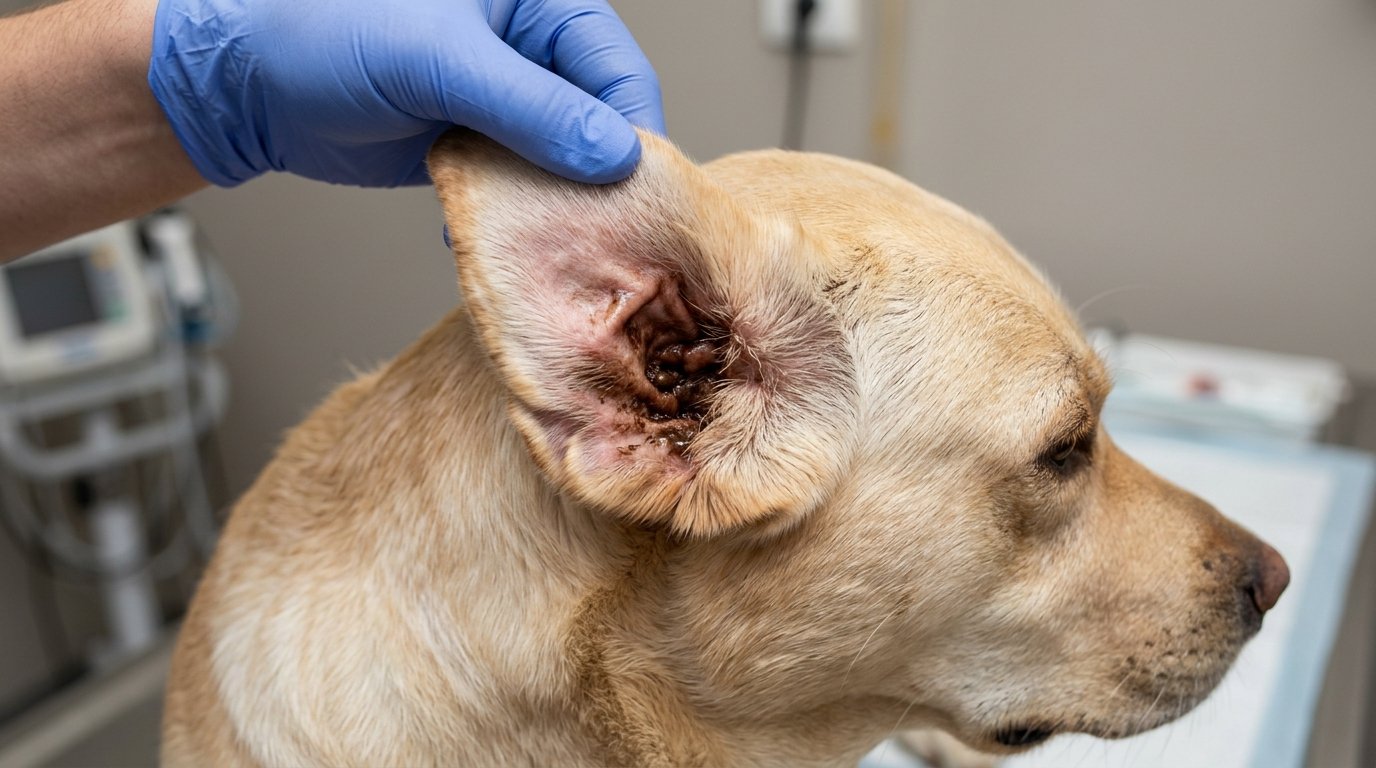
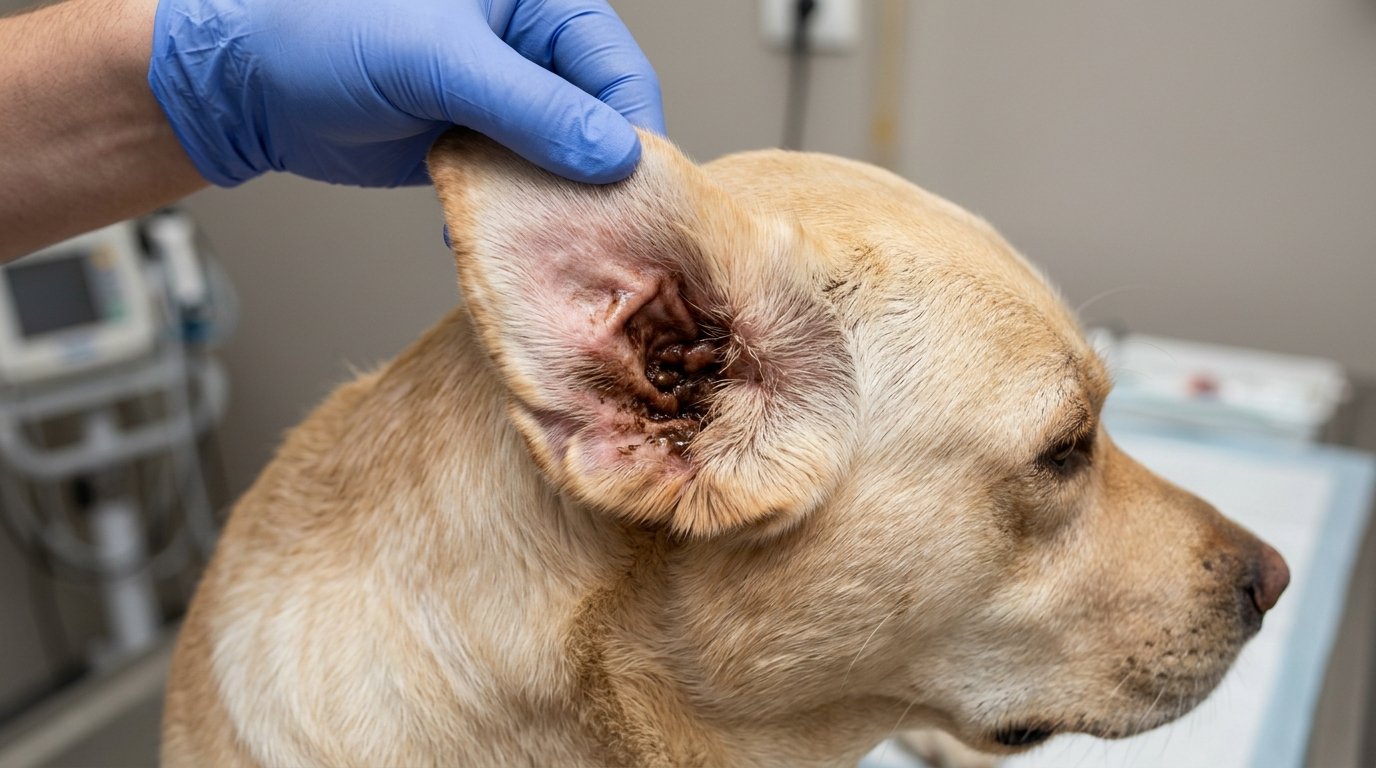
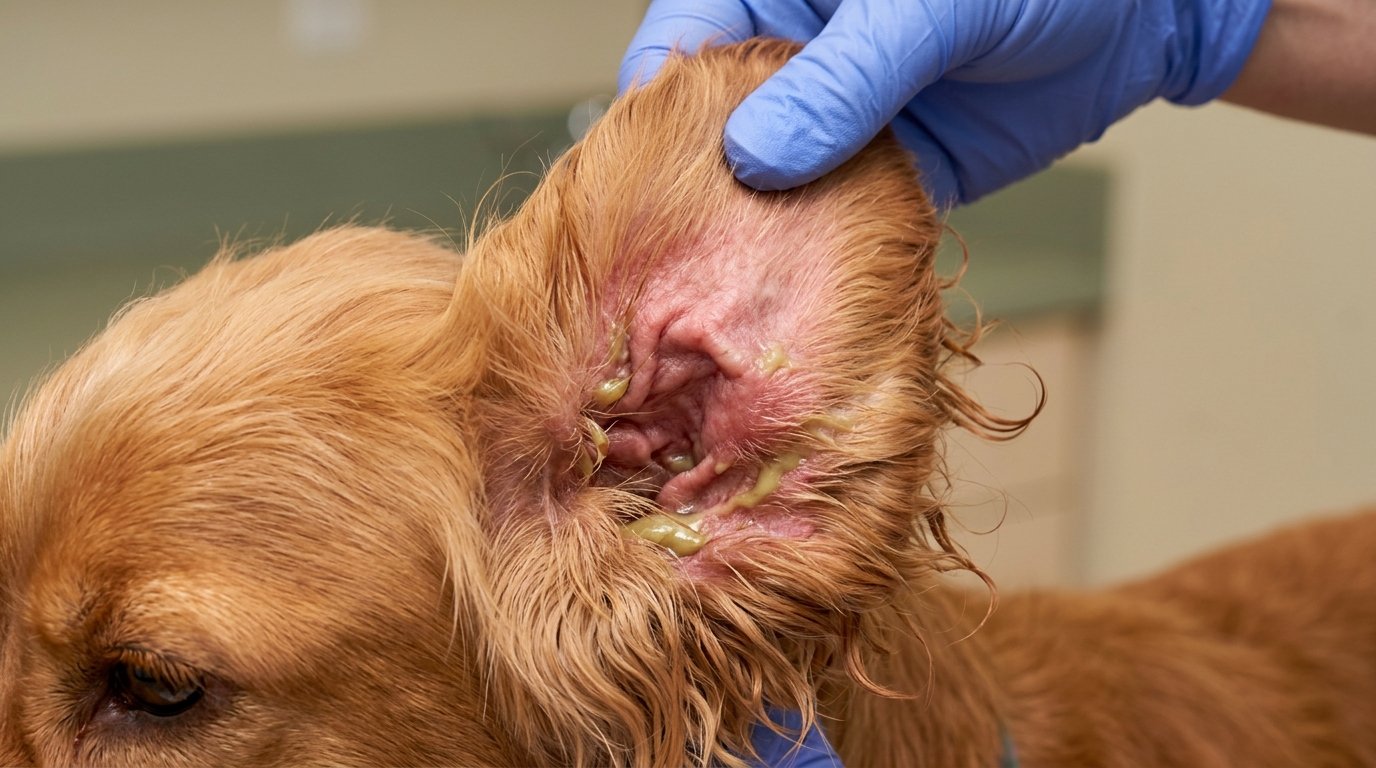
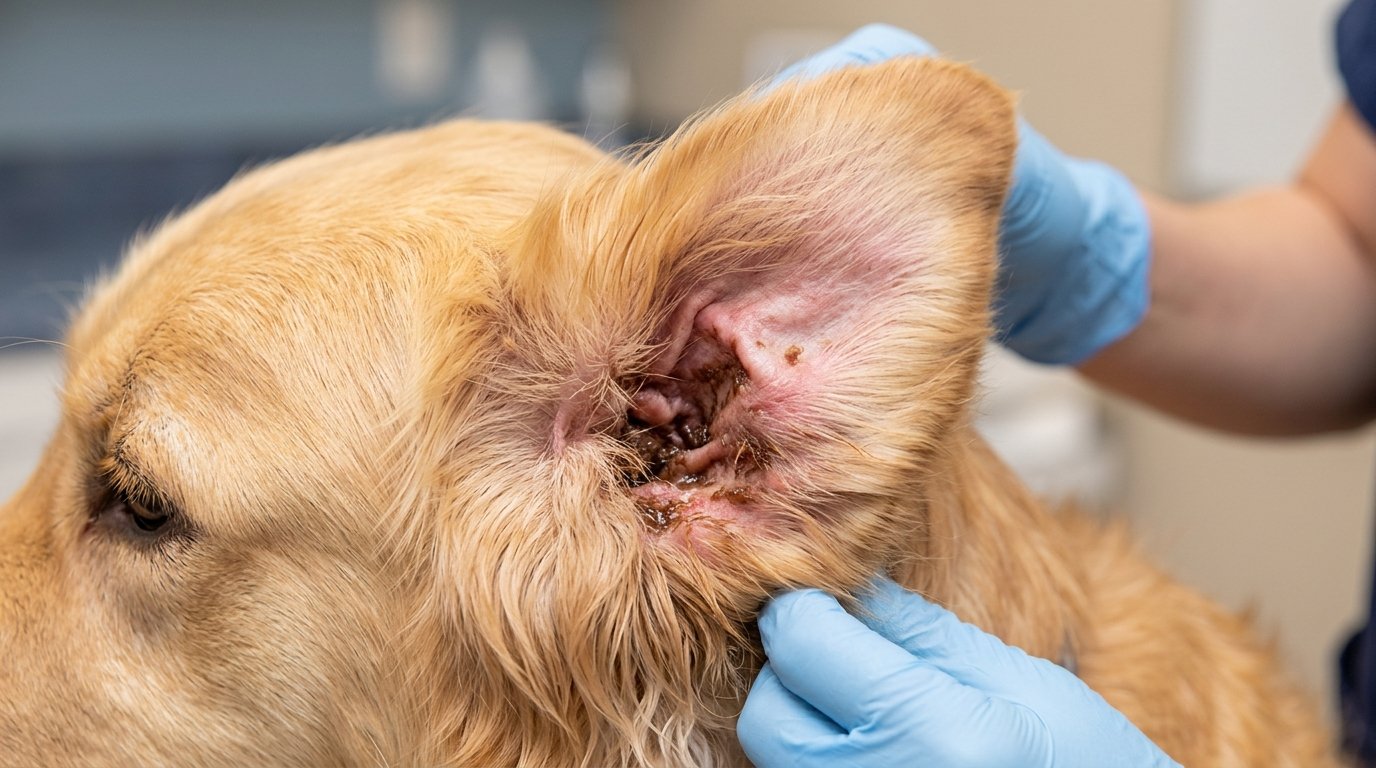
- ✓Recurring ear infections — allergies are the #1 cause of chronic ear problems in dogs
- ✓Darkened or thickened skin in areas of chronic irritation
If your dog shows any of these signs, uploading a photo to our AI skin concerns photo analysis tool can help identify what's going on before your vet visit.
The 3 Main Types of Dog Skin Allergies
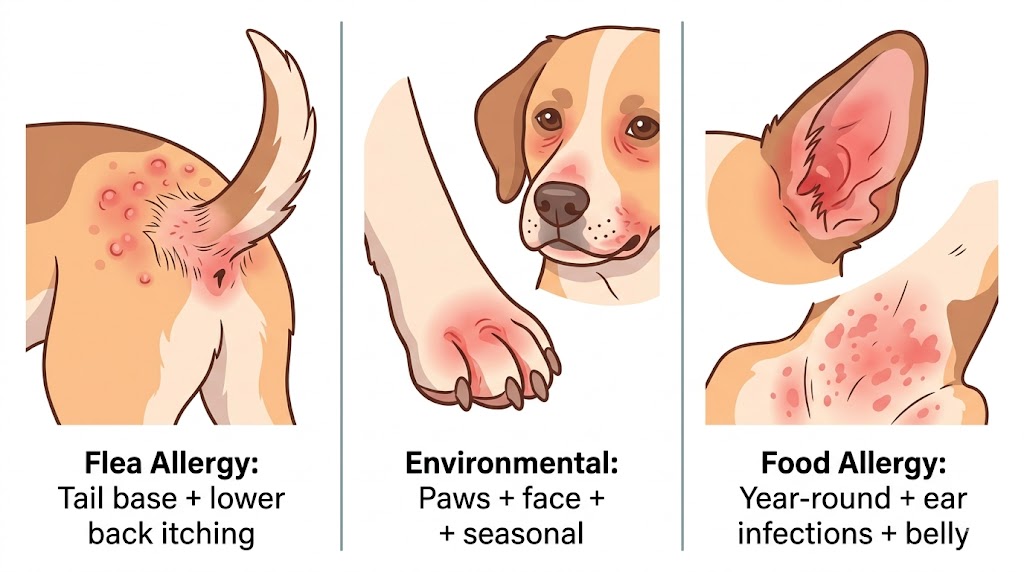
1. Flea Allergy Skin Reaction (FAD)
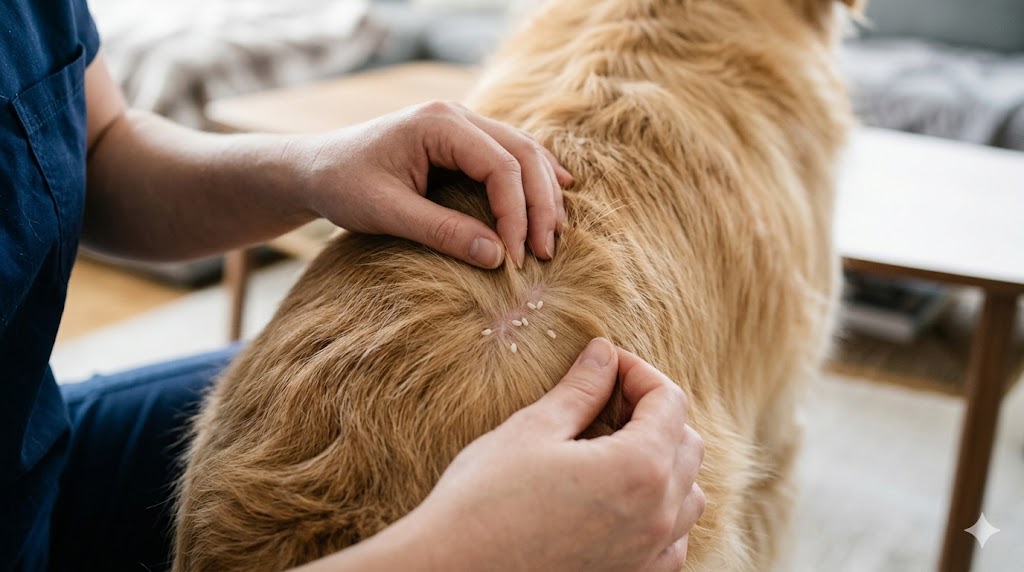
Flea allergy skin irritation in dogs is the single most common skin allergy. It's not about having a flea infestation — even a single flea bite can trigger an intense allergic reaction in sensitive dogs. The allergy is actually to proteins in flea saliva.
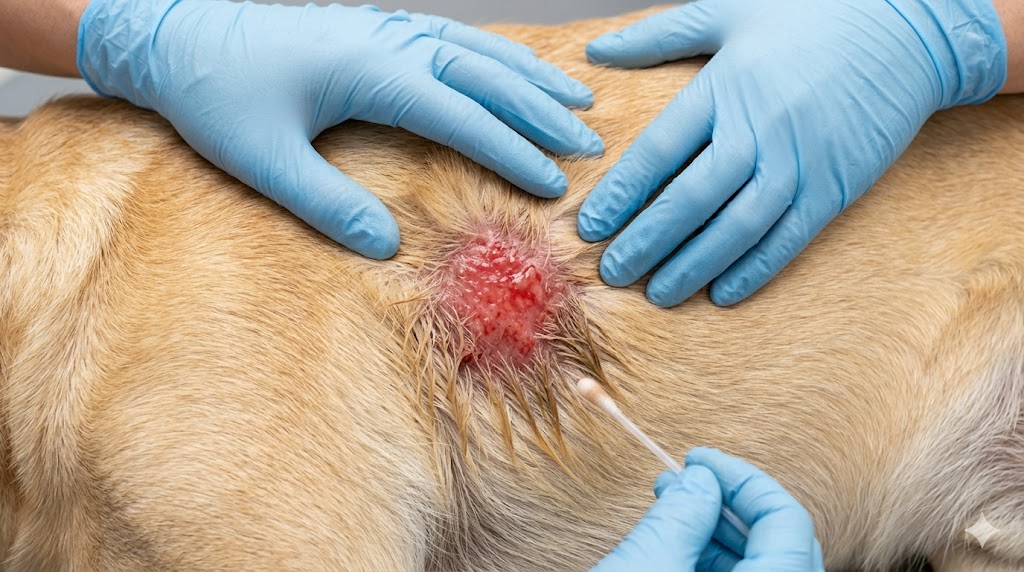
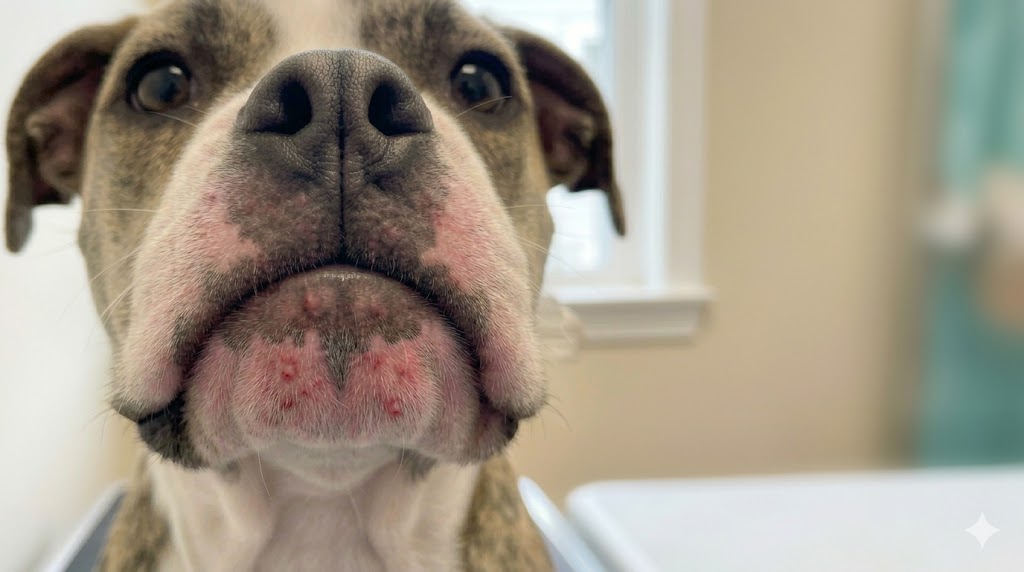
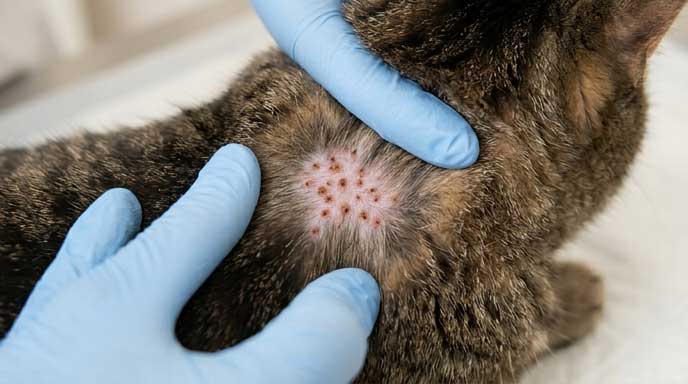
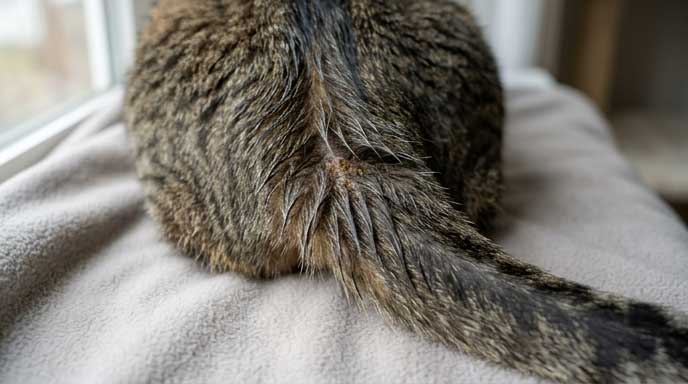
What it looks like: Severe itching concentrated around the tail base, lower back, inner thighs, and belly. You'll see red bumps, hair loss, and often hot spots from obsessive scratching. The symptoms of flea allergy in dogs can appear within minutes of a single bite and last for days.
The key giveaway: The itching is worst around the tail base and rear end. If your dog is chewing at the base of their tail constantly, flea allergy is the most likely culprit — even if you can't find any fleas on them.
2. Environmental Allergies (skin allergies)
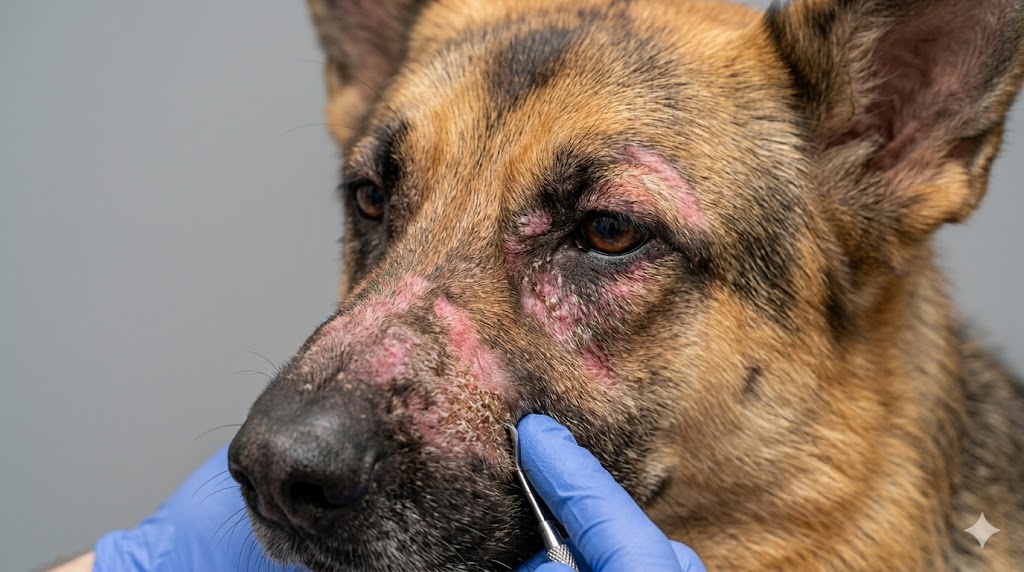
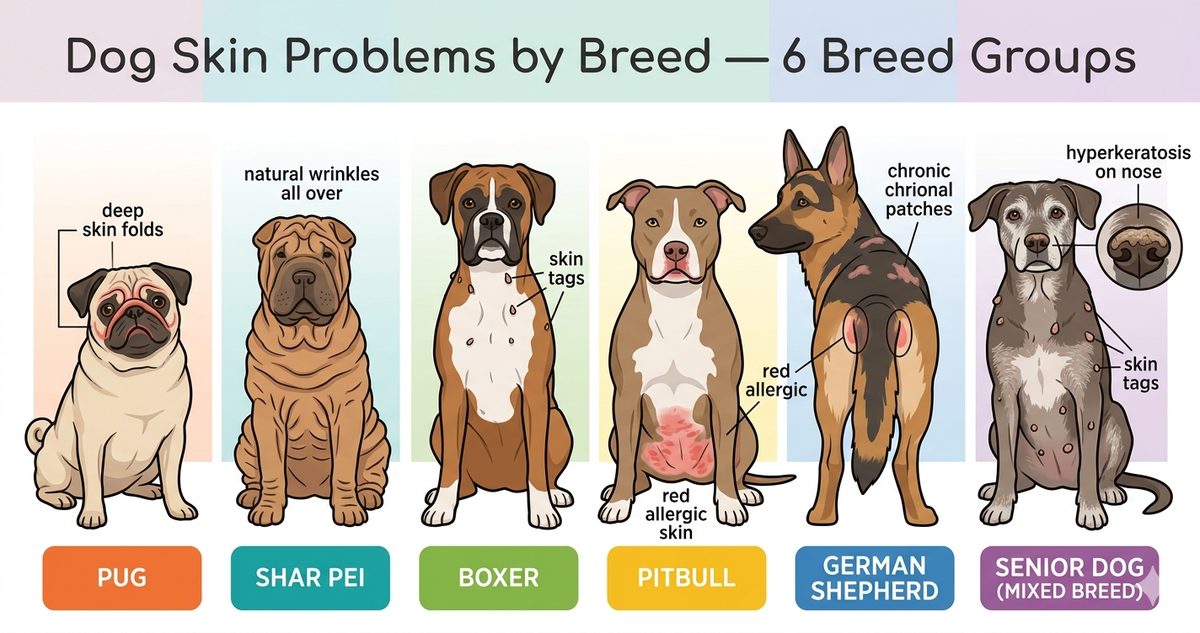
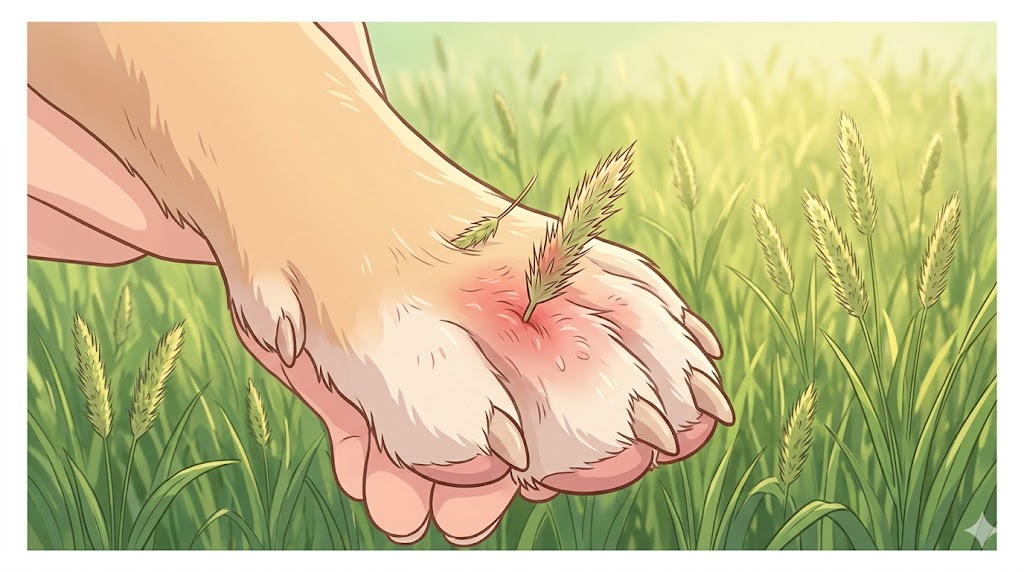
Just like humans get hay fever, dogs can be allergic to pollen, dust mites, mold, and grass. This is called skin allergies, and it's the second most common allergy in dogs. Certain breeds — Golden Retrievers, Bulldogs, Labradors, and German Shepherds — are genetically predisposed.
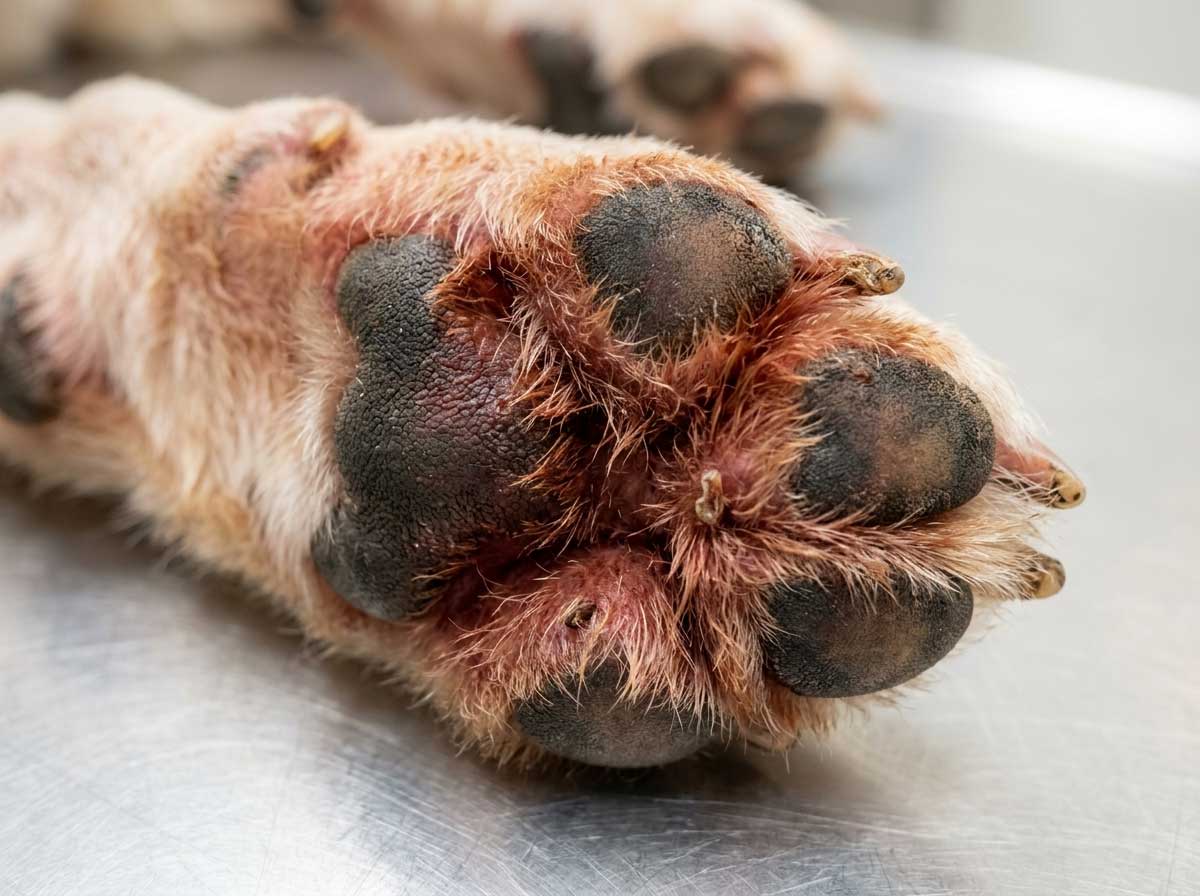
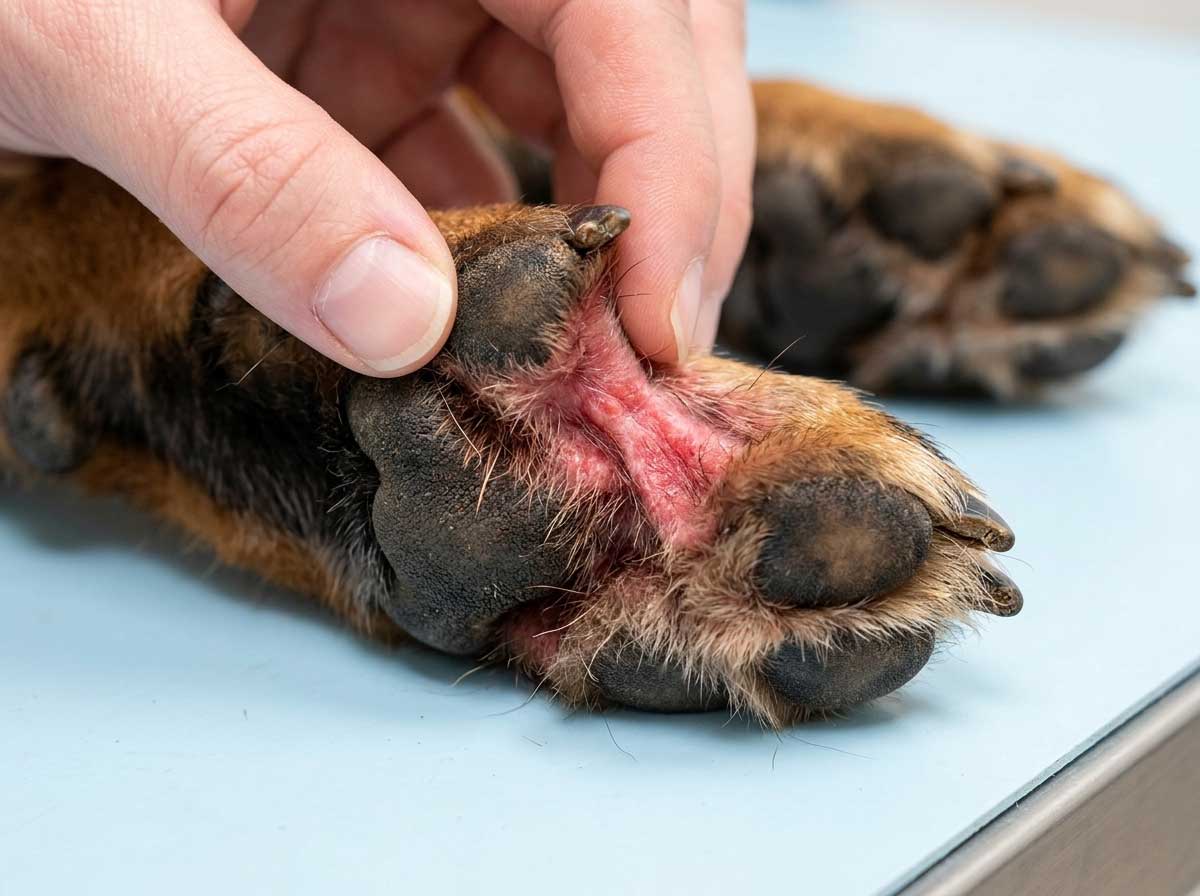
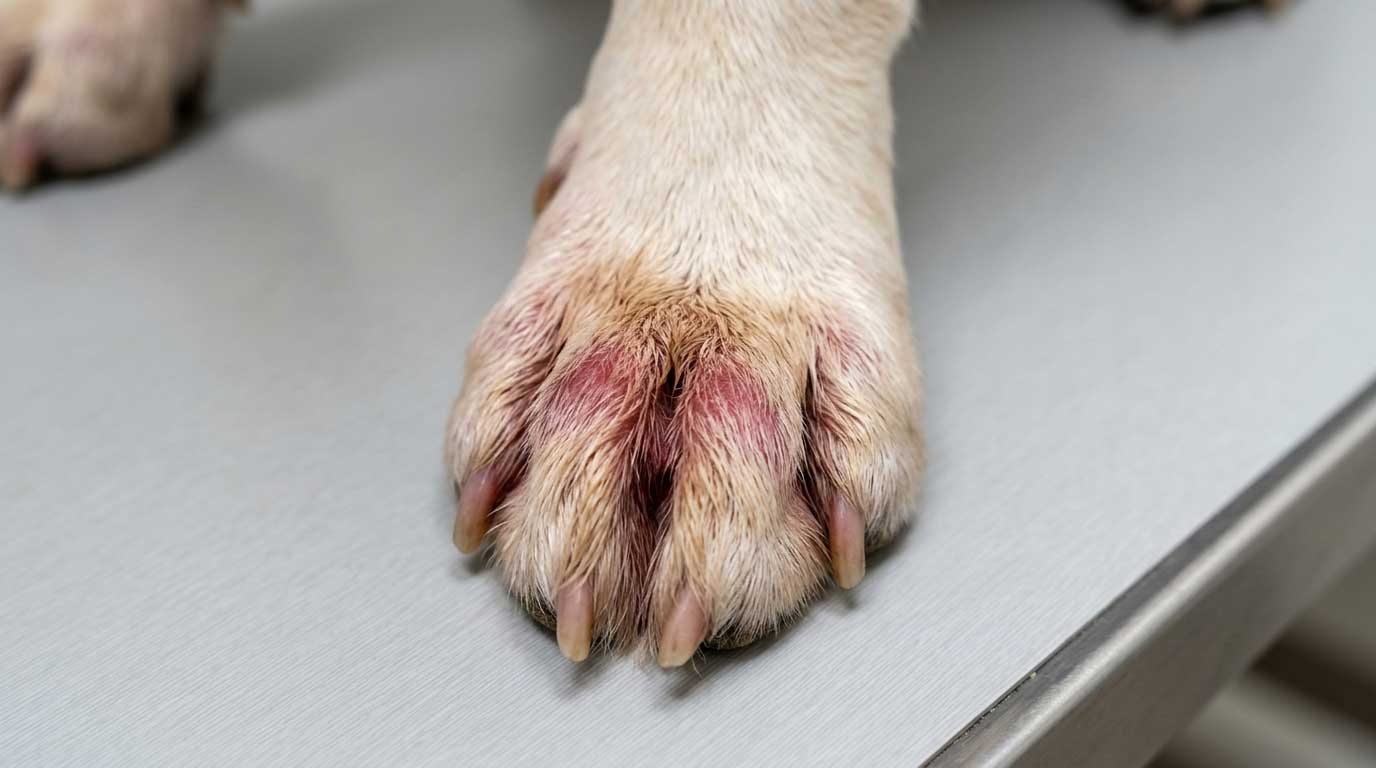
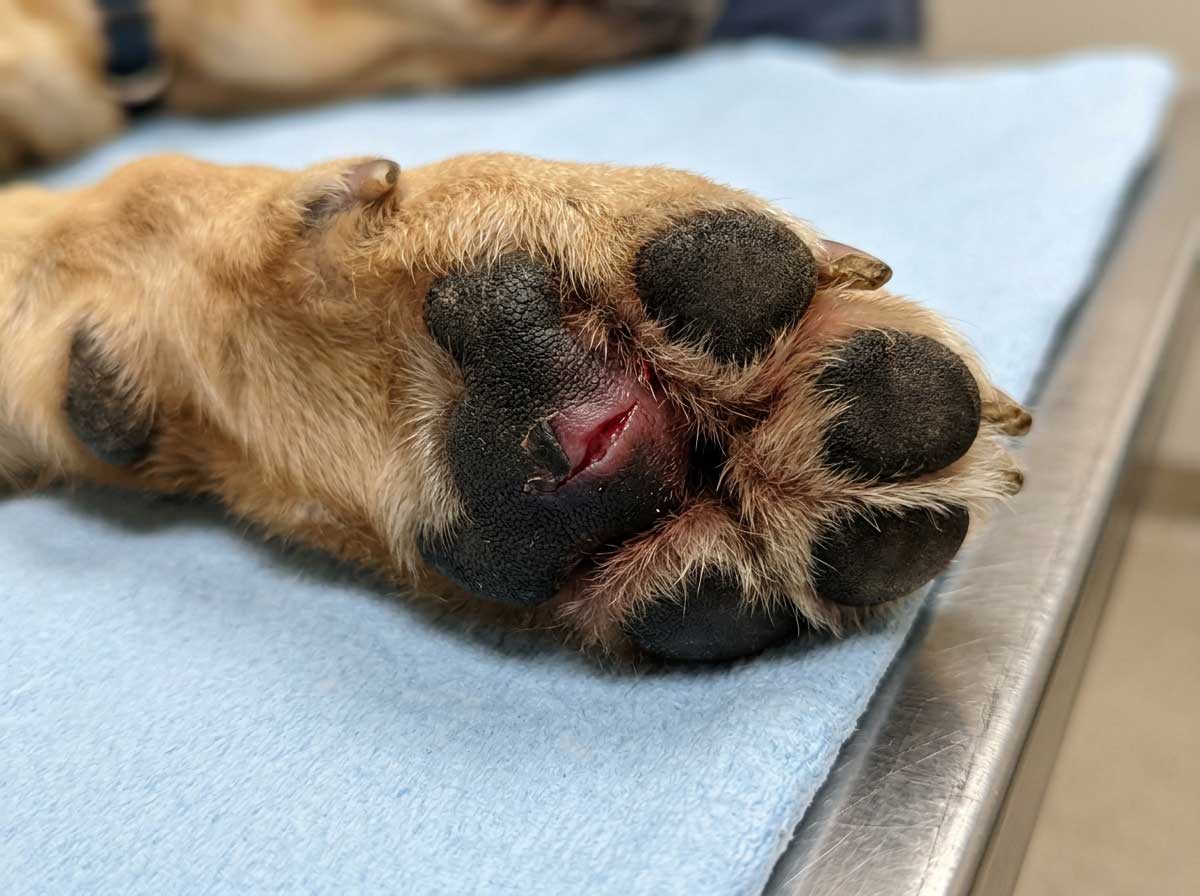
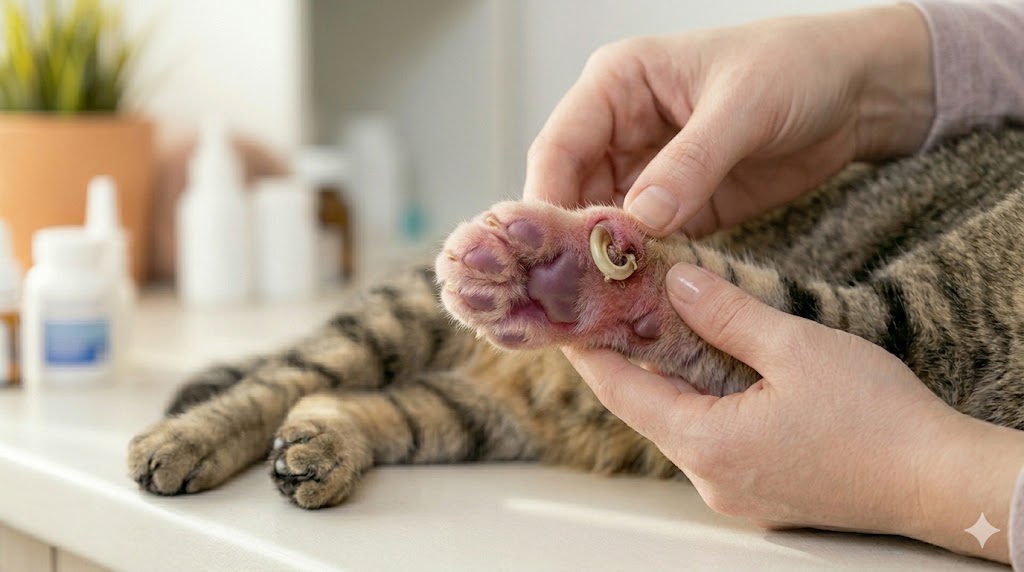
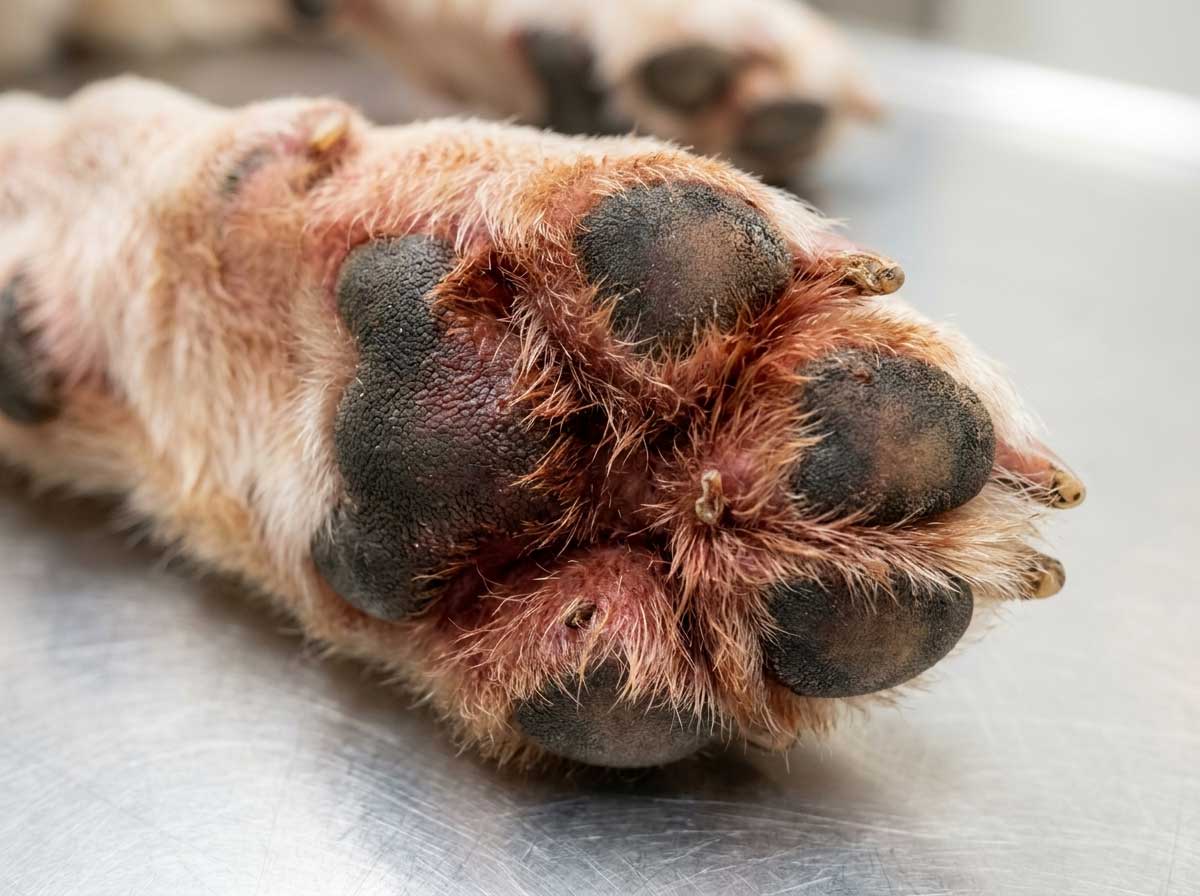
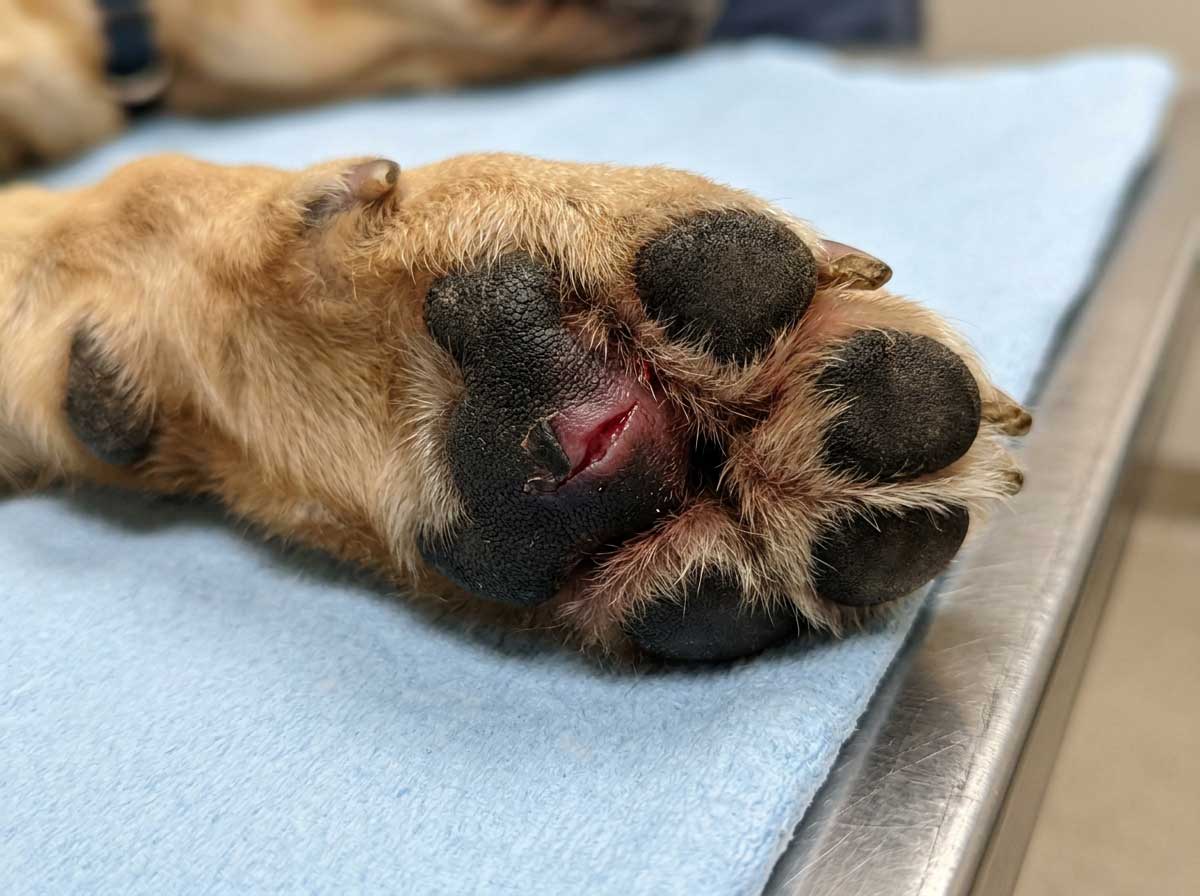
What it looks like: Itching focused on the face, paws (especially between the toes), ears, armpits, and groin. Dog seasonal allergies often flare up in spring and fall, while dust mite allergies persist year-round. You'll notice your dog licking their paws obsessively — allergies in dogs feet are a classic sign of environmental allergy.
The key giveaway: If the itching is seasonal (worse in spring/fall) and focused on paws and face, it's likely environmental. If it's year-round, dust mites or indoor allergens may be the cause.
3. Food Allergies
Food allergies in dogs are less common than most owners think — accounting for only about 10-15% of all allergies. The most common food allergens for dogs are chicken, beef, dairy, wheat, and soy. A true food allergy triggers an immune response, which is different from food intolerance (which causes digestive upset without immune involvement).
What it looks like: Non-seasonal itching (year-round, consistent), often focused on the ears, paws, and rear end. Dog food allergy symptoms on skin include chronic ear infections, itchy skin, and sometimes vomiting or diarrhea. The skin symptoms of food allergy in dogs are often identical to environmental allergies — the only way to confirm is an elimination diet.
The key giveaway: Year-round itching that doesn't respond to flea treatment and isn't seasonal. If your dog also has digestive issues (vomiting, diarrhea, gas) alongside skin problems, food allergy is more likely. Try our <a href="/dog-vomiting" class="text-primary-600 hover:text-primary-700 underline">dog vomit photo analysis tool</a> if vomiting is also a concern.
Dog Allergic Reaction: What Bumps and Hives Mean
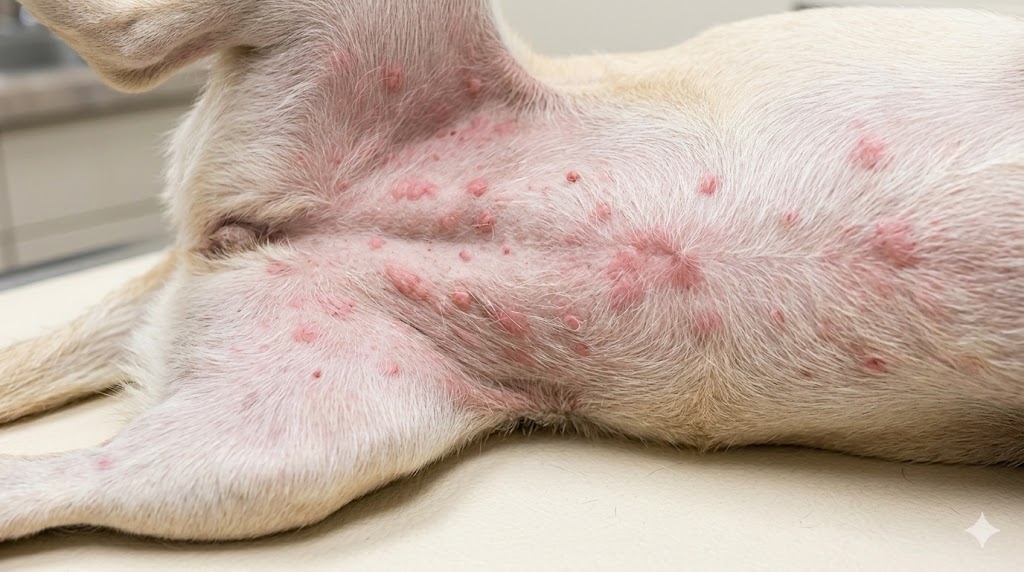
Sometimes allergy symptoms appear suddenly as bumps or hives — this is an acute allergic reaction. Dog allergic reaction bumps are raised welts that can appear anywhere on the body, often within minutes to hours of exposure to the allergen. Common triggers include insect stings, new foods, medications, or contact with plants.
Mild reactions (a few bumps, minor swelling) often resolve on their own or with an vet-prescribed care. But if you see facial swelling, difficulty breathing, or widespread hives, this is an emergency — get to the vet immediately.
Sudden hives or bumps from an allergic reaction? Upload a photo for AI severity check.
Start Skin AnalysisBest Treatment for Dog Skin Allergies — Prescription Options
When home care isn't enough, your vet has several prescription options. Knowing what to expect saves time at the appointment:
Apoquel (Oclacitinib)
A once-daily oral pill that blocks the itch signal at the immune level. Fast-acting (4 hours to relief), generally well-tolerated long-term. The most-prescribed allergy medication for dogs. Cost: $60-100/month for a medium dog. Best for: chronic atopic (environmental) allergies and food allergies.
Cytopoint Injection
A monthly injection at the vet that targets the specific protein causing itch. Very safe even for dogs with liver/kidney issues who cannot take Apoquel. Cost: $80-150/month. Slower than Apoquel (1-2 days to relief) but many owners prefer once-monthly dosing.
NUMELVI (Atinvicitinib) — Newer Option
A 2024-approved second-generation JAK inhibitor for dogs 6+ months. Similar mechanism to Apoquel but with fewer required doses. Newer to the market, may not be available at every vet. Discuss with your vet.
Immunotherapy (Allergy Shots)
Customized injections based on intradermal or blood allergy testing — the closest thing to a "cure" for environmental allergies. Works for 60-70% of dogs but takes 6-12 months to see full benefit. Long-term cost-effective for chronic cases.
Steroids (Prednisone)
Fast and effective but rarely used long-term due to side effects (increased thirst, weight gain, immune suppression). Used short-term during severe flares only.
How to Treat Dog Skin Allergies at Home
Home care will not "cure" an allergy, but the right home routine dramatically reduces flare frequency and severity. The 6 evidence-based steps:
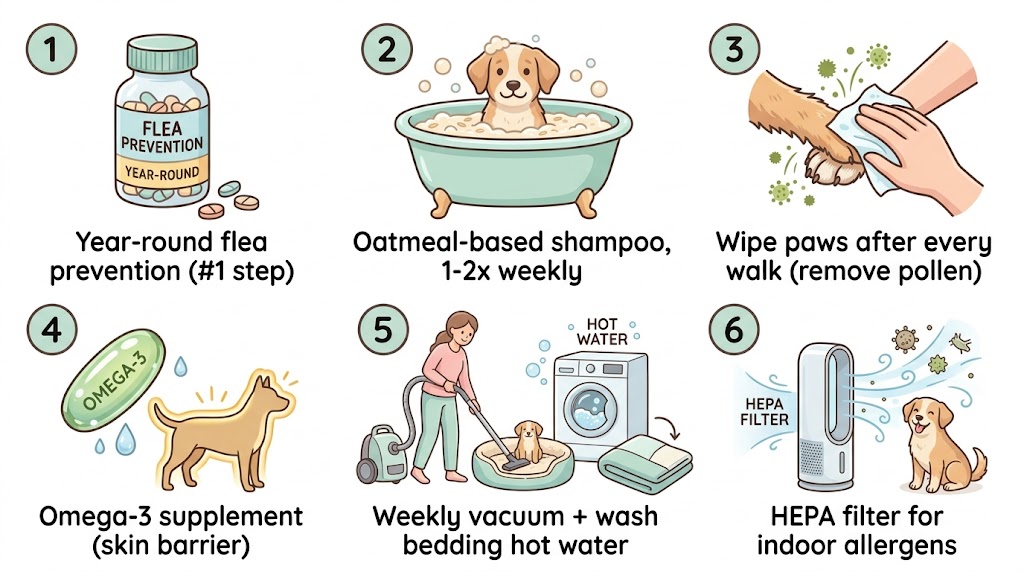
- ✓**Year-round flea prevention** (NexGard, Bravecto, Credelio, Simparica) — this is the #1 step even if you don't see fleas
- ✓**Colloidal oatmeal bath / shampoo** 1-2x weekly during flare seasons — soothes itch with vet-backed evidence (American Kennel Club recommended)
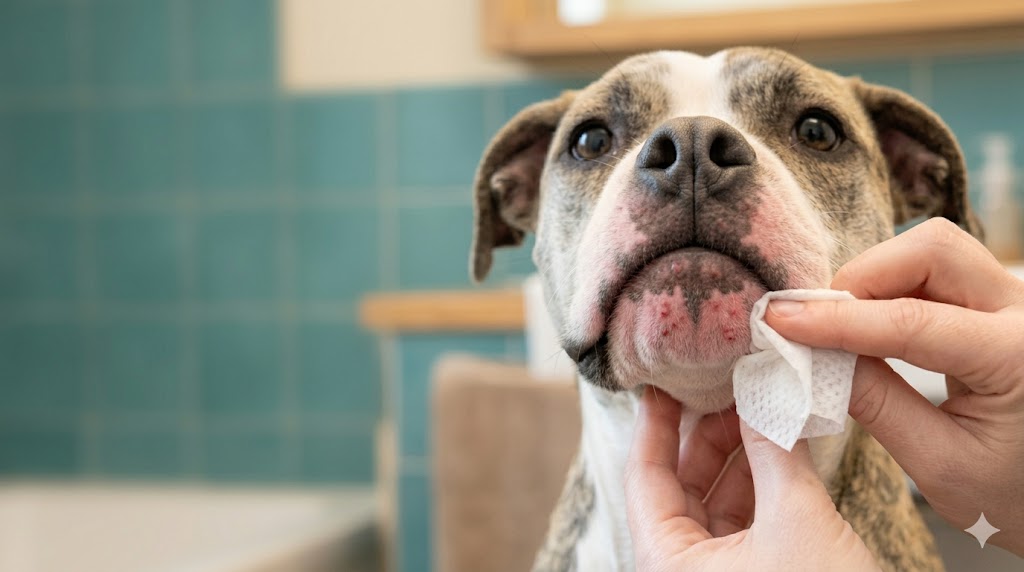
- ✓**Wipe paws after every walk** with pet-safe wipes (chlorhexidine wipes for allergic dogs) — removes pollen and dust
- ✓**Omega-3 fish oil supplement** daily — 20-55 mg combined EPA/DHA per pound of body weight reduces inflammation over 6-8 weeks
- ✓**Weekly vacuum + bedding hot wash** — reduces dust mites and indoor allergens by 30-50%
- ✓**HEPA air filter** in the rooms your dog sleeps in — captures airborne allergens
Critical timing: home care works as PREVENTION between vet visits. It does NOT replace prescription treatment for an active severe flare with infected skin.
Natural Remedies for Dog Skin Allergies — What Actually Works vs Myths
Internet advice on "natural" dog allergy remedies is mixed — some have real evidence, others are myths or actually harmful. Here is the evidence-based truth:
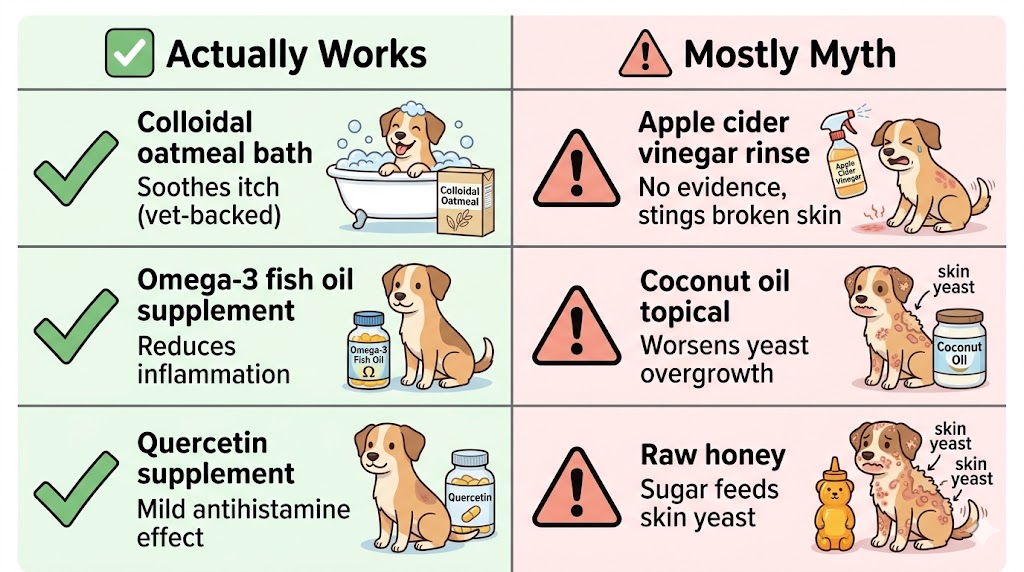
✅ Actually Works (Vet-Backed)
- ✓**Colloidal oatmeal baths** — AKC and Merck Veterinary Manual confirm itch-soothing properties for mild irritation
- ✓**Omega-3 fish oil supplementation** — solid evidence for reducing skin inflammation over 6-8 weeks
- ✓**Quercetin supplementation** ("nature's Benadryl") — mild antihistamine effect; check dose with your vet
- ✓**Cool damp compress** on flare areas — 10-15 minutes brings immediate symptomatic relief
⚠️ Mostly Myth (Skip These)
- ✓**Apple cider vinegar rinses** — no evidence at safe dilutions; stings broken skin severely
- ✓**Coconut oil topical** — actually worsens yeast overgrowth (yeast loves fat) and dogs lick it off
- ✓**Raw honey topical or oral** — sugars feed skin yeast; high carbohydrate load
- ✓**Tea tree oil** — TOXIC to dogs; can cause tremors, weakness, even death at low concentrations
- ✓**Garlic** — TOXIC; causes hemolytic anemia (red blood cell destruction)
Severe Skin Allergies in Dogs — When Home Care Isn't Enough
Severe allergic dermatitis goes beyond what home care can handle. Signs you are in severe territory:
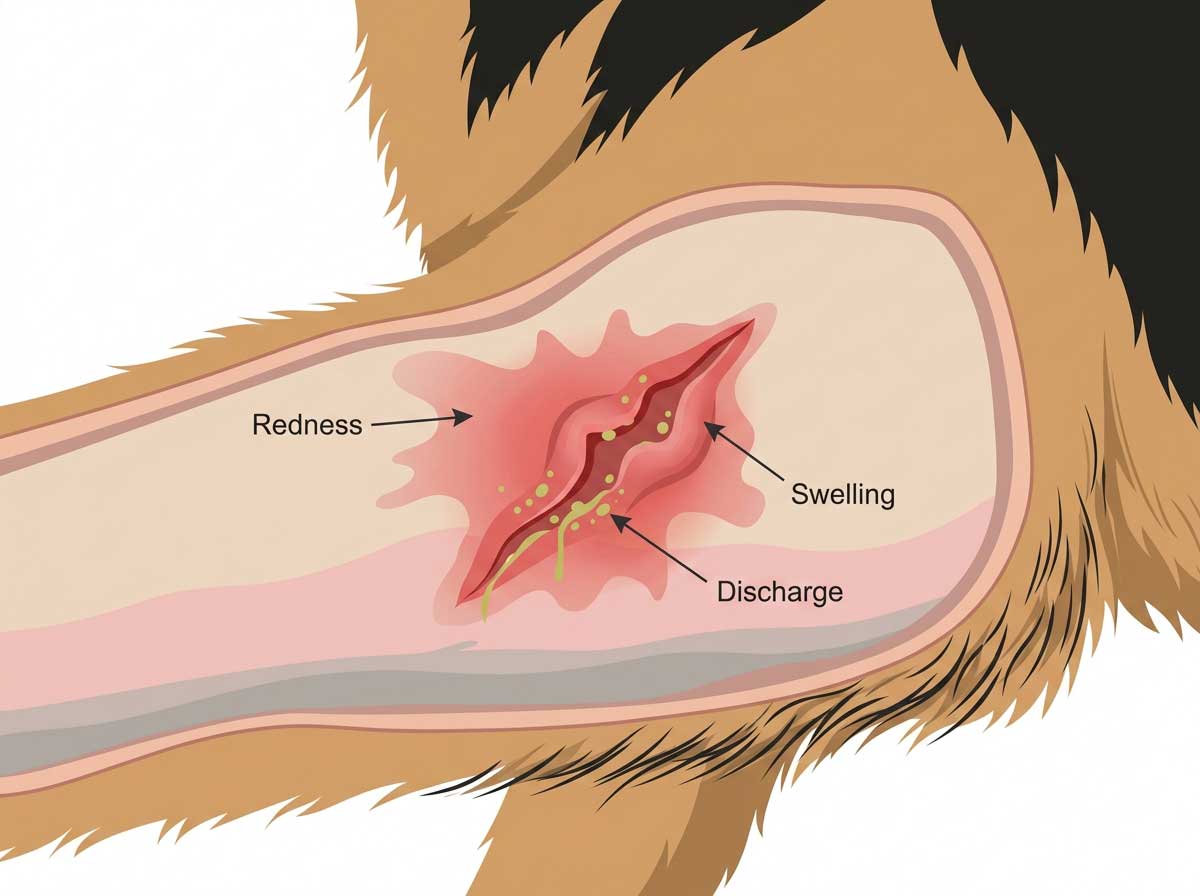
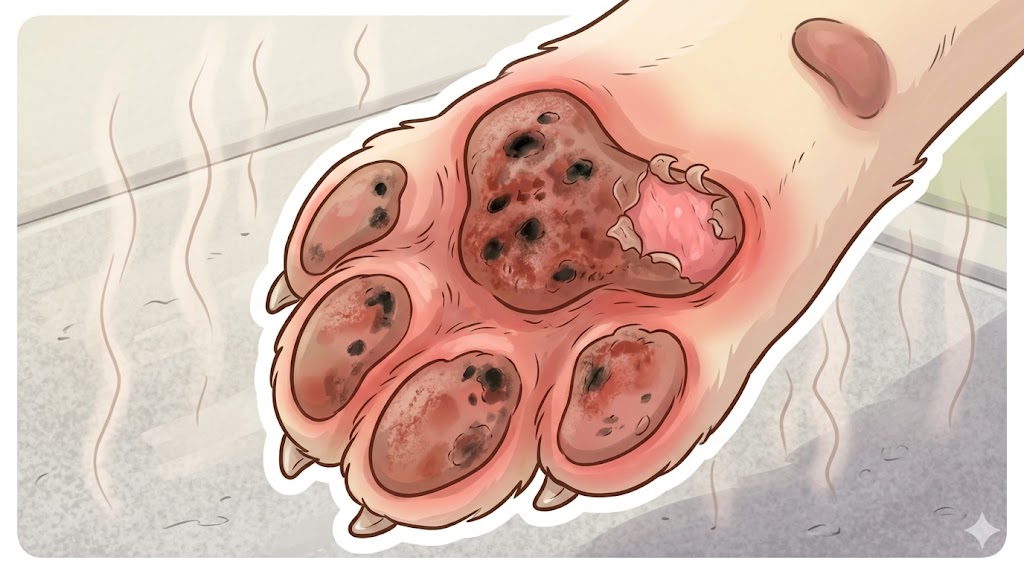
- ✓**Constantly scratching to the point of bleeding or open wounds**
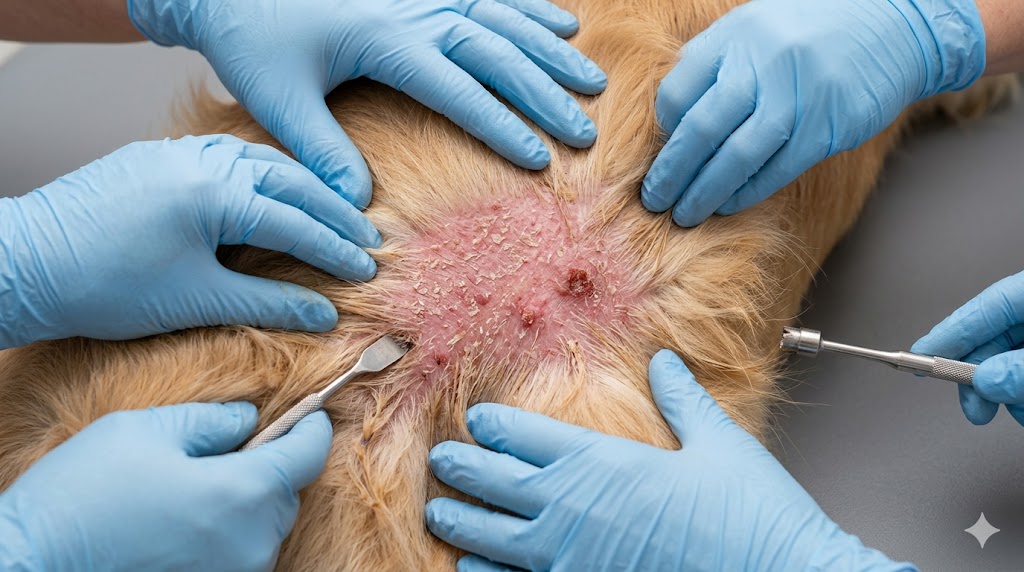
- ✓**Infected skin with pus, foul smell, or hot to the touch** (secondary bacterial pyoderma)
- ✓**Multiple chronic ear infections** (3+ per year — allergies are the #1 cause)
- ✓**Hair loss covering large areas** (not just patches)
- ✓**Sleep disruption** for the dog (constant scratching at night)
- ✓**Quality of life severely affected** — withdrawn, won't play, depressed mood
Severe cases need prescription Apoquel/Cytopoint immediately, plus addressing any secondary infections with antibiotics. Allergy testing (intradermal or blood) becomes worth the $200-400 cost to identify specific triggers for immunotherapy. Do not try to manage severe allergies at home alone — the dog suffers unnecessarily and chronic uncontrolled scratching damages skin permanently.
Allergic reaction looking severe? Upload a photo for AI urgency assessment.
Start Skin AnalysisWhen Should You See a Vet?
While mild itching or occasional scratching is normal, see your vet if:
- ✓Your dog is scratching so much it's causing wounds, hot spots, or hair loss
- ✓The skin looks infected — pus, oozing, crusting, or a bad smell
- ✓Symptoms keep coming back despite treatment
- ✓Your dog has recurring ear infections (3+ per year)
- ✓There's sudden facial swelling or difficulty breathing (emergency)
- ✓You've tried changing food and flea prevention but nothing helps
Home Management Tips for Dog Skin Allergies
- ✓Year-round flea prevention — non-negotiable, even if you don't see fleas
- ✓Rinse paws after walks to remove pollen and irritants
- ✓Use a dog-specific oatmeal shampoo for allergies (not human shampoo)
- ✓Wash bedding weekly in hot water
- ✓Consider an air purifier for indoor allergens
- ✓Don't switch foods randomly — work with your vet on a proper elimination diet
- ✓Keep a symptom diary: when does the itching flare up? After walks? Certain seasons? New food?
Dog skin allergies are manageable but rarely "curable." The goal is identifying the trigger and minimizing exposure. If you're unsure what's causing your dog's skin problems, start by uploading a photo to our skin concerns photo analysis tool for an instant AI assessment — it can help narrow down whether you're dealing with allergies, infection, or something else entirely.
For deeper reading on related conditions see our guides on dog food allergy symptoms, dog hot spots, dog paws red between toes — 5 causes, and dog hair loss home remedies — what works. For external veterinary references see PetMD's dog skin allergies guide, Cornell Vet on canine atopic dermatitis, and AKC's "Dog Allergies — Symptoms and Treatment".
Skin allergies often trigger hot spots from continuous scratching. Our new AI tool identifies hot spot severity (mild vs spreading vs severe) from your dog photo.
Try Hot Spots Pictures AI ToolAllergic dermatitis is just 1 of 5 most common dog skin diseases. Our new AI dog skin diseases pictures tool identifies allergic vs bacterial pyoderma vs mange vs ringworm vs hot spot from your dog's actual skin photo.
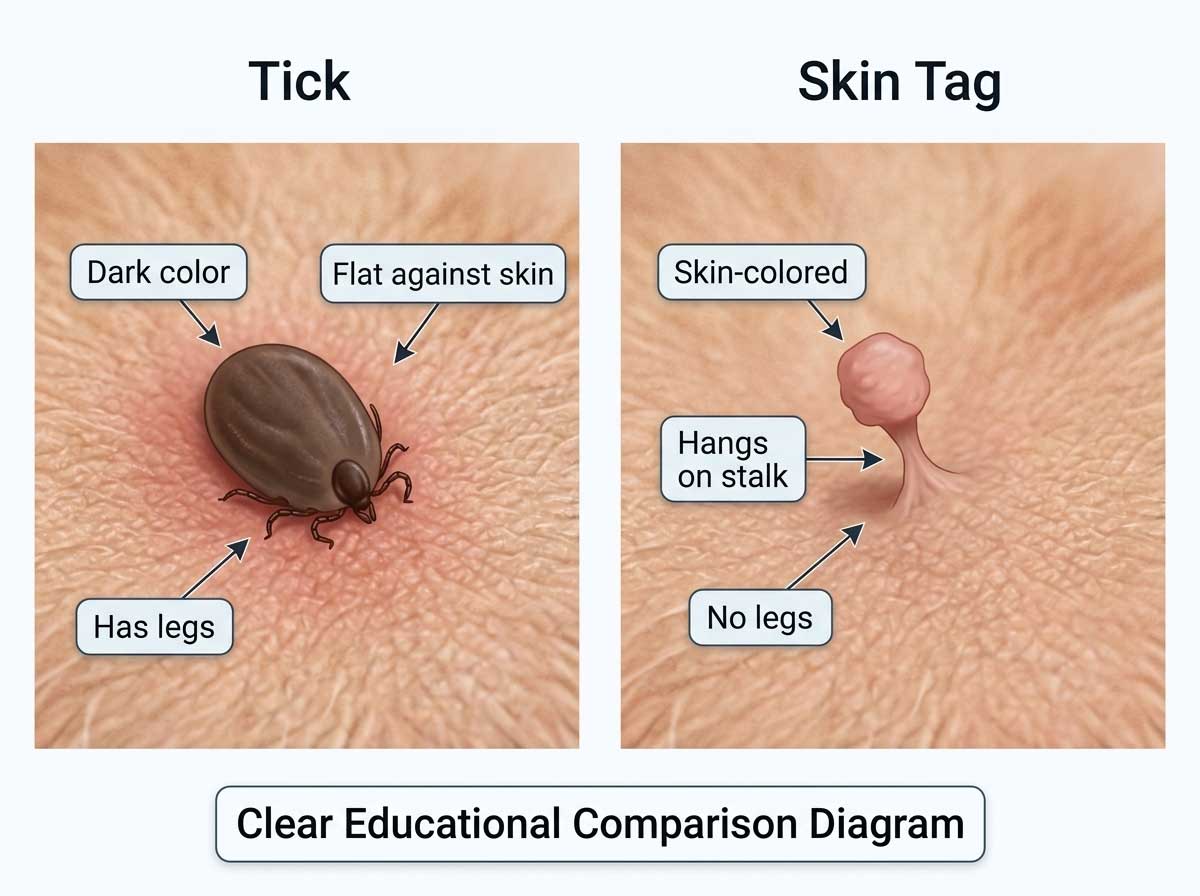
Try Dog Skin Diseases Pictures AI ToolSometimes allergic bumps look like skin tags or other growths. Our new AI dog skin tags pictures tool identifies benign skin tag vs embedded tick mimic vs wart vs cyst from your dog's skin growth photo.
Try Dog Skin Tags Pictures AI ToolAllergies often progress to secondary skin infections. Our new AI dog skin infection pictures tool identifies bacterial pyoderma vs yeast Malassezia vs fungal ringworm vs hot spot from your dog's actual skin photo.
Try Dog Skin Infection Pictures AI ToolBelly rash is one of the most common dog skin allergy signs — direct grass and pollen contact on the belly. Our new AI dog belly rash pictures tool identifies allergy vs flea vs yeast vs bacterial pattern from the belly photo.
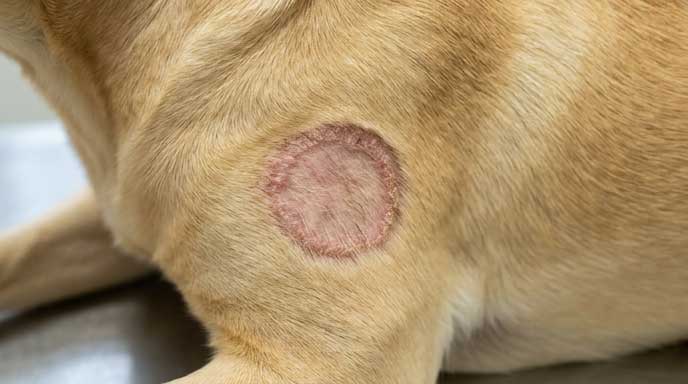
Try Dog Belly Rash Pictures AI ToolAllergy round patch or ringworm? Critical to tell apart — ringworm is CONTAGIOUS to humans. Our new AI dog ringworm pictures tool identifies ringworm stage + zoonotic risk + when to see vet.
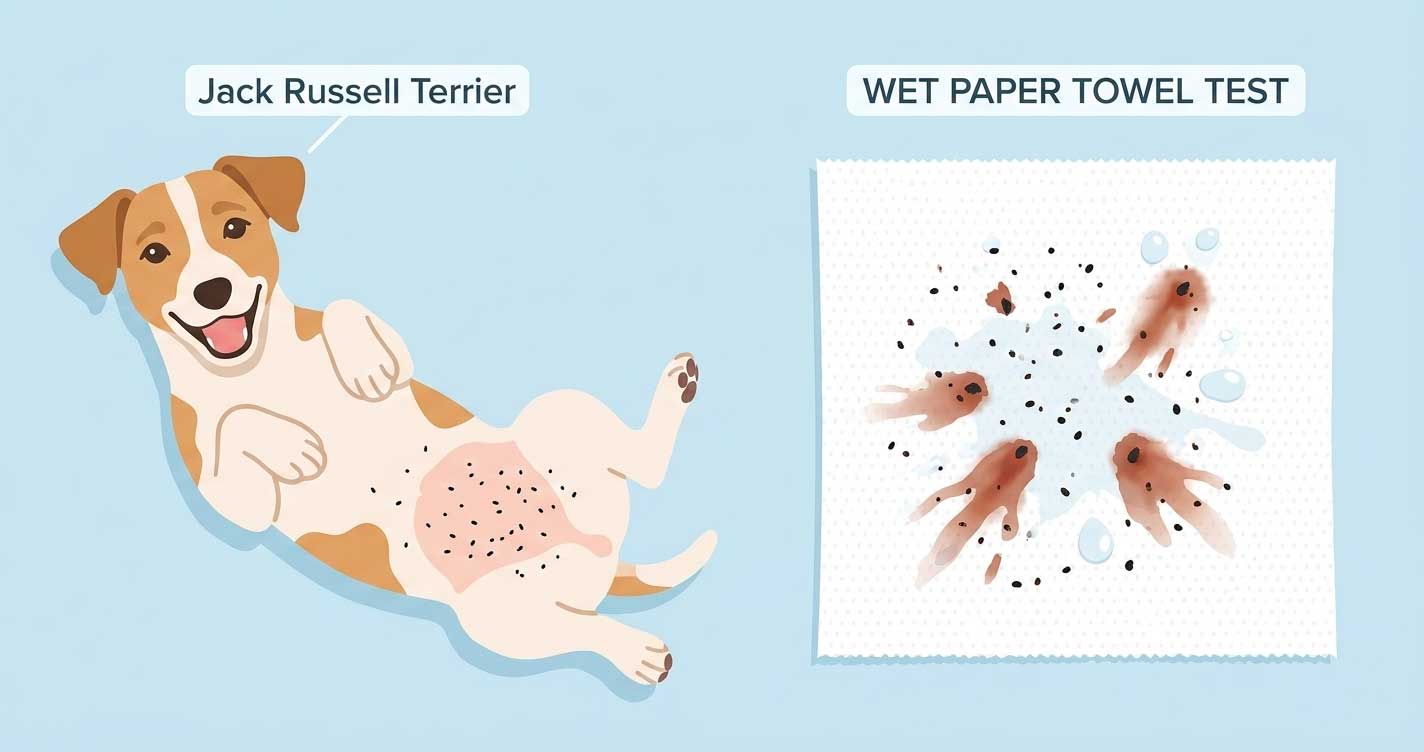
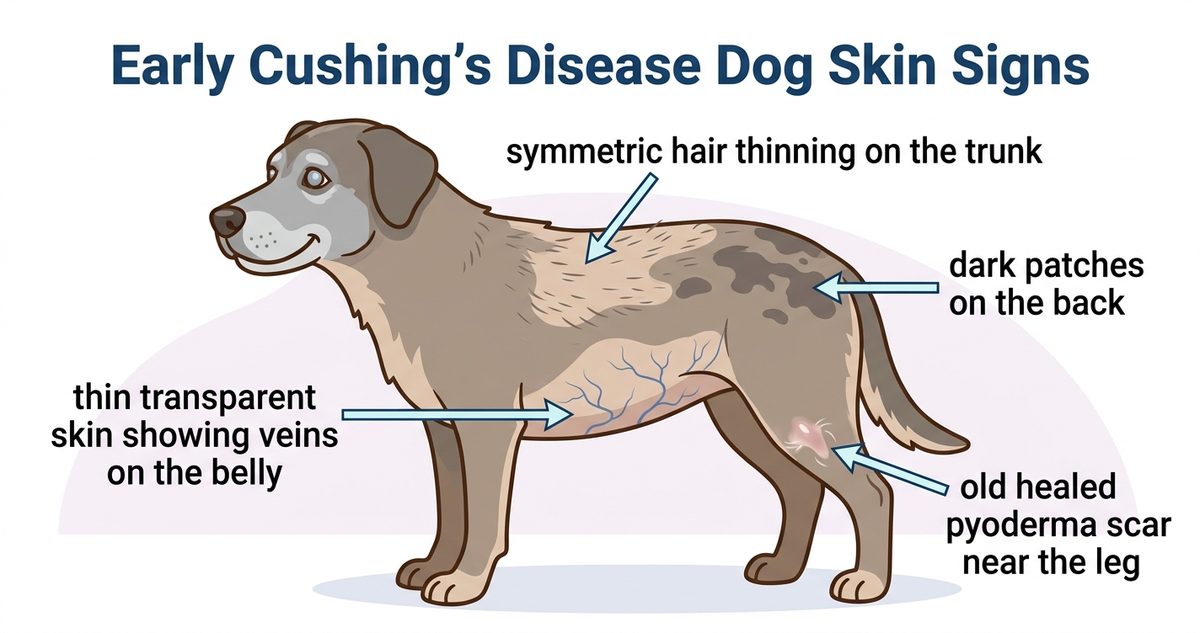
Try Dog Ringworm Pictures AI ToolChronic skin allergy can progress to hyperpigmentation (dark thickened patches). Our new AI dog skin black spots pictures tool identifies flea dirt vs comedones vs hyperpigmentation vs yeast vs Cushing's pattern.
Try Dog Skin Black Spots AI ToolChronic allergy scratching often creates multiple small scabs over weeks. Our new AI dog skin scabs pictures tool identifies allergy scratch scabs vs hot spot vs mange vs Flea Allergy Dermatitis vs injury pattern.
Try Dog Skin Scabs AI ToolRash type identification matters — hives needs ER, atopic needs allergy workup, contact dermatitis just needs trigger removal. Our new AI dog skin rash pictures tool identifies all 5 rash types from the photo.
Try Dog Skin Rash Pictures AI ToolSevere itching + spreading hair loss + you developed itchy patches? Could be Sarcoptic mange (CONTAGIOUS). Our new AI dog skin mites pictures tool identifies Sarcoptic vs Demodex vs ear mites vs Cheyletiella with zoonotic warning.
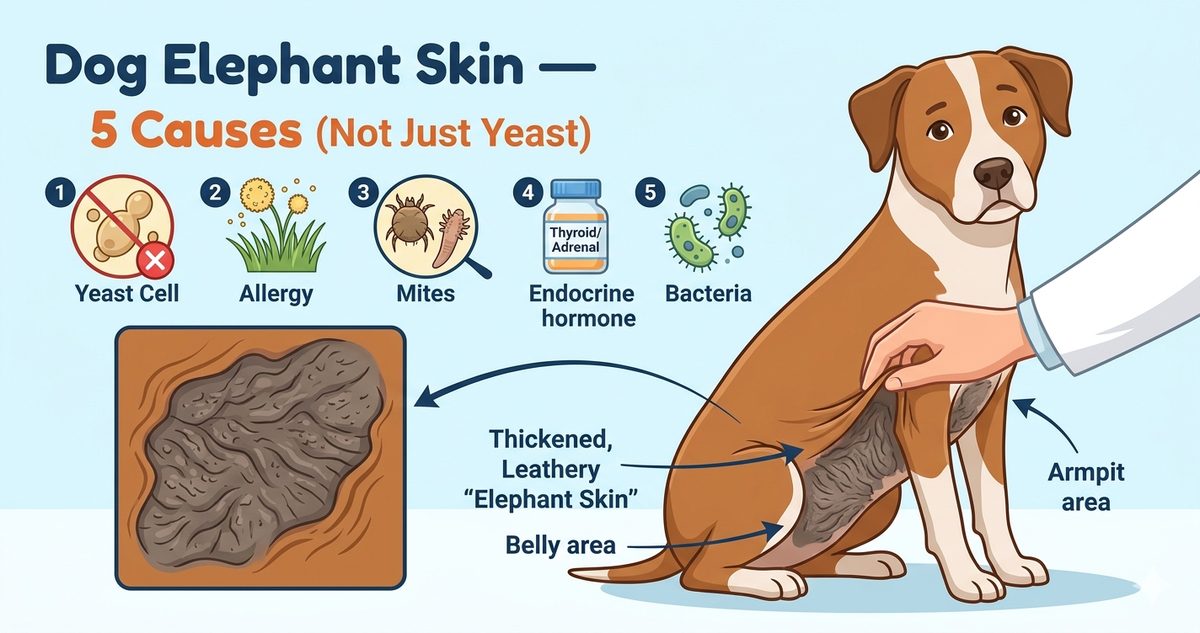
Try Dog Skin Mites Pictures AI ToolChronic allergy can progress to elephant skin (lichenification) after months of inflammation. Our new dog elephant skin guide covers 5 causes including atopic vs yeast vs endocrine differential.
Read Dog Elephant Skin GuideFrequently Asked Questions
How do you treat skin allergies in dogs?
+
How do you treat a dog with allergies at home?
+
What is the best thing for dogs with skin allergies?
+
What are the most common allergies in dogs?
+
How can I treat my dog's skin allergies naturally?
+
When are dog skin allergies considered severe?
+
Is Your Dog's Skin Itchy or Irritated?
Upload a photo of the affected area and get an instant AI health assessment. Detect allergic reactions, rashes, hot spots, and more.
Disclaimer: This article is for informational purposes only and is not a substitute for professional veterinary advice. Always consult a licensed veterinarian for diagnosis and treatment of your pet's health conditions.