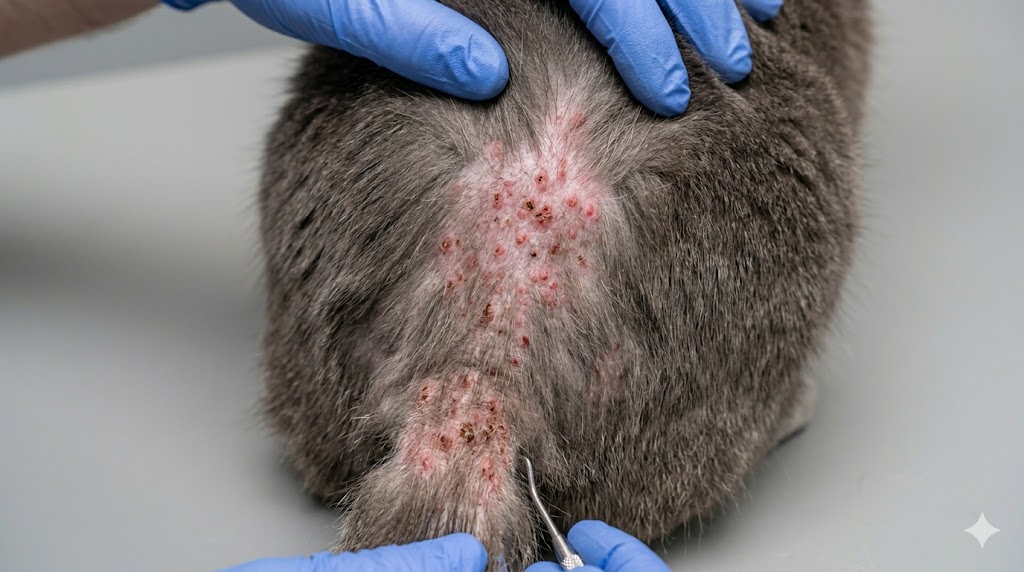
Black Specks on Dog Skin Not Fleas? 6 Causes & Pictures
Wet paper towel test negative? 6 causes of black specks on dog skin not fleas (yeast, mites, comedones), pictures comparison, and when to see a vet.
Published 2026-04-17 · Updated 2026-06-18
Found Black Specks on Your Dog?
Upload a photo and let AI flag visual patterns commonly associated with flea dirt, yeast, mites, comedones, or other parasites. Educational only — not a veterinary diagnosis.
By Yipara Veterinary Content Team · Reviewed against Merck Veterinary Manual and AKC guidelines · Last updated May 15, 2026.
This guide is for general educational purposes and is not a substitute for professional veterinary diagnosis. If your dog shows any of the red-flag signs listed below, contact your veterinarian right away.
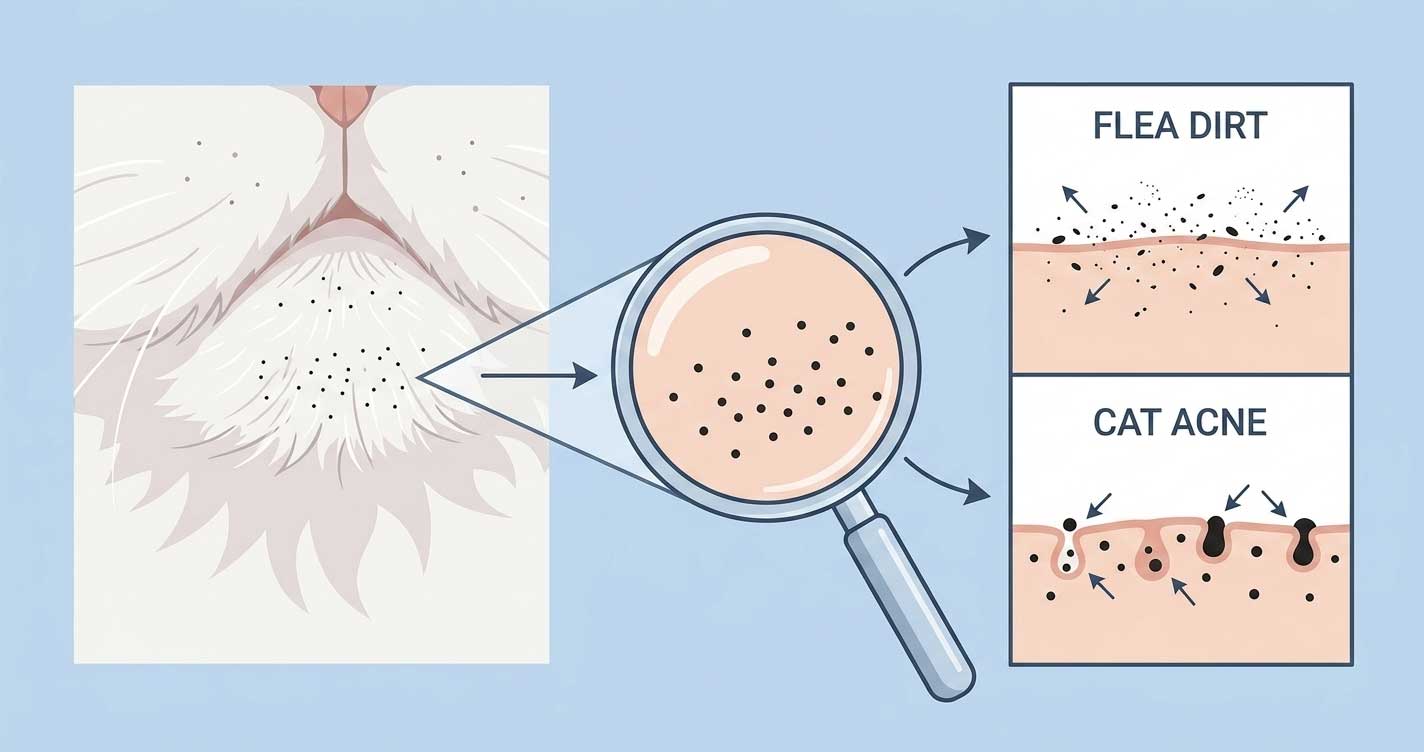
If the wet paper towel test came back negative — the black specks on your dog don't turn reddish-brown when moistened — it's not flea dirt. The 6 most common non-flea causes are: yeast infection, mites, comedones (dog blackheads), hyperpigmentation, skin debris with dirt, and dried blood from minor scratches. Below: how to tell each apart, a side-by-side picture comparison, a decision tree, and the red-flag signs that mean see a vet today.
Quick Test: Is It Flea Dirt or Not?
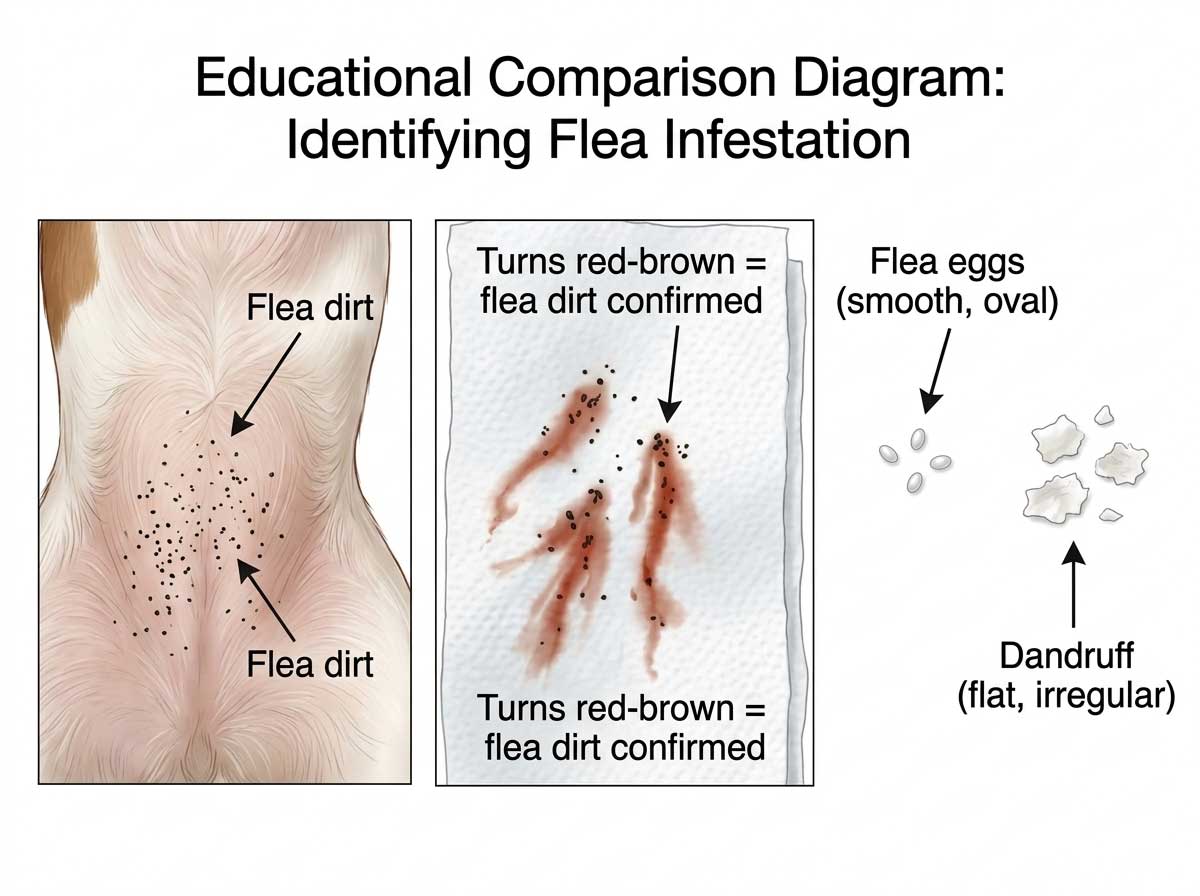
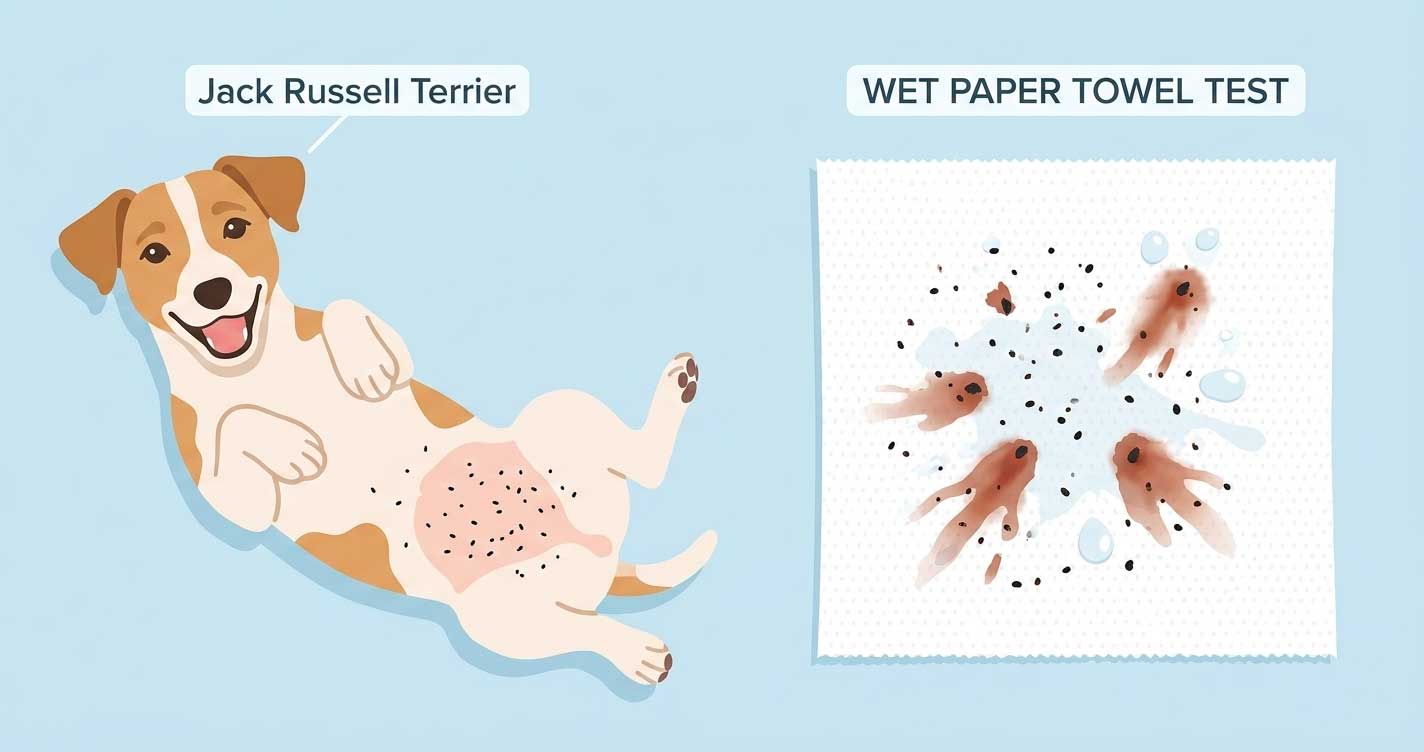
Before exploring non-flea causes, run this 60-second test to rule out flea dirt for certain.
The Wet Paper Towel Test
- ✓Collect some of the black specks from your dog's fur with a fine-toothed comb
- ✓Place them on a damp white paper towel
- ✓Wait 30-60 seconds
- ✓If specks dissolve into reddish-brown streaks → it's flea dirt (dried blood from flea feces)
- ✓If specks stay dark and don't change color → it's NOT flea dirt; continue reading
A negative test (no color change) is your cue to consider the 6 non-flea causes below.
Wet test negative? Upload a photo to compare against the 6 visual patterns (yeast, mites, comedones, hyperpigmentation, debris, blood).
Check Dog Skin6 Causes of Black Specks on Dog Skin (Not Fleas)
When the wet test is negative, the black specks usually trace back to one of these 6 causes. The order below reflects how commonly each appears in canine dermatology consultations.
Cause #1: Yeast Infection (Most Common Non-Flea Cause)
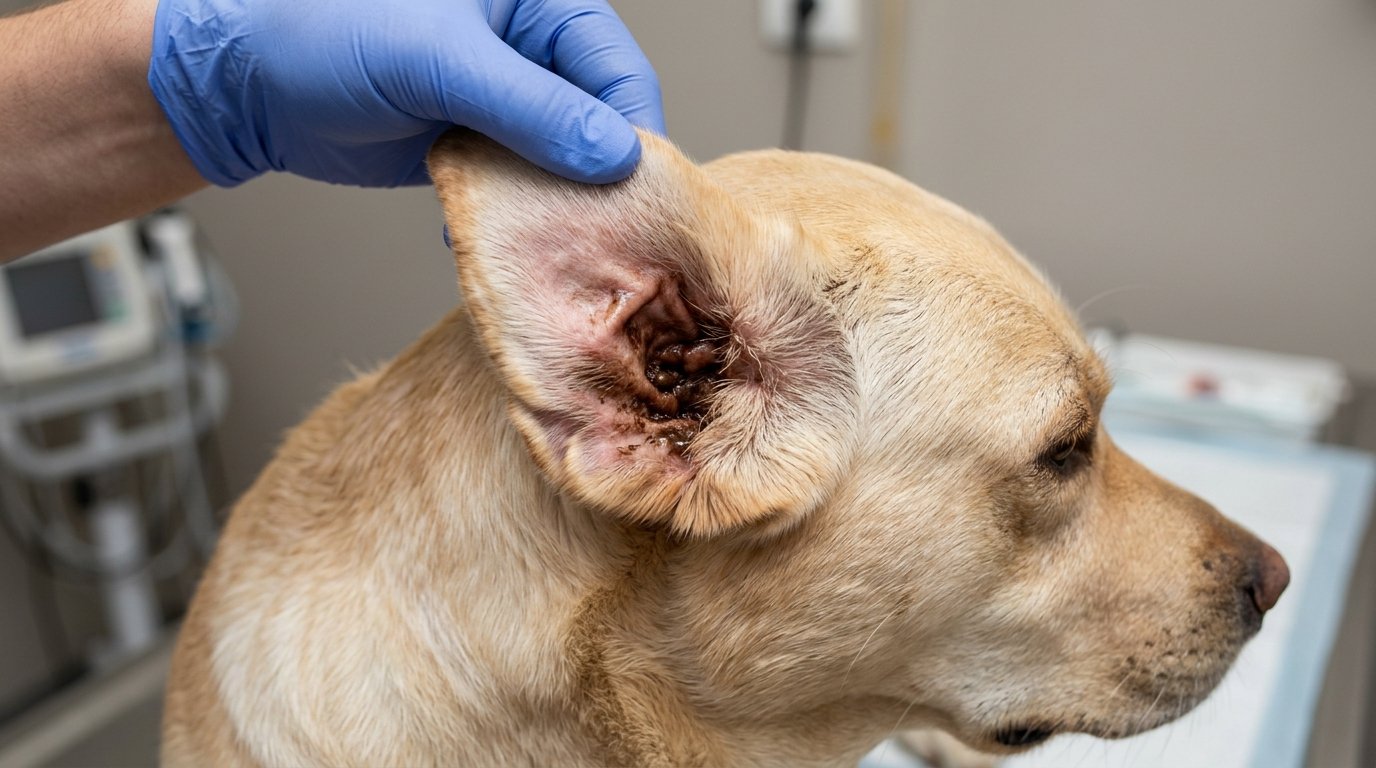
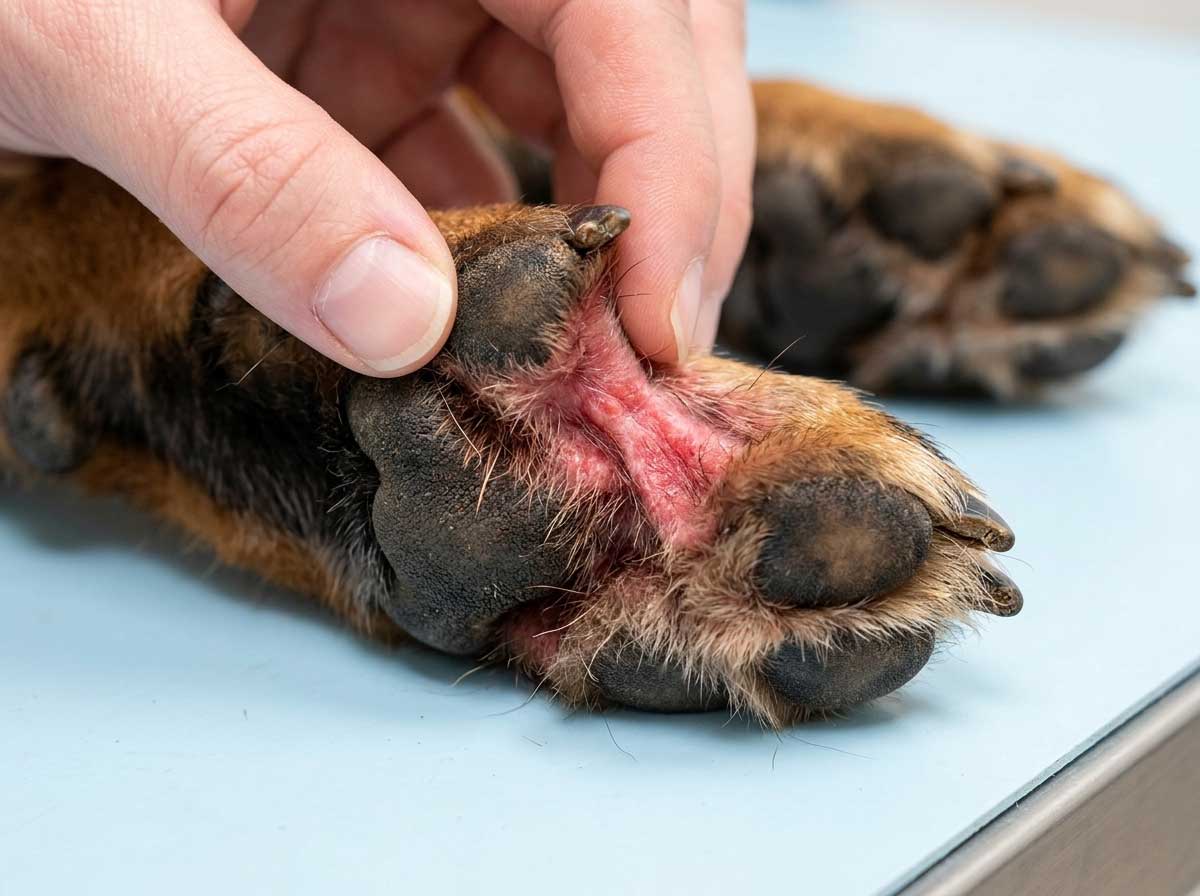
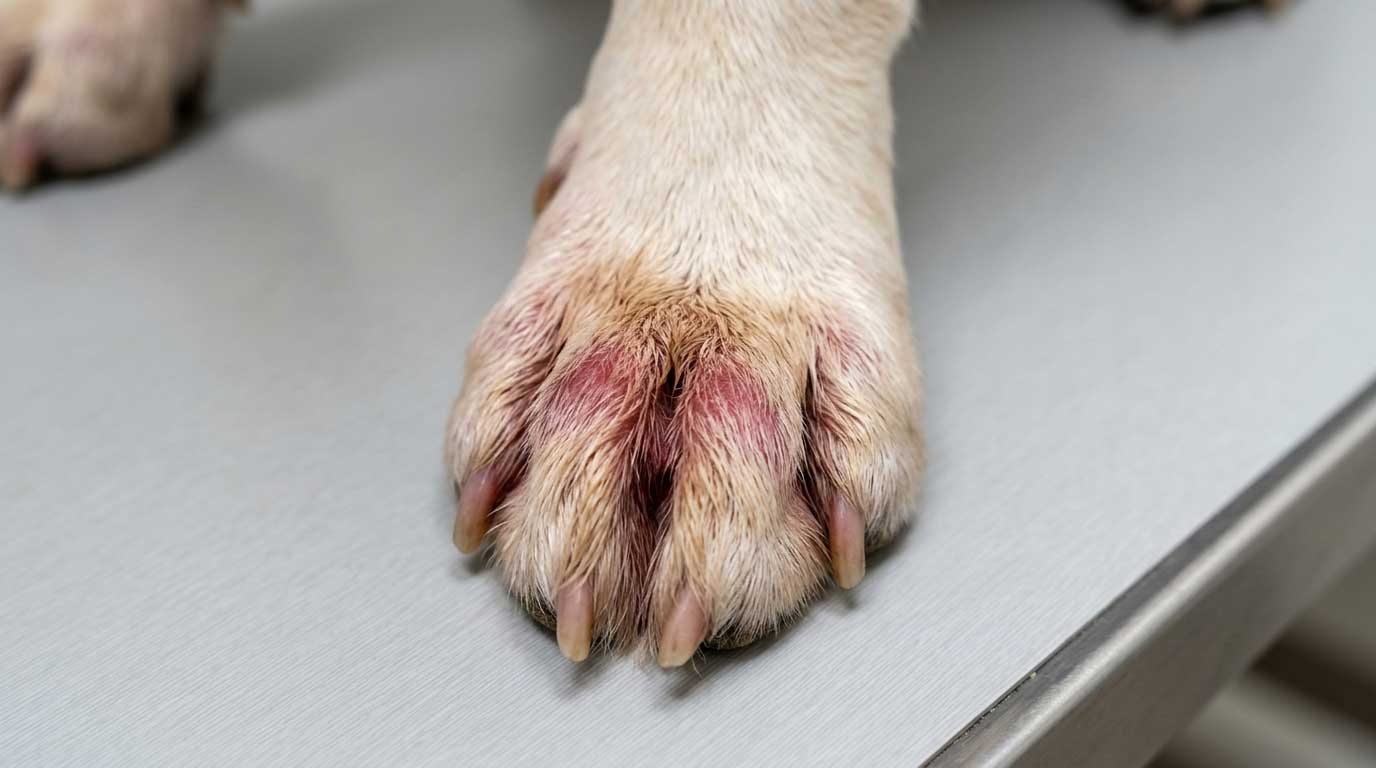
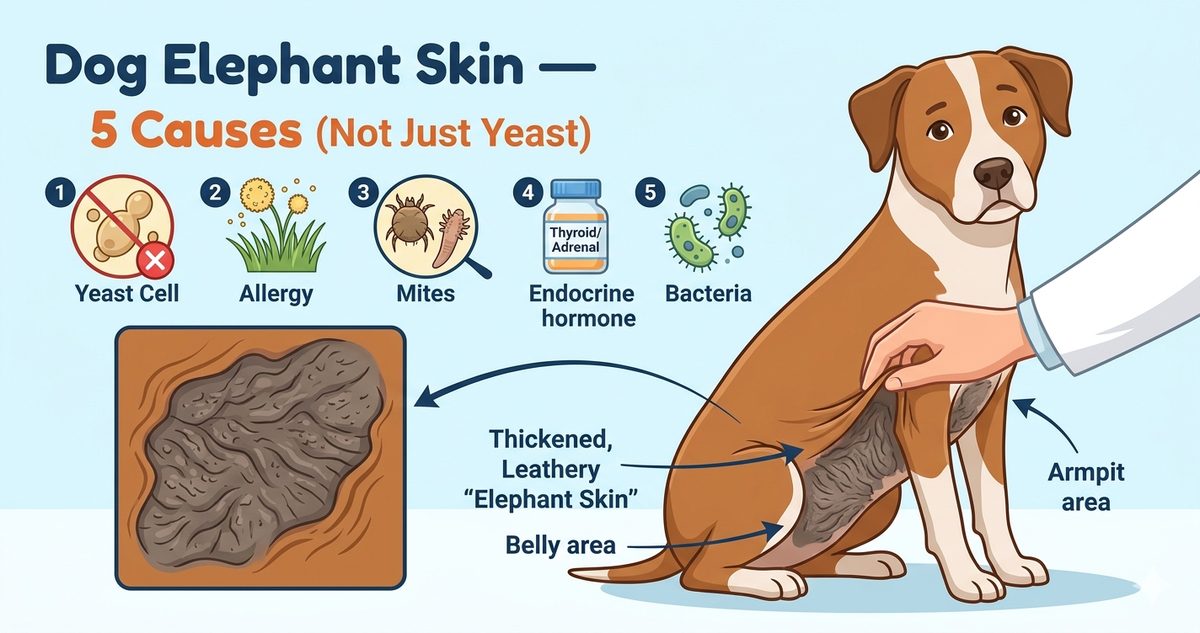
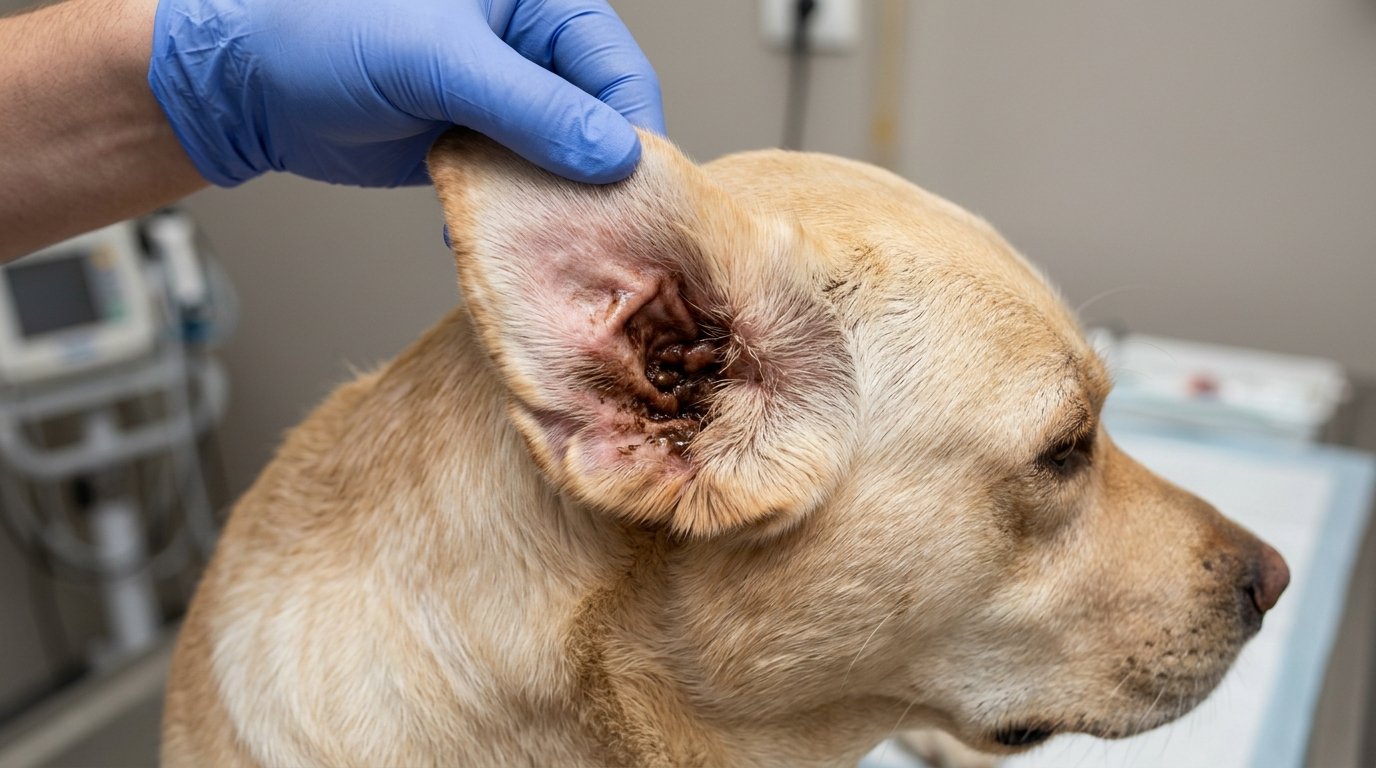
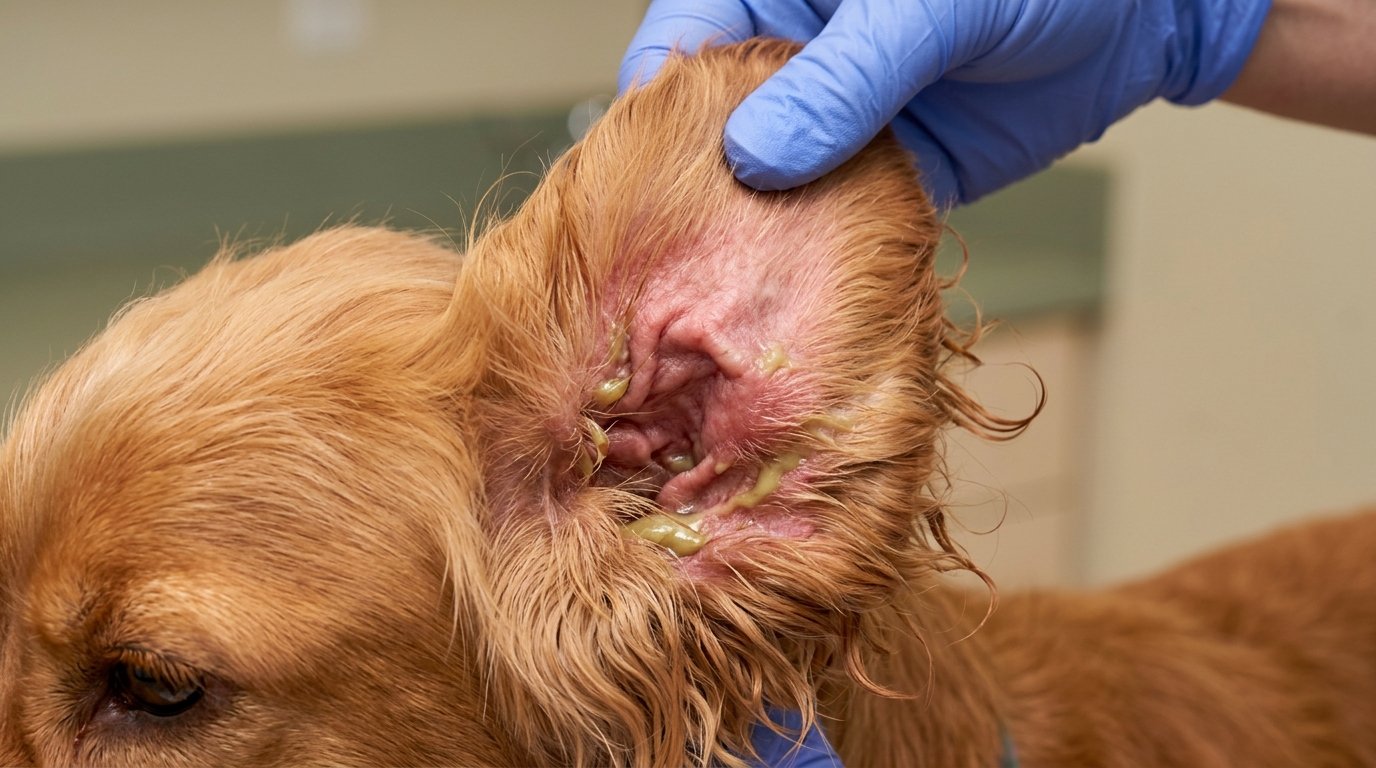
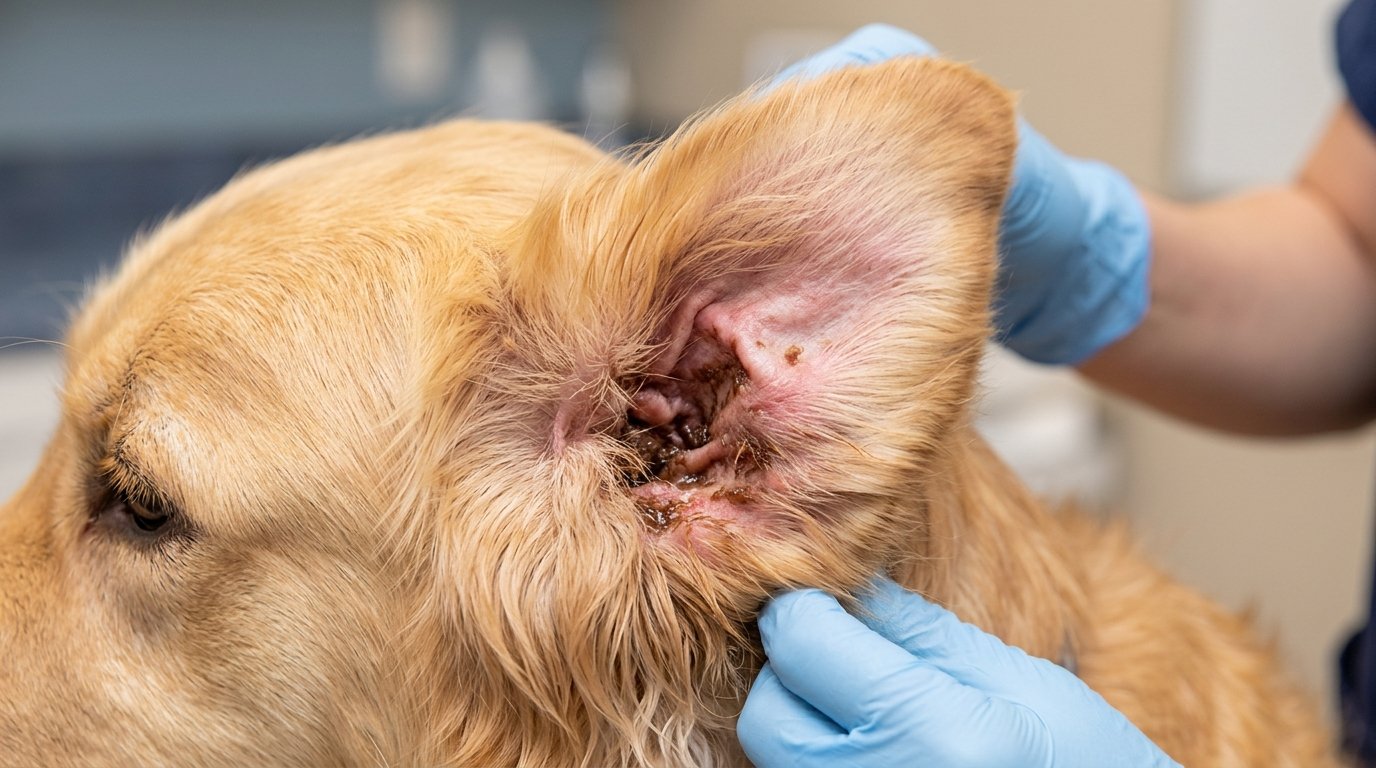
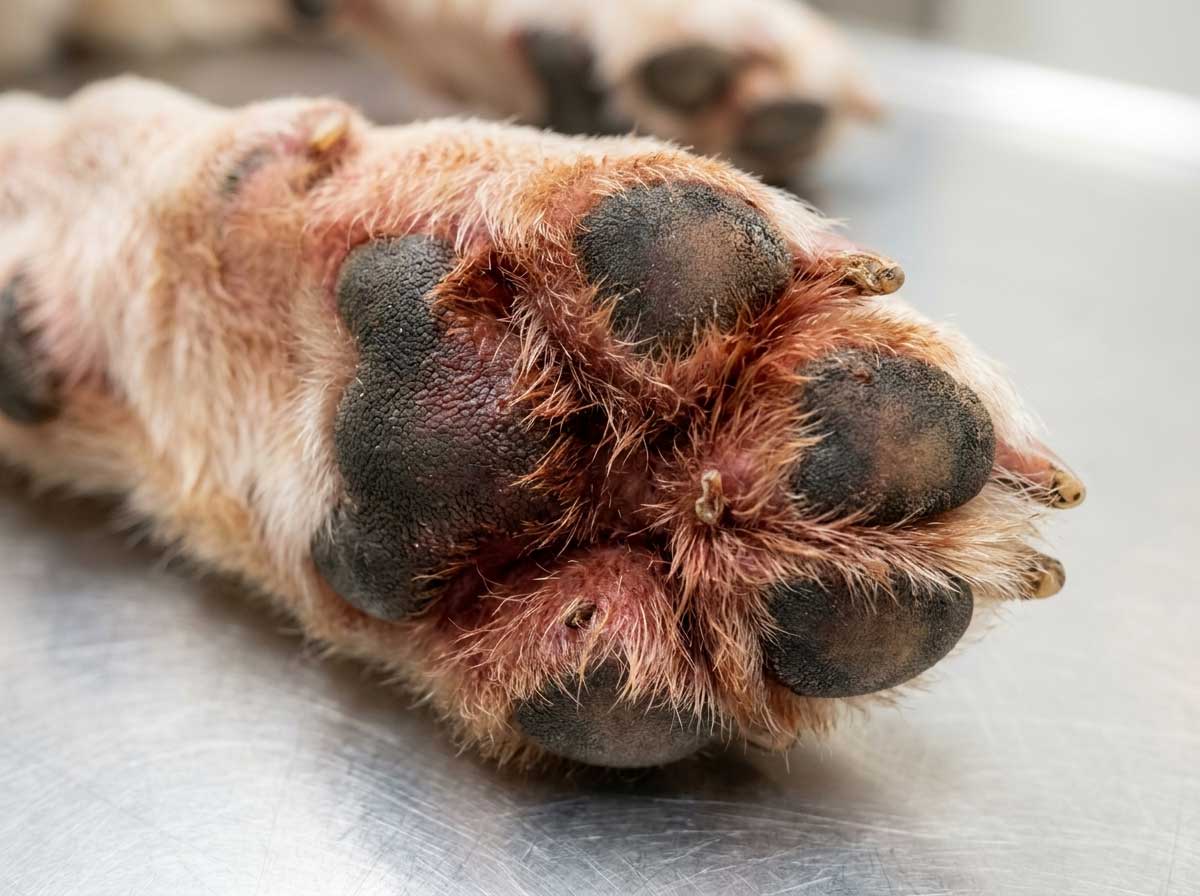
Yeast overgrowth is the most common non-flea source of black specks on dog skin. The species is typically Malassezia pachydermatis. This yeast lives normally on canine skin in small numbers. It is a natural part of the skin microbiome. Problems begin when the immune system or skin barrier is compromised. Humidity, chronic allergies, and immune issues all tip the balance. The yeast then multiplies rapidly. The result is dark, greasy, crusty specks. A distinctive musty or "corn chip" odor often accompanies the overgrowth.
- ✓Color: dark brown to black, often with a slight reddish or greasy sheen
- ✓Texture: greasy or waxy when touched
- ✓Smell: musty, yeasty, or "corn chip" odor — this is the key tell
- ✓Location: belly, groin, armpits, between toes, inside ears (warm/moist areas)
- ✓Associated signs: itching, redness, hair loss, thickened or "elephant skin" appearance over time
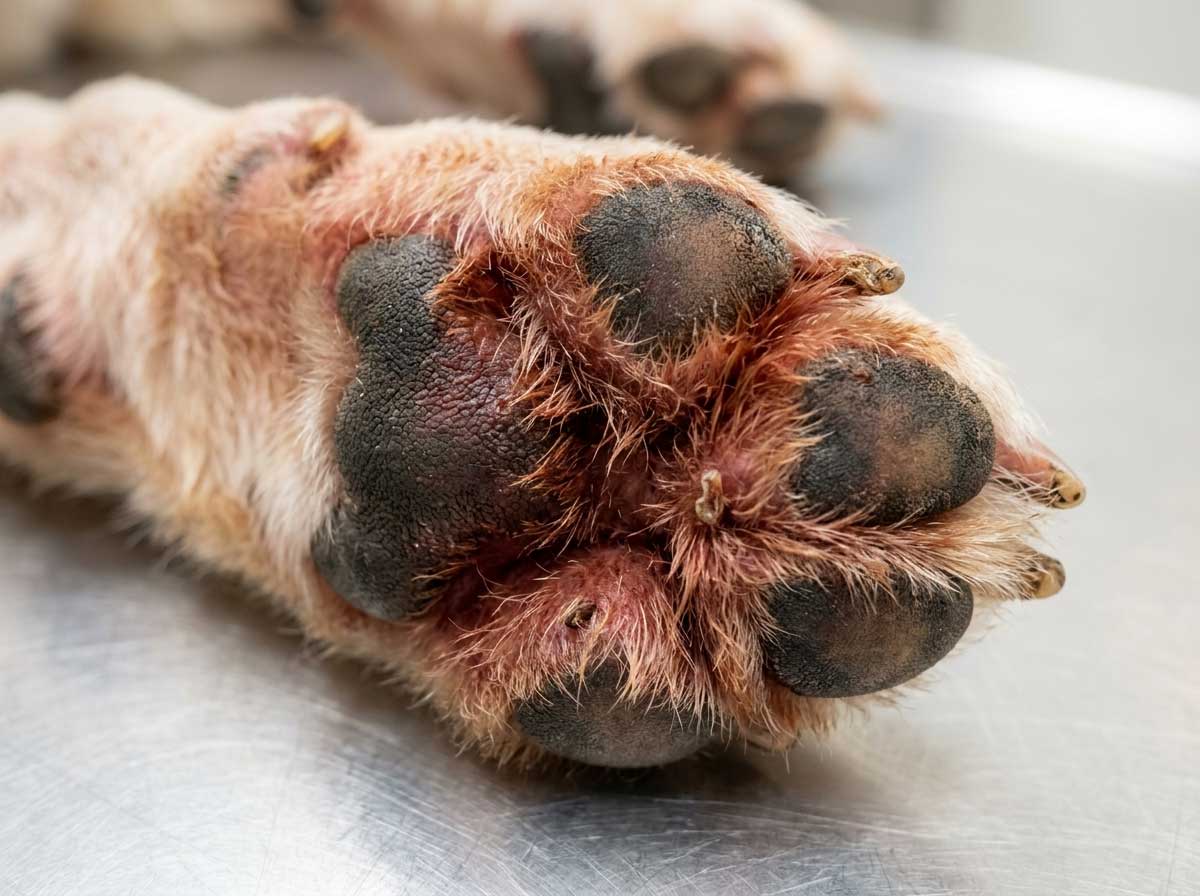
Yeast issues often accompany underlying allergies. The skin barrier weakens. Yeast multiplies. The two problems feed each other. If you notice these signs, see your veterinarian. A simple cytology test confirms yeast presence. Your vet then recommends an appropriate care plan. Yeast on the skin is not something to address with home guesswork. For paw-specific yeast cases, see our dog paw yeast infection guide.
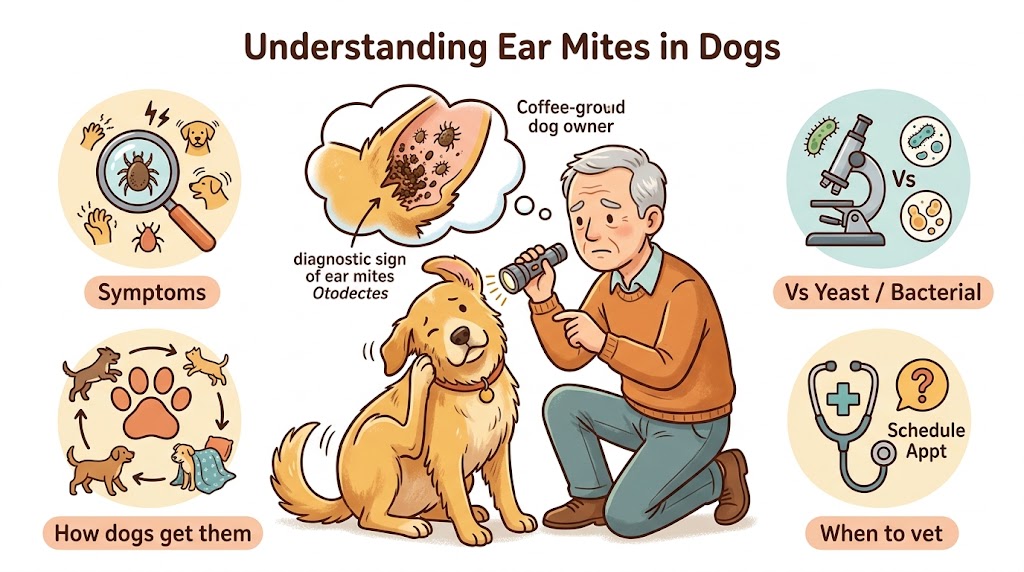
Cause #2: mites Mites
mites are microscopic parasites that live in hair follicles. In small numbers they're normal — most dogs carry a few. But when the immune system is weakened (young puppies, seniors, dogs on immunosuppressants), the mite population can multiply, producing dark, scaly, crusty specks along with patchy hair loss.
- ✓Color: dark gray to black, often crusty or scaly
- ✓Texture: dry, flaky, sometimes scab-like
- ✓Location: face (around eyes/mouth), legs, paws — often patchy
- ✓Associated signs: localized hair loss, scaly bald patches, mild to moderate itching, secondary skin infections
- ✓Who's at risk: puppies under 18 months, immunocompromised dogs, certain breeds (Bulldogs, Boxers, Shar-Peis)
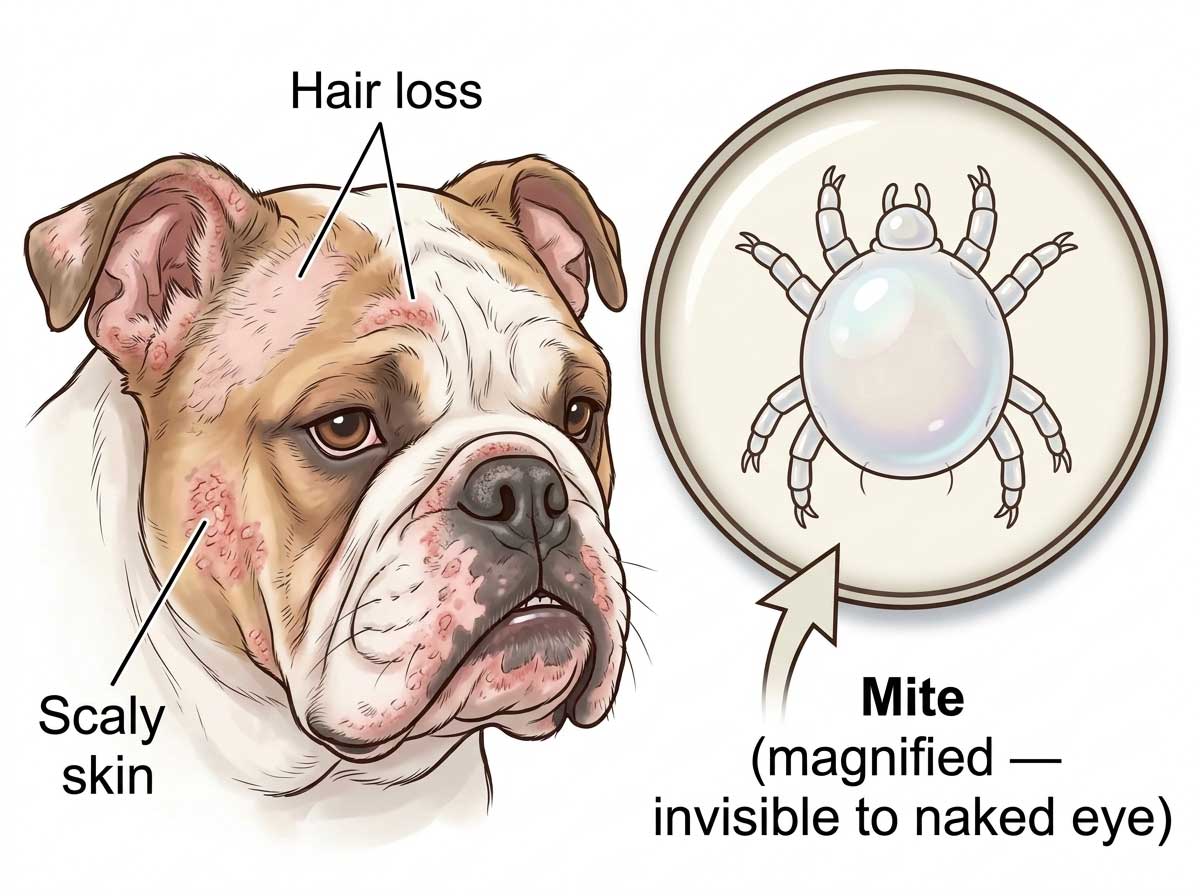
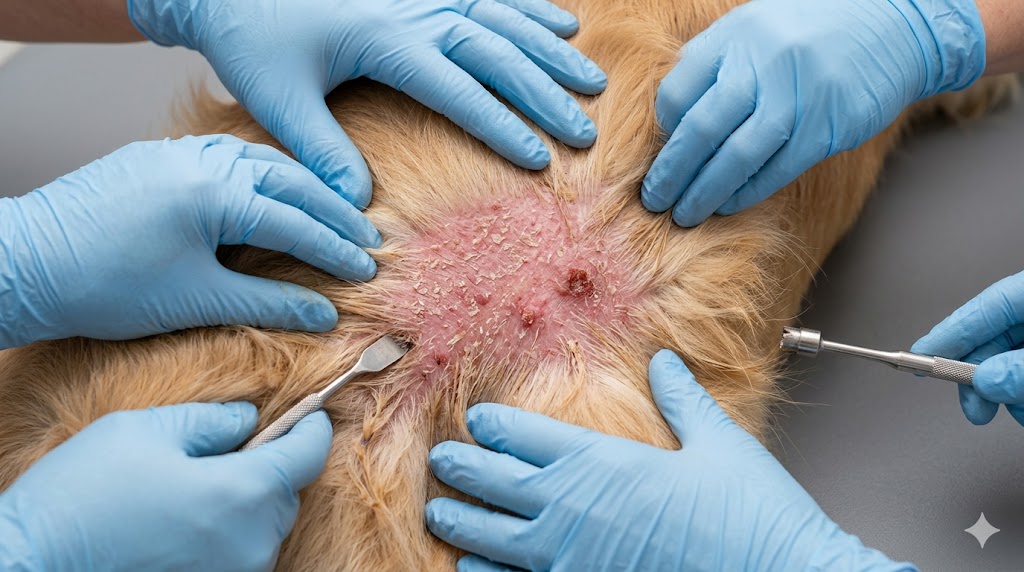
mites requires a skin scraping by a veterinarian to confirm. The procedure is quick and minimally invasive. Localized mites (1-4 spots) usually clears on its own in young dogs. Generalized mites covers more than 4 spots or the whole body. This form is more serious. It needs prompt veterinary attention. For mites specifically around the eyes, see our dog losing hair around eyes guide.
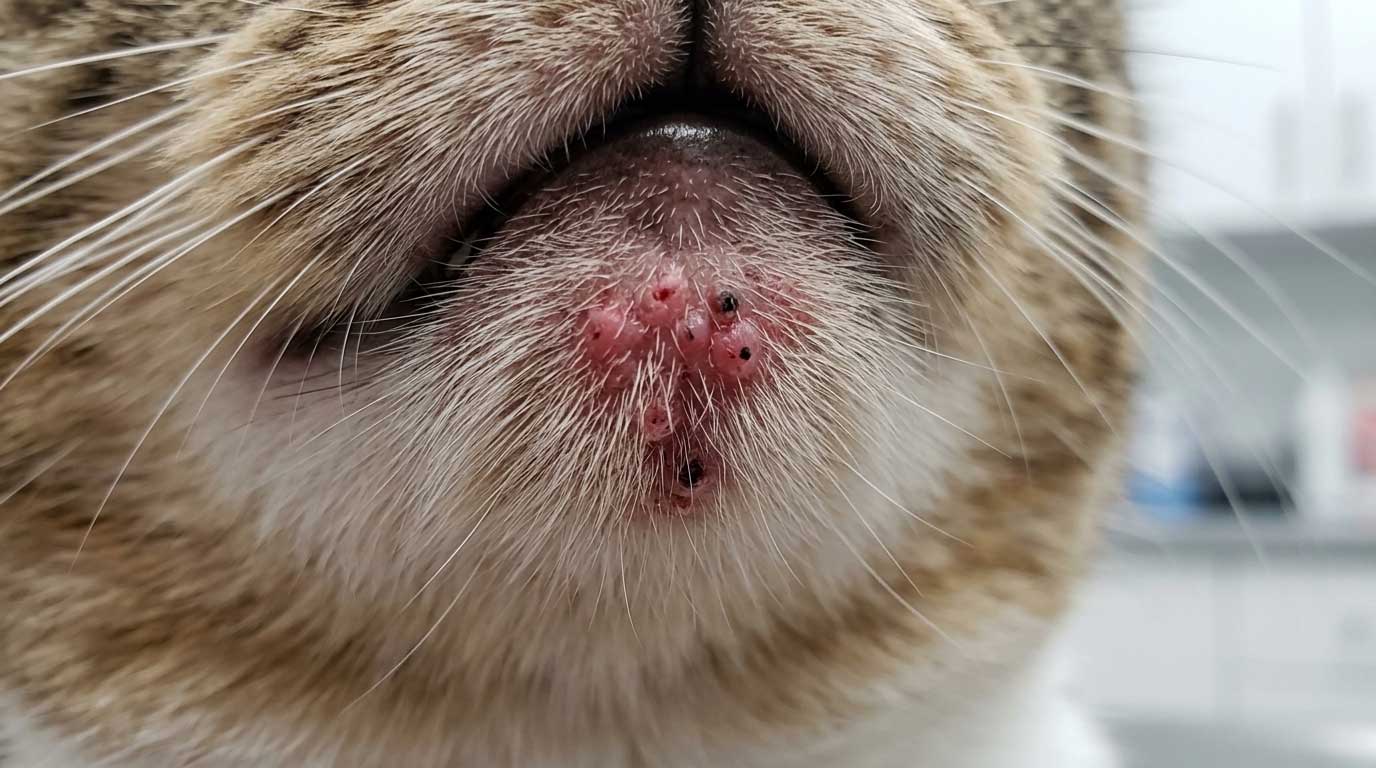
Cause #3: Comedones (Dog Blackheads)
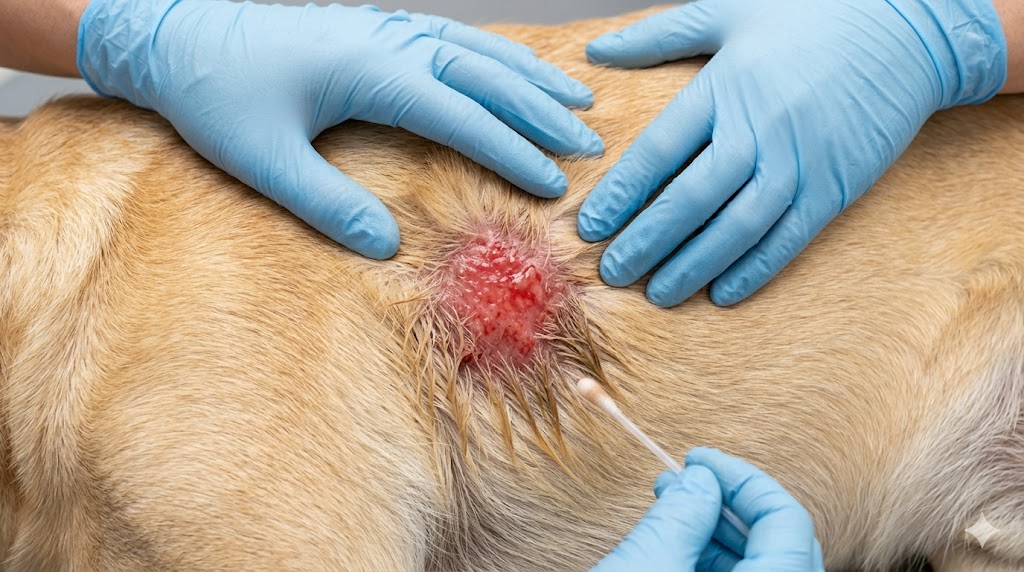
Comedones are the canine equivalent of blackheads. They form in blocked hair follicles. Sebum (skin oil) and dead skin cells get trapped inside. The trapped material oxidizes and turns dark. Comedones are harmless in small numbers. They can become inflamed if scratched. Bacterial invasion turns them into painful pimples.
- ✓Color: dark brown to black, sometimes with a tiny dot in the center
- ✓Texture: small bumps that feel slightly raised under the skin
- ✓Location: chin, belly (especially hairless areas), inside thighs
- ✓Most affected breeds: Schnauzers (a condition called "Schnauzer comedone syndrome"), Doberman Pinschers, Bulldogs
- ✓Associated signs: usually none unless inflamed (then redness, mild swelling)
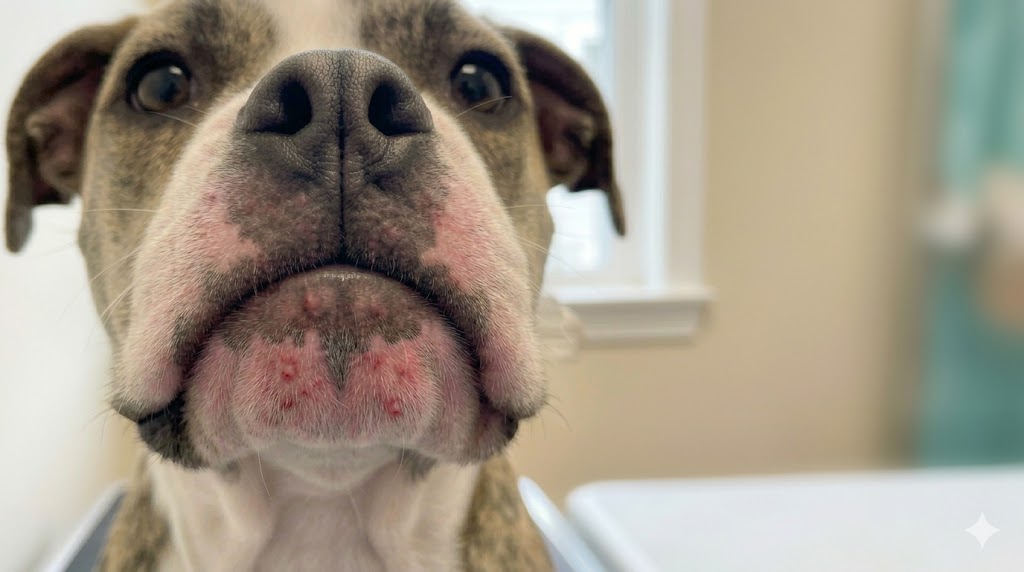
Single comedones are normal and don't require action. If you see clusters that look inflamed or your dog scratches the area, ask your veterinarian about a medicated shampoo recommendation.
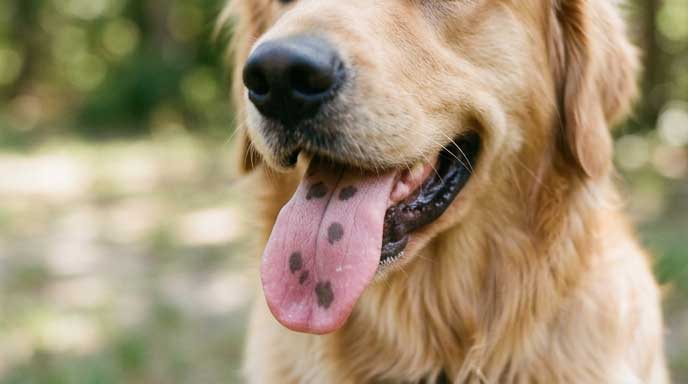
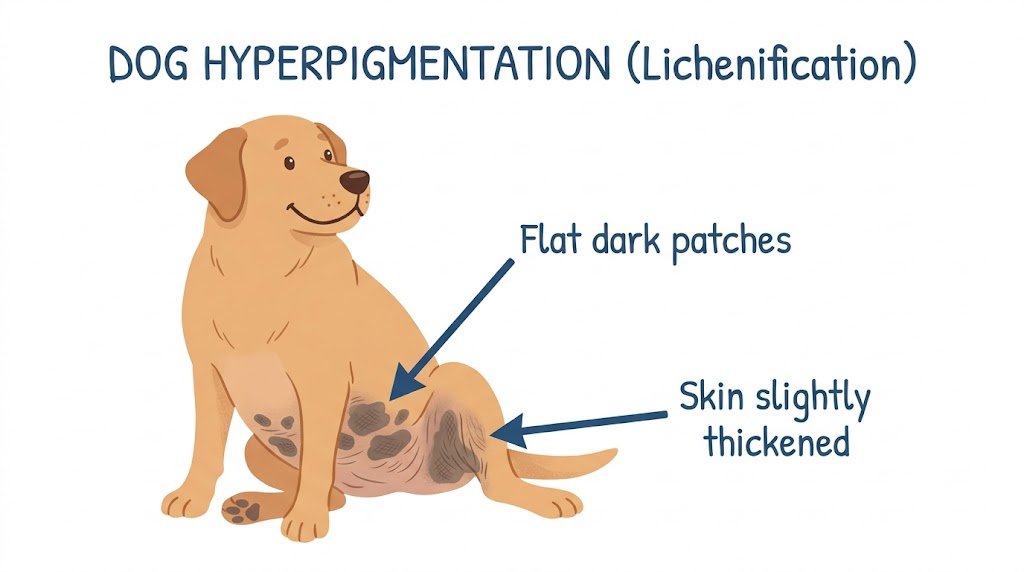
Cause #4: Hyperpigmentation
Hyperpigmentation is the darkening of skin due to increased melanin production. It can look like dark specks, larger patches, or whole areas turning black. It's usually a sign that the skin has been chronically inflamed or irritated — more of a symptom than a disease itself.
- ✓Color: dark brown to black, often in patches rather than discrete specks
- ✓Texture: flat against the skin (not raised); skin may feel slightly thickened
- ✓Location: anywhere chronic friction or irritation occurs — belly, armpits, groin, around eyes
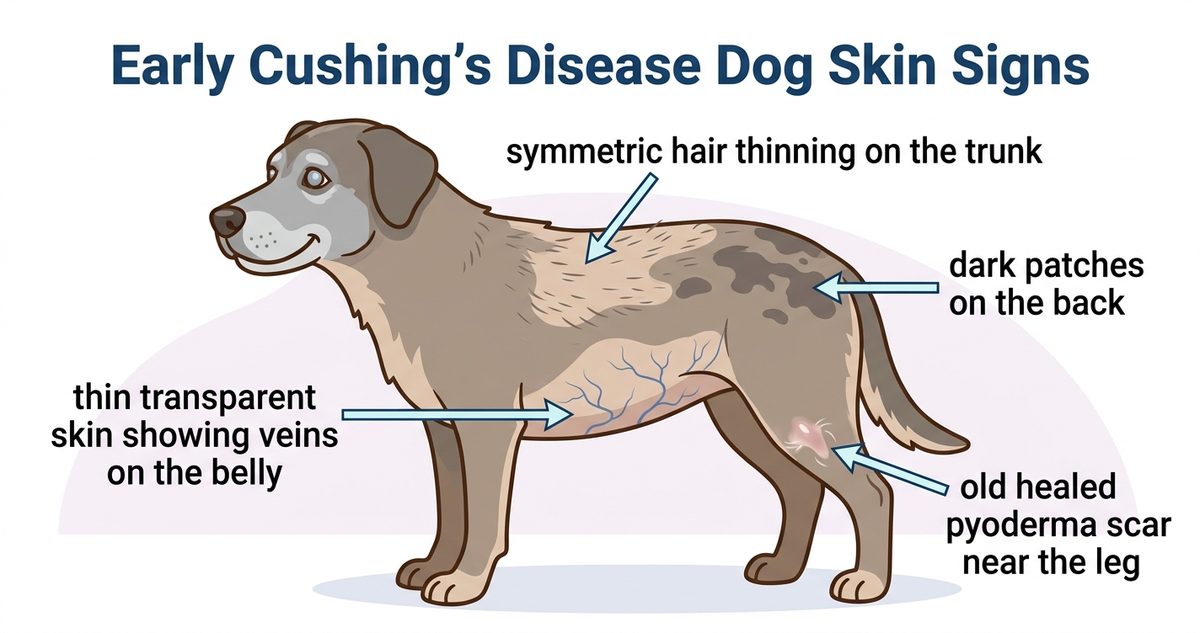
- ✓Common underlying causes: chronic allergies, repeated yeast infections, hormonal issues (thyroid concerns, Cushing's), or simply age
- ✓Associated signs: often follows a history of itching or recurring skin issues
Hyperpigmentation itself isn't dangerous, but it signals the skin has been under stress. Your veterinarian can investigate the underlying cause — addressing that often slows or stops further darkening. If chronic allergies are suspected, see our dog skin allergy guide for symptom patterns to share with your vet.
Cause #5: Skin Debris & Dandruff Mixed with Dirt
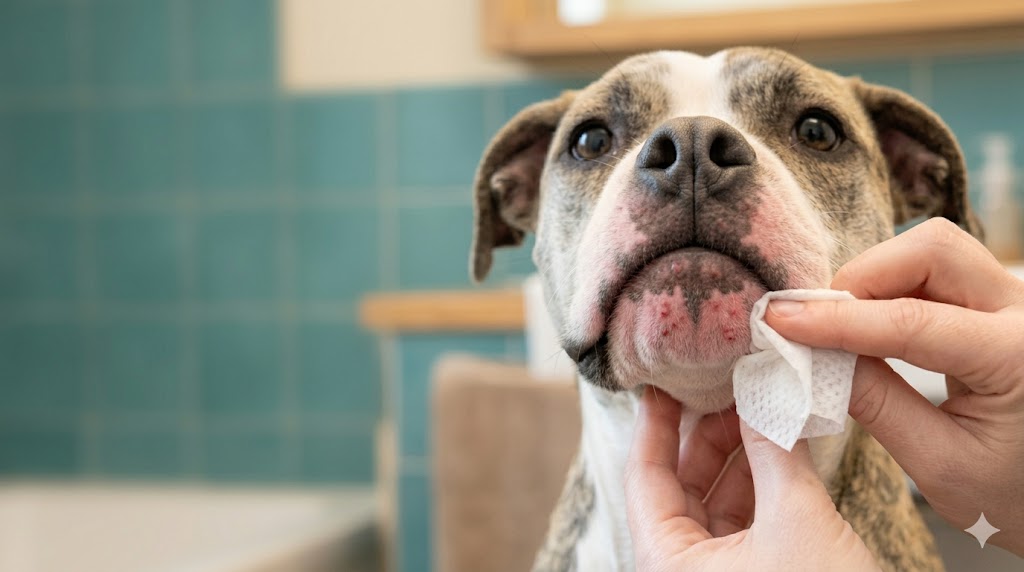
Sometimes the simplest explanation is correct. Your dog has been rolling in dirt. The debris is mixing with dead skin cells. The combination creates dark specks. They look concerning but are not a medical issue. A bath usually clears them up.
- ✓Color: varies — brown, gray, or black depending on the dirt source
- ✓Texture: brushes off easily with a damp cloth or grooming
- ✓Location: anywhere your dog has rubbed against — back, sides, belly
- ✓Associated signs: usually none; skin underneath looks normal and healthy
A bath with a dog-appropriate shampoo usually clears this up. If specks return within days even with regular grooming, look for other causes on this list.
Cause #6: Dried Blood from Minor Scratches
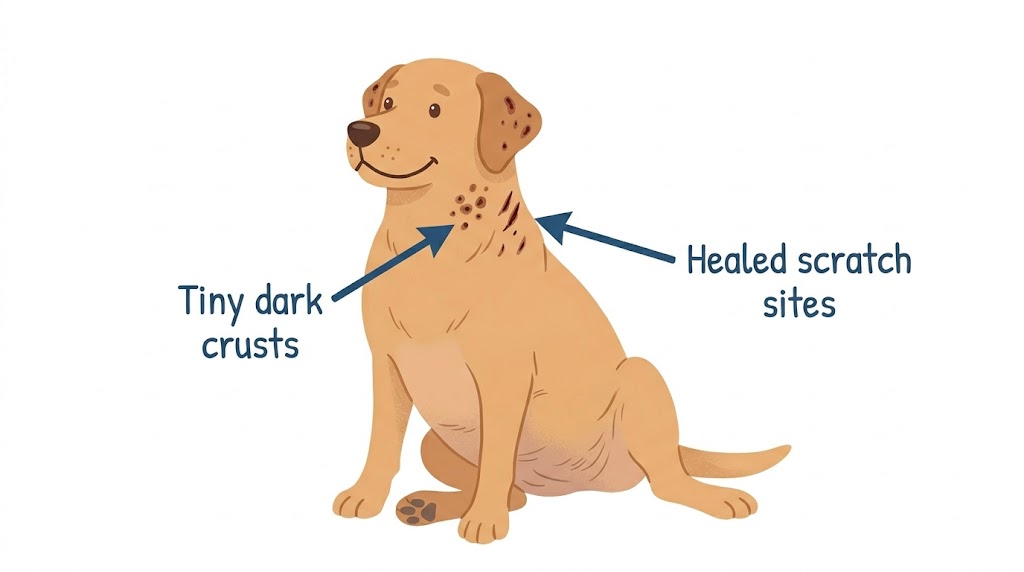
Tiny scabs from healed scratches can look like black specks. The same applies to hot spots and insect bites. Fresh blood dries and crusts over within hours. Your dog may have scratched an itchy spot recently. Microscopic wounds then scab over. The result looks like scattered dark dots.
- ✓Color: dark reddish-brown to black, often with a slight crust
- ✓Texture: stuck to the skin (won't brush off easily) but flakes when the skin underneath heals
- ✓Location: wherever your dog has been scratching — often near ears, neck, belly
- ✓Associated signs: small healed wounds, dry skin, or recent insect bites
If you find dried blood crusts, look for what your dog was scratching. The bigger question is what's causing the itch in the first place — that's usually the issue worth addressing.
Side-by-Side: How to Tell Each Cause Apart
| Cause | Texture | Location | Smell | Itch? |
|---|---|---|---|---|
| Yeast infection | Greasy, waxy | Belly, groin, ears, paws | Musty / corn chip | Yes (often intense) |
| mites | Dry, scaly, crusty | Face, legs, patchy | Usually none | Mild to moderate |
| Comedones | Small raised bumps | Chin, belly, thighs | None | Rarely |
| Hyperpigmentation | Flat patches | Belly, armpits, groin | None | No (but often history of itching) |
| Skin debris / dirt | Brushes off easily | Back, sides | None | No |
| Dried blood | Crusted, sticks to skin | Anywhere scratched | None | Recently itched here |
Still unsure which cause matches your dog's specks? Upload a photo for AI pattern comparison.
Check Dog SkinSeverity & Recommended Action
| Cause | Urgency | Recommended Action | Typical Timeframe |
|---|---|---|---|
| Yeast infection | Moderate | Vet visit + cytology test | 1-2 weeks to improve |
| mites | Moderate to high | Vet skin scraping (same week) | Same week (especially puppies/seniors) |
| Comedones | Low | Bathe + monitor; vet if inflamed | 1-2 weeks observation |
| Hyperpigmentation | Low (signals chronic issue) | Vet to find root cause | 2-4 weeks to assess |
| Skin debris + dirt | Very low | Bath with dog-appropriate shampoo | 3-5 days |
| Dried blood | Low (find itch source) | Inspect for parasites or hot spots | Within 1 week |
Breeds Most Prone to Each Cause
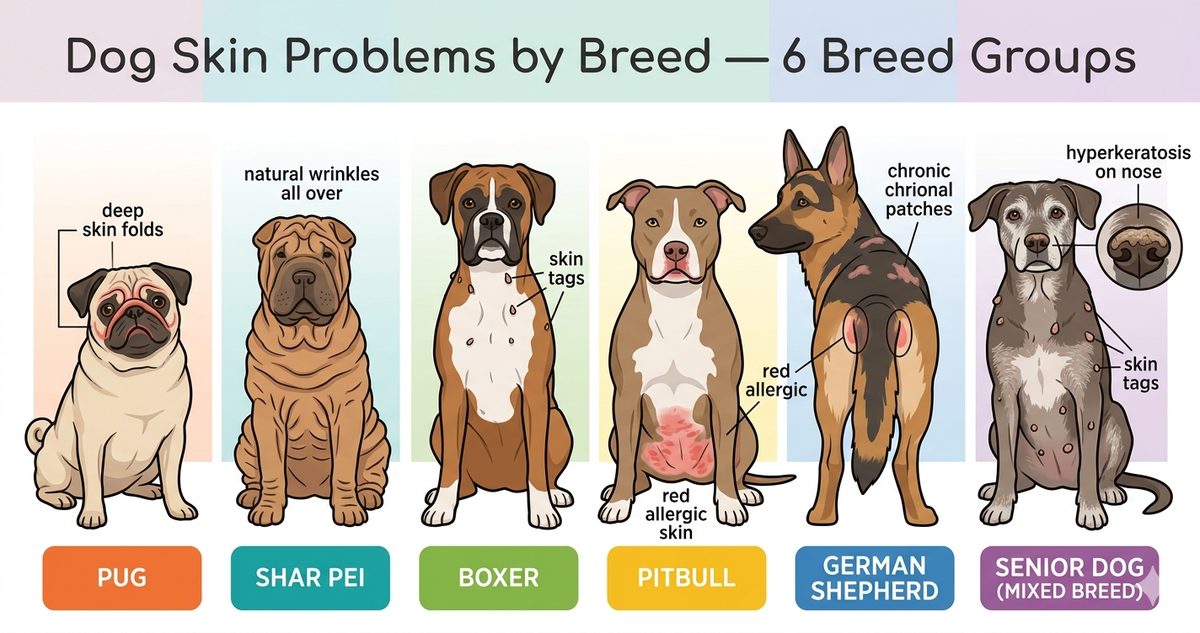
Some breeds are genetically more prone to certain non-flea causes. Knowing your dog's risk profile narrows the likely cause faster. The table below shows breed predispositions seen most often in veterinary dermatology.
| Breed Group | Highest Risk Cause | Why | What to Check |
|---|---|---|---|
| Bulldogs, Pugs, French Bulldogs | Yeast in skin folds | Deep facial and body folds trap moisture | Between folds, weekly |
| Cocker Spaniels, Basset Hounds | Yeast (ears + paws) | Heavy ears trap warmth and humidity | Ear canals and paw webbing |
| Schnauzers (all sizes) | Comedones | Schnauzer comedone syndrome (genetic follicular issue) | Back and chest hairline |
| Doberman Pinschers, Boxers | mites + comedones | Genetic immune predisposition | Face and chest in young dogs |
| Shar-Peis, Chinese Cresteds | mites + hyperpigmentation | Heavy skin folds plus thin coat exposure | Folds and bare skin areas |
| Labradors, Goldens | Yeast from paw licking | High allergy rate drives chronic licking | Paws and belly |
| Dachshunds, Beagles | Hyperpigmentation | Common allergy and hypothyroid risk | Belly and armpit color changes |
These are tendencies, not certainties. A Labrador can still get mites. A Schnauzer can still get yeast. Use this table to bias your suspicion. Do not use it to skip a vet check.
Where Flea Dirt Hides — If the Wet Test Was Positive
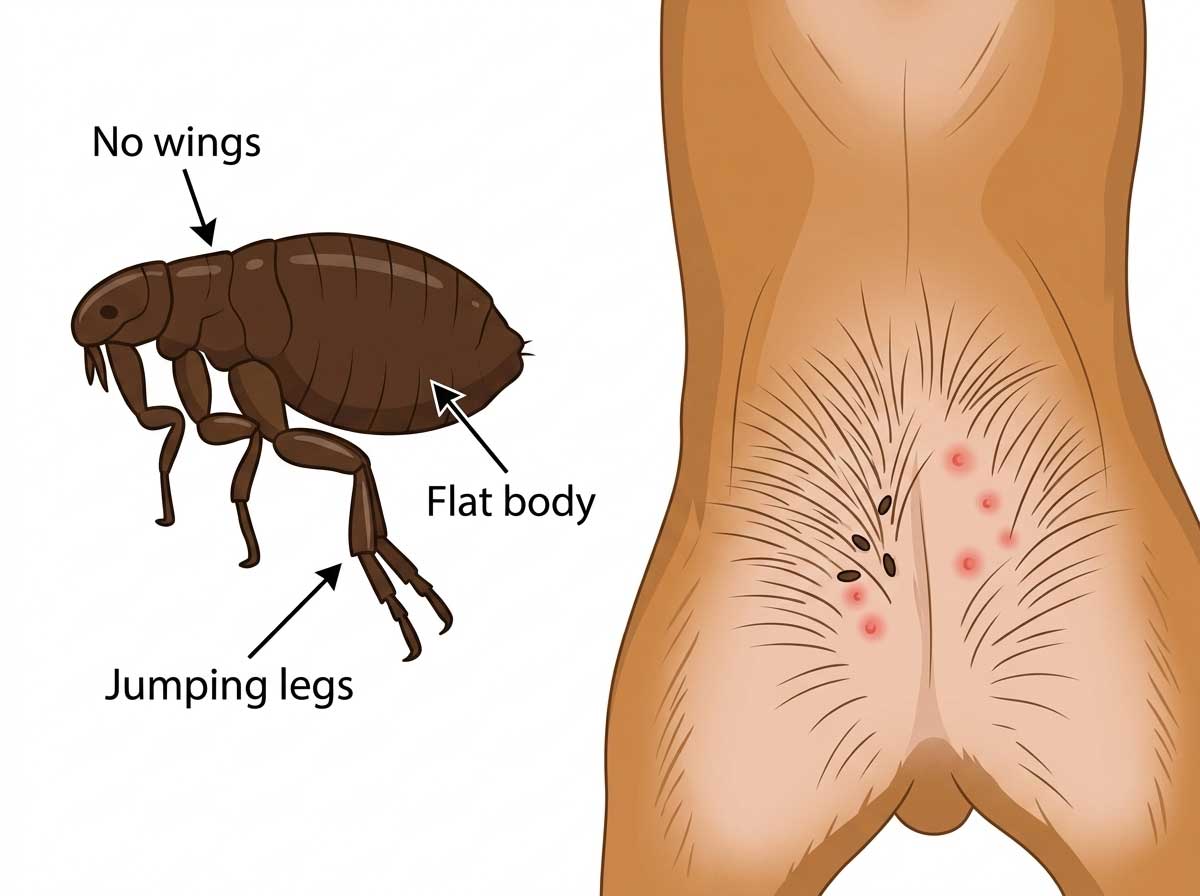
If the wet paper towel test was positive after all (specks turned reddish-brown), here's where to look for active fleas:
- ✓Base of the tail — the #1 spot for flea activity
- ✓Belly and groin — thin skin where fleas feed easily
- ✓Inner thighs — warm and protected
- ✓Along the back and spine — run a flea comb through this area
- ✓Around the neck and behind the ears
- ✓Armpits — warm and hidden
Use a fine-toothed flea comb over a white paper towel. The comb catches both live fleas and flea dirt. The white background makes dark specks easy to spot. Found flea dirt but no live fleas? The fleas are usually still there. They are small. They are fast. They are good at hiding in dense fur.
Decision Tree: What to Check Right Now
Answer these 3 questions in order. The pattern points to the most likely cause:
- ✓Q1: Did the wet paper towel test turn reddish-brown? → If yes, it's flea dirt (address fleas + home). If no, continue.
- ✓Q2: Is there a musty or "corn chip" smell + greasy texture? → Most likely yeast infection. See your veterinarian.
- ✓Q3: Are there patchy bald spots with the specks? → Most likely mites (especially in puppies/seniors). See your veterinarian for a skin scraping.
- ✓If none of the above match: bathe with a dog-appropriate shampoo, then re-check in 3-5 days. If specks return or your dog seems itchy/uncomfortable, contact your veterinarian.
When Multiple Causes Combine
Real cases often overlap. A dog with allergies may have yeast from chronic licking. The same dog may show hyperpigmentation from inflammation. Dried blood may appear from constant scratching. Single causes are clean. Real dogs are messy.
When in doubt, document the timeline. Note when each symptom started. Photograph the affected area weekly. Bring this to the vet visit. Pattern recognition is what veterinarians do best.
Red Flag Signs: See a Vet Today
Black specks themselves are rarely an emergency, but these accompanying signs mean don't wait — contact your veterinarian or an emergency clinic the same day:
- ✓Specks cover a large area of the body (more than the size of your palm)
- ✓Your dog is scratching so intensely that the skin is bleeding or raw
- ✓Visible large bald patches or rapidly spreading hair loss
- ✓Skin is red, hot to the touch, or oozing fluid
- ✓Your dog seems lethargic, off food, or feverish
- ✓Open sores, deep crusts, or signs of secondary infection
- ✓You're seeing similar symptoms on yourself or family members (some skin issues are zoonotic)
5 Common Mistakes That Make Black Specks Worse
Well-meaning owners often try home solutions that backfire. These 5 mistakes are the most common. All come from real veterinary case patterns.
Mistake #1: Using Human Acne Products
Human salicylic acid and vet-recommended product creams are too harsh. They do not match canine skin pH. They strip protective oils. They worsen yeast or bacterial issues. Use dog-formulated products only.
Mistake #2: Frequent Bathing with Strong Shampoo
More bathing seems logical. It is not. Daily baths disrupt the skin barrier. They feed yeast overgrowth. Aim for once every 1-2 weeks. Use a vet-approved dog shampoo only.
Mistake #3: Squeezing or Picking at Specks
This pushes bacteria deeper into the skin. A single comedone can turn into painful infection. Leave the skin alone. Let it heal on its own.
Mistake #4: Treating Without Identifying
Buying any "skin product" off the shelf delays the real fix. Yeast and mites need different approaches. Hyperpigmentation needs root-cause work. Get a clear diagnosis from your vet first.
Mistake #5: Ignoring the Smell
A musty corn-chip smell is the strongest yeast indicator. Owners often dismiss it as "dog smell." It is not normal. It is a clue worth acting on.
Flea Eggs vs Dandruff on Dogs — A Different Question
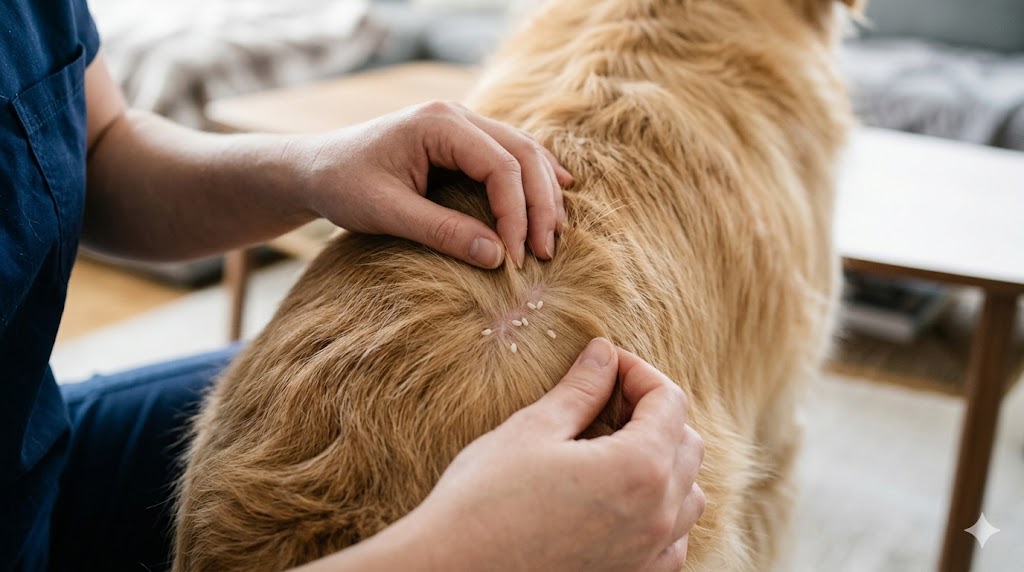
If what you're seeing is white or off-white (not black), you might be looking at flea eggs or dandruff. Here's how to tell them apart:
- ✓Flea eggs: smooth, oval, uniform shape — they roll when touched
- ✓Dandruff: flat, irregular, flaky — they stick to fur and crumble
- ✓Flea eggs: slippery, fall off easily, about 0.5mm
- ✓Dandruff: dry, tends to cling to hair shafts
Flea eggs are 0.5mm and barely visible. They fall off the dog within hours into carpets and bedding — so finding them on the dog itself is rare. Persistent flakes are more often dandruff or skin debris.
If You Confirmed Fleas: Address the Home, Not Just the Dog
For every flea on your dog, there are typically 50-100 eggs, larvae, and pupae in your home. Adult fleas you see represent only about 5% of the total population. The other 95% is in:
- ✓Carpets and rugs — eggs and larvae hide deep in fibers
- ✓Bedding (yours and your dog's) — wash in hot water weekly
- ✓Furniture — especially fabric couches and cushions
- ✓Cracks in hardwood floors
- ✓Your car — if your dog rides in it
Addressing only your dog without addressing your home leads to re-infestation within weeks. Vacuum thoroughly, wash all bedding in hot water, and ask your veterinarian about home flea control options for severe infestations.
How to Photograph Black Specks for Your Vet
A clear photo is one of the most useful things you bring to a vet visit. It saves diagnostic time. It helps the vet see exactly what concerned you. Follow these steps for a useful photo.
Photo Setup Basics
- ✓Use natural daylight if possible. Avoid yellow indoor light.
- ✓Get close. Fill the frame with the affected skin.
- ✓Use the macro mode on your phone for detail.
- ✓Hold the camera steady. Brace your elbow on something solid.
- ✓Take at least 3 photos from different angles.
- ✓Include one wider shot showing body location.
What to Document Beyond the Photo
- ✓When did you first notice the specks?
- ✓Have they spread or stayed in one area?
- ✓Is your dog scratching or licking the spot?
- ✓Any smell? Musty, sweet, sour, or none?
- ✓Recent diet changes, new treats, or new shampoo?
- ✓Any other dogs in the home showing similar signs?
- ✓Your dog's last flea preventive dose date.
Bring this list of answers to the vet appointment. It changes a 15-minute appointment into a focused diagnostic session. Your vet appreciates the prep work.
When in Doubt: Photo, Wet Test, Vet
Black specks on dog skin have many possible causes. The single best step is documenting what you see. A clear close-up photo gives your veterinarian critical information. Combine the photo with your wet paper towel test result. Most cases narrow down quickly with this combination. For additional reading, the PetMD Hyperpigmentation Guide and Merck Veterinary Manual on skin disorders of dogs are reliable starting points.
This article is educational. It does not replace professional veterinary advice. If your dog's symptoms persist for more than 5-7 days, worsen, or appear with any red-flag signs above, please contact your veterinarian.
Black specks ruled out as fleas, but worried it might be mange, yeast, or another skin disease? Our new AI dog skin diseases pictures tool identifies allergic vs bacterial vs mange vs ringworm vs hot spot from your dog's actual skin photo.
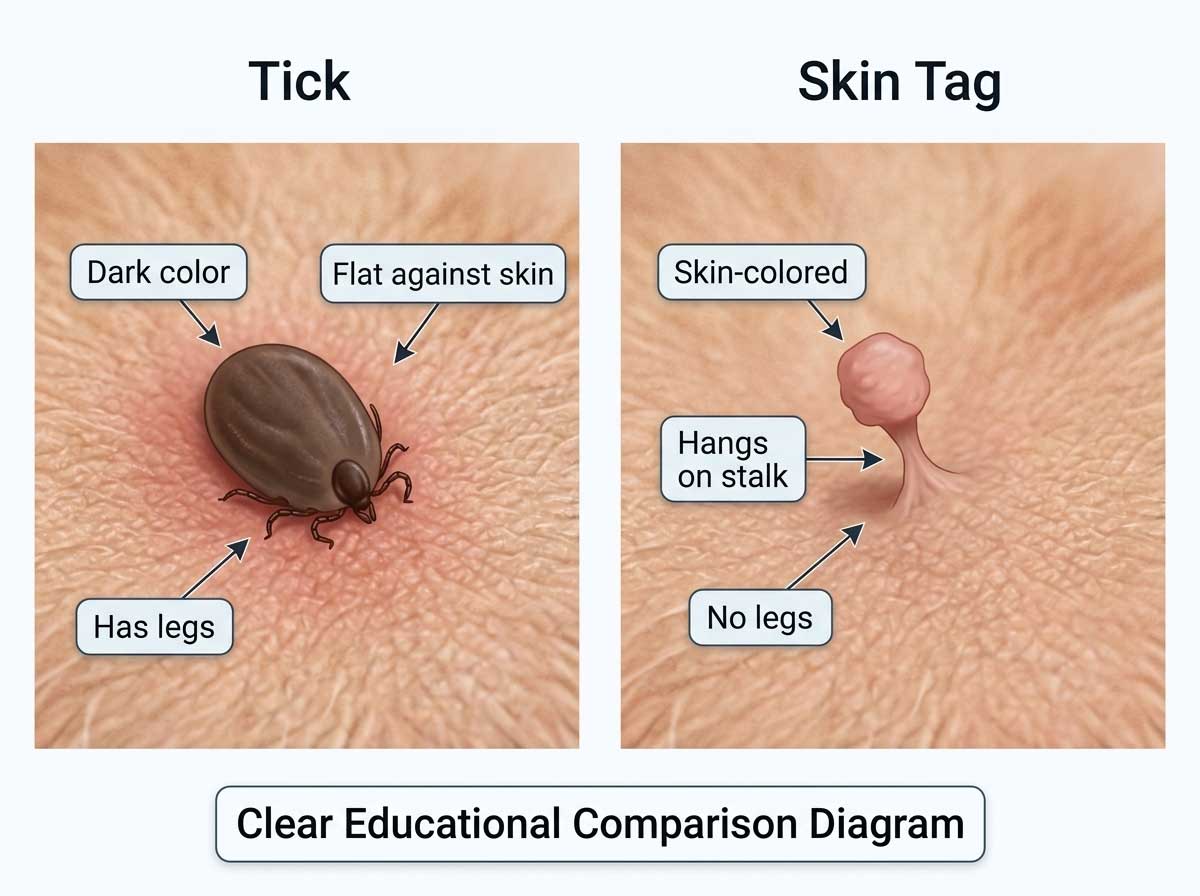
Try Dog Skin Diseases Pictures AI ToolBlack specks turn out to be a single small growth instead? Could be a skin tag or — critically — an embedded tick mimicking a skin tag. Our new AI dog skin tags pictures tool identifies benign skin tag vs tick vs wart vs cyst from the photo.
Try Dog Skin Tags Pictures AI ToolBlack specks ruled out as fleas + you see a circular bald spot instead? Could be early ringworm — CONTAGIOUS to humans. Our new AI dog ringworm pictures tool identifies ringworm stage + zoonotic risk.
Try Dog Ringworm Pictures AI ToolBlack specks not fleas + spots are darkening or spreading into patches? Could be comedones / hyperpigmentation / yeast / Cushing's. Our new AI dog skin black spots pictures tool identifies all 5 pattern types.
Try Dog Skin Black Spots AI ToolFlea Allergy Dermatitis (FAD) creates concentrated scabs on lower back + tail base. Our new AI dog skin scabs pictures tool identifies FAD vs hot spot vs allergy vs mange vs injury scab pattern.
Try Dog Skin Scabs AI ToolFlea bite causes FAD allergic rash on lower back. Our new AI dog skin rash pictures tool identifies FAD vs hives vs atopic vs food allergy vs contact dermatitis rash pattern.
Try Dog Skin Rash Pictures AI ToolFlea-like itching but no flea dirt found? Could be mites instead — some CONTAGIOUS to humans. Our new AI dog skin mites pictures tool identifies Sarcoptic mange vs Demodex vs ear mites vs Cheyletiella.
Try Dog Skin Mites Pictures AI ToolFlea infestations often cause secondary bacterial or yeast skin infections from constant scratching. Our new AI dog skin infection pictures tool identifies bacterial vs yeast vs fungal ringworm vs hot spot from the photo.
Try Dog Skin Infection Pictures AI ToolFlea Allergy Dermatitis (FAD) often shows as red dots on belly + rear-end. Our new AI dog belly rash pictures tool identifies flea allergy vs environmental allergy vs yeast vs bacterial pattern.
Try Dog Belly Rash Pictures AI ToolFrequently Asked Questions
What are black specks on my dog's skin if not fleas?
+
How do I tell yeast infection from flea dirt on a dog?
+
Are black specks on my dog's skin dangerous?
+
Can I treat black specks on my dog at home?
+
What does the wet paper towel test prove?
+
How long does it take for black specks to clear up?
+
Can I prevent black specks from coming back?
+
Found Black Specks on Your Dog?
Upload a photo and let AI flag visual patterns commonly associated with flea dirt, yeast, mites, comedones, or other parasites. Educational only — not a veterinary diagnosis.
Disclaimer: This article is for informational purposes only and is not a substitute for professional veterinary advice. Always consult a licensed veterinarian for diagnosis and treatment of your pet's health conditions.