Cat Sneezing and Watery Eyes: 5 Causes + When to See Vet
Cat sneezing and watery eyes? Learn the 5 causes (URI, herpes, allergies, foreign body, one-eye specifics), home care that actually works, and when same-day vet care is needed.
Published 2026-04-19 · Updated 2026-06-18
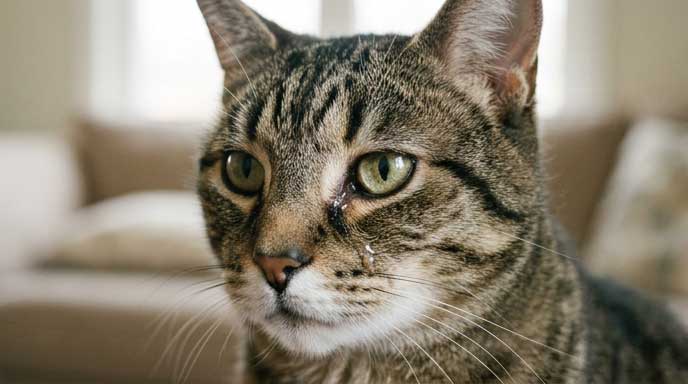
Cat Cold or Emergency?
Upload a photo — AI can flag visual patterns to help indicate if this is manageable upper respiratory concerns or needs urgent vet care.
Your cat is sneezing and has watery eyes. Most of the time, this is a feline upper respiratory infection (URI) — what people call a "cat cold" or "cat flu." But the same two symptoms can also point to allergies, a stuck grass seed in one eye, a herpesvirus flare-up, or in rare cases something more serious. This guide breaks down the 5 main causes, which red flags mean same-day vet, what home care actually helps, and what to watch for in special cases (one eye only, senior cats, kittens).
This article is for general educational purposes only and is not a substitute for professional veterinary diagnosis. If your cat shows severe symptoms — heavy breathing, refusing food, blue gums, or persistent symptoms past 4-5 days — see your veterinarian immediately.
What Causes Cat upper respiratory concerns?
upper respiratory concerns in cats is almost always caused by a combination of:
- ✓feline viral concerns-1 (viral concerns) — most common; 80%+ of cats have been exposed; lifelong carriers
- ✓FELINE viral concerns — viral; causes mouth ulcers too
- ✓feline bacterial concerns — bacterial; more eye-focused
- ✓bacterial concern felis — often co-infects with viral concerns
- ✓SECONDARY BACTERIAL infection on top of viral
- ✓Less commonly: Bordetella bronchiseptica (rare in cats)
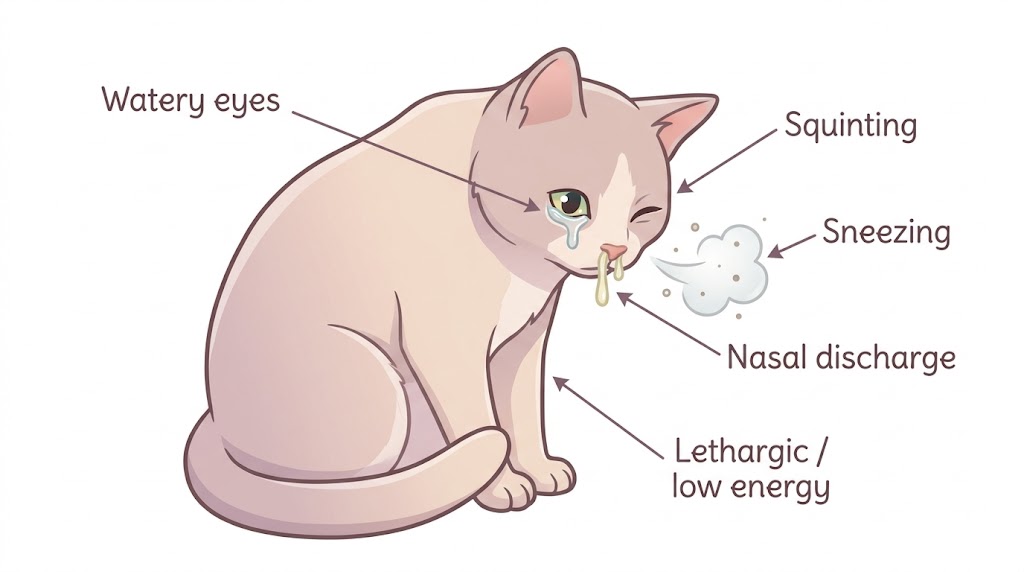
Classic upper respiratory concerns Symptoms
- ✓SNEEZING (frequent, sometimes violent)
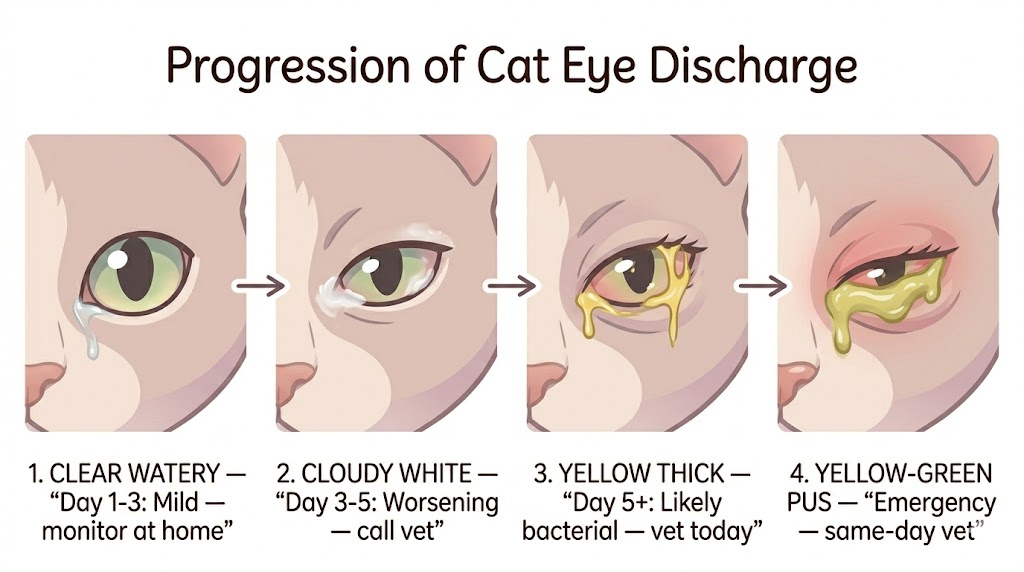
- ✓NASAL DISCHARGE (clear becoming thick yellow-green if bacterial)
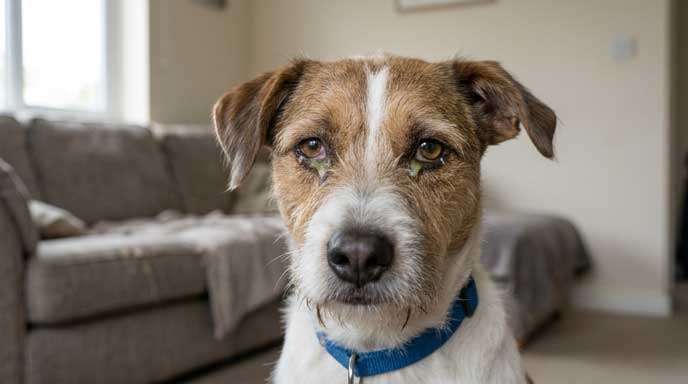
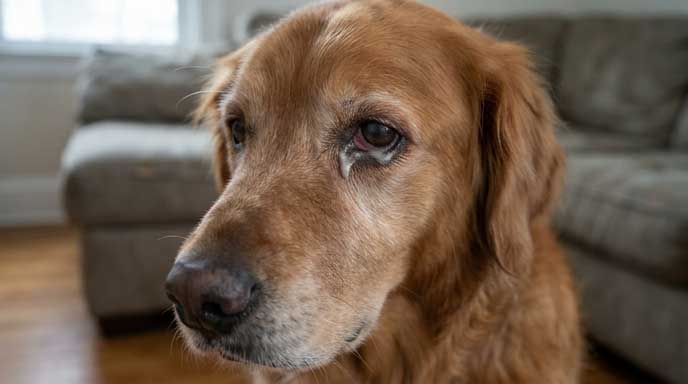
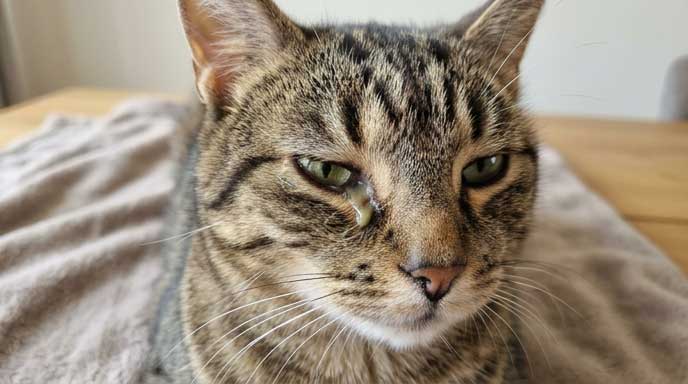
- ✓WATERY EYES progressing to yellow-green discharge
- ✓REDUCED APPETITE (CRITICAL warning sign in cats)
- ✓MILD FEVER
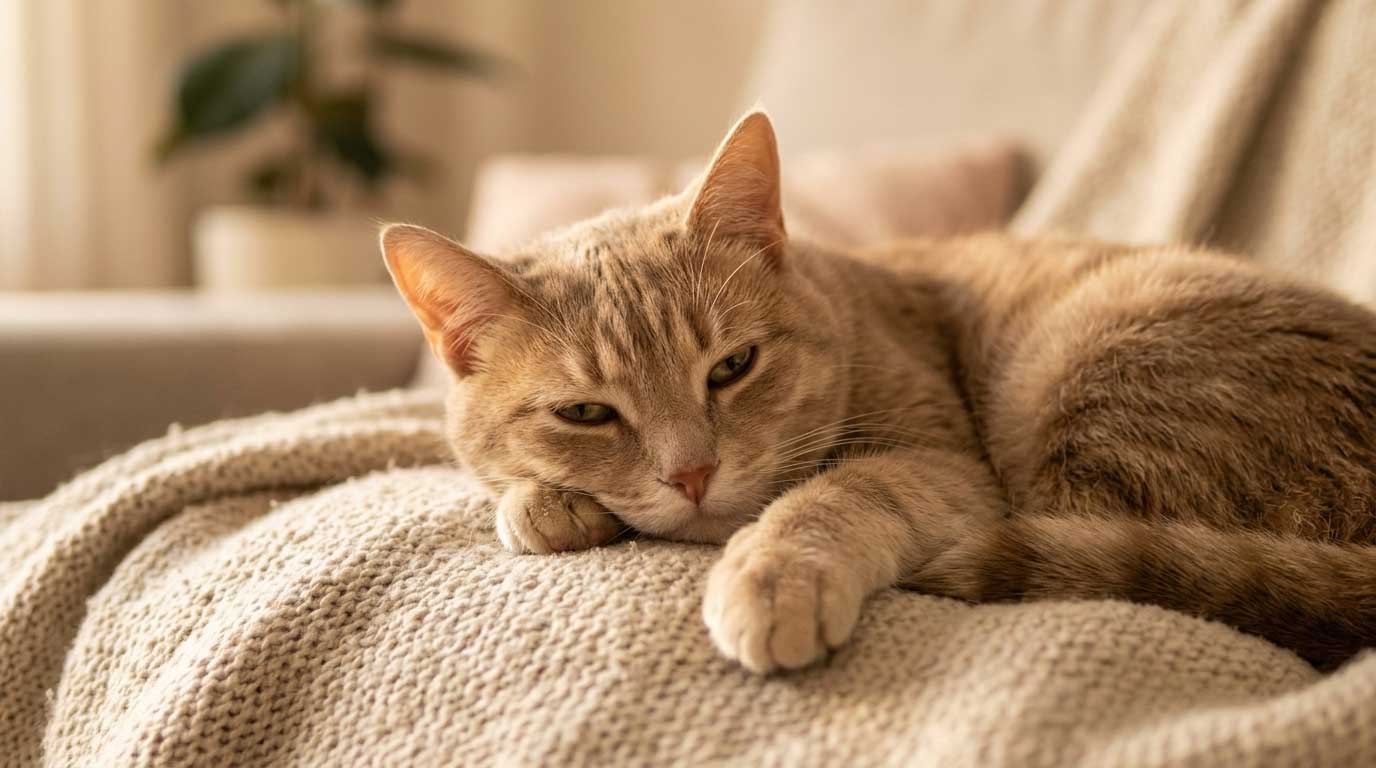
- ✓LETHARGY
- ✓Squinting if eye infection develops
- ✓Mouth ulcers (classic viral concerns sign)
- ✓Drooling from mouth ulcers
- ✓Hoarse meow
How Cats Get upper respiratory concerns
Transmission pathways:
- ✓DIRECT contact with infected cats (sneezing, grooming, shared bowls)
- ✓Shelter/boarding exposure
- ✓Multi-cat households (one cat flares, spreads)
- ✓Indoor cats via owner bringing virus home on hands/clothes
- ✓Kittens from mothers (viral concerns very commonly transmitted)
- ✓Virus reactivation from stress (even in indoor-only cats who were exposed as kittens)
Sneezing + watery eyes started recently? Upload a photo for AI severity check — vet now vs monitor at home.
Check Cat Eye DischargeWhen to Rush to the Vet (Same Day)
- ✓Kitten (under 6 months) with ANY significant upper respiratory concerns signs
- ✓Not eating for 24+ hours (fatty liver concerns risk in 2-3 days for overweight cats)
- ✓Breathing difficulty or rapid shallow breathing
- ✓Severely lethargic, hiding, unresponsive
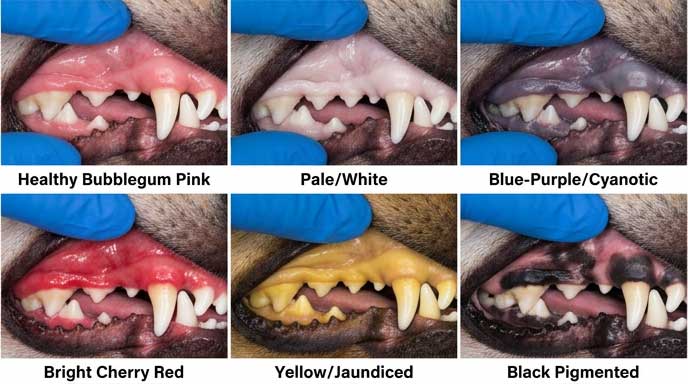
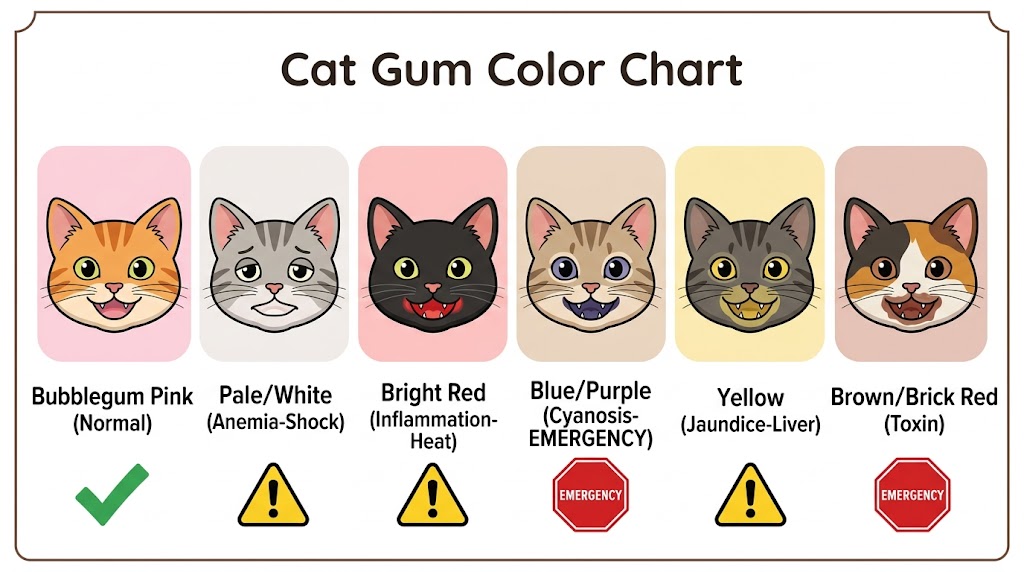
- ✓Blue or pale gums (oxygen issue)
- ✓Discharge covering entire eyes, can't open
- ✓High fever (over 104°F / 40°C)
- ✓Dehydration signs (skin tent, dry sticky gums)
When to Vet Within 48 Hours
- ✓Adult cat with yellow-green eye discharge
- ✓Moderate sneezing with thick nasal discharge
- ✓Reduced but not absent appetite
- ✓One eye clearly worse than other
- ✓Symptoms not improving in 2-3 days
- ✓Cat with feline leukemia concerns/feline immunodeficiency concerns or other chronic disease
Home Monitoring OK for 24-48 Hours
Only if your cat is:
- ✓Eating normally
- ✓Drinking normally
- ✓Alert and responsive
- ✓Mild clear watery eye discharge
- ✓Occasional sneezing
- ✓Symptoms not worsening
What the Vet Will Do
- ✓Physical exam — temperature, lung sounds, eye exam, mouth check for ulcers
- ✓Fluorescein stain if eye looks painful (rule out corneal ulcer)
- ✓Sometimes viral/bacterial testing
- ✓Prescribe vet-prescribed medication EYE DROPS (if yellow/green discharge)
- ✓Prescribe ORAL DOXYCYCLINE if bacterial concerns/bacterial concern suspected (3-4 weeks)
- ✓ANTIVIRAL DROPS for severe herpes flare (cidofovir, idoxuridine)
- ✓APPETITE STIMULANT (mirtazapine) if not eating
- ✓FLUID THERAPY if dehydrated (SC or IV)
- ✓SUPPORTIVE CARE recommendations
Home Supportive Care
Critical: Keep Your Cat Eating
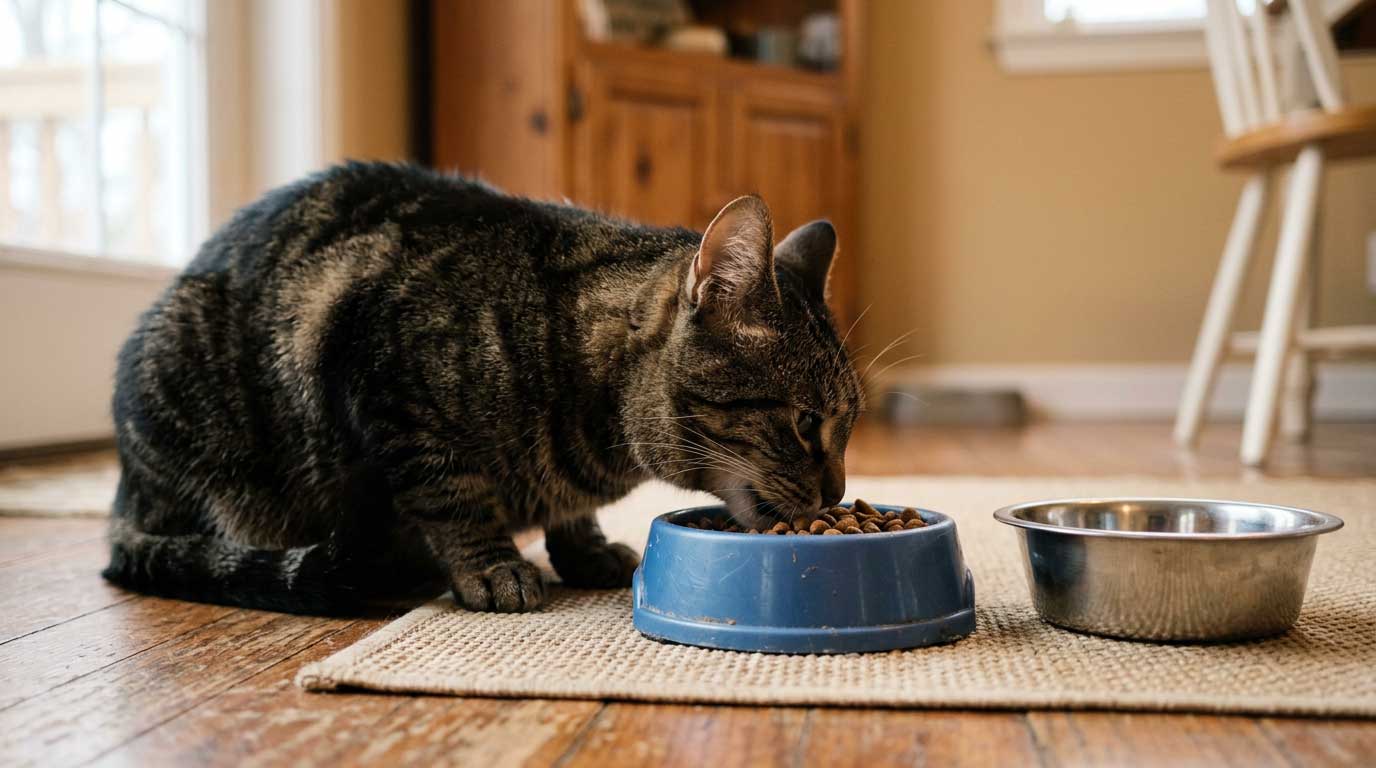
Cats who stop eating develop fatty liver concerns within days — this is as dangerous as the upper respiratory concerns itself. Tricks to encourage eating:
- ✓WARM the food slightly (releases aroma)
- ✓Offer TASTY options: tuna juice, baby food (meat only, no onion), Churu treats
- ✓SYRINGE FEED if necessary (with vet guidance)
- ✓Clean nose discharge so cat can smell food
- ✓Add warm water to dry food to soften and aromatize
- ✓Appetite stimulant (mirtazapine) if vet prescribes
Relieve Congestion
- ✓HUMIDIFIER in the room (or bring cat into bathroom during hot shower for steam)
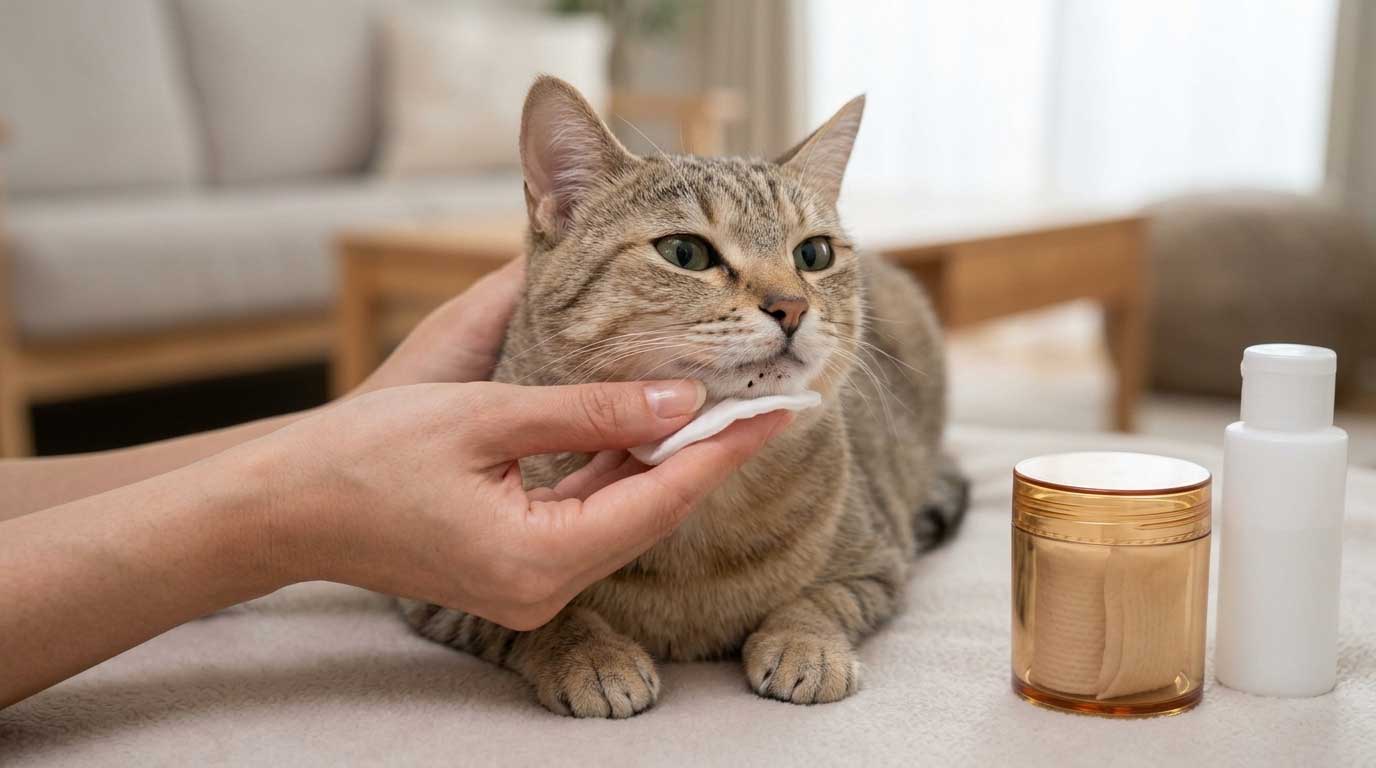
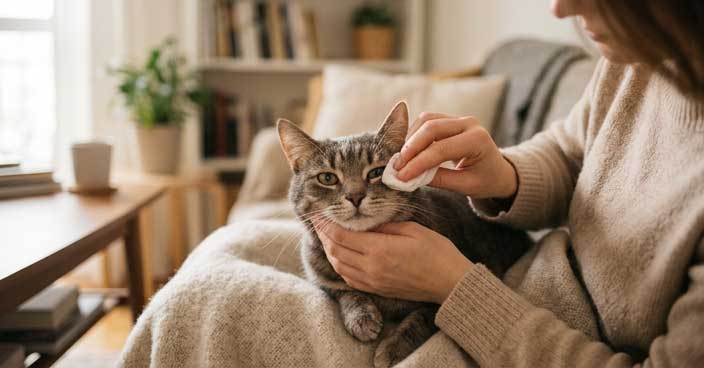
- ✓CLEAN nasal discharge with warm damp cloth
- ✓Saline drops in nose (if vet recommends)
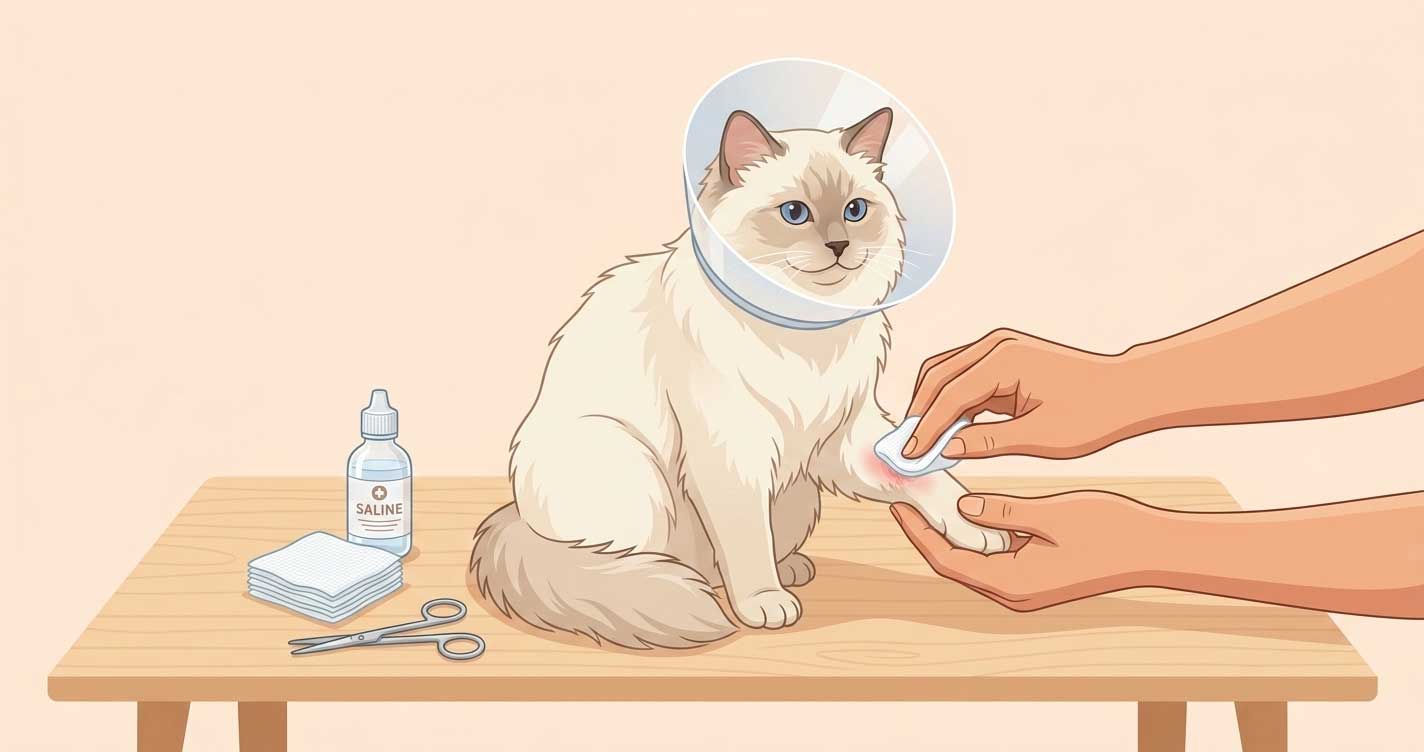
Eye Care
- ✓Gentle warm saline cleanses 2-3x daily
- ✓Warm compresses 5 min 2-3x daily
- ✓Apply vet-prescribed drops per instructions
- ✓Prevent rubbing with e-collar if needed
Isolation and Stress Reduction
- ✓SEPARATE from other cats until recovered (highly contagious)
- ✓Wash hands between cats
- ✓QUIET space with favorite resting spots
- ✓Feliway pheromone diffuser for anxiety
- ✓Maintain routine to reduce stress
L-Lysine for viral concerns?
L-lysine supplementation is widely used for cat herpes flares. Theory: competes with arginine which viral concerns needs to replicate. Evidence: mixed; some studies show benefit, others don't; still commonly prescribed. Dose: 500mg twice daily for adults, 250mg twice daily for kittens. Available as powder, paste, or treats. Generally safe. Ask your vet.
Prevention
- ✓FVRCP vaccination (viral concerns, viral concerns, panleukopenia) — doesn't eliminate viral concerns if already infected but reduces severity of flares
- ✓Isolate new cats for 2 weeks before introducing to household
- ✓Test for feline leukemia concerns/feline immunodeficiency concerns before introducing
- ✓Minimize stress (especially for known herpes-positive cats)
- ✓Good nutrition supports immune system
- ✓Regular vet checkups
Eye discharge changed color or your cat stopped eating? Upload a photo for urgency assessment.
Check Cat Eye DischargeSpecial Case: Only ONE Eye Is Watery (Not Both)
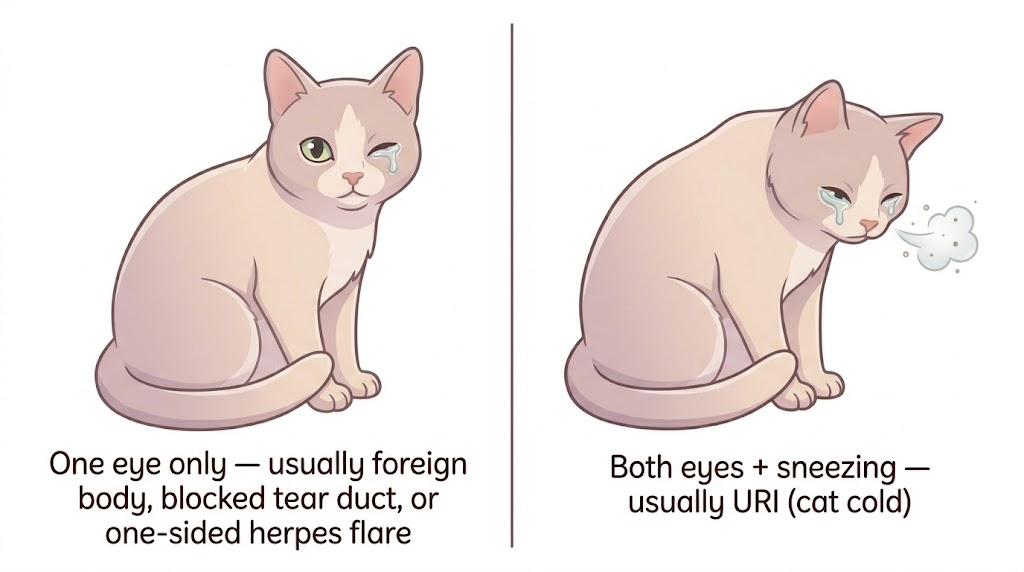
When only one eye is watery — with or without sneezing — the cause list is quite different from "both eyes watery." Unilateral (one-sided) eye watering usually points to a localized problem, not a systemic infection.
- ✓🌾 **Foreign body**: a grass seed, eyelash, or speck of debris stuck in the eye or under the third eyelid — sudden onset after going outside, intense squinting, may be rubbing the eye
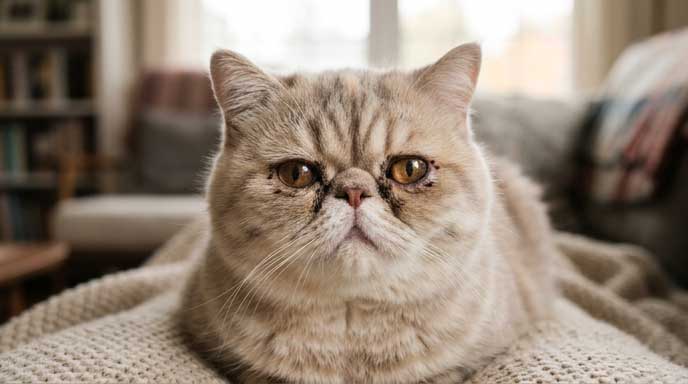
- ✓🚫 **Blocked tear duct**: tears overflow because they cannot drain properly — common in flat-faced breeds (Persian, Himalayan, Exotic Shorthair) and after past eye infections
- ✓👁️ **Corneal ulcer or scratch**: painful, often combined with squinting and pawing at the eye — emergency, can perforate within 24 hours
- ✓🦠 **Feline herpesvirus (FHV-1) flare in one eye**: cats are lifelong carriers, and stress-triggered flares can hit one eye first
- ✓🧪 **Chlamydia / mycoplasma**: often starts one-sided before spreading to both
One-eye watering with squinting, pawing, or visible cloudiness is a same-day vet problem (suspect corneal ulcer until proven otherwise). One-eye watering with no pain and a normal-looking eye that has been going on for weeks is usually a blocked tear duct — schedule a routine vet visit.
Special Case: Senior Cat (10+ Years)
In older cats, sneezing and watery eyes deserve a lower threshold for vet attention. Senior cats have weakened immune systems, may have underlying conditions (chronic kidney disease, diabetes, dental disease) that make even mild URIs dangerous, and are more prone to dental root abscesses pushing into the nasal cavity (presents like URI but is dental). New onset persistent sneezing in a senior cat that has never sneezed before warrants a vet visit within 1-2 days — even if symptoms seem mild.
Special Case: Kitten (Under 6 Months)
Kittens with sneezing and watery eyes are at much higher risk than adult cats. Their immune systems are still developing, they can dehydrate within 12-24 hours, and severe URIs can permanently damage the developing nasal passages and tear ducts. A sneezing, watery-eyed kitten with reduced appetite is a same-day vet visit, no exceptions. Tiny kittens (under 8 weeks) with any URI signs need a vet within hours — they can crash overnight.
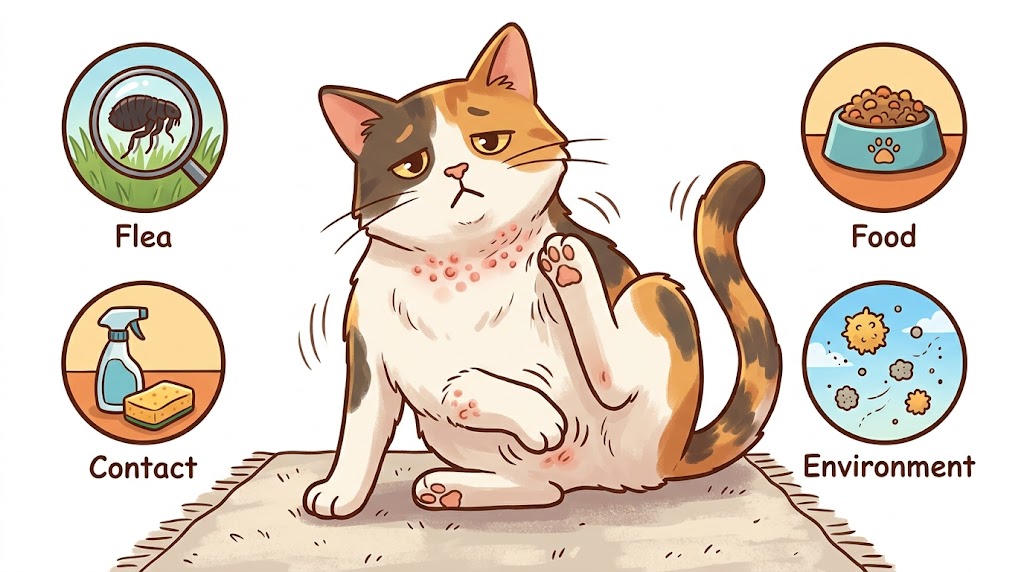
Allergies vs URI: How to Tell Them Apart
Both allergies and URI cause sneezing and watery eyes, but the patterns are different:
| Sign | 🤧 URI (Cat Cold) | 🌸 Allergies |
|---|---|---|
| Onset | Sudden, gets worse over days | Seasonal or after exposure (cleaning, pollen) |
| Nasal discharge | Clear → thick yellow/green | Stays clear and watery |
| Fever | Possible (>102.5°F) | No |
| Appetite | Often reduced | Usually normal |
| Energy level | Lethargic | Normal |
| Treatment | Antibiotics if bacterial; antivirals if herpes | Avoid trigger, antihistamines (vet-prescribed) |
For more on related cat eye issues, see our guides on how to treat cat conjunctivitis at home, cat eye infection: herpes vs chlamydia treatment, black crust around cat eyes, and Persian cat brown eye discharge / tear staining. For external veterinary references, see PetMD's "Why Cats Sneeze and What to Do" and Cornell Feline Health Center on upper respiratory infections.
Not sure if your cat's watery eyes and sneezing need a vet or can wait? Upload a photo — AI assesses severity and gives specific urgency guidance.
Sneezing + eye discharge together? Our new AI symptom triage tool focuses on this specific combo — distinguish viral URI vs bacterial vs allergy vs blocked tear duct.
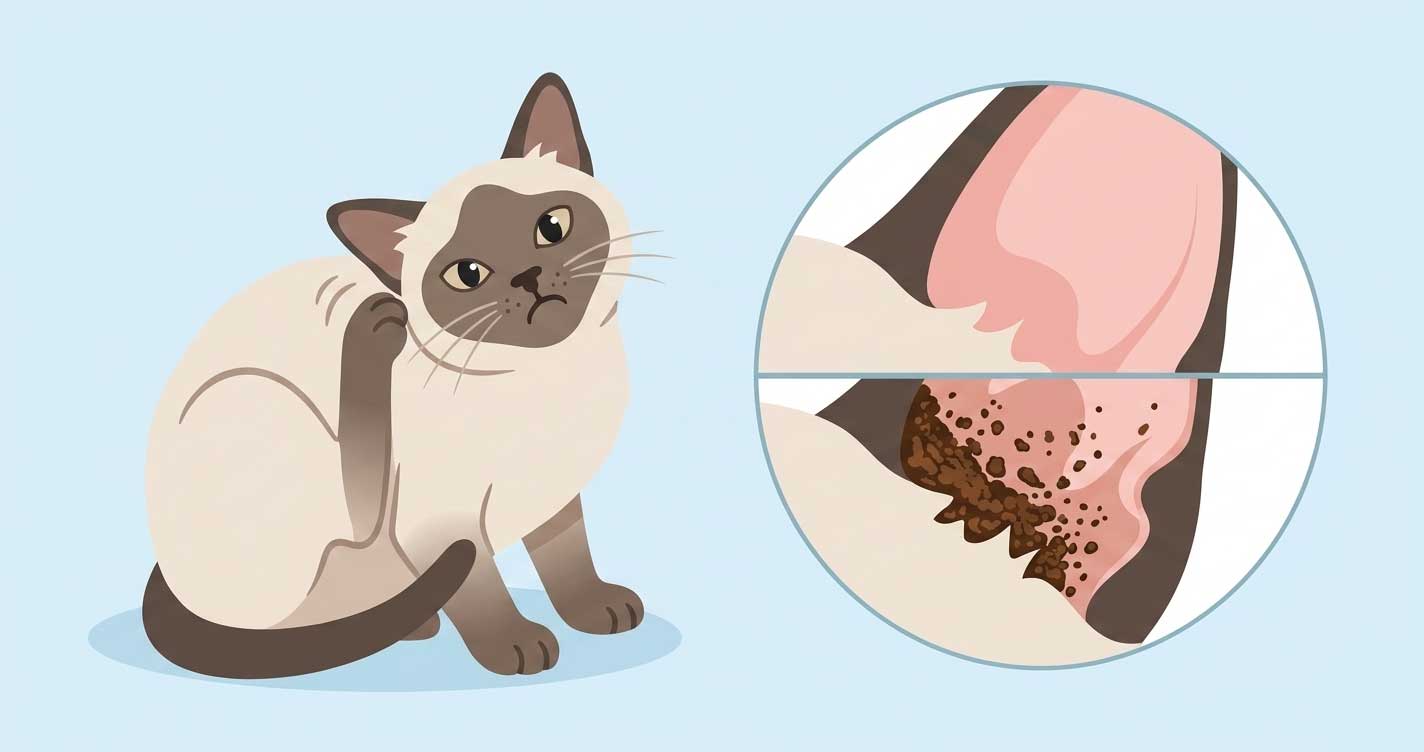
Try AI Symptom TriageCat URI sometimes spreads to the ear — chronic ear infection cats often have URI history. Our new AI ear tool identifies bacterial vs yeast vs mites pattern.
Try Cat Ear Infection AI ToolFrequently Asked Questions
What to do if my cat is sneezing a lot and has watery eyes?
+
Do cat colds go away on their own?
+
When should I take my cat to the vet for sneezing and eye discharge?
+
What causes watery eyes and runny nose in cats?
+
My cat is sneezing and has watery eyes — what home remedy works?
+
My cat's watery eyes and sneezing came with diarrhea and lethargy — is it serious?
+
Cat Cold or Emergency?
Upload a photo — AI can flag visual patterns to help indicate if this is manageable upper respiratory concerns or needs urgent vet care.
Disclaimer: This article is for informational purposes only and is not a substitute for professional veterinary advice. Always consult a licensed veterinarian for diagnosis and treatment of your pet's health conditions.