Dog Paw Pad Injury: First Aid, Flap Treatment & Healing Time

How to treat a dog paw pad injury at home — stopping bleeding, handling a paw pad flap, bandaging, and what the healing timeline looks like. Plus when you need a vet.

Published 2026-04-18
Share:
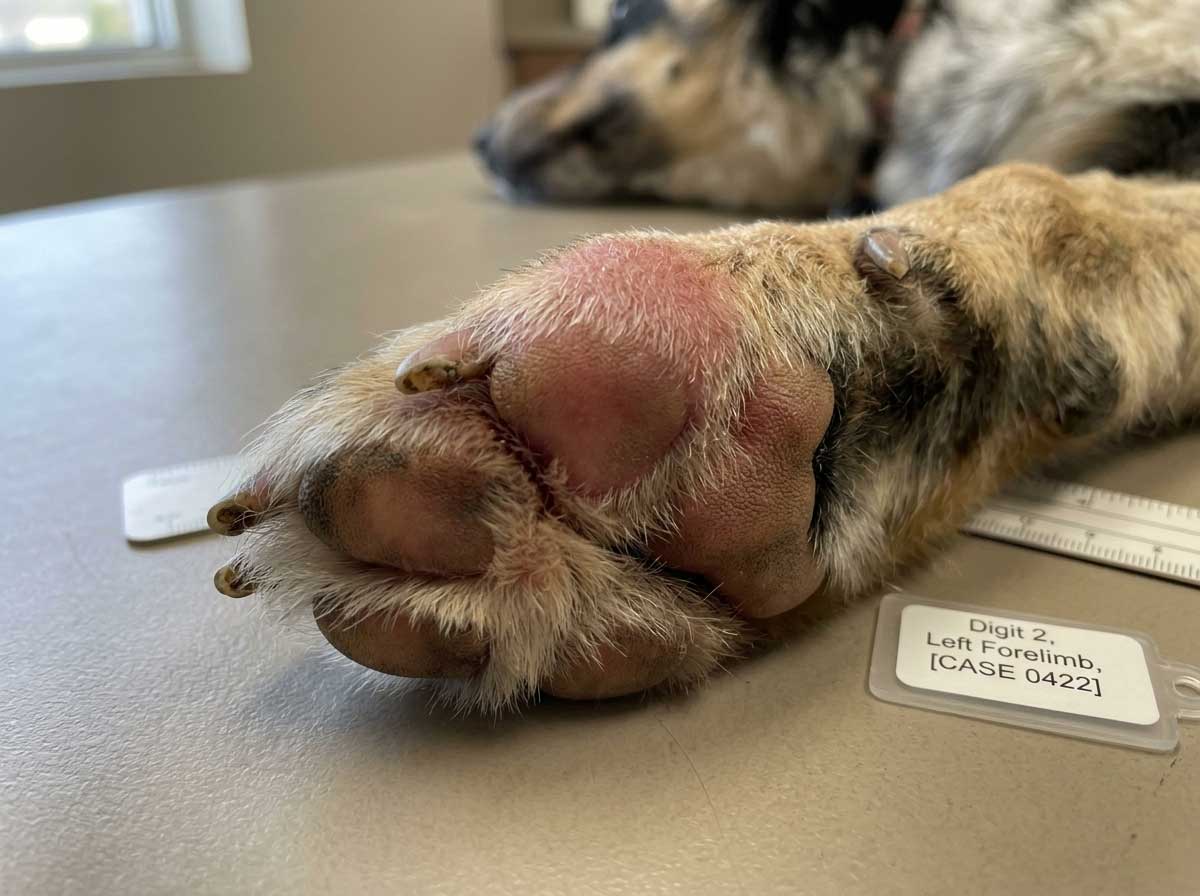
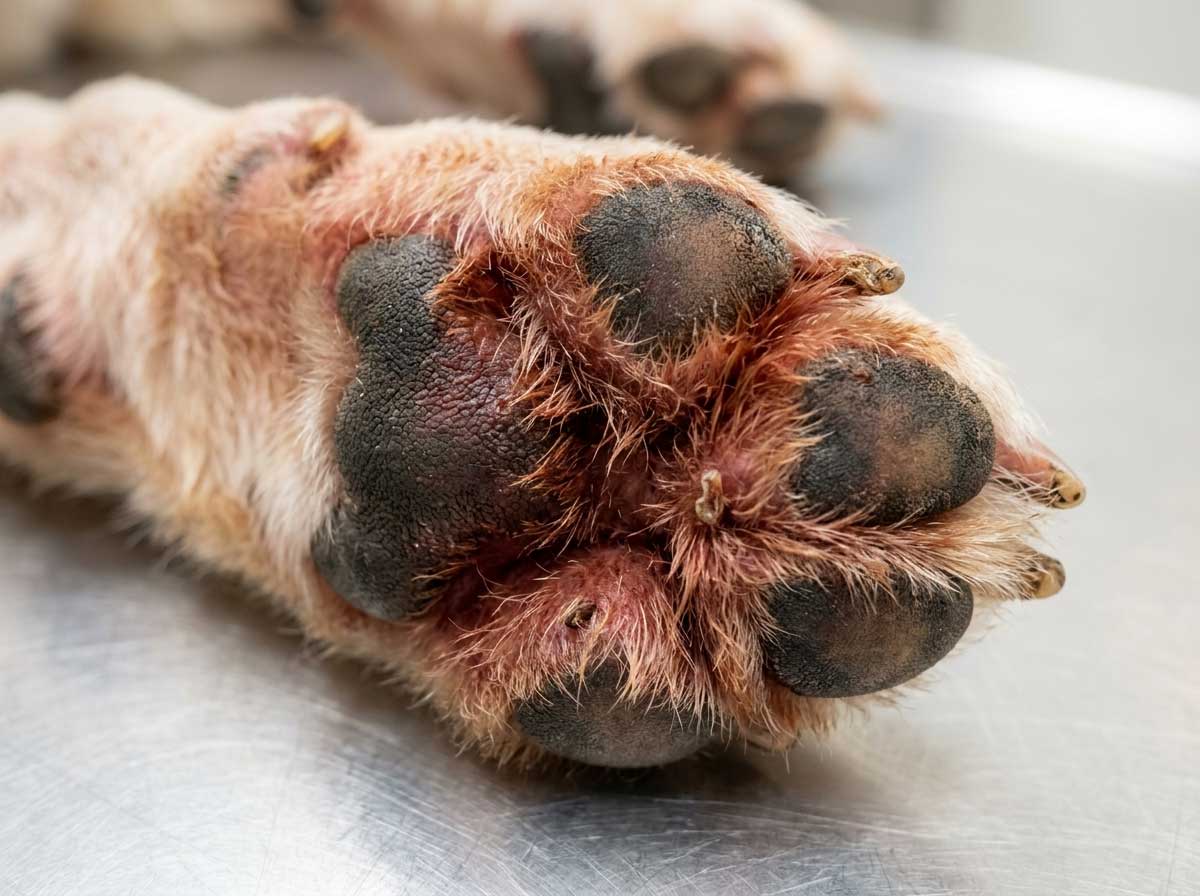
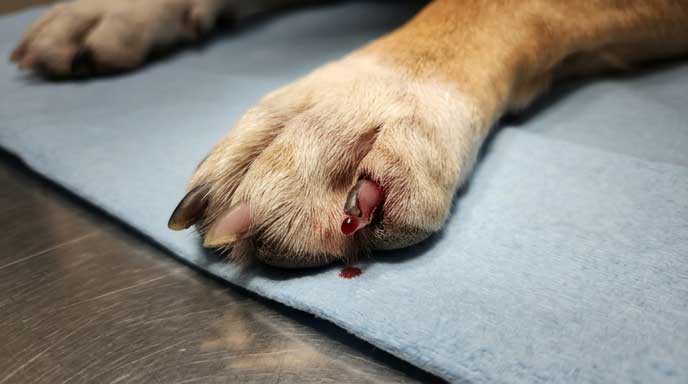
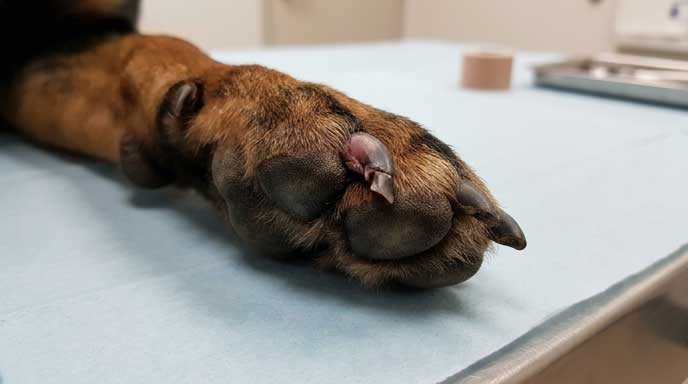
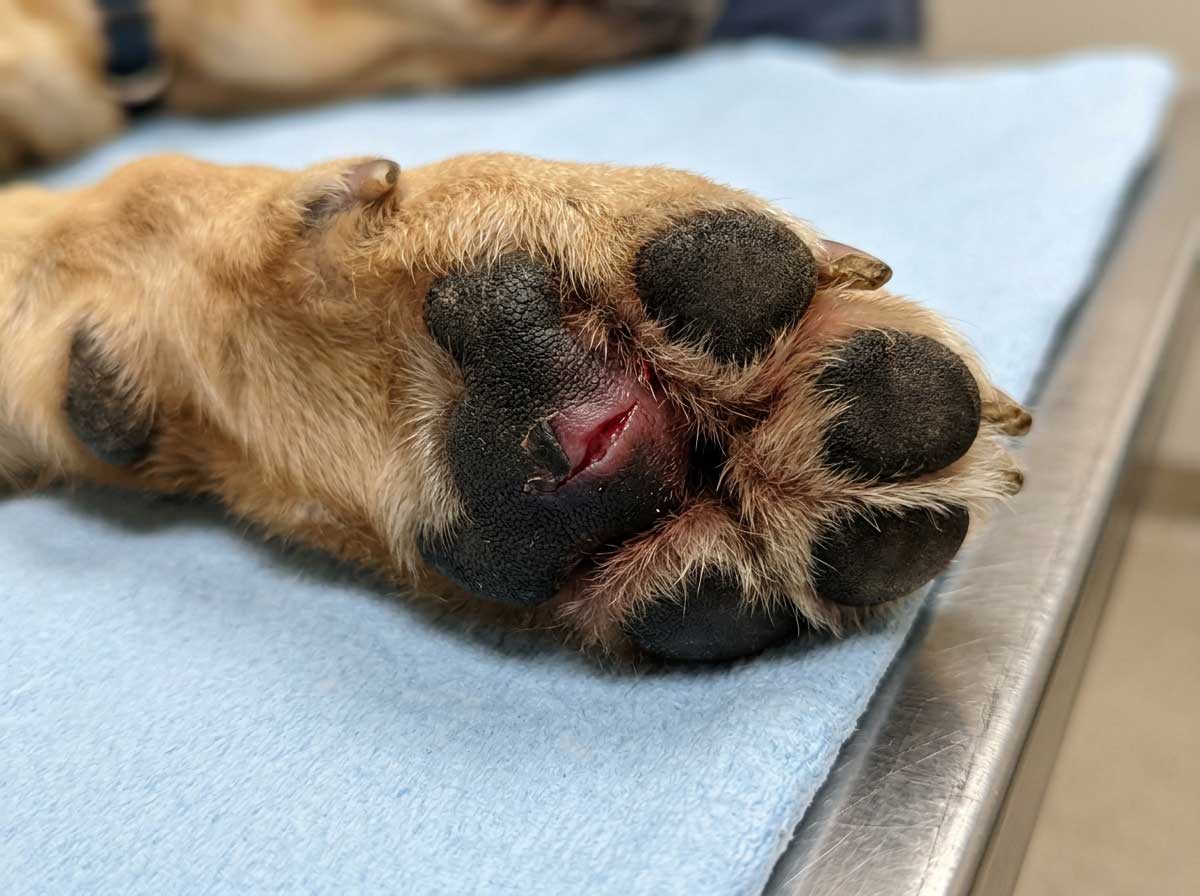
Dog paw with a cut or injury on the pad

Need Help Assessing the Injury?

Upload a photo of the paw pad injury and get AI analysis of severity and recommended next steps.

Check Dog Paw →

Paw pads take a beating. They protect your dog from rough ground, hot pavement, ice, rocks, and broken glass — but they aren't invincible. When a paw pad gets cut, torn, or develops a "flap" of loose pad tissue, knowing what to do in the first few minutes makes a real difference in how fast it heals (and whether you end up at the emergency vet).

Types of Paw Pad Injuries

  • Surface cut or scrape — the top layer of pad is scratched or sliced
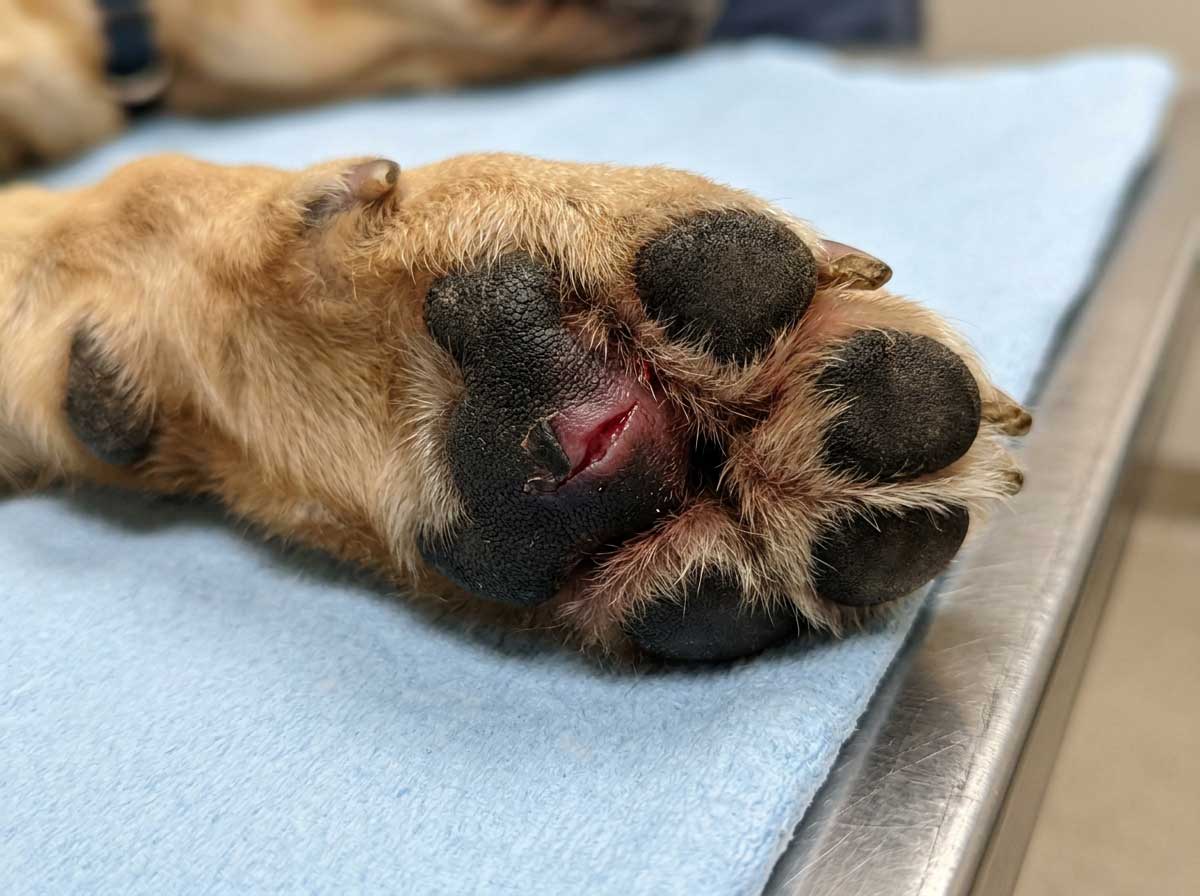
  • Deep laceration — cuts through multiple layers of the pad, exposing pink tissue
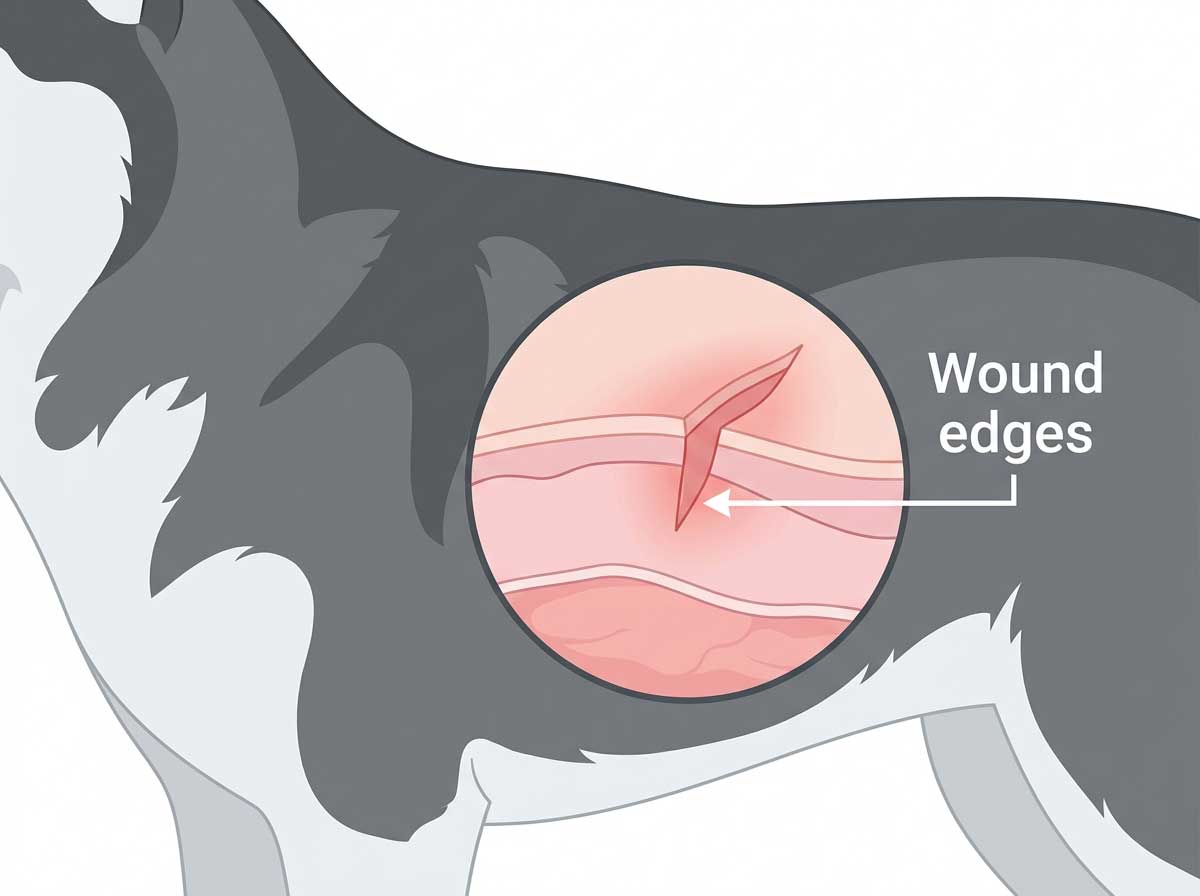
  • Pad flap — a piece of pad is partially torn but still attached
  • Completely avulsed (torn off) pad — rare but serious, exposes nerves and fat
  • Burn — from hot pavement, chemicals, or ice-melt salt
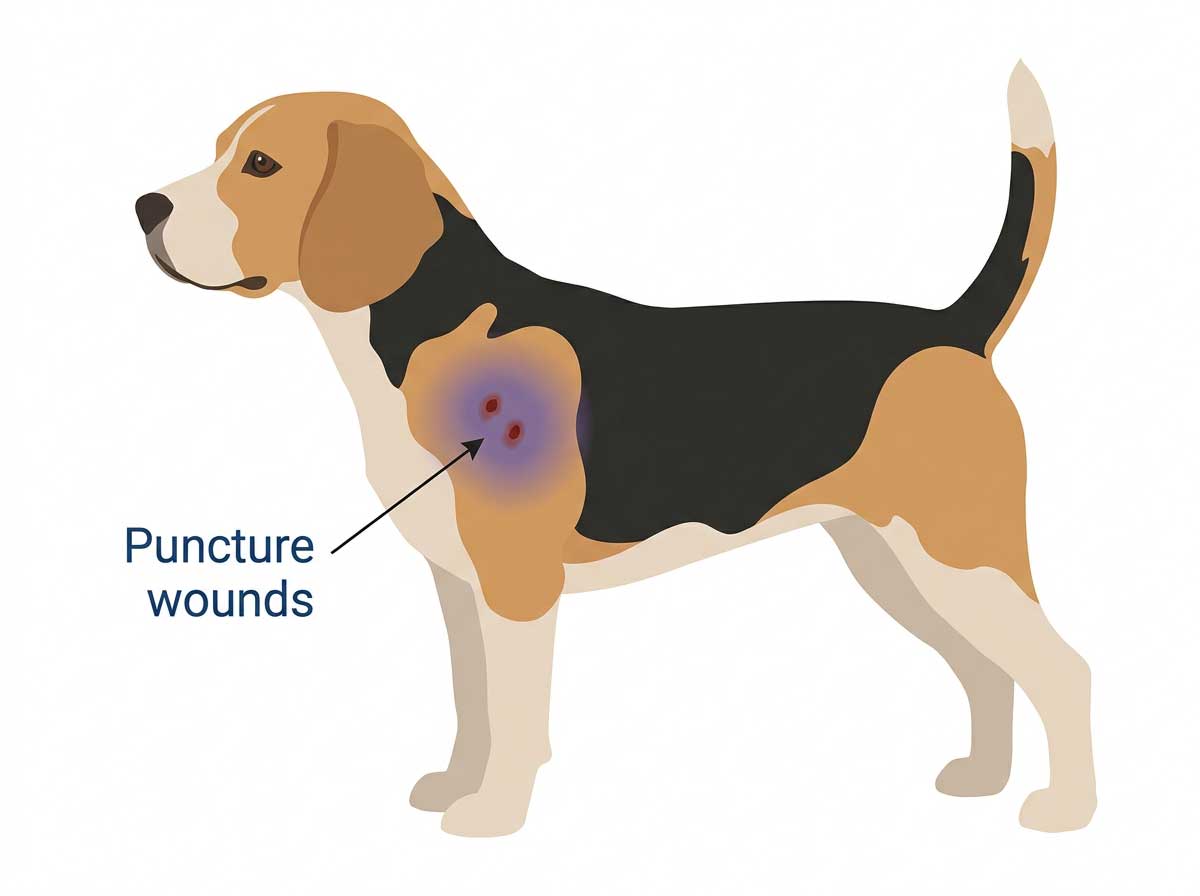
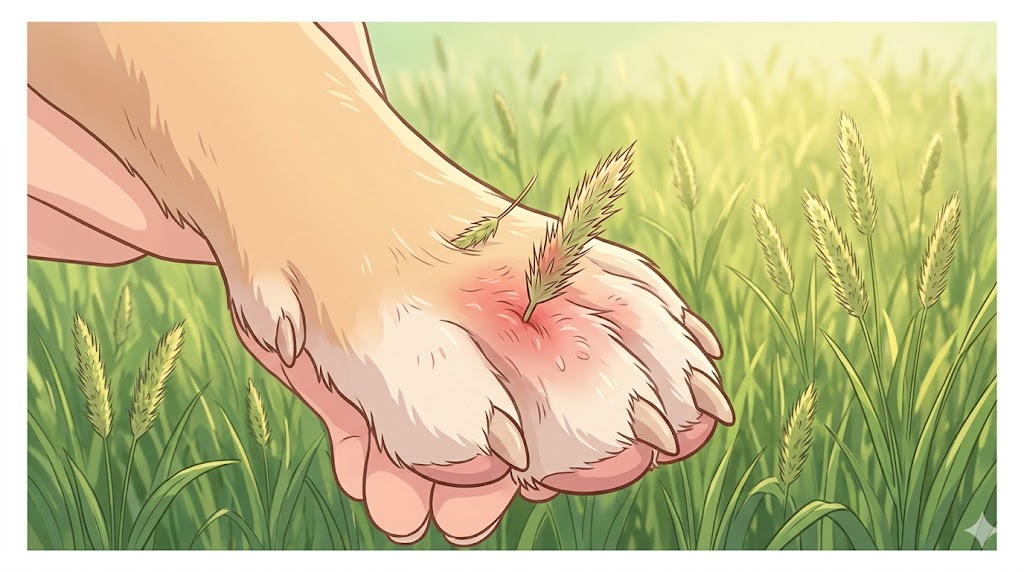
  • Puncture wound — from glass, nails, stickers, or sharp objects
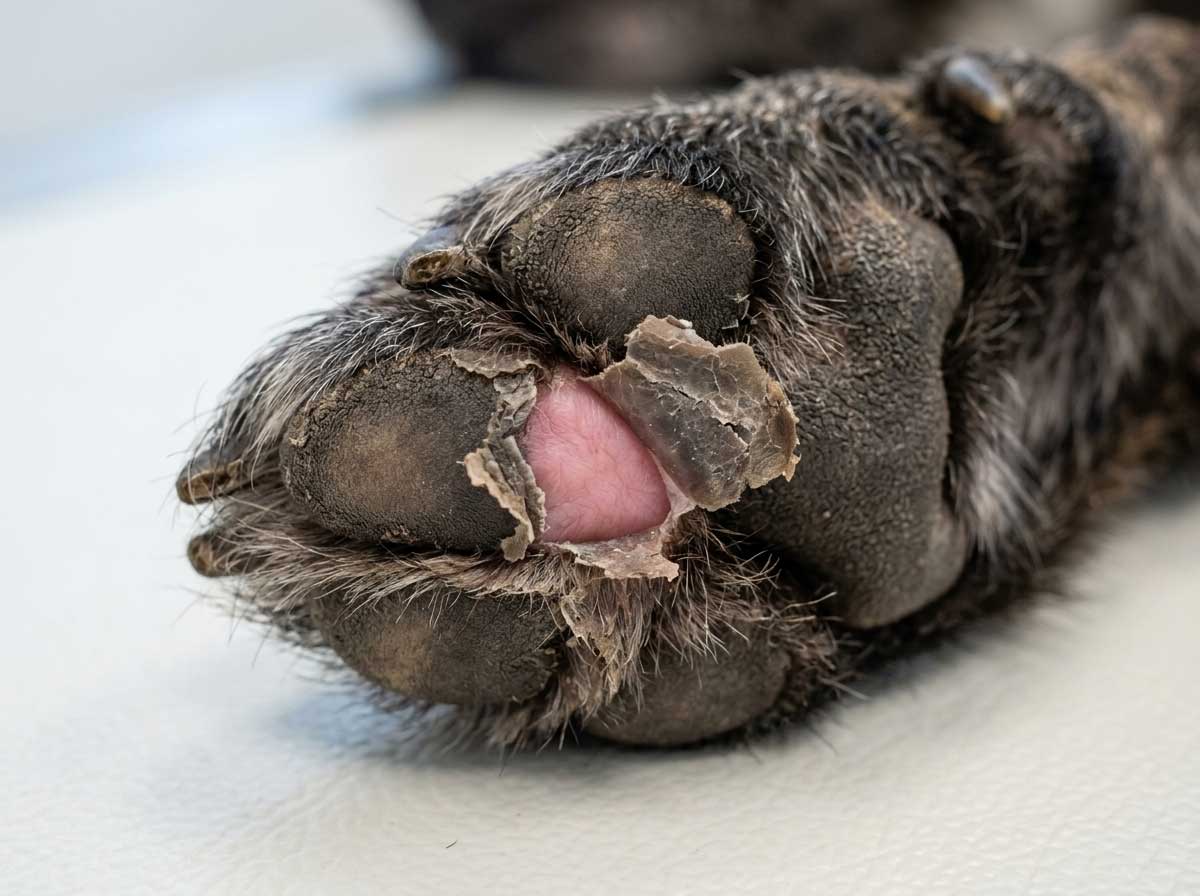
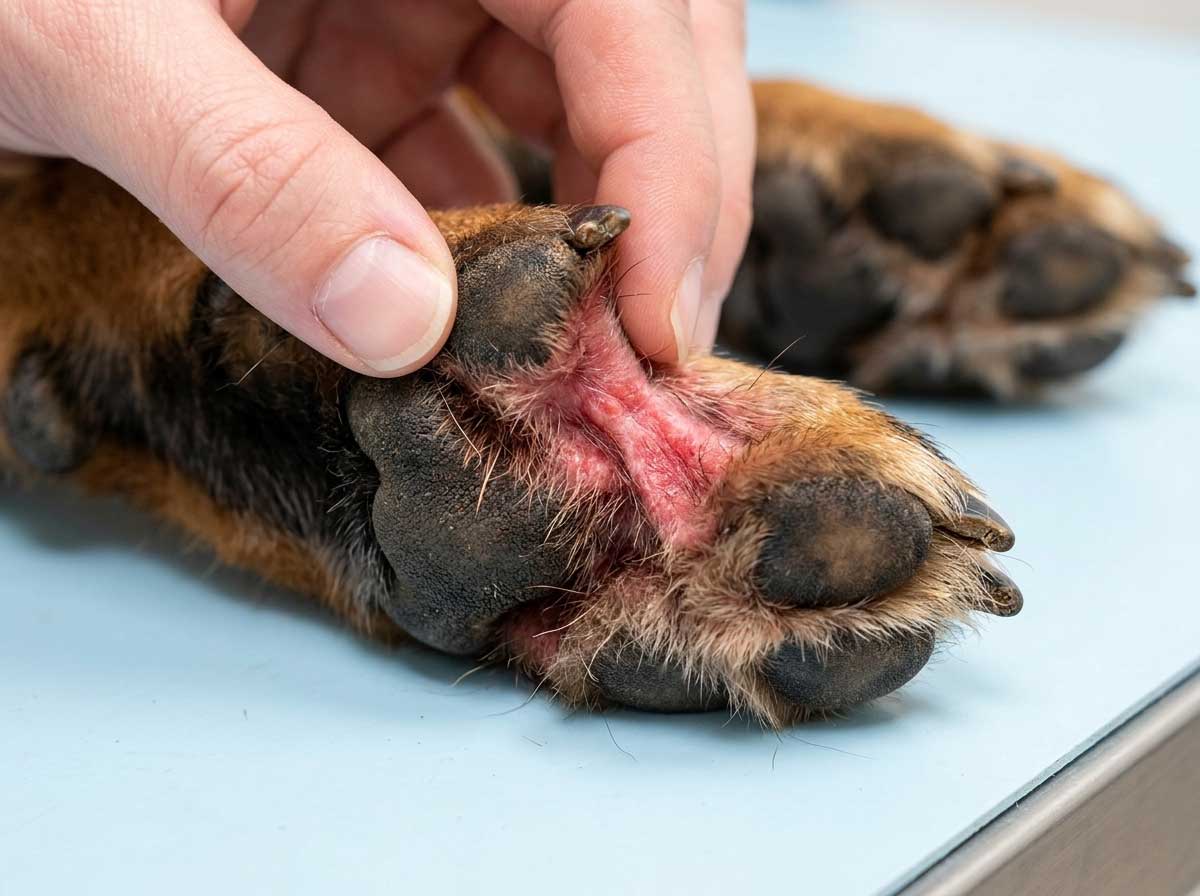
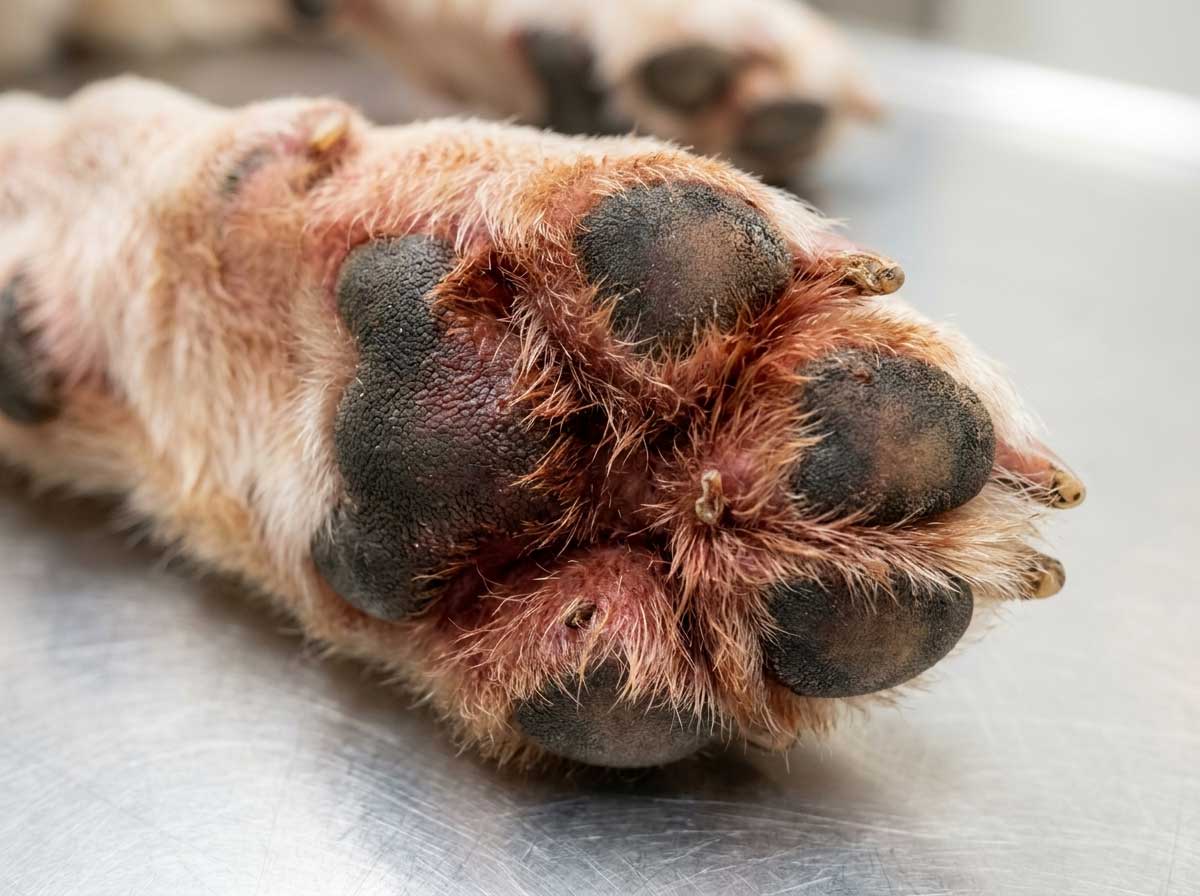
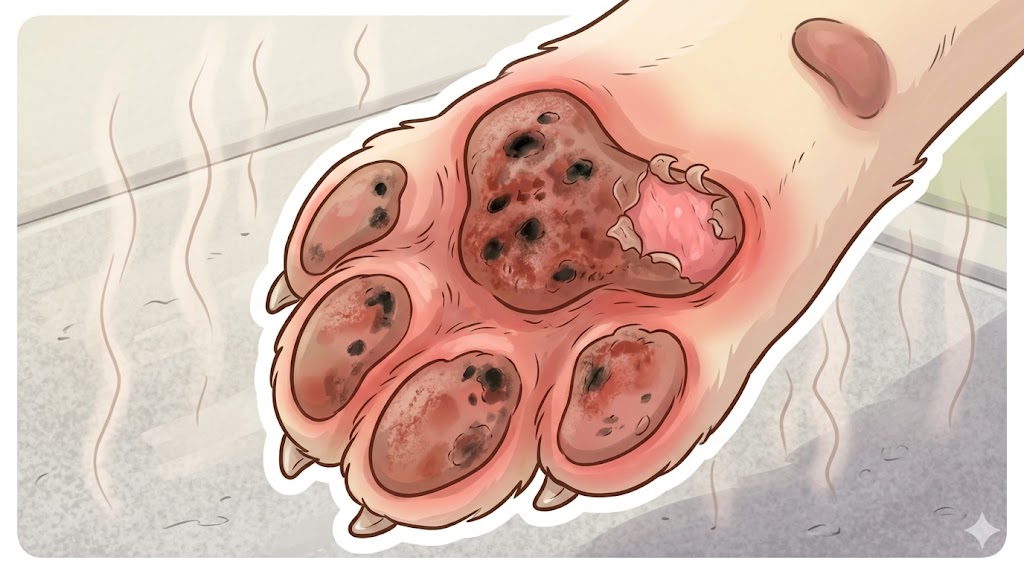
Dog paw pad with outer layer peeling away from burn or chemical injury
Peeling of the outer pad layer is common after hot-pavement burns or chemical exposure

First Aid: What to Do Right Away

Step 1: Stop the Bleeding

Paw pads bleed a lot — don't panic. Apply firm pressure with gauze or a clean cloth for 5-10 minutes straight (don't keep peeking to see if it's stopped — that reopens the wound). For stubborn bleeding, wrap with vet wrap or an Ace bandage over the gauze, but not too tight. If bleeding hasn't stopped after 10-15 minutes of firm pressure, go to the vet.

Step 2: Clean the Wound

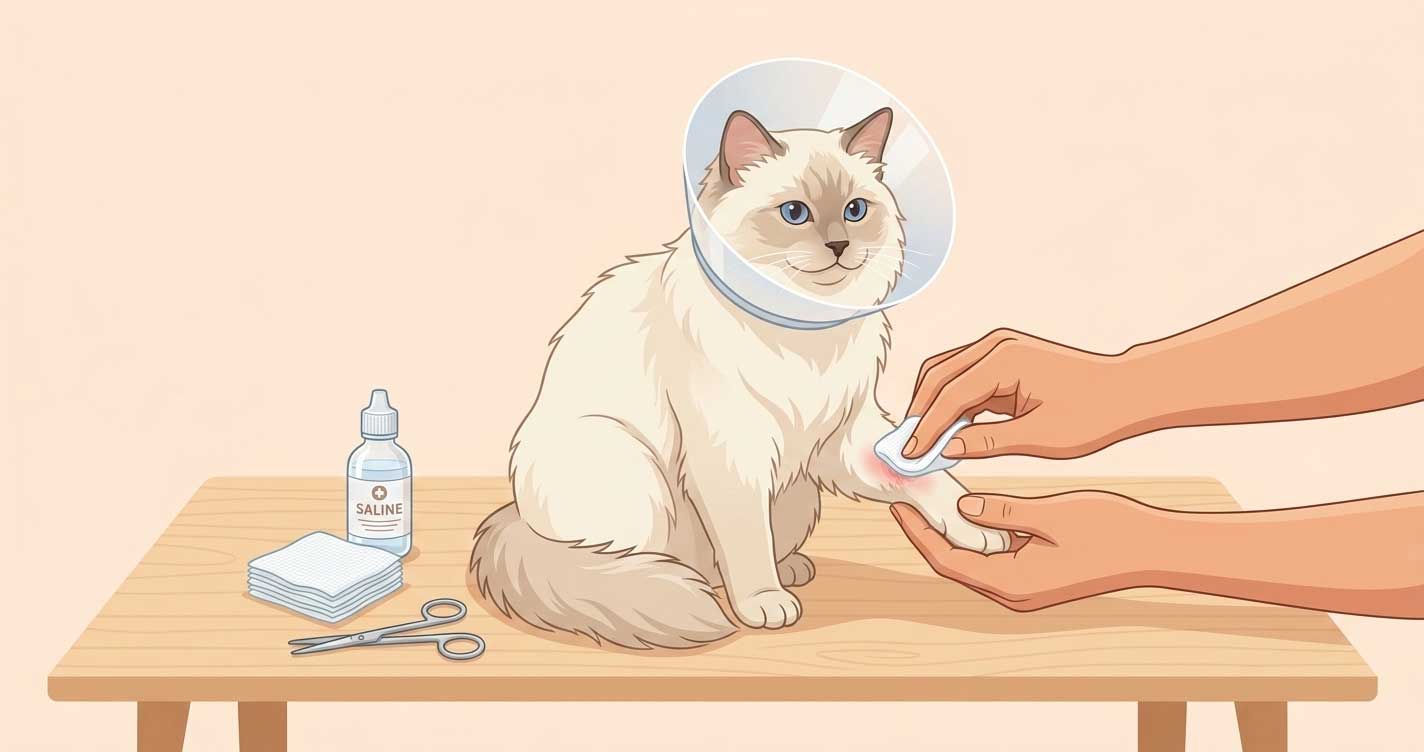
Rinse with clean lukewarm water or saline solution to flush out debris. Do NOT use hydrogen peroxide — it damages healing tissue and actually slows recovery. Good options: sterile saline, diluted chlorhexidine (weak tea color), or plain clean water. Pat dry with gauze (don't scrub).

Step 3: Assess the Damage

Look at what you're dealing with:

  • Surface scrape with just the outer pad scratched → home care likely fine
  • Cut that's deeper than the outer pad layer → vet visit recommended
  • Flap of pad tissue hanging loose → vet visit — may need gluing or stitching
  • Bleeding won't stop after 15 minutes of pressure → emergency vet
  • Fat or deeper tissue visible → emergency vet
  • Longer than half an inch → vet visit
  • On a joint or between toes (constantly moving, hard to heal) → vet visit

Step 4: Bandage (for home-treatable injuries)

Apply a thin layer of pet-safe antibiotic ointment (Neosporin without pain reliever is fine short-term, or ask your vet for a pet-specific version). Cover with a sterile non-stick gauze pad, wrap with gauze rolling, then secure with vet wrap. Don't wrap so tight that you cut off circulation — you should be able to fit a finger underneath. Check the bandage 2-3 times a day for wetness, slippage, or swelling above the wrap.

What About a Paw Pad Flap?

A "flap" — where a piece of pad is torn but still attached — is one of the most common paw pad injuries. Don't cut it off yourself. If the flap is small, clean, and still has good blood supply, a vet can often glue or stitch it back into place where it will heal as part of the original pad. Cutting it off at home means your dog grows back a thinner replacement pad with scar tissue. Keep the flap in place, bandage it, and head to the vet within 24 hours.

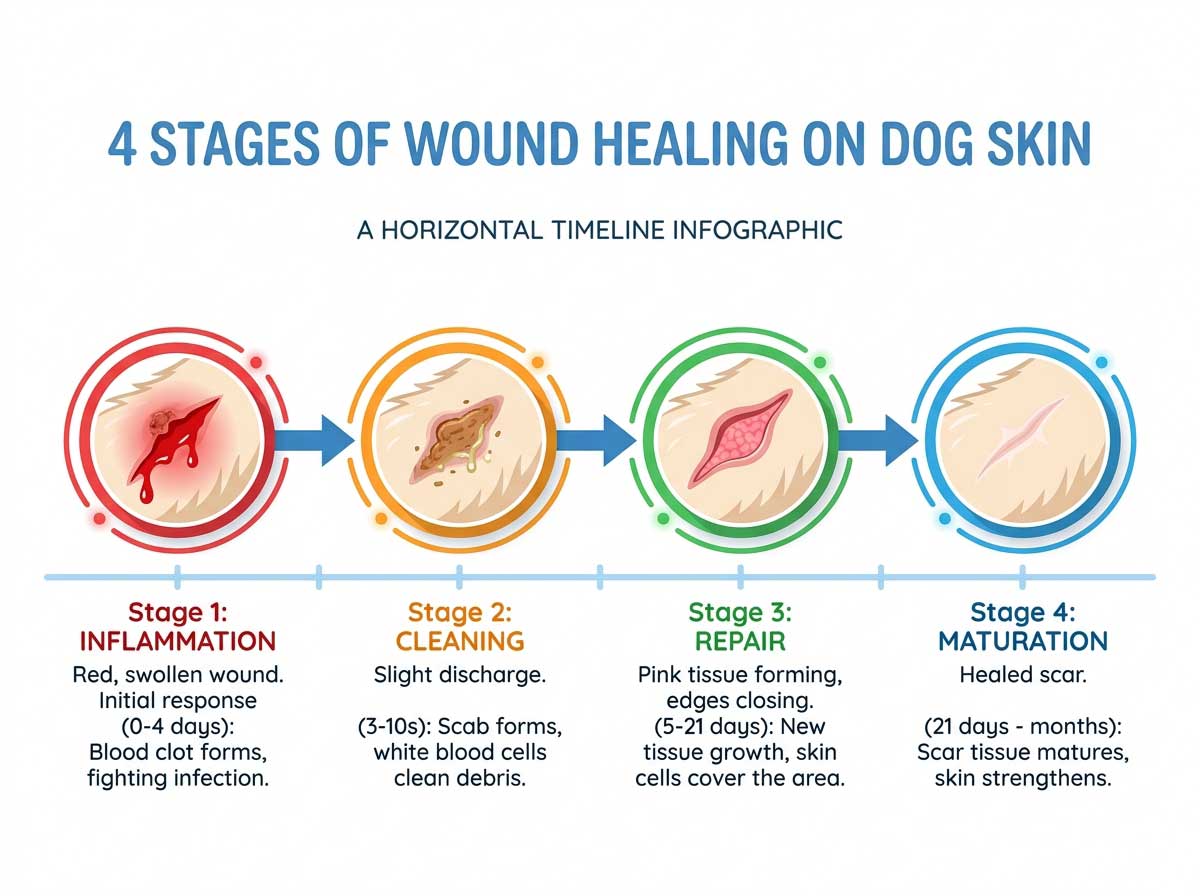
Healing Timeline: What to Expect

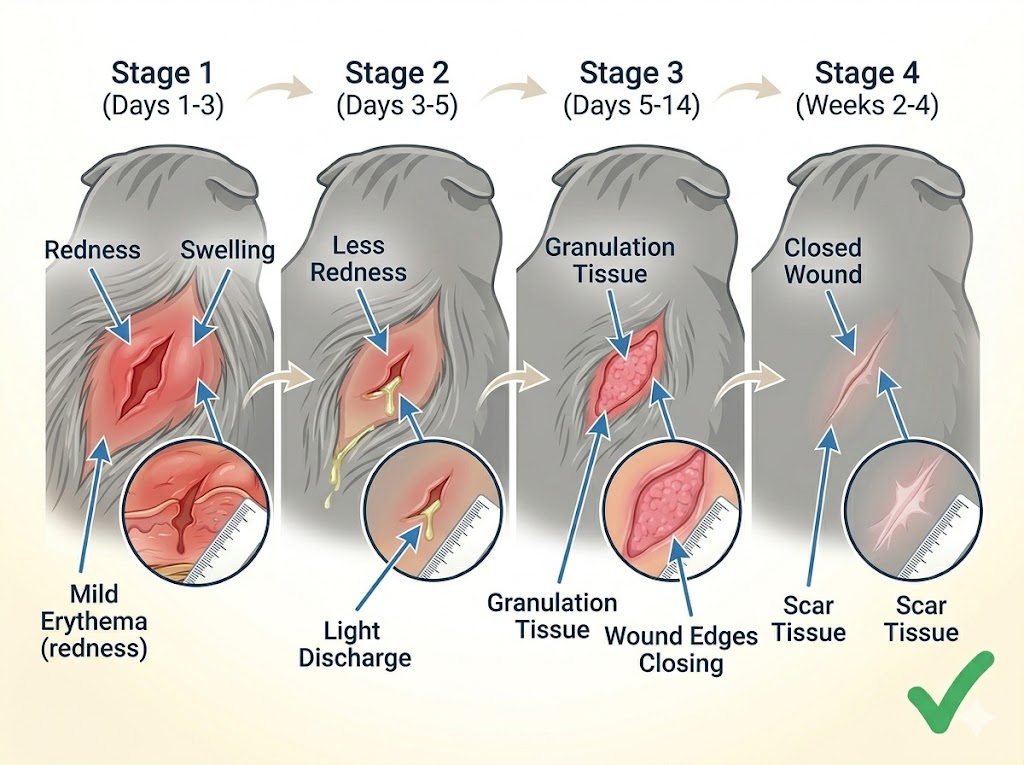
  • Day 1-3: inflammation, mild swelling, scab starts forming — this is normal
  • Day 4-7: scab hardens, edges begin to close, dog is using the paw again cautiously
  • Week 2: scab may come off, exposed tissue is pink (new pad growing)
  • Week 3-4: surface healing for shallow injuries
  • Week 4-8: full pad thickness regeneration for deeper injuries
  • Pad will sometimes come back thinner or slightly different-textured — that's normal

Dog paw pad injury healing time depends heavily on depth and whether the dog rests the paw. If your dog keeps running on an injured pad, add weeks to the timeline.

Keeping the Paw Clean During Healing

  • Change the bandage daily or every other day — more often if it gets wet or dirty
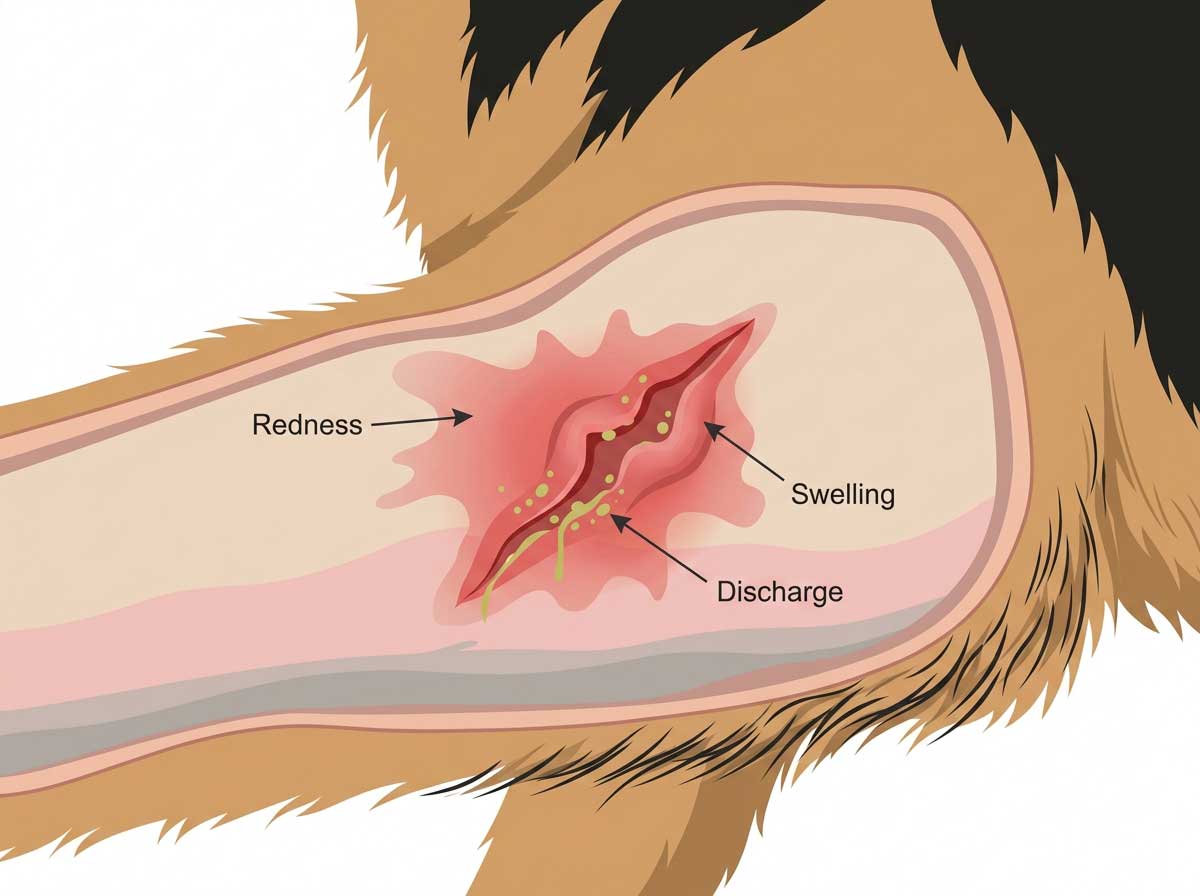
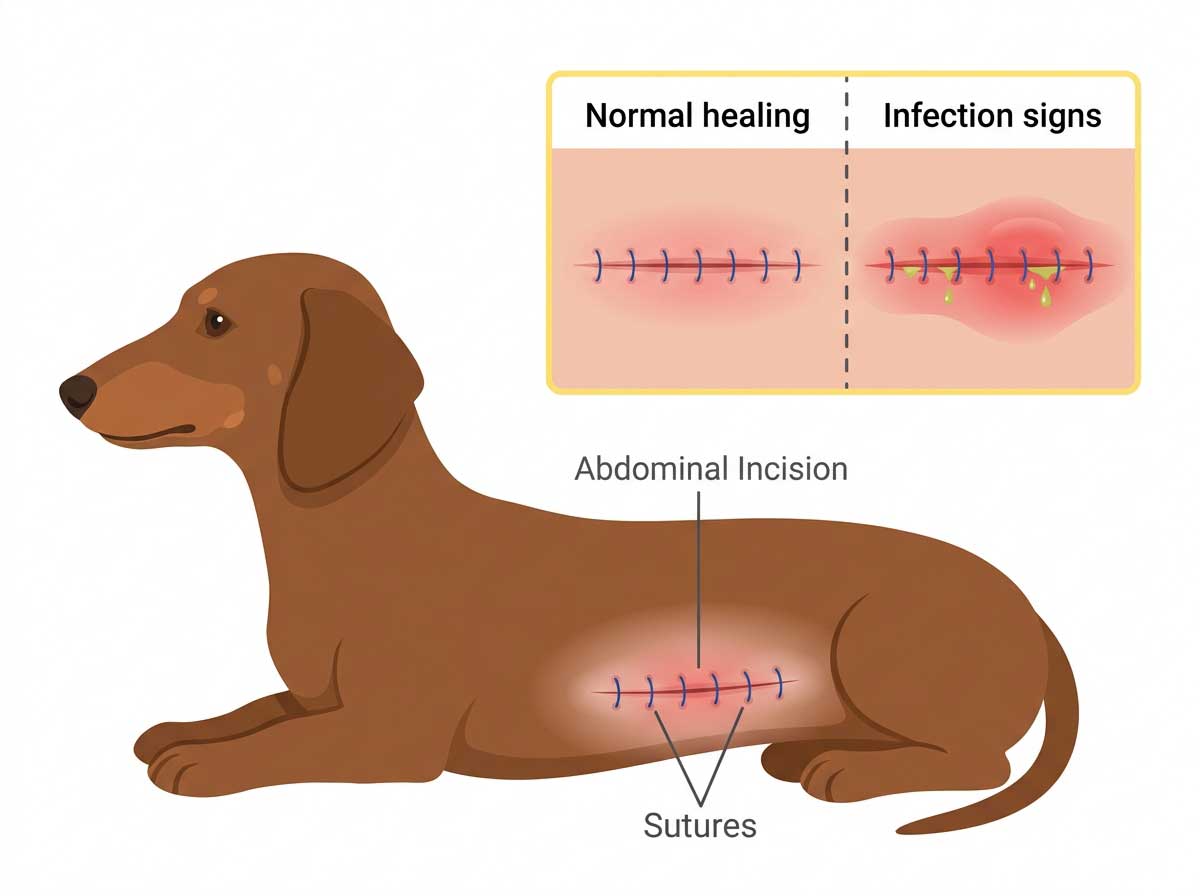
  • Check for signs of infection: increasing redness, swelling, pus, bad smell
  • Keep your dog on leashed potty breaks — no running or roughhousing
  • Use a boot or plastic bag over the bandage for outdoor bathroom breaks
  • E-collar is essential — licking introduces bacteria and delays healing by 50%+

Signs of Infection During Healing

Go to the vet right away if you see:

  • Swelling that's increasing instead of decreasing
  • Red streaks spreading outward from the wound
  • Yellow, green, or thick discharge
  • Foul smell from the wound
  • The wound looks worse than yesterday, not better
  • Your dog develops fever (normal dog temp is 101-102.5°F)
  • Lethargy or loss of appetite
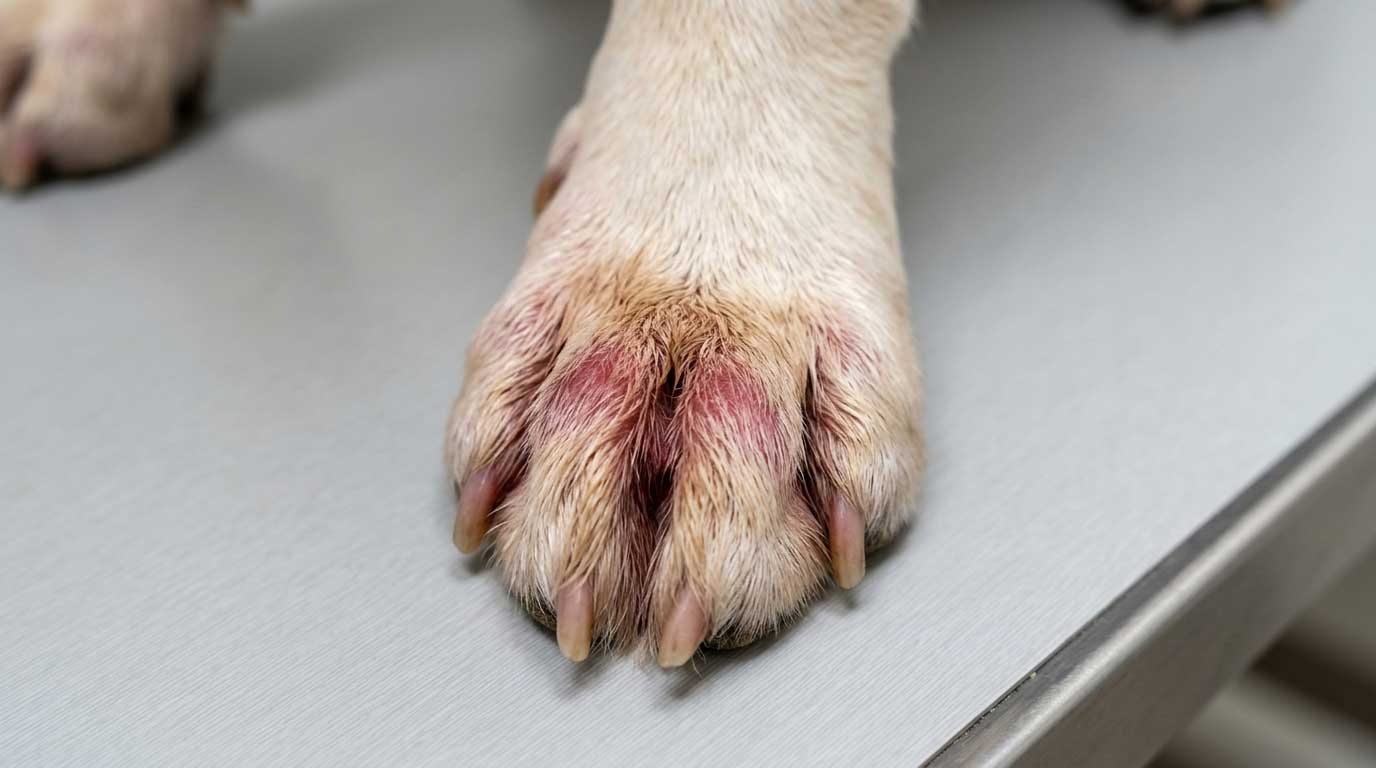
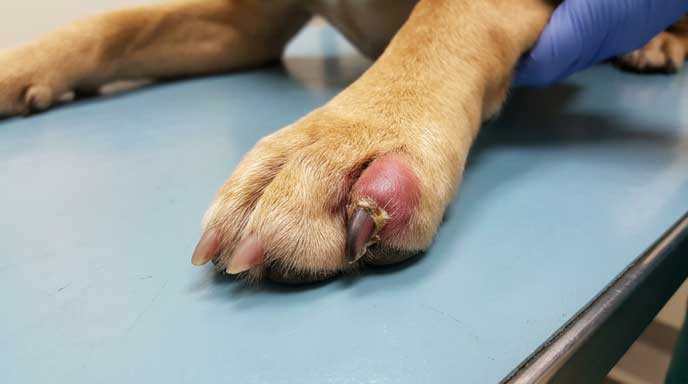
Dog paw visibly swollen and enlarged as a sign of wound infection
Increasing swelling around the injury is one of the earliest warning signs of infection

When You Should Skip Home Care

Go directly to a vet (don't pass go) if:

  • Cut is deeper than surface-level
  • There's a pad flap that won't lie flat
  • You can see fat, muscle, or anything beneath the pad
  • Bleeding doesn't stop after 10-15 minutes of firm pressure
  • The injury is on a paw your dog won't bear weight on
  • It's a puncture wound (glass, nail, splinter)
  • It's a burn — chemical or thermal burns look worse on day 2-3

Not sure how serious the injury is? A photo assessment can help you decide whether home care is safe or if you should head to the vet. Dealing with redness between the toes (not pad cuts)? See our separate Dog Paws Red Between Toes Guide for cause identification.

Need Help Assessing the Injury?

Upload a photo of the paw pad injury and get AI analysis of severity and recommended next steps.

Share:

Disclaimer: This article is for informational purposes only and is not a substitute for professional veterinary advice. Always consult a licensed veterinarian for diagnosis and treatment of your pet's health conditions.

More Articles

Dog eye infection showing redness and discharge in a Golden Retriever

Dog Eye Infection: Symptoms, Causes & When to See a Vet

How to identify a dog eye infection, what causes it, common types like conjunctivitis and corneal ulcers, home care tips, and when you need to see a vet.

Hot spot on a Labrador Retriever showing red moist oozing skin patch

Dog Hot Spots: What They Look Like, Causes & How to Treat Them

Everything you need to know about hot spots on dogs — how to identify them, what causes them, home treatment options, and when you need a vet.

Dog ear showing brown discharge and wax buildup indicating ear problems

Why Do My Dog's Ears Smell Bad? 7 Causes and What to Do

Dogs ears smell bad for a reason. Learn the 7 most common causes of smelly dog ears, what the smell and discharge color mean, and when you need a vet.

Dermatitis on Golden Retriever belly showing red inflamed flaky skin

My Dog Has a Rash: How to Identify Common Skin Problems

Found a rash on your dog? Learn how to identify dermatitis, hot spots, mange, flea allergy, and other common skin infections from appearance and symptoms.

Dog shaking head and scratching ear showing signs of ear discomfort

Dog Keeps Shaking Head? Here's What It Means and What to Do

Why does your dog keep shaking their head? Learn the most common causes including ear infections, ear mites, and allergies, plus when to see a vet.

Dog skin allergy showing red irritated skin from flea allergy dermatitis

Dog Skin Allergy: Symptoms, Types & What Your Dog's Skin Is Telling You

Learn how to identify dog skin allergies from rashes, bumps, and itching. Understand flea allergy dermatitis, food allergies, and environmental allergies in dogs.

Dog scratching ear from food allergy showing redness and discomfort

Dog Food Allergy Symptoms: How to Tell If Your Dog's Food Is the Problem

How to identify food allergy symptoms in dogs vs food intolerance. Learn about elimination diets, common allergens like chicken and beef, and when to see a vet.

Cat with skin allergy showing patchy hair loss and irritated skin

Cat Skin Allergies & Flea Dermatitis: Signs, Causes & What to Do

How to identify cat skin allergies, flea allergy dermatitis in cats, food allergy rashes, and environmental allergies. Learn what your cat's skin is telling you.

Dog wound showing redness and swelling that needs proper care

Dog Wound Care: How to Clean, Treat & Monitor Wounds at Home

Complete guide to dog wound care at home. Learn how to clean a wound, what to put on it, signs of infection to watch for, and when to see a vet.

Dog wound in healing stage showing healthy pink tissue forming

How to Heal a Dog Wound Fast at Home: 7 Vet-Approved Tips

Want to help your dog's wound heal faster? 7 proven tips for faster wound healing in dogs — from proper cleaning to nutrition to preventing licking.

Open wound on dog that needs proper cleaning

How to Clean a Dog Wound: Step-by-Step Guide (With What to Avoid)

Learn the right way to clean a dog wound at home. Step-by-step instructions, what solutions to use, what to avoid, and when cleaning isn't enough.

Dog bite wound that needs proper cleaning — not hydrogen peroxide

Can You Put Hydrogen Peroxide on a Dog Wound? (Why Vets Say No)

Should you use hydrogen peroxide on your dog's wound? Learn why most vets no longer recommend it, what to use instead, and how to clean dog wounds safely.

Cat wound being gently cleaned at home with saline solution

Cat Wound Care at Home: How to Clean, Treat & Know When to See a Vet

Learn how to care for your cat's wound at home — cleaning, safe ointments, what to avoid, healing stages, and when a wound needs emergency vet care.

Cat abscess that has burst showing drainage and surrounding area

Cat Abscess Burst: What to Do, What It Looks Like & When to See a Vet

Your cat's abscess burst? Don't panic. Learn what a burst abscess looks like, what to do immediately, home care steps, healing timeline, and when it's an emergency.

Close-up of flea dirt on dog skin showing tiny black specks among fur

Flea Dirt, Flea Eggs & Black Specks on Your Dog — What They Mean

Found black specks or tiny white dots on your dog? Learn how to identify flea dirt vs regular dirt, flea eggs vs dandruff, and what black specks on dog skin mean.

Comparison of deer tick and American dog tick on dog skin

Dog Tick Identification: Deer Tick vs Dog Tick, Embedded & Engorged Ticks

How to identify ticks on your dog — deer tick vs dog tick differences, what embedded and engorged ticks look like, tick vs skin tag, and which ticks carry disease.

Cat ear showing dark brown discharge from ear mites vs normal clean ear

Cat Ear Mites: Signs, How to Tell vs Dirty Ears & Treatment Guide

How to tell if your cat has ear mites vs just dirty ears, signs and symptoms, how indoor cats get ear mites, home remedies, and when to see a vet.

Black specks on cat chin showing comparison of flea dirt vs feline acne

Black Specks on Your Cat: Flea Dirt vs Cat Acne — How to Tell & What to Do

Black specks on your cat's chin, fur, or skin? Learn how to tell flea dirt from cat acne, what black dots mean, and when to worry.

Dog licking and chewing their paw on a couch

Why Do Dogs Lick and Chew Their Paws? 8 Common Causes

Why is your dog licking or chewing their paws? Here are the 8 most common causes — from allergies and yeast infections to anxiety and pain — plus what to do about each.

Owner applying paw balm to stop dog from licking paws

How to Stop a Dog from Licking Their Paws: Home Remedies That Actually Work

Practical home remedies to stop compulsive paw licking in dogs — soaks, e-collars, topical treatments, and long-term fixes. Plus when home care isn't enough.

Dog paw with brown yeast staining between the toes

Dog Paw Yeast Infection: Signs, Treatment & Home Remedies

How to spot a dog paw yeast infection (the "Frito foot" smell), what causes it, and how to treat it at home — plus when you need prescription antifungals.

Close-up of red inflamed skin between a dog's toes — common signs of allergies, yeast, or infection

Dog Paws Red Between Toes: 5 Causes & 7 Home Remedies

Dog paws red between toes? Identify the 5 main causes (allergies, yeast, infection, cyst) plus 7 home remedies (ACV, Epsom salt, oatmeal). When to see a vet.

Dog paw with allergic dermatitis showing redness between toes

Dog Paw Allergies: Symptoms, Treatment & Prevention

Why do allergies hit dogs' paws so hard? Here's what paw allergies look like, the 3 main types (environmental, food, contact), and how to treat them.

Cat paw showing pillow foot with puffy enlarged central pad

What is Pillow Foot in Cats? Causes, Signs & Pictures

Pillow foot in cats (plasma cell pododermatitis) causes soft puffy paw pads. Learn the signs, causes, whether it's contagious, and what to do about it.

Hand holding a cat paw showing pillow foot condition during vet examination

Pillow Foot Treatment in Cats: Home Remedies & Vet Options

How to treat pillow foot (plasma cell pododermatitis) in cats — doxycycline, steroids, home care, litter changes, and how long treatment takes.

Close-up of a swollen cat paw showing enlarged toes and redness

Swollen Cat Paw: 7 Causes + When It's an Emergency

Why is your cat's paw swollen? 7 common causes, how to tell an emergency, home remedies, and when you must see a vet — including the "silent pain" trap.

Close-up of a cat paw with an ingrown nail curling into the pad

Cat Ingrown Nail Removal at Home: Step-by-Step + When to See a Vet

How to safely trim an ingrown cat nail at home — step-by-step guide, when it's too risky, vet costs, and prevention tips. Most common in elderly cats.

Cat paw with nail bed infection showing redness and swelling around the claw base

Cat Nail Bed Infection (Paronychia): Signs, Treatment & Home Remedies

Cat nail bed infection (paronychia) causes redness, swelling, and nail discoloration. Learn to spot it, treat mild cases at home, and when antibiotics are needed.

Cat chewing on its paw while sitting on a couch

Why Is My Cat Chewing or Licking Their Paws? 6 Causes

Why your cat is obsessively chewing or licking their paws — 6 common causes, from allergies to post-declaw chewing, and when you need to see a vet.

Cat chin with black specks that could be acne, flea dirt, or mites

Black Dots on Cat Chin: Acne, Flea Dirt, or Mites?

Black specks on your cat's chin can be feline acne, flea dirt, or mites — here's how to tell them apart with a simple wet-tissue test and visual clues.

Hand applying medicated wipe to cat chin for acne treatment

Cat Acne Treatment at Home: Step-by-Step Guide + What NOT to Do

How to treat mild to moderate cat chin acne at home — bowl changes, chlorhexidine cleaning, warm compresses. Plus the home remedies you should avoid.

Cat eating from plastic bowl showing chin contact with rim

How Plastic Bowls Cause Cat Acne (and What to Use Instead)

Notice black specks or red bumps on your cat's chin? Plastic bowls are a common trigger for feline chin acne. See which bowl materials vets recommend instead.

Cat relaxing after acne treatment showing clearer chin

Can Cat Acne Clear Up on Its Own? When to Wait vs Treat

Mild cat acne can clear on its own once the trigger is removed. Learn which cases need treatment, how long to wait, and when to see a vet.

Pet dermatology wipes and chlorhexidine solution for cat acne treatment

Chlorhexidine for Cat Acne: How to Use It Safely

Chlorhexidine is the vet-recommended antiseptic for cat chin acne. Learn the right concentration, how to apply it, and common mistakes to avoid.

Cat with new acne on chin looking at new plastic food bowl

Why Did My Cat Get Acne All of a Sudden? 6 Triggers to Check

Cat acne rarely appears for no reason. Here are 6 common triggers that cause sudden feline acne — and how to find the cause in your cat.

Dog with red pimples and bumps on chin and lower lip

Why Does My Dog Have Pimples? 6 Causes of Canine Acne

Small red bumps or pimples on your dog's chin? Here are the 6 most common causes of canine acne, plus how to tell acne from mange and other skin problems.

Hand applying pet-safe wipe to dog chin for acne treatment

How to Treat Dog Chin Acne at Home: Step-by-Step Guide

Treat mild to moderate dog chin acne at home — step-by-step plan with bowl hygiene, chlorhexidine, and pet-safe benzoyl peroxide. Plus what NOT to do.

Young puppy with pimples on chin during adolescent puppy acne phase

Puppy Acne: When It Starts, What It Looks Like, When It Clears

Puppy acne shows up between 5-12 months of age, especially in Boxers, Bulldogs, and other short-haired breeds. Here's what to expect and how to help.

Dog urine sample showing blood on white paper towel for owner examination

Why Is My Dog Peeing Blood? 8 Causes + When It's an Emergency

Blood in your dog's urine is alarming. Here are the 8 most common causes — UTI, stones, prostate, pyometra — plus how to tell when it's a true emergency.

Dog urine color chart showing healthy pale yellow through concerning dark and red shades

Dog Urine Color Chart: What Each Color Means (with Pictures)

A visual guide to dog urine colors — from healthy pale yellow to emergency red and brown. Learn what each shade tells you about your dog's health.

Dog showing UTI symptoms with frequent urination attempts

Dog UTI: Symptoms, Treatment & Home Care vs When to See a Vet

Urinary tract infections are the #1 cause of blood in dog urine. Learn the symptoms, when home remedies help, and when antibiotics are required.

Diagram showing differences between male and female dog urinary tract issues

Blood in Dog Urine: Male vs Female — Different Causes

Male and female dogs get blood in urine from different conditions. Here's what to check based on your dog's sex and neuter status.
Cat straining in litter box showing signs of urinary blockage

Cat Urinary Blockage: Signs, Survival Rate & Emergency Actions

Cat urinary blockage is a life-threatening emergency — especially in male cats. Learn the signs, cost, survival rate, and why every hour matters.

Cat drinking water with owner checking for UTI symptoms

Cat UTI Symptoms: How to Tell What's Really a UTI (and What's Not)

Cat UTIs are actually less common than people think. Here's how to tell a true UTI from FIC, crystals, blockage, and other conditions that mimic it.

Stressed cat hiding showing signs of feline idiopathic cystitis

Blood in Cat Urine But No UTI: FIC and Stress Cystitis Explained

Your vet says no UTI but there's blood in your cat's urine. It's probably Feline Idiopathic Cystitis (FIC) — a stress-related condition. Here's how to manage it.

Cat urine crystals under microscope showing struvite and oxalate types

Cat Urine Crystals: Struvite vs Oxalate, Diet & Treatment

Struvite and calcium oxalate crystals are the most common types in cat urine. Learn the differences, prevention, diet strategies, and when surgery is needed.

Owner noticing strong ammonia smell from cat litter box

Cat Urine Smells Like Ammonia: 5 Causes & What to Do

A strong ammonia smell from cat urine can signal concentrated urine, UTI, kidney disease, or just an intact male. Here's what each smell pattern means.

Dog with pale or white gums — anemia or shock warning sign

Dog Has Pale Gums But Acting Normal — Should You Still Worry?

Your dog's gums are pale but they seem fine? Here's why "acting normal" can be dangerously misleading, and when pale gums need an ER trip regardless of behavior.

Dog gum color chart showing healthy pink vs pale, blue, red, yellow, black gum variations

Normal vs Unhealthy Dog Gum Color Chart (With What Each Means)

Complete dog gum color chart — pink, pale, white, blue, red, yellow, black. What healthy looks like, what's dangerous, and exactly when to go to the vet.

Pale dog gums — early warning sign of silent killer conditions

Silent Killers in Dogs: 5 Warning Signs You Can Spot on the Gums

Five "silent killer" conditions that kill dogs before owners notice — and each one shows up on the gums first. How to do the 5-second check that could save your dog.

Dog with blue or purple gums indicating hypoxia emergency

Why Are My Dog's Gums Turning Blue? Causes + Emergency Action

Blue or purple gums on a dog always mean hypoxia — tissues are not getting enough oxygen. 7 causes, how to identify which, and exactly what to do in the next 30 minutes.

Dog gums showing benign lentigo pigmentation versus oral melanoma comparison

Sudden Black Gums on Your Dog: Harmless Lentigo or Melanoma?

Black spots on a dog's gums can be benign lentigo or dangerous melanoma. Here's how to tell them apart and when to biopsy.

Cat with severe stomatitis showing bright red inflamed gums and mouth

Feline Stomatitis: Symptoms, Treatment, and Why Full-Mouth Extraction Works

Feline stomatitis (FCGS) causes severe, painful mouth inflammation in cats. Here's what it is, why cats cry yawning, and why many cats need full-mouth extraction for relief.

Cat showing signs of feline tooth resorption with red gum line at tooth base

Feline Tooth Resorption: The Painful Cat Disease Most Owners Miss

Feline tooth resorption (FORL) affects 30-70% of cats and causes severe pain — yet most owners don't know it exists. Symptoms, stages, treatment, and cost.

Dog tongue showing normal black pigment spots from benign lentigo

Black Spots on Dog Tongue: Normal Breed Pigmentation or Something Worse?

Black spots on your dog's tongue? Usually completely normal in Labs, Goldens, GSDs, and many breeds. Here's how to tell benign lentigo from rare concerning changes.

Dog with circular bald patch — non-itchy hair loss pattern

Dog Losing Hair But Not Itchy? 7 Non-Inflammatory Causes

Hair loss without itching narrows the possibilities — it's probably NOT flea allergy or mange. Here are the 7 causes of non-itchy dog hair loss and when to see a vet.

Boxer dog with seasonal flank alopecia showing bilateral symmetric bald patches on both sides

Seasonal Flank Alopecia in Dogs (Boxers, Bulldogs, Schnauzers) — The Bilateral Bald Patch Explained

Seasonal flank alopecia causes symmetric hair loss on both sides in fall/winter — common in Boxers, Bulldogs, Schnauzers. Here's how to recognize it and treatment options.

Dog with symmetric body-wide hair thinning from Cushing's or hypothyroidism

Cushing's vs Hypothyroidism Hair Loss in Dogs: How to Tell Them Apart

Both Cushing's and hypothyroidism cause symmetric hair loss in dogs — but they're very different diseases. Here's how to tell them apart and what bloodwork confirms.
Young dog with hair loss around the eyes suggesting demodex or allergies

Why Is My Dog Losing Hair Around the Eyes? Demodex, Allergies & More

Hair loss around a dog's eyes has 6 common causes — Demodex mange is #1 in puppies, but allergies, hypothyroidism, and infection are possible in older dogs.
Owner parting dog fur to examine hair loss area at home

Dog Hair Loss Home Remedies: What Actually Works (And What Doesn't)

Home remedies for dog hair loss — which ones help, which are dangerous. The truth about coconut oil, fish oil, and other popular treatments.
Cat showing bilateral hair loss on belly and inner thighs with psychogenic or paraneoplastic pattern

Cat Losing Hair on Belly and Back Legs — Psychogenic Alopecia vs Cancer Warning

Bilateral belly + back leg hair loss in cats has two very different causes. In young cats, usually overgrooming. In seniors, it can be a cancer marker (paraneoplastic alopecia).

Cat overgrooming her belly showing classic psychogenic alopecia pattern

Is My Cat Overgrooming? How to Tell + What Actually Stops It

Overgrooming affects up to 10% of cats. Here's how to tell if your cat is overgrooming, why it happens, and what actually stops it — not just "reduce stress."

Cat with miliary dermatitis showing scattered small scabs across the back

Feline Miliary Dermatitis: The Cat-Specific Flea Allergy Signature

Tiny scattered scabs on your cat's back + itching = feline miliary dermatitis. It's the classic sign of flea allergy in cats, even without visible fleas.

Cat with stud tail showing greasy waxy patch at base of tail

Stud Tail in Cats: Treatment and Prevention That Actually Works

Stud tail is a greasy patch at the base of a cat's tail caused by overactive oil glands. Here's what actually works to treat it — shampoos, neutering, and what doesn't help.

Senior cat with poor coat and hair loss showing signs suggestive of feline leukemia virus

Is Hair Loss a Sign of Feline Leukemia (FeLV)?

Feline leukemia virus (FeLV) can cause hair loss through multiple mechanisms. Here are the warning signs combined with hair loss that should prompt FeLV testing.

Owner applying styptic powder to dog broken nail to stop bleeding

How to Stop a Dog's Broken Nail from Bleeding (Step-by-Step)

Dog broken nail won't stop bleeding? Here's the exact step-by-step method using styptic powder, cornstarch, or flour — plus when to go to the vet.

Dog owner treating a broken nail at home with proper supplies

Dog Broken Nail Home Treatment: What Actually Works (And What Doesn't)

Complete home treatment guide for dog broken nails — step-by-step, what supplies to have, common mistakes to avoid, and when home care isn't enough.

Dog paw with nail broken but still partially attached and hanging

Dog's Nail Broken But Still Attached — What to Do

Dog nail partially broken and hanging? Should you pull it off or leave it? Here's the right approach — and why pulling it yourself usually makes things worse.

Dog nail with exposed pink quick tissue requiring immediate treatment

Dog Exposed Quick on Nail: Treatment and Pain Relief

Exposed quick on a dog nail = extremely painful. Here's exactly how to treat it, stop the bleeding, relieve pain, and prevent infection — plus when to see a vet.

Dog paw with infected swollen toe around nail bed showing paronychia

Infected Dog Nail Bed: Signs, Treatment, and Recovery Time

Swollen toe, discharge, bad smell around a dog's nail? It's likely paronychia — nail bed infection. Here's how to recognize it, treat it, and when to see a vet.

Dog with yellow or green eye discharge indicating bacterial infection

What Does Yellow or Green Discharge from a Dog's Eye Mean?

Yellow or green eye discharge in dogs is almost always bacterial infection. Here's what it means, home care, and why antibiotic eye drops are usually needed.

Maltese dog with tear stains under eyes showing porphyrin fur discoloration

How to Remove Dog Tear Stains Naturally (Complete Guide)

Reddish-brown tear stains on your Maltese, Shih Tzu, or Poodle? Here's the complete evidence-based guide to removing them naturally — filtered water, probiotics, diet, and more.

Owner gently cleaning dog eye discharge with warm damp cloth

How to Clean Dog Eye Discharge at Home (Step-by-Step Guide)

Complete guide to cleaning your dog's eye discharge — what supplies to use, step-by-step technique, what NOT to do, and how often to clean based on severity.

Dog with sudden onset eye discharge that appeared overnight

Why Does My Dog Have Eye Boogers All of a Sudden? 7 Causes

Dog suddenly developed eye discharge or goopy eyes? Here are the 7 most common causes of sudden onset dog eye boogers — and how to tell which one.

Cavalier King Charles Spaniel with dry eye showing thick white discharge

Dog Dry Eye (KCS): Symptoms, Treatment, and Why It's Lifelong

Thick white-gray discharge, constant squinting, predisposed breeds — here's the complete guide to canine dry eye (keratoconjunctivitis sicca/KCS) and its lifelong treatment.

Cat with eye infection showing yellow-green discharge and squinting

Cat Eye Infection: Feline Herpesvirus, Chlamydia & Treatment

Cat eye infection isn't like dog eye infection — it's usually herpesvirus or chlamydia. Here's what causes it, how to treat it, and why herpesvirus can be lifelong.

Cat with watery eyes and sneezing showing upper respiratory infection signs

Cat Watery Eyes and Sneezing — Upper Respiratory Infection Guide

Watery eyes + sneezing = cat URI ("cat cold"). Here's how to recognize it, when to go to the vet, and what home supportive care actually helps.

Persian cat with black crust around eyes from accumulated porphyrin

Black Crust Around Cat's Eyes — What It Means and How to Clean

Black crust or "black boogers" around your cat's eyes? Here's what causes it, how to clean it properly, and when it's a concern.

Persian cat with brown tear staining under eyes from blocked tear ducts

Cat Brown Eye Discharge: Persian Tear Staining & Blocked Tear Ducts

Brown or reddish-brown cat eye discharge often means blocked tear duct, especially in Persian, Himalayan, and Exotic Shorthair breeds. Here's what to do.

Cat owner gently cleaning cat eye at home with pet-safe solution

How to Treat Cat Conjunctivitis at Home — Realistic Guide

You want to treat cat conjunctivitis at home without a vet visit? Here's the honest truth about what works, what doesn't, and when home treatment is dangerous.

Overweight labrador showing no waist definition — how to tell if a dog is fat

How to Tell If Your Dog Is Fat: 3 Simple Checks at Home

Is your dog overweight or just fluffy? Learn the 3 home checks vets use to assess dog body condition — the rib test, waist check, and belly tuck — with no scale required.

Fluffy golden retriever — hard to tell if fat or just fluffy coat

Is My Dog Fat or Just Fluffy? How to Tell the Difference

Long coat hiding your dog's body? Learn how to tell if your fluffy dog is actually overweight — the rib test works regardless of coat length, and the results may surprise you.

Obese dog with swollen belly — is it fat accumulation or something more serious

Is My Dog Fat or Bloated? How to Tell the Difference Fast

A swollen belly in a dog can be fat accumulation — or a medical emergency. Learn the key differences between a fat dog belly and dangerous bloat (GDV), ascites, and other causes of abdominal distension.

Underweight dog on vet table with visible spine and thin body condition

Underweight Dog: Causes, Signs, and What to Do

Why is my dog so skinny? Underweight dogs have many causes — from parasites to serious illness. Learn how to assess body condition score, identify the cause, and help your dog gain healthy weight.

Severely underweight dog being examined at vet — too skinny despite eating

My Dog Is Too Skinny: 8 Reasons and How to Help

Your dog looks too skinny despite eating — find out why. From parasites to picky eating to serious illness, here are 8 reasons dogs stay thin and what to do about each.

Obese senior dog at vet — excess weight significantly reduces life expectancy

Overweight Dogs Life Expectancy: How Much Does Extra Weight Cost?

Overweight dogs live significantly shorter lives. A landmark study found obese dogs live up to 2.5 years less than dogs kept at ideal weight. Here's what the science says and what you can do.

Healthy tabby cat photographed from the side at body height for body condition assessment

How to Tell If My Cat Is Fat (Vet-Approved 3-Step Check)

Three reliable at-home tests to find out if your cat is overweight — and why the scale alone is not enough. Includes the rib test, waist check, and belly profile explained with photos.

Cat showing primordial pouch while walking — loose belly skin that swings

Is My Cat Fat or Is It a Primordial Pouch? (How to Tell the Difference)

The primordial pouch is normal cat anatomy — not fat. Learn what it is, why all cats have it, and how to actually tell if your cat is overweight beyond the swinging belly flap.

Veterinarian examining cat with swollen distended belly to determine cause

Is My Cat Fat or Bloated? How to Tell the Difference (And When It's Serious)

A swollen cat belly can mean simple weight gain or a serious medical emergency. Learn to tell the difference between feline obesity, ascites, FIP, and other dangerous causes of cat belly distension.

Overweight cat at BCS 7 showing rounded body and absent waist definition

Why Is My Cat Fat Even on a Diet? 6 Real Reasons

Your cat eats less than ever but still gains weight. The problem isn't always portion size. Here are 6 overlooked reasons cats stay fat — and what to do about each one.

Severely underweight cat on veterinary examination table with visible rib and spine outline

Underweight Cat: Causes, Warning Signs, and What to Do

Is your cat too skinny? Learn the most common causes of underweight cats — from hyperthyroidism to dental pain — how to assess body condition, and when to see a vet urgently.

Obese cat at BCS 8-9 on examination table showing the health consequences of feline obesity

Overweight Cat Life Expectancy: What the Research Actually Shows

Obese cats live shorter lives and suffer more during the years they do have. Here is what the research shows about feline obesity and lifespan — and what you can do about it.

Female Golden Retriever beside a row of six glass sample bottles showing pale yellow, medium yellow, amber, brown, pink, and cloudy urine shades

Female Dog Urine Color Chart: What Each Shade Means (with Pictures)

A female-specific guide to dog urine colors. Learn how heat cycle, UTIs, pregnancy, and life stage change what is normal — and which shades mean call the vet.