How Plastic Bowls Cause Cat Acne (and What to Use Instead)
Yes — plastic bowls are a primary cause of cat chin acne. See why, which 3 materials vets recommend, the 6-week recovery timeline, and 5 mistakes to avoid.
Published 2026-04-18 · Updated 2026-05-15
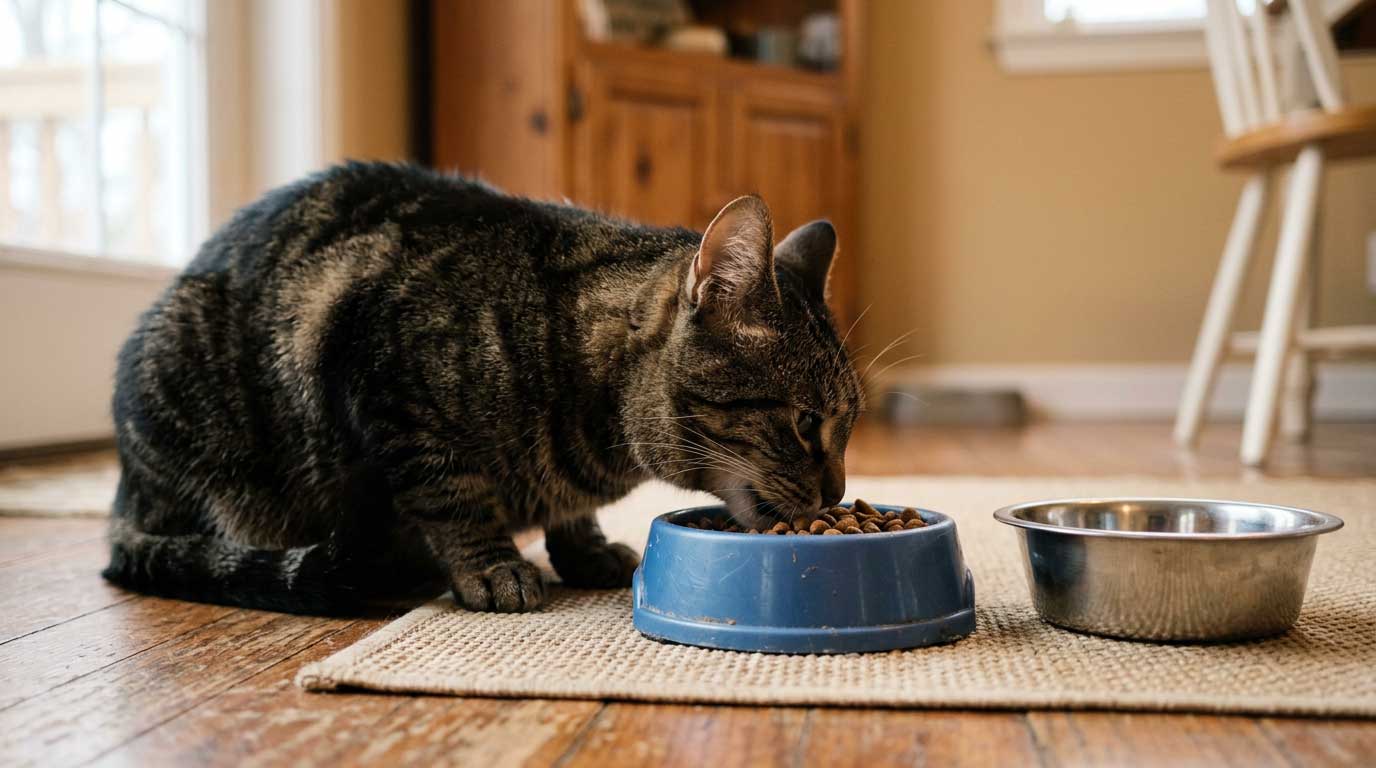
Is the Bowl Change Working?
Upload a photo for AI screening to flag visual patterns and track recovery. Educational only — not a veterinary diagnosis.
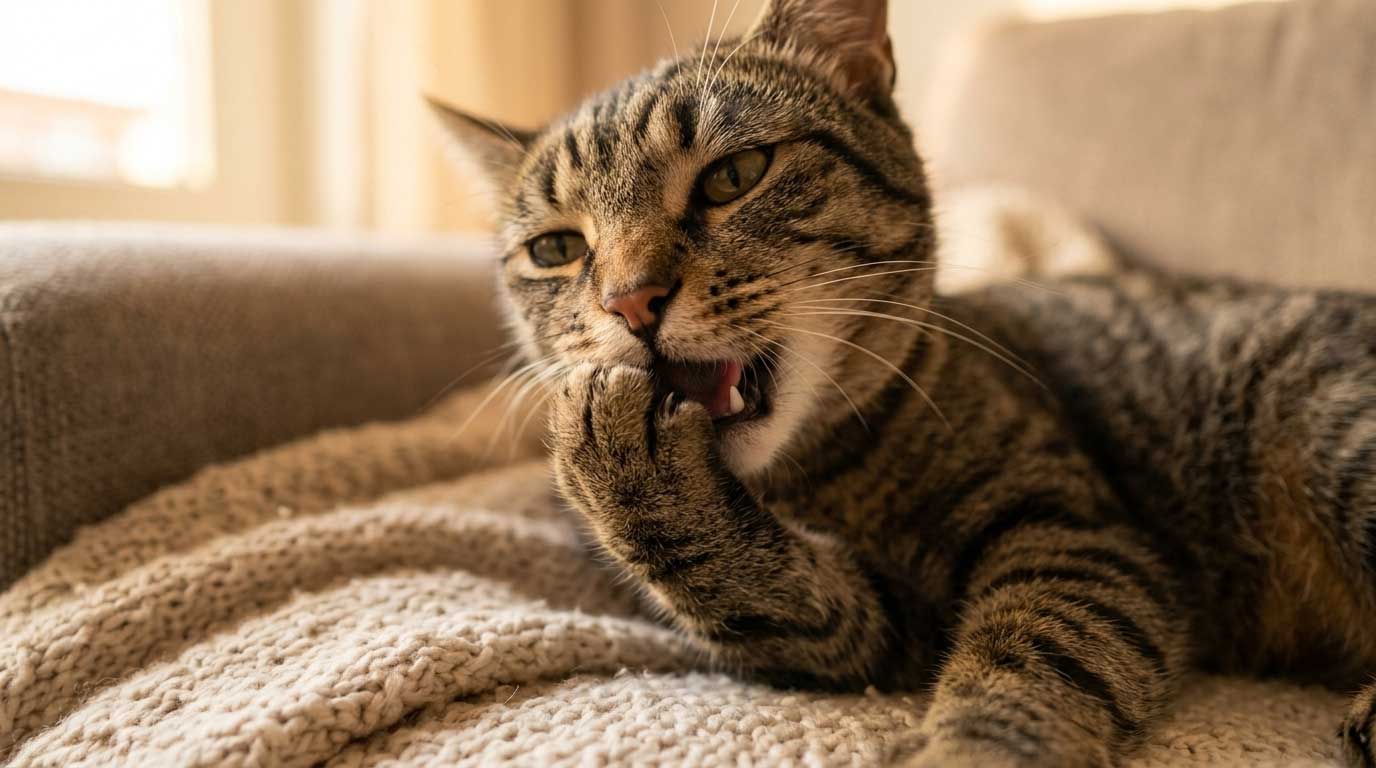
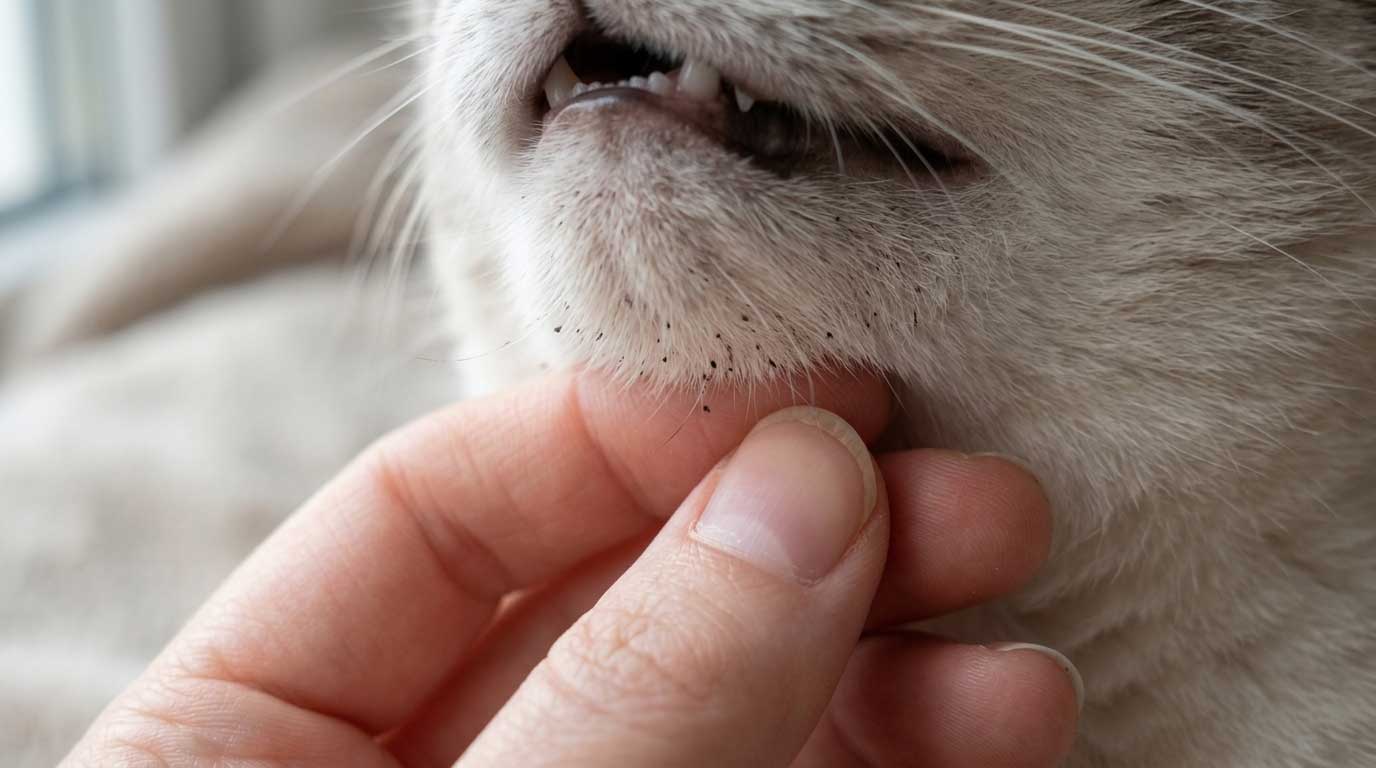
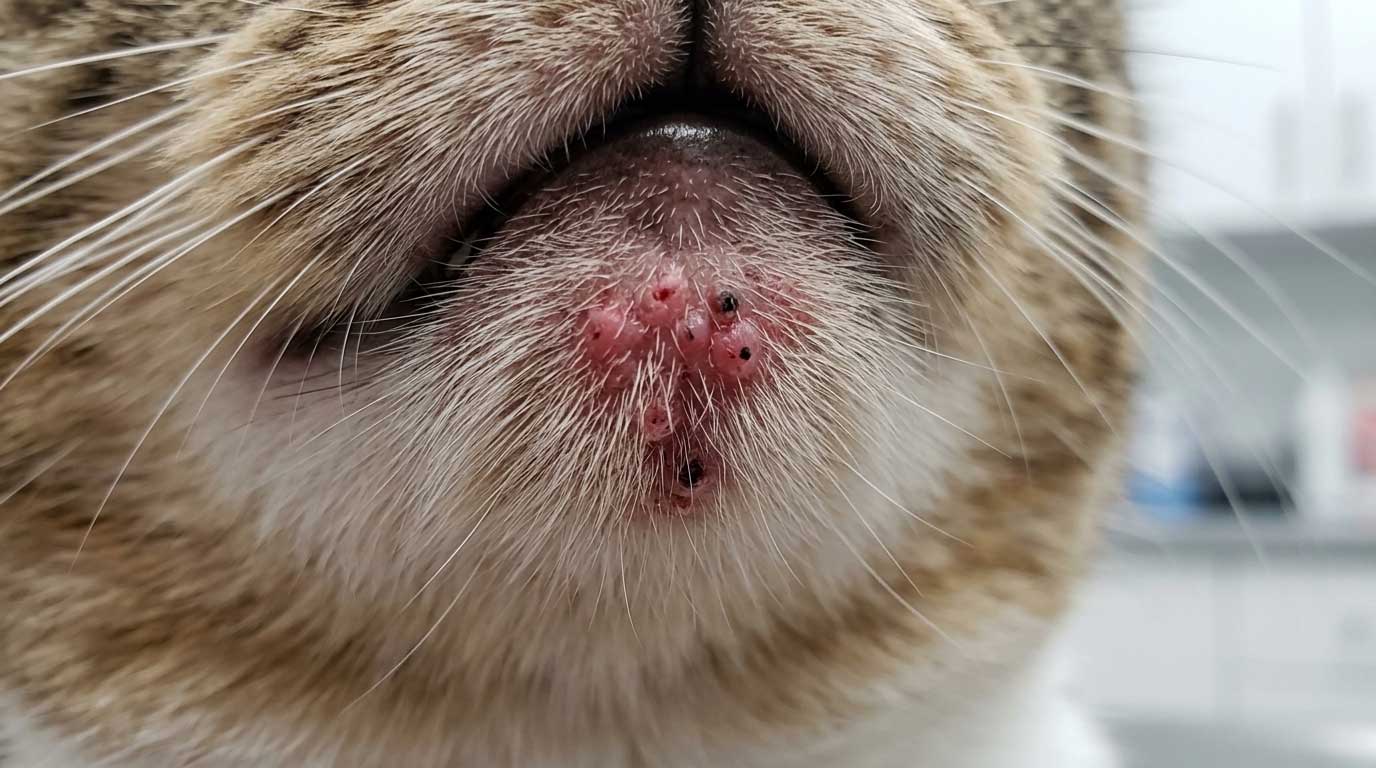
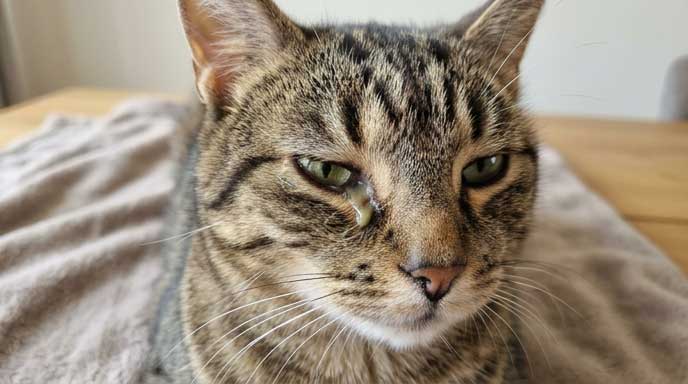
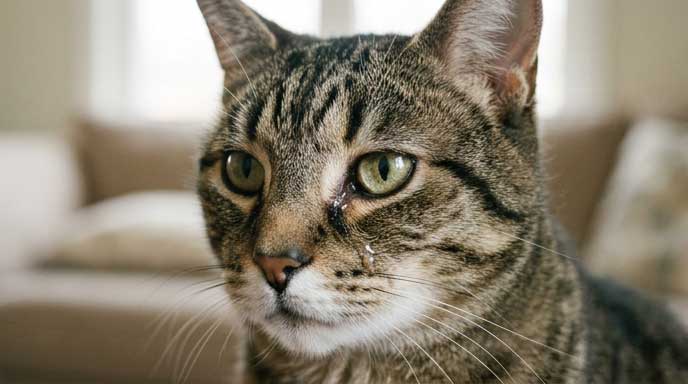
Yes — plastic bowls are a primary cause of cat chin acne. Vets call this "feline acne." It looks like black specks on the chin. Sometimes the bumps turn red. The trigger is bacteria trapped in the porous plastic surface. The bacteria transfers to your cat's chin every time it eats. The fix is usually simple. Switch the bowl, wash daily, and watch the chin clear within 4-8 weeks.
This article is for general educational purposes only. It is not a substitute for veterinary diagnosis or treatment. If your cat shows severe symptoms (pus, bleeding, swelling beyond the chin), contact your veterinarian immediately.
Key Takeaways
- ✓Plastic bowls are the **#1 cause** of cat chin acne.
- ✓The porous surface traps bacteria that transfer to the chin.
- ✓Three safe materials: **stainless steel, ceramic, glass**.
- ✓Daily bowl washing matters as much as the material.
- ✓**60-70% of mild cases clear in 4-6 weeks** after switching bowls.
- ✓See a vet if you see **pus, bleeding, or no improvement after 4 weeks**.
What is Cat Chin Acne?
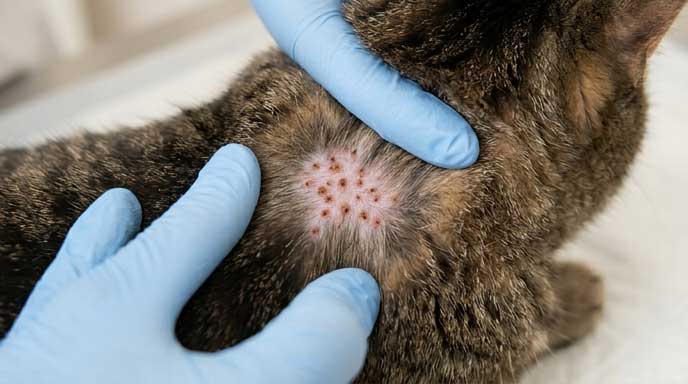
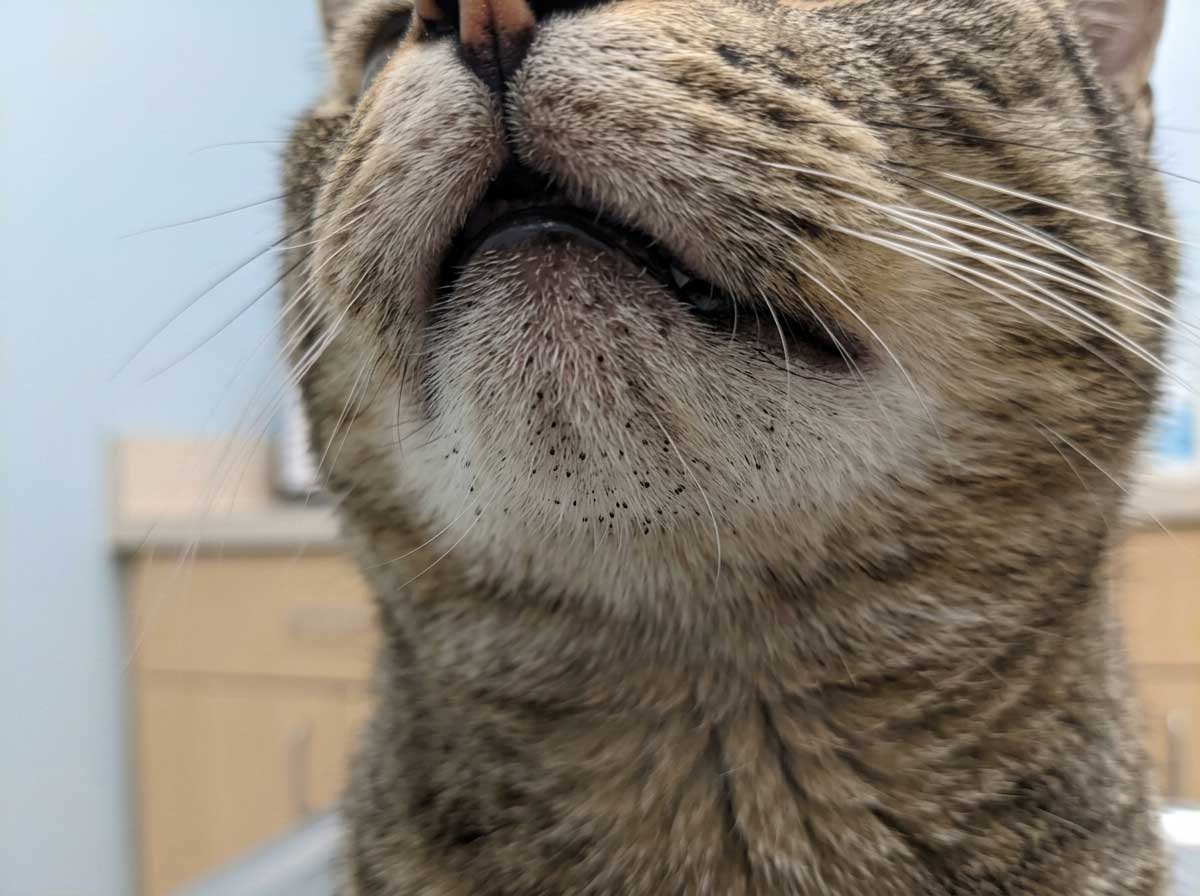
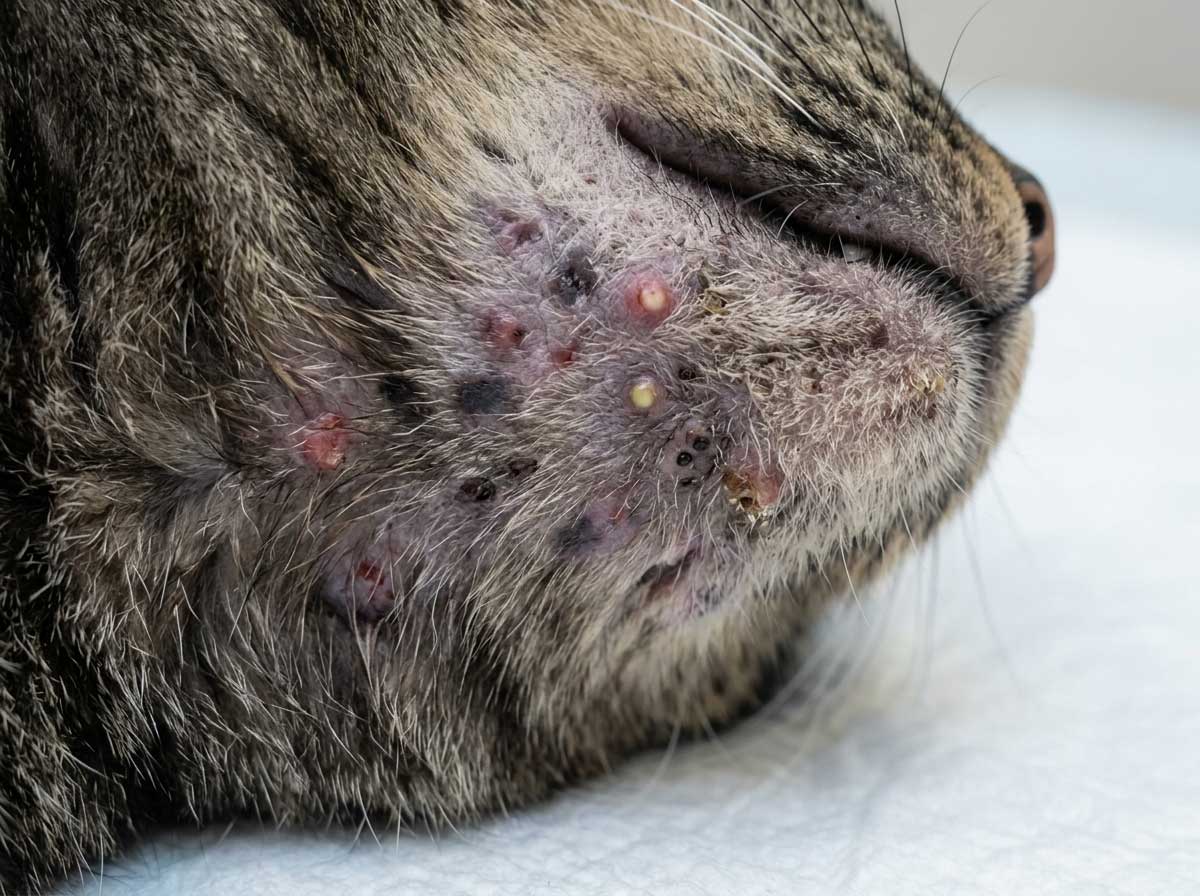
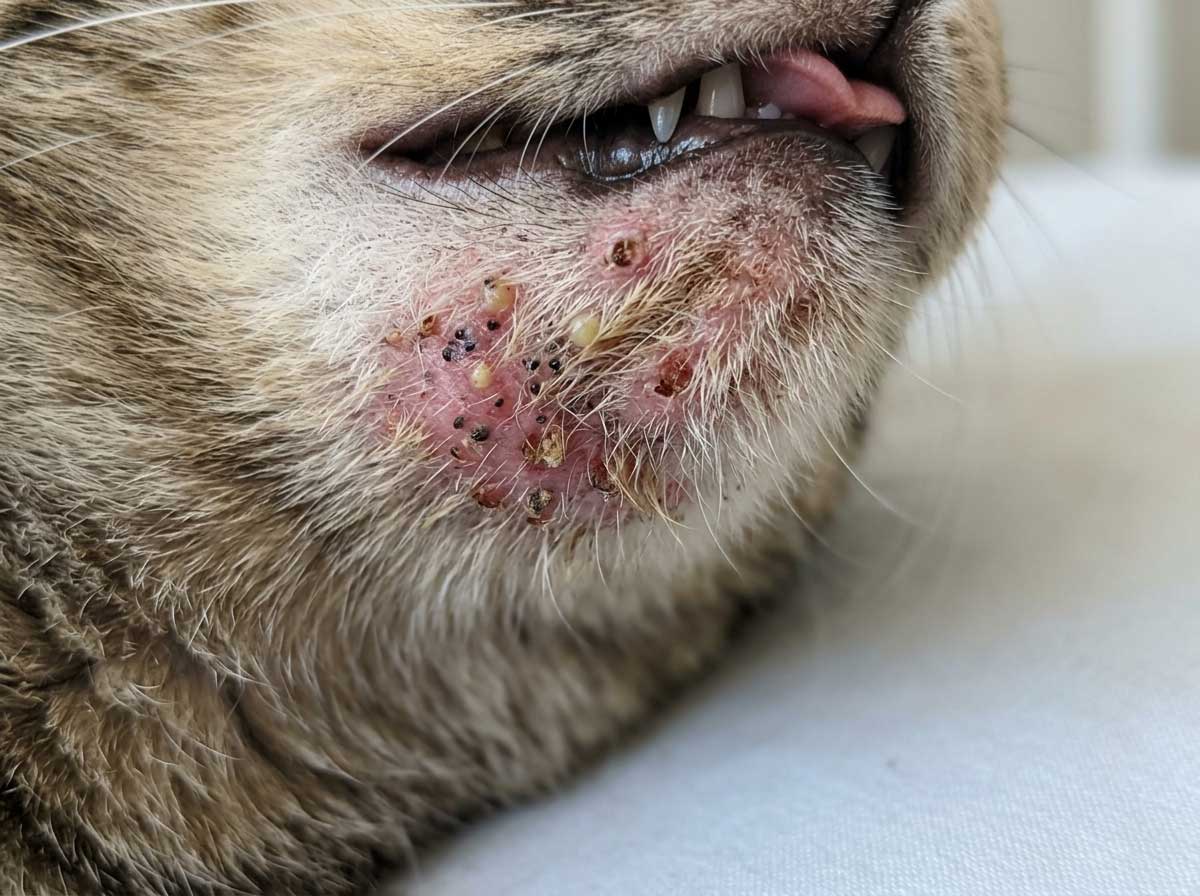
Feline acne is a follicular skin disorder. It affects the chin and lower lip area. Hair follicles get clogged with keratin and sebum. Bacteria then colonize the clogged follicles. The result looks like clusters of small black specks or red bumps.
The condition affects cats of any age, breed, or sex. According to the Merck Veterinary Manual, most cases stay mild. A smaller percentage progress to painful pustules or chronic infection.
Why Plastic Bowls Cause Cat Acne
Five separate mechanisms connect plastic bowls to chin acne:
1. Porous Surface
Plastic is microscopically porous. The surface has thousands of tiny pits invisible to the eye. These pits hold bacteria, food oils, and saliva. Even careful washing leaves residue behind. The pores are smaller than soap molecules can reach. Over weeks, bacteria colonize the pores. The colony grows deeper into the material. Every time your cat eats, bacteria transfer to the chin. Newer plastic bowls are slightly safer than aged ones. But all plastic eventually develops this bacterial reservoir.
2. Micro-Scratches
Plastic scratches easily. A scrubby sponge creates tiny grooves with every wash. Your cat's rough tongue adds more grooves during meals. Even spoons or food scoops scratch the surface. These scratches are bigger than the natural pores. They become permanent bacterial reservoirs. Each scratch hides hundreds of bacteria the dishwasher cannot reach. Old plastic bowls are always worse than new ones. After 6-12 months of daily use, the scratch density is too high to clean properly.
3. Chemical Leaching
Some plastics leach BPA, phthalates, or similar chemicals. These irritate sensitive chin skin on contact. The leached chemicals cause skin reactions to contact first. The chin reddens and may itch. Then bacteria enter the inflamed follicles. Acne develops shortly after. Warm wet conditions speed up leaching. A bowl of water sitting all day leaches more than a quick meal bowl. "BPA-free" labels do not eliminate this risk fully.
4. Bacterial Overload (Biofilm)
A bacterial biofilm forms inside plastic pores within days. The biofilm is a self-protecting slime layer. It coats the bacteria and shields them from soap. Soap and water cannot fully break biofilms down. Even bleach struggles against mature biofilms. Each meal pushes biofilm bacteria onto the chin. PetMD lists bacterial concern species as the most common acne pathogen. Other involved bacteria include Pasteurella multocida and various anaerobes.
5. Allergic Contact Reaction
Some cats react allergically to the plastic itself. The chin may turn red before any acne appears. This is contact allergic skin irritation. The cat's immune system flags the plastic dye or softener as foreign. Cats with known skin allergies (general skin allergies) are especially vulnerable. The reaction can show up within days of switching to a new plastic bowl. Removing the plastic typically resolves the redness within 2 weeks.
Why the Chin Specifically?
The chin is the only body part that touches the bowl directly. When a cat lowers its head to eat, the chin rests on the rim. Bacteria on that rim get pushed into the chin's hair follicles. The chin also has unusually dense sebaceous glands. High oil production makes the chin prone to follicle plugging.
The cat chin is anatomically similar to the human nose and forehead. Both areas have high sebaceous gland density. Both are prone to acne. The cat's submental organ (a sebaceous patch under the chin) is the densest such structure on the body. It exists for scent-marking but also makes the area uniquely vulnerable to bacterial overgrowth.
This is why cat chin acne does not spread to the belly, back, or paws. The condition is contact-driven to the chin specifically. A skin condition that spreads beyond the chin suggests a different diagnosis. Allergies, ringworm, or systemic illness are more likely culprits in those cases.
Bowl Material Comparison: Which Is Safest?
Not all bowl materials carry the same risk. Here is how the four common options compare:
| Material | Acne Risk | Durability | Avg Cost | Main Drawback |
|---|---|---|---|---|
| Plastic | 🔴 High | 2-3 years | $3-8 | Porous + scratches easily |
| Stainless Steel | 🟢 Very Low | 5-10 years | $8-20 | Can be noisy when dropped |
| Ceramic (glazed) | 🟢 Low | 3-7 years | $10-25 | Chips expose porous base |
| Glass (Pyrex) | 🟢 Very Low | 5+ years | $10-15 | Fragile if dropped |
What to Use Instead: The 3 Safe Materials
1. Stainless Steel ★ (Best Overall)
Stainless steel is the vet-recommended gold standard. It is non-porous, scratch-resistant, dishwasher safe, durable, and lightweight. The trade-off: it can be noisy when dropped. Some cats also dislike the reflection — a placemat solves this. Look for restaurant-grade 304 or 18/8 stainless steel for the longest life.
2. Ceramic ★ (Great for Picky Cats)
Ceramic is heavy. It stays put during eating. It does not reflect and feels warm. Properly glazed ceramic is non-porous. The trade-off: it can chip or crack. Chipped ceramic becomes porous again — inspect monthly. Avoid low-quality ceramic with lead glaze. Buy from reputable pet brands.
3. Glass ★ (Gentlest on Skin)
Glass is the smoothest non-porous surface. It is completely chemical-free and dishwasher safe. The trade-off: it breaks if dropped. Good bowl shapes are harder to find. It can slide around without grip. A Pyrex dish or dedicated glass pet bowl works well.
Severity Scale: What Stage Is Your Cat At?
Cat chin acne ranges from cosmetic to medical emergency. Match the visual to the right action:
| Stage | What You See | Action | Red Flag? |
|---|---|---|---|
| Mild | Black specks only, no redness | Switch bowl + daily wash | 🟢 Home care fine |
| Moderate | Red bumps or pimples appearing | Bowl change + [vet-recommended antiseptic wipes](/blog/vet-recommended-antiseptic-for-cat-acne-safe-use) | 🟡 Watch 1 week |
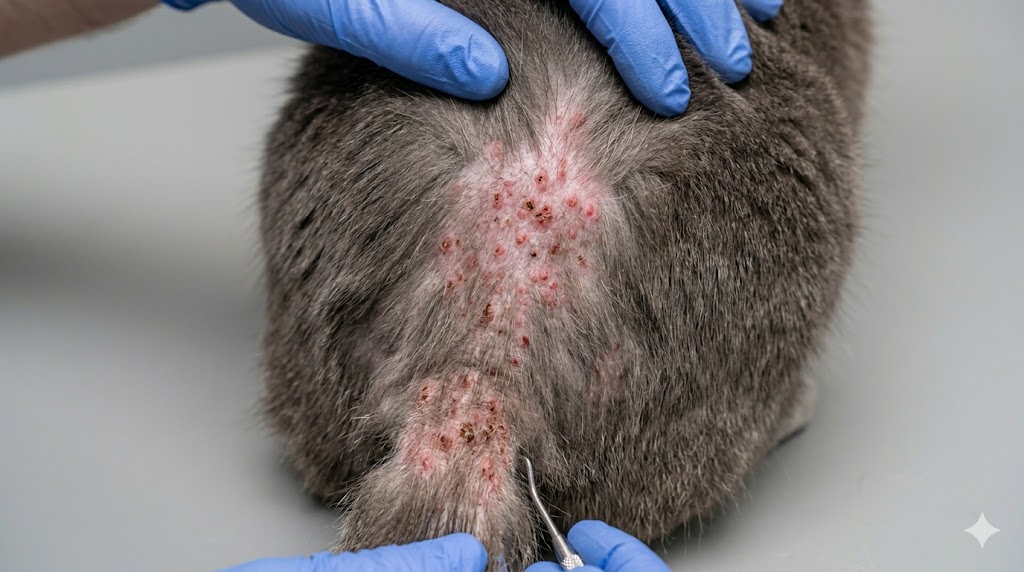
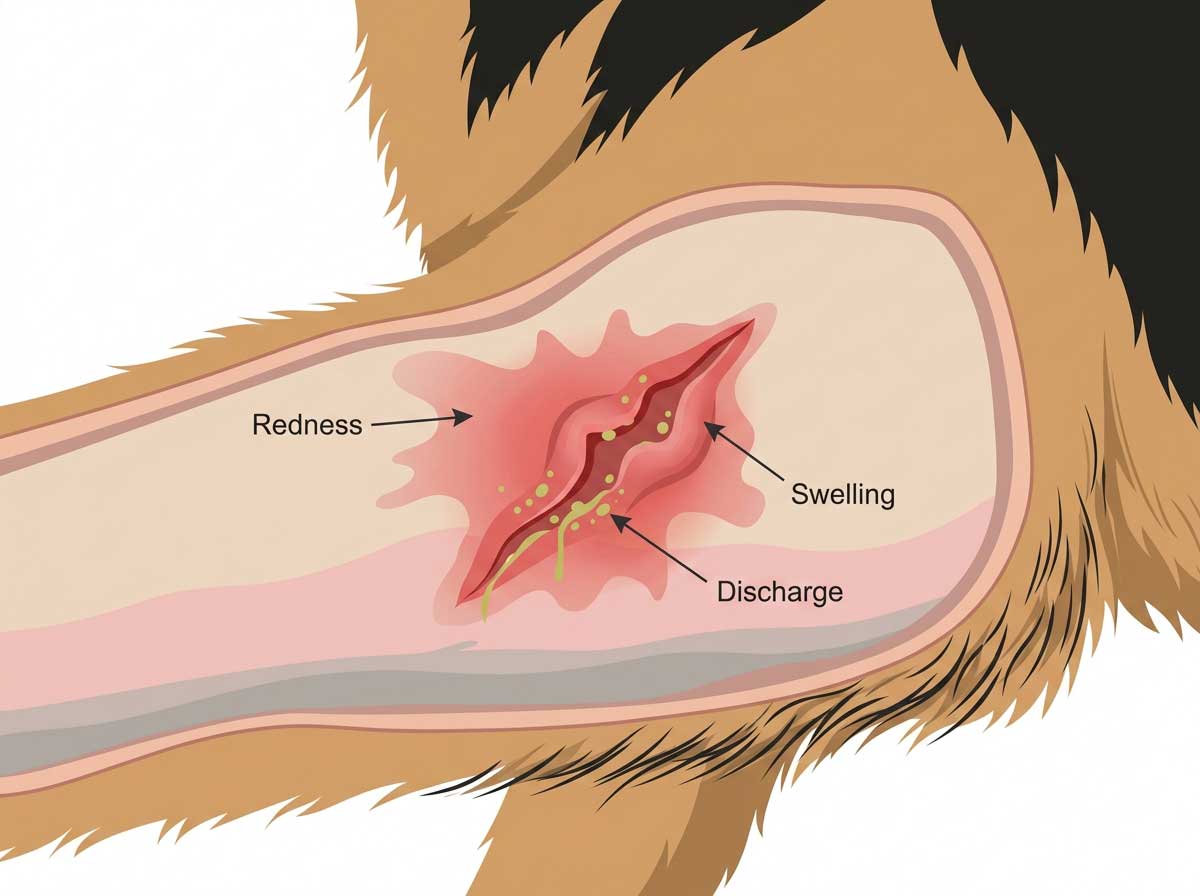
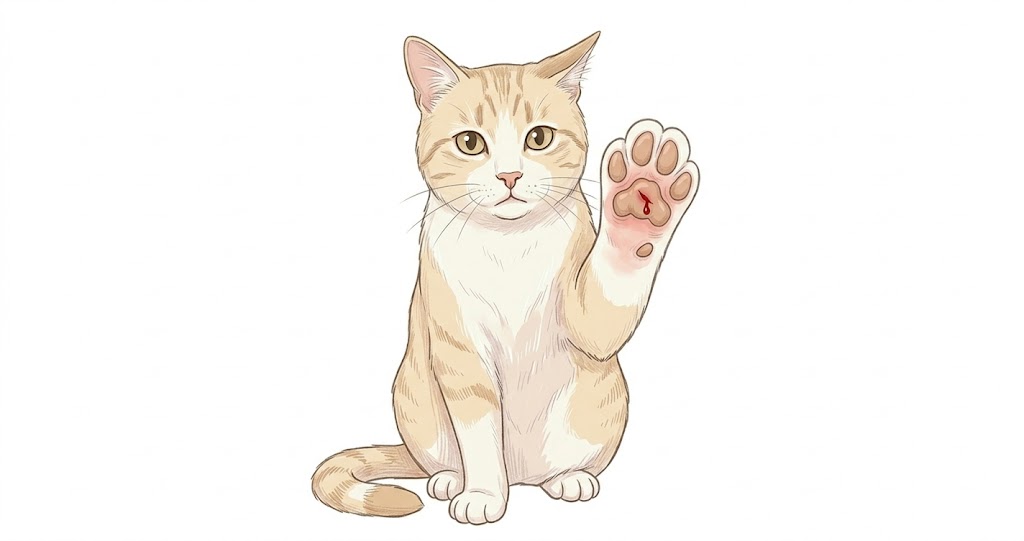
| Severe | Pus, bleeding, swelling, hair loss | Vet visit within 48 hours | 🔴 See vet now |
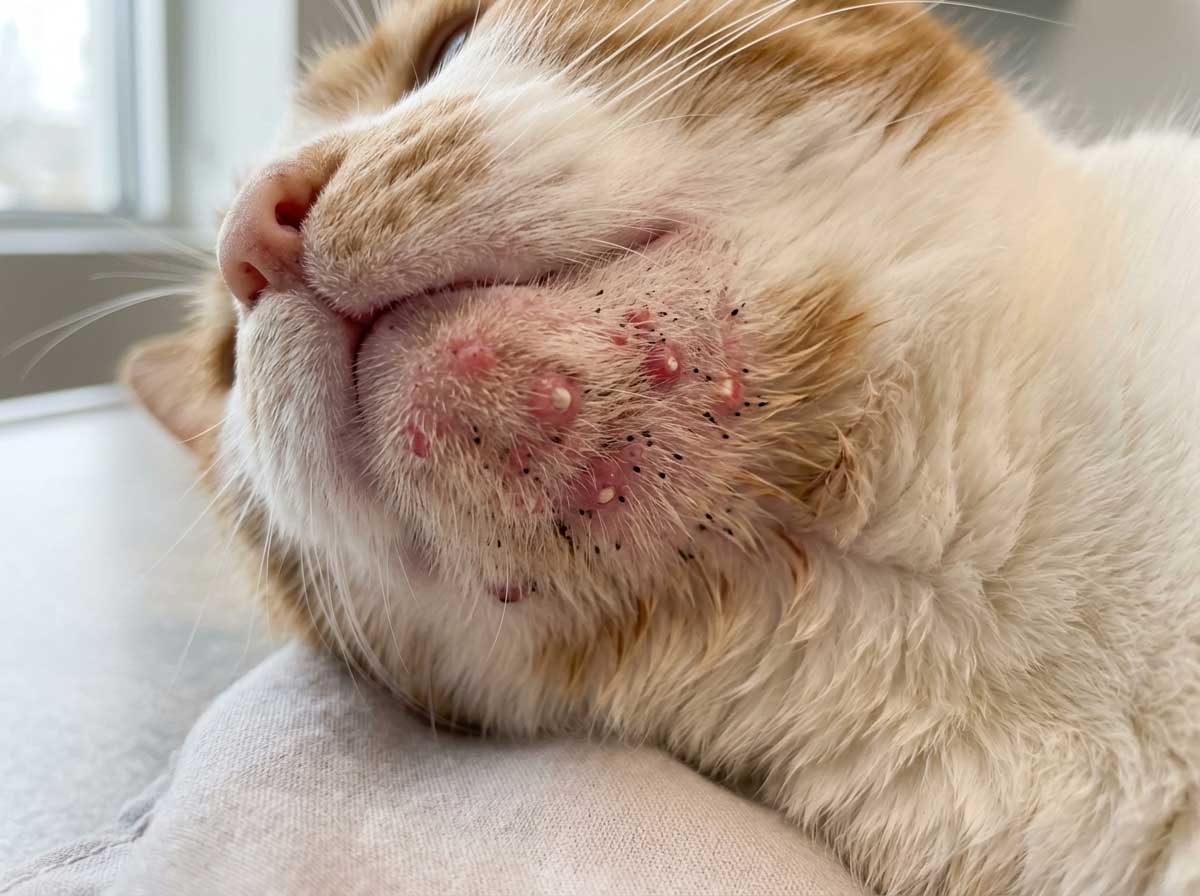
⚠️ Stop home care and see a vet if you see: pus, bleeding scabs, swelling spreading beyond the chin, hair loss, or no improvement after 4 weeks.
Is My Cat's Acne From the Bowl? 4-Question Decision Tree
Before assuming the bowl is the cause, run through these four questions:
- ✓**Q1: Is the acne only on the chin?** Yes → likely bowl-related. No (spreads to body) → see vet, likely allergies.
- ✓**Q2: Is your current bowl plastic, scratched ceramic, or old silicone?** Yes → almost certainly the cause. No → check Q3.
- ✓**Q3: Do you wash the bowl daily with hot soapy water?** No → hygiene may be the driver, not the material. Yes → check Q4.
- ✓**Q4: Did you adopt the cat or change food in the last 3 months?** Yes → food allergy or stress could be the trigger. No → bowl change should clear it within 6 weeks.
Two or more "Yes" on Q1-Q3 means the bowl is the most likely cause. A single "Yes" on Q4 means consider an elimination diet trial before assuming the bowl.
Other Triggers Besides Plastic Bowls
Plastic bowls are the #1 cause but not the only one. Five other factors drive recurrent acne flares:
Food Allergies
Cats can develop allergies to common protein sources. Chicken, beef, and fish are the top three culprits. An allergic cat may show chin acne plus belly itching. A vet-supervised 8-12 week hypoallergenic diet trial confirms or rules out food allergy. Many cats need novel protein (rabbit, duck, venison) for the trial.
Poor Grooming
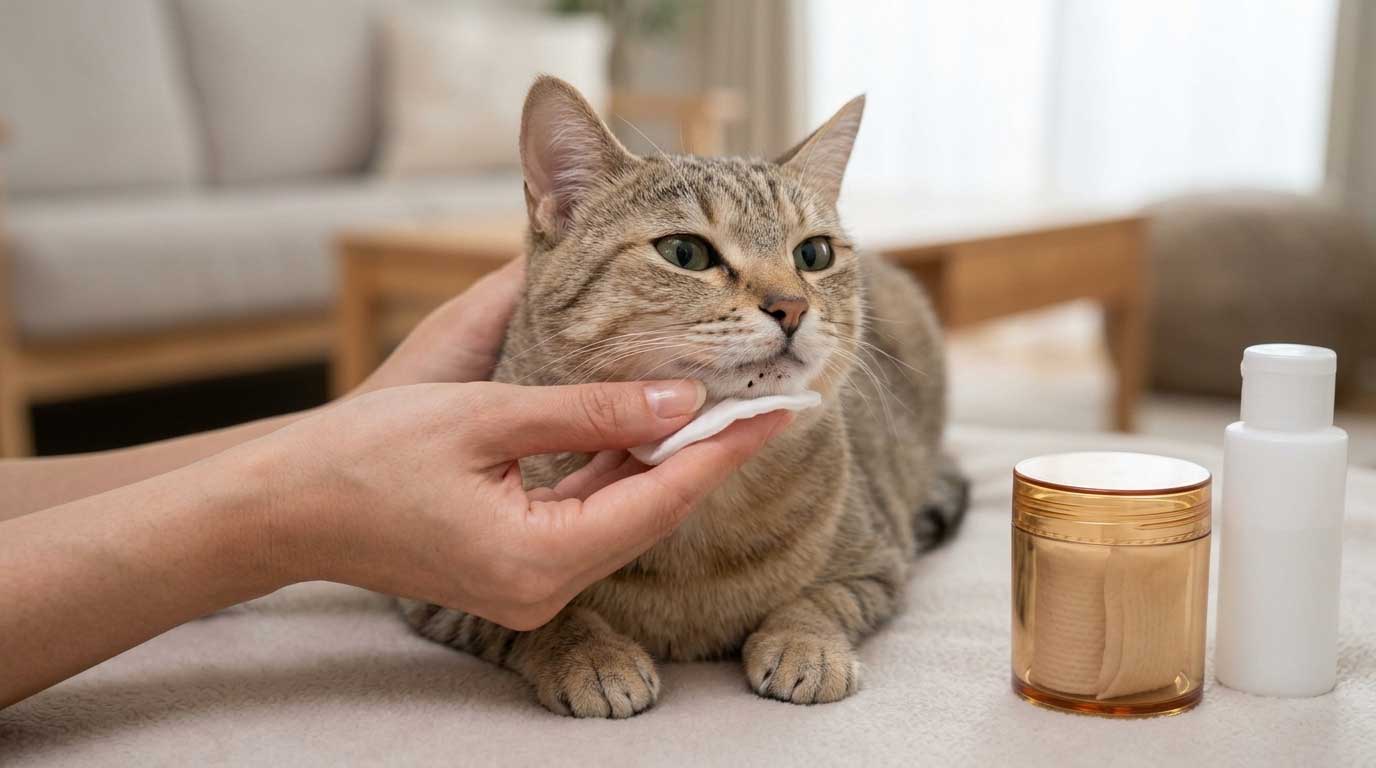
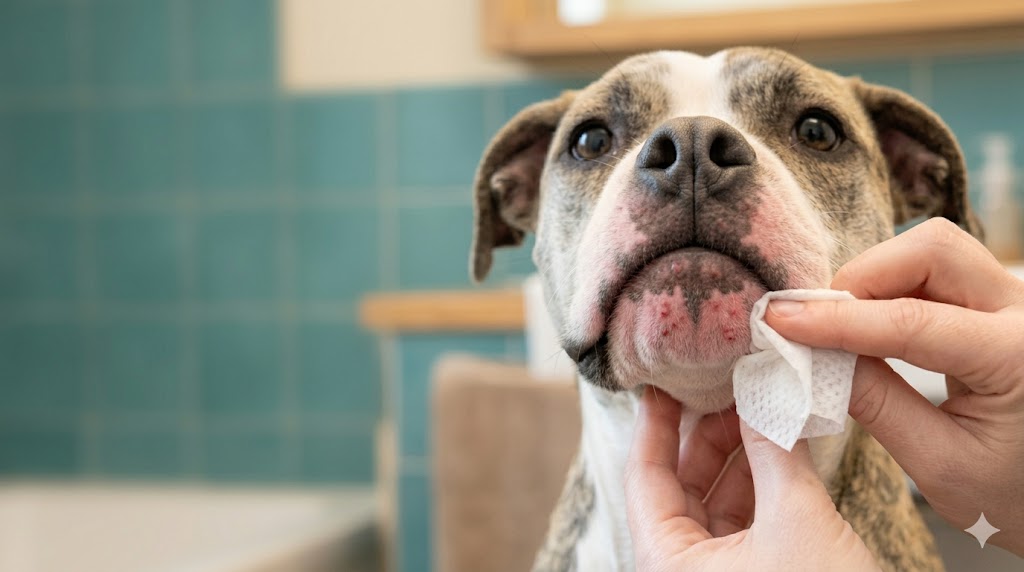
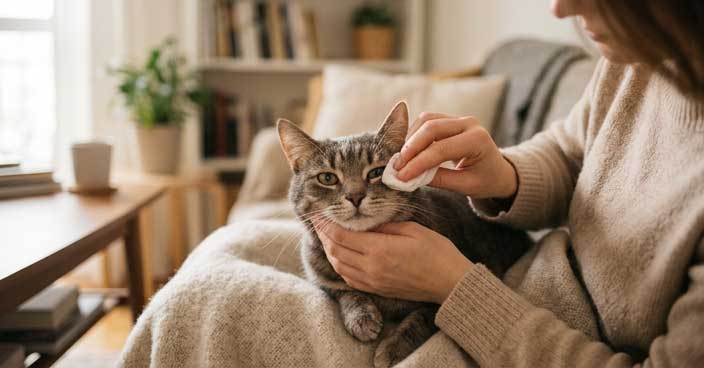
Senior cats and overweight cats often stop grooming the chin. Food debris and oil accumulate on the fur. The buildup feeds the same bacteria that plastic bowls trap. Daily warm water wipes help cats that cannot reach their own chins.
Stress and Hormones
Major life changes can trigger acne flares. A new pet, a move, or a household disruption all count. Stress hormones increase sebum production. The extra oil clogs follicles faster than usual. The acne usually clears once the cat adjusts.
Underlying Immune Disease
Cats with feline immunodeficiency concerns, feline leukemia concerns, or diabetes have weakened immunity. Bacterial colonization of the chin becomes chronic. These cats often need long-term vet-recommended antiseptic maintenance. A vet should diagnose the underlying condition first.
Dirty Environment Near the Food Area
A dusty litter box near the food bowl spreads particles into food and water. Litter dust can clog follicles directly. Keep the food and litter areas at least 6 feet apart. Wash placemats weekly with hot water.
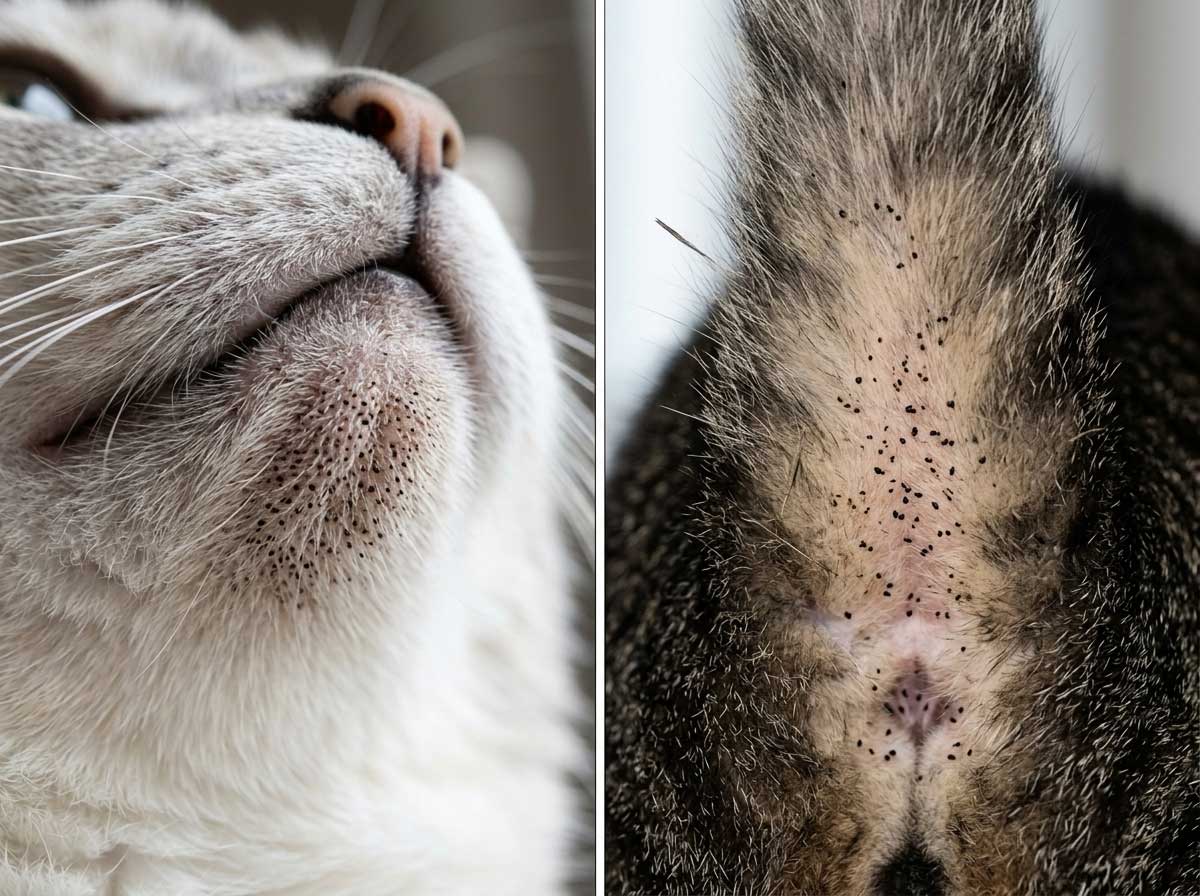
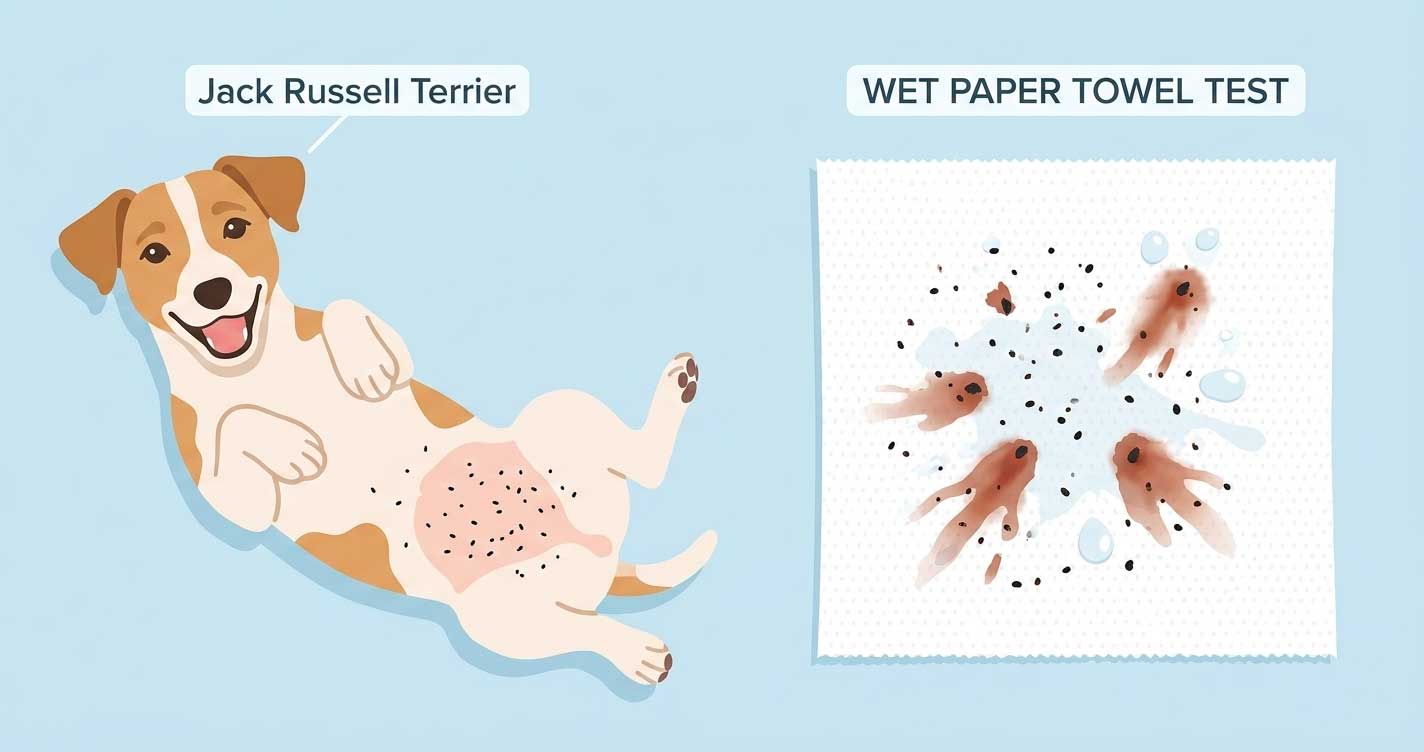
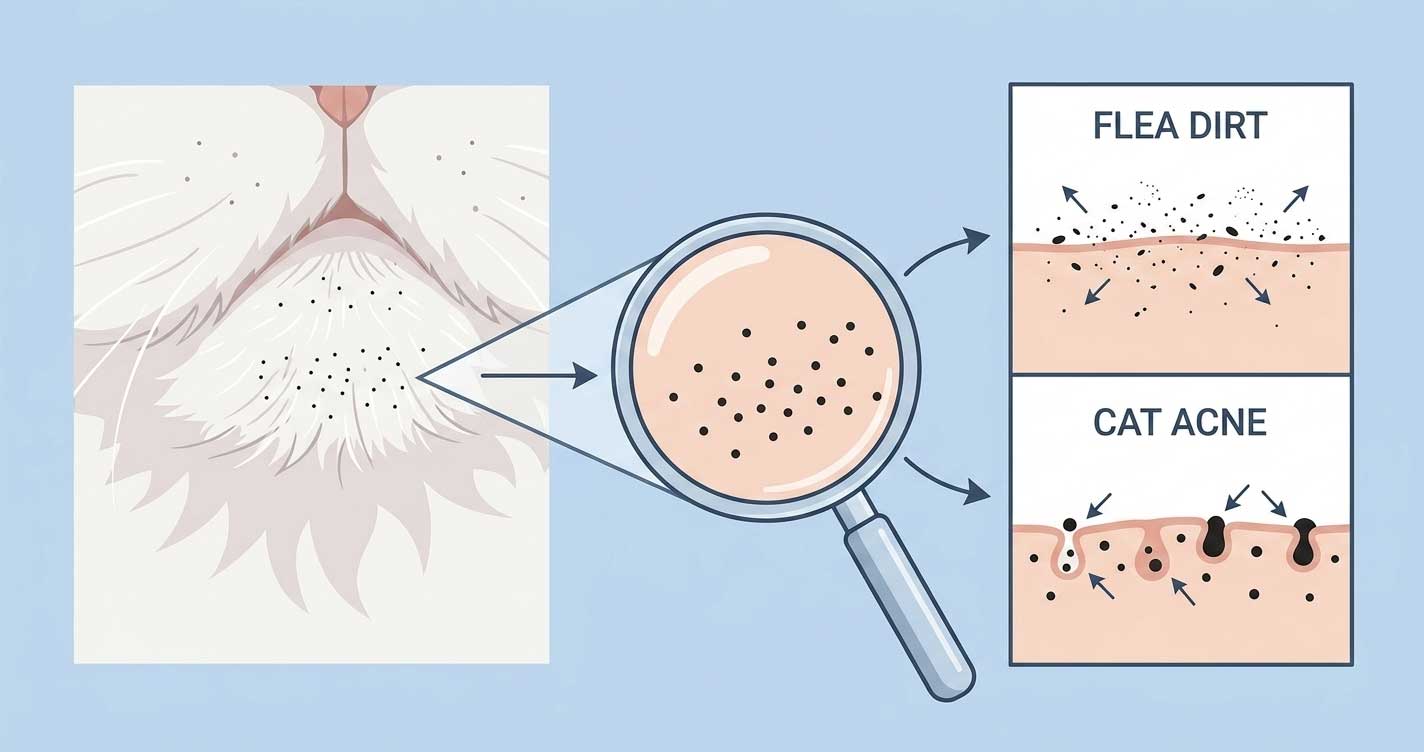
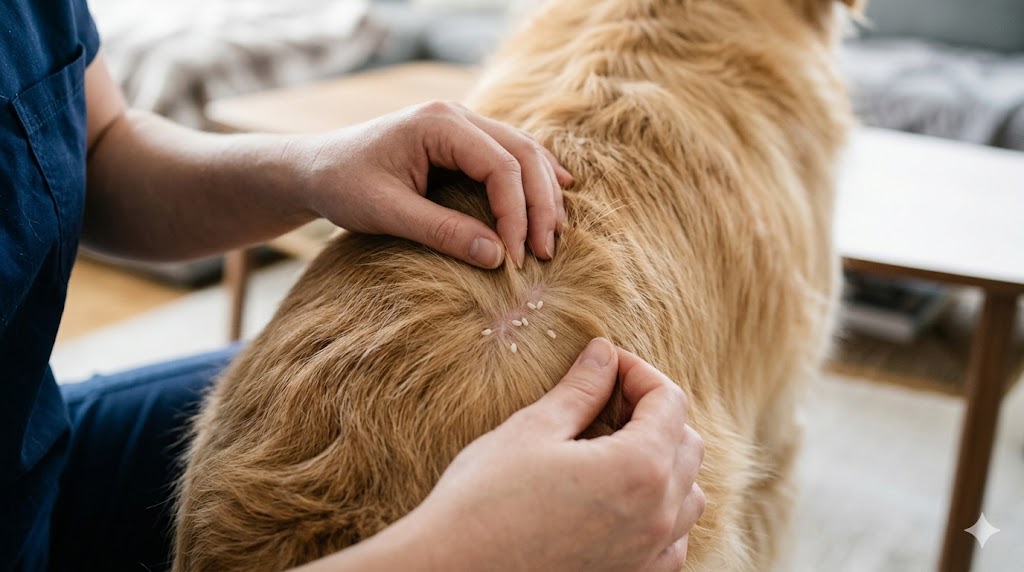
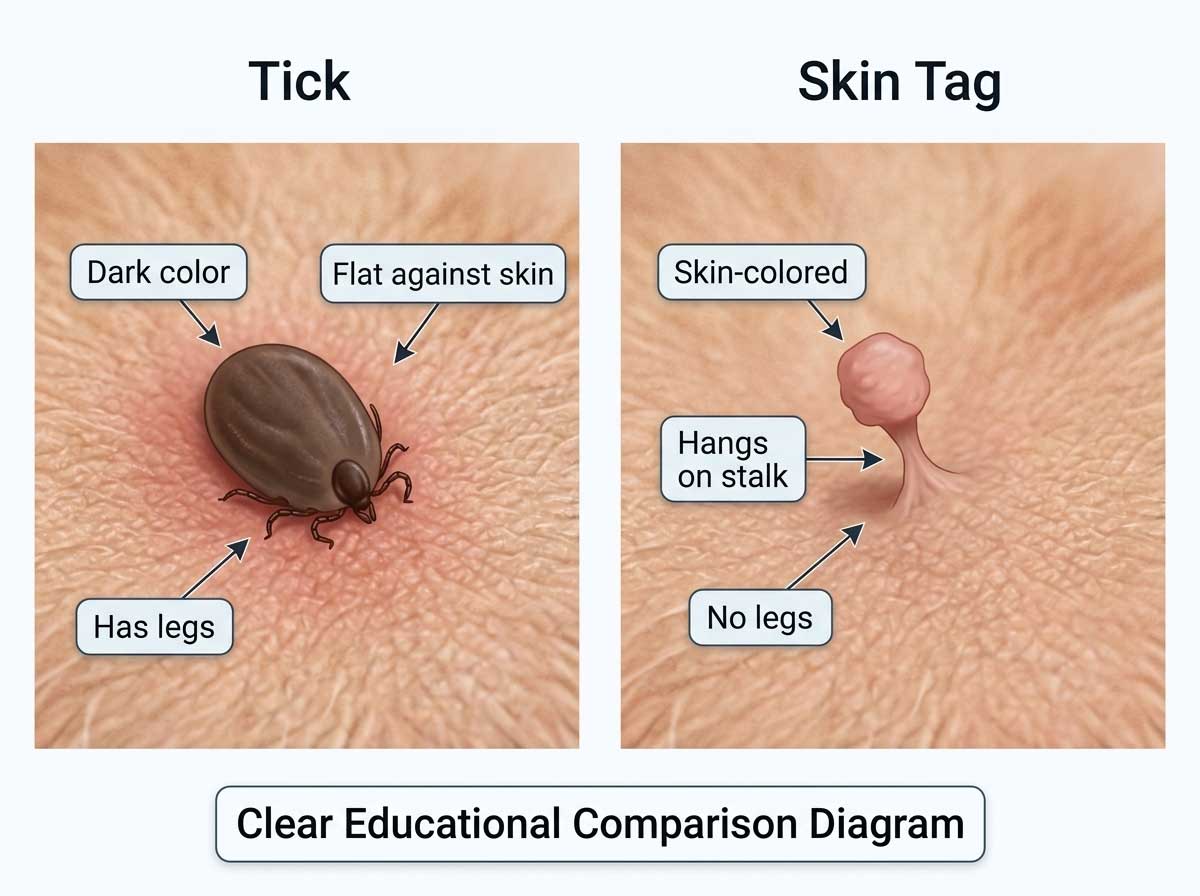
If the bowl change does not clear the chin in 6 weeks, run through this list with your vet. First rule out parasites. Compare your cat's symptoms to black specks: flea dirt vs cat acne.
What to Avoid
- ✓Any plastic bowl — even "BPA-free" plastic
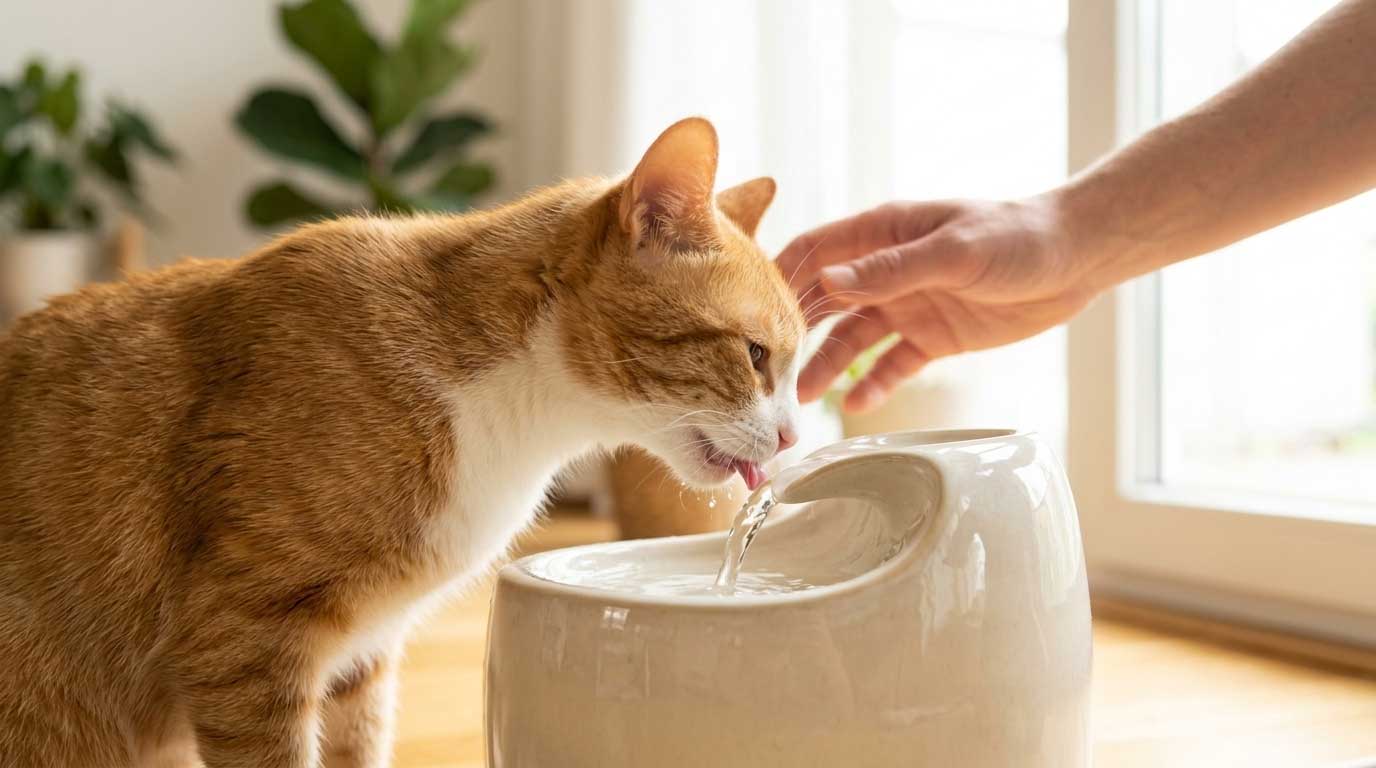
- ✓Plastic water fountains (switch to stainless steel or ceramic fountains)
- ✓Scratched ceramic (the glaze is damaged, exposing porous base)
- ✓Painted bowls where the paint touches the food area
- ✓Old silicone (becomes porous over time)
Bowl Hygiene Best Practices
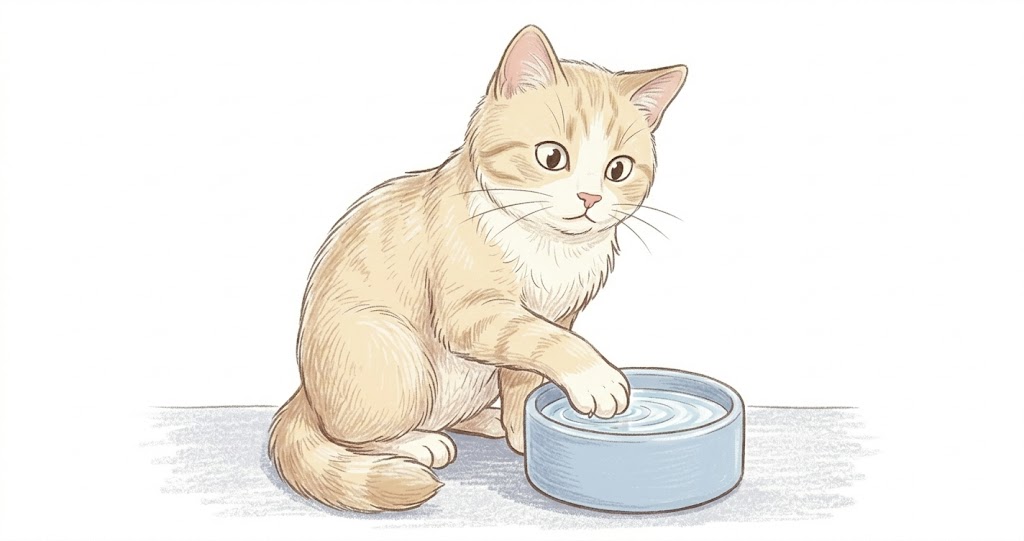
Even a stainless steel bowl can cause acne without daily cleaning. Wash every day with hot soapy water. Do not stretch washing to every 2-3 days. Have 2 sets of bowls so one is always clean. Rinse thoroughly to remove soap residue. Inspect ceramic bowls for chips and cracks monthly. Replace stainless steel bowls every 2-3 years.
Water bowls need the same attention as food bowls. Water sitting all day grows bacteria fast in warm rooms. Change the water at least twice daily. If you use a water fountain, follow the manufacturer's deep-cleaning schedule. Most fountains need full disassembly weekly to clean the pump and filter housing.
⚠️ Stop and see a vet if poor hygiene already caused infection (pus, scabs, fever, off food).
What About Raised or Wide Bowls?
Whisker fatigue is a separate issue. Narrow deep bowls irritate cats. For acne-prone cats, a wide shallow bowl serves two purposes. It reduces chin contact with the rim. It also reduces whisker stress. A wide shallow non-plastic bowl is the ideal setup.
Recovery Timeline: Week-by-Week After Switching
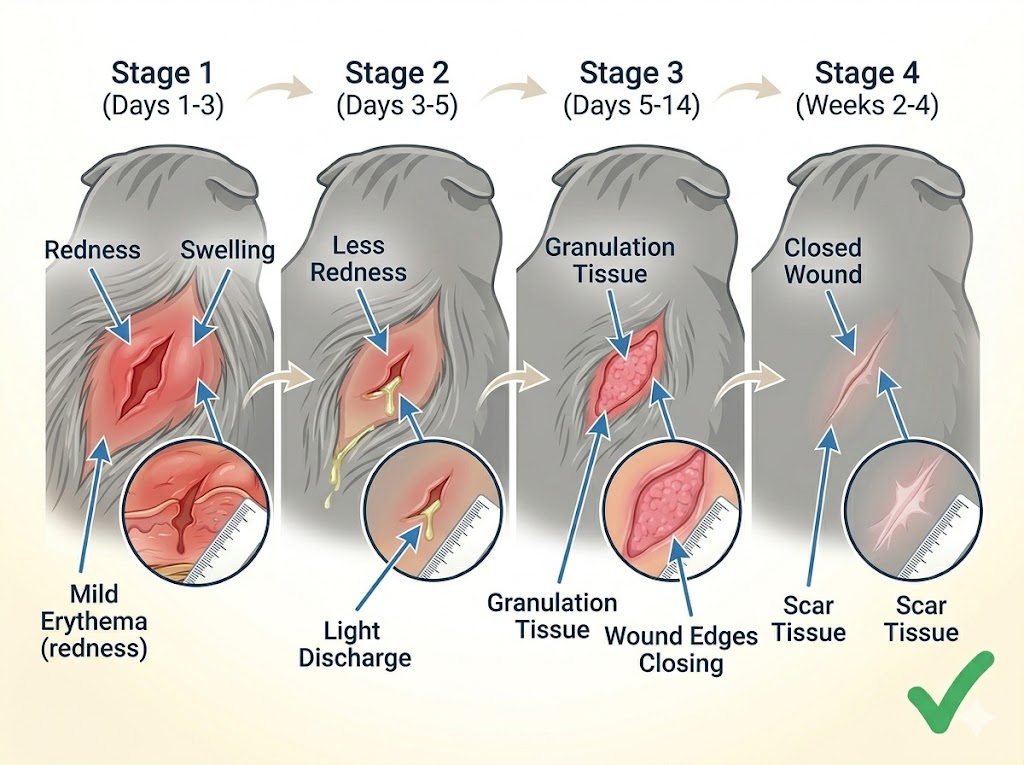
After switching to a non-plastic bowl and washing daily, expect this rough progression:
| Week | What Changes | What to Do | When to Escalate |
|---|---|---|---|
| Week 1 | No new blackheads forming | Stay the course | Worsening = vet visit |
| Week 2-3 | Existing blackheads start to clear | Daily warm water wipes | New bumps = vet-recommended antiseptic |
| Week 4 | Chin visibly cleaner, less crusty | Continue hygiene | No change = re-check diet |
| Week 6-8 | Full resolution in 60-70% of mild cases | Maintenance washing | Recurrence = chronic workup |
No improvement after 4 weeks? The bowl was not the only cause. Allergies, immune issues, or chronic bacterial colonization need a vet workup.
Home Care vs Vet Visit: Cost Comparison
Most plastic-bowl-triggered acne resolves with home care. Vet visits become necessary for severe or chronic cases. Here is the typical cost breakdown (US, 2026 averages):
| Approach | Cost Range | When to Use | Recovery Time |
|---|---|---|---|
| Bowl swap + daily wash | $15-50 one-time | Mild blackheads only | 4-8 weeks |
| Bowl swap + vet-recommended antiseptic wipes | $30-80 first month | Moderate red bumps | 3-6 weeks |
| Vet visit + topical vet-prescribed medication | $150-300 | Severe pustules or infection | 4-6 weeks with meds |
| Vet workup for chronic case | $400-800+ | Recurring after 2 successful clearances | Long-term management |
Switching bowls costs less than $30 in most cases. A vet visit costs 5-10x more. Try the bowl change for 4-6 weeks before booking a vet visit for mild cases. But never delay vet care if you see pus, bleeding, or rapid worsening.
5 Mistakes That Delay Healing
Common owner mistakes that keep cat acne from clearing:
- ✓**Switching to a "BPA-free" plastic bowl.** Still plastic, still porous. The acne does not improve. The owner wastes 4-6 weeks waiting for healing that will not come. Use steel, ceramic, or glass instead.
- ✓**Squeezing blackheads to "clean" the chin.** This pushes bacteria deeper into the follicle wall. Scarring, pustule formation, and secondary infection often follow within days. Permanent dark scars can remain even after the acne resolves.
- ✓**Using human acne products** (vet-recommended product creams, salicylic acid). These are toxic to cats if licked. Even small amounts can cause vomiting, drooling, or chemical burns. See our [vet-recommended antiseptic guide](/blog/vet-recommended-antiseptic-for-cat-acne-safe-use) for the safe alternative.
- ✓**Washing the bowl only when it looks dirty.** Biofilm forms invisibly within 24-48 hours. Daily washing is non-negotiable. Even a "clean-looking" bowl after 2 days harbors millions of bacteria.
- ✓**Stopping treatment as soon as the chin looks better.** Bacteria recolonize within days of stopping. The flare typically returns within 2-3 weeks. Complete the full 4-6 week recovery before stopping any treatment.
How to Photograph Your Cat's Chin for the Vet
Good photos help vets diagnose acne severity remotely. They also help you track progress week-by-week:
- ✓**Use natural daylight near a window** — avoid yellow indoor bulbs.
- ✓**Lift the chin gently with one finger** to expose the affected area.
- ✓**Hold the camera 6-8 inches away** for sharp detail.
- ✓**Take 3 angles**: straight-on, side profile, under-chin view.
- ✓**Include a coin in one photo** for scale reference.
- ✓**Take the same shots each week** for accurate comparison.
A clean before/after comparison shows recovery progress fast. It also helps your vet diagnose remotely if needed.
Long-Term Prevention Checklist
Bowl swap alone is not enough for chronic prevention. Build a daily, weekly, monthly, and yearly routine to keep acne from returning:
Daily
- ✓Wash food and water bowls with hot soapy water.
- ✓Rinse thoroughly to remove all soap residue.
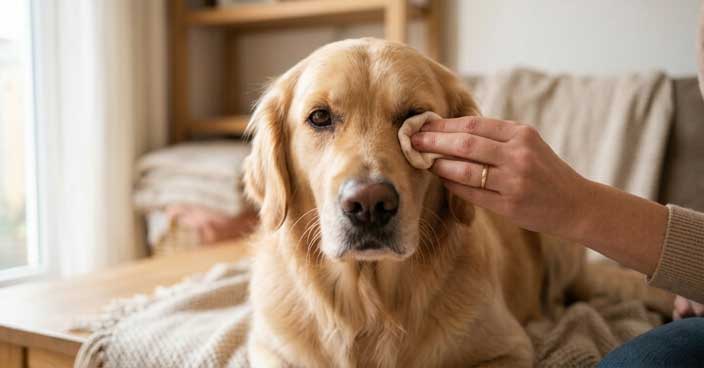
- ✓Wipe the cat's chin with a soft damp cloth after meals.
- ✓Check the chin visually for new black specks or redness.
Weekly
- ✓Run all bowls through the dishwasher on hot cycle.
- ✓Wash placemats with hot water and detergent.
- ✓Inspect bowls for new scratches, chips, or cracks.
- ✓Take one photo of the chin for week-over-week tracking.
Monthly
- ✓Deep-clean the water fountain if you use one.
- ✓Replace fountain filters according to manufacturer instructions.
- ✓Inspect ceramic bowls closely under bright light for hidden chips.
- ✓Note any seasonal patterns in flare timing.
Yearly
- ✓Replace stainless steel bowls every 2-3 years as scratches accumulate.
- ✓Replace ceramic bowls immediately if you find chips or cracks.
- ✓Replace any glass bowls with hairline cracks (they can shatter).
- ✓Schedule a routine vet check-up to catch early skin issues.
Consistency matters more than perfection. A cat owner who follows 80% of this checklist will see far fewer flares than one who only switches bowls. The goal is steady habit, not occasional deep-cleaning bursts.
How Fast Will You See Improvement?
After switching to a non-plastic bowl and washing it daily:
- ✓Week 1: no new blackheads forming
- ✓Week 2-3: existing blackheads start to clear
- ✓Week 4: chin looks noticeably cleaner
- ✓Week 6-8: full resolution in most mild cases
No improvement after 4 weeks? The bowl was not the only cause. Look at black specks: flea dirt vs acne to rule out parasites. Allergies, immune issues, or chronic bacterial colonization need a vet visit.
Not sure if your cat's acne is responding to the bowl change? A photo comparison over time helps. Yipara's cat acne photo screening flags visual patterns. It helps you decide if home care is enough or a vet visit is needed. Many owners find weekly photo tracking catches early relapses before they become full flares.
Yipara provides AI-powered photo screening as a triage tool to help you decide whether home treatment is appropriate or a vet visit is needed. It is not a substitute for veterinary diagnosis or care.
**Author**: Yipara Veterinary Content Team · Reviewed against Merck Veterinary Manual and PetMD guidelines · Last updated May 15, 2026
Not sure if those small black dots on your cat's chin are blackheads, chin mites Demodex, or fungal? Our new AI cat acne pictures tool identifies blackheads vs cystic acne vs chin mites Demodex from your cat's actual chin photo.
Try Cat Acne Pictures AI ToolFrequently Asked Questions
Will my cat's acne come back if I switch to a new plastic bowl later?
+
How long until I see improvement after switching bowls?
+
Is cat chin acne contagious to other cats or humans?
+
Are "BPA-free" plastic bowls safe for cats with acne?
+
My cat's acne keeps coming back even with a stainless steel bowl. Why?
+
Can I just squeeze the blackheads to clean my cat's chin?
+
When does cat chin acne need vet-prescribed medication from a vet?
+
Is the Bowl Change Working?
Upload a photo for AI screening to flag visual patterns and track recovery. Educational only — not a veterinary diagnosis.
Disclaimer: This article is for informational purposes only and is not a substitute for professional veterinary advice. Always consult a licensed veterinarian for diagnosis and treatment of your pet's health conditions.