What Does Yellow or Green Discharge from a Dog's Eye Mean?
Yellow or green eye discharge in dogs is almost always bacterial infection. Here's what it means, home care, and why vet-prescribed medication eye drops are usually needed.
Published 2026-04-19
Bacterial or Something Else?
Upload a photo — AI identifies discharge color and tells you if you need vet-prescribed medication drops or can treat at home.
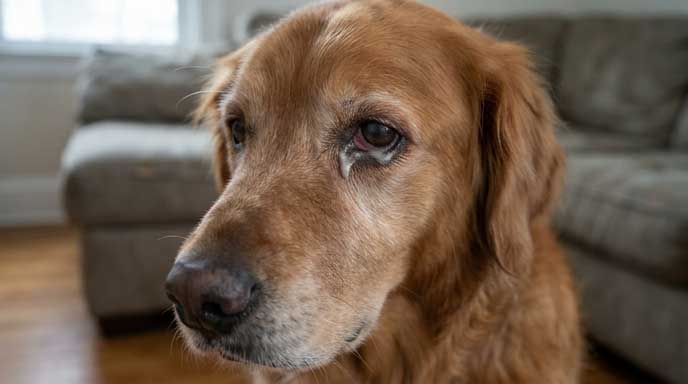
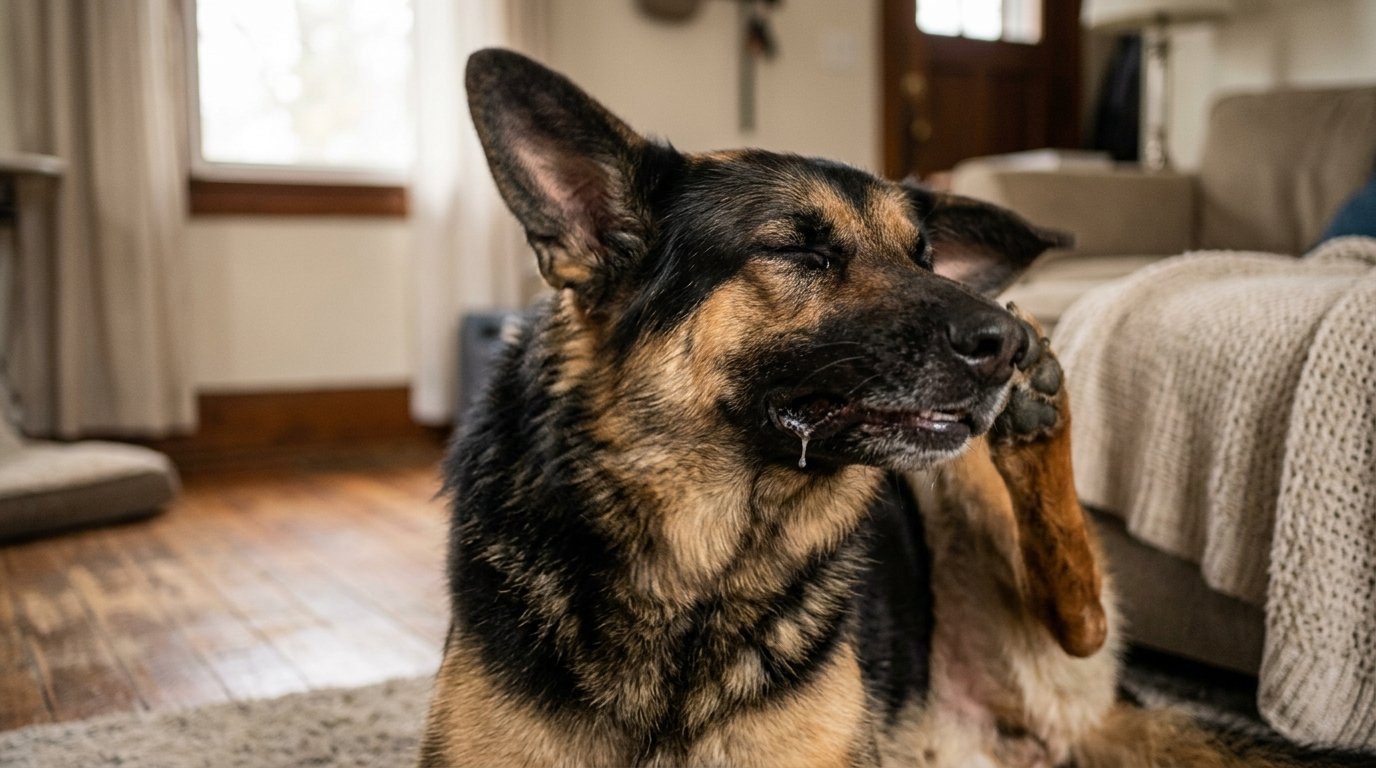
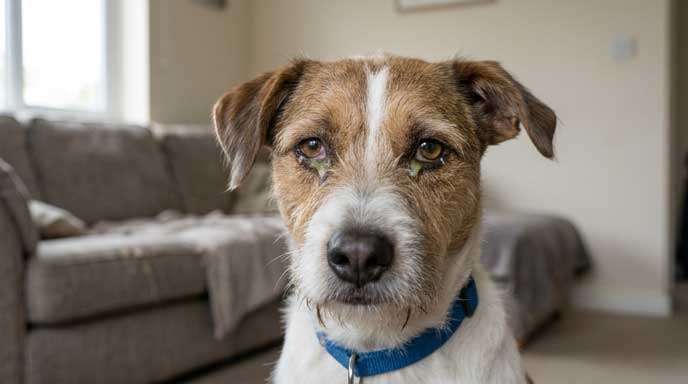
You noticed thick yellow or green goop crusting around your dog's eye. It accumulates overnight, sticks to the fur, and may come back within hours of cleaning. The short answer: this is almost always a bacterial infection, and home remedies alone won't fix it.
Here's what yellow and green eye discharge actually means, how it's treated, and when to skip the home remedies and see a vet.
What the Colors Mean
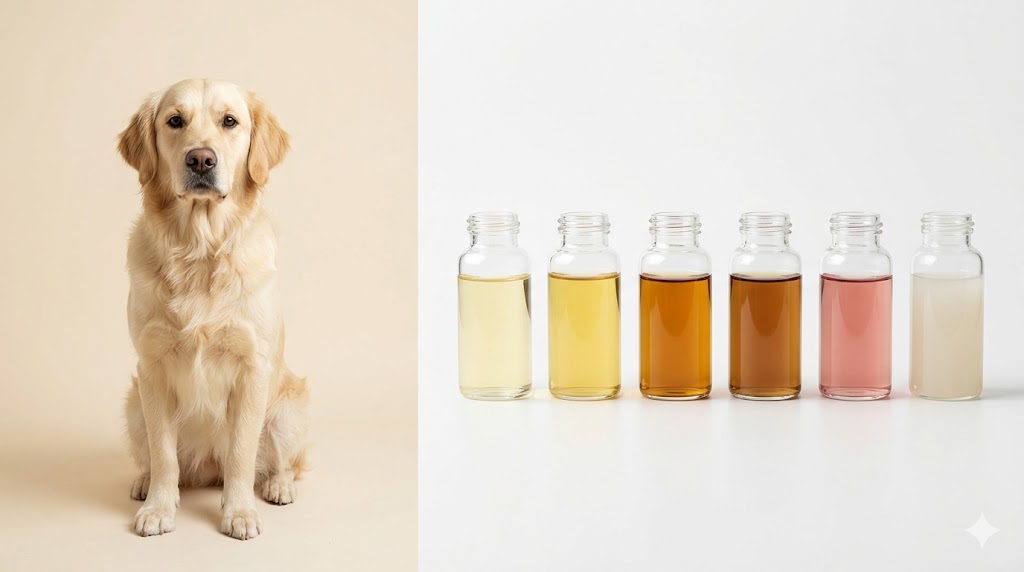
In dog medicine, eye discharge color is a surprisingly clear diagnostic signal:
- ✓GREEN discharge = bacterial infection (most severe shade; larger bacteria load)
- ✓YELLOW discharge = bacterial infection (early stage or less severe)
- ✓YELLOW-GREEN mix = bacterial pink eye in active phase
- ✓CLEAR discharge = allergies, tearing, or viral cause (not bacterial)
- ✓REDDISH-BROWN fur staining = normal tear pigment (cosmetic, not infection)
- ✓WHITE-GRAY thick mucus = dry eye (dry eye — different problem)
What's Happening Medically
Yellow/green discharge = pus. Specifically, white blood cells and bacteria mixed with tears and mucus. Common bacterial culprits in dogs: bacterial concern (most common), bacterial concern, bacterial concern, E. coli. These bacteria multiply on the eye surface (pink eye), producing the pus that you see.
Common Causes of Bacterial Eye Infection in Dogs
- ✓PRIMARY BACTERIAL pink eye — direct bacterial infection; often picks up from environment or other dogs
- ✓SECONDARY TO ALLERGY — allergic inflammation weakens eye's defense, bacteria invade
- ✓SECONDARY TO DRY EYE — reduced tear flow allows bacterial overgrowth
- ✓CORNEAL ULCER WITH INFECTION — scratch on cornea becomes infected (emergency — can cause vision loss)
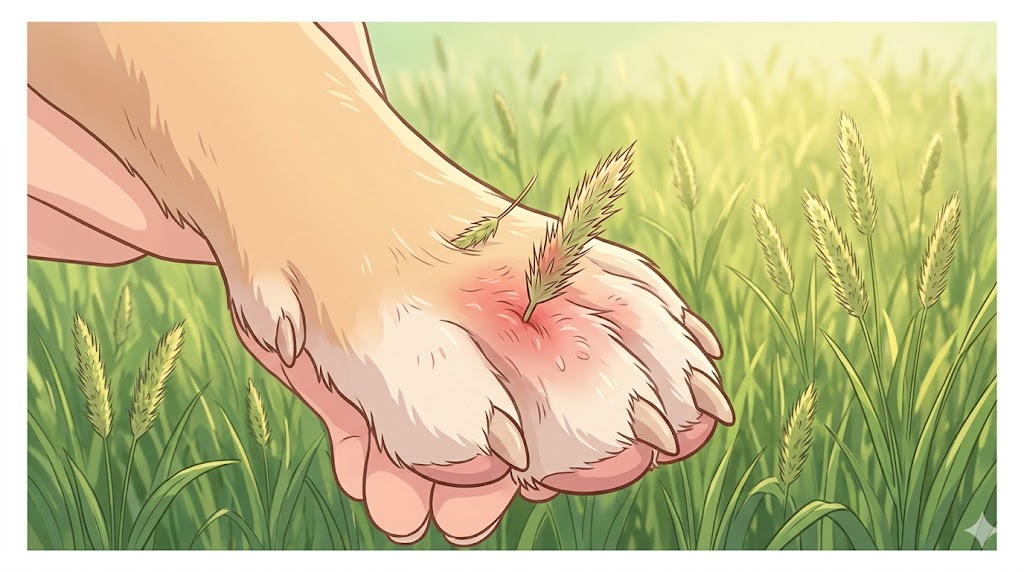
- ✓FOREIGN BODY INFECTION — grass seed, dust, or debris trapped in eye
- ✓POST-VIRAL — viral infection opened door for bacterial
- ✓PUPPIES specifically — viral pink eye (canine herpes) may present yellow-green
Why Home Treatment Alone Won't Work
Many owners try cleaning, warm compresses, or human over-the-counter products for 1-2 weeks hoping it resolves. Problem: bacterial infections rarely self-resolve. Without vet-prescribed medication:
- ✓Bacteria keep multiplying
- ✓Infection spreads to other eye
- ✓Can progress to corneal ulcer (scratch becomes infected and deepens)
- ✓Untreated severe cases → corneal perforation → possible vision loss
- ✓Chronic low-grade infection becomes harder to treat
You need prescription vet-prescribed medication eye drops. There's no effective over-the-counter equivalent for dogs.
What the Vet Will Do
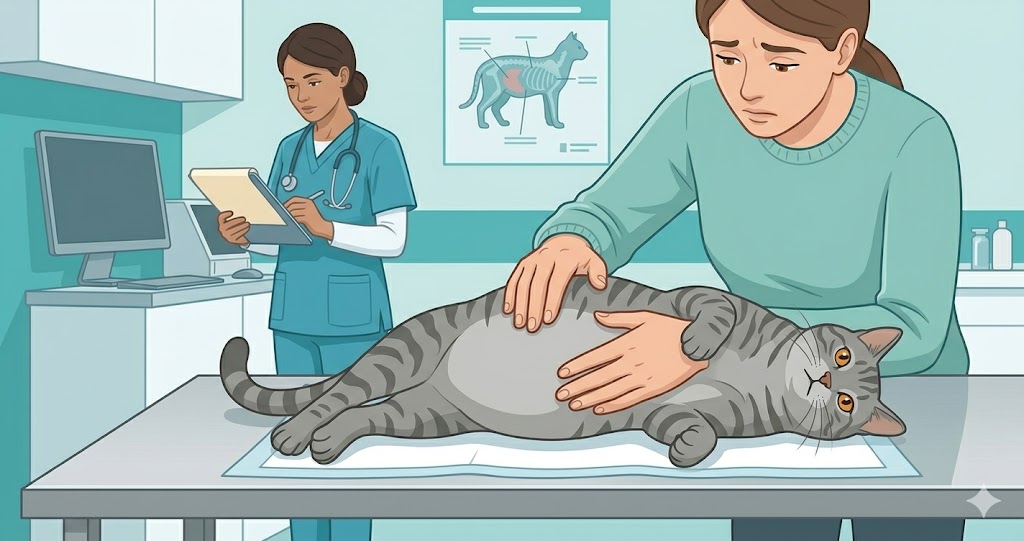
- ✓Examine eye with slit lamp or magnification
- ✓Perform fluorescein stain test — rules out corneal ulcer (takes 30 seconds)
- ✓Sometimes cytology (swab + microscope) to identify bacteria type
- ✓Rarely culture for vet-prescribed medication susceptibility in severe/refractory cases
- ✓Prescribe topical vet-prescribed medication eye drops — common choices: vet-prescribed medication, vet-prescribed medication, vet-prescribed medication, neomycin-polymyxin-bacitracin
- ✓Dosing: usually 2-4 times daily for 7-10 days
- ✓Sometimes oral vet-prescribed medication for severe cases
- ✓Recheck if not improving in 3-5 days
Typical cost: $80-150 for exam + $20-40 for drops = $100-190 total. Compare to corneal ulcer surgery cost if untreated infection progresses ($500-2,000+).
Home Supportive Care While Treating
Alongside vet-prescribed drops:
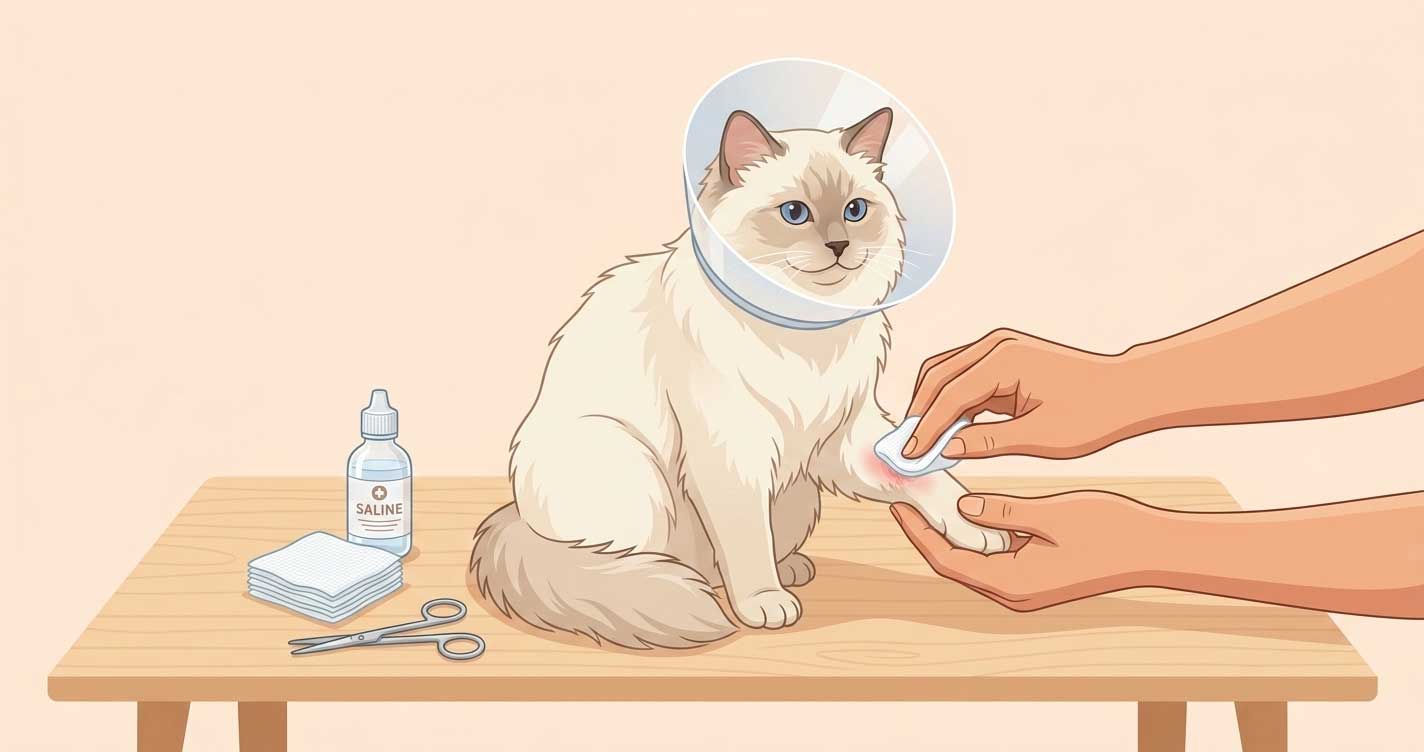
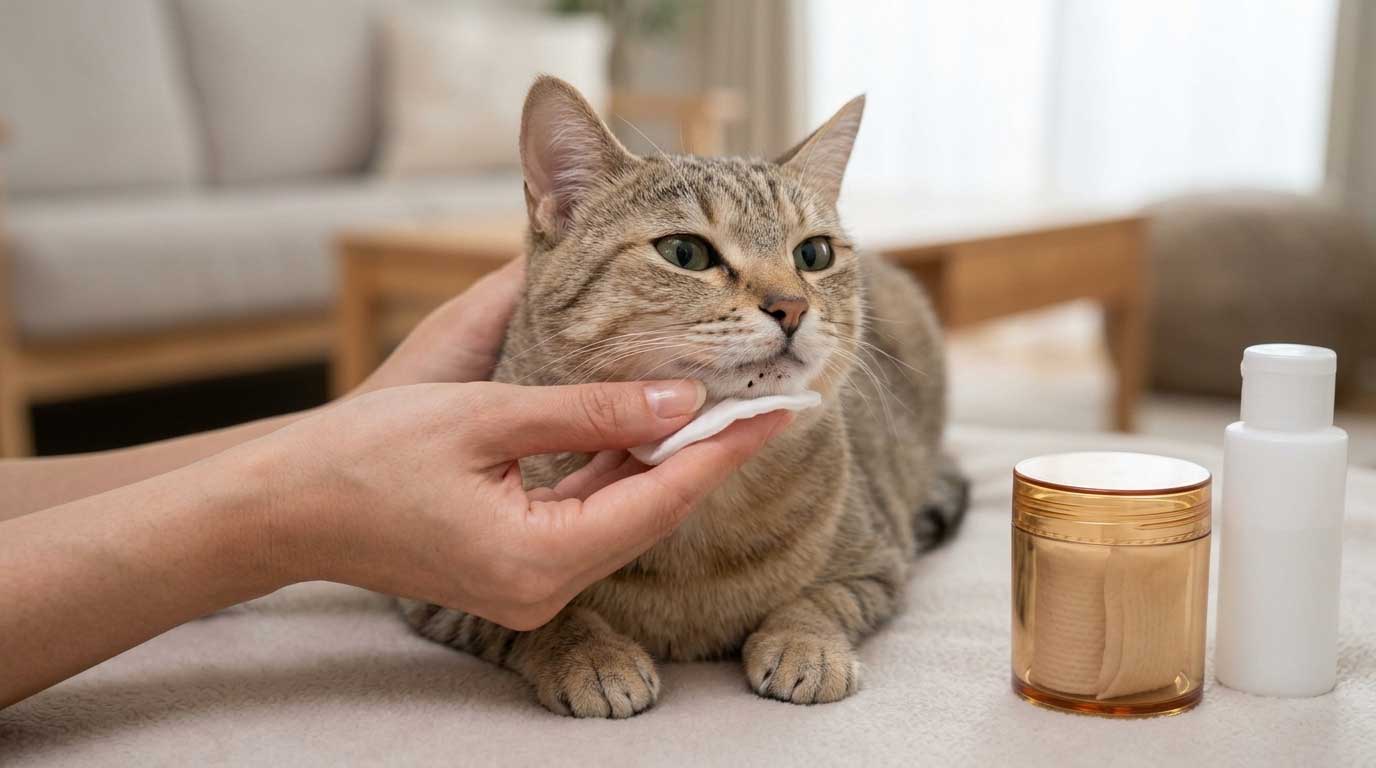
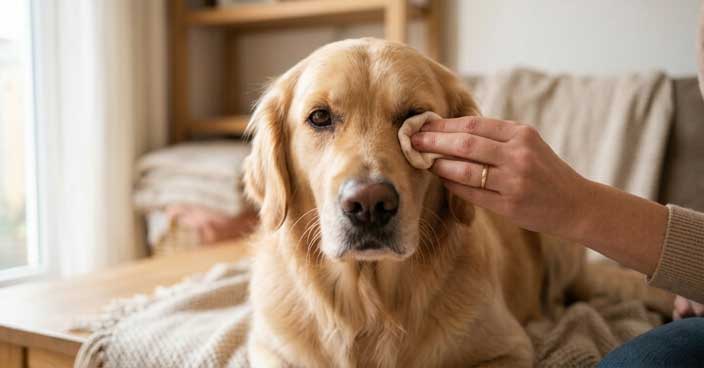
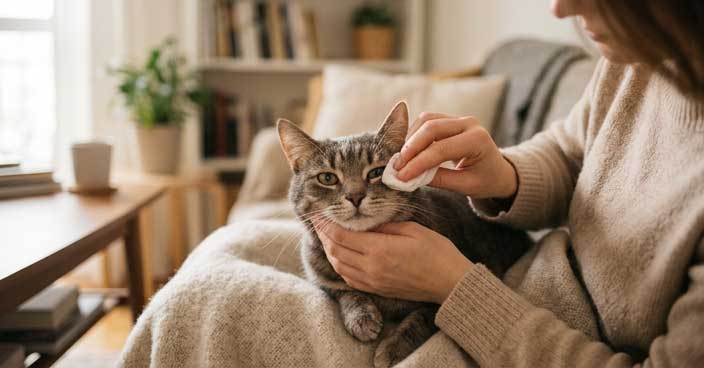
- ✓Clean eye gently with warm saline 2-3x daily before applying drops
- ✓Wipe from inner corner OUTWARD; use separate cotton ball for each eye
- ✓Warm compress 5-10 min 2-3x/day for comfort
- ✓E-collar to prevent rubbing (very important — dogs scratch infected eyes)
- ✓Wash dog bedding daily during treatment
- ✓Keep other pets away from affected dog (some bacteria transmissible)
- ✓Don't skip doses — consistency matters for vet-prescribed medication effectiveness
- ✓Complete full course — don't stop early when it "looks better"
What NOT to Do
- ✓Don't use human eye drops (Visine, Clear Eyes) — vasoconstrictors, can damage canine cornea
- ✓Don't use leftover vet-prescribed medication drops from other pets or humans — may be wrong vet-prescribed medication, contaminated
- ✓Don't use breast milk, tea, or essential oils — ineffective, potentially harmful
- ✓Don't cover with gauze (traps bacteria in warm moist environment)
- ✓Don't use hydrogen peroxide anywhere near eyes
- ✓Don't delay vet visit hoping it resolves — infections get harder to treat
When to See the Vet URGENTLY (Same Day)
- ✓Your dog is squinting heavily or holding the eye closed
- ✓One eye only with rapid-onset severe discharge
- ✓Eye appears cloudy, hazy, or bluish
- ✓Blood or red fluid visible
- ✓Significant eyelid swelling
- ✓Dog rubbing or pawing at eye constantly
- ✓Puppy or senior dog — systems compensate less
- ✓Not improving after 3-5 days of prescribed drops
Prognosis
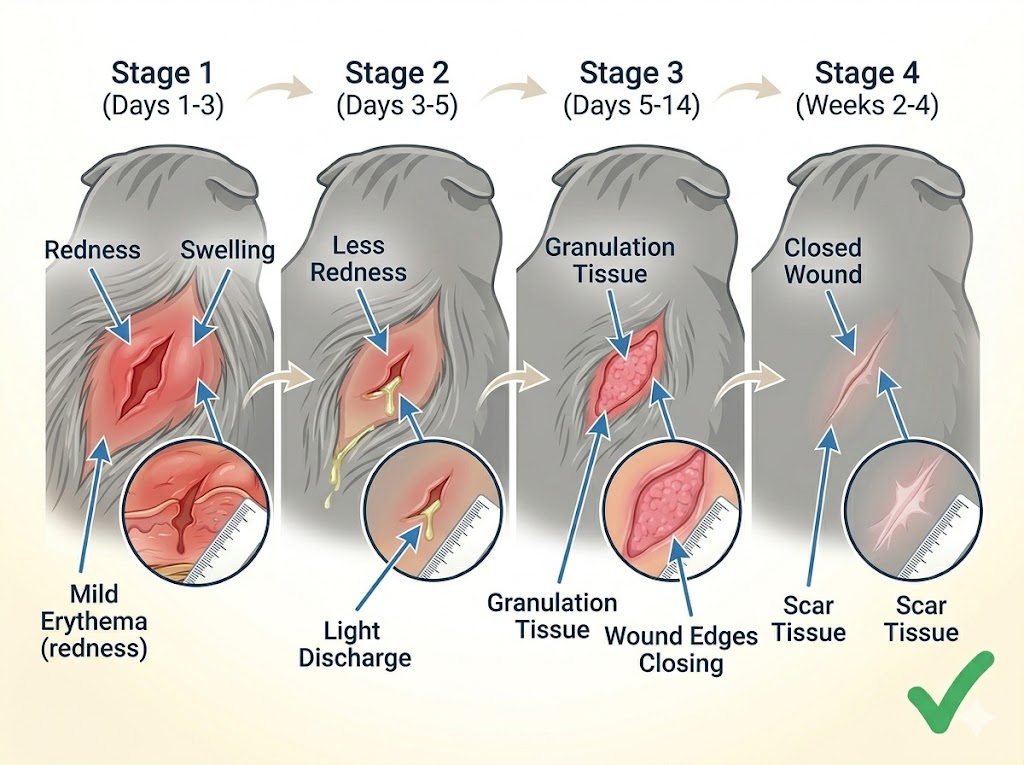
Excellent with treatment. Most bacterial pink eye resolves completely in 7-10 days of vet-prescribed medication drops. Expected progression with treatment: noticeable improvement within 2-3 days; full resolution by day 7-10; complete healing of any secondary irritation over 2 weeks. Recurrence suggests: incomplete treatment course, underlying dry eye, allergies, foreign body, or entropion (eyelid rolling inward).
Not sure if your dog's discharge is bacterial vs allergic vs normal tear pigment staining? Upload a photo — AI identifies the color and tells you whether it's infection (needs vet-prescribed medication) or something else.
Bacterial or Something Else?
Upload a photo — AI identifies discharge color and tells you if you need vet-prescribed medication drops or can treat at home.
Disclaimer: This article is for informational purposes only and is not a substitute for professional veterinary advice. Always consult a licensed veterinarian for diagnosis and treatment of your pet's health conditions.