Cat Paw Injury: Cut, Bleeding & When to See a Vet Guide
Cat paw injury — how to read the severity of cuts, bleeding, and limping, what to do in the first 60 seconds at home, and when limping means a vet visit today.
Published 2026-06-22
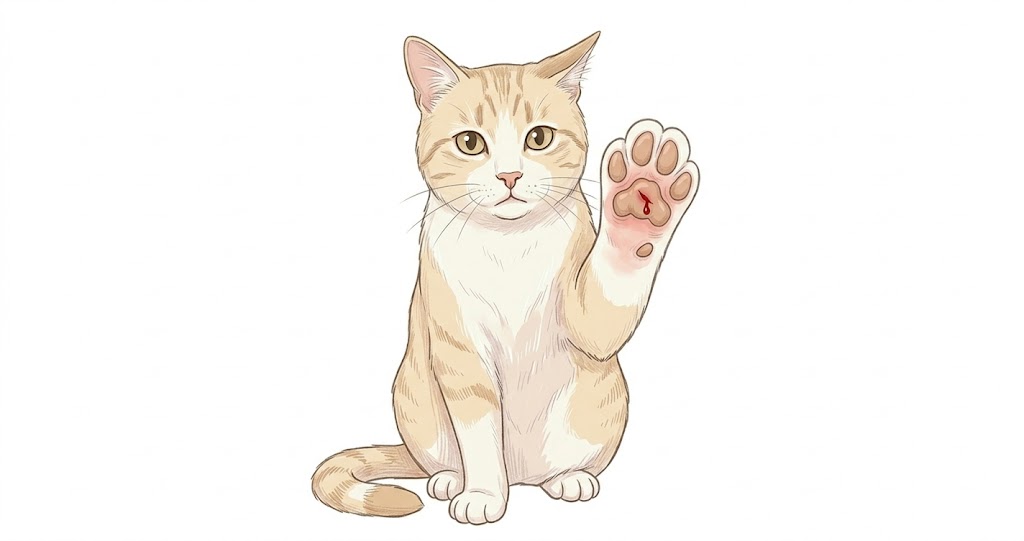
Cat paw injury that is not closing as expected?
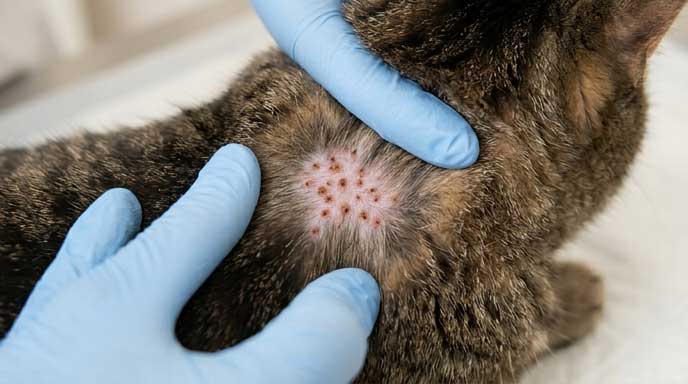
If your cat's paw shows redness, swelling, rust-colored saliva staining, or visible signs of infection days after a cut, upload a clear photo and our AI compares against bacterial infection, yeast, abscess, and healthy paw patterns in seconds.
Cats land their paws on a lot of risky surfaces — glass shards, splinters, hot pavement, fight scratches, even the occasional house-corner stub. Cat paw injury is one of the more common emergency-style questions cat owners ask, but most cat paw cuts and bleeds are minor and resolve quickly once you stop the bleeding, keep the area clean, and watch for signs of escalation. This guide walks through how to read the severity in the first 60 seconds (small cut vs deep cut vs hidden abscess), the visible cat paw injury symptoms that mean a vet visit today, the cat-specific differences from dog paw injuries (cat-bite wounds matter more than people realize), what to do at home before a vet visit, and how to tell apart a sprain from a deeper issue when your cat is limping.
Saw redness, swelling, or signs your cat's paw injury has crossed from "minor scratch" into "infected wound"? Upload a clear paw photo — our AI compares against bacterial infection, yeast, abscess, and healthy paw patterns in seconds.
Check Cat Paw Now →Read the Severity in the First 60 Seconds
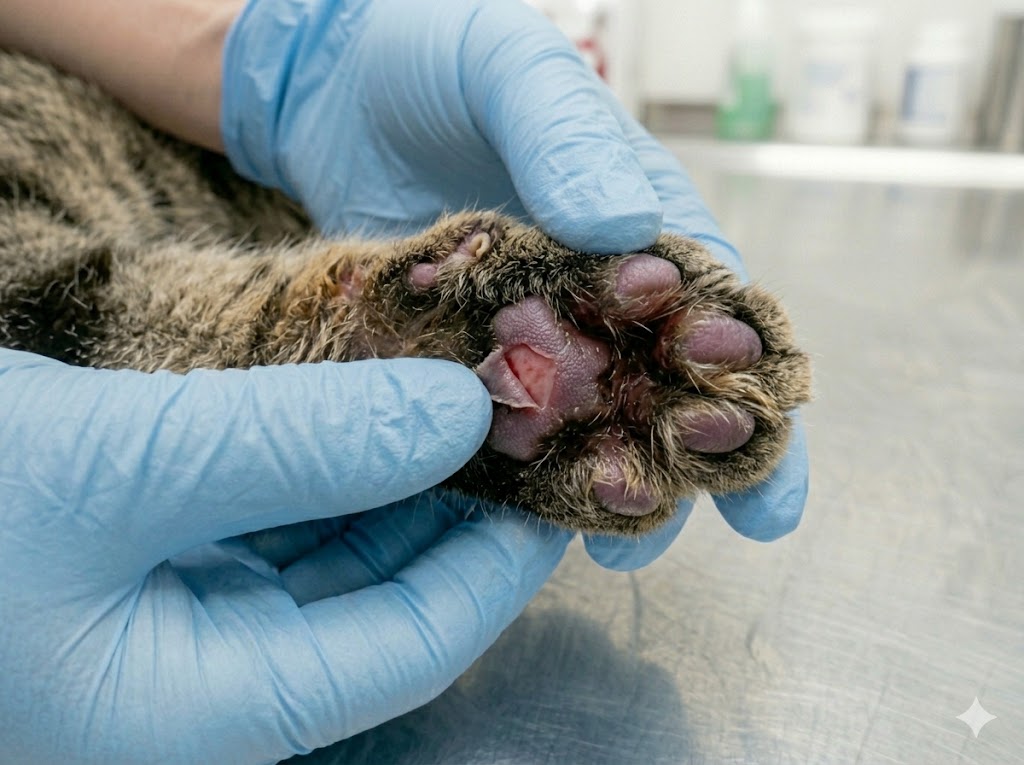
Most cat paw injuries fall into 4 visual categories. The first 60 seconds of observation tells you which one — and which action level to take:
- ✓**Surface scratch or shallow cut**: thin pink line on the pad or between toes, almost no bleeding or a tiny dot of blood, cat walks normally within seconds. **Action**: clean with warm water, dry, watch for 2-3 days.
- ✓**Active bleeding cut**: visible flowing blood from the paw pad, fur becomes wet with blood, may need pressure to stop. **Action**: apply gentle pressure with a clean cloth for 5 full minutes, do not lift to peek (re-clots break). If bleeding does not stop in 10 minutes → vet visit.
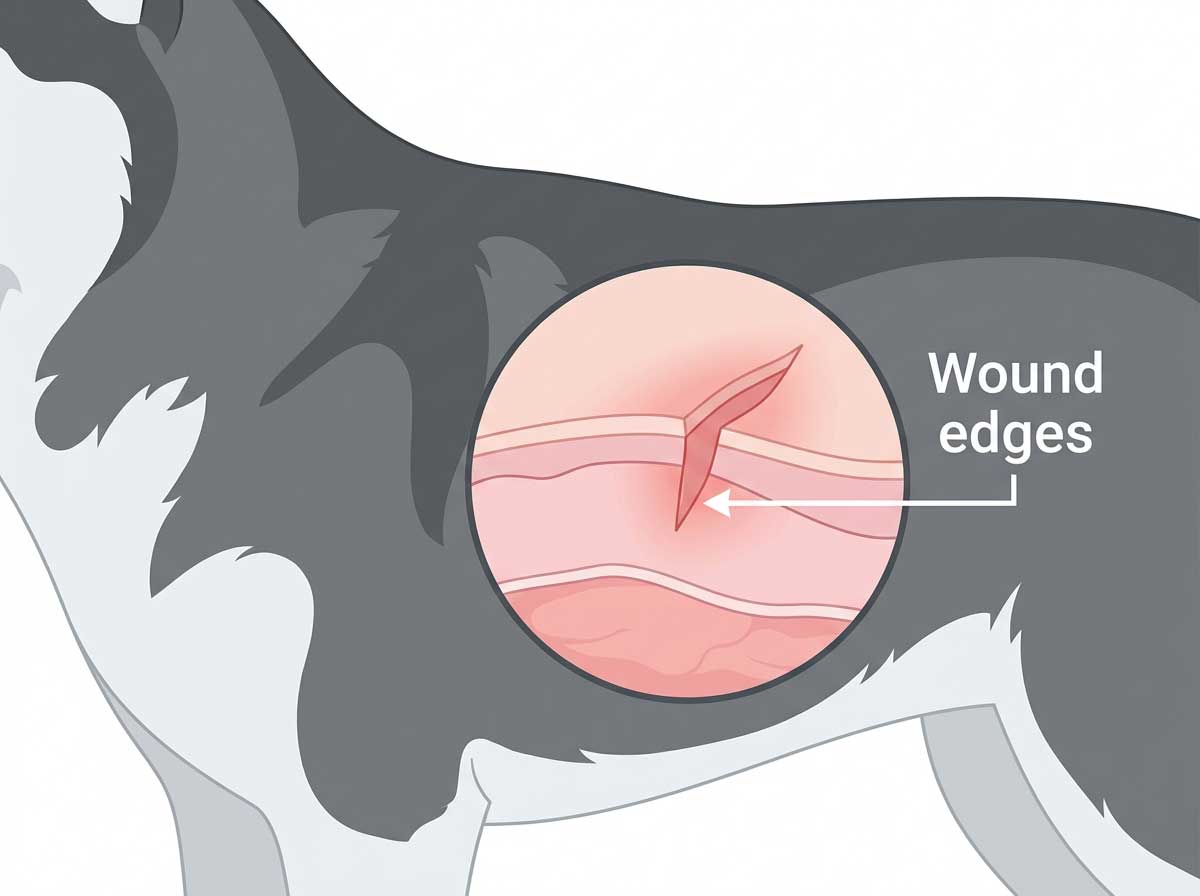
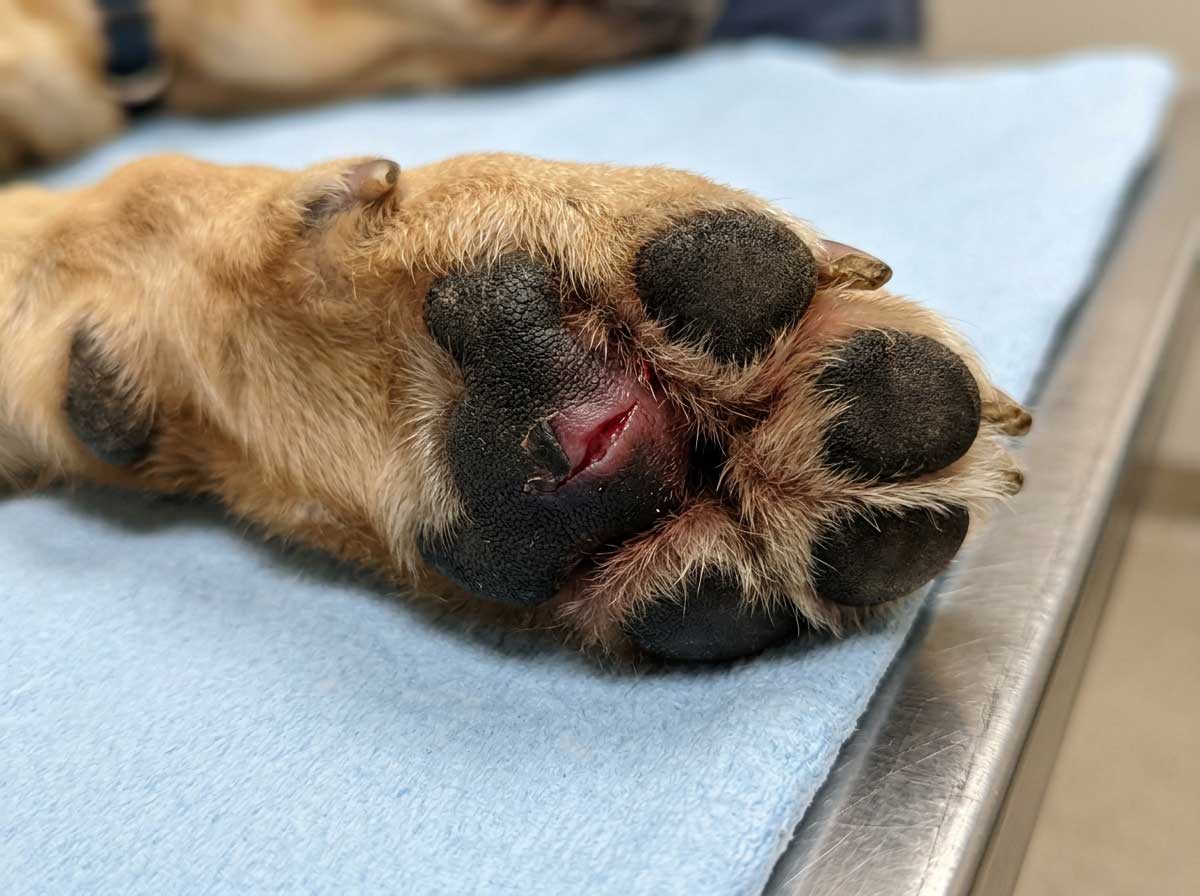
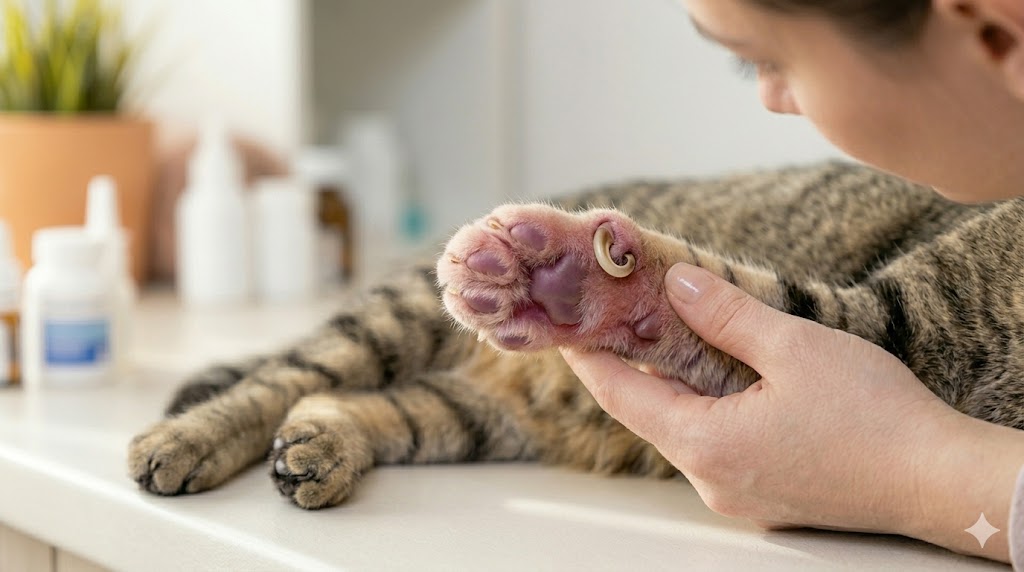
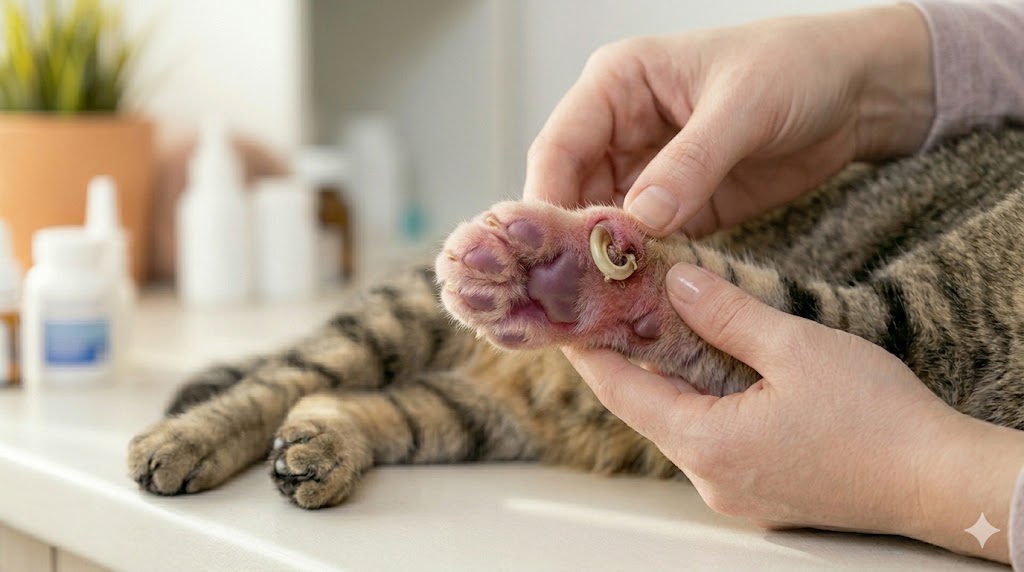
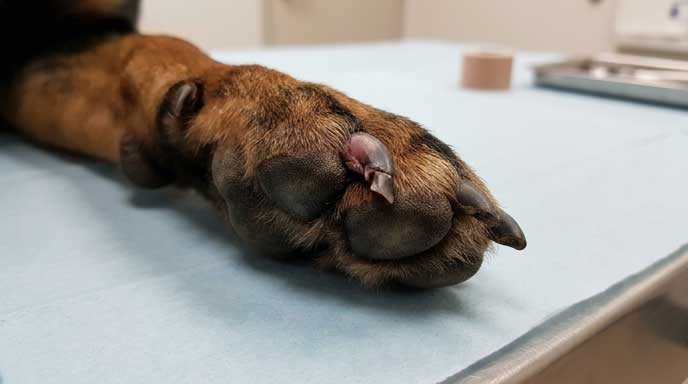
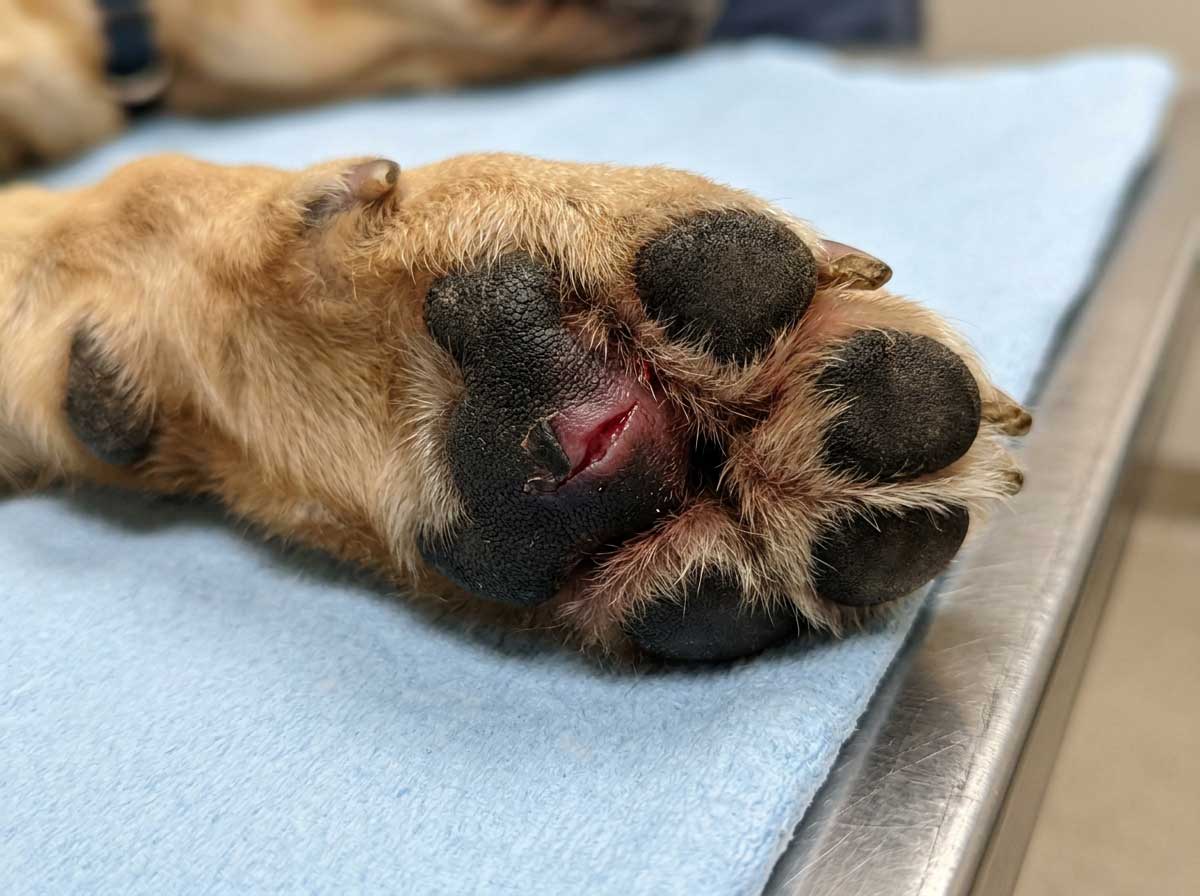
- ✓**Deep cut or puncture wound**: blood flow + visible depth (you can see beyond surface skin), cat reluctant to put weight on the paw, possible visible foreign object (glass / thorn / splinter). **Action**: do not try to extract anything — apply pressure to slow the bleeding and go to a vet today.
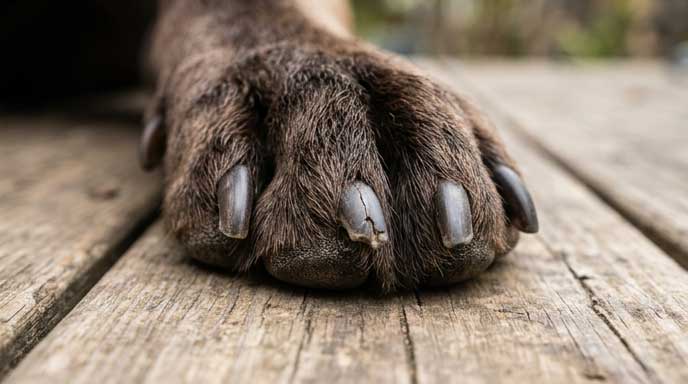
- ✓**Hidden injury — only limping visible**: no blood, no visible cut, but cat is limping or holding the paw up. Often a sprain, a hidden puncture under the fur (especially between toes), or an early bite wound that will abscess in 48 hours. **Action**: inspect between toes carefully (use light), check all 5 nails for damage, look for any swelling. If you find nothing visible and the limping continues past 24 hours → vet visit.
The 60-Second First Step: Stop the Bleeding
Bleeding from a paw pad looks scarier than it usually is — pad tissue is rich in small blood vessels so even a shallow cut bleeds more than skin elsewhere. The first action is always the same: gentle, sustained pressure with a clean cloth or gauze for 5 full minutes by a clock. Do not lift the cloth to peek before 5 minutes — every peek breaks the early clot and the bleeding restarts. If after 5 minutes the cloth is soaked and bleeding continues, apply a second clean cloth on top of the first (do not pull the first one off) and reapply pressure for another 5 minutes. Bleeding that does not slow after 10 minutes of pressure is a vet emergency — pack the paw and go.
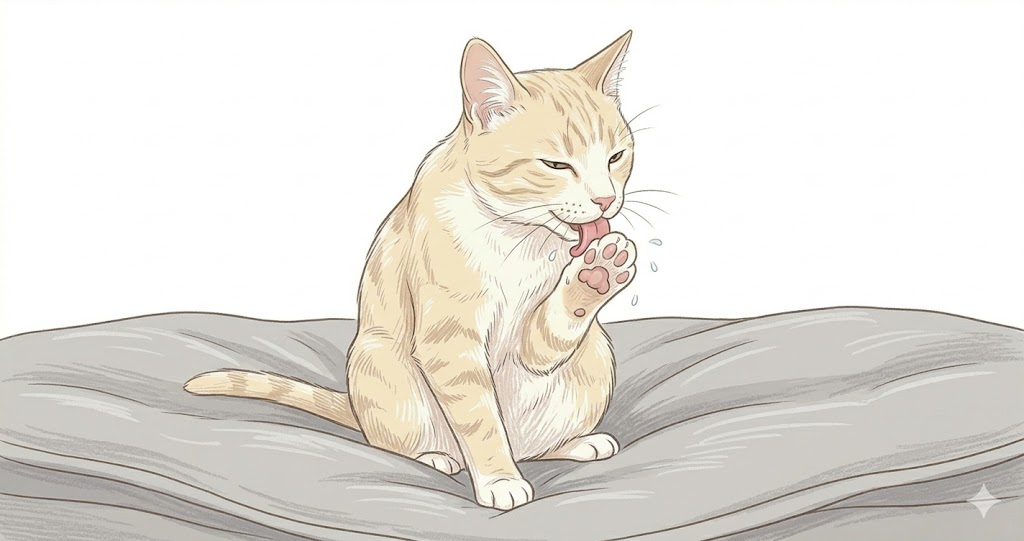
According to the ASPCA, small paw cuts that stop bleeding within 5-10 minutes of pressure usually do not need a vet for the cut itself — but they do need clean follow-up care to prevent the cut from becoming an entry point for bacteria. Cats lick paws compulsively and licking a cut moves bacteria from the mouth into the wound (see our cat licking paw guide for the bigger picture on cat paw licking).
Cat Paw Injury Symptoms Beyond the Visible Cut
Cat paw injury symptoms show up on a spectrum from "barely noticed" to "obvious distress". Track these signals for 24-48 hours after any paw injury:
- ✓**Limping pattern**: limping that gets worse over the day, or limping that returns after rest, signals a deeper issue than a simple surface cut.
- ✓**Holding the paw up**: a cat that refuses to put any weight on the paw at all is reporting significant pain — vet visit today.
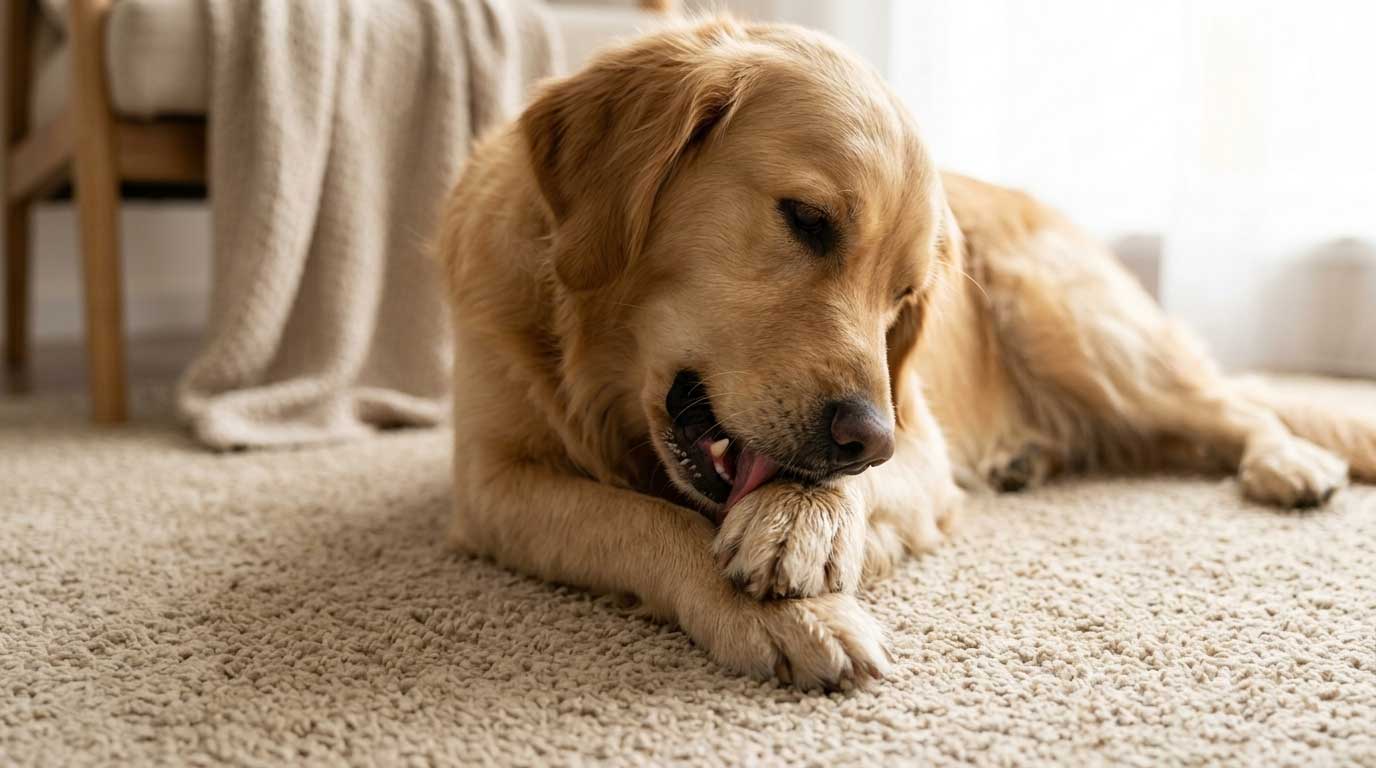
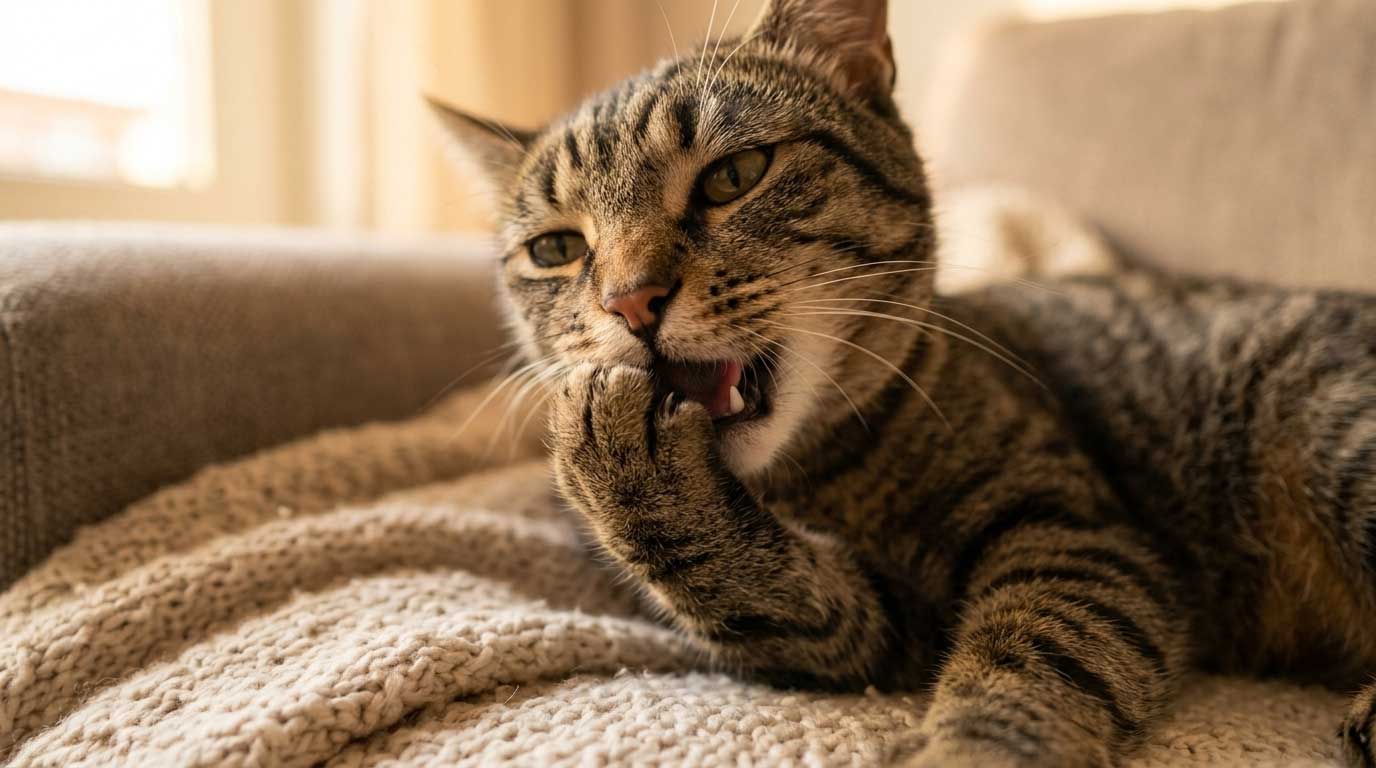
- ✓**Persistent licking**: licking the injured paw constantly is normal in the first hour. Licking that continues past day 2 means the cat finds something still bothering them — see our [why do cats lick their paws guide](/blog/why-do-cats-lick-their-paws) for what licking patterns mean.
- ✓**Visible swelling**: any swelling that develops 12-24 hours after the injury is a strong signal of either bacterial infection or hidden abscess from a bite. See the swollen-paw section below.
- ✓**Behavior shift**: hiding, refusing food, low energy — cats hide pain by default, so a behavior shift signals significant discomfort.
When Limping Means Sprain vs Something Deeper
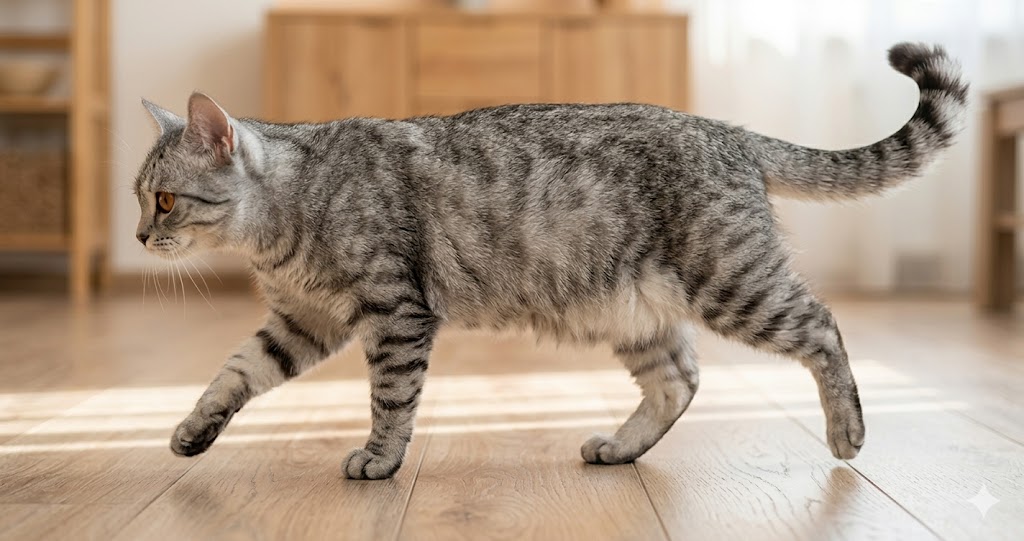
Cat paw injury limping is the most common search owners type when their cat starts walking on three legs or favoring one paw — and the limping pattern tells you more than any other single visual signal. My cat is limping but still jumping and running is one of the most common owner reports — and a classic sign that the injury is mild. Cats with severe paw injuries do not jump or run; they hold the paw up and walk on three legs. If your cat is limping but still doing normal activity (jumping to a counter, running short distances, playing) the injury is likely a mild sprain, bruise, or surface scratch.
How do you tell if a cat's paw is sprained or broken: sprained cats put intermittent weight on the paw, may limp briefly after rest, and the limp gets better with each day. Broken-paw cats hold the paw completely up, do not bear weight at all, often hide or refuse food, and the limp does not improve over 24 hours. The visual distinction is "occasional limp + still active" (sprain) vs "no weight at all + behavior change" (possible fracture). According to the Cornell Feline Health Center, any persistent non-weight-bearing lameness deserves a vet exam to rule out fracture, dislocation, or deep tissue injury.
Cat Paw Injury Between Toes — Easy to Miss
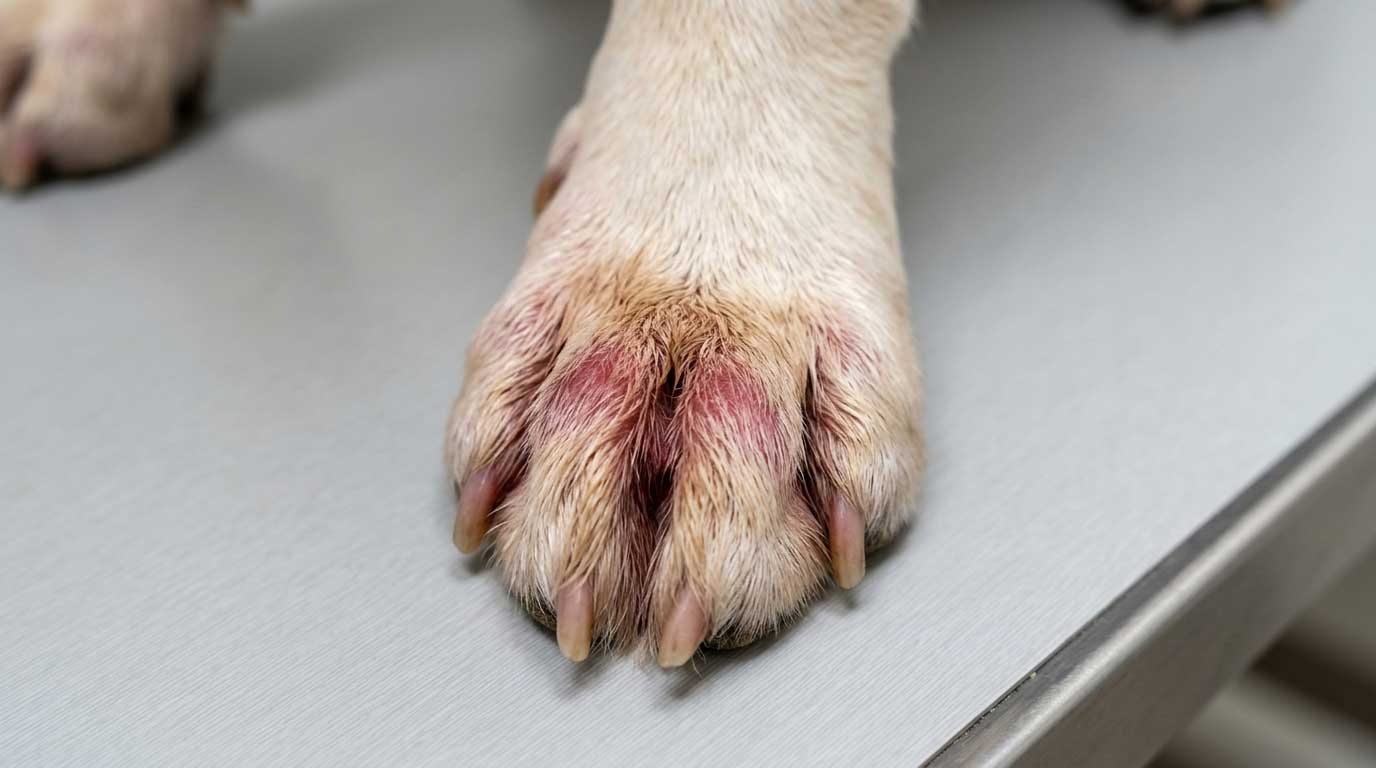
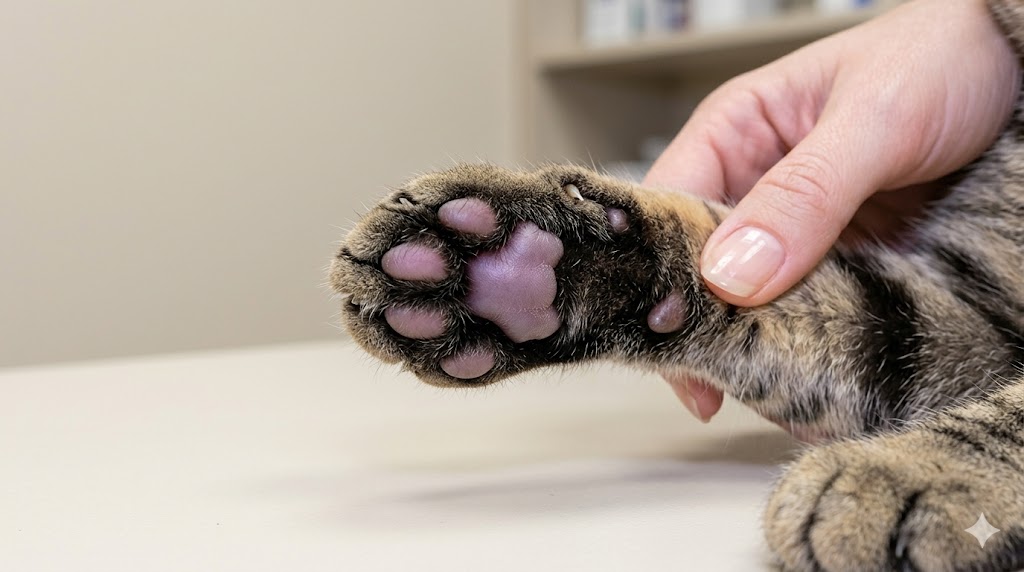
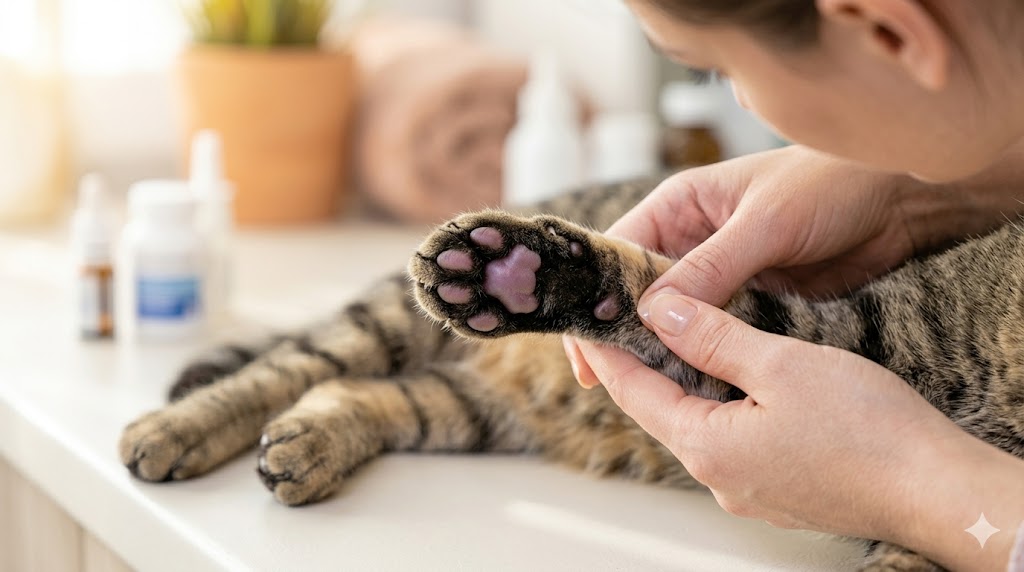
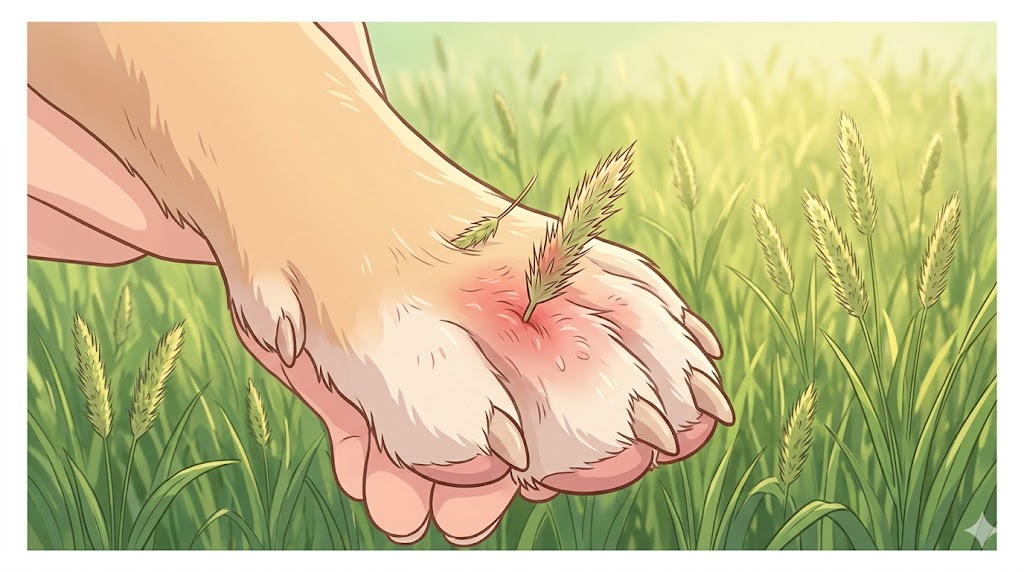
Cat paw injury between toes is one of the most-missed cat paw issues because the fur between toes hides small cuts, foreign objects, or developing inflammation. If your cat is licking one paw obsessively but you cannot see any visible injury on the pad, always check between the toes — gently spread the toes apart in good light and look for:
- ✓Small splinter, thorn, or grit lodged in the skin folds
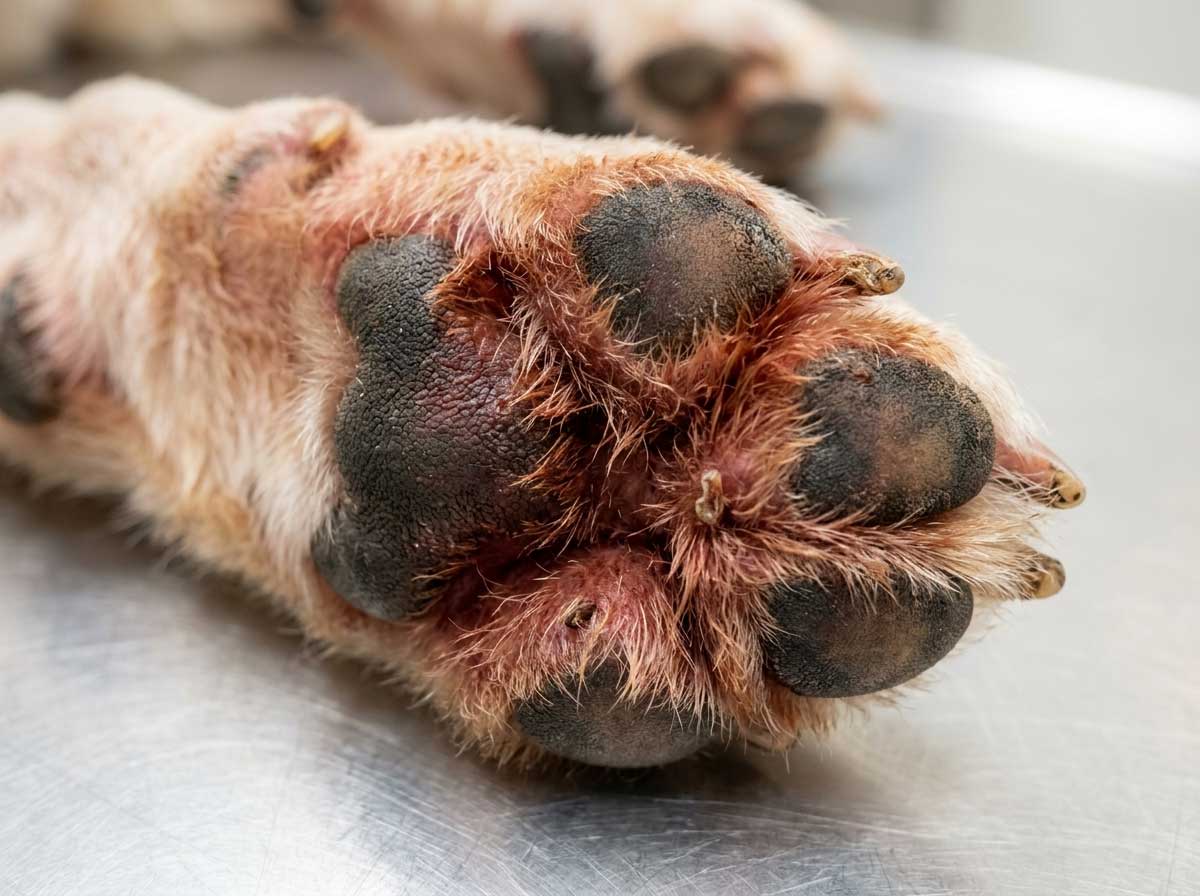
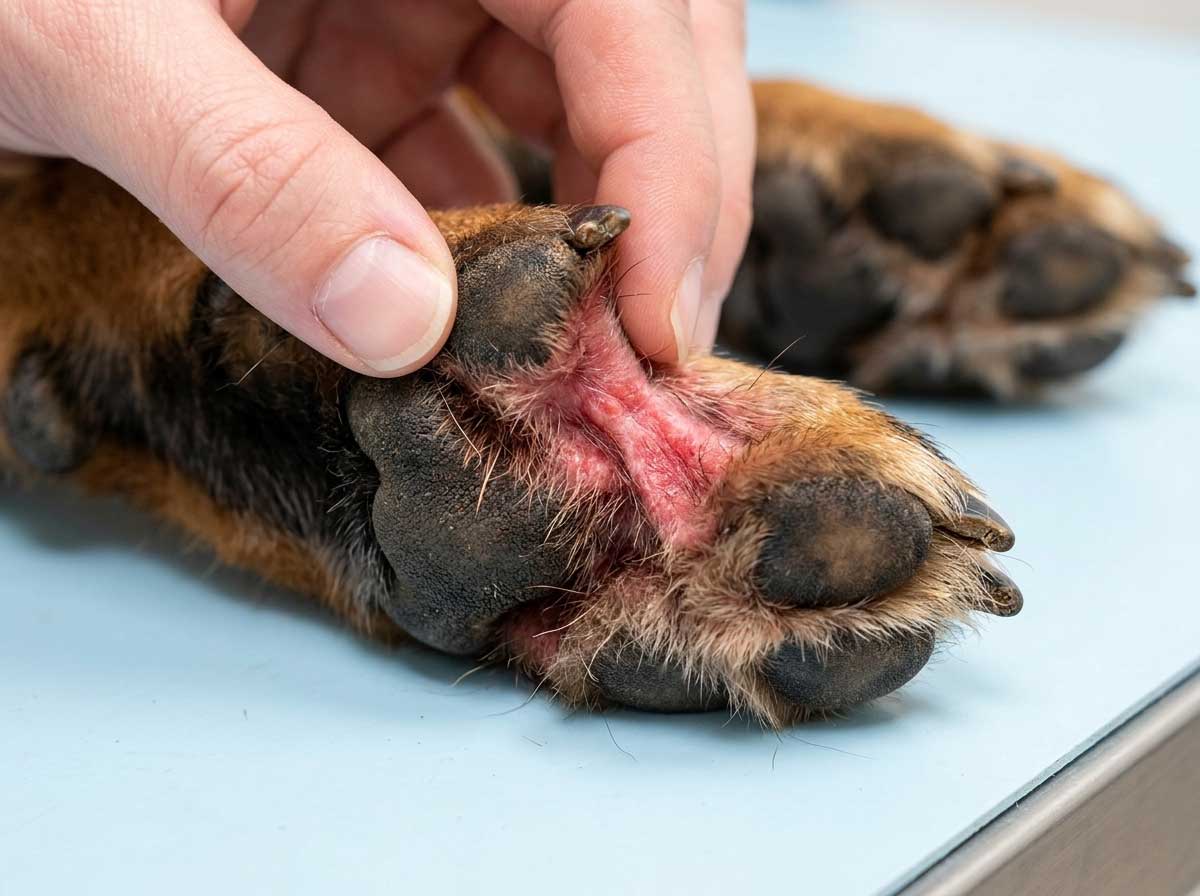
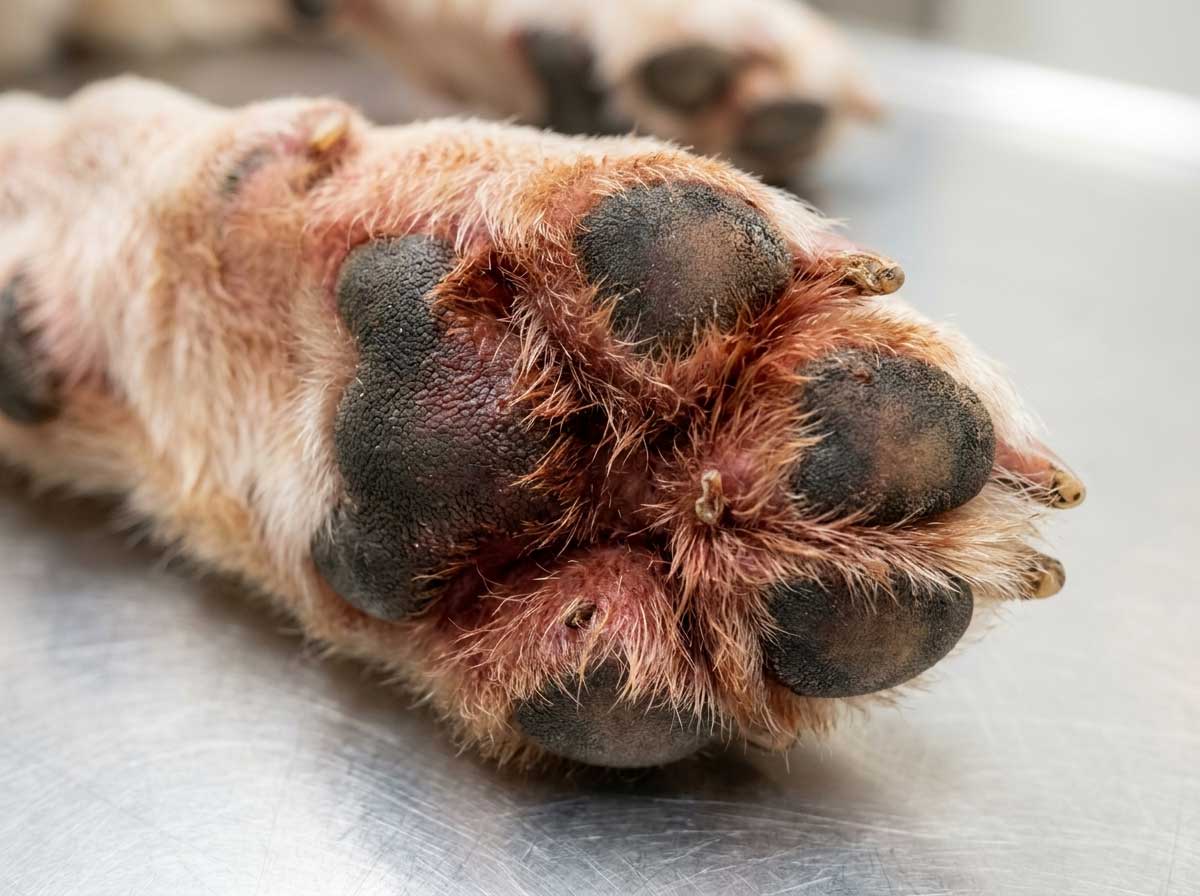
- ✓Pink or red inflammation in the toe webs (early infection sign)
- ✓Brown or rust-colored saliva staining (chronic licking signal)
- ✓Small cut or scratch hidden by fur
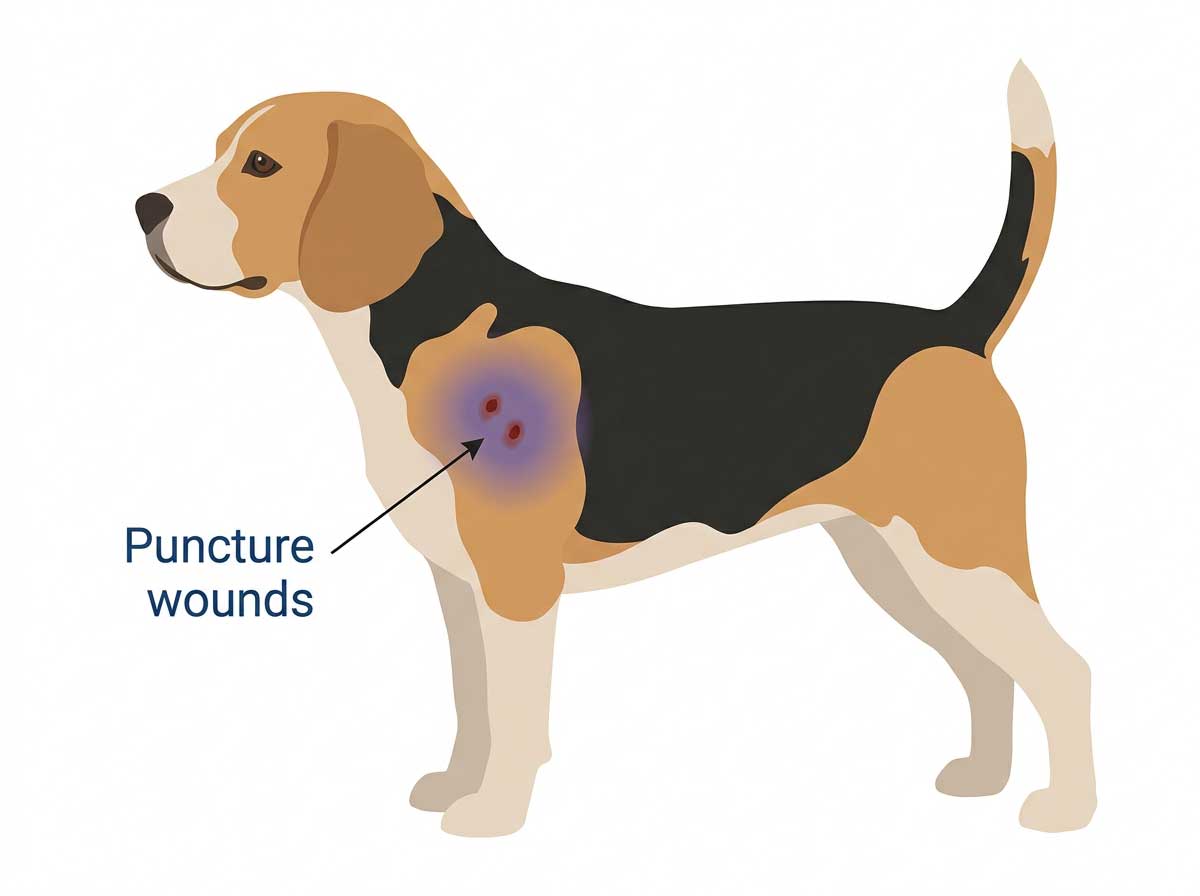
- ✓Tiny puncture wound (often from a fight or a sharp object) — these are the highest-risk injuries because they look minor but can abscess
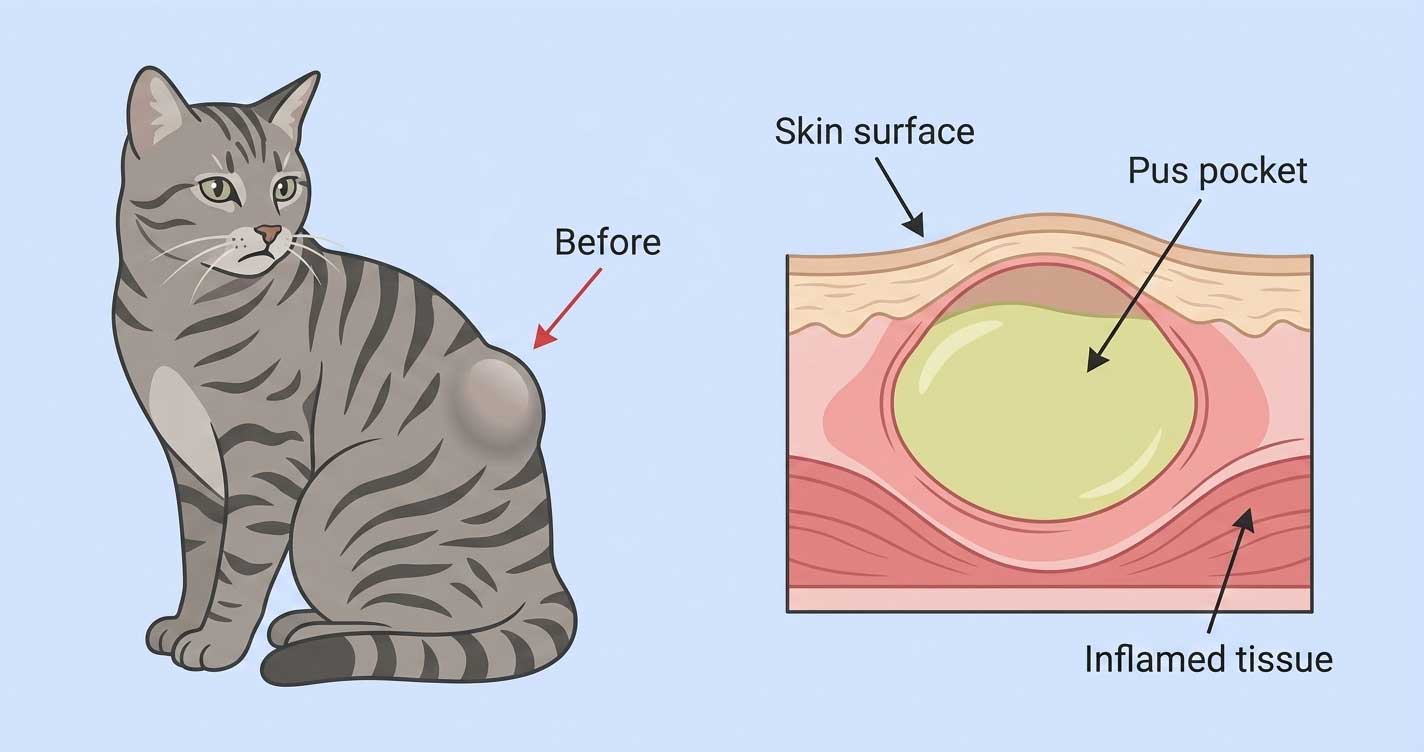
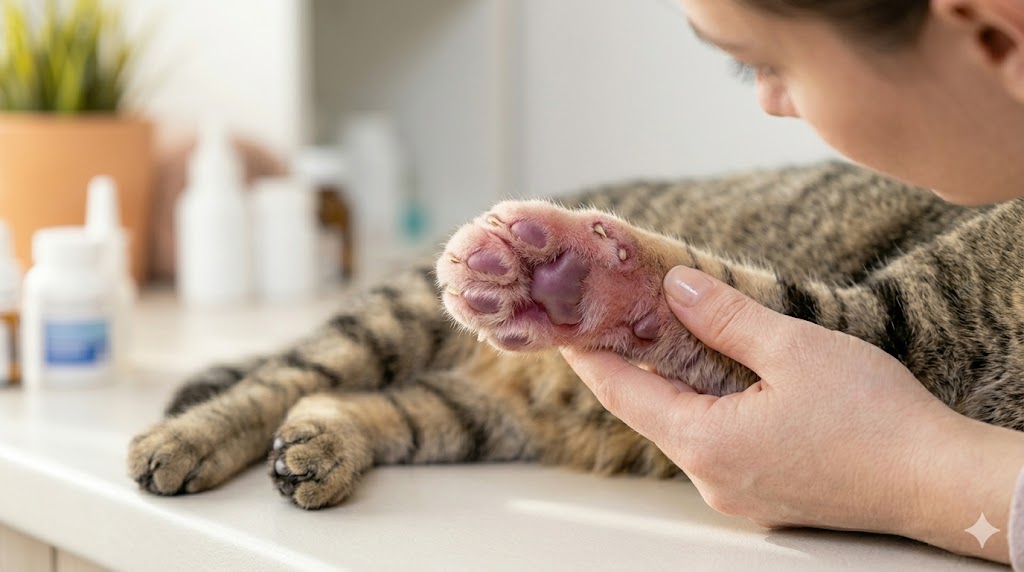
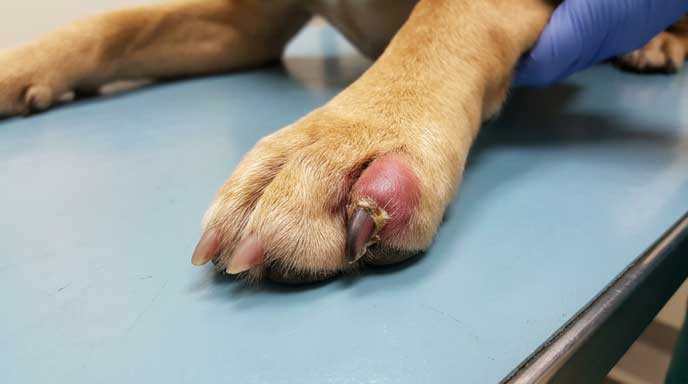
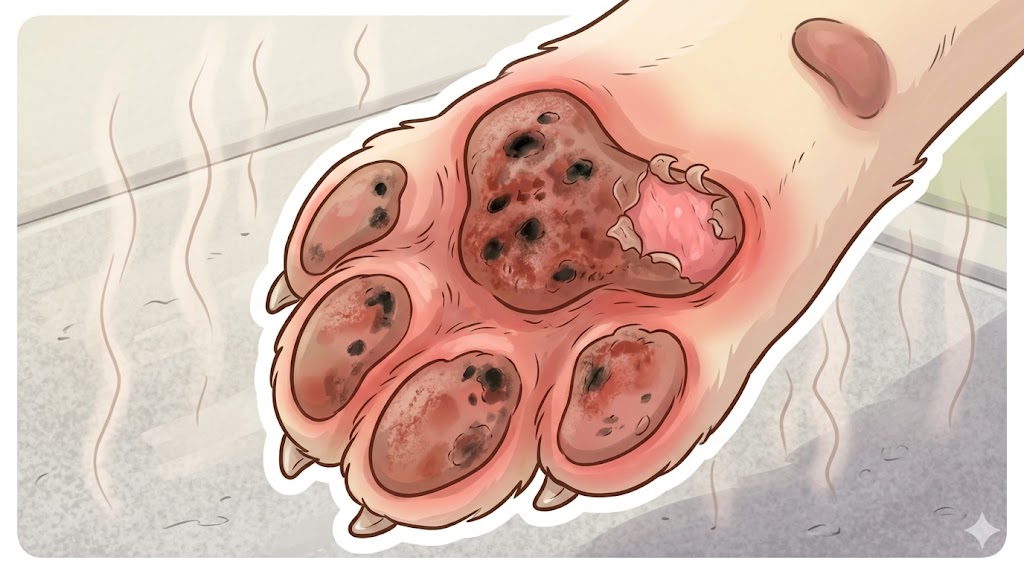
Between-toes injuries are especially concerning when paired with cat paw injury swollen signs — swelling 12-48 hours after a between-toes injury is the classic signature of an abscess from a hidden puncture wound. Cats close surface skin fast, so the puncture seals over the contaminated wound and bacteria multiply underneath. Within 48 hours the area swells noticeably, becomes hot to touch, and the cat develops a fever feeling. This is the most common cat-specific paw injury pattern that needs vet draining.
Cat paw is swollen, hot, or showing rust-colored licking stains — possibly an abscess from a hidden puncture? Upload a paw photo and our AI flags bacterial infection, abscess, and healthy patterns in seconds.
Check Cat Paw Now →Cat Paw Injury Swollen — Hidden Abscess Risk
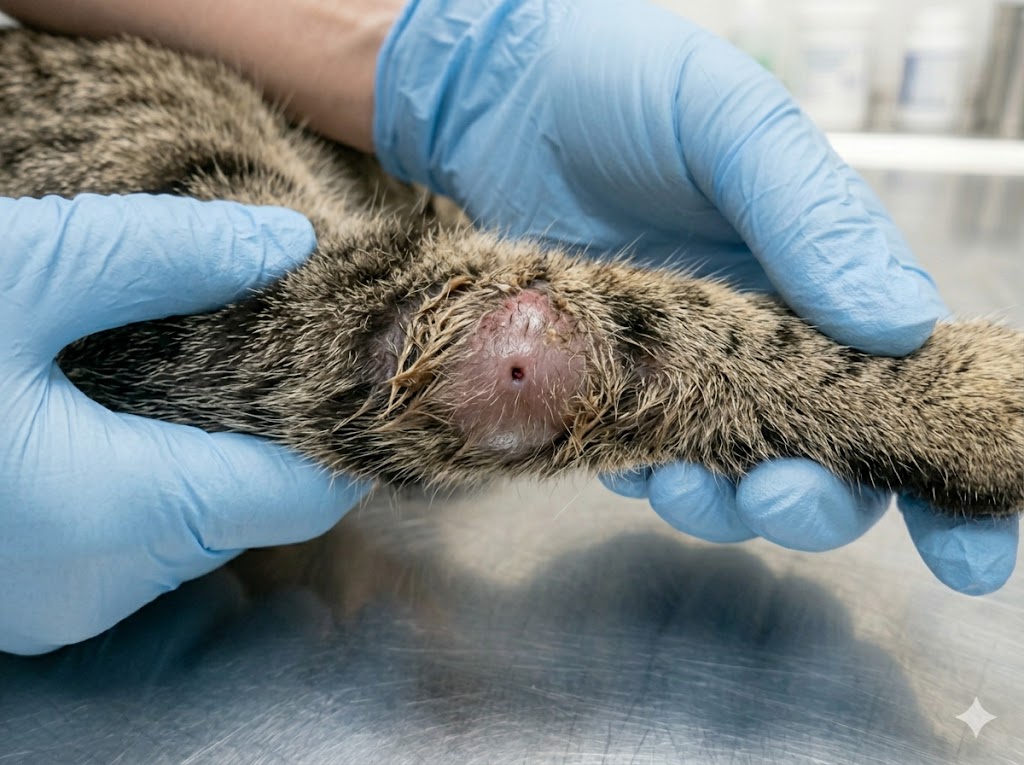
Cats that go outdoors and get into territorial fights are especially likely to develop paw abscesses from bite wounds. The pattern is highly recognizable: a small puncture appears on the paw (often between toes or on the side of the foot), looks trivial at first, the cat seems fine for 12-36 hours, then the entire paw swells, becomes hot to touch, the cat refuses to bear weight, and they often develop lethargy or hide. This is vet-required care — abscesses need a vet draining procedure and vet-managed follow-up care. It will not resolve on its own and gets significantly worse over days if ignored.
Sudden one-paw swelling without a known injury is also a possible signal of feline pillow foot (plasma cell pododermatitis), an autoimmune condition that requires vet workup. The visual distinction: abscess = hot + painful + cat clearly distressed, pillow foot = soft squishy swelling + cat may seem comfortable. Both need vet evaluation but the urgency differs.
Severe Swelling and When to Skip Home Steps
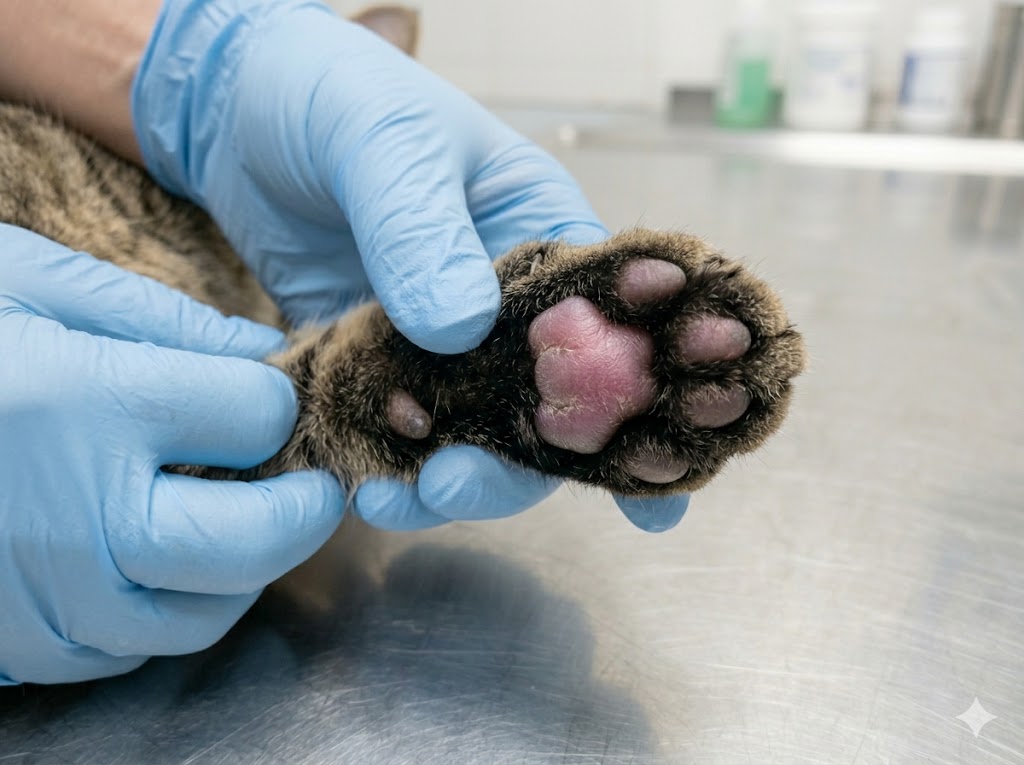
Any of these signs mean skip home steps and go to a vet immediately:
- ✓Bleeding that does not slow after 10 minutes of pressure
- ✓Visible bone, tendon, or foreign object embedded in the wound
- ✓Whole paw swelling (not just a single toe)
- ✓Cat refuses any weight on the paw for more than 12 hours
- ✓Fever feeling (cat's ears feel hot, body warm to touch)
- ✓Cat becomes lethargic, hides, or stops eating after the injury
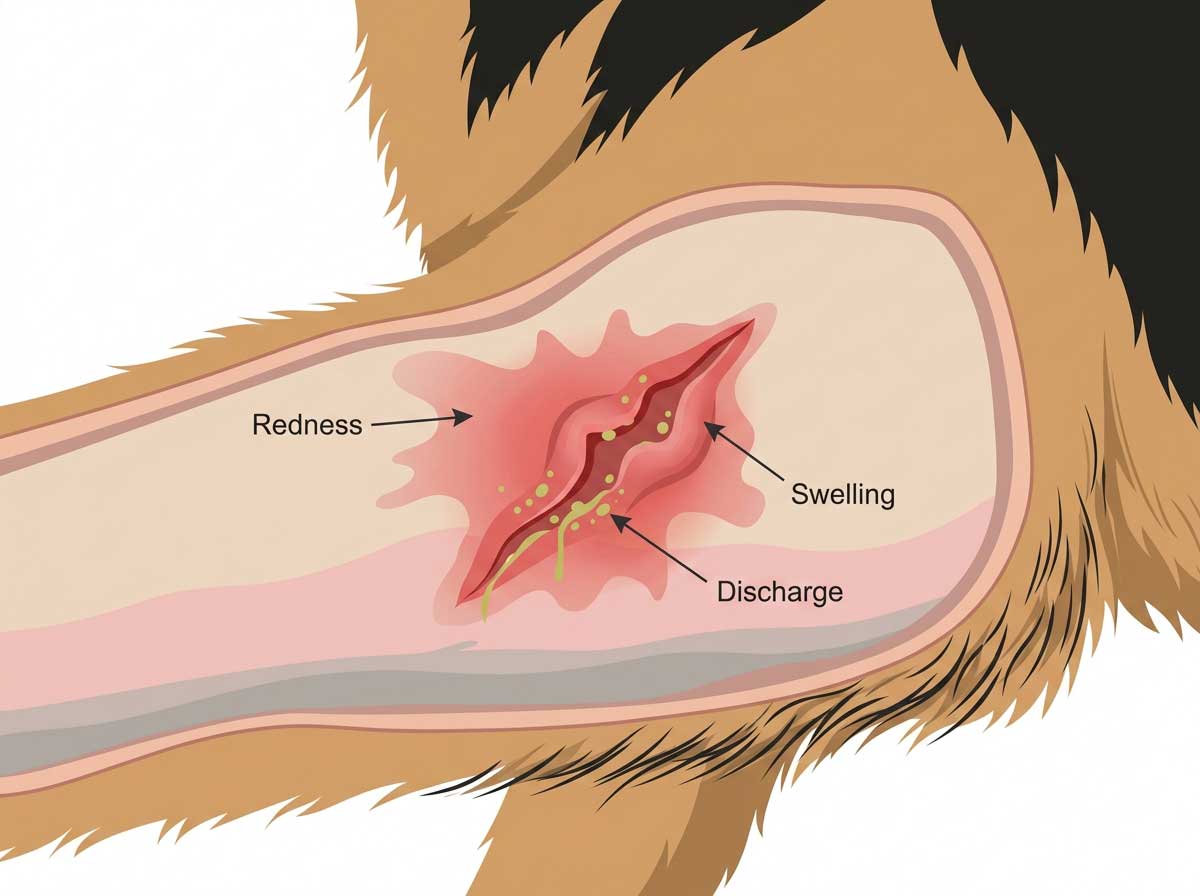
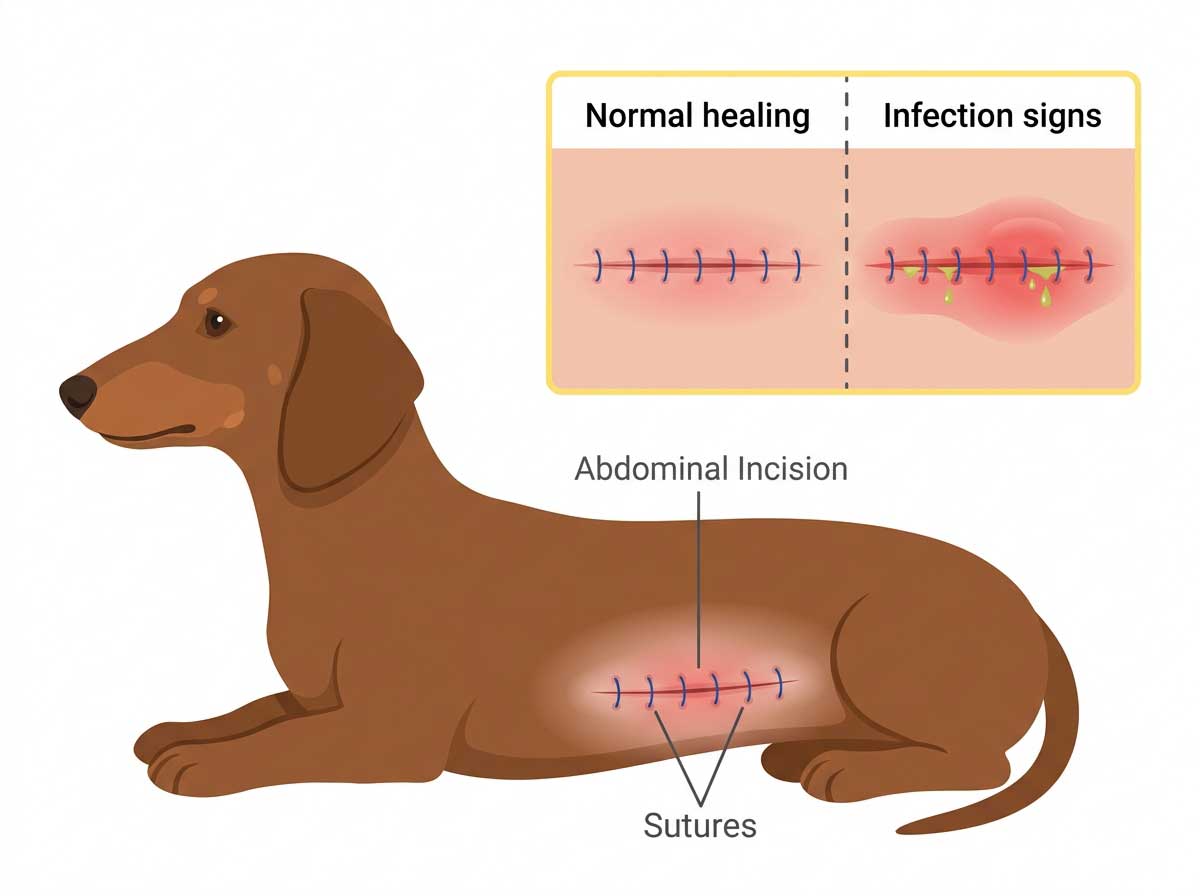
- ✓Pus, foul smell, or yellow-green discharge from any visible cut
- ✓Injury caused by a fight with another animal (bite-wound abscess risk is high)
Clean Care After the Bleeding Stops (Home Steps)
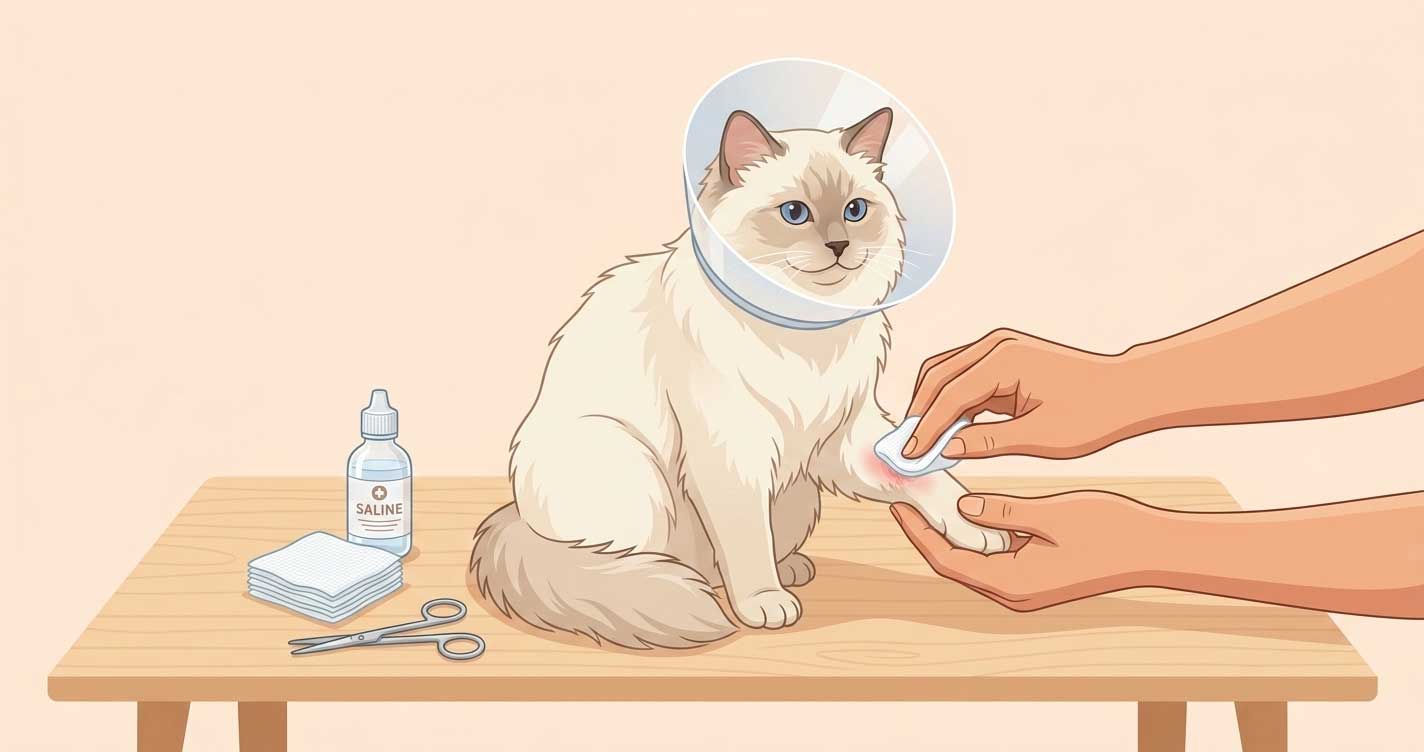
Once bleeding has stopped and the cut looks minor (small surface scratch, no embedded object, cat walking comfortably), the next 5 days are about keeping it clean and watching for signs of escalation. The principle is "gentle and dry" — not aggressive scrubbing:
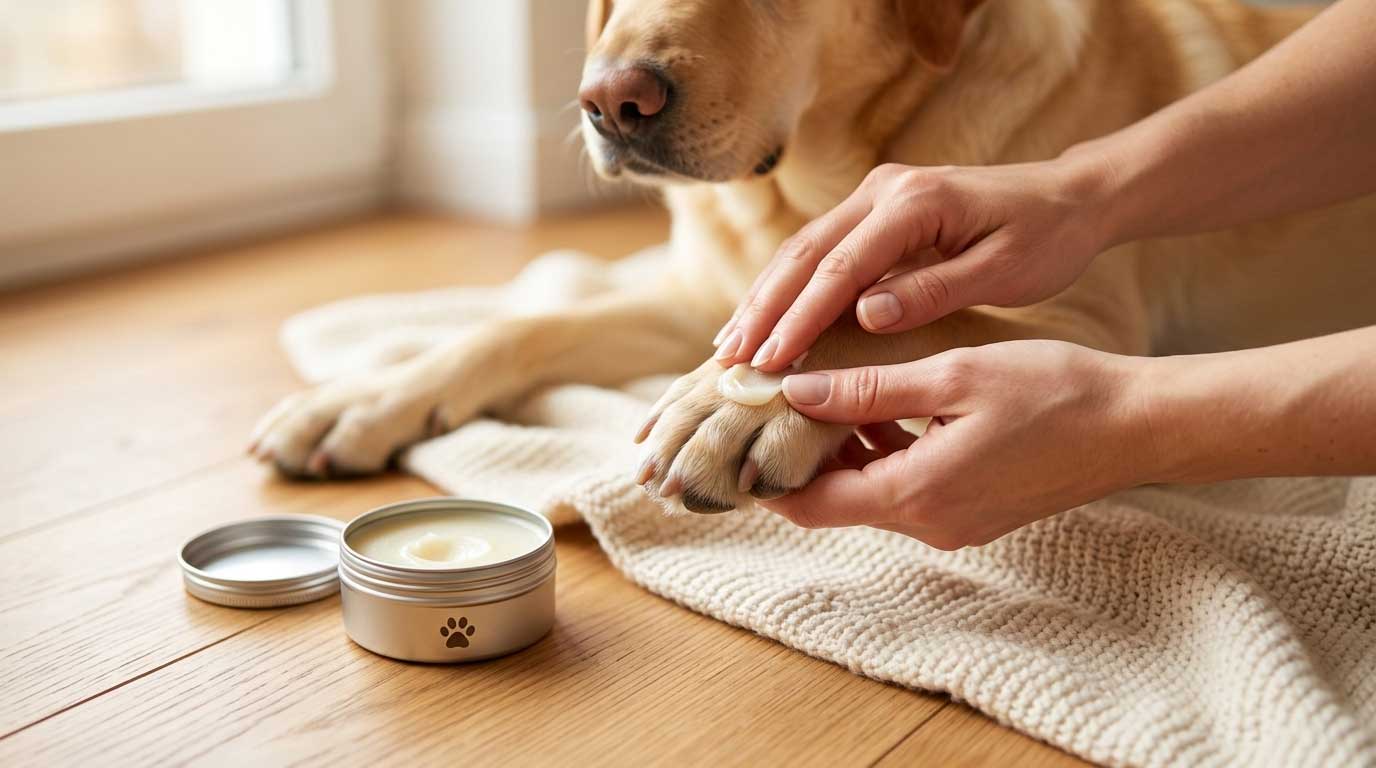
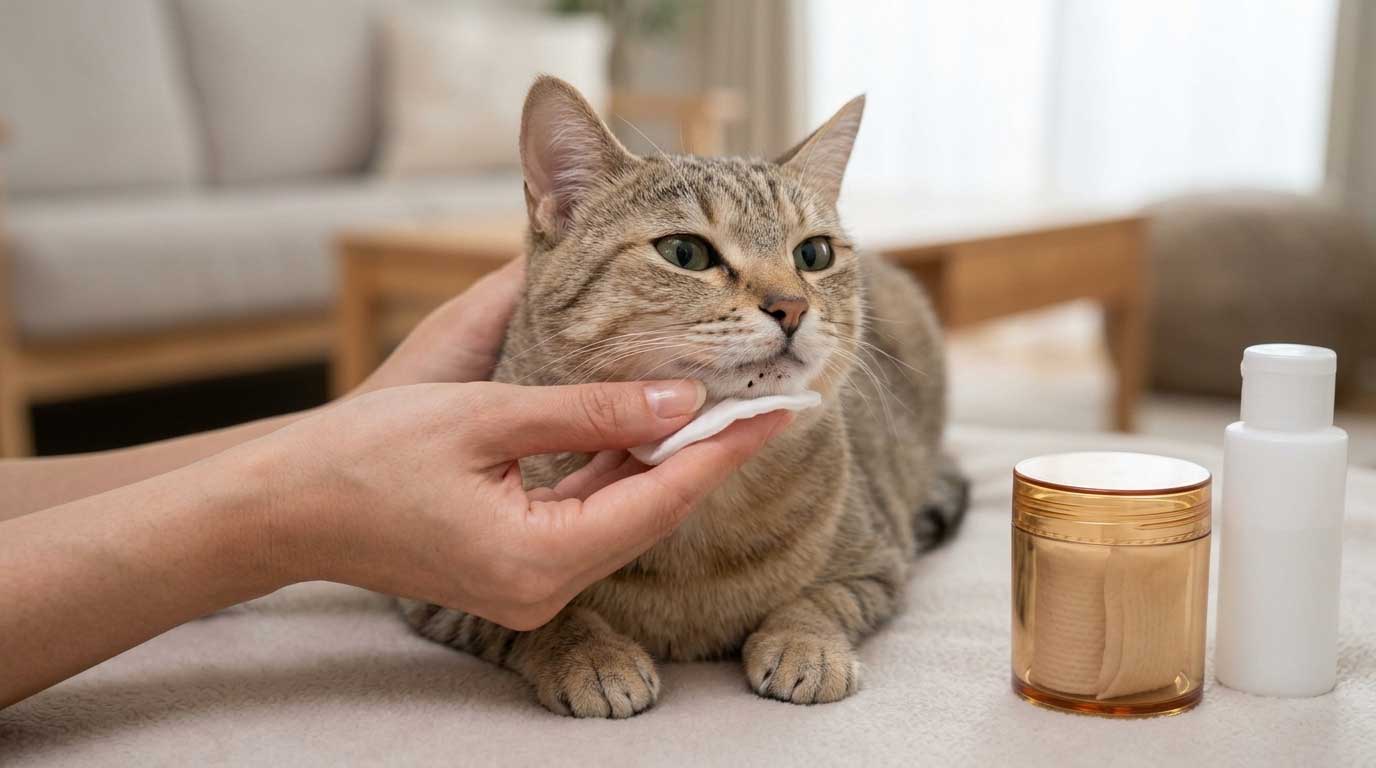
- ✓Rinse the paw gently with **warm water only** once a day (no soap, no hydrogen peroxide, no alcohol — all damage tissue recovery and cats lick them off).
- ✓Pat dry with a clean soft cloth — do not rub.
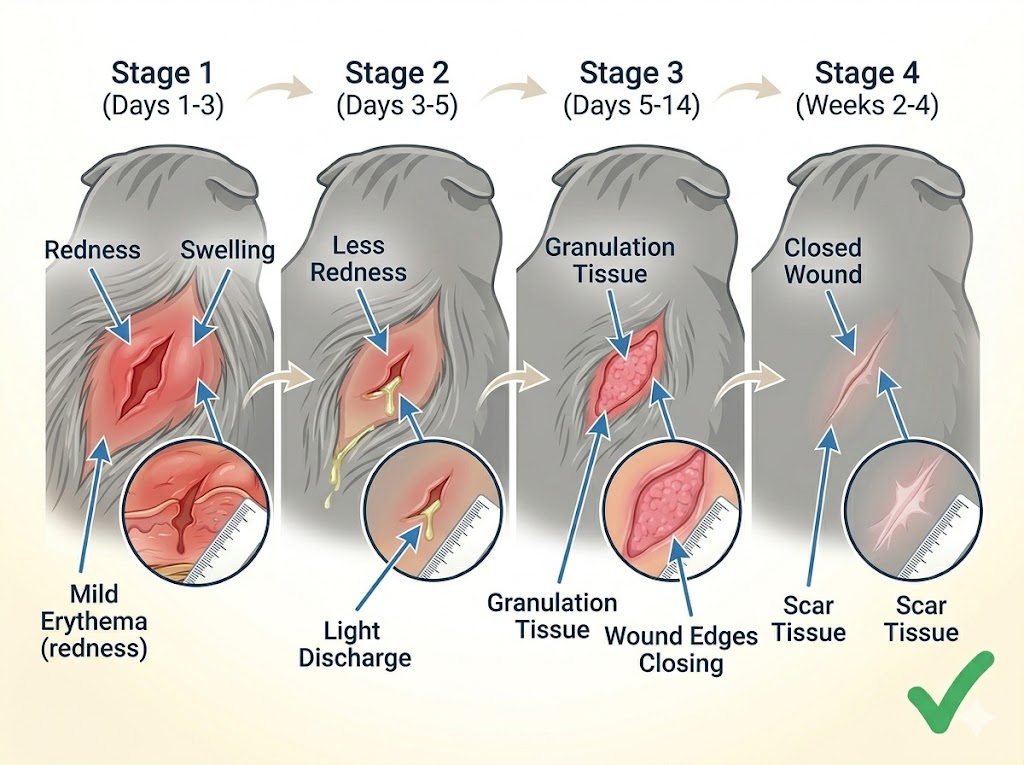
- ✓Check the cut twice a day in good light for redness, swelling, or rust-colored staining (the early infection markers).
- ✓Discourage licking with a soft e-collar (cone) for 2-3 days if the cat licks constantly — vet-grade soft cones are far better tolerated than hard plastic ones.
- ✓Keep the cat indoors for 5-7 days to prevent re-injury and contamination from outdoor surfaces.
- ✓Avoid applying human medical products or essential oils to the cut — cats lick them off and many human products are toxic to cats.
Cat Paw Injuries vs Dog Paw Injuries — Key Differences
Cat paw injuries differ from dog paw injuries in three meaningful ways that change how you read them:
- ✓**Cat bite wounds matter more**: cat bites carry oral bacteria (Pasteurella) deep into puncture wounds and abscess in 48-72 hours almost reliably. Cat bite + paw = abscess risk far higher than equivalent dog bite. Dog paw bites usually need cleaning; cat paw bites usually need vet-managed care.
- ✓**Cats hide pain better**: cats evolved as both predator and prey, so they hide weakness instinctively. A cat acting "fine" with a paw injury is often masking real pain. Behavior shifts (hiding, refusing food) are more reliable distress signals than vocal complaints.
- ✓**Cat paw pads are smaller and more sensitive**: a 5mm cut on a small cat pad covers a much higher percentage of the foot than the same 5mm cut on a dog pad — proportionally more painful and slower to close. Cats also walk on the entire pad surface (not just the central pad) so injuries between toes are weight-bearing.
What About Cat Bleeding From Paw — Is This Different?
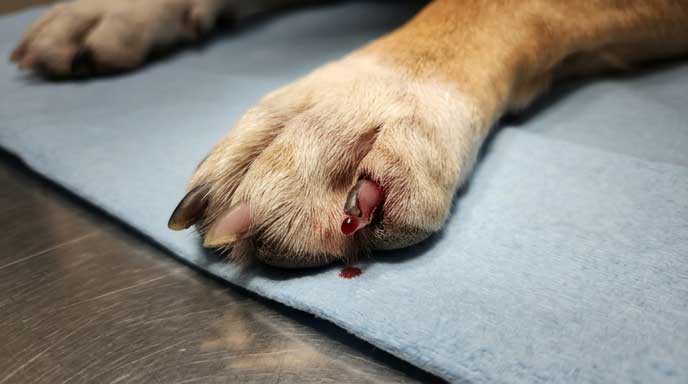
Cat bleeding from paw is the search owners type when they actively see blood on the paw or trailing on the floor. The first-step actions are the same as any cat paw cut (apply pressure for 5 full minutes by a clock), but cats that are actively dripping blood on the floor are usually higher-severity. Possible causes: torn nail (very common — the nail breaks at the quick and bleeds steadily), deep pad cut, or active arterial bleeding from a deep cut. Torn nail bleeding usually responds to styptic powder (also called Kwik Stop, available at pet stores) which clots the quick in seconds. If you do not have styptic powder, cornstarch or plain flour pressed gently onto the quick also slows clotting.
Related Cat Paw Behaviors That Show Up Together
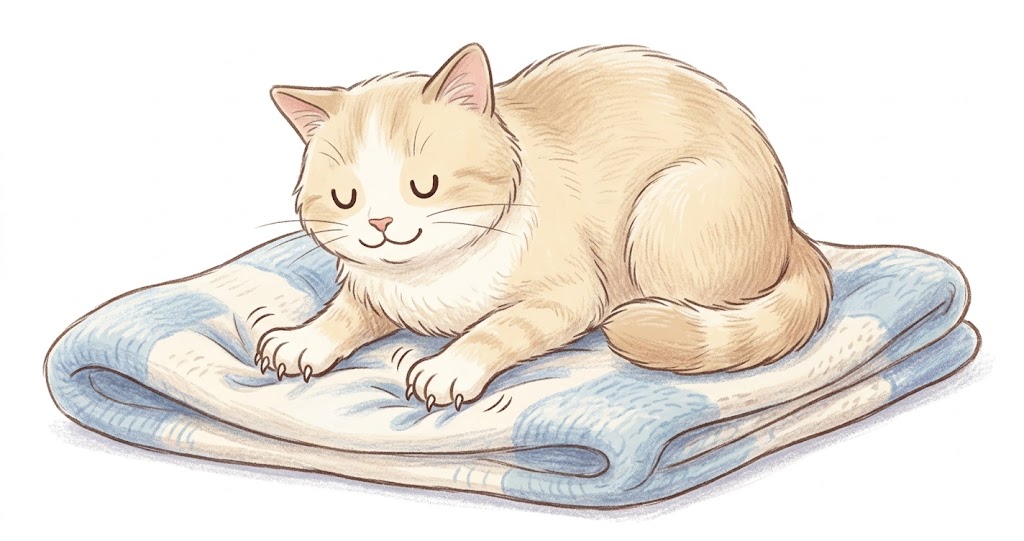
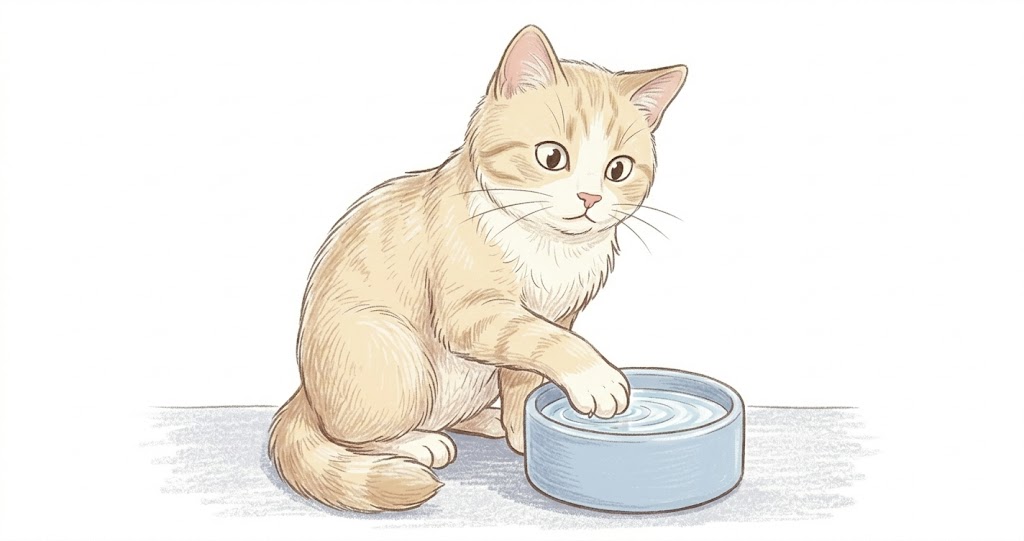
Cat paw injury sits in the broader cat-paw topic alongside three related behaviors many owners notice at the same time: why cats lick their paws (which becomes a signal when an injury is hidden), why cats knead with their paws (a comfort behavior unrelated to injury), and why cats put their paws in the water bowl (depth-perception, unrelated to injury but often noticed together). If you notice unusual licking or limping pair with normal kneading/water-pawing, the licking + limping is likely the actual signal — the comfort behaviors are background.
The Bottom Line
Most cat paw injuries are minor cuts and scratches that resolve with 5 minutes of pressure to stop bleeding plus 5 days of clean, dry follow-up care. The danger zone is hidden injuries — between-toes punctures, cat-bite wounds — that look minor at first and abscess in 48-72 hours. Watch for swelling, escalating limp, refusing weight on the paw, hot-to-touch feeling, or behavior shift. Cat-bite paw wounds especially should not wait — get a vet visit within 24-48 hours to prevent abscess formation.
If your cat's paw shows redness between toes, swelling, brown rust-colored saliva staining, or any open wound that is not improving, upload a clear photo and our AI compares against bacterial infection, yeast, abscess, and healthy paw patterns in seconds.
Check Cat Paw Now →Frequently Asked Questions
How do you tell if a cat's paw is sprained or broken?
+
What are common cat paw injury symptoms beyond the visible cut?
+
My cat is limping but still jumping and running — is the injury serious?
+
How worried should I be about a cat paw injury between toes?
+
Why is my cat's paw swollen after an injury?
+
Should I take my cat to the vet for every paw cut?
+
Cat paw injury that is not closing as expected?
If your cat's paw shows redness, swelling, rust-colored saliva staining, or visible signs of infection days after a cut, upload a clear photo and our AI compares against bacterial infection, yeast, abscess, and healthy paw patterns in seconds.
Disclaimer: This article is for informational purposes only and is not a substitute for professional veterinary advice. Always consult a licensed veterinarian for diagnosis and treatment of your pet's health conditions.