Ear Mites in Dogs: Symptoms, Causes, Vet Guide [2026]
Ear mites in dogs — early stage symptoms, how dogs get them, mites vs yeast vs bacterial visual differences, zoonotic risk to humans + when to see vet guide.
Published 2026-06-20
Ear Mites in Dogs? Get Instant AI Pattern Check
Upload a close-up photo of your dog's ear — the AI compares against ear mites coffee-ground debris vs yeast greasy brown vs bacterial pus patterns and tells you urgency + when to see a vet.
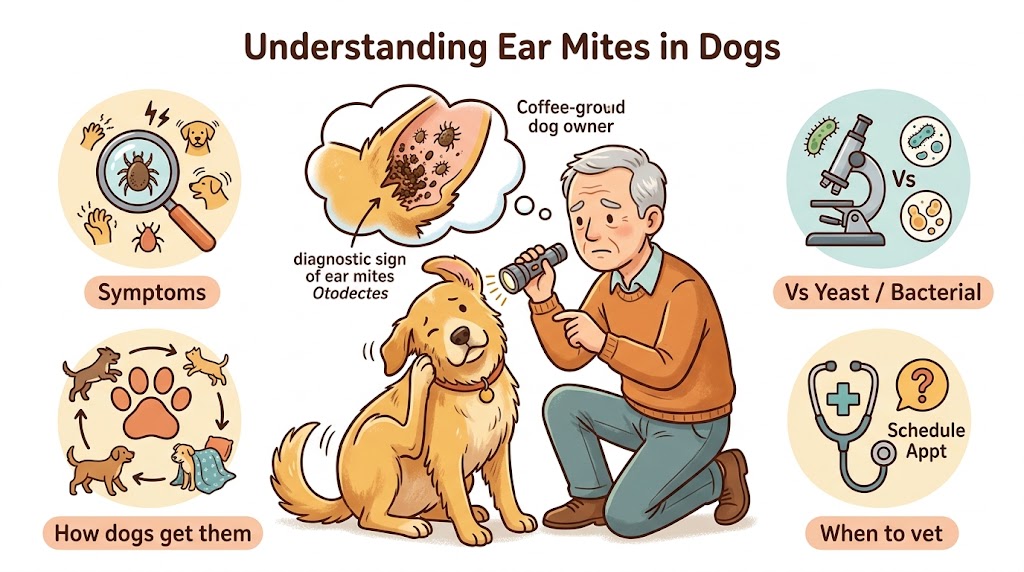
Ear mites in dogs (Otodectes cynotis) are one of the most-searched dog ear health concerns online — and for good reason. Your dog scratches their ear non-stop, shakes their head, and when you peek inside you see dark coffee-ground-like debris that looks alarming. This guide covers the 5 things every dog owner needs to know about ear mites in dogs: the visible symptoms (what to look for), how dogs actually get them (the surprising routes), how to distinguish ear mites from yeast / bacterial / wax problems that look similar, whether humans can catch them (the zoonotic question), and the early vs severe stage signal for when a vet visit is essential.
See dark debris in your dog's ear and want a quick AI pattern check? Upload a close-up photo for instant identification.
Check Dog Ear Pattern →What Ear Mites in Dogs Look Like — Symptoms
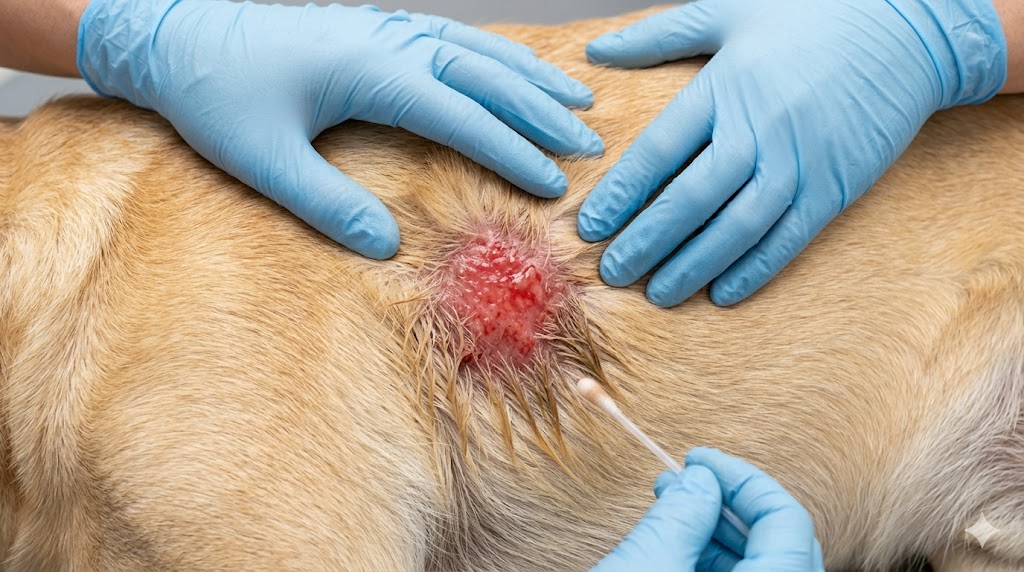
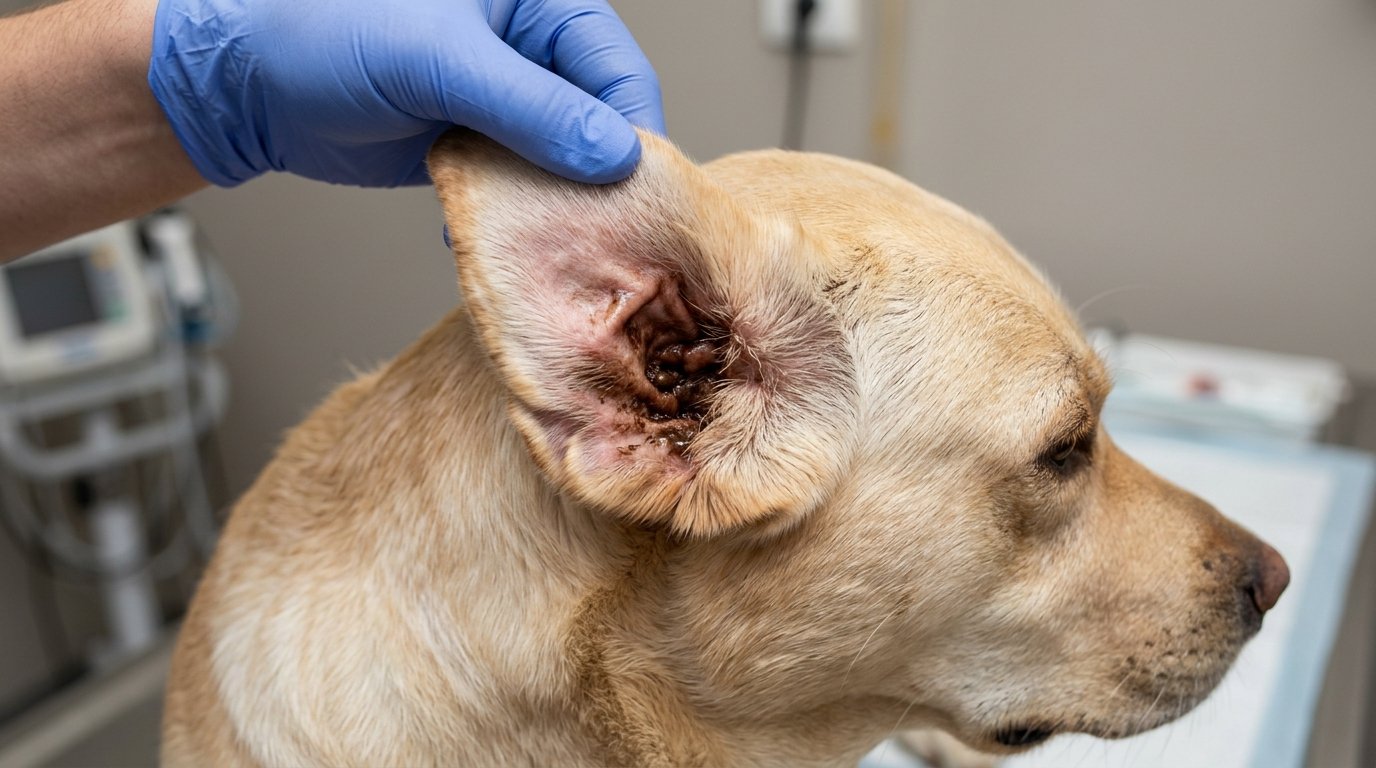
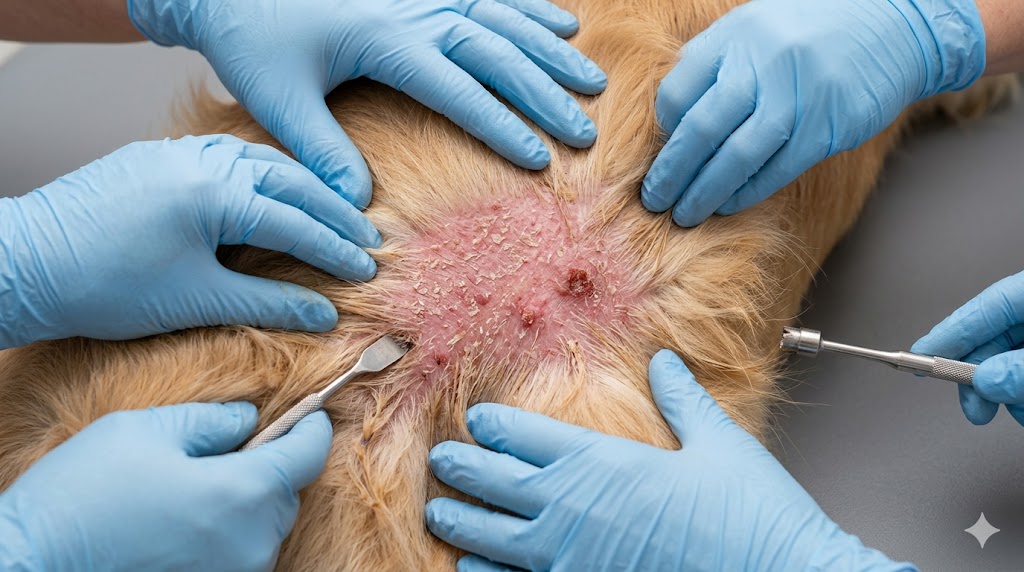
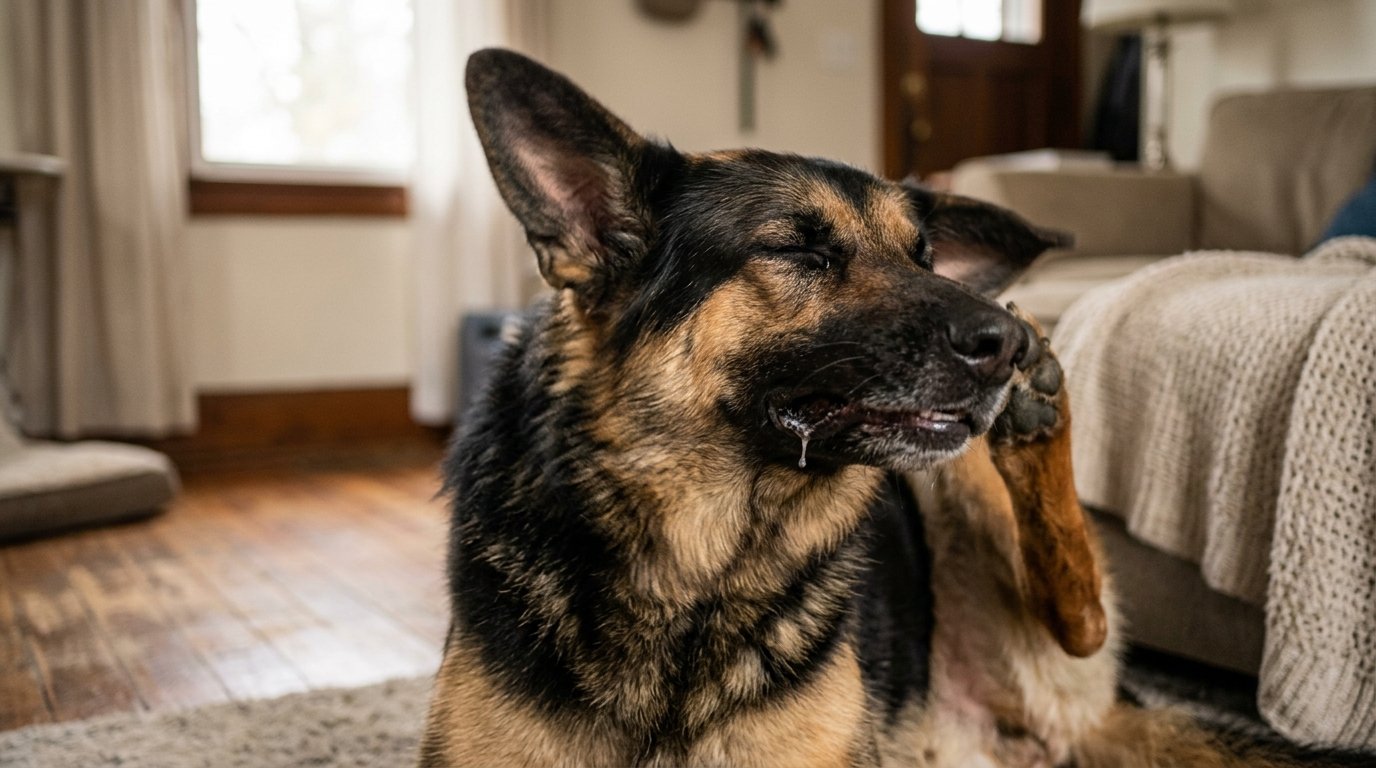
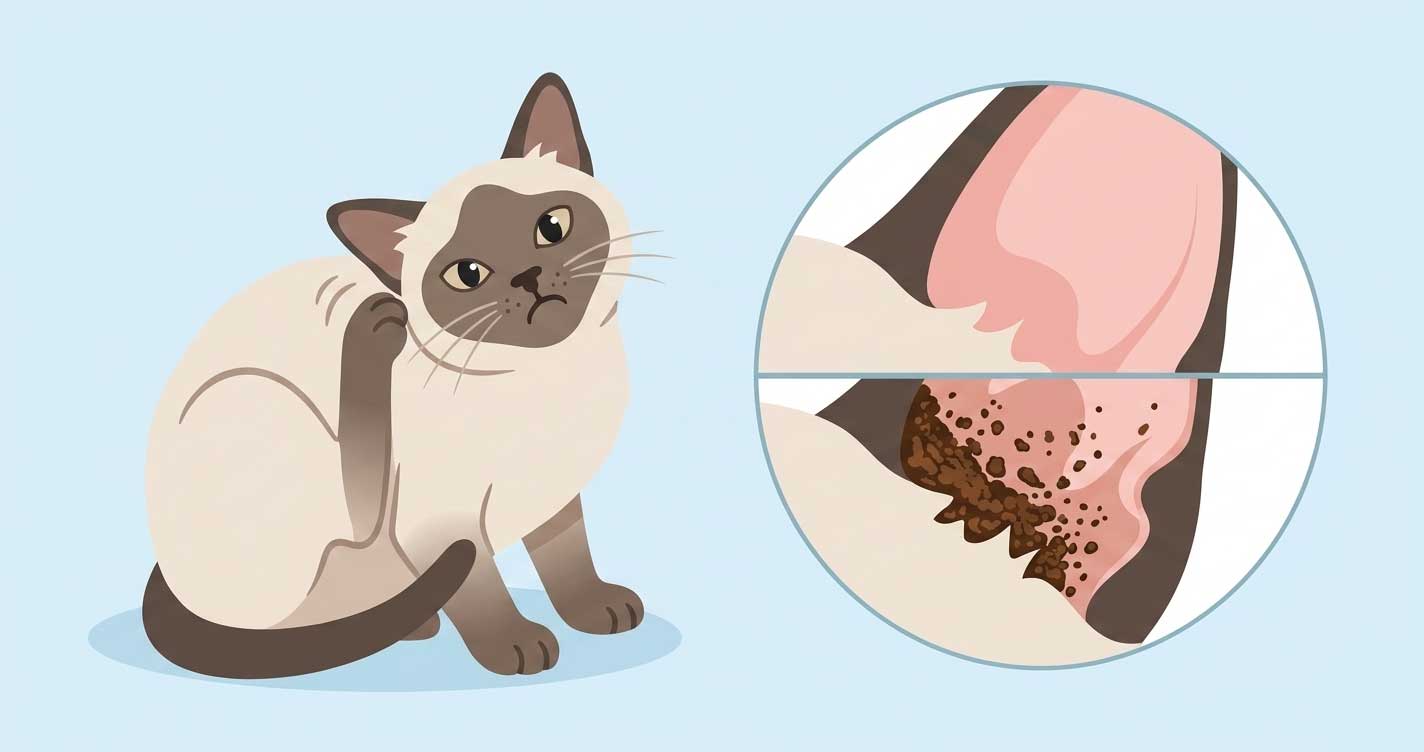
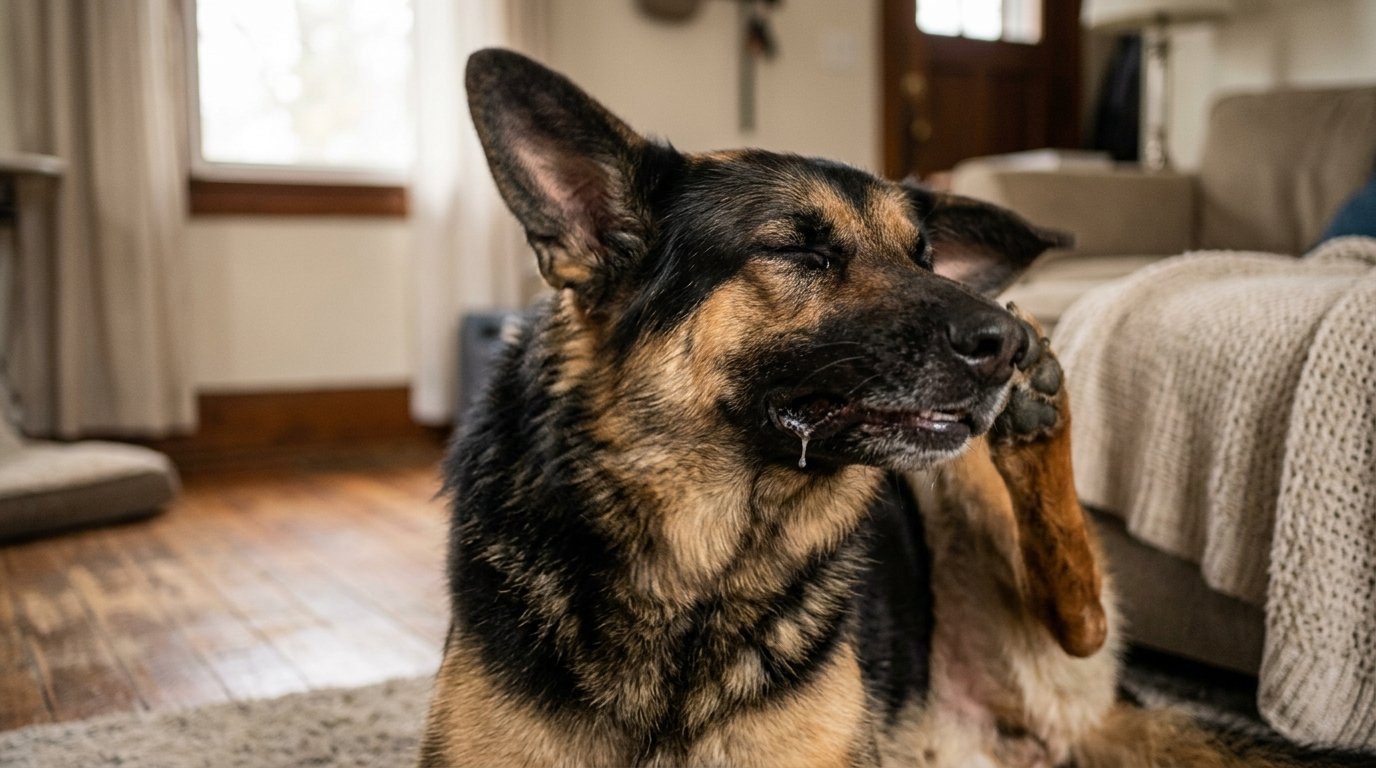
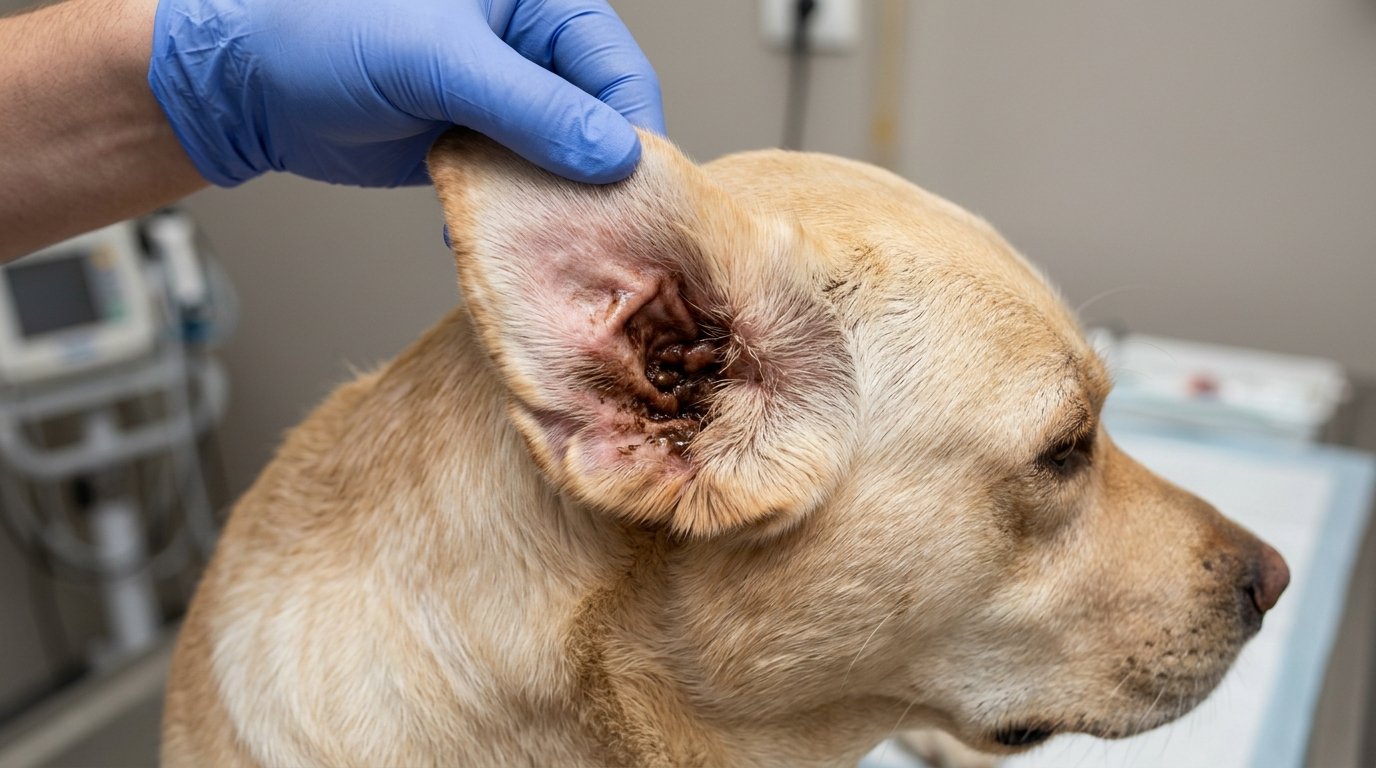
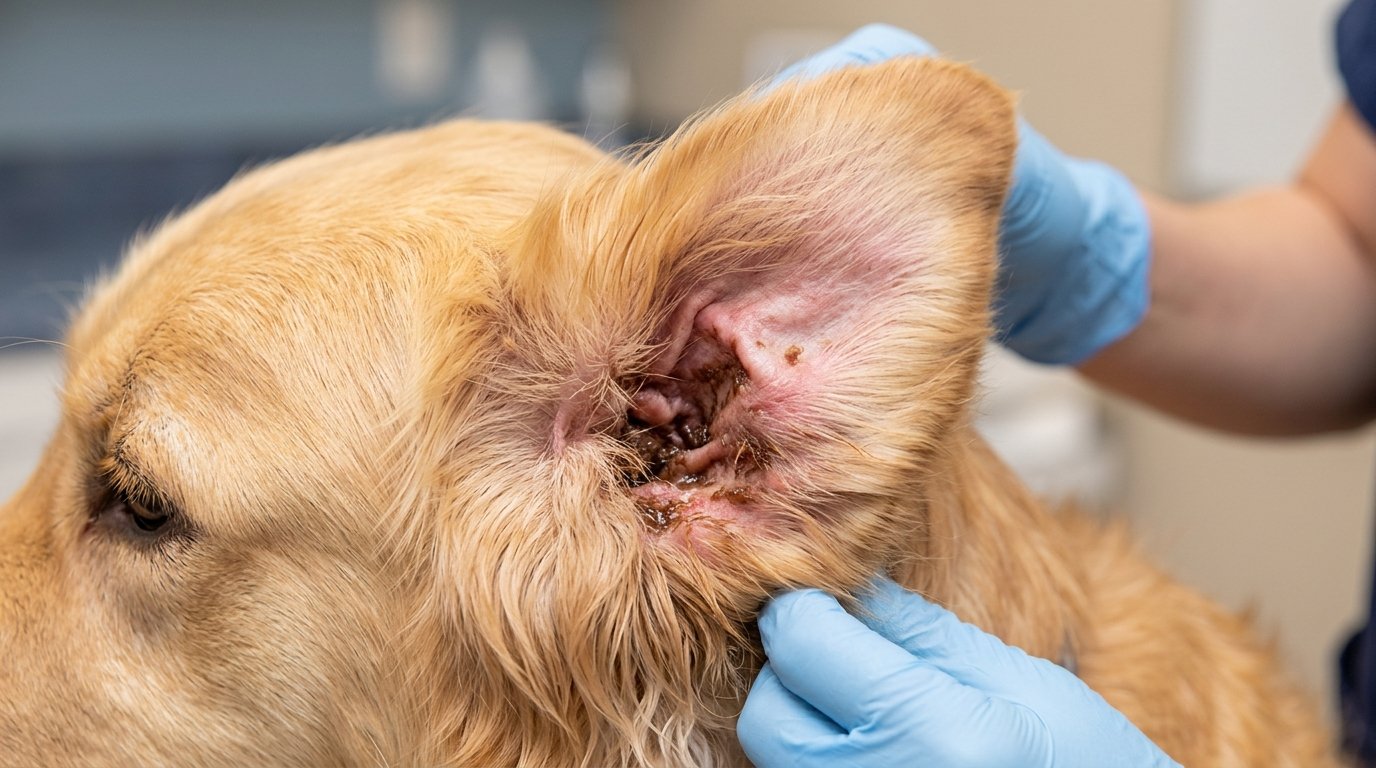
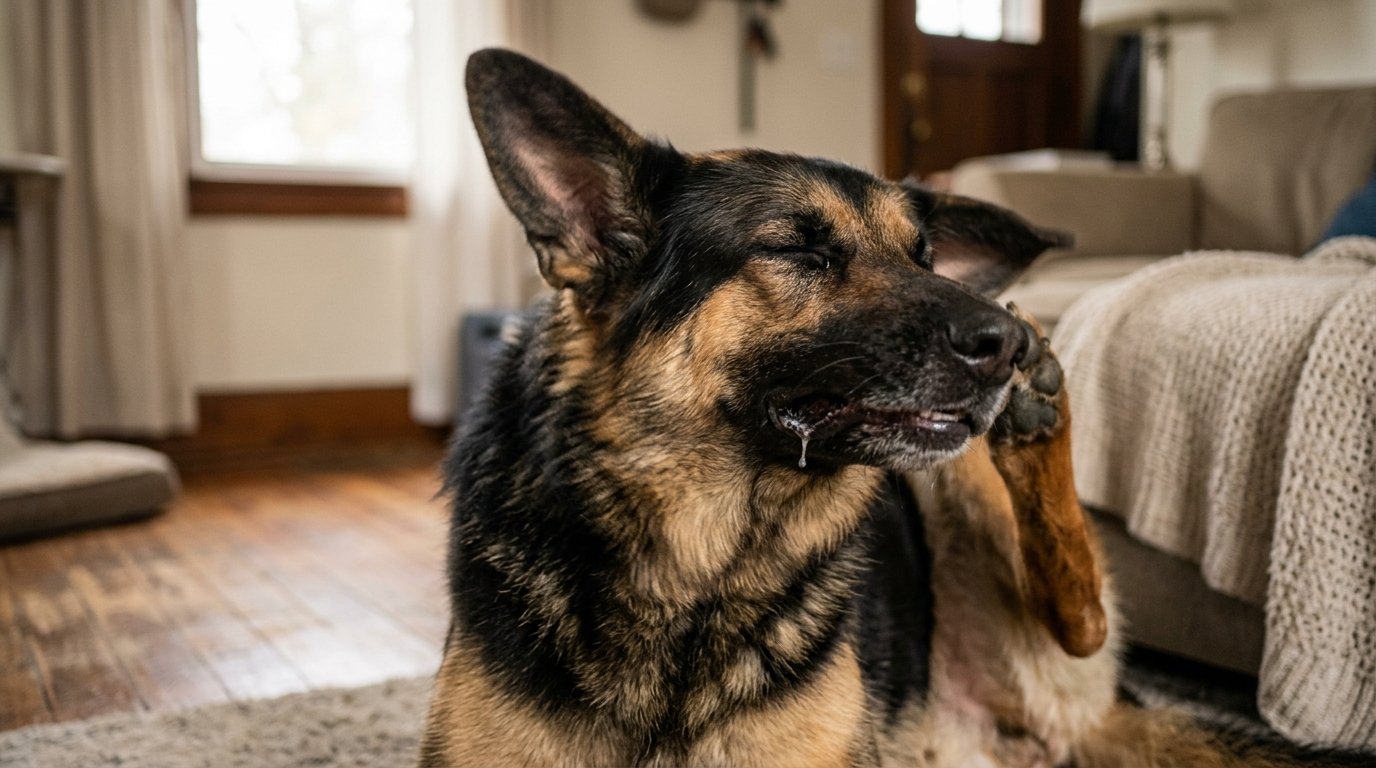
Ear mites in dogs symptoms are distinctive once you know what to look for. The most diagnostic visual sign: dark coffee-ground-like debris inside the dog ear canal — this is mite feces + dried blood + ear wax mixed together, NOT normal ear wax. Other ear mites in dogs symptoms: intense itching (the dog scratches the ear constantly, sometimes to the point of bleeding), frequent head shaking (the dog tries to dislodge the irritation), head tilt to the affected side, redness inside the ear flap, sometimes a strong unusual odor coming from the ear, and in advanced cases small scabs or sores on the outside of the ear from scratching damage. Early stage dog ear mites pictures show only mild dark debris with light scratching; mild dog ear mites pictures show moderate buildup with regular scratching; severe stage shows hematoma risk (the dog scratches so much the ear flap fills with blood). The mites themselves are microscopic — you cannot see the mites with the naked eye, only the debris they leave behind.
How Do Dogs Get Ear Mites?
How do dogs get ear mites is one of the most-asked questions because owners assume their dog must have done something specific to catch them. The reality: ear mites spread by direct dog-to-dog or cat-to-dog contact — the mites crawl from one animal's ear to another during play, sleeping together, or grooming. How does a dog get ear mites in real life: (a) close contact with an infected dog at the dog park, daycare, or boarding facility; (b) contact with an infected cat in the home (cats carry ear mites very commonly — far more often than dogs); (c) shelter or rescue origin (mites are extremely common in shelter cats and shelter dogs); (d) puppies pick them up from infected littermates or mother; (e) outdoor dogs from contact with wildlife or feral cats. Important: ear mites do NOT survive long in the environment — they need a warm host. So your dog does not catch them from grass, bedding, or floors (unlike fleas which can live off-host for weeks). The transmission is essentially always direct animal-to-animal contact.
Multi-pet household and worried mites are spreading? Upload a photo of each dog's ear for AI pattern triage.
Check Dog Ear Patterns →Dog Ear Mites vs Yeast vs Bacterial — Visual Differentiation
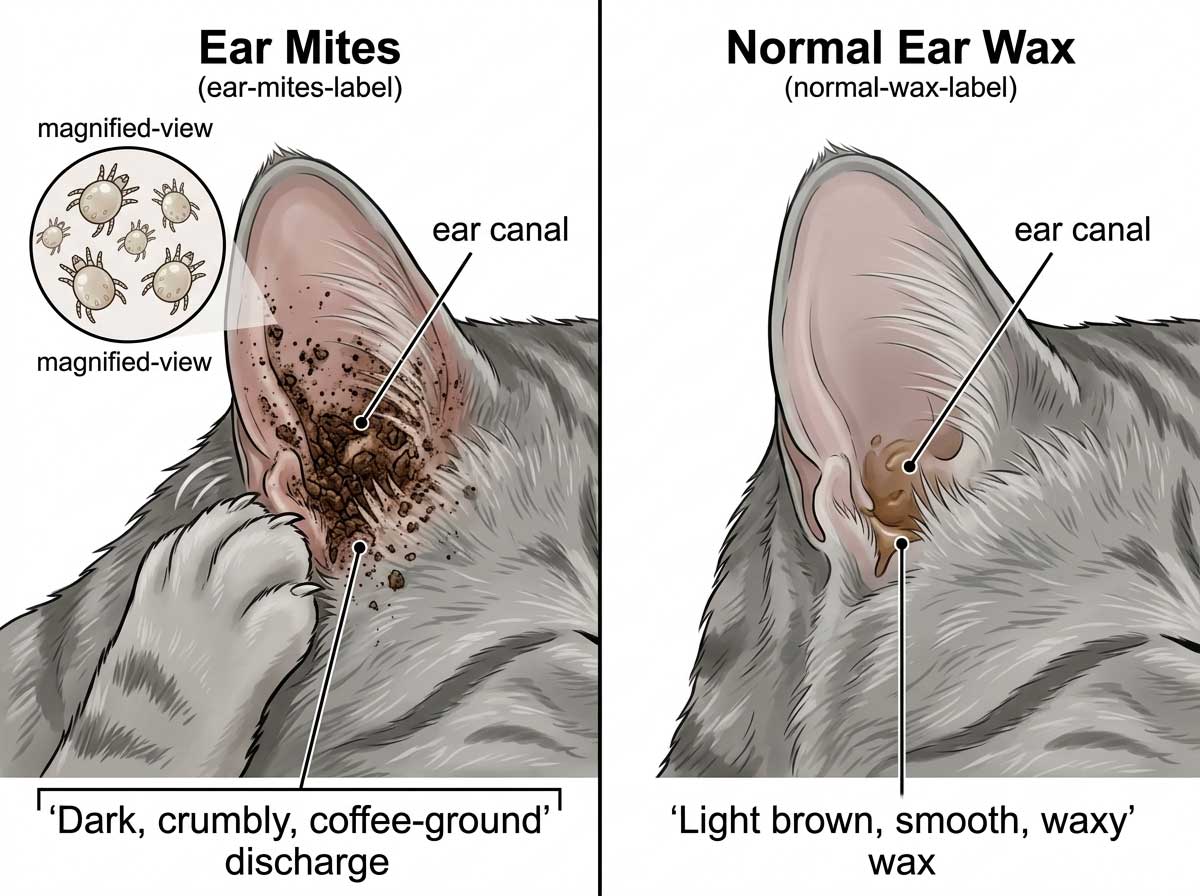
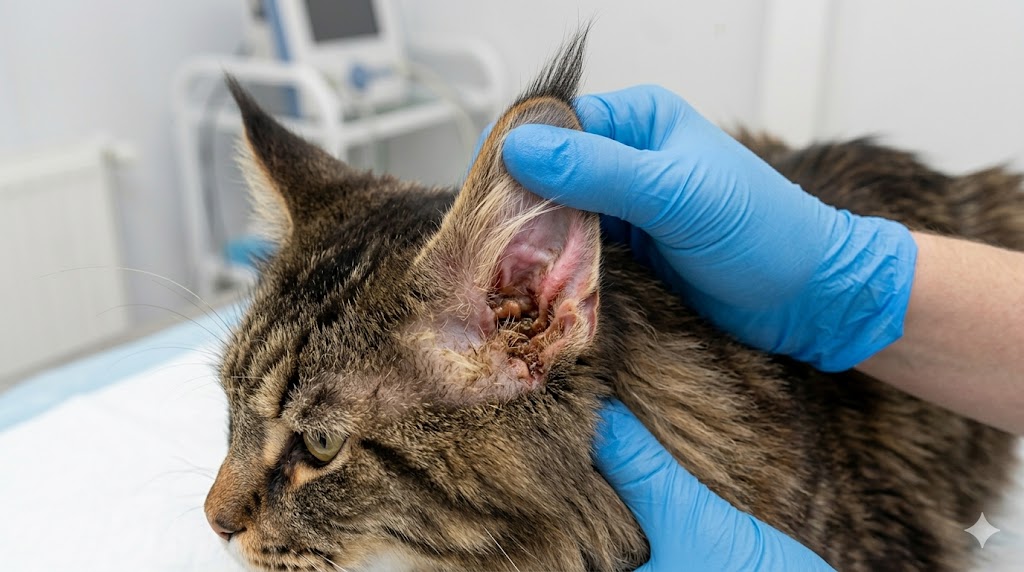
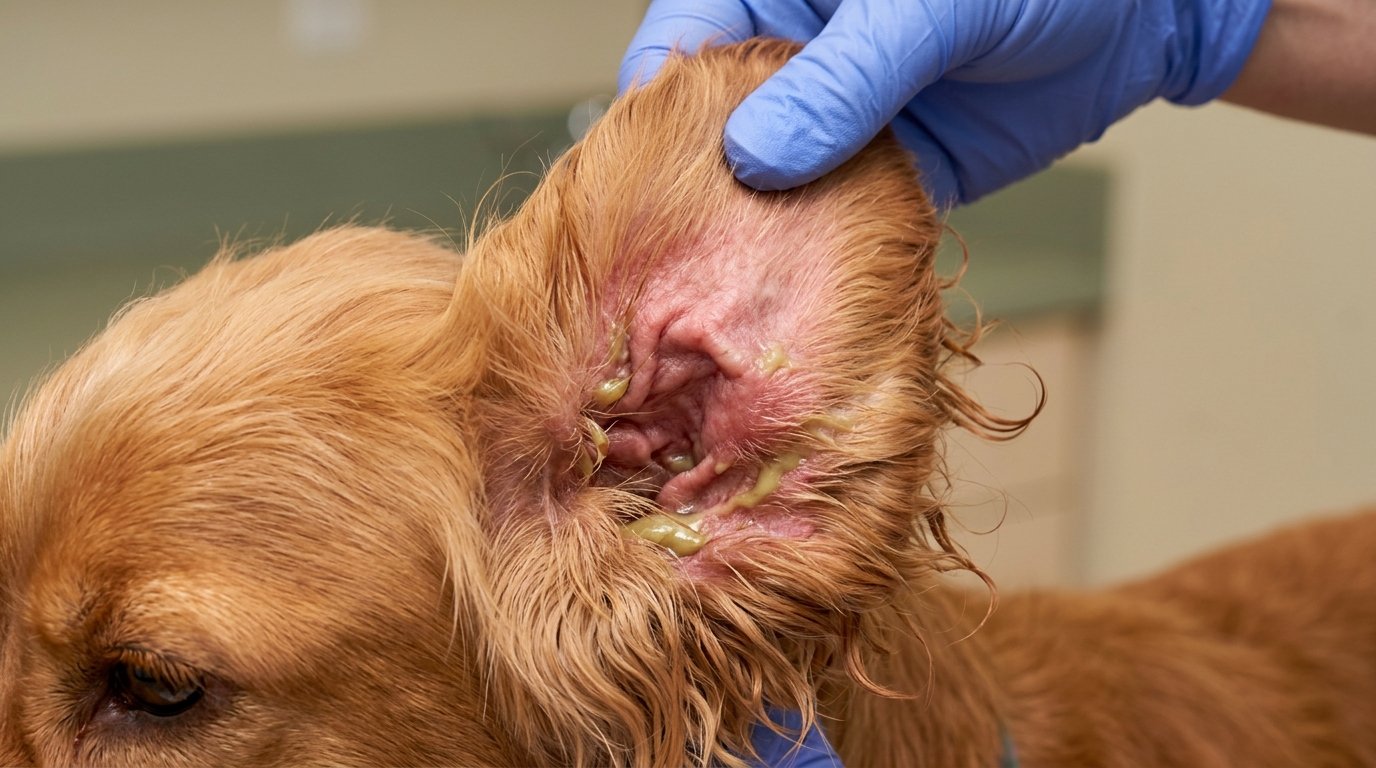
Dog ear mites vs yeast infection pictures are one of the most-confused dog ear comparisons. The 4 most common dog ear problems all cause dark debris and head shaking, but the visual pattern differs: (a) Ear mites in dogs — DRY dark coffee-ground debris, mite feces mixed with dried blood, no liquid component. (b) Yeast (Malassezia) infection — GREASY brown-red oily discharge with a yeasty / musty smell, often with reddened inflamed inner ear flap, common in floppy-eared breeds (Cocker Spaniels, Labradors, Basset Hounds). (c) Bacterial infection (pyoderma) — YELLOW or GREEN pus discharge, often with strong putrid odor, painful when touched, frequently a secondary infection on top of mites or yeast. (d) Excessive ear wax — LIGHT YELLOW to medium brown soft wax, no debris-like consistency, no symptoms beyond mild discomfort. What can be mistaken for ear mites in dogs is therefore mainly yeast and bacterial — both very common, both treated differently. A vet ear swab examined under microscope is the definitive test (mites visible directly, yeast and bacteria seen via cytology stain). Cornell's Riney Canine Health Center covers the diagnostic workup.
Are Ear Mites in Dogs Contagious to Humans?
Can a human catch ear mites from a dog is a top-searched concern in households where dogs share beds and close contact. The honest answer: very rarely, but it is technically possible. Otodectes cynotis (the dog and cat ear mite) is highly host-specific to dogs, cats, and ferrets — humans are dead-end hosts where mites cannot complete their life cycle. Rare cases of temporary human itching and mild ear irritation have been documented in literature when humans had prolonged close contact with infected pets, but the mites do not establish a sustained infestation in humans. Pictures of ear mites in humans circulating online are usually showing a different parasite (Demodex face mites which everyone has naturally, or scabies which is unrelated to dog ear mites). The practical takeaway: ear mites in dogs are mainly a dog-to-cat and cat-to-dog zoonotic concern (between pets), not a serious dog-to-human concern. Pictures of ear mites in cats often show the same coffee-ground debris pattern because the species is the same parasite — Otodectes spreads freely between cats and dogs in multi-pet households, so treating only one pet while ignoring the others guarantees reinfection.
Early Stage vs Severe — When to See a Vet
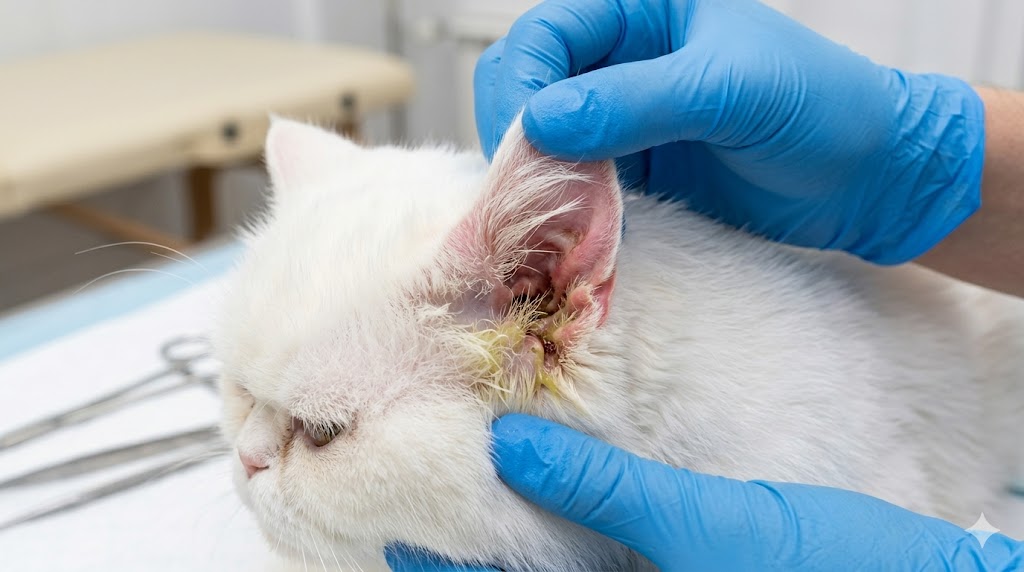
About "what kills ear mites in dogs instantly" and "what kills ear mites instantly" — these are among the most-searched ear mite questions online, but the honest answer is that no DIY approach reliably kills ear mites without potential harm to the dog. Vet care plans use targeted parasiticides matched to the dog's weight and species; over-the-counter or home applications often miss the mites in the deep ear canal, irritate the inflamed tissue, or are toxic if the dog shakes them onto the face. The fastest reliable path is a vet ear swab + vet-appropriate care plan within 1-2 weeks — see-the-vet is the actual answer to the "kills instantly" search.
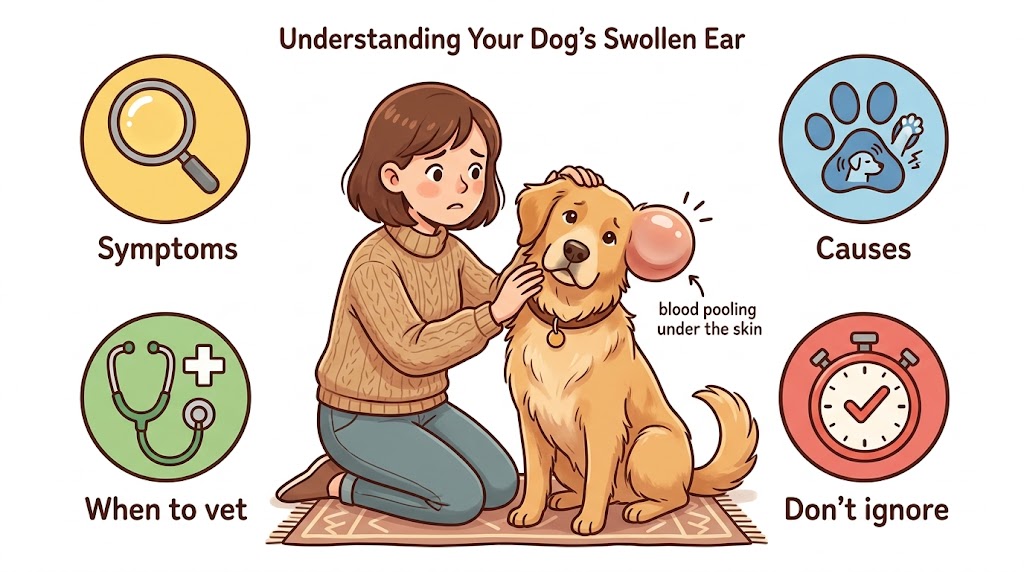
See a vet within 1-2 weeks for any suspected ear mites in dogs presentation — even mild dog ear mites pictures patterns need confirmation because the dark debris look-alikes (yeast, bacterial, wax) all need different vet workups. Urgent within 48 hours if: extensive bleeding from scratching damage, the ear flap is swelling visibly (early aural hematoma — blood pooling under the skin from violent head shaking), strong putrid yellow / green discharge (secondary bacterial infection), the dog is lethargic / not eating / showing pain when the ear is touched, or both ears affected with severe scratching damage. Why early-stage diagnosis matters: ear mites in dogs are easily managed when caught early, but untreated cases progress to (a) aural hematoma requiring surgical drainage, (b) secondary bacterial pyoderma needing antibiotics, (c) chronic ear inflammation that scars the canal and predisposes to lifelong recurrent ear infections, and (d) spread to other pets in the household. The vet ear swab takes 10 minutes and gives a definitive answer.
Suspected ear mites in your dog? Upload a close-up photo for AI pattern check + urgency triage before the vet visit.
Check Dog Ear Now →Related Dog Ear Reading
For more dog ear visual identification, see our Dog Ear Yeast Infection Pictures tool (the most-confused look-alike for ear mites in dogs), our Severely Infected Dog Ear Wax Pictures tool (when ear wax buildup progresses to infection), and our Why Do My Dog's Ears Smell guide (covers the odor signature of ear mites vs yeast vs bacterial). Ear mites in dogs are highly treatable when caught early — bring this symptom observation log to the vet visit and the workup is fast.
Frequently Asked Questions
How do I tell if my dog has ear mites?
+
How do dogs get ear mites?
+
What can be mistaken for ear mites in dogs?
+
Can a human catch ear mites from a dog?
+
Dog ear mites vs yeast infection pictures — visual differences?
+
Early stage dog ear mites symptoms — when should I see a vet?
+
Ear Mites in Dogs? Get Instant AI Pattern Check
Upload a close-up photo of your dog's ear — the AI compares against ear mites coffee-ground debris vs yeast greasy brown vs bacterial pus patterns and tells you urgency + when to see a vet.
Disclaimer: This article is for informational purposes only and is not a substitute for professional veterinary advice. Always consult a licensed veterinarian for diagnosis and treatment of your pet's health conditions.