Foxtail in Dog's Ear: 4 Warning Signs + Vet Care + Prevention
Worried about a foxtail in your dog ear? Spot 4 warning signs, what it looks like, what vets do for safe extraction, plus how to prevent the next ear emergency.
Published 2026-06-21
Spotted something that might be a foxtail? Let AI take a quick look.
Upload a clear close-up of your dog ear — our AI compares against bacterial, yeast, mites, and foreign-object patterns and tells you the most likely match in seconds so you can decide whether to head to the vet now.
Foxtail in dog's ear is one of the few summer ear problems that genuinely deserves the label "emergency". A foxtail (a barbed grass-awn seed head) lodges easily in a dog ear canal during a walk through dry grass, then migrates inward — sometimes within hours — and can puncture the eardrum or burrow into deeper tissue. Use the page navigation above to jump to warning signs, the photo guide, or what the vet does. According to the American Kennel Club, foxtails kill several hundred US dogs each year by migrating through tissue and reaching organs. The good news: if you catch it within 24-48 hours and a vet extracts it, recovery is nearly always full. This guide walks through how to know it's there, what to look for visually, the full-body symptoms beyond the ear, what vets actually do, and how to prevent the next round.
See a foxtail near the ear opening but not sure if it has gone deeper? Upload a clear photo of your dog ear — our AI compares against the most common visible patterns and tells you the most likely match before you book the urgent vet visit.
Check Dog Ear Now →What Is a Foxtail and Why It Is an Ear Emergency
What is a foxtail in dogs: foxtails (grass awns) are the barbed seed heads of wild grasses that ripen and dry out in late spring through fall. The barbs only let them travel one direction — inward — which is exactly why an ear-lodged foxtail does not work itself back out. Within hours of getting into a canal, the foxtail can travel down toward the eardrum, and within days it can puncture through and migrate into deeper tissue. The further it gets, the more dangerous and the more invasive the extraction.
Foxtail in Dog's Ear Symptoms — 4 Warning Signs
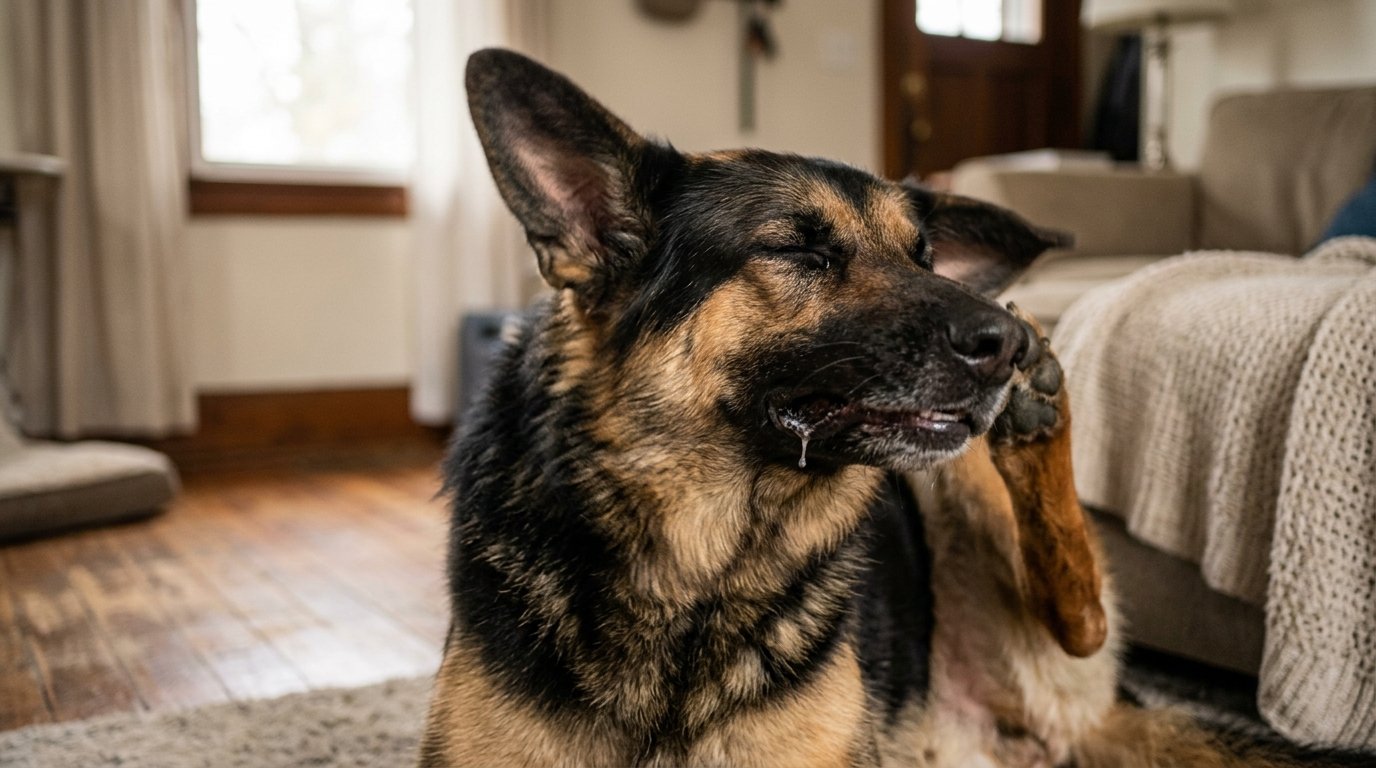
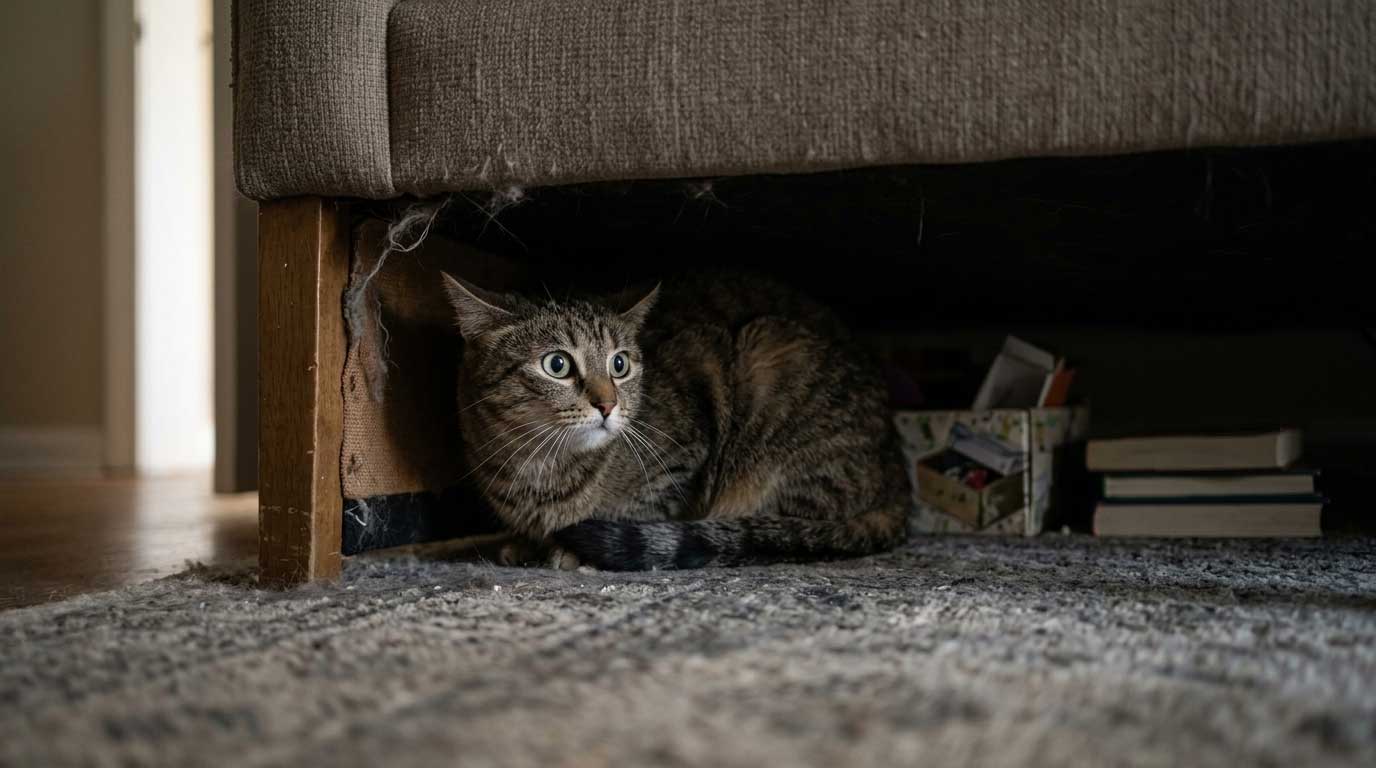
Foxtail in dog's ear symptoms are dramatic and sudden — they almost never sneak up gradually. If your dog goes from normal to one of these within hours of a walk, consider it the most likely cause and call the vet today.
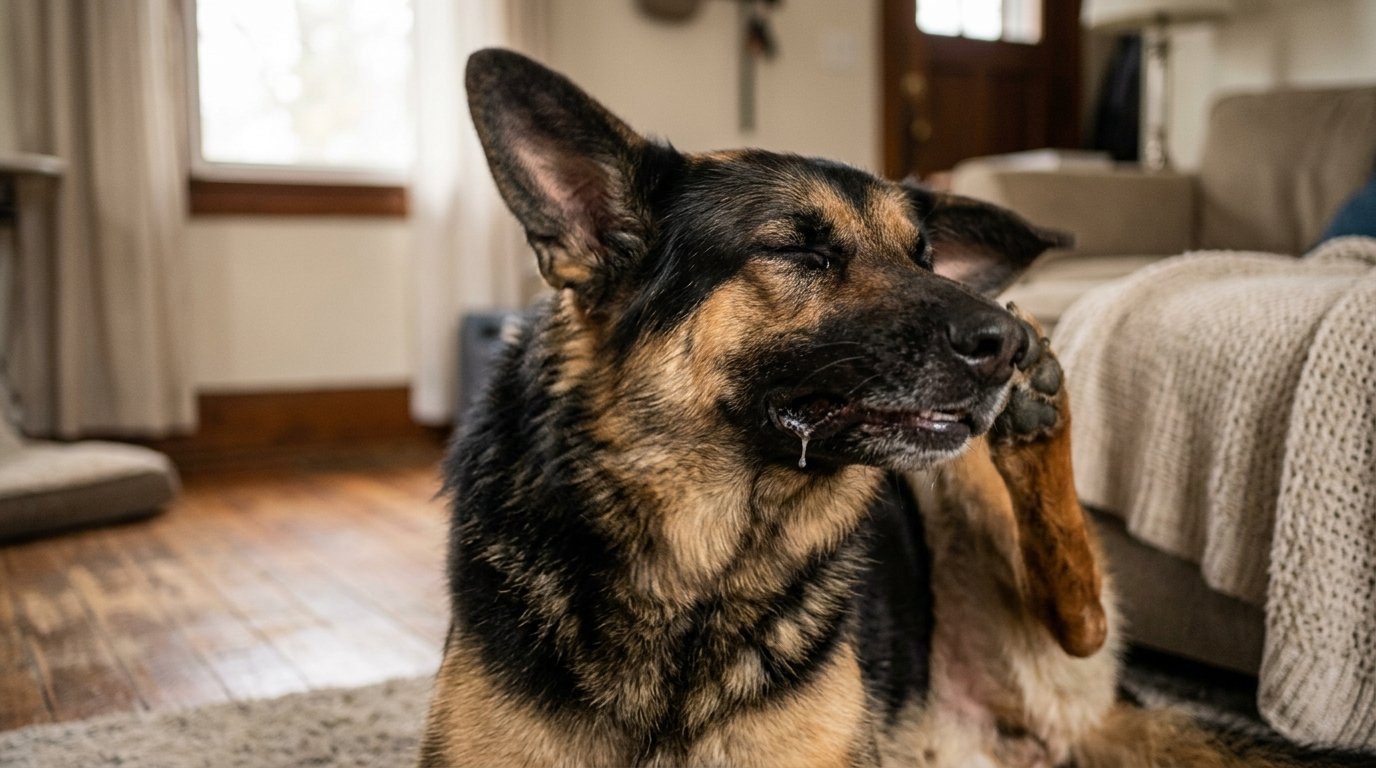
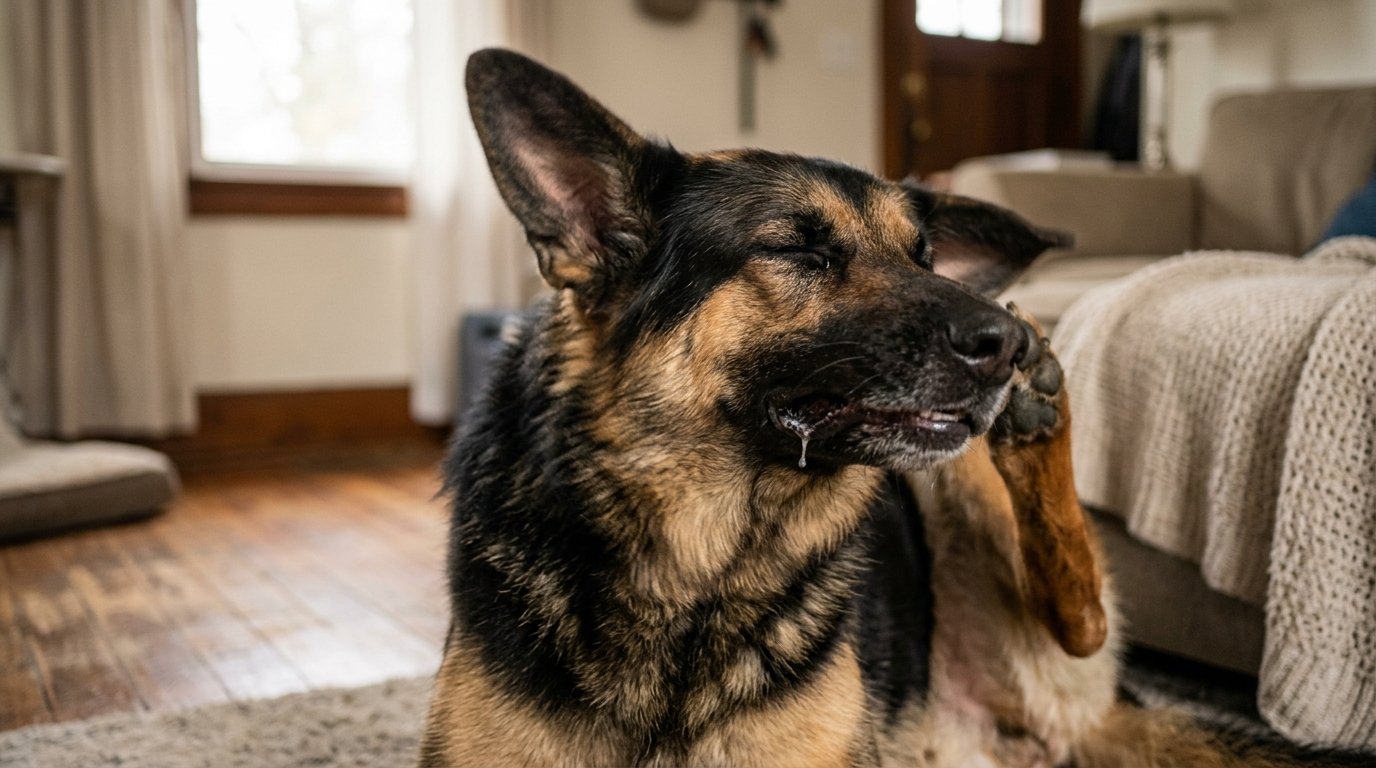
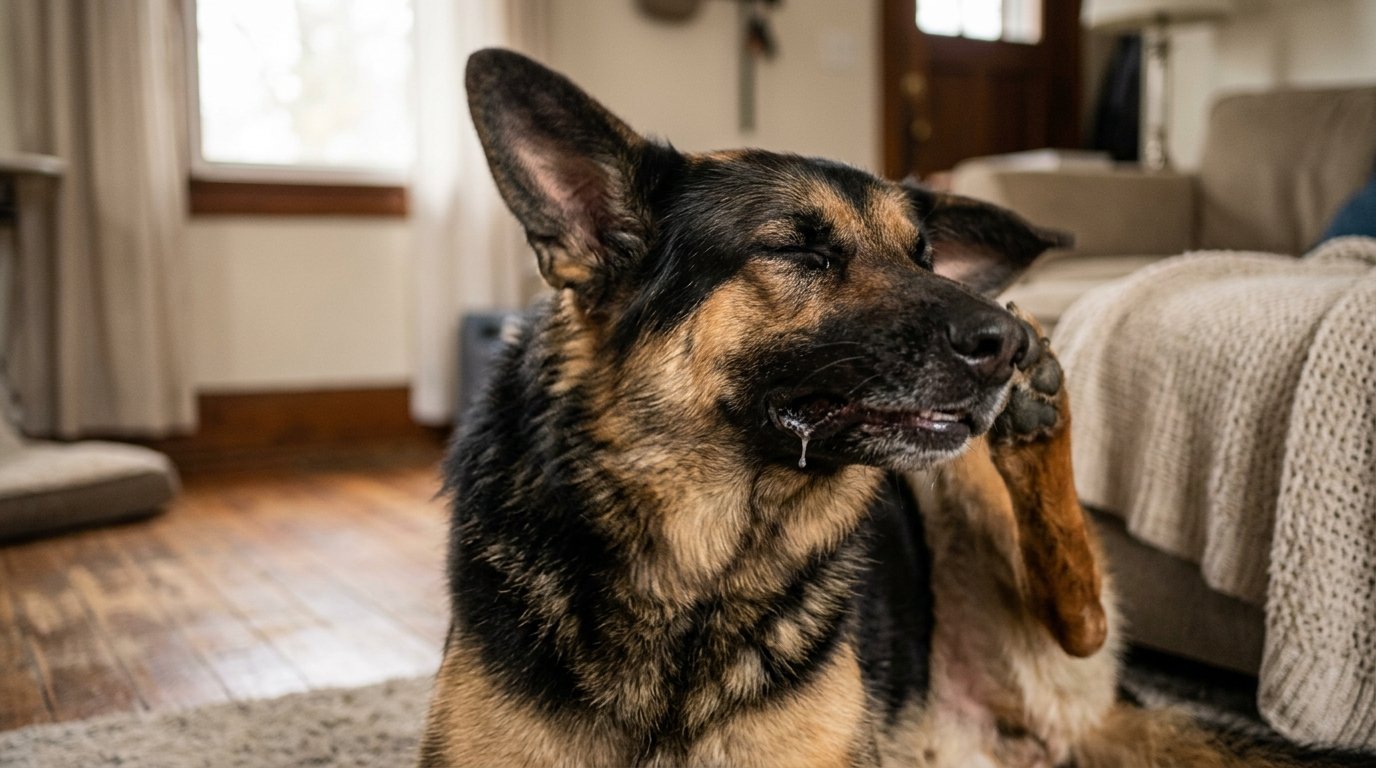
- ✓Sudden frantic head shaking — much more violent than a normal scratch, often immediately after a walk in dry grass.
- ✓Pawing aggressively at one specific ear, sometimes scraping the ear against the ground.
- ✓Holding the head tilted hard to one side, the affected ear pointed down.
- ✓Yelping, whining, or growling when you touch anywhere near the ear — sudden pain response that was not there yesterday.
If you live in foxtail country (California, Pacific Northwest, much of the western US, parts of Europe) and see two or more of these signs after a walk, do not wait. Foxtails do not improve on their own; every hour delay means deeper migration.
Spotted these signs after a grass walk? Compare a quick photo against bacterial, yeast, foxtail-wound, and healthy patterns — the fastest way to know if the trip is urgent.
Quick Photo Check →What Does a Foxtail Infection Look Like?
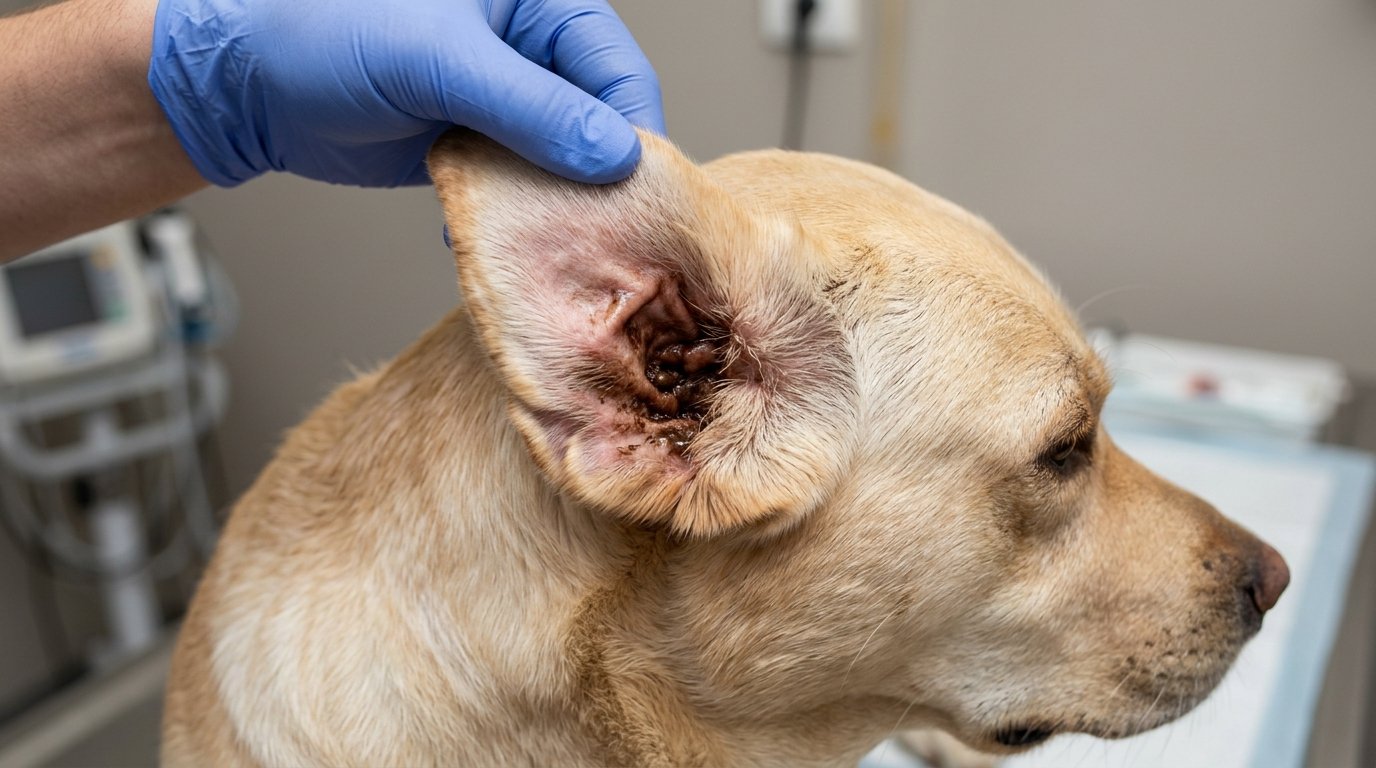
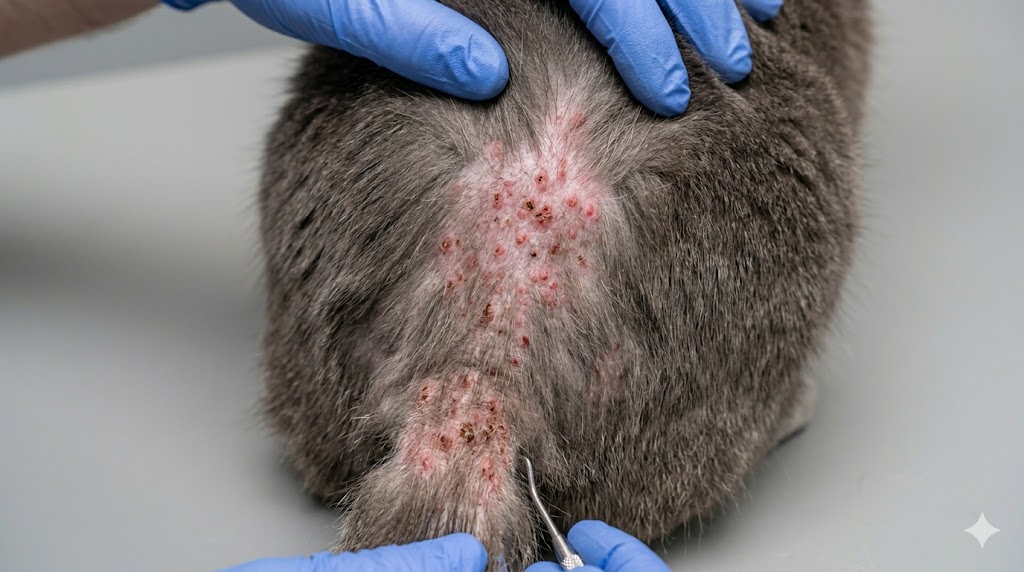
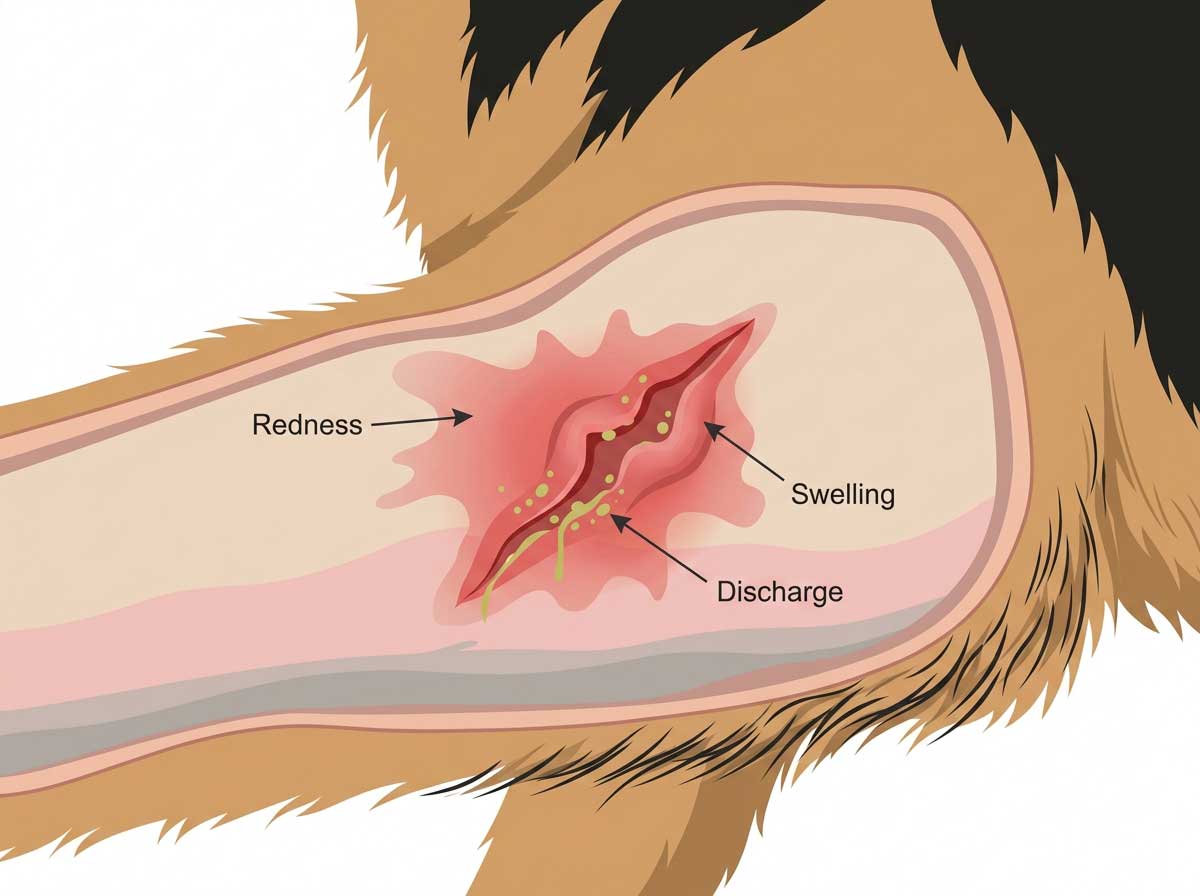
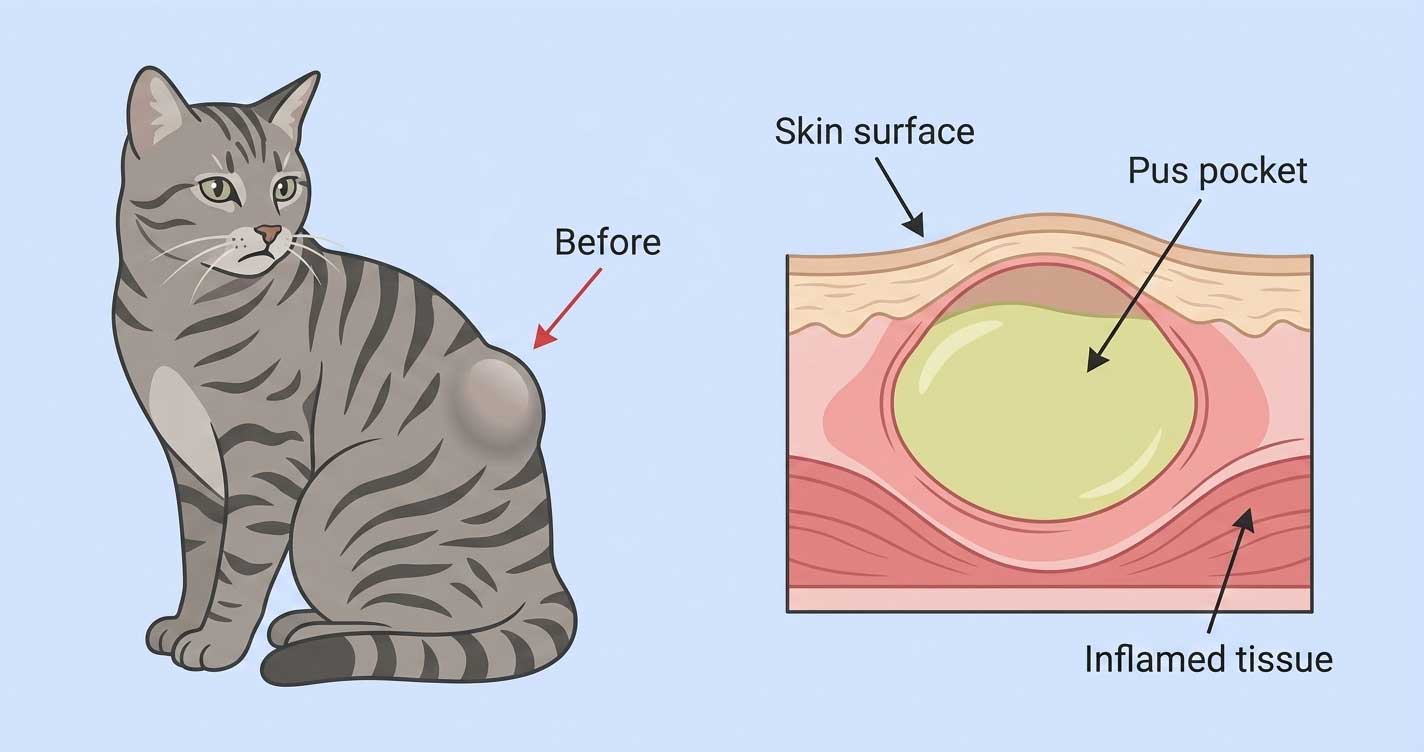
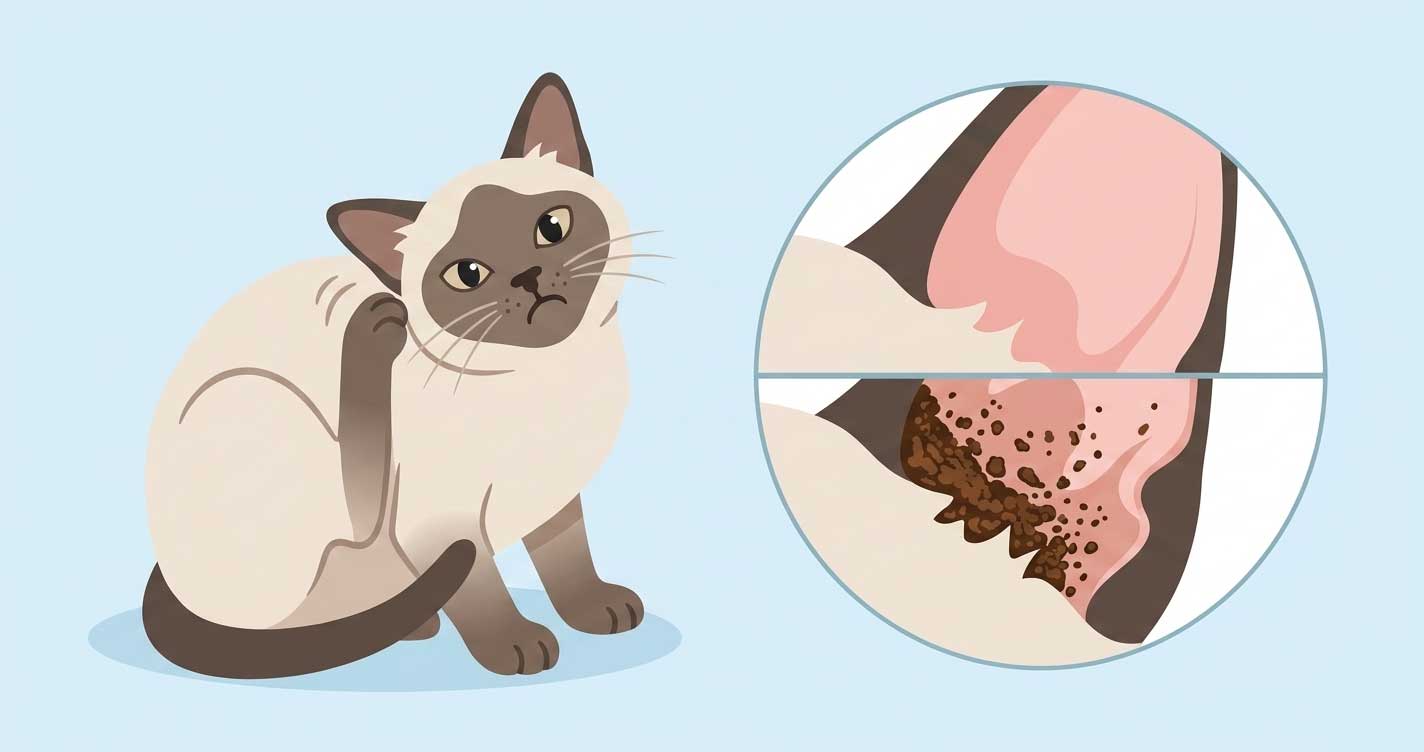
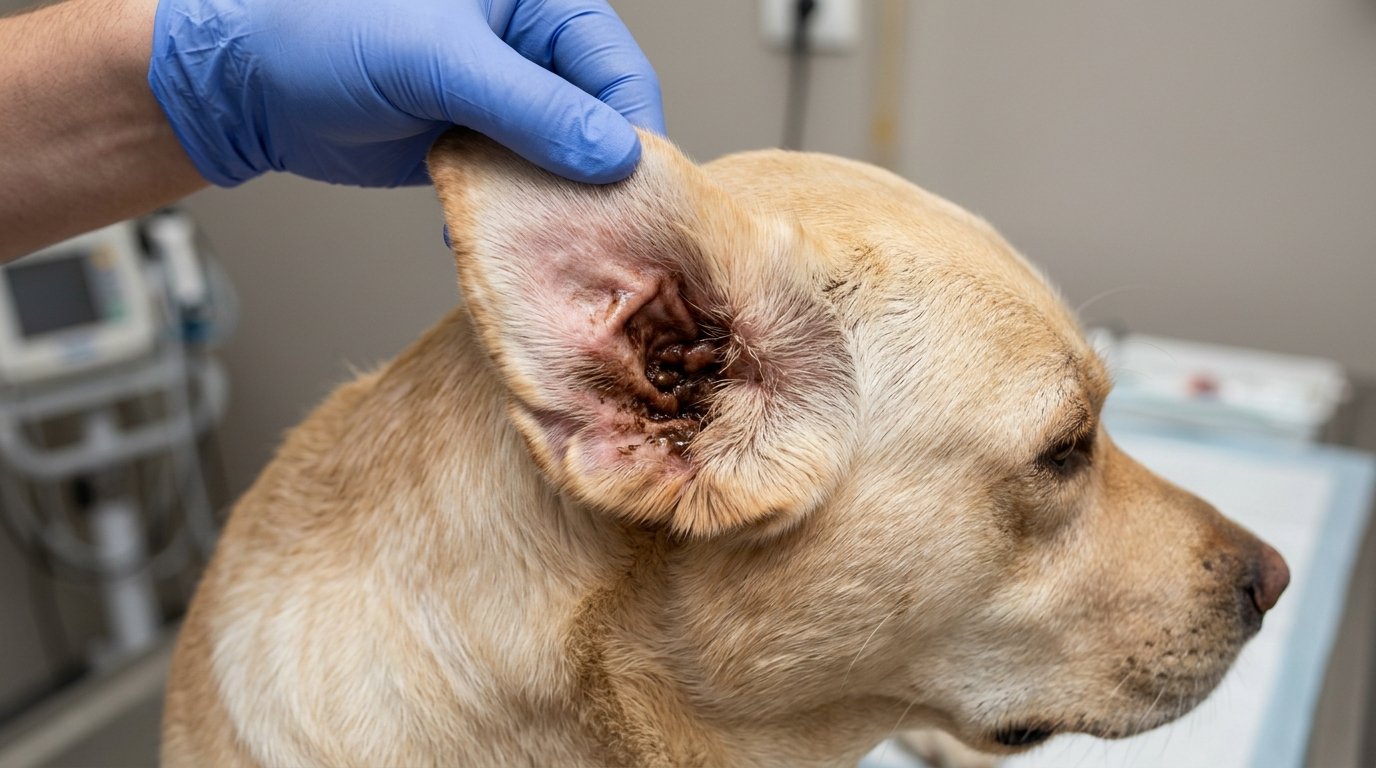
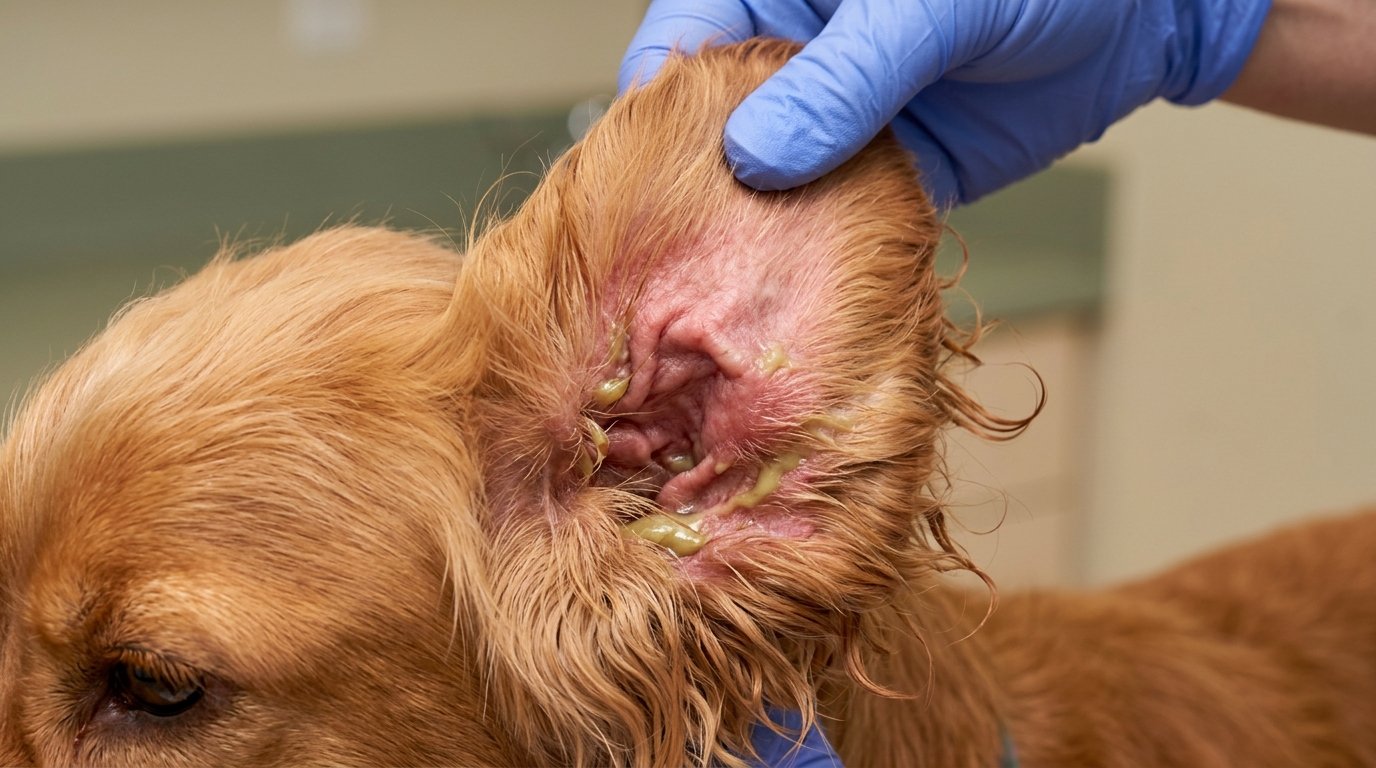
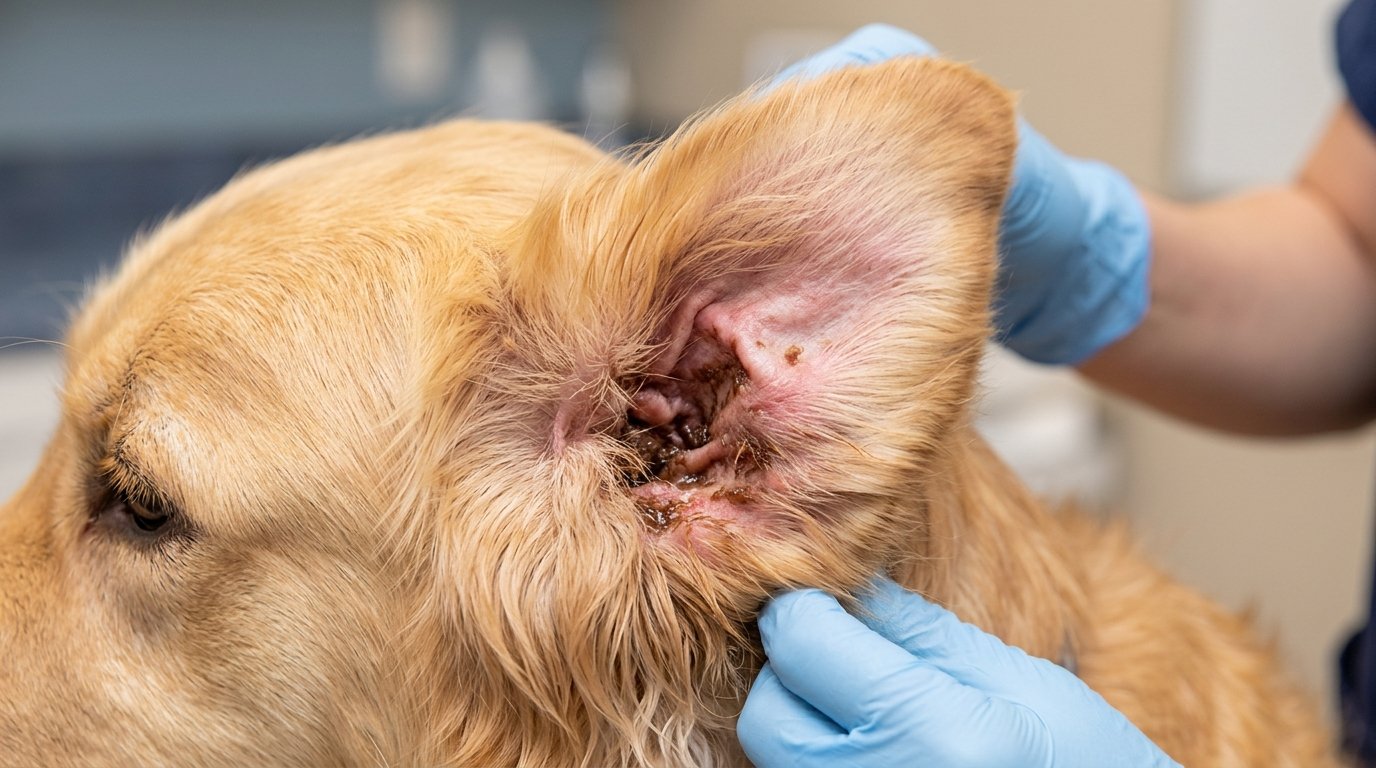
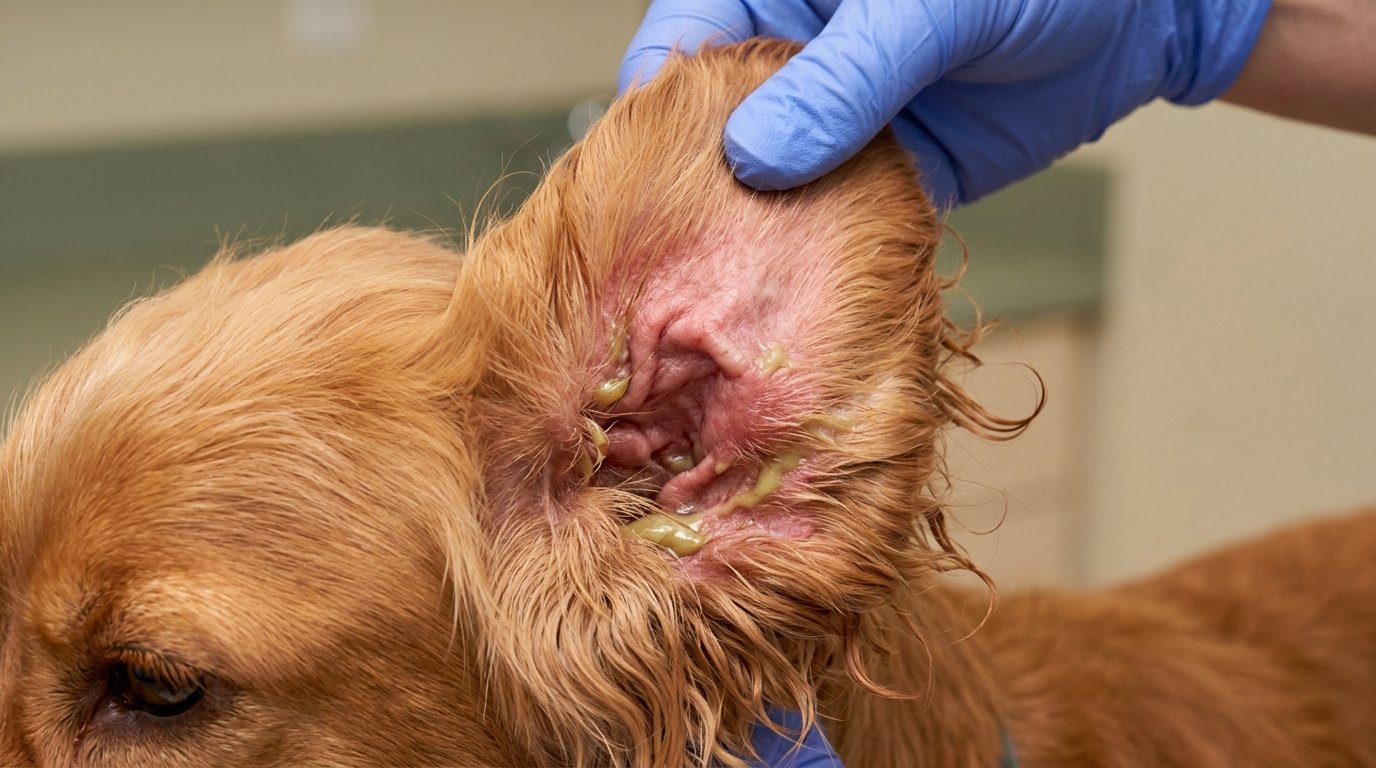
What does a foxtail infection look like: if you fold the ear flap back and look at the canal opening, you might see one of three things. First, the foxtail itself — a small straw-colored barbed seed head visible at the canal entrance. Second, redness and swelling at the canal opening with no foxtail visible (it has already moved deeper). Third, yellow or yellow-green pus discharge — a secondary bacterial infection that has set up shop around the foxtail wound.
Beyond the Ear — Full-Body Foxtail Symptoms
Foxtails do not only attack ears. Foxtail dog symptoms depend on where the seed lodged. Knowing the full-body picture helps you catch foxtail problems in other areas before they reach organs.
- ✓Nose — **foxtail dog nose symptoms** include violent sneezing fits, pawing at the muzzle, and bloody nasal discharge from one nostril.
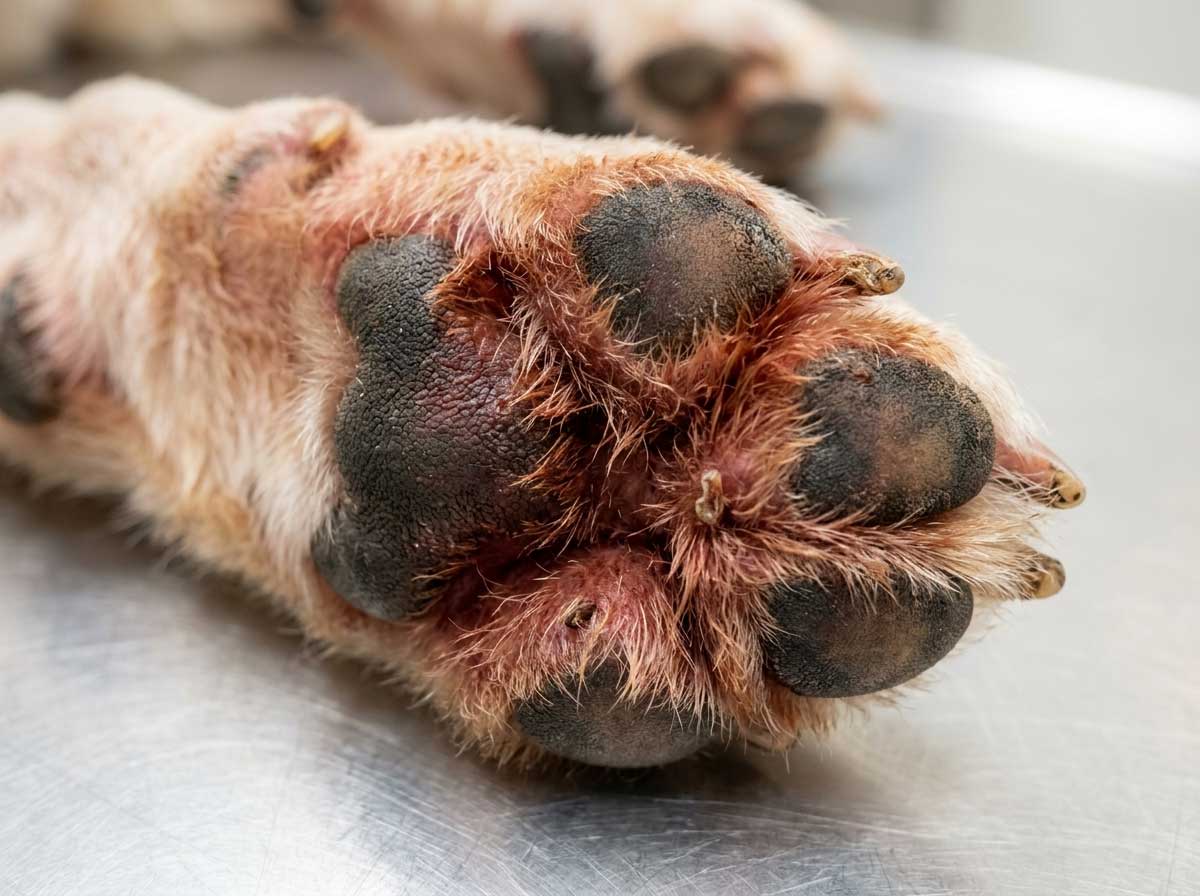
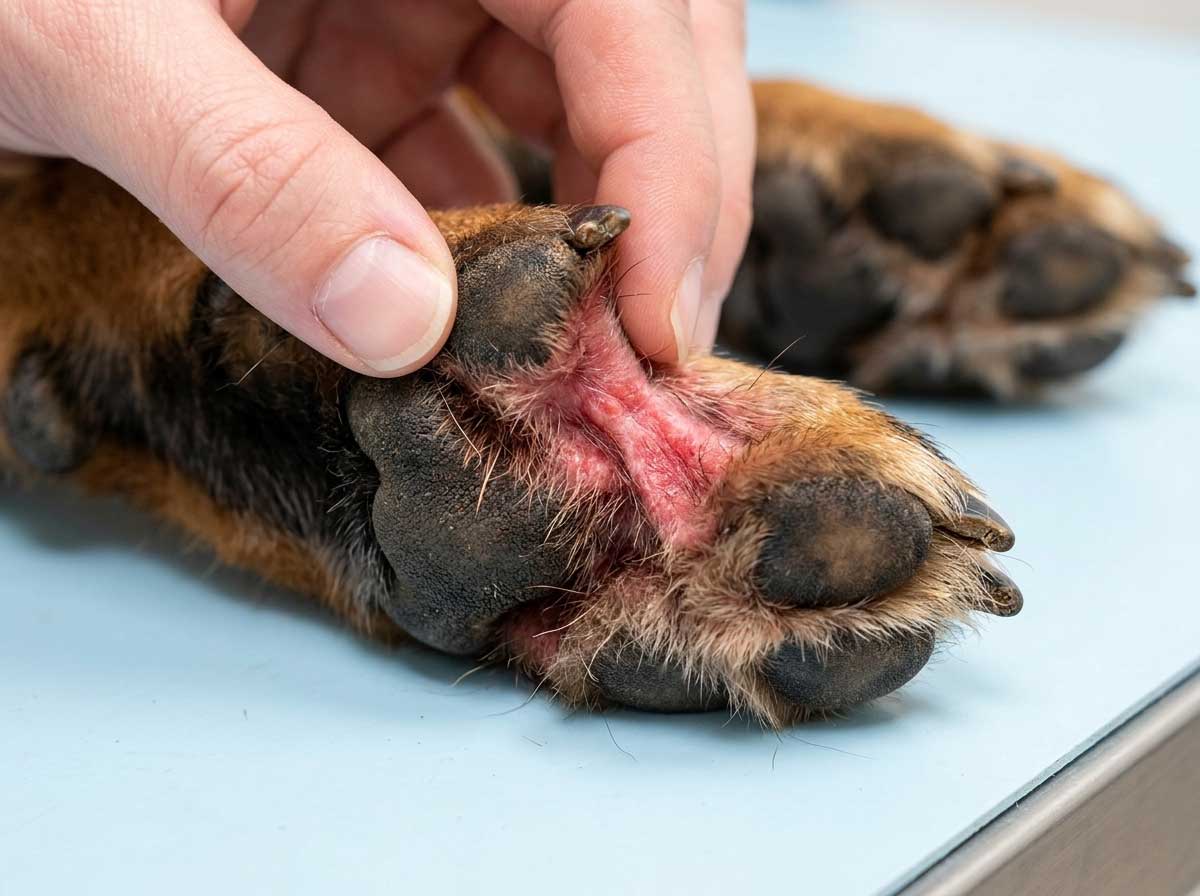
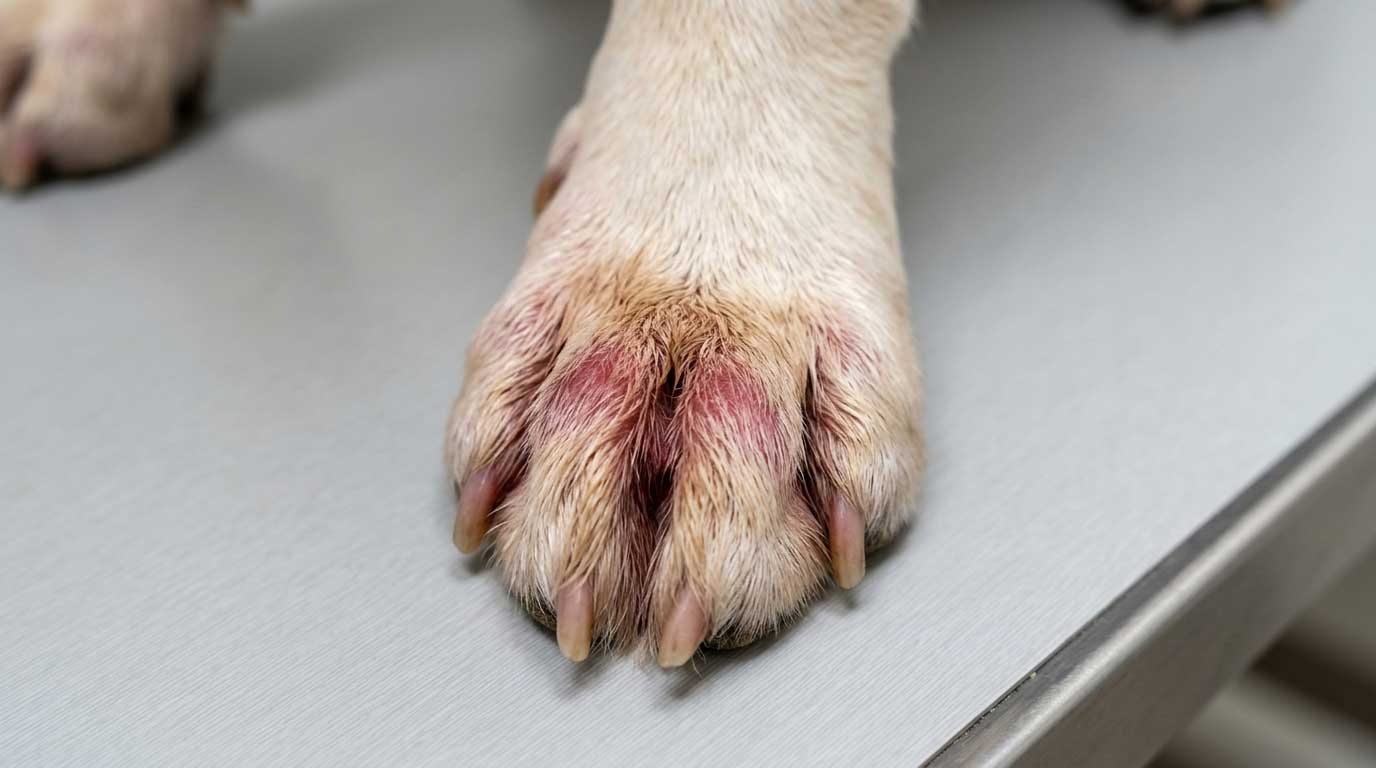
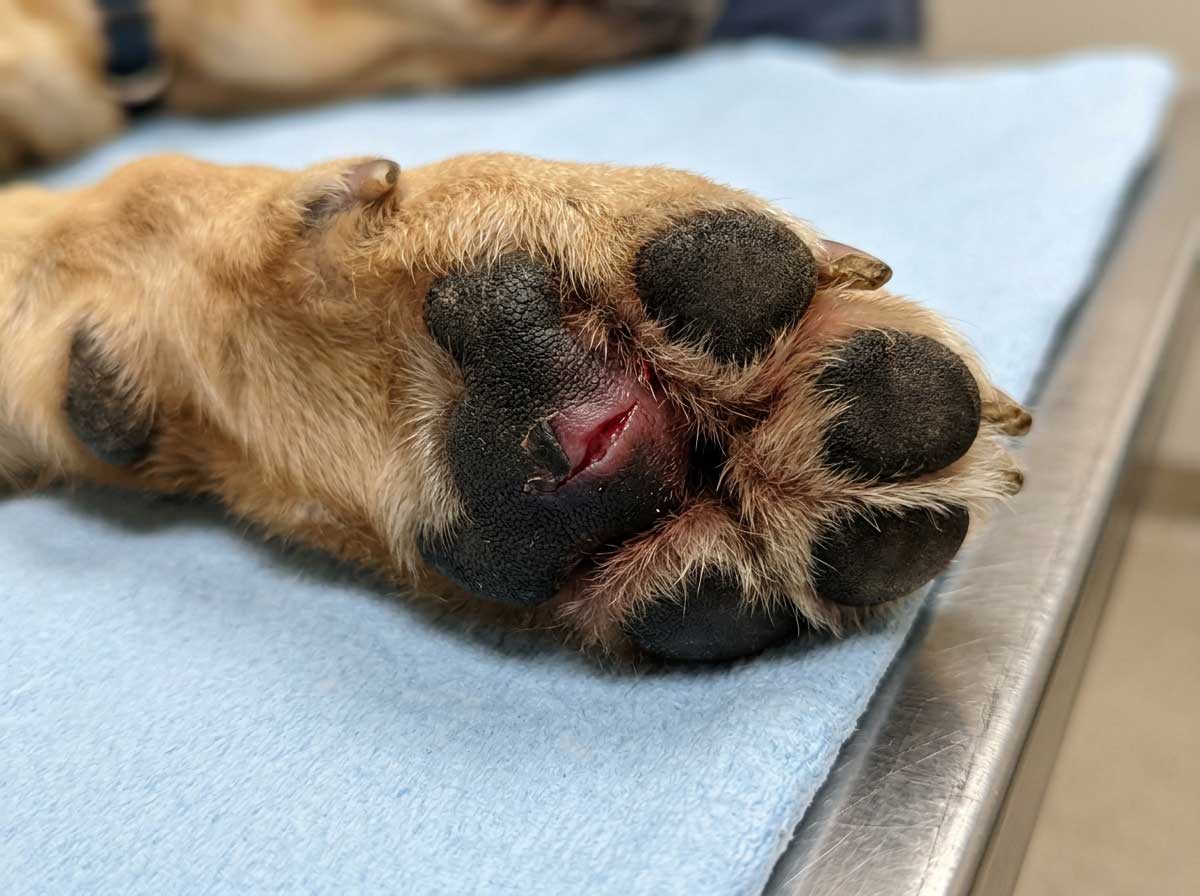
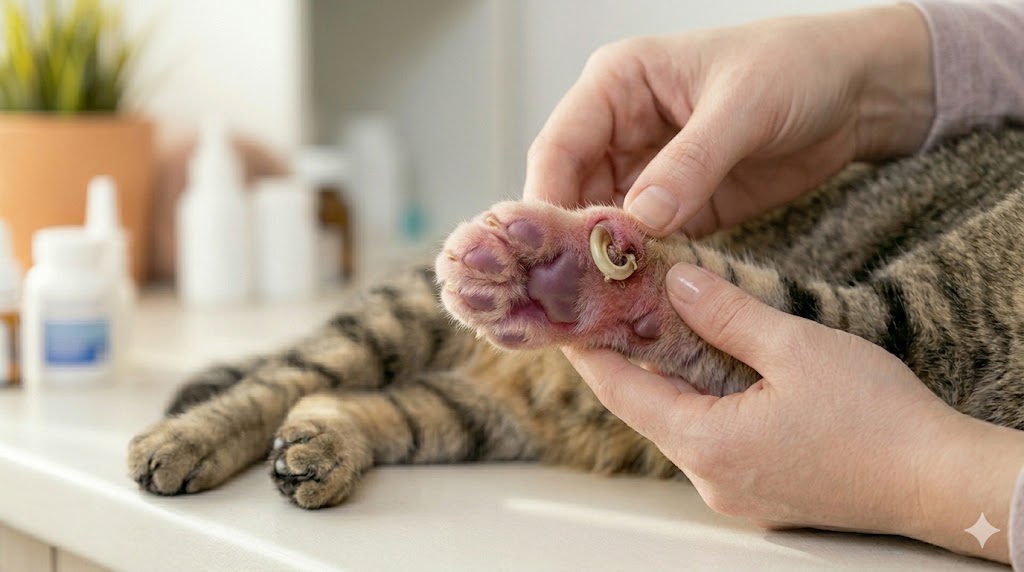
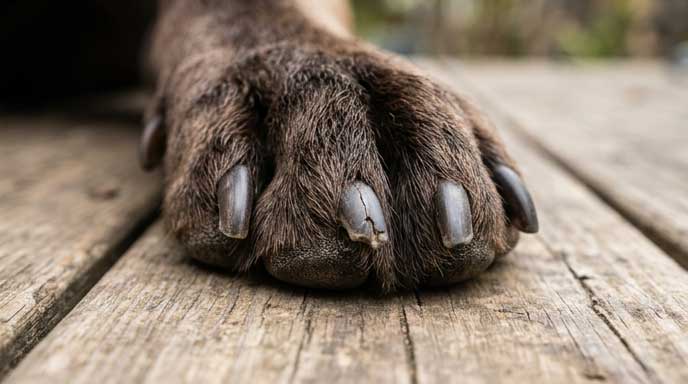
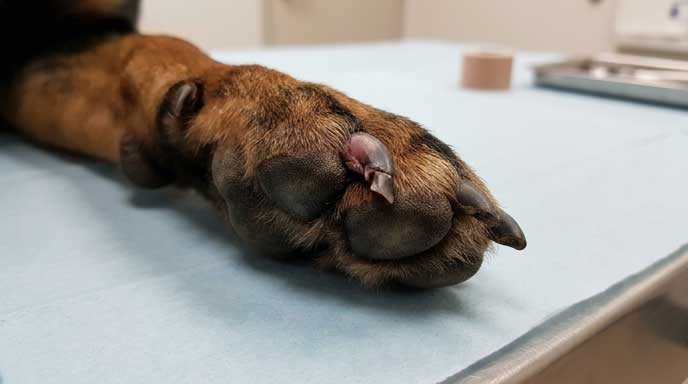
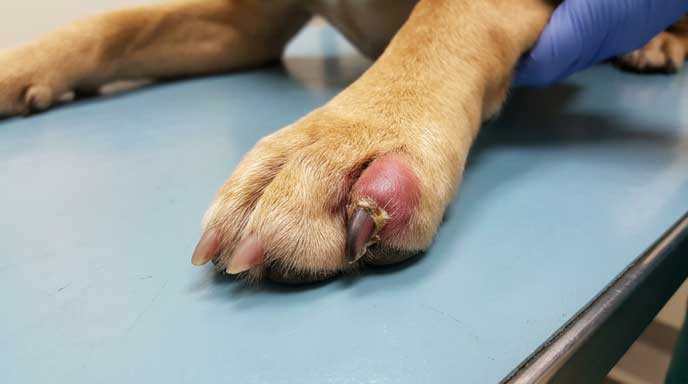
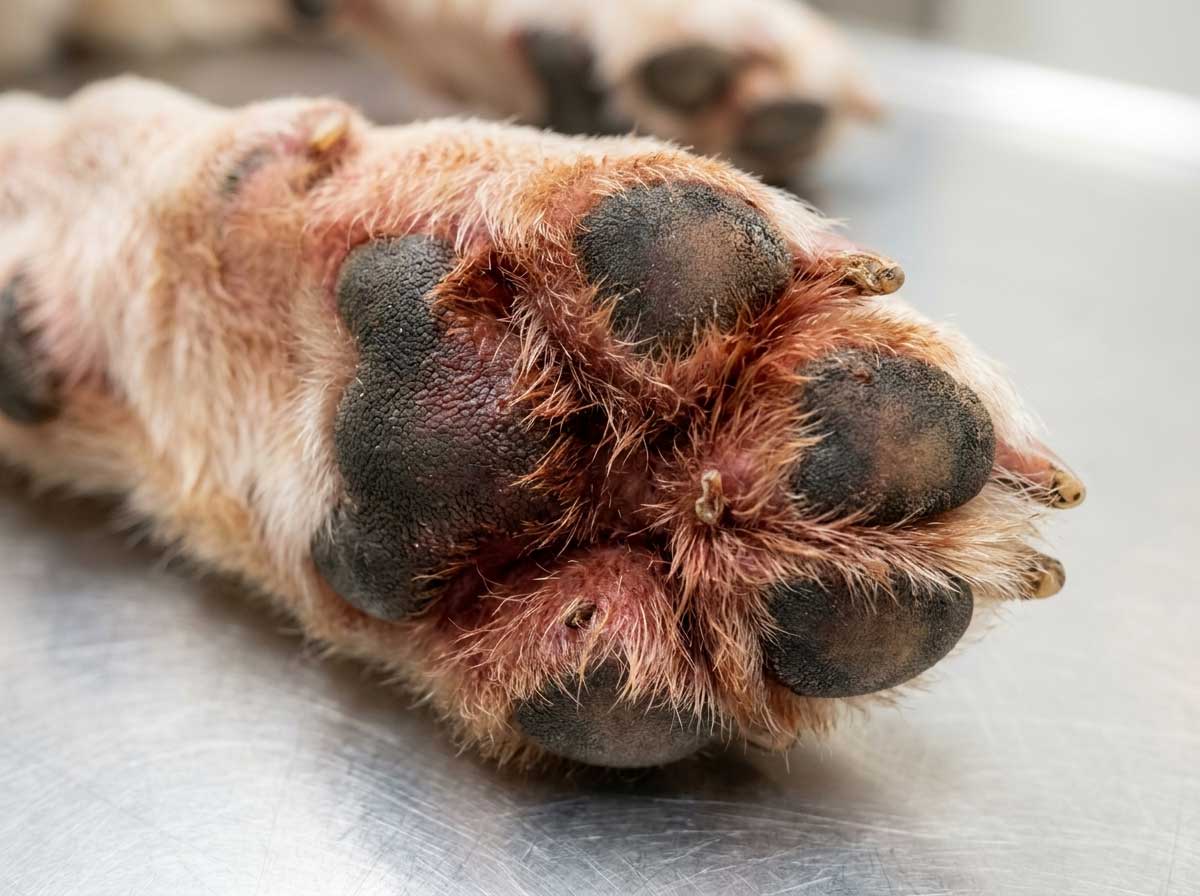
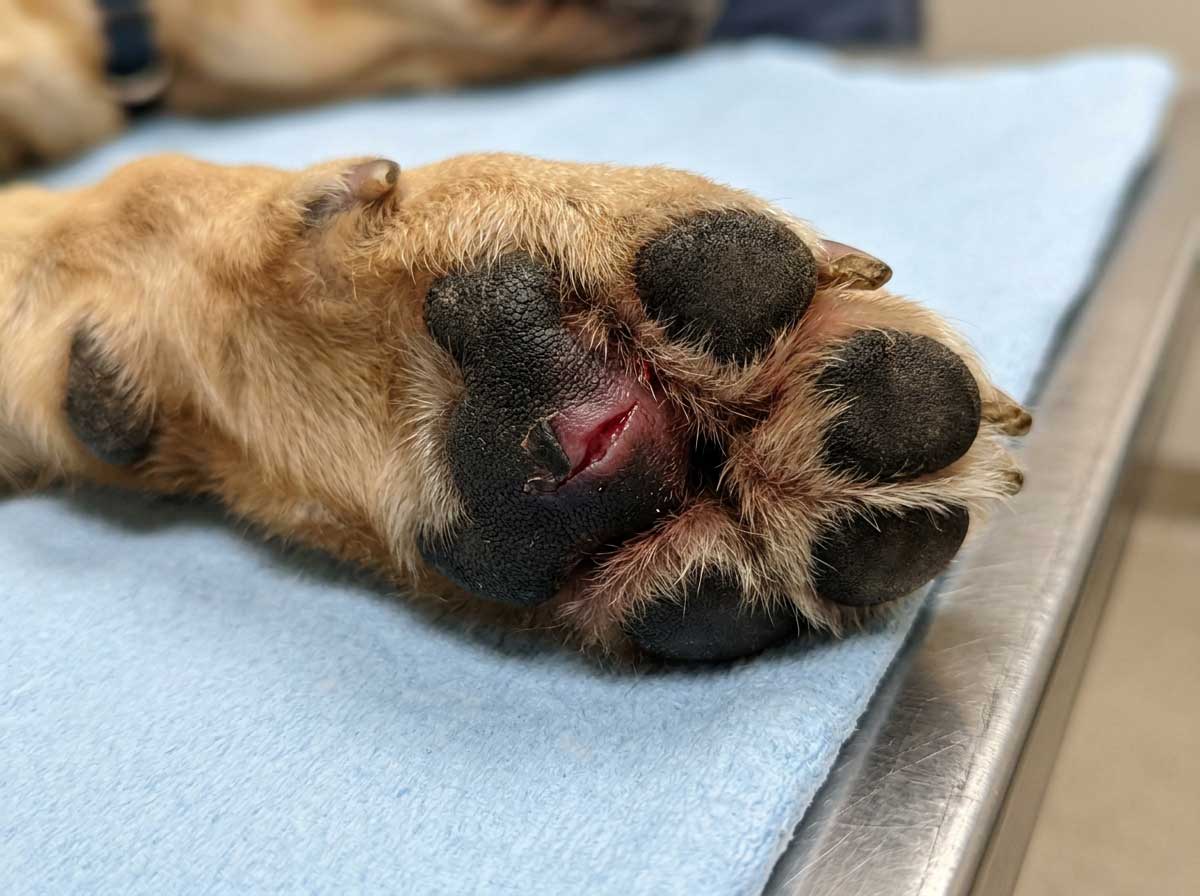
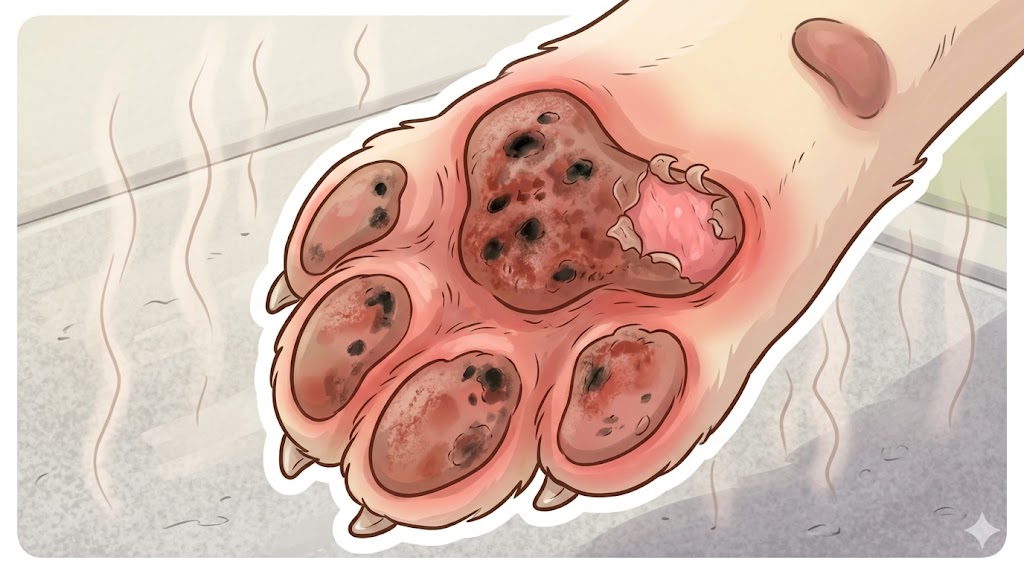
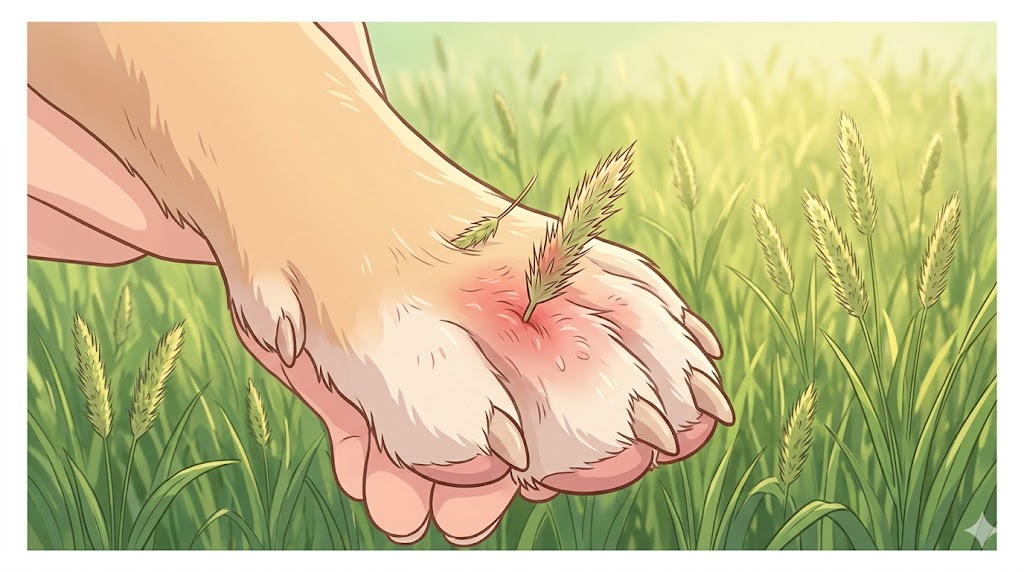
- ✓Paws — limping, licking one paw obsessively, a small painful swelling between the toes (where the foxtail entered).
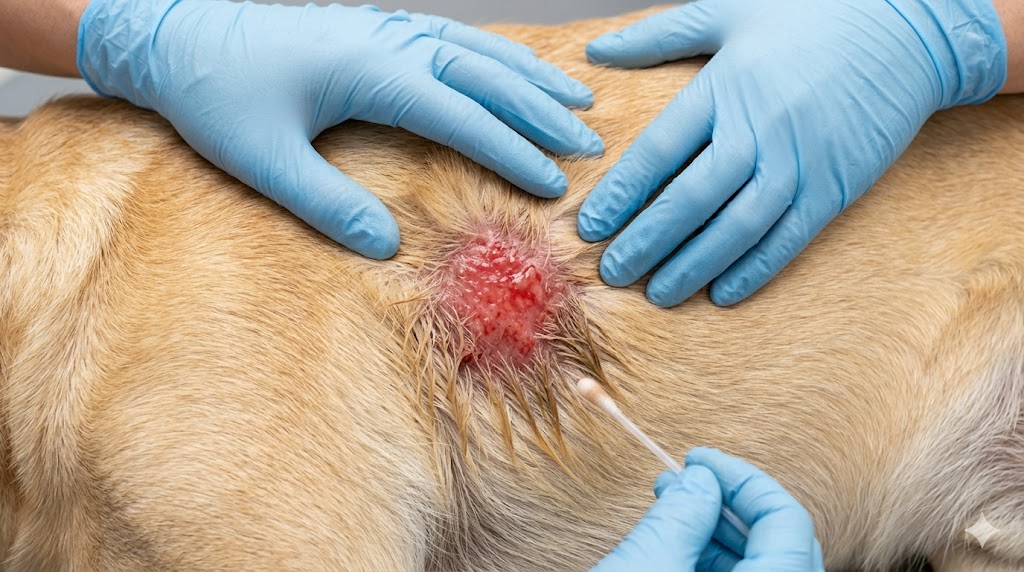
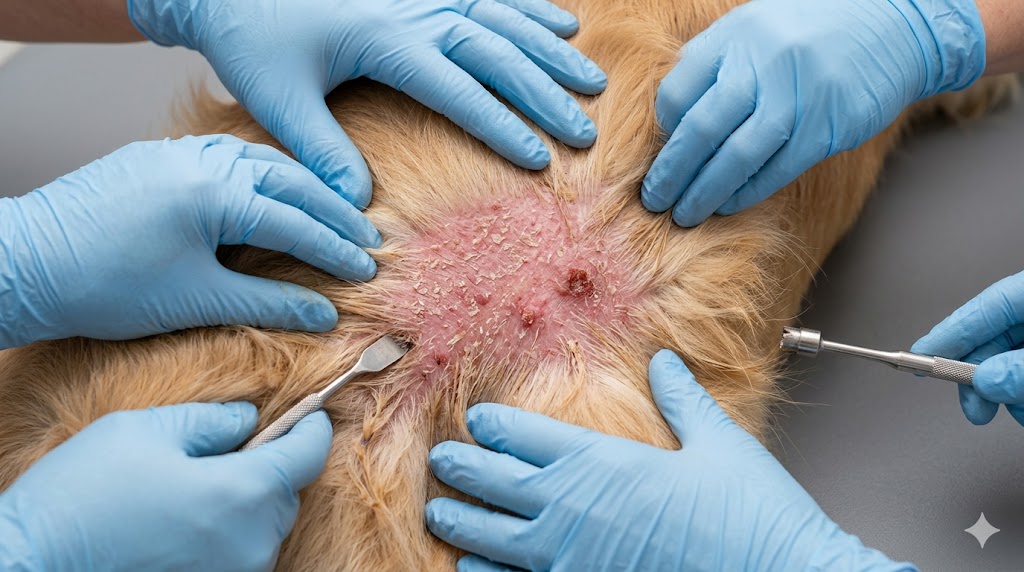
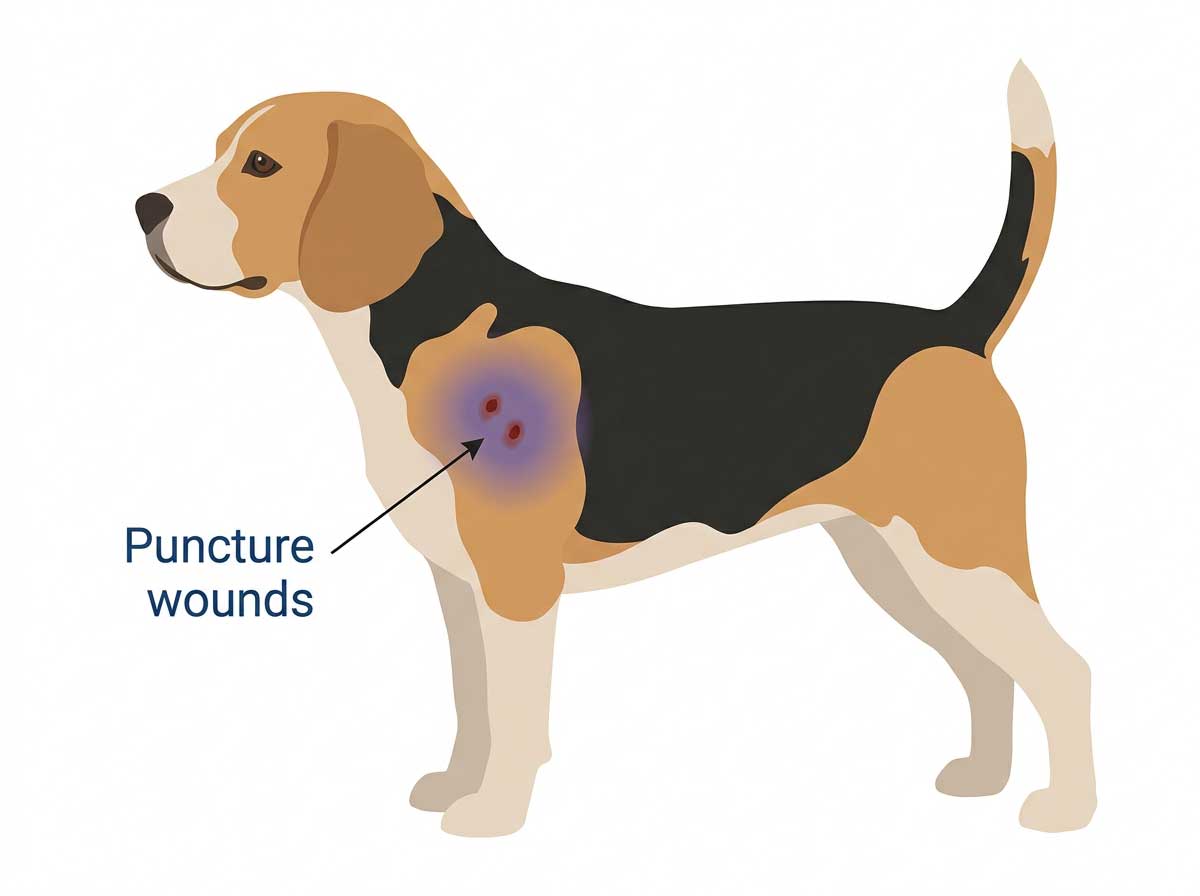
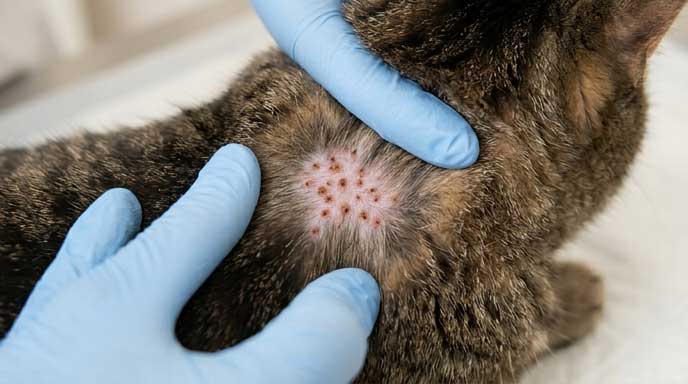
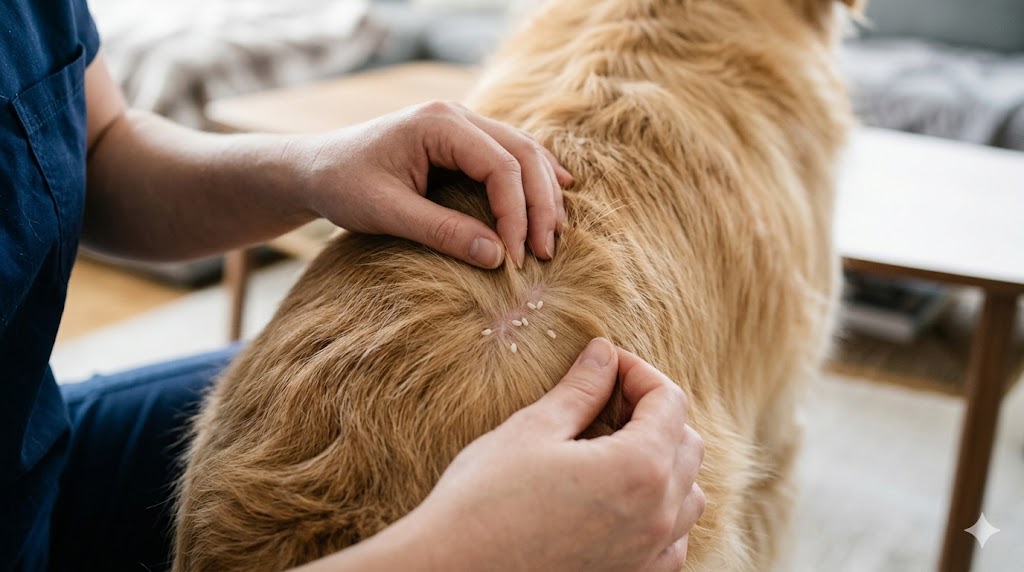
- ✓Skin and belly — small angry-red lump or draining tract anywhere on the body, often on the chest or belly after a dog has run through grass.
- ✓Eye — squinting, tearing, pawing at one eye, sometimes a visible foxtail under the eyelid.
- ✓Mouth — coughing, gagging, drooling, pawing at the throat (foxtail can lodge under the tongue or in the throat).
How to Get a Foxtail Out of a Dog's Ears — Vet Only
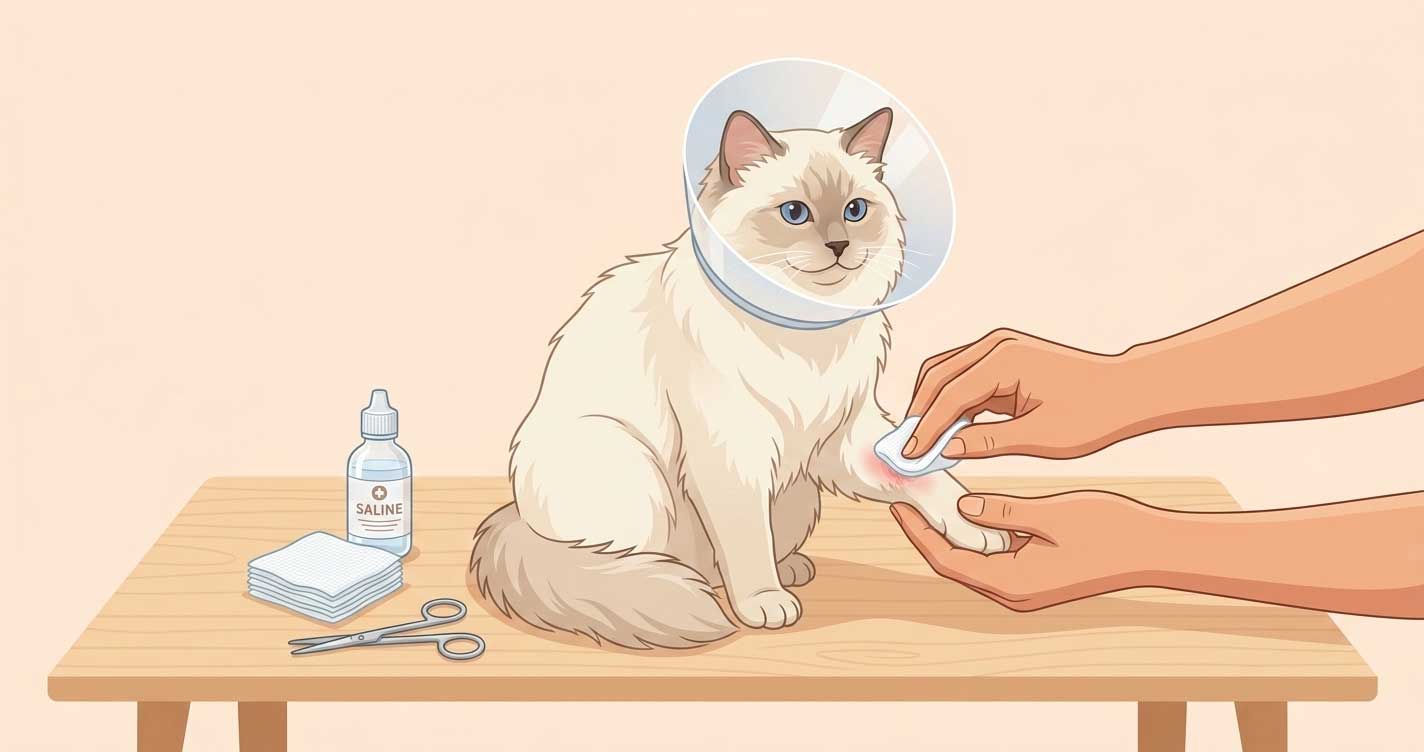
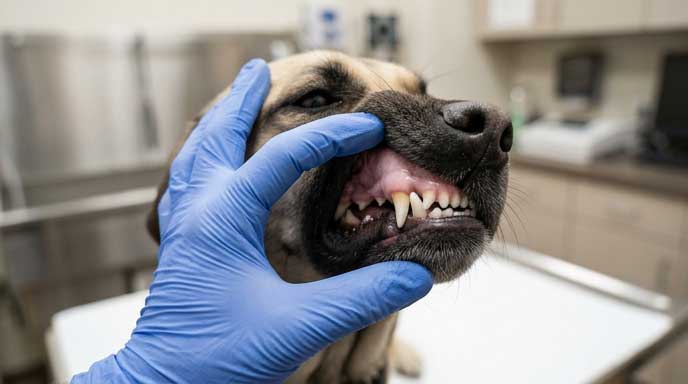
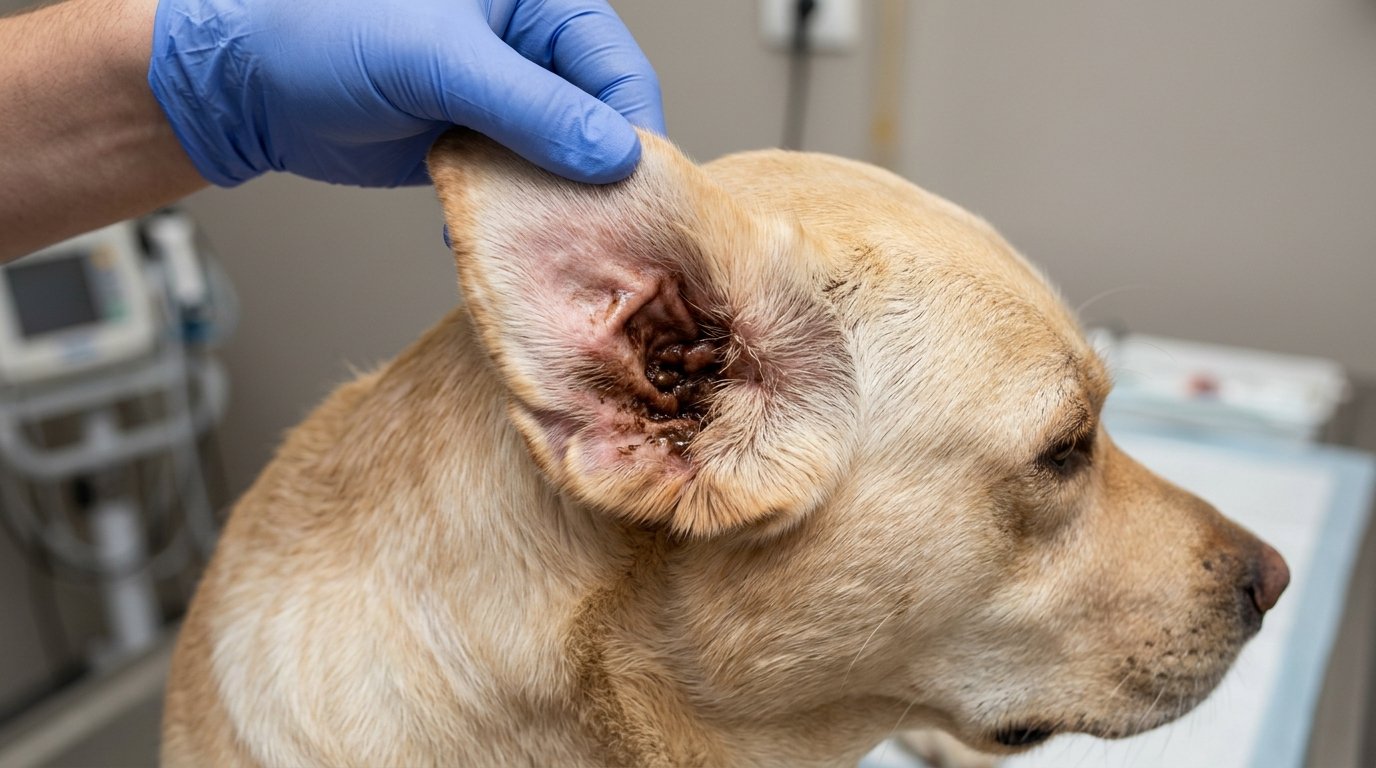
How to get foxtail out of dog's ears: the honest answer is you cannot — and trying at home almost always makes things worse. The barbs anchor the foxtail in tissue, the canal is narrow and dark, and any home tool (cotton swab, tweezers, water flush) pushes the foxtail deeper instead of pulling it out. Even owners who can see the foxtail at the canal opening should not attempt extraction. A proper vet extraction uses an otoscope plus special long forceps, often with sedation so the dog holds still. The vet checks the entire canal and the eardrum for migration damage at the same time.
Not sure if what you see is a foxtail or a different kind of ear problem? Compare a quick photo against bacterial, yeast, mites, and foreign-object patterns — our AI gives you a fast match before the vet visit.
Photo Check Now →What Will the Vet Do?
What will the vet do if there is foxtail embedded in a dog: the standard workup has four steps. First, an otoscope exam to find the foxtail and check the eardrum. Second, sedation if the dog is in too much pain to hold still safely. Third, careful extraction with long forceps under direct visualization. Fourth, a follow-up care plan for any secondary infection — usually a course of vet-chosen ear care, a check on the eardrum, and a 7-10 day recheck visit. Cost typically runs $200-600 depending on whether sedation and extra imaging are needed; deeper-tissue extractions cost more — see AKC's foxtail safety guide for current ranges.
Can a Dog Survive a Foxtail? Death Rates and Recovery
Can a dog survive with a foxtail depends almost entirely on how fast it is caught. Foxtails extracted from the ear canal within 24-48 hours: full recovery is the rule, not the exception — typically 99%+ of cases. Foxtails that migrate through the eardrum and into the middle or inner ear: still very treatable but more complex care, longer recovery, sometimes some permanent hearing change. How many dogs die from foxtails in the US each year is harder to pin down — published estimates range from several hundred to over a thousand — and almost all of those deaths come from foxtails that reach lungs, heart, or brain after migrating undetected through skin or nose for weeks. Ear-lodged foxtails caught early almost never fall into that category.
For a deeper general reference on dog ear problems and what to look for in the canal, see our main dog ear infection symptoms guide and the why your dog keeps getting ear infections companion if recurring issues are a worry. PetMD's foxtail reference covers each migration pattern in more detail.
5 Prevention Steps for Foxtail Season
Peak foxtail season runs May through October in most US regions. These five prevention steps cut foxtail incidents dramatically:
- ✓Avoid dry-grass walking in peak season — choose paved trails, mown parks, or watered yards instead of fields.
- ✓Inspect ears, paws between toes, armpits, belly, and nose after every walk during foxtail season — 30 seconds catches almost everything.
- ✓Trim long ear hair short on long-haired breeds; the ear opening is the entry point and short hair makes inspection much easier.
- ✓Brush your dog after every walk; a wide-tooth comb through long coats catches foxtails before they migrate into skin.
- ✓Yard maintenance — mow grasses before they go to seed, and clear dry seed heads from fence lines where dogs sniff.
Frequently Asked Questions
How to get foxtail out of dog's ears?
+
Can a dog survive with a foxtail?
+
What will the vet do if there is foxtail embedded in a dog?
+
What does a foxtail infection look like?
+
How do I know if my dog has a foxtail in the ear?
+
Are foxtails seasonal? When is the worst risk?
+
Spotted something that might be a foxtail? Let AI take a quick look.
Upload a clear close-up of your dog ear — our AI compares against bacterial, yeast, mites, and foreign-object patterns and tells you the most likely match in seconds so you can decide whether to head to the vet now.
Disclaimer: This article is for informational purposes only and is not a substitute for professional veterinary advice. Always consult a licensed veterinarian for diagnosis and treatment of your pet's health conditions.