Cat Skin Scabs No Fleas: 7 Real Causes (With Pictures)
Cat skin scabs but no fleas? 7 real causes — miliary dermatitis, allergies, bacterial / fungal infection, cat acne, sun damage — pictures + when to see vet.
Published 2026-06-20
Cat Skin Scabs No Fleas? Get Instant AI Pattern Check
Upload a close-up photo of your cat's skin scabs — the AI compares against miliary dermatitis, bacterial, fungal, allergy, and acne patterns and tells you urgency + when to see vet.
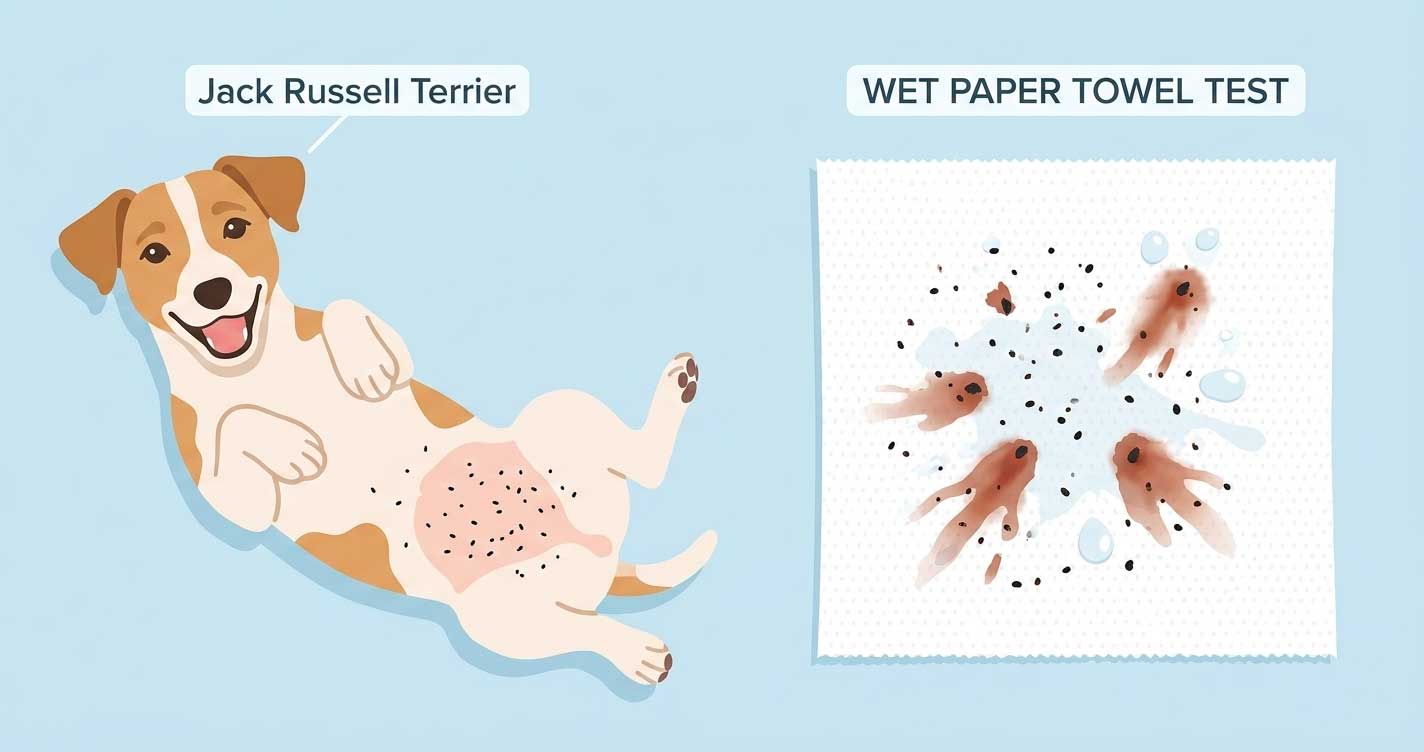
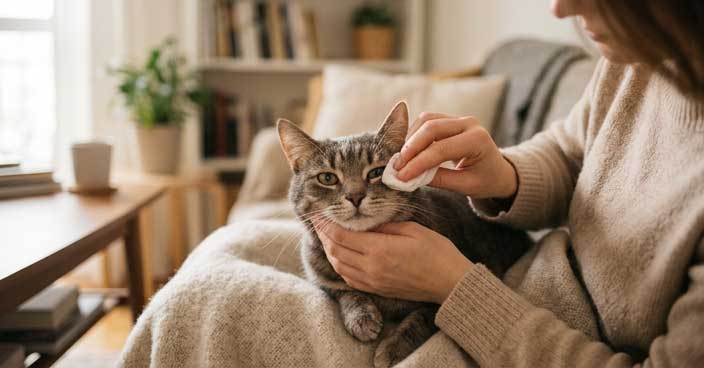
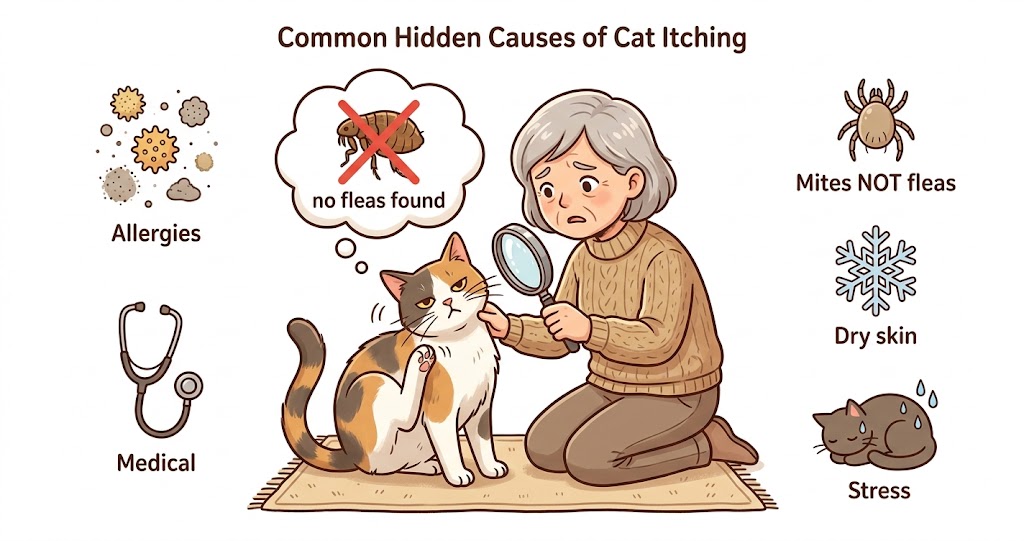
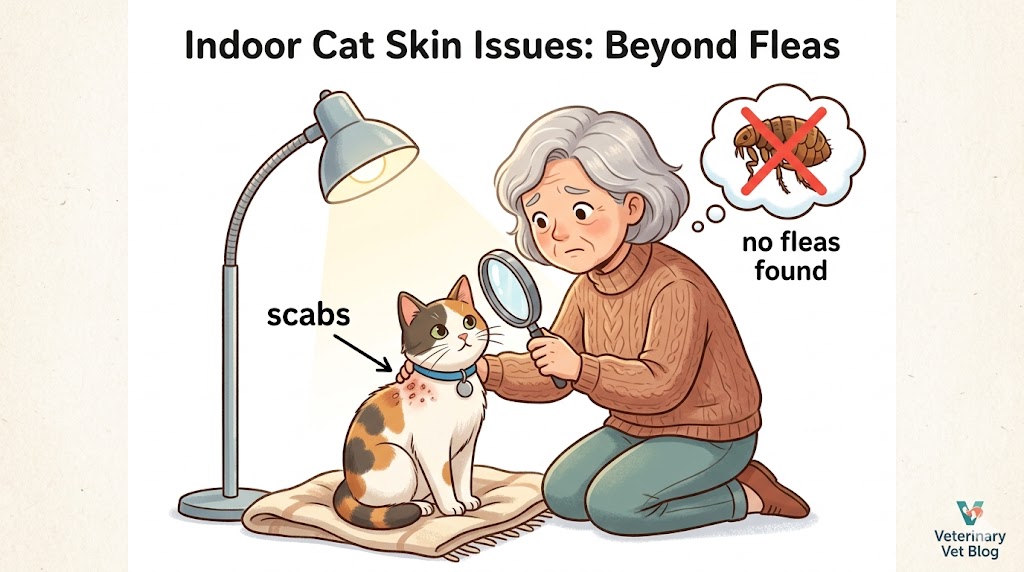
Cat skin scabs no fleas — it is one of the most-searched cat skin queries online, and for good reason. You comb your cat carefully, you find no fleas, no flea dirt, and yet the cat keeps scratching and the small crusty scabs keep showing up on the neck, back, ears, or belly. The truth is that fleas are only the #1 reason cats get scabs — they are not the only reason. This guide covers the 7 real causes of crusty scabs on cats when fleas are not the answer, with visual signs for each, and a clear rule for when to see the vet versus when to monitor at home.
Already saw cat skin scabs and want a quick visual pattern check? Upload a close-up photo for instant AI identification.
Identify Cat Skin Scabs →Cat Skin Scabs No Fleas — Why It Happens
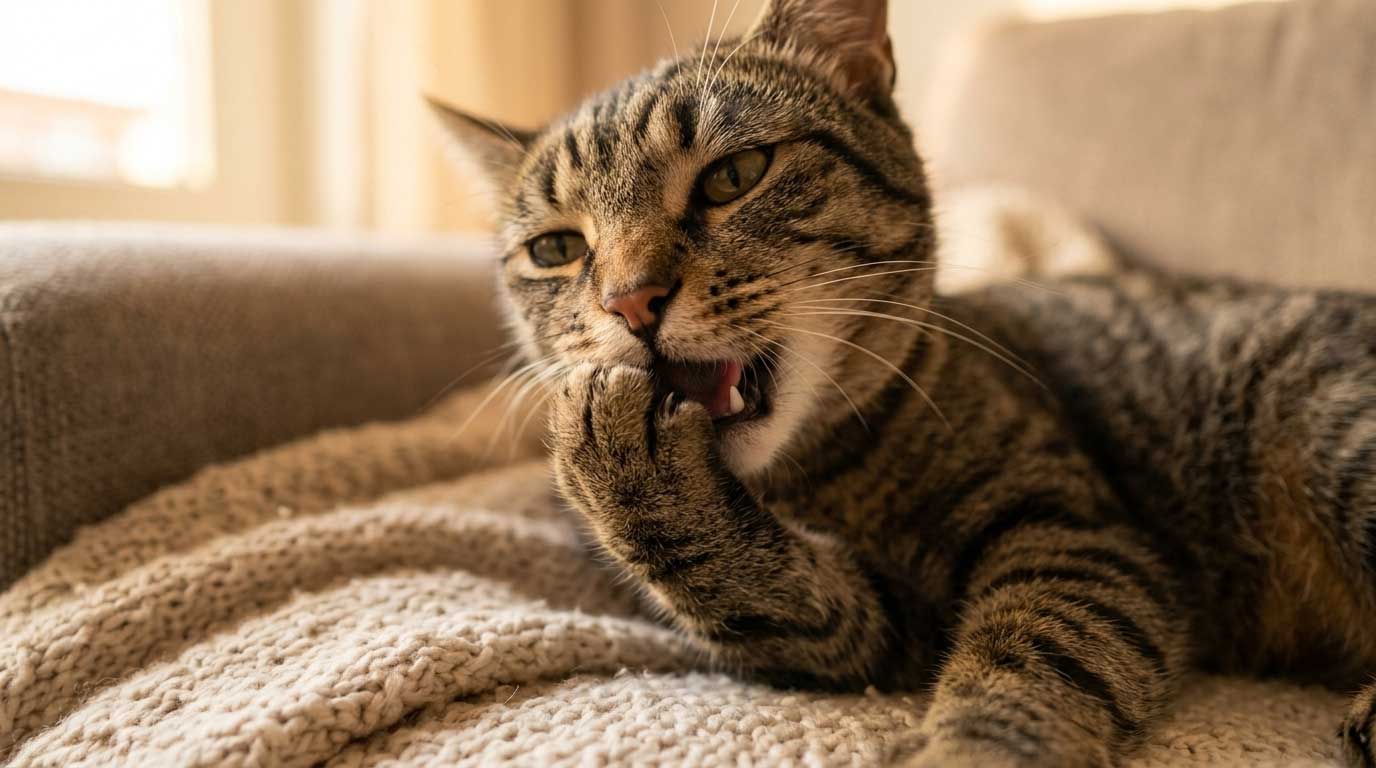
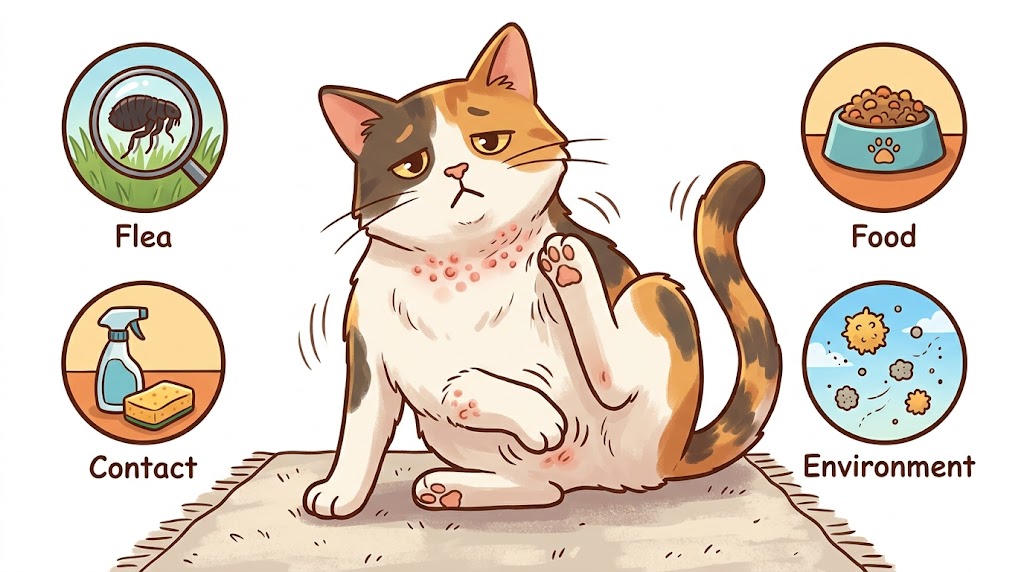
When you find scabs on cats skin but no fleas, the cat is still scratching, licking, or over-grooming for a reason — and the scab is the visible end-result of that scratching, not the original problem. The original problem is almost always one of these 7 categories: miliary dermatitis from a non-flea allergy, food or environmental allergy, bacterial skin infection (pyoderma), fungal infection (ringworm), cat acne on the chin, sun damage on white-coated cats, or eosinophilic granuloma complex. Solving the cat scabby skin problem means matching what you see to the right cause, then a vet exam to confirm and start care. The sections below walk through each one with the visual pattern — including miliary dermatitis cat scabs, ringworm cat scabs, bacterial pyoderma, and the chin-area cat acne pattern.
Not sure which of the 7 causes matches what you see on your cat? Upload a photo for an instant AI pattern check.
Check Cat Skin Scabs →1. Miliary Dermatitis — The Most Common Pattern
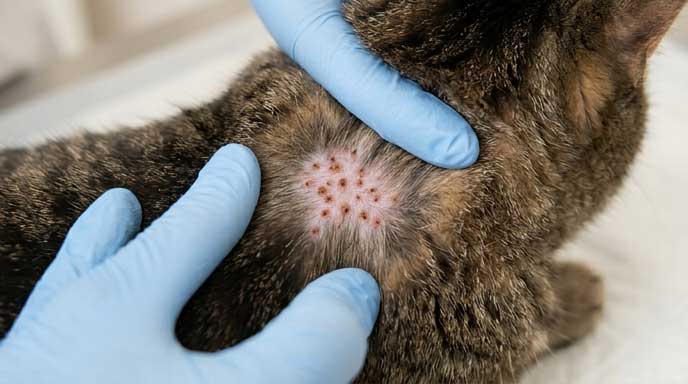
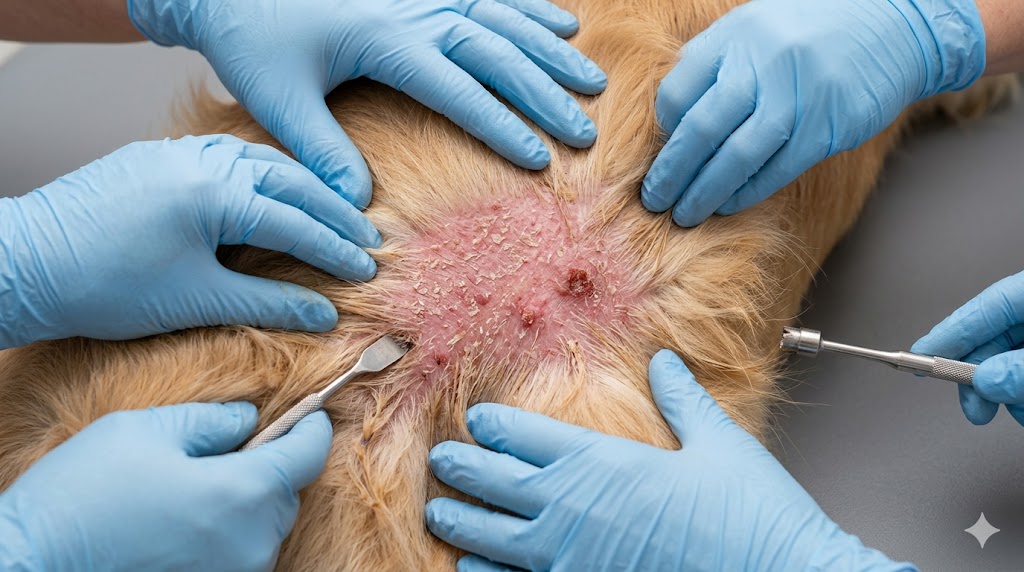
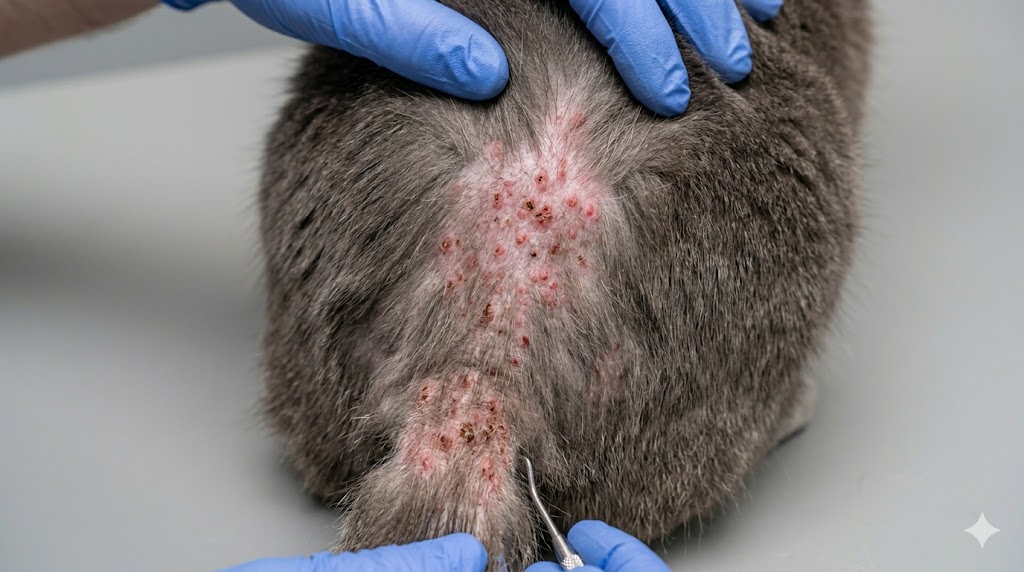
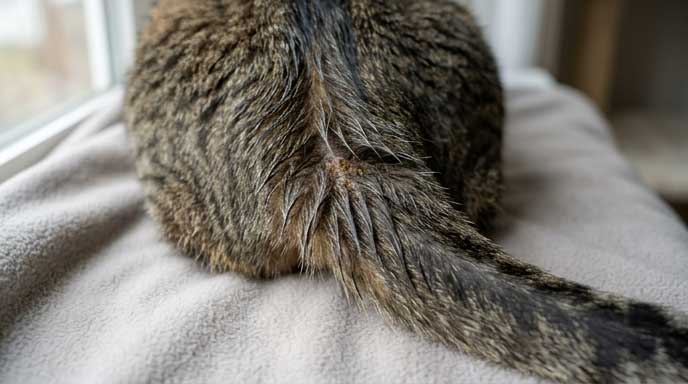
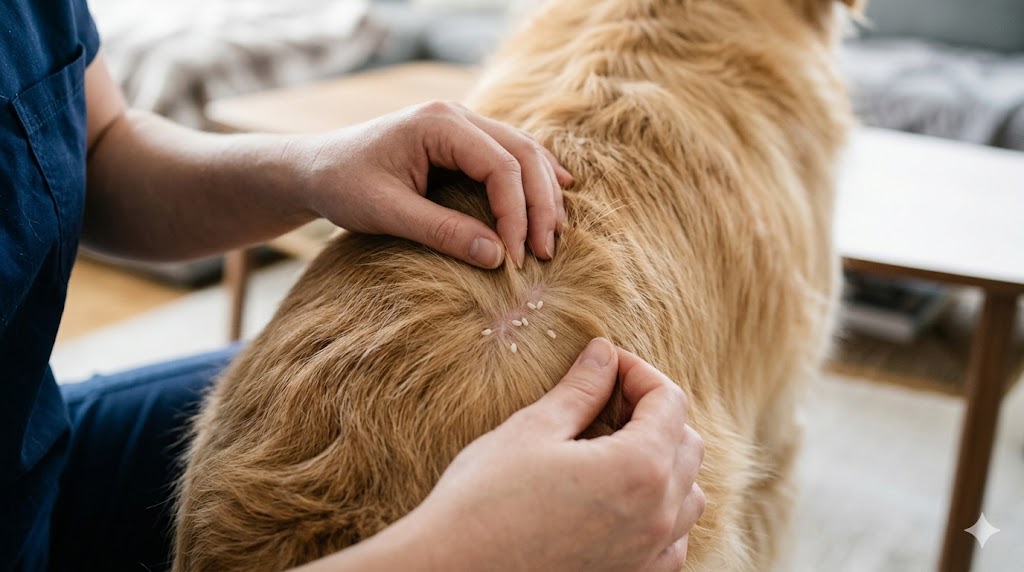
Miliary dermatitis (also called scabby cat disease) is the most common pattern behind cat skin scabs no fleas. It is named after millet seeds — the scabs feel like tiny grain-sized crusts when you run your hand over the cat's skin, often along the spine, base of the tail, and neck. The cat is intensely itchy and may over-groom. The big surprise: flea allergy is by far the most common trigger, even when you cannot see a single live flea on the cat — because a flea allergic cat can react severely to just one or two bites and groom away every visible flea. But miliary dermatitis can also be triggered by mites (Cheyletiella, Notoedres), food allergy, environmental allergy, or fungal infection. VCA Hospitals' miliary dermatitis in cats guide walks through the diagnostic workup.
How to tell if it is miliary dermatitis: run your fingers gently against the grain of the cat's coat from the shoulders down to the tail base. If you feel many small bumpy crusts you cannot easily see, that is the signature. The vet will rule out fleas first (even when you cannot see any), then move to allergy testing.
2. Cat Skin Allergies — Food and Environmental
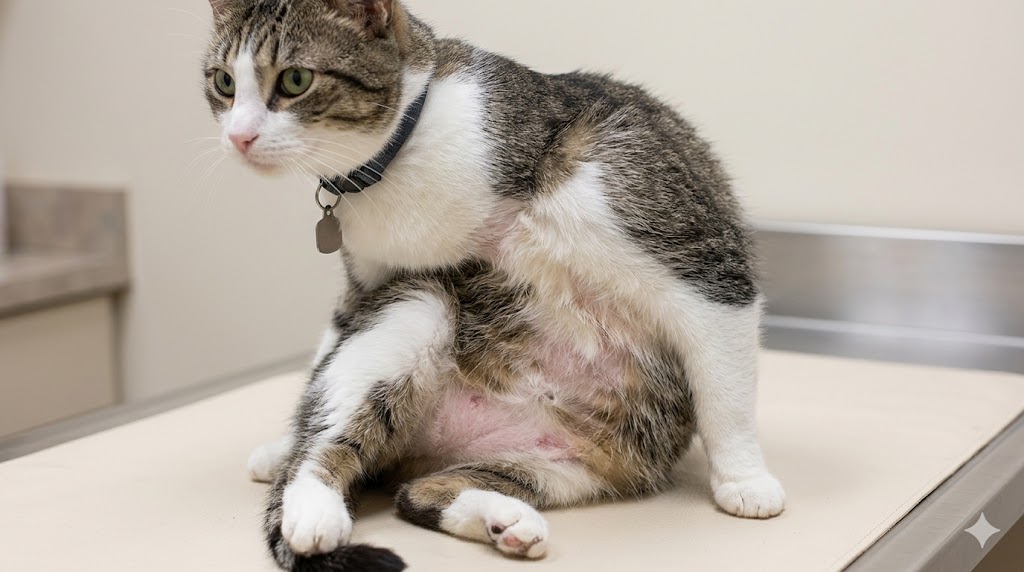
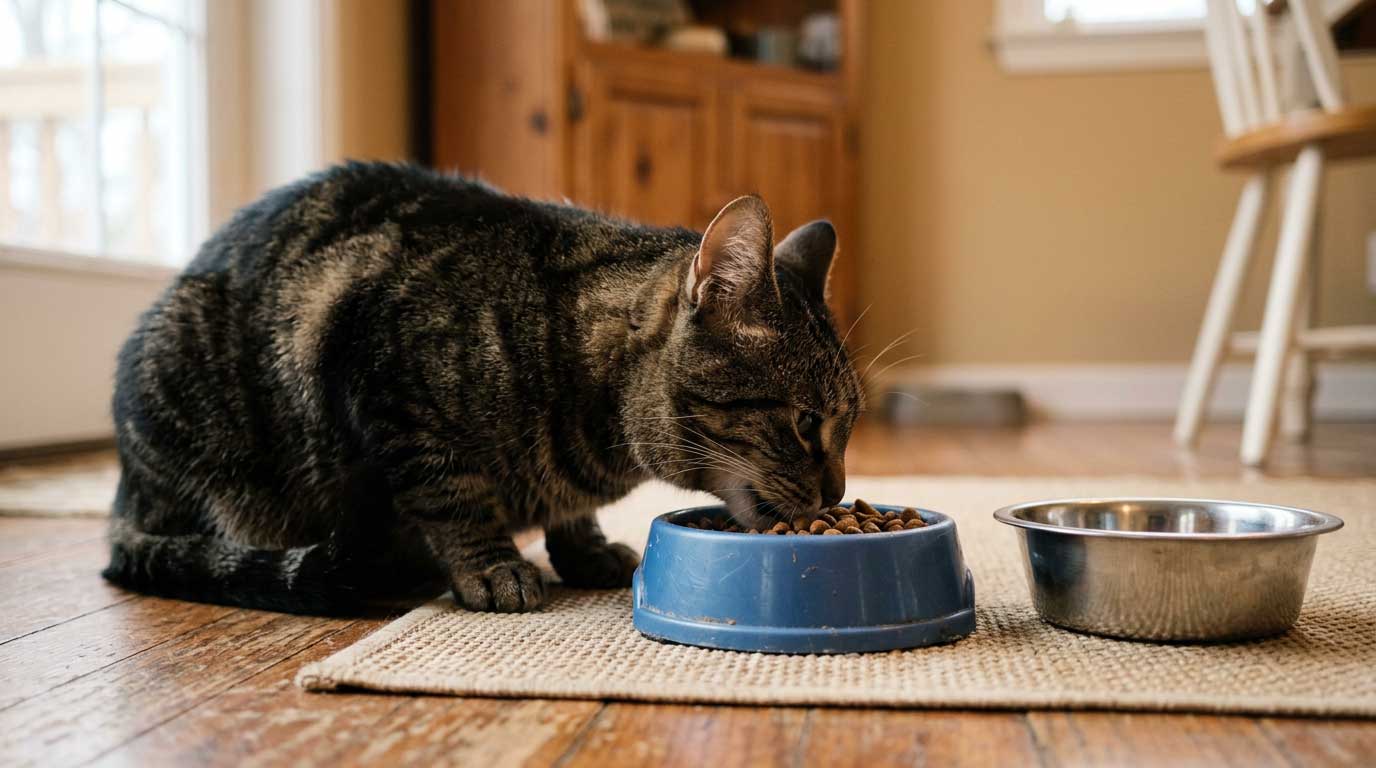
Allergies are the second-biggest reason for cat skin scabs no fleas. Cats can be allergic to specific ingredients in their food (most commonly chicken, fish, beef, dairy), environmental triggers like pollen / dust mites / mold, or even plastic from food bowls. The scratching → scabbing pattern looks similar to miliary dermatitis, but allergic scabs often concentrate around the face, neck, paws (atopic dermatitis pattern), or symmetrically on the belly. Cats with food allergy may also have GI symptoms (occasional vomiting, soft stool). The vet will use an elimination diet trial for food allergies (8-12 weeks of a single novel-protein hydrolyzed diet) or intradermal allergy skin testing for environmental allergens. Cornell Feline Health Center's feline atopic syndrome reference explains the diagnostic process.
Wondering if your cat's scabs match an allergy pattern or miliary dermatitis? Upload a close-up for instant AI comparison.
Compare Cat Skin Patterns →3. Bacterial Skin Infection (Pyoderma)
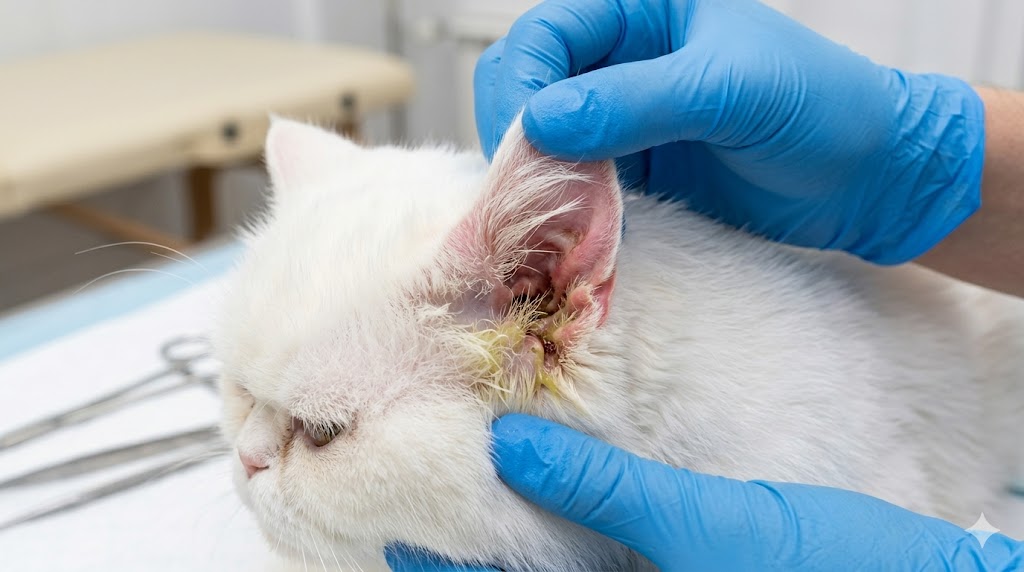
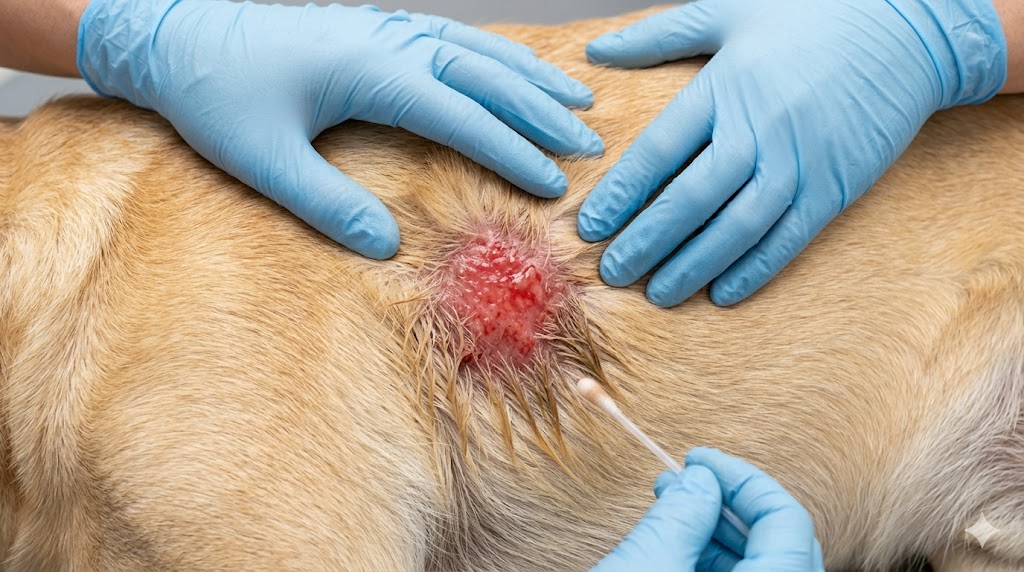
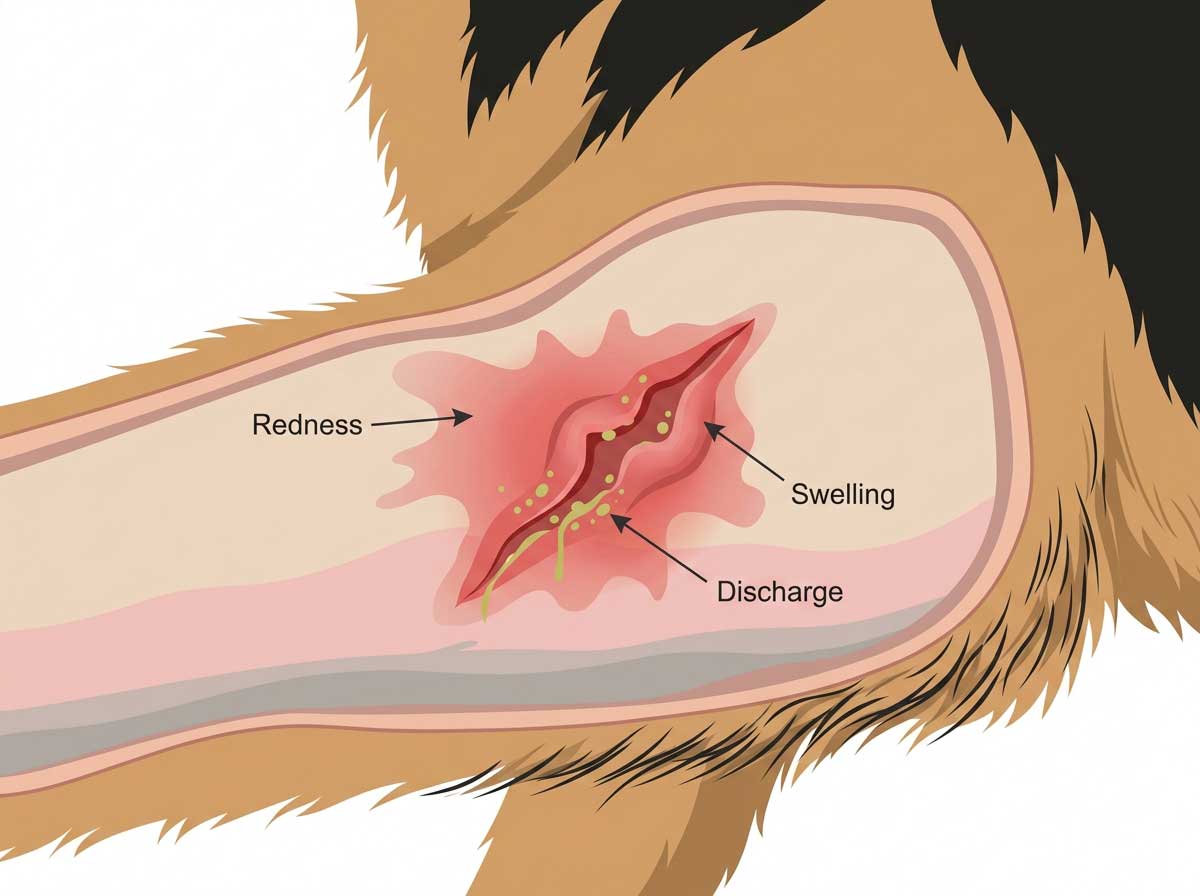
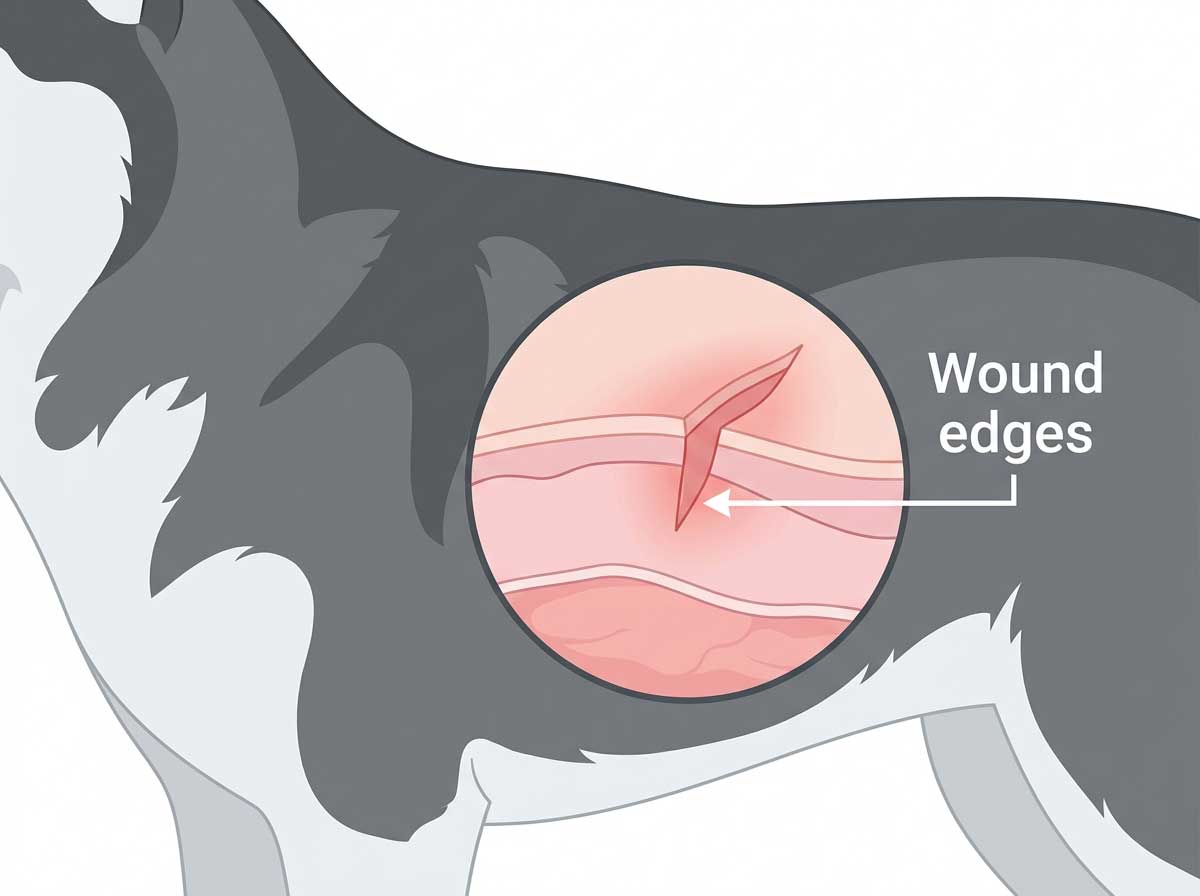
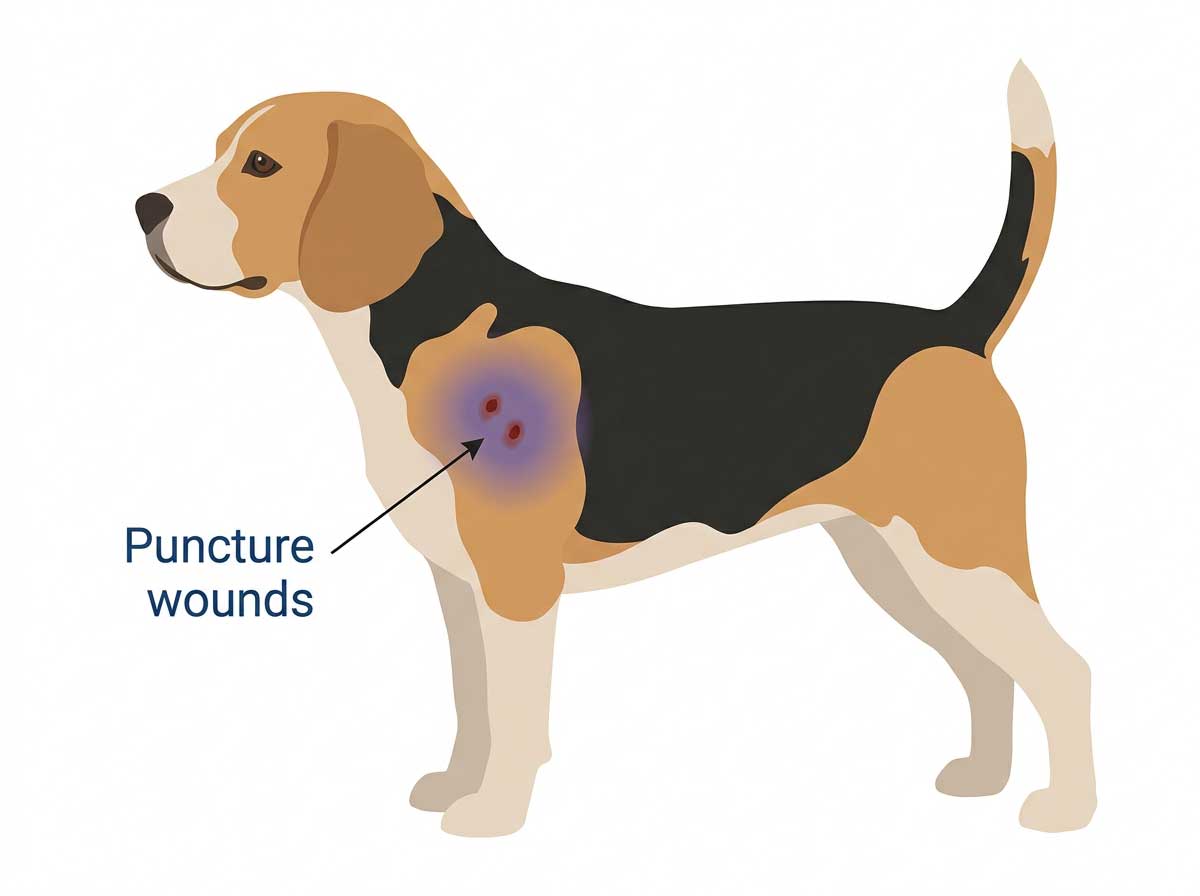
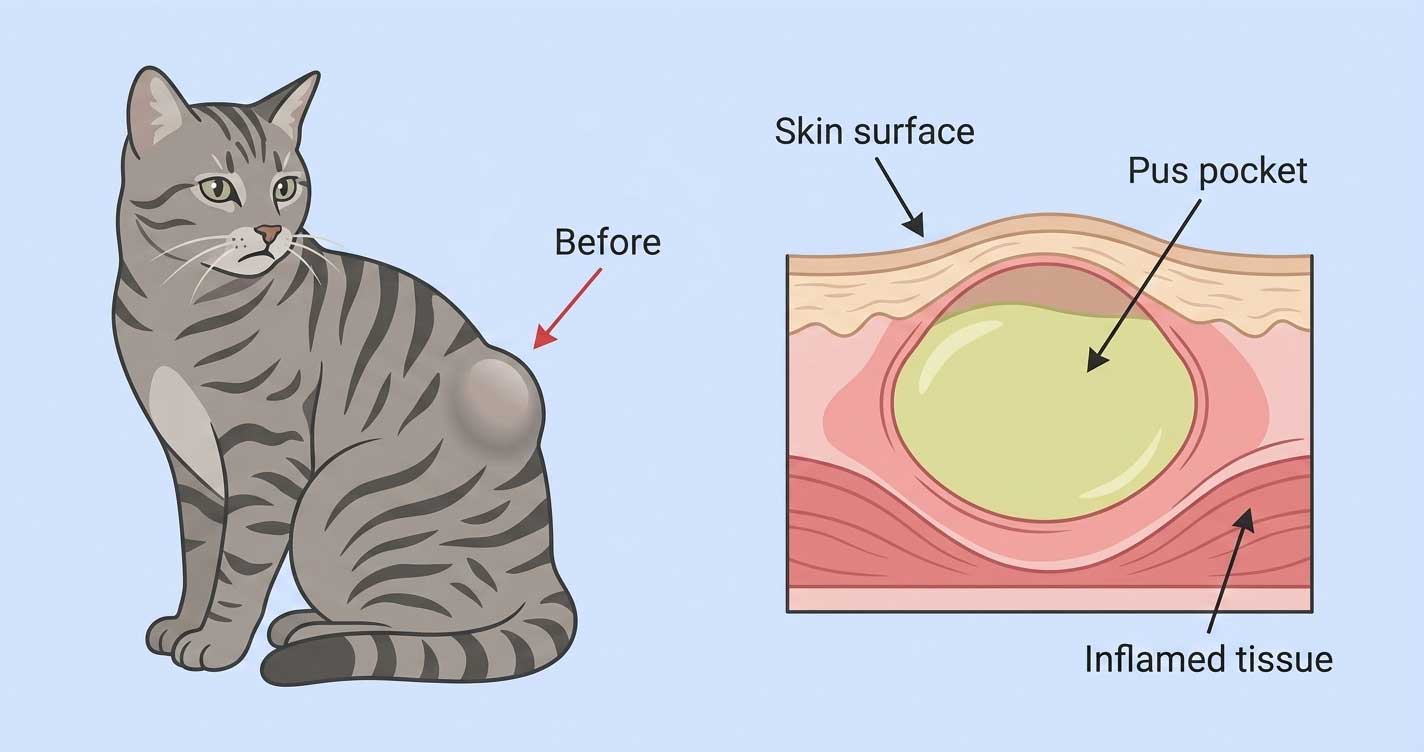
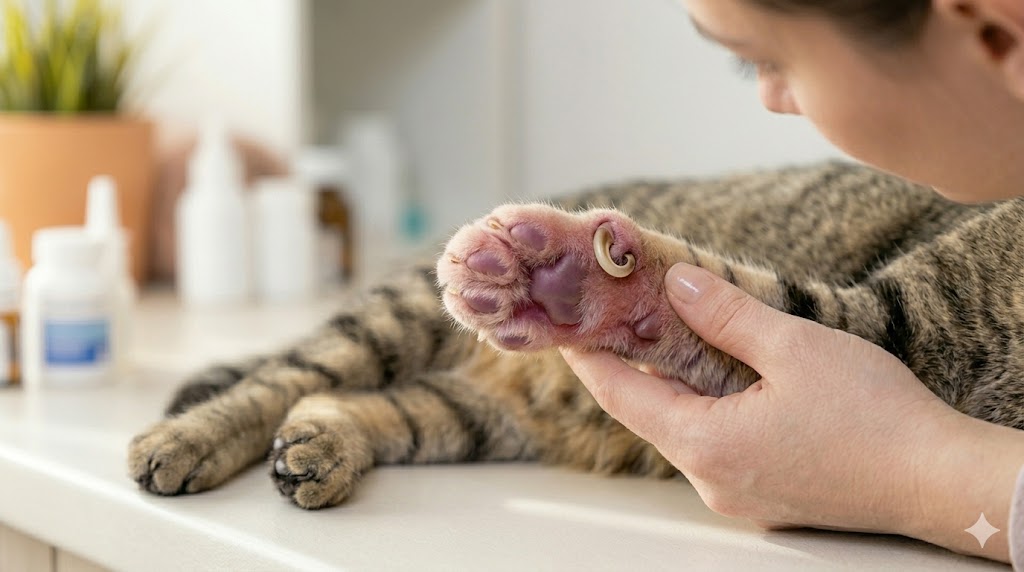
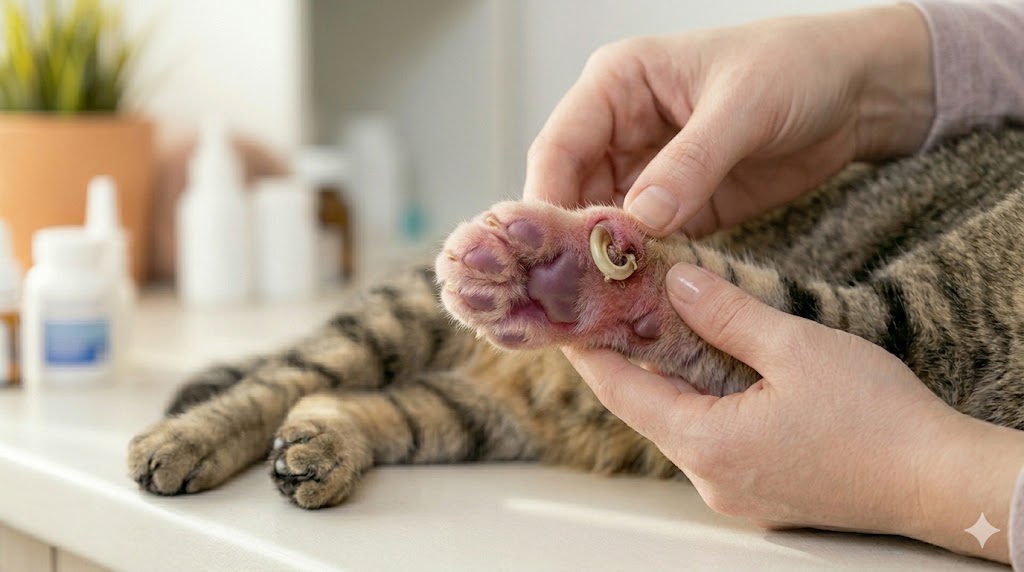
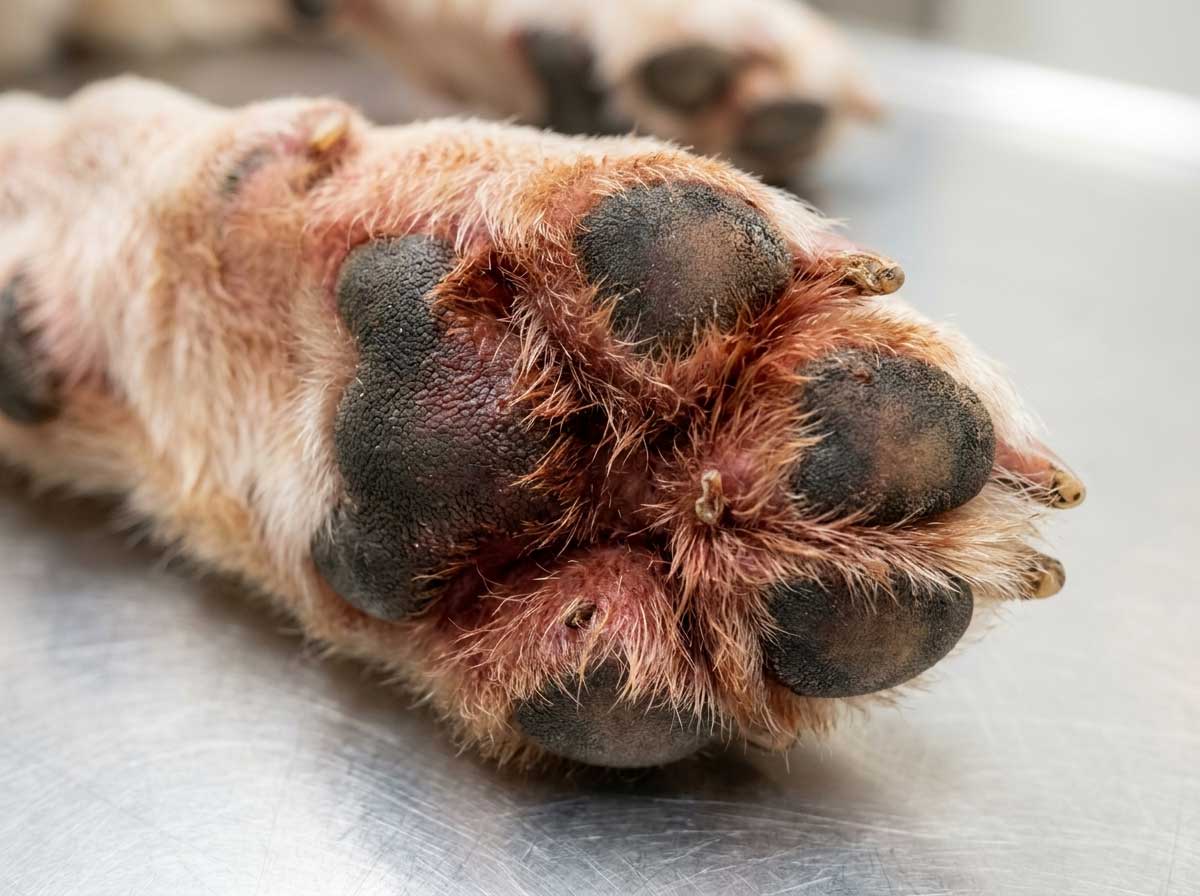
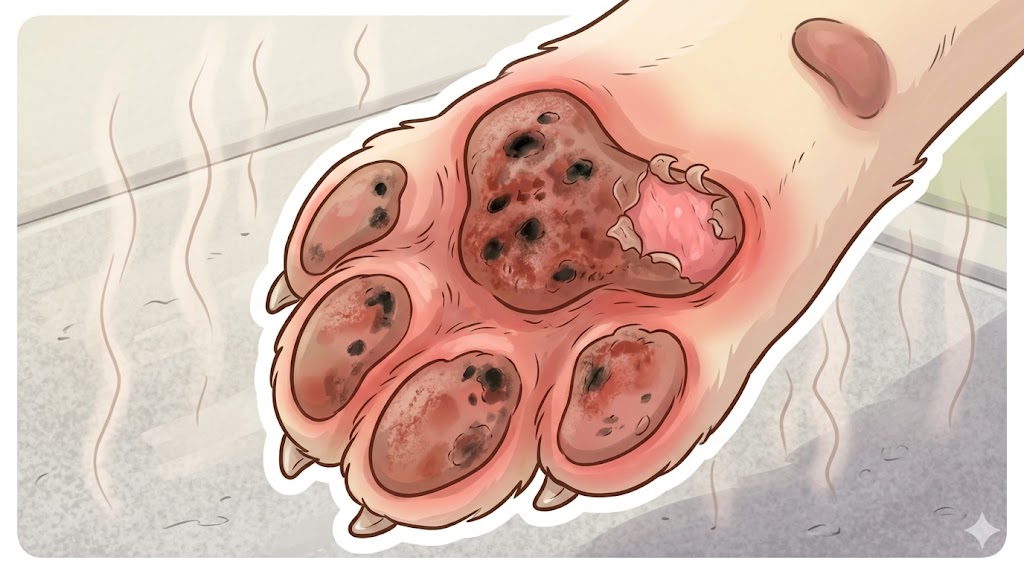
Cat bacterial skin infection (pyoderma) often shows up as red inflamed skin with small yellow pustules (pus-filled bumps) and crusts. It typically starts as a secondary problem on top of an underlying scratch wound, allergy, or fungal infection — the cat damages the skin barrier through licking, and bacteria like Staphylococcus pseudintermedius then move in. The scabs look slightly different from miliary dermatitis scabs: pyoderma crusts are larger, often have a yellowish tint underneath, and the surrounding skin is visibly red rather than just bumpy. Cat scratch skin infection from a fight bite is a special urgent version — it can progress to a hot swollen abscess within 24-48 hours. A vet exam with cytology confirms bacterial pyoderma.
4. Fungal Infection (Ringworm)
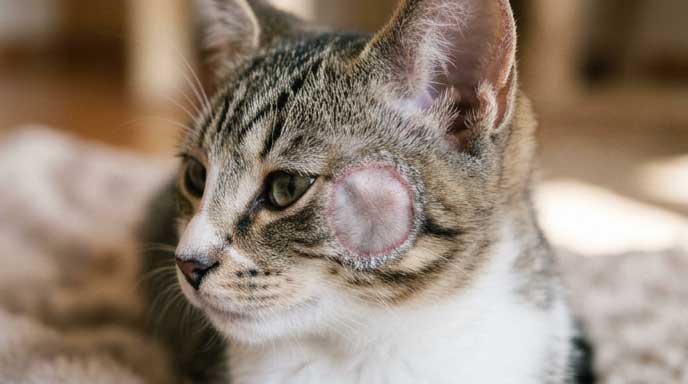
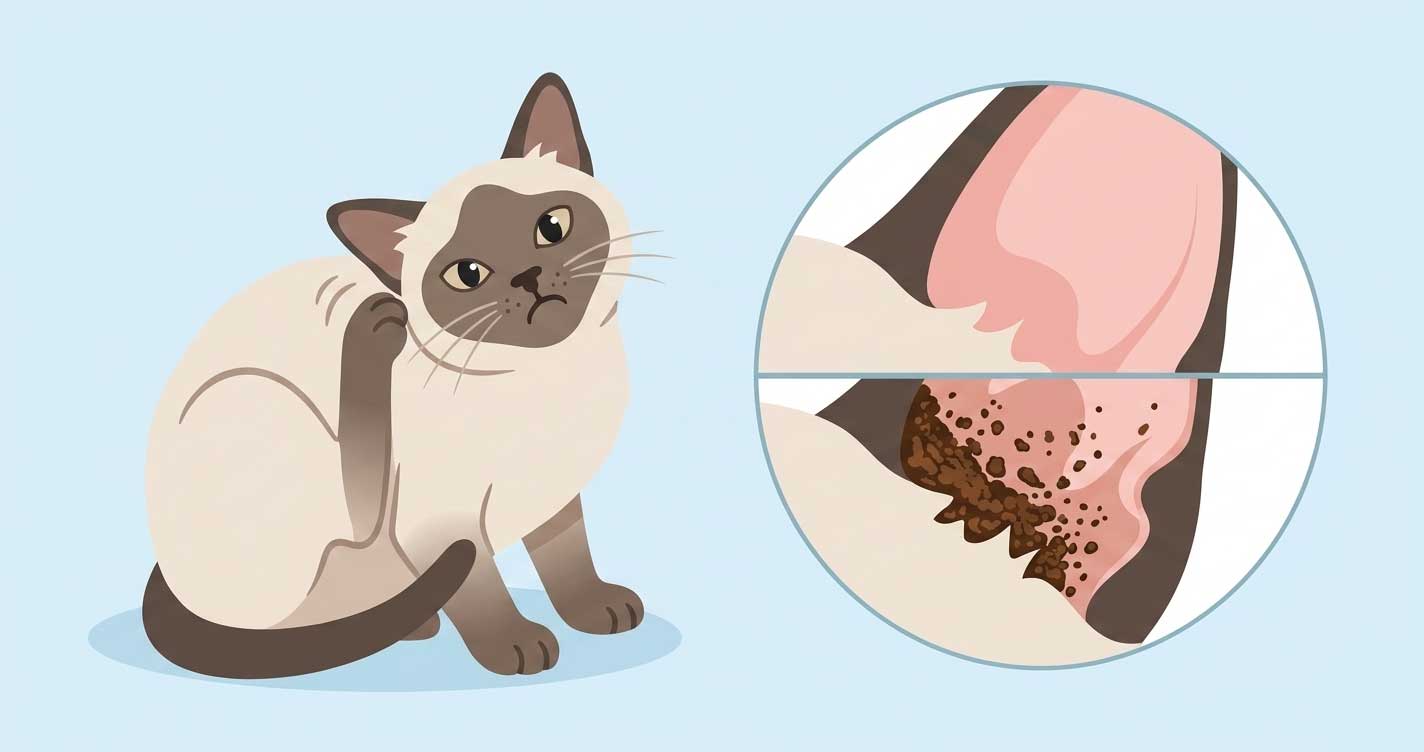
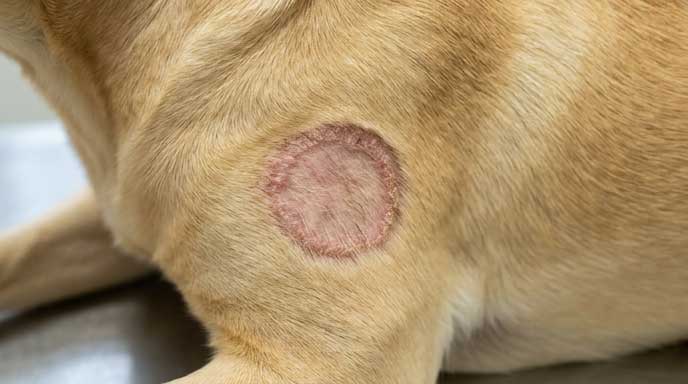
Ringworm (fungal infection, dermatophytosis) is a sneaky cause of cat scabs no fleas because the visual pattern is distinctive but easy to miss in long-haired cats. Look for circular bald patches with raised scaly edges and a crusty center — most commonly on the face, ears, paws, and along the back. Kittens, long-haired breeds (Persian, Maine Coon), and immunocompromised cats are most at risk. Ringworm is highly contagious to humans (especially children) and other pets in the household, so wear gloves when handling the cat and disinfect bedding regularly. The vet diagnoses ringworm with a fungal culture (takes 1-3 weeks) or a Wood's lamp UV exam (only catches ~50% of cases). PetMD's cat ringworm overview covers the diagnostic process.
5. Cat Acne — When Scabs Are Only on the Chin
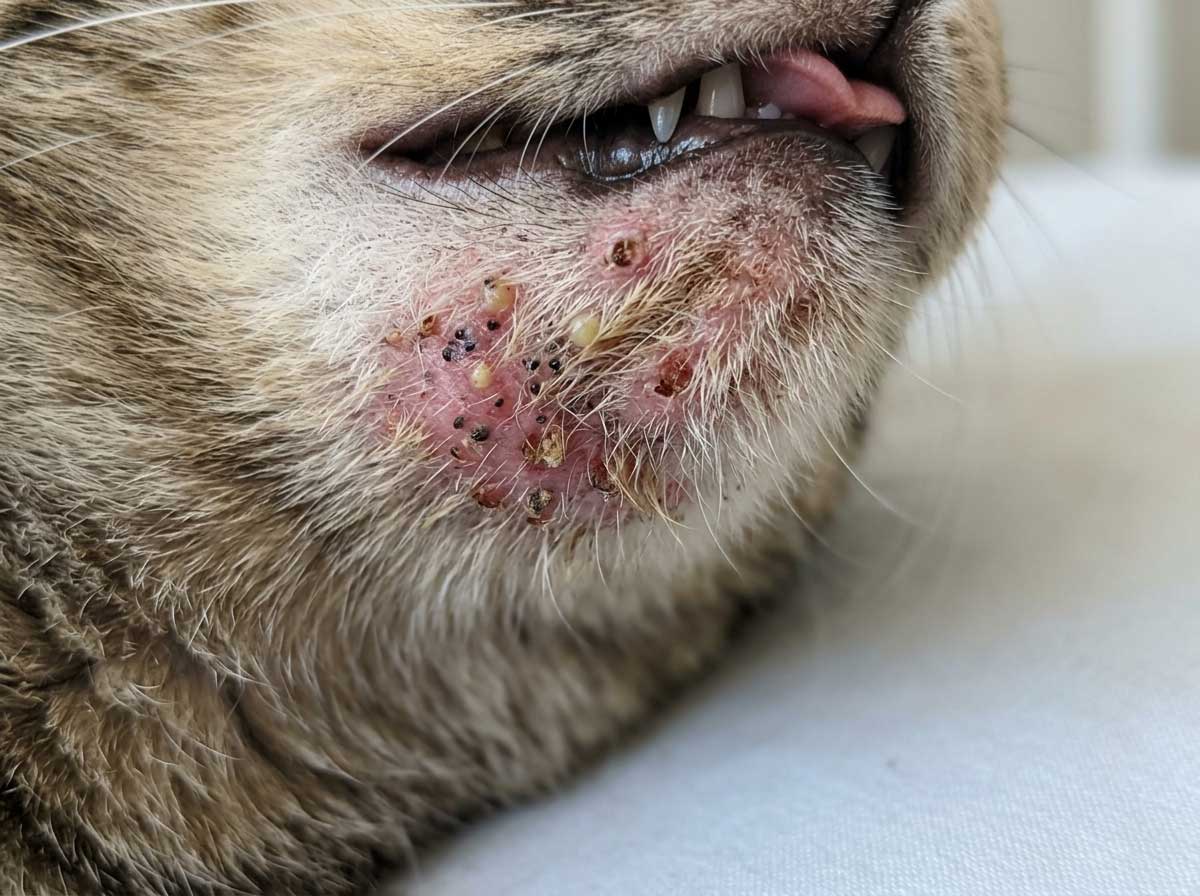
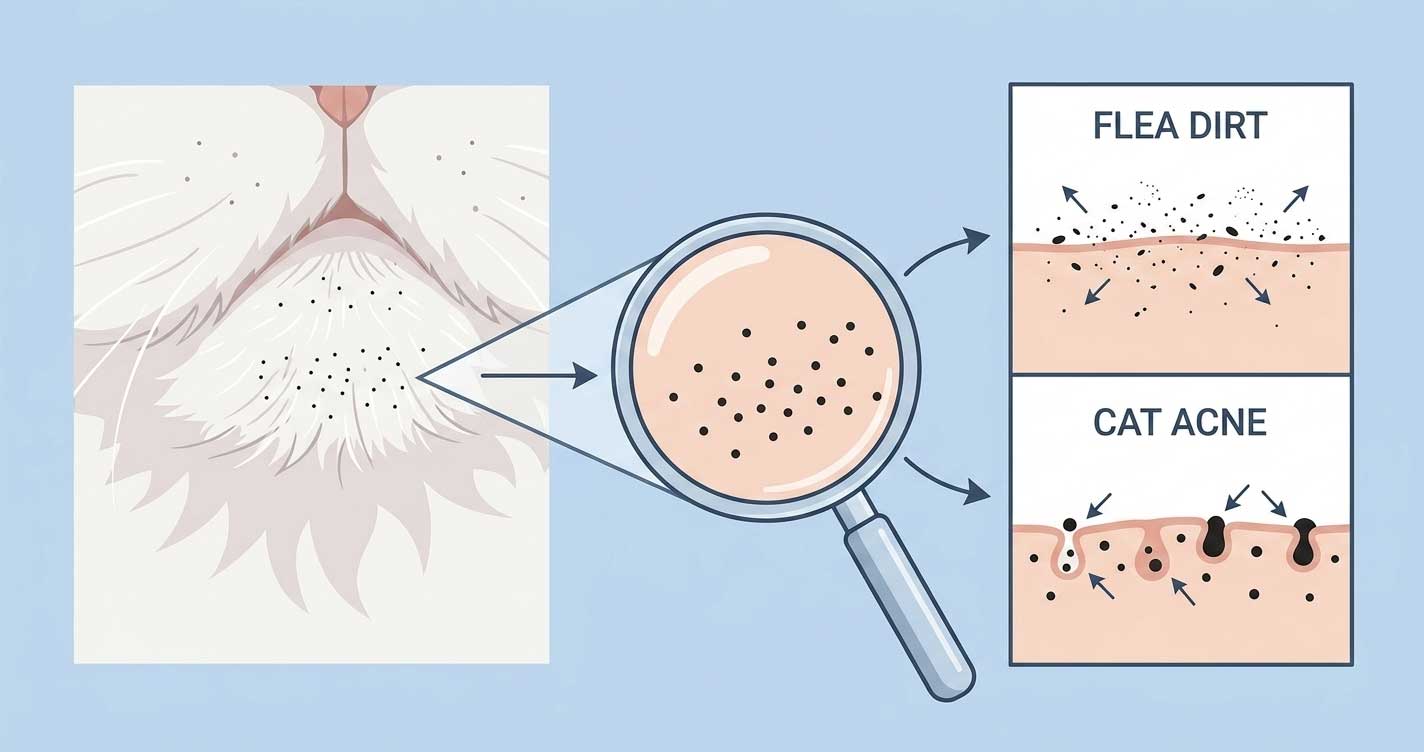
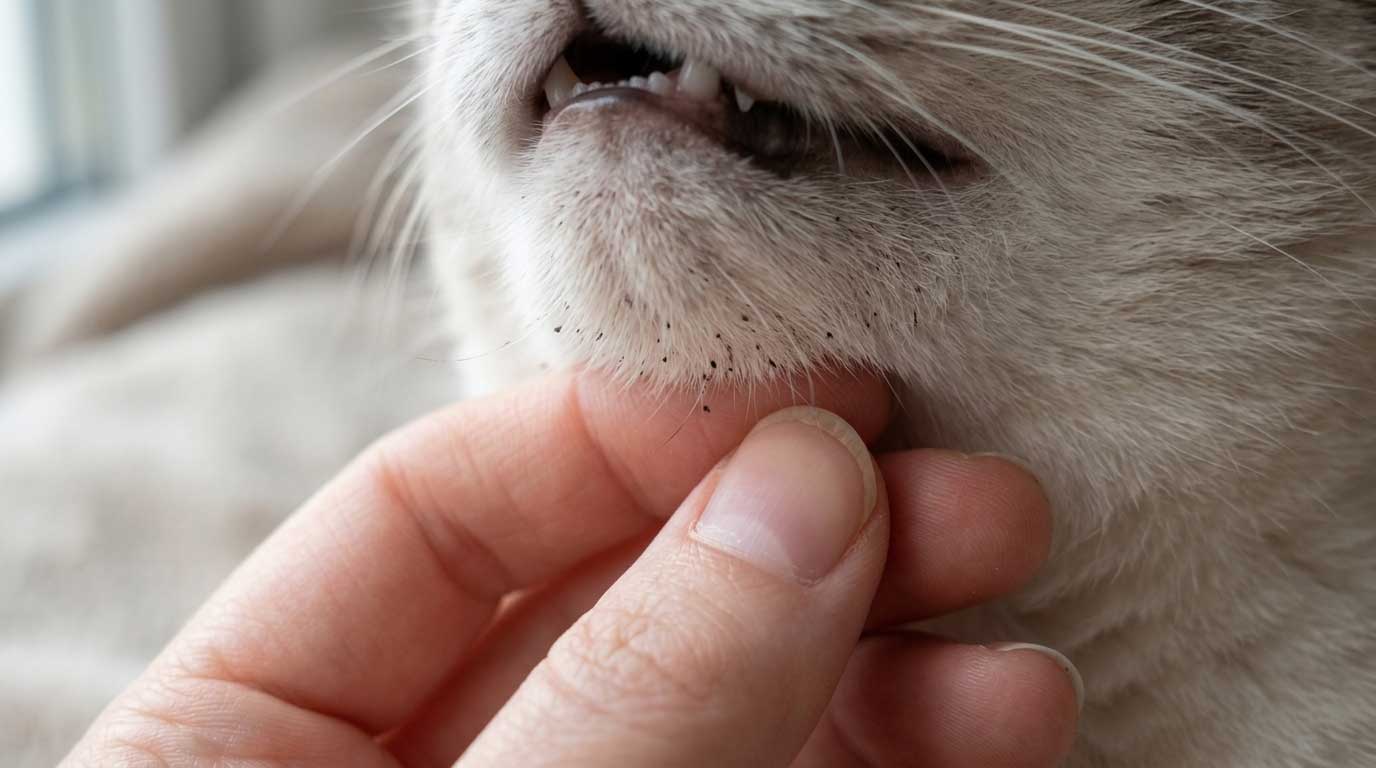
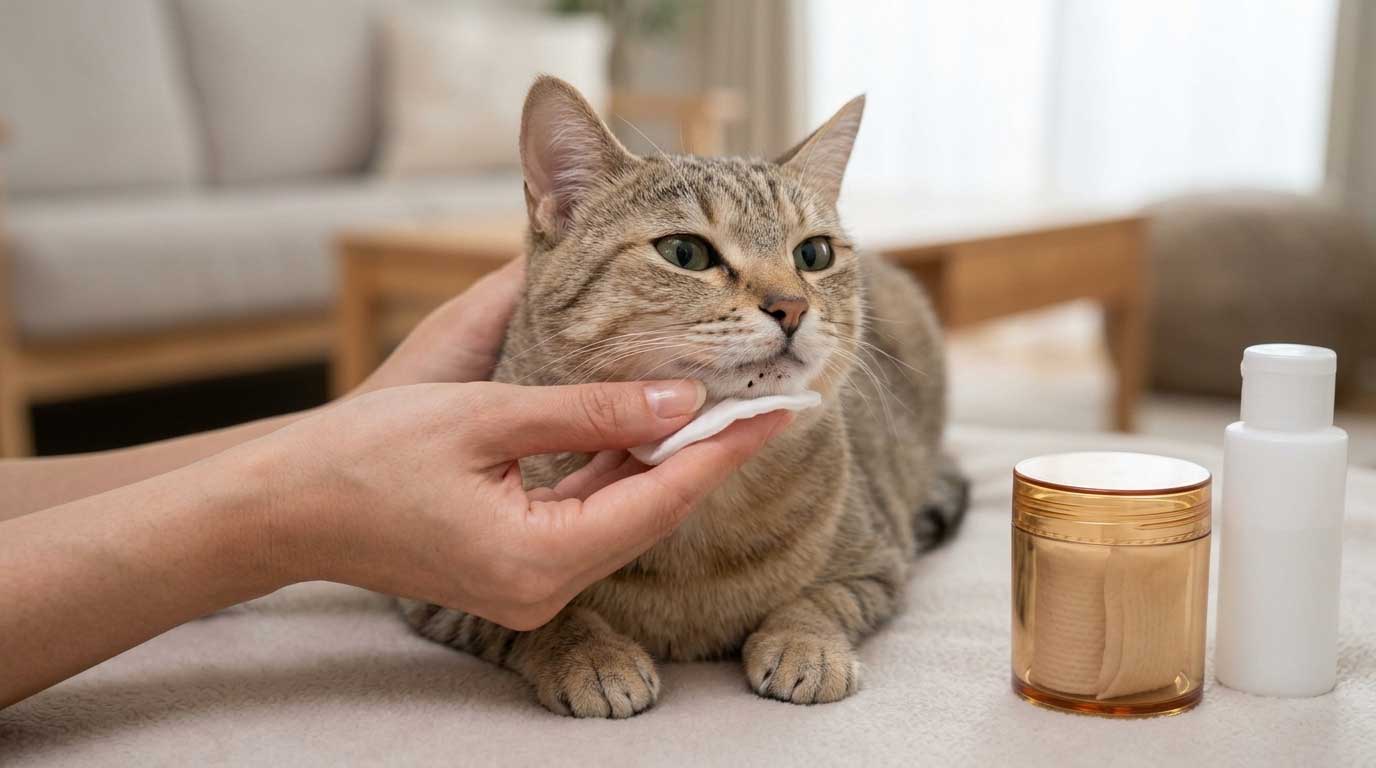
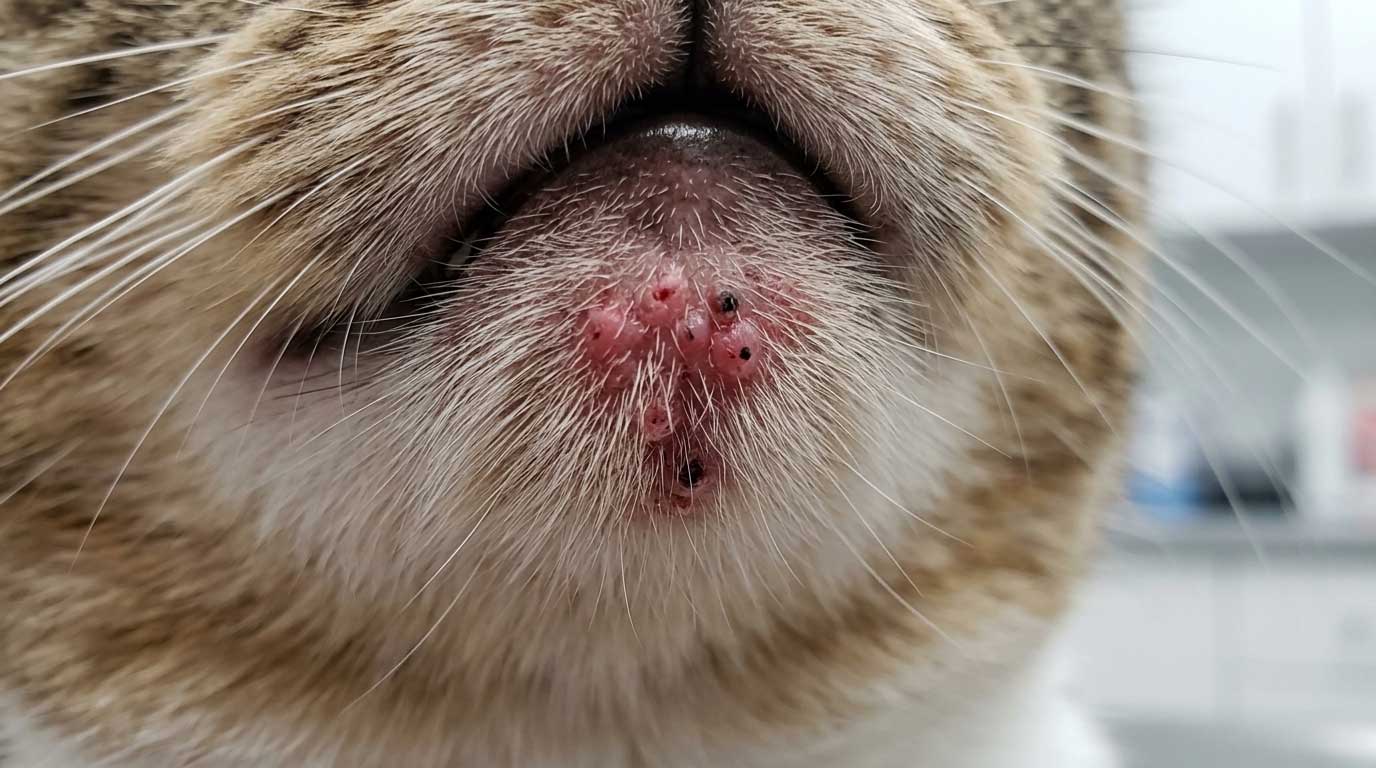
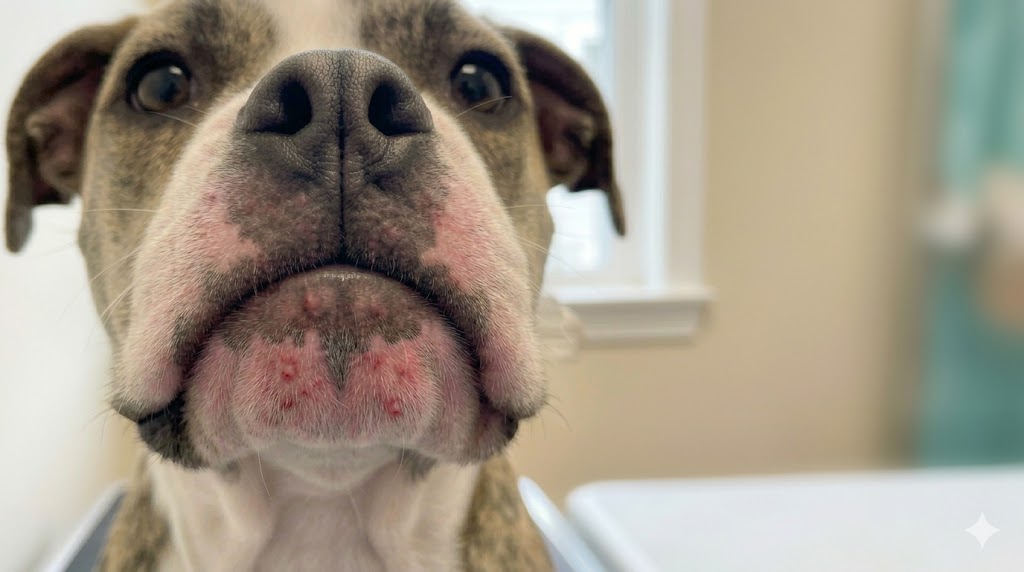
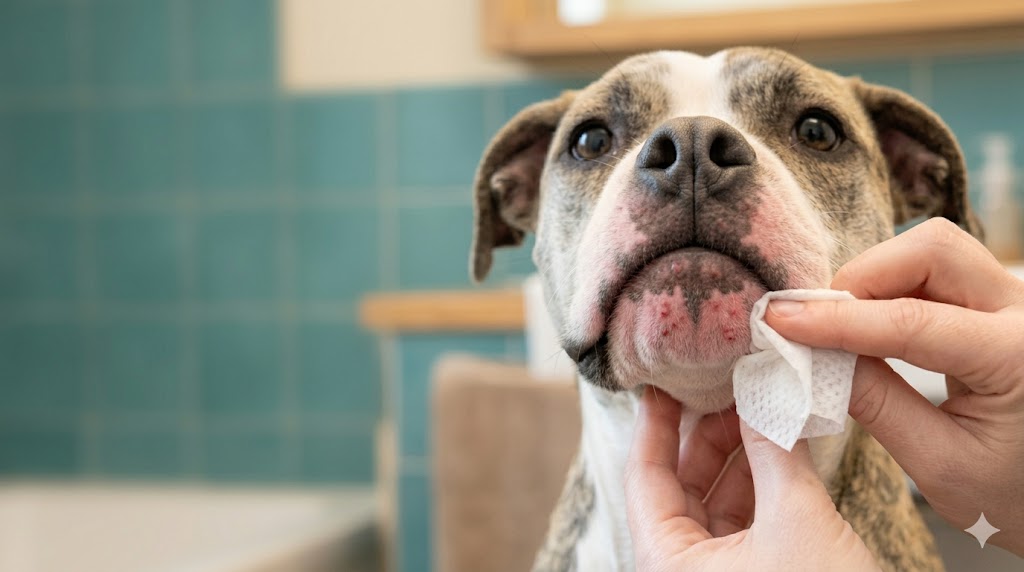
If the scabs on your cat are ONLY on the chin (not anywhere else on the body), the cause is almost certainly feline acne, not a general skin condition. Cat acne starts as small black dots (comedones) on the chin and can progress to pustules, crusty scabs, and even cellulitis in severe cases. The leading trigger is plastic food and water bowls — they harbor bacteria in micro-scratches and trigger an inflammatory response on the chin where the cat presses while eating. Switch to ceramic or stainless steel bowls, wash them daily, and the mild form often clears on its own. Moderate to severe cat acne needs a vet exam for proper diagnosis.
Is your cat's chin acne mild and clearing or severe enough to need a vet? Upload a close-up for instant AI severity check.
Check Cat Acne →6. Sun Damage on White or Pale-Coated Cats
White cats and cats with pale ears and noses are vulnerable to sunburn — the lack of pigment means UV light directly damages the skin. The first visible sign is hair loss and scabby crusts on the ear tips, followed by redness and peeling. Over years of repeated sun exposure, these scabs can progress to squamous cell carcinoma (skin cancer) on the ear tips and nose — making sun damage one of the few cat skin scab causes with a serious long-term risk. If your white cat spends time in sunny windows or outdoors, vet-approved cat-safe sunscreen on the ear tips and nose is worth discussing. Indoor cats with sunny window perches need protection too — window glass blocks UVB but UVA still gets through.
7. Eosinophilic Granuloma Complex
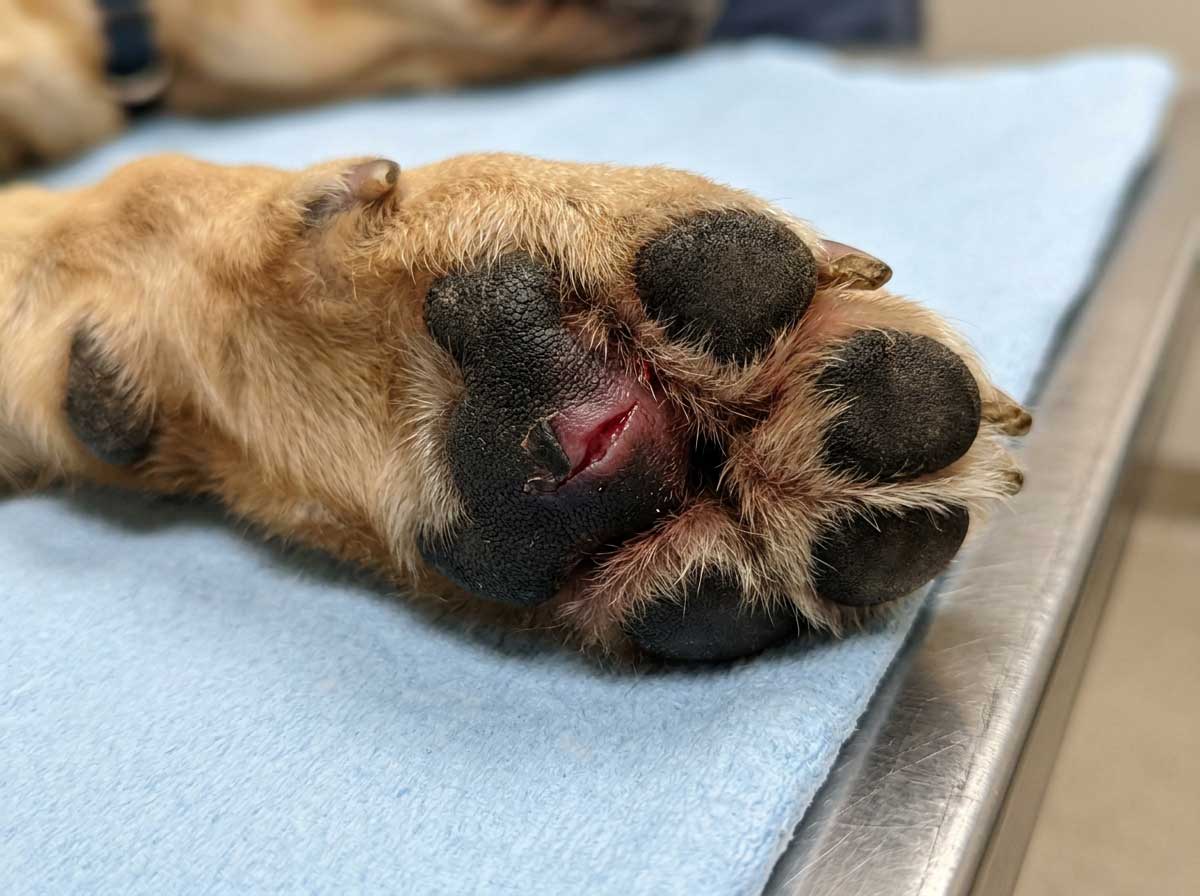
Eosinophilic granuloma complex (EGC) is a group of inflammatory cat skin conditions that cause raised lesions, plaques, or ulcers — usually on the face, lips, chin, or thighs. The most distinctive form is the rodent ulcer (indolent ulcer) on the upper lip — a clean-edged red ulcer that is slow to resolve on its own. EGC is thought to be an immune-mediated reaction often triggered by an underlying allergy (food, flea, or environmental). The diagnosis is made by biopsy. Without vet care, EGC lesions can become quite large and uncomfortable, though they are not directly dangerous. Vet care often focuses on identifying the underlying allergen trigger.
When to See a Vet for Cat Skin Scabs No Fleas
Most cat skin scab causes need a vet exam to confirm and start care — visual identification from pictures alone is not enough for definitive diagnosis. Make a vet appointment within 1-2 weeks for the typical scabby cat (miliary dermatitis pattern, mild bacterial pyoderma, suspected allergy, suspected ringworm, mild cat acne) so the underlying cause can be identified before it gets worse. Make a vet appointment within 48 hours if you see a hot swollen abscess (cat fight bite), a rapidly growing wound, signs of a systemic infection (fever, lethargy, not eating), or a single suspicious raised lesion that looks different from the rest. The vet workup typically includes skin scraping (for mites), fungal culture (for ringworm), and cytology (for bacterial / yeast).
Need help triaging how urgent your cat's skin scabs are? Upload a clear photo for instant AI pattern + urgency check.
Check Cat Skin Scabs Now →Related Cat Skin Reading
For more cat skin scabs and sores pictures visual identification, see our Cat Skin Conditions Pictures tool (covers all major cat skin conditions including the scab patterns above and pictures of scabs on cats), our Cat Skin Infection Pictures tool (bacterial vs fungal vs yeast specific differentiation), and our Cat Acne Pictures tool (for chin-area scabs specifically). When the cat skin scabs no fleas mystery is solved, you can move from worry to action.
Frequently Asked Questions
Why has my cat got scabby skin but no fleas?
+
What does feline dermatitis look like?
+
What does a skin fungal infection look like on a cat?
+
Cat skin scabs no fleas — what are the most common causes?
+
Miliary dermatitis in cats — visual pattern and when to see a vet?
+
Crusty scabs on cats — bacterial vs fungal vs allergy, how to tell?
+
Cat Skin Scabs No Fleas? Get Instant AI Pattern Check
Upload a close-up photo of your cat's skin scabs — the AI compares against miliary dermatitis, bacterial, fungal, allergy, and acne patterns and tells you urgency + when to see vet.
Disclaimer: This article is for informational purposes only and is not a substitute for professional veterinary advice. Always consult a licensed veterinarian for diagnosis and treatment of your pet's health conditions.