Why Do Dogs Lick Their Paws? 5 Hidden Causes + When to Vet
Why do dogs lick their paws nonstop? 5 hidden causes — allergies, yeast, pain, anxiety, habit — plus night/eating patterns and when paw licking needs a vet visit.
Published 2026-06-21
Paw licking driving you and your dog crazy? Let AI take a quick look.
Upload a clear close-up of your dog paw — our AI compares against yeast, allergic, bacterial, and healthy patterns and gives you the most likely match in seconds so you know what next step to take.
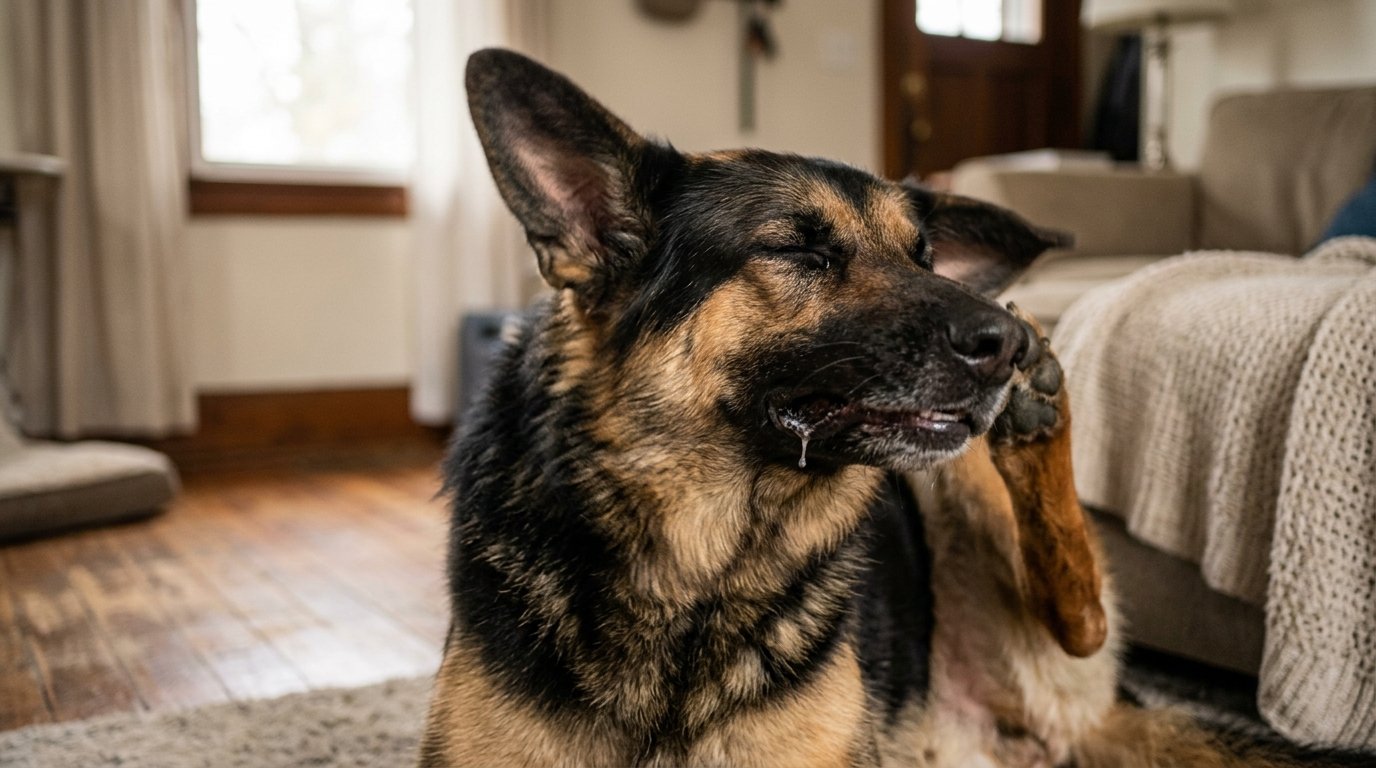
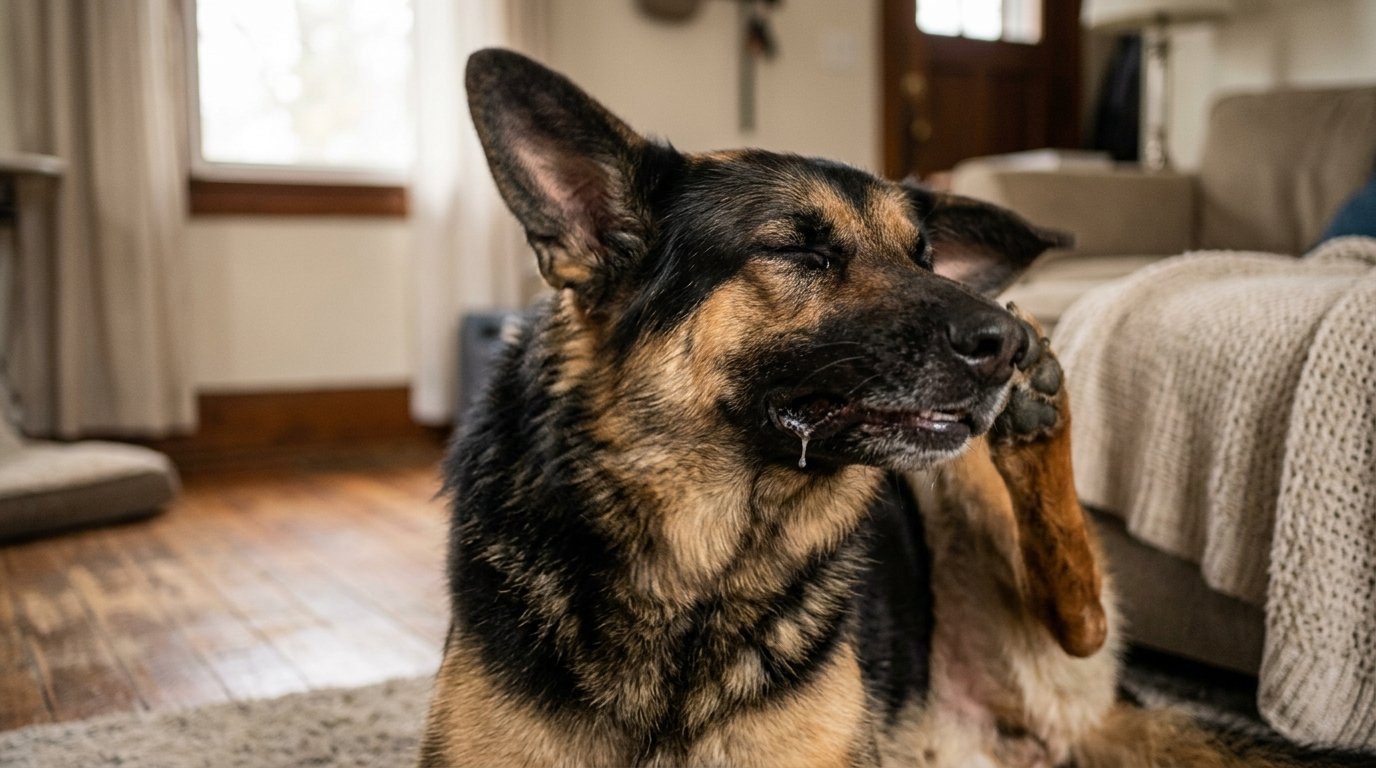
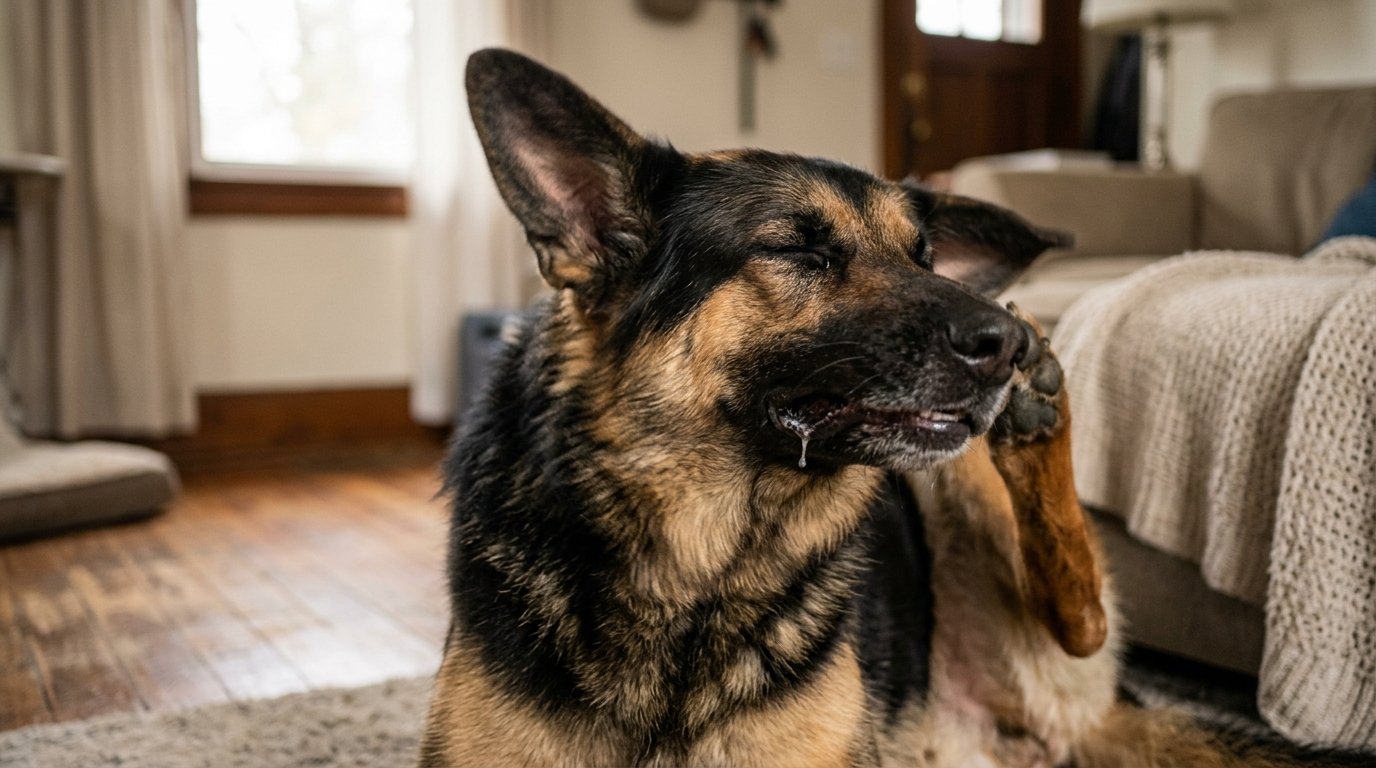
If your dog keeps licking, chewing, or biting at one paw, you're asking the right question — why do dogs lick their paws is almost never just a habit. Constant paw licking is one of the most common ways dogs tell owners "something is bothering me", and the underlying cause is usually identifiable. Use the page navigation above to jump straight to the 5 hidden causes, the night-time pattern, or when to see a vet. The single most useful clue is the visual state of the paw itself — rust-colored saliva staining between the toes, redness, or chronic moisture all point to specific causes. According to the American Kennel Club, allergic itch is the #1 driver and the same root cause that makes dogs lick paws often makes the ears itch too. This guide walks through the 5 root causes, what the night-time and after-eating patterns reveal, when red between toes means infection, and the warning signs that mean book the vet visit today.
Want a quick second opinion on what is driving the licking? Upload a clear photo of your dog paw — our AI compares against yeast, allergic, bacterial, and healthy patterns and tells you the most likely cause in seconds.
Check Dog Paw Now →The 5 Hidden Causes of Dog Paw Licking
Persistent dog licking paws behavior almost always traces back to one (or two combined) of the following 5 root causes. The first 3 are far more common than the last 2.
- ✓Allergies — food or environmental. The #1 driver, behind more than half of recurring paw licking cases. Usually paired with itchy ears and a belly rash.
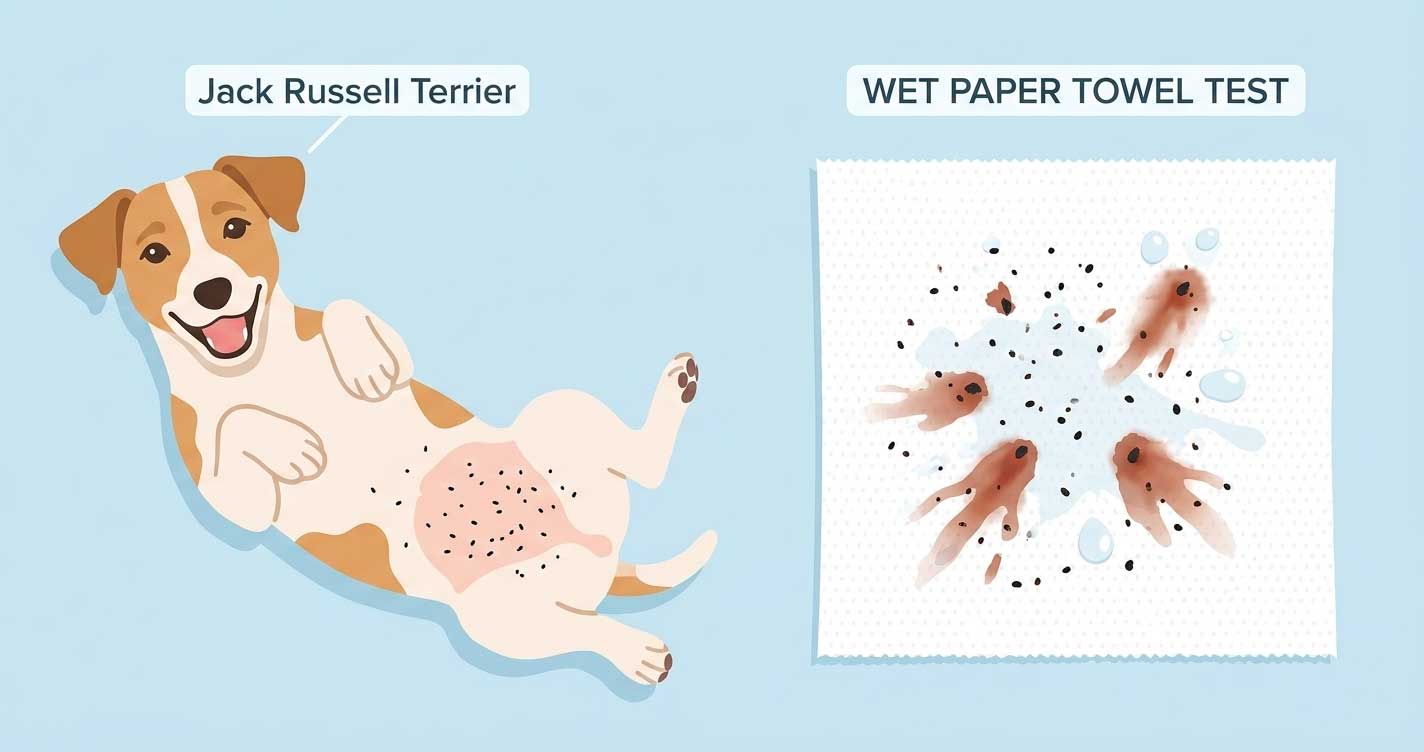
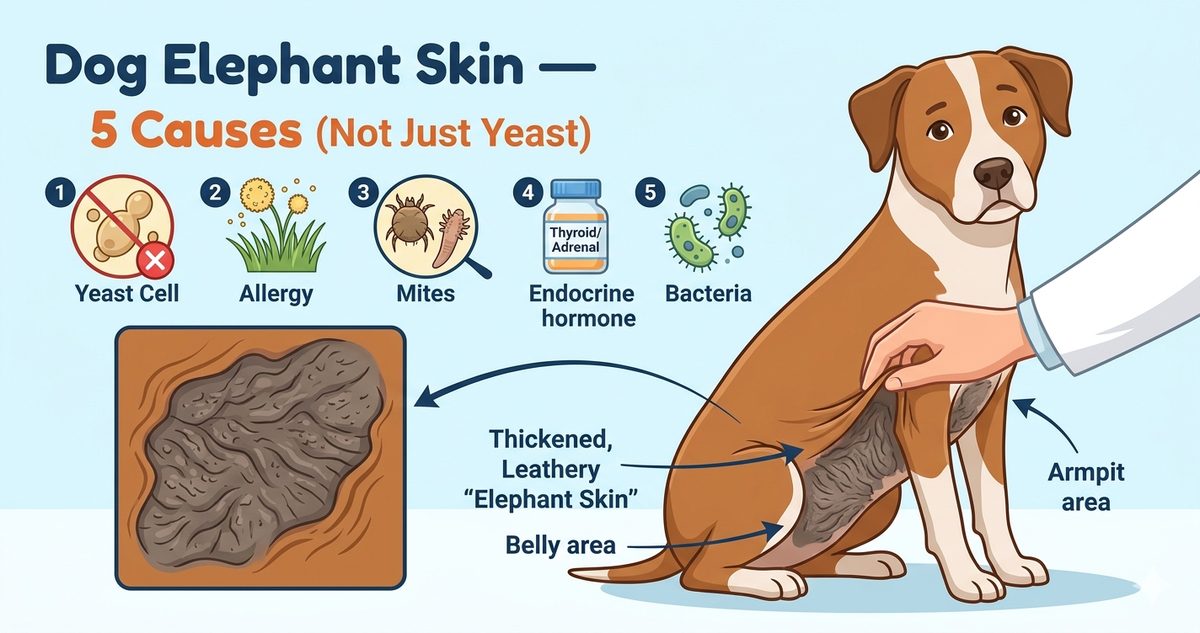
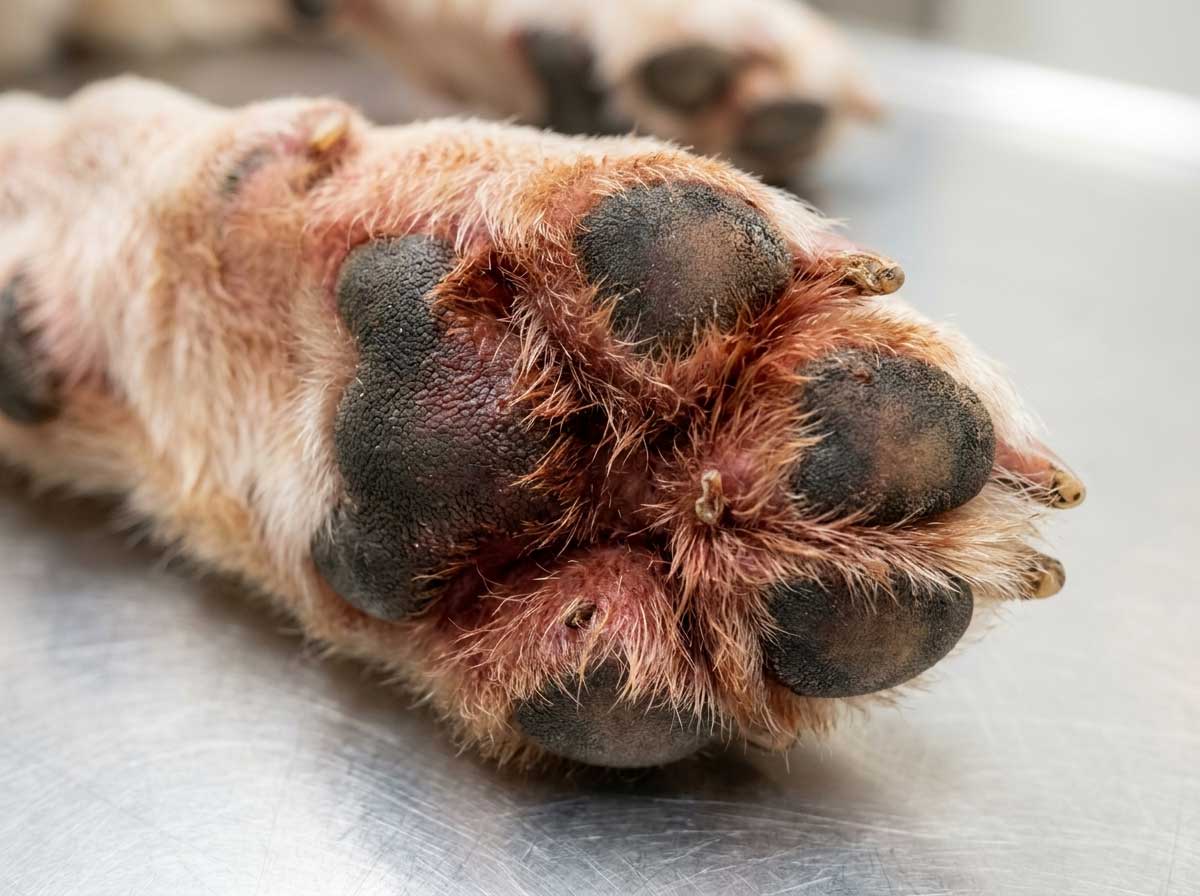
- ✓Yeast Malassezia overgrowth between the toes — dark brown greasy buildup, sweet yeasty smell, rust-colored saliva staining. Often allergy-triggered.
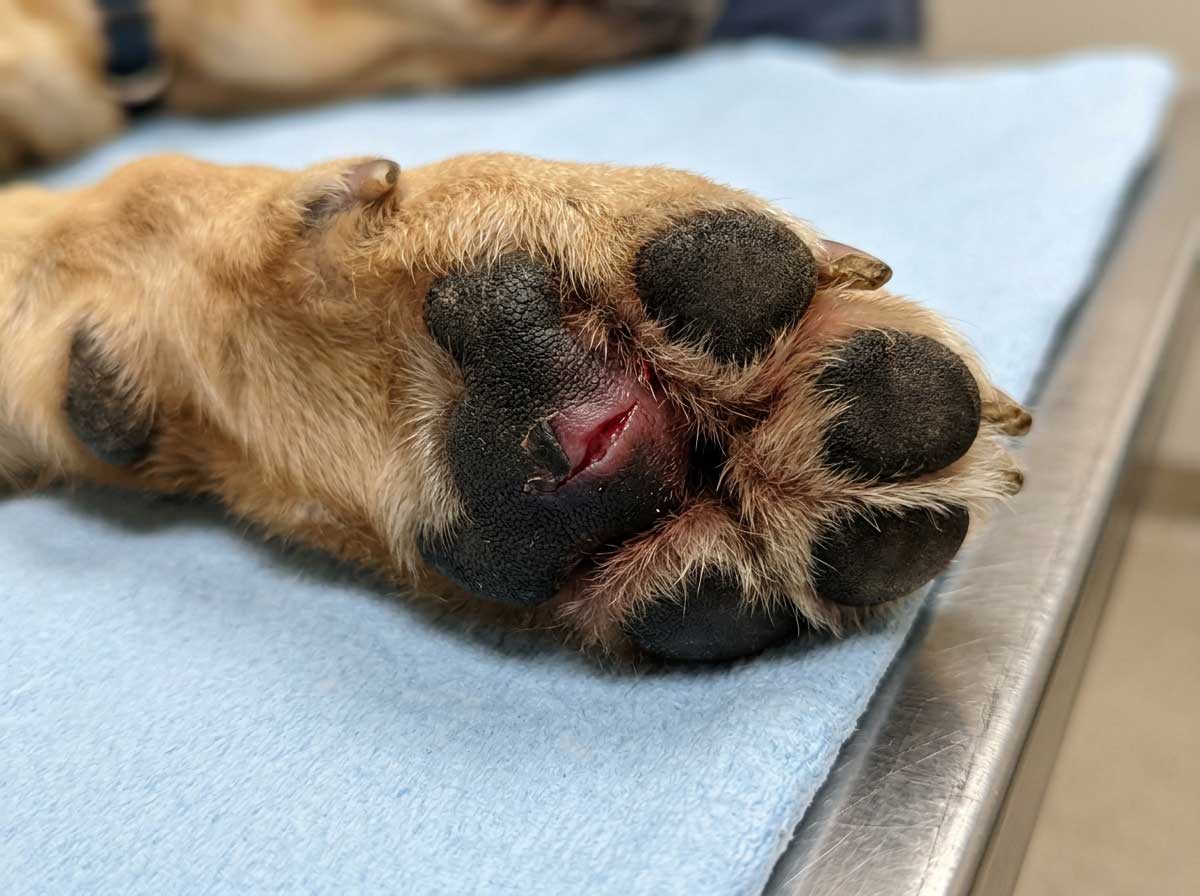
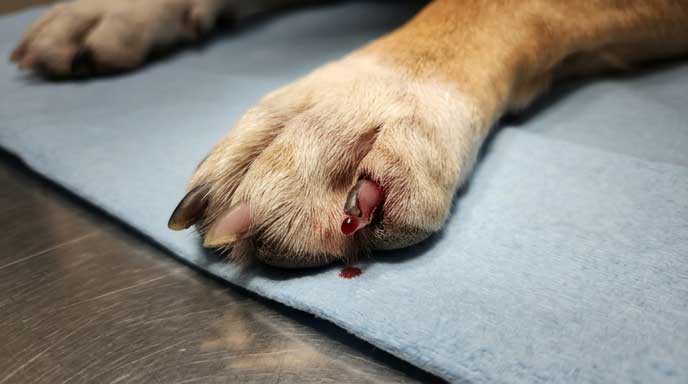
- ✓Pain — joint pain, a small foreign object lodged between toes, a tiny cut, or a torn nail can all drive sudden paw licking that wasn`t there last week.
- ✓Anxiety or boredom — chronic dogs with no medical finding sometimes lick paws as a self-soothing behavior, similar to nail-biting in humans.
- ✓Habit / compulsive — established licking that started medical but continued past the original cause as a learned habit. Diagnosis of exclusion only.
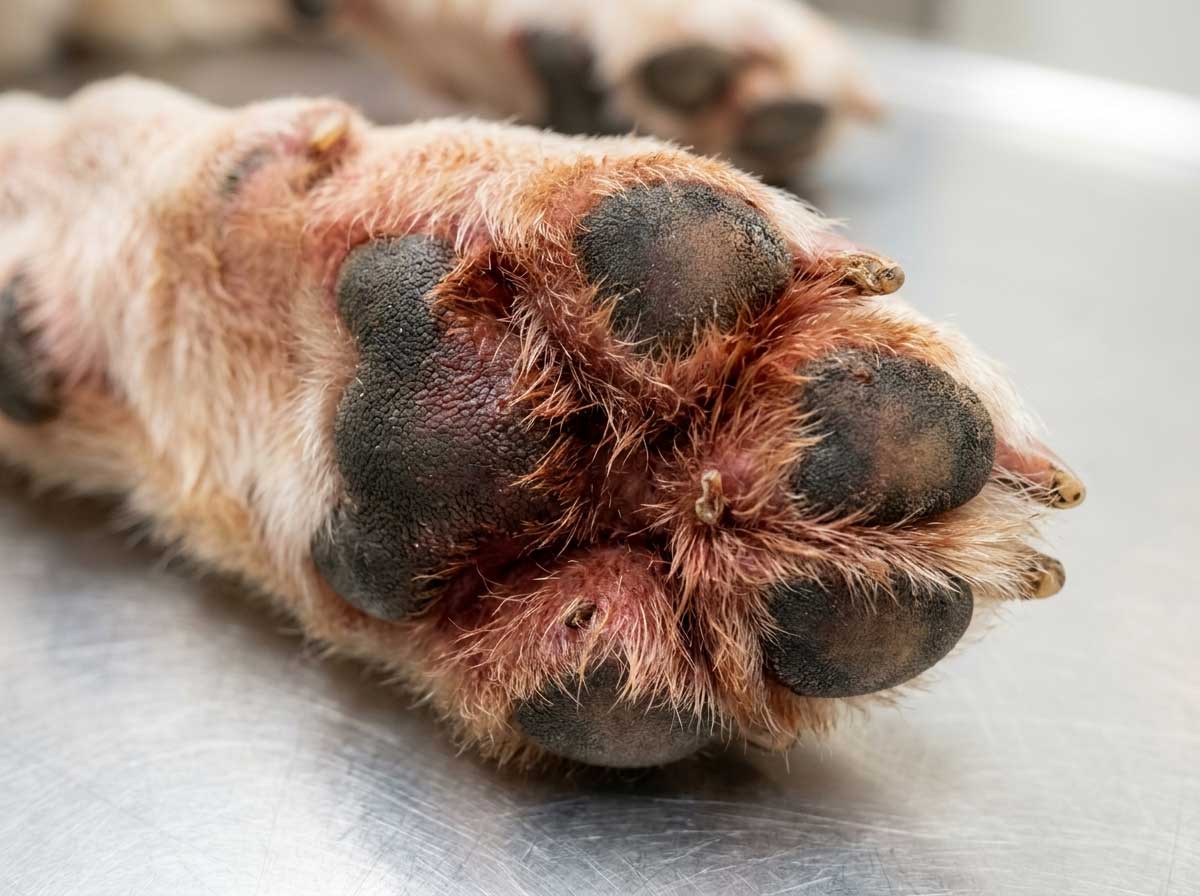
Allergies Are The #1 Driver — How To Recognize
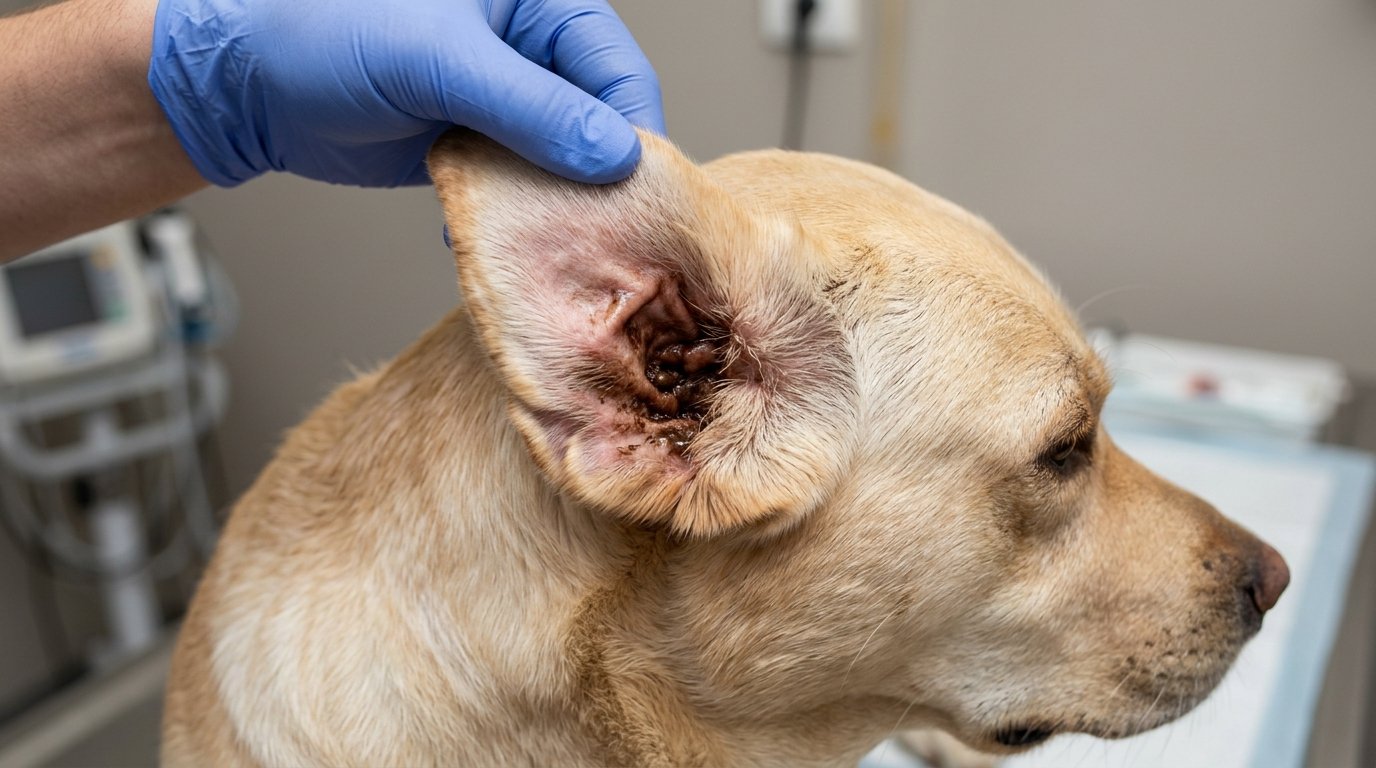
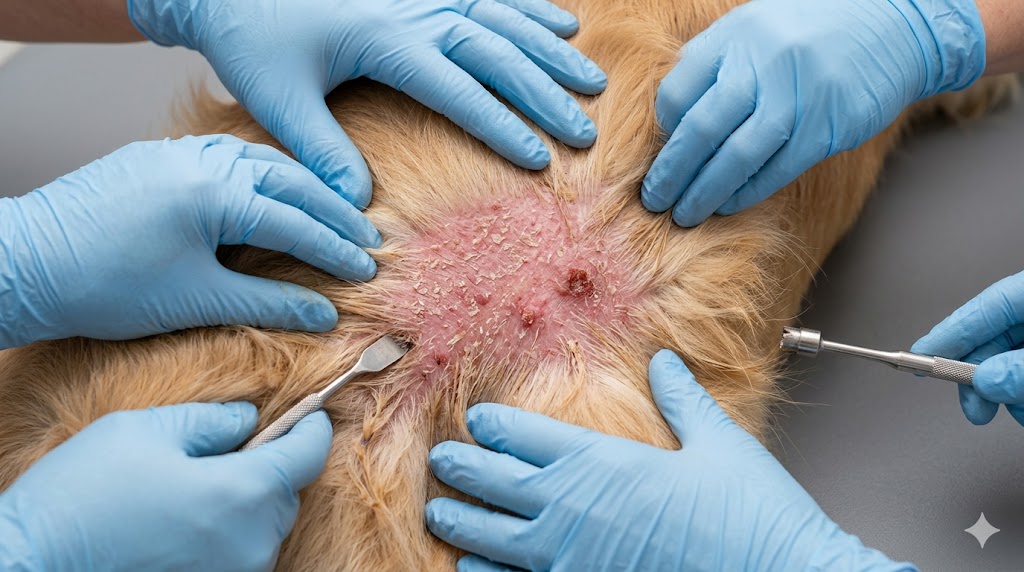
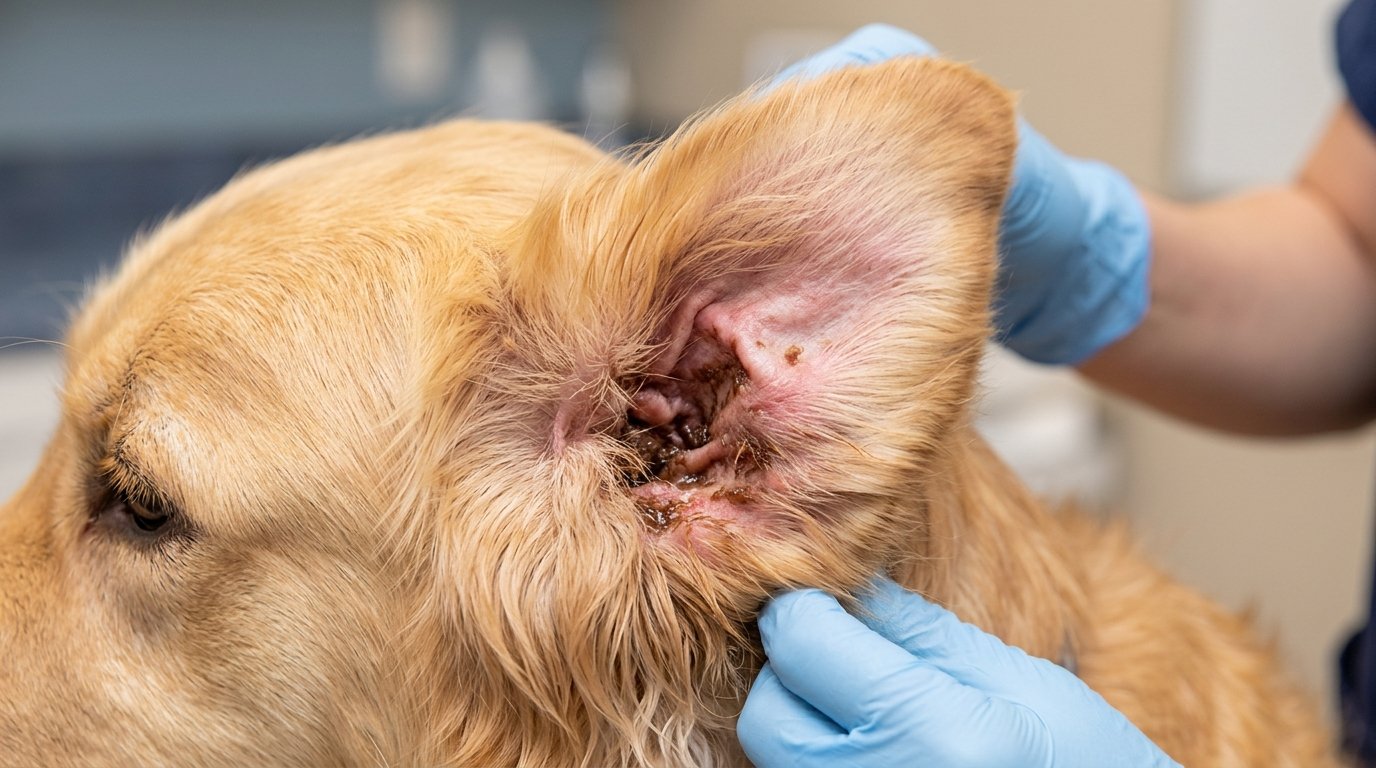
Why do dogs lick their paws when they have allergies: the paw pads have dense mast-cell populations that release histamine when triggered, producing intense itch. Food allergies (chicken, beef, dairy, soy, wheat, corn) and environmental allergies (pollen, dust mites, mold, grass) are the two big drivers. When allergic dogs encounter the trigger — through diet or just walking through grass — paws are one of the first body areas to inflame, alongside ears and belly. If your dog licks paws plus has itchy ears plus a belly rash, you are looking at three faces of the same allergic skin condition.
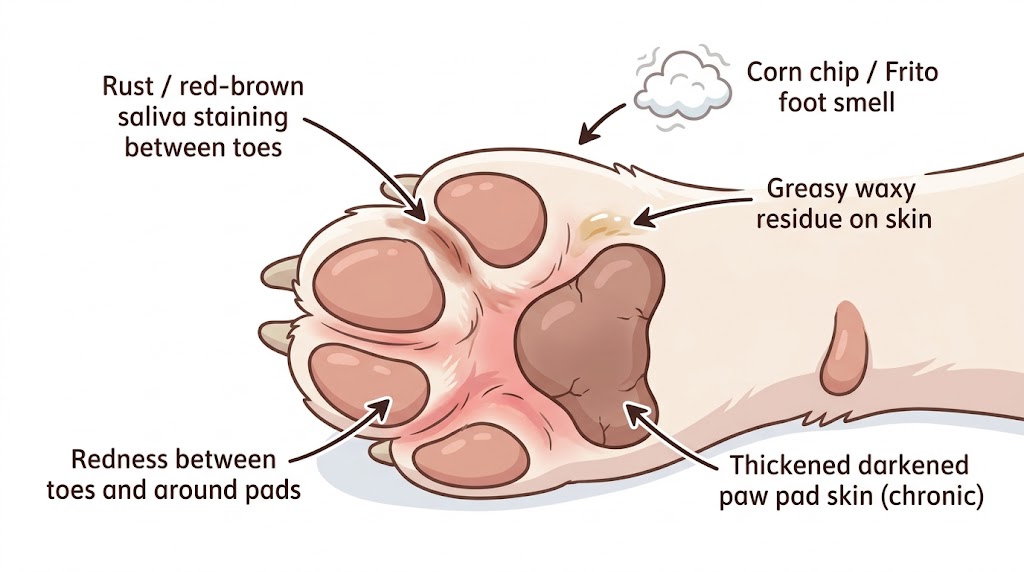
The yeast / allergy connection is tight: allergic dogs over-produce paw oils, which feed Malassezia yeast, which produces the corn-chip / Frito smell and dark waxy residue between toes. Owners frequently notice the smell before the visible staining. According to PetMD's dog paw licking reference, more than half of chronic paw lickers have a yeast component on top of the underlying allergy.
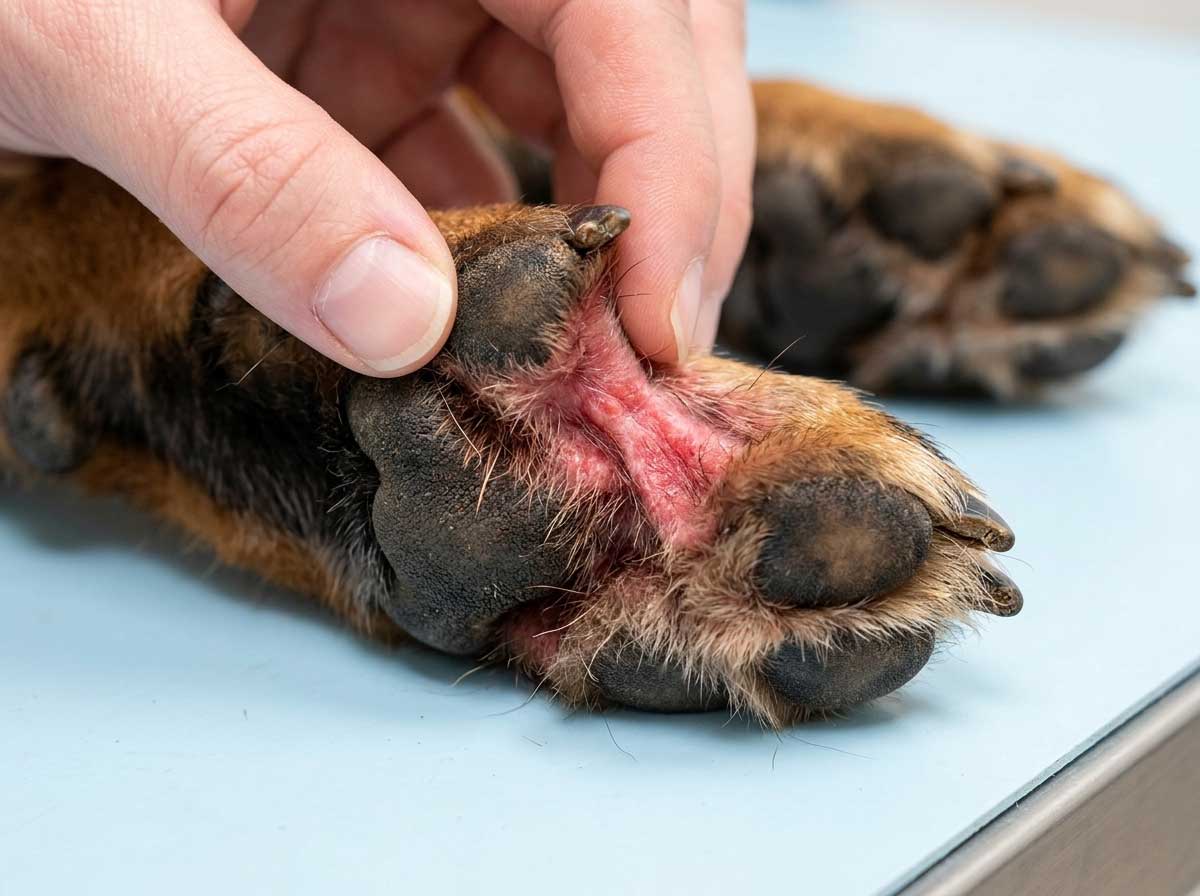
My Dog Keeps Licking His Paws and They Are Red — What It Means
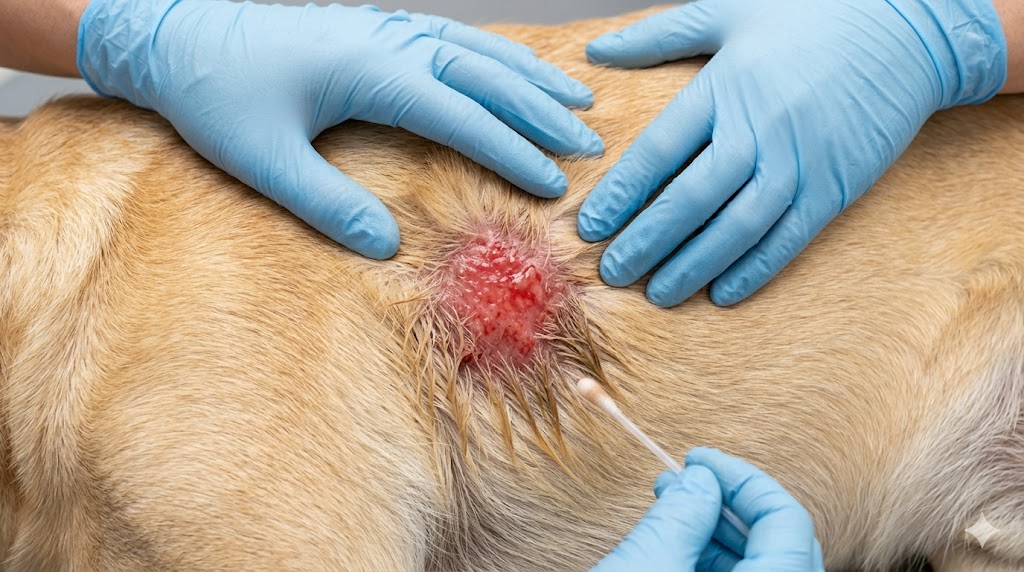
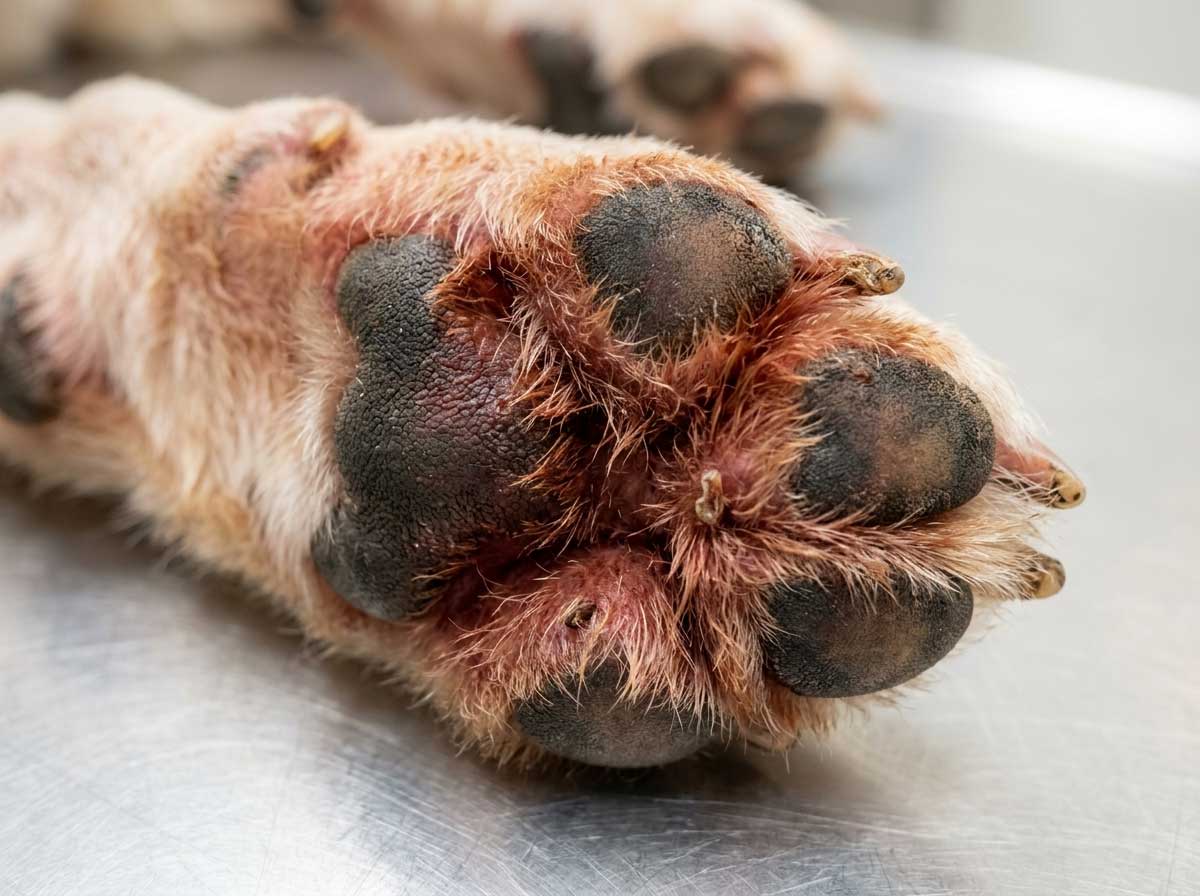
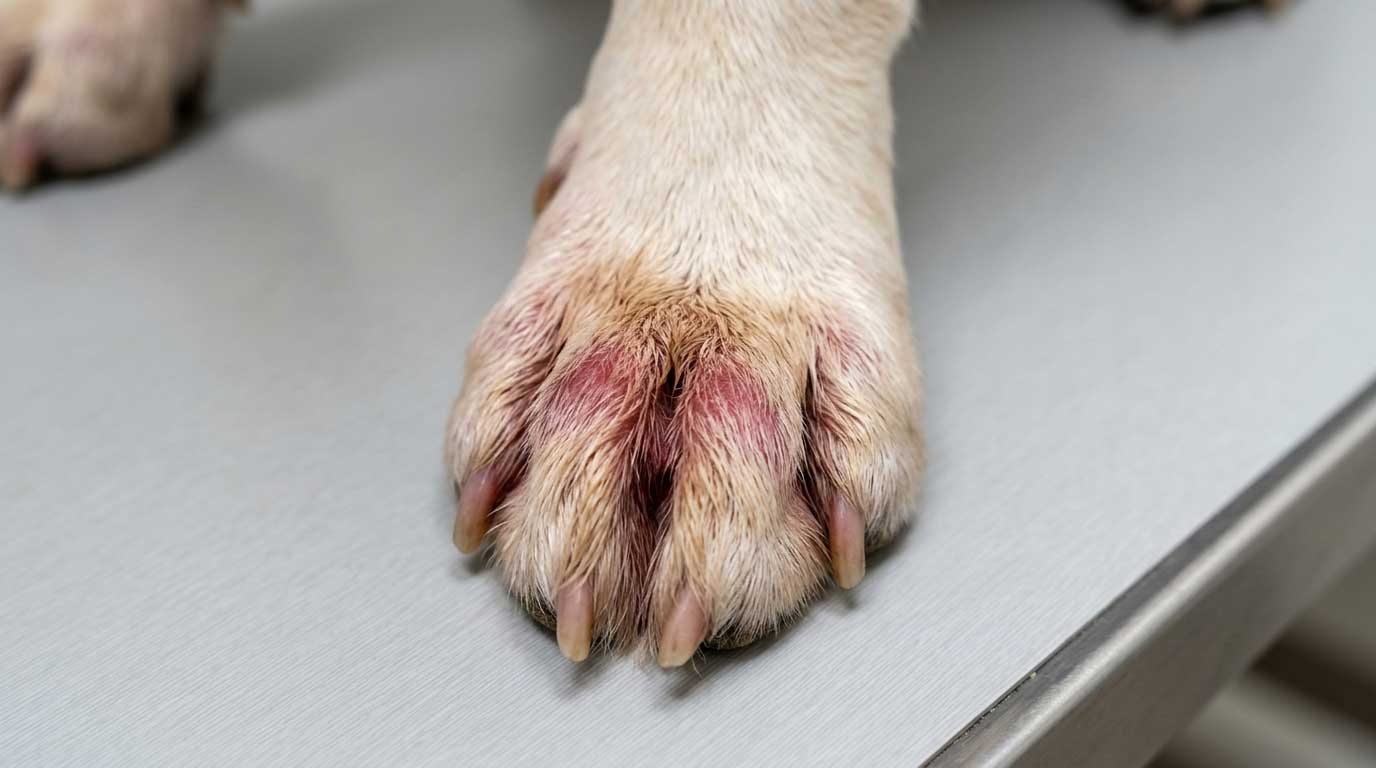
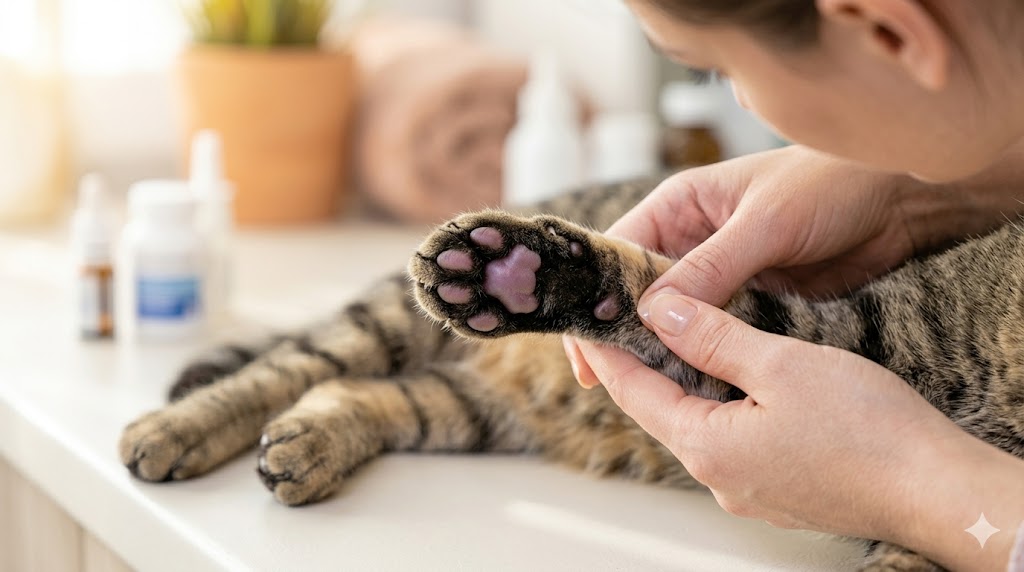
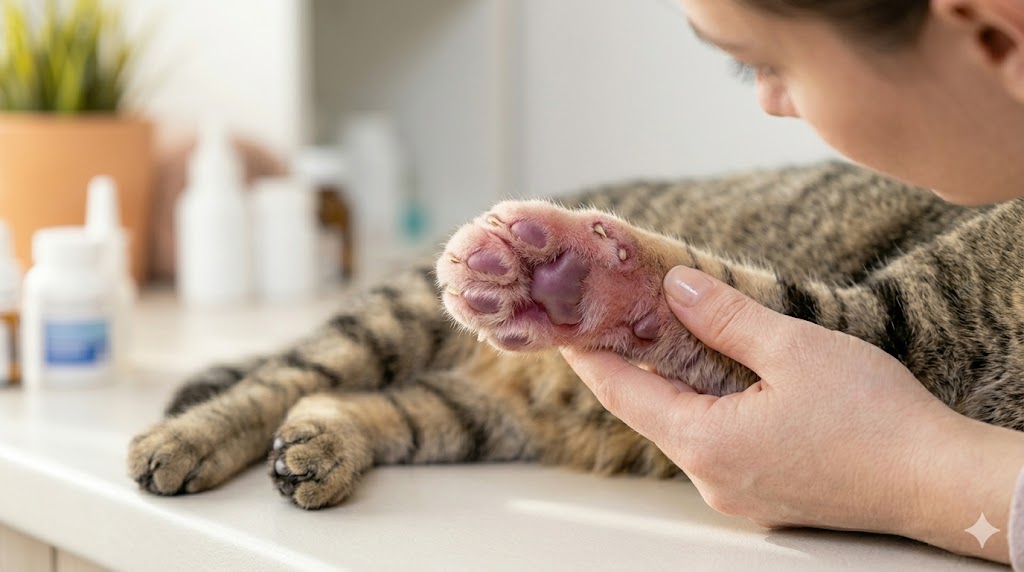
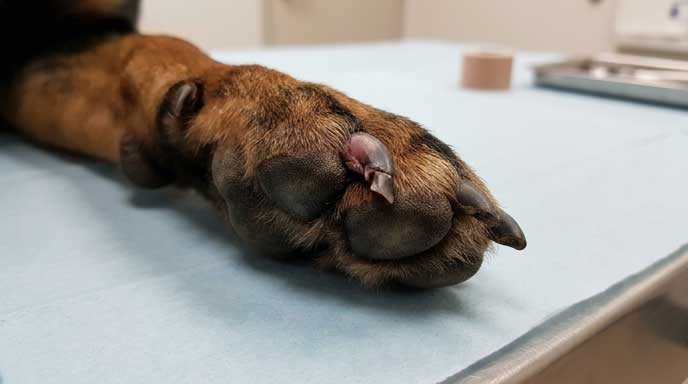
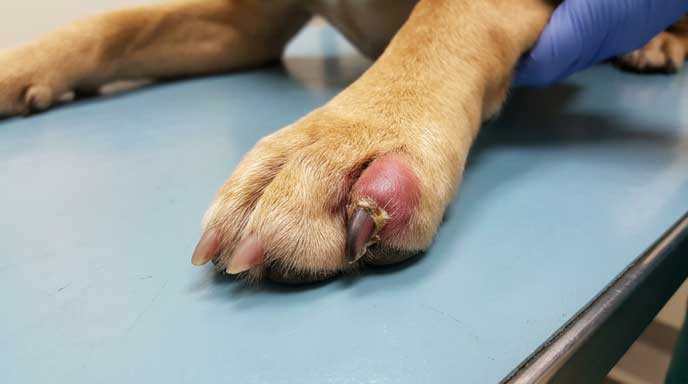
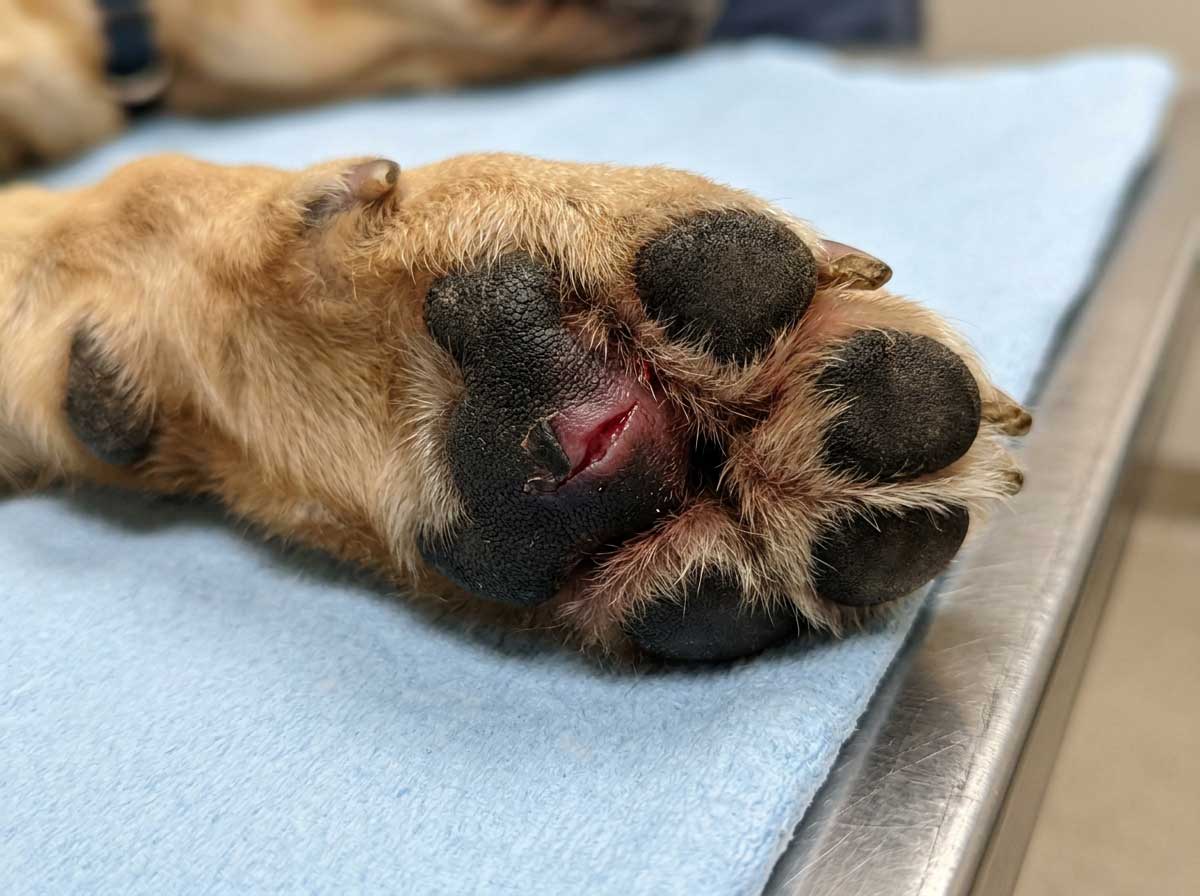
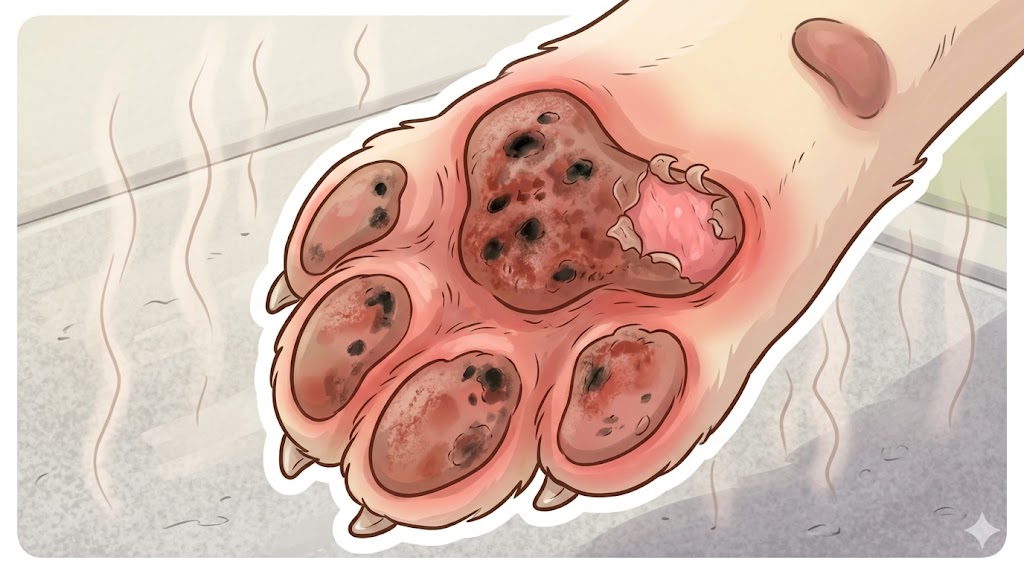
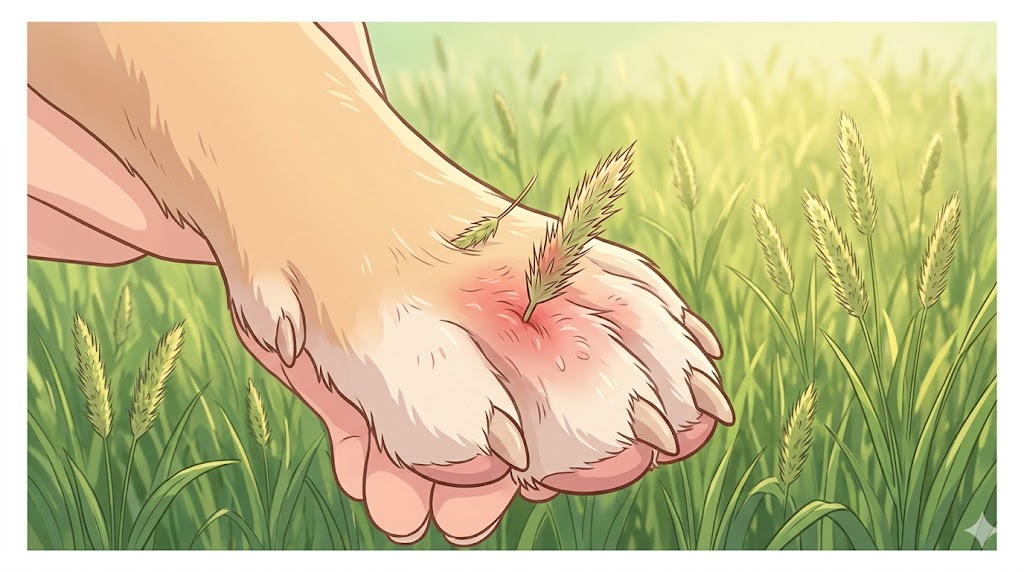
When my dog keeps licking his paws and they are red, you are looking at the visual end-stage of one of the 5 root causes — most commonly allergic pododermatitis (inflammation of the skin between the toes) or yeast Malassezia overgrowth. Red between toes specifically points to interdigital inflammation; red around the pads can also indicate pad burns from hot pavement, salt damage, or chemical irritation.
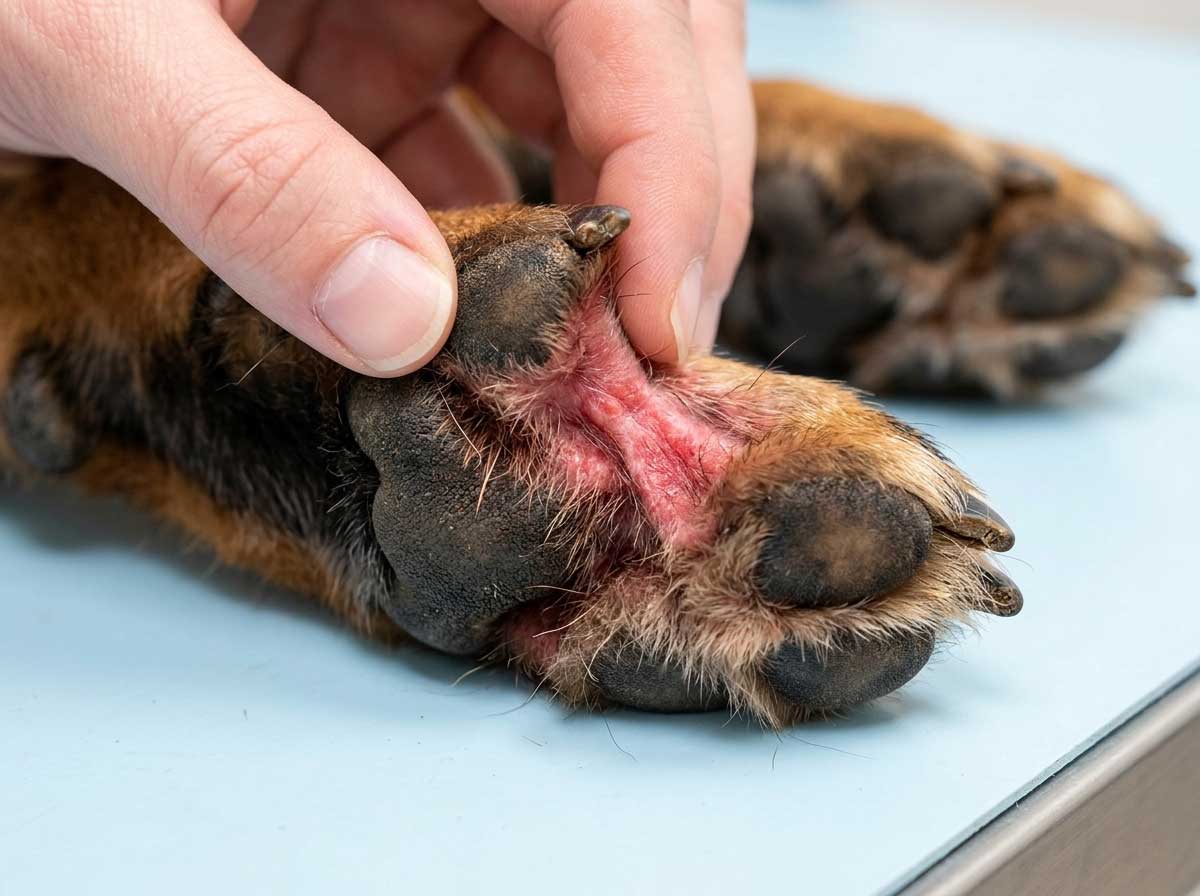
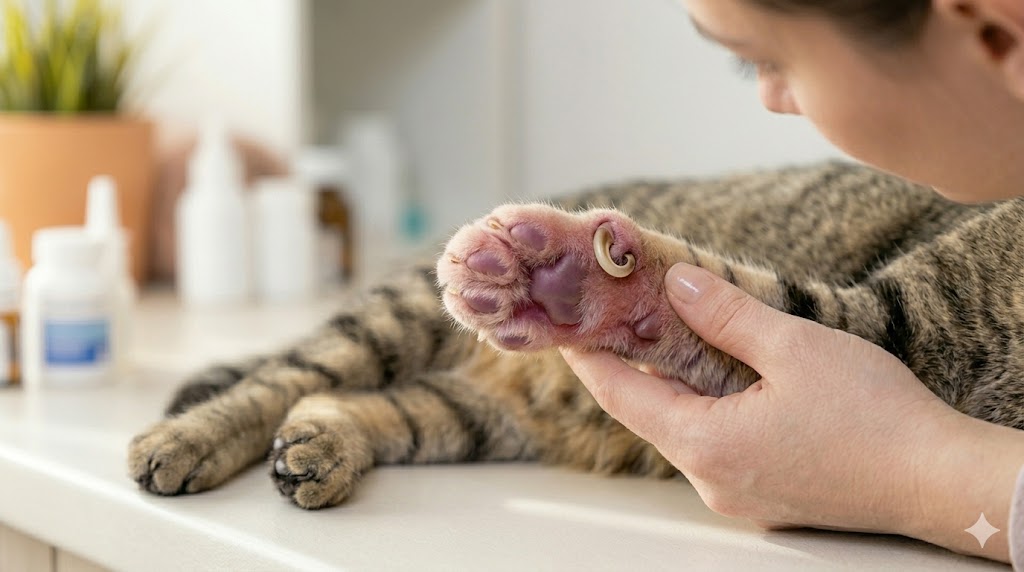
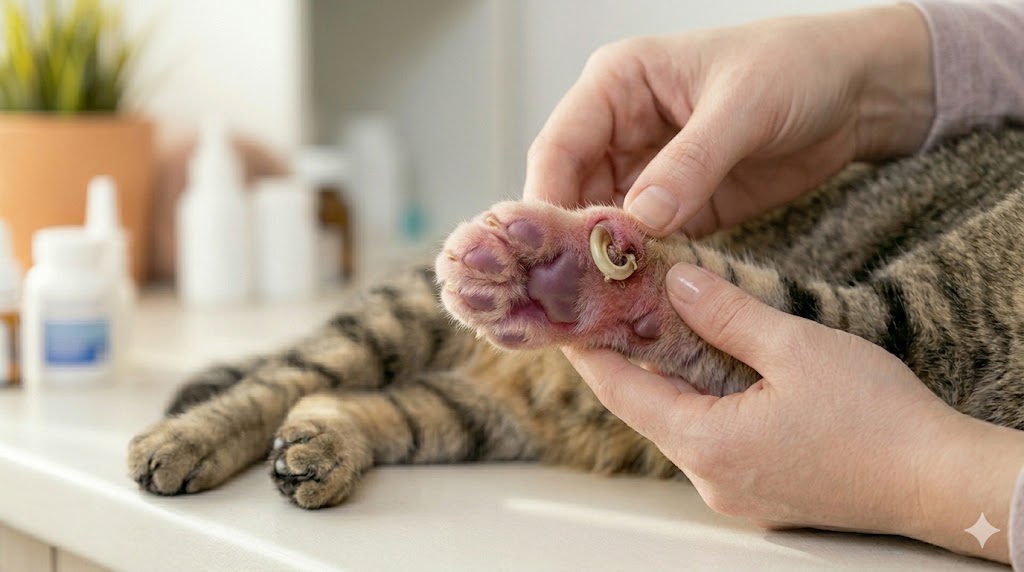
If both paws are equally red and the dog has itchy ears too, allergy is the top suspect. If only one paw is red, look for a foreign body (grass seed, splinter), interdigital cyst, or torn nail driving asymmetric licking.
Allergies behind the licking? A clear photo of the paw plus the pattern history is what helps the vet pick the right diagnostic test on visit one. Upload the photo now to see the most likely cause.
Photo Triage Now →Why Do Dogs Lick Their Paws At Night?
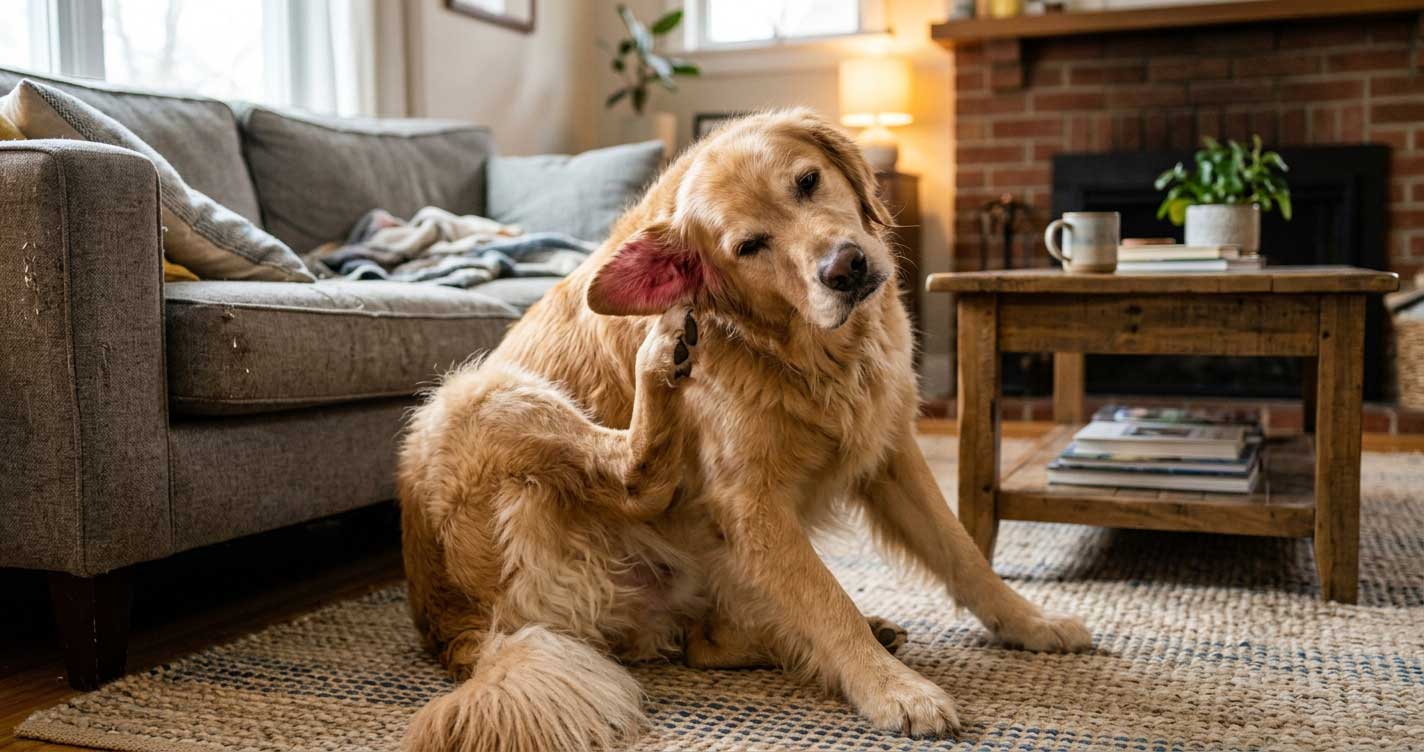
Why do dogs lick their paws at night is one of the most common owner-reported patterns and has three common explanations. First, environmental allergens (dust mites, mold) concentrate in bedrooms and trigger flares once the dog settles down. Second, circadian inflammation — cortisol falls in the evening and histamine response peaks. Third, the dog notices the itch more when daytime distractions are gone. If the at-night licking pattern lines up with itchy ears, environmental allergy is the most likely root cause.
Why Do Dogs Lick Their Paws After Eating?
Why do dogs lick their paws after eating is almost always a food allergy signal. The dog reacts within 1-3 hours of eating the trigger protein (most commonly chicken, beef, or dairy), histamine spikes, and the paws flare first. Less commonly, the dog has simply gotten food residue on the paws and is grooming. The food-allergy version is much more common than the food-residue version when the pattern repeats daily after meals — that consistency is the giveaway. Talk to your vet about an 8-to-12 week elimination diet trial using a single novel protein source.
When Should I Worry About My Dog Licking His Paws?
When should I worry about my dog licking his paws comes down to duration, the visual state of the paw, and any systemic signs. Schedule a vet visit if any of the following applies: licking has lasted more than 5-7 days, you see visible redness or rust staining between the toes, a foul or yeasty smell, swelling or limping, a foreign object you can see between the toes, or licking plus itchy ears plus belly rash together. The most useful piece of information to bring to the vet visit is a clear close-up photo of the paw, plus a quick history (when did it start, after walks vs at night vs after eating, both paws or just one).
Want fast triage before the vet visit? Upload a clear photo of your dog paw — our AI compares against yeast, allergic, bacterial, and healthy patterns and tells you the most likely cause in seconds.
Quick Photo Check →Is It Good For A Dog To Lick Their Paws?
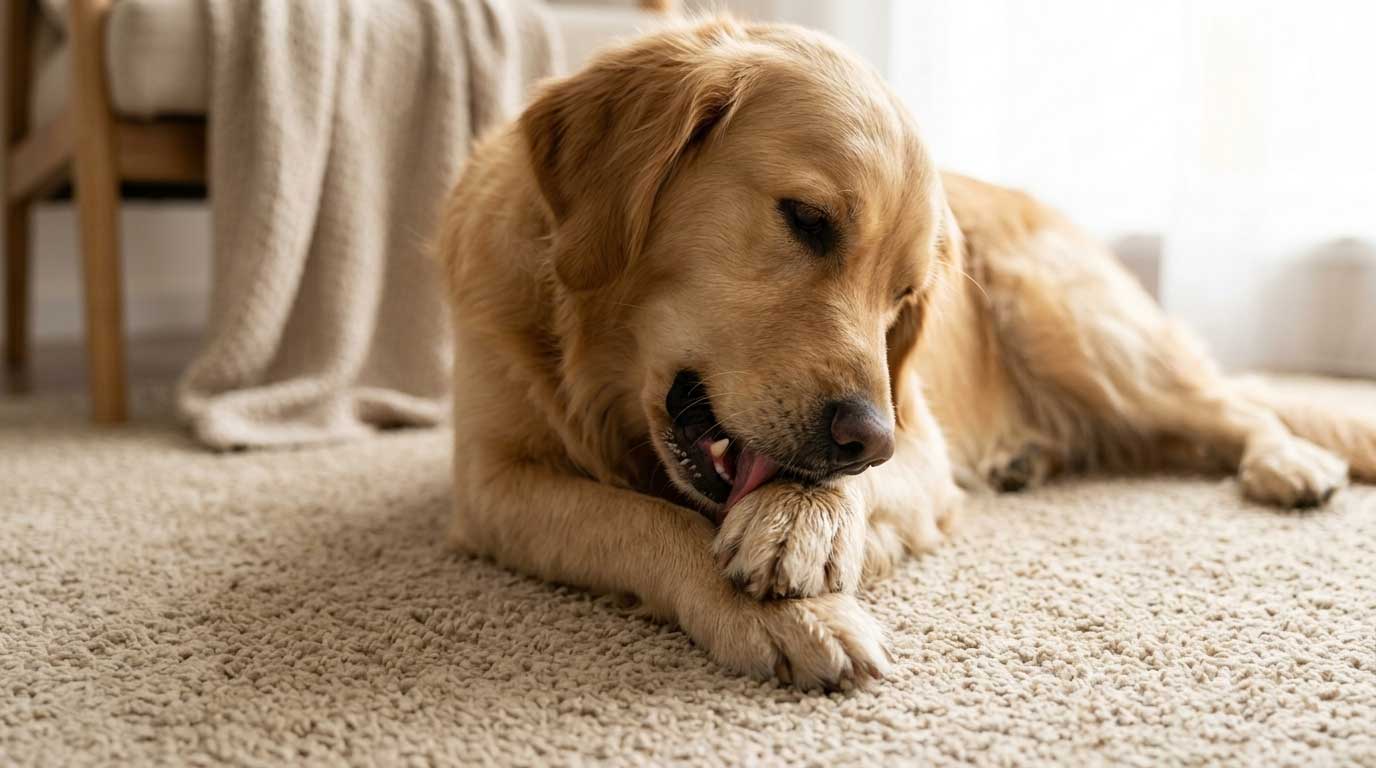
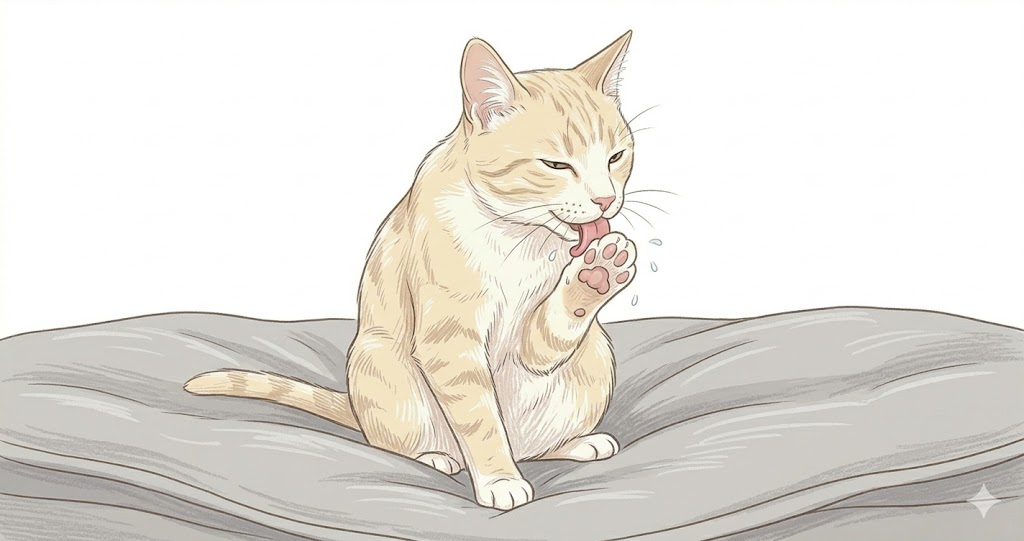
Is it good for a dog to lick their paws: a small amount of routine paw grooming is normal — most dogs lick paws briefly after walks to clean them, similar to a cat grooming. Chronic licking is not. Chronic licking damages the skin barrier, drives yeast and bacterial overgrowth in the wet warm space between toes, stains the fur rust-red with saliva, and makes the underlying allergic itch worse over time. The honest answer: brief routine paw grooming is fine; chronic daily licking is a red flag worth a vet visit, not a habit to tolerate.
What Is Your Dog Trying To Tell You When It Licks Its Paws?
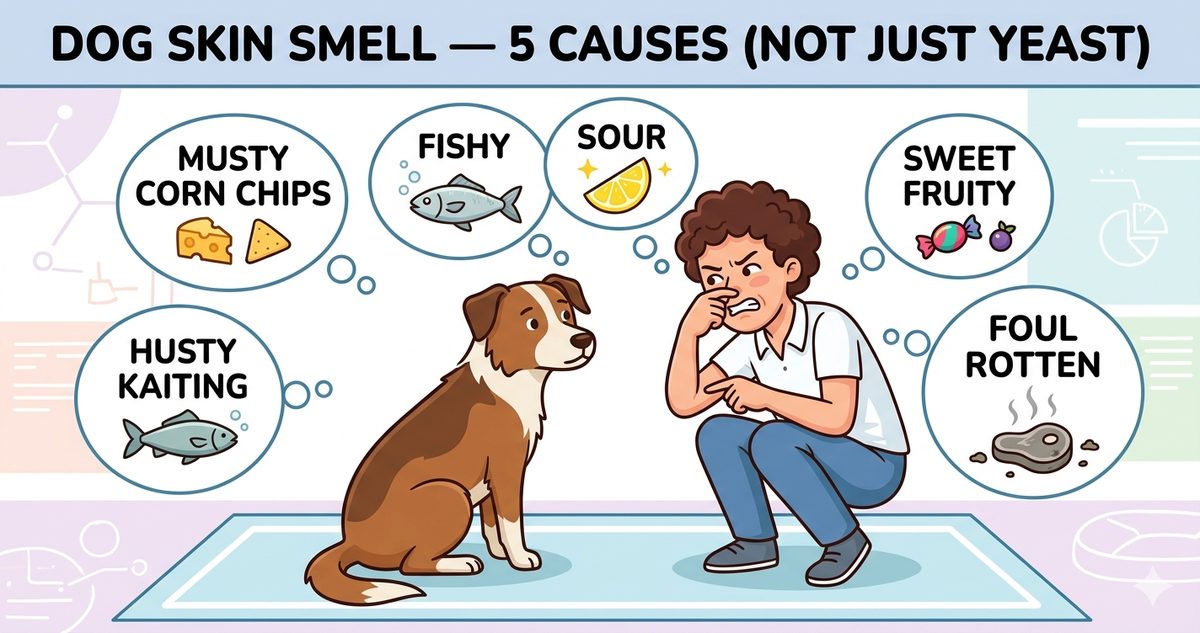
What is your dog trying to tell you when it licks its paws: most often the message is "I itch", less often "I hurt", and very rarely "I am bored". The itch is almost always allergy-driven; the pain is almost always a small foreign object or torn nail; the boredom version only fits dogs with no medical findings and no visual paw changes. The single most useful diagnostic step you can take at home is to look at the actual paw — fold the toes apart, smell near the skin (yeasty corn-chip smell = yeast; foul rotten = bacterial), check for redness between toes, and look for any small foreign object lodged in the webbing between toes.
What To Do When Your Dog Keeps Licking Their Paws
What to do when your dog keeps licking their paws breaks into 4 simple steps. (1) Photograph the paw in natural daylight — front + sole + between toes. (2) Note the pattern — daily after meals (food allergy), at night (environmental), after walks (irritation), one paw only (foreign body), both paws (systemic). (3) Smell the paw — yeasty corn-chip smell = yeast Malassezia; foul rotten = bacterial; neutral = pure allergic itch without microbial overgrowth yet. (4) Book the vet visit — the goal is identifying the root cause (allergy panel, culture-and-sensitivity test, foreign body search), not just covering up the symptom. The fix is layered: address the allergen, clear any yeast or bacterial overgrowth, and only then consider habit-modification work for dogs that continue licking with no medical finding.
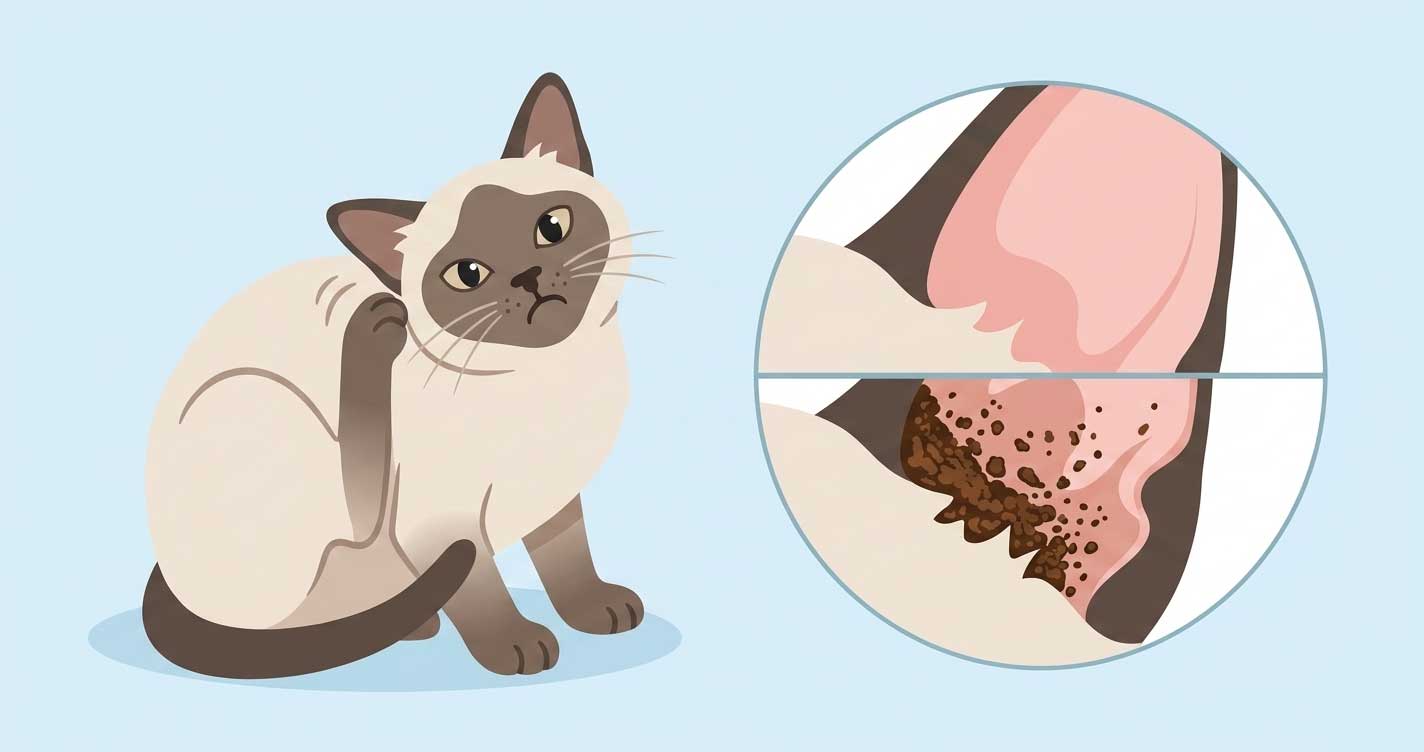
For a deeper look at the allergy side of chronic licking, see our companion guide on why your dog keeps getting ear infections — the same allergic cause that drives recurring ear flares is usually behind chronic paw licking too. If your dog also has itchy ears alongside the paw licking, see the dog itchy ears causes guide for the layered identification approach. The two patterns commonly occur together because the underlying allergic skin condition affects ears, paws, and belly simultaneously rather than picking one location.
One last note worth knowing: chronic paw licking that continues for more than a couple of weeks past the original trigger sometimes becomes a learned behavior independent of the medical cause. In those rare cases, your vet may recommend a brief course of focused enrichment plus environmental adjustments alongside the medical workup — but only after the medical side has been cleared, not as a first-line guess. Treating habit-only causes before ruling out medical causes wastes time and lets the underlying allergy or yeast progress, so the medical workup always comes first in the diagnostic sequence.
Quick reference summary: chronic dog paw licking is almost always either an allergy, a yeast overgrowth between the toes, or a small foreign object stuck somewhere in the paw skin. The four-step home check (photo, pattern, smell, vet visit) is the fastest path to identification. Skip generic ear cleaner or topical sprays without a proper diagnosis since the wrong product on the wrong cause makes things worse.
Bottom line on dog paw licking: it is almost always a real medical signal worth investigating, not just a quirky habit to ignore. The five hidden causes covered above — allergies, yeast, pain, anxiety, and learned habit — capture more than 95 percent of cases vets see. The fastest path forward is the four-step in-house check (photo, pattern, smell, vet visit) so you bring the right history and visual data to the appointment instead of starting the diagnostic process from scratch. Catching the cause early is the difference between a single quick vet visit and a months-long chronic flare cycle with repeated escalations. The earlier you catch and address the underlying allergy or yeast component the better your dog feels and the less expensive the workup becomes.
Frequently Asked Questions
When should I worry about my dog licking his paws?
+
Is it good for a dog to lick their paws?
+
What to do when your dog keeps licking their paws?
+
What is your dog trying to tell you when it licks its paws?
+
Why does my dog lick his paws at night specifically?
+
Can food allergies cause dog paw licking after eating?
+
Paw licking driving you and your dog crazy? Let AI take a quick look.
Upload a clear close-up of your dog paw — our AI compares against yeast, allergic, bacterial, and healthy patterns and gives you the most likely match in seconds so you know what next step to take.
Disclaimer: This article is for informational purposes only and is not a substitute for professional veterinary advice. Always consult a licensed veterinarian for diagnosis and treatment of your pet's health conditions.