Why Do Cats Push With Their Paws? Kneading Explained
Why do cats push with their paws? Cats knead ("making biscuits") for 4 reasons — kitten nursing instinct, scent marking, comfort-seeking, and bonding trust.
Published 2026-06-22
Worried about your cat's paw behavior?
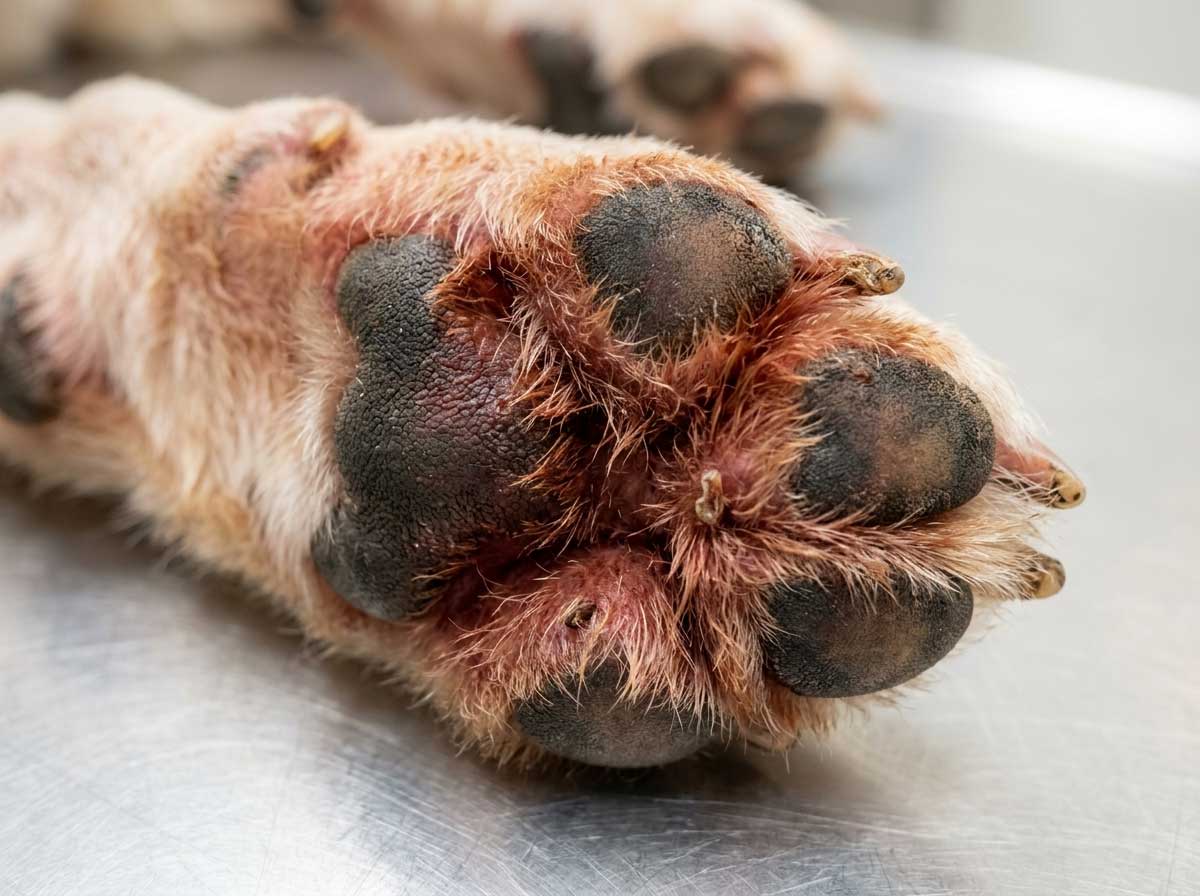
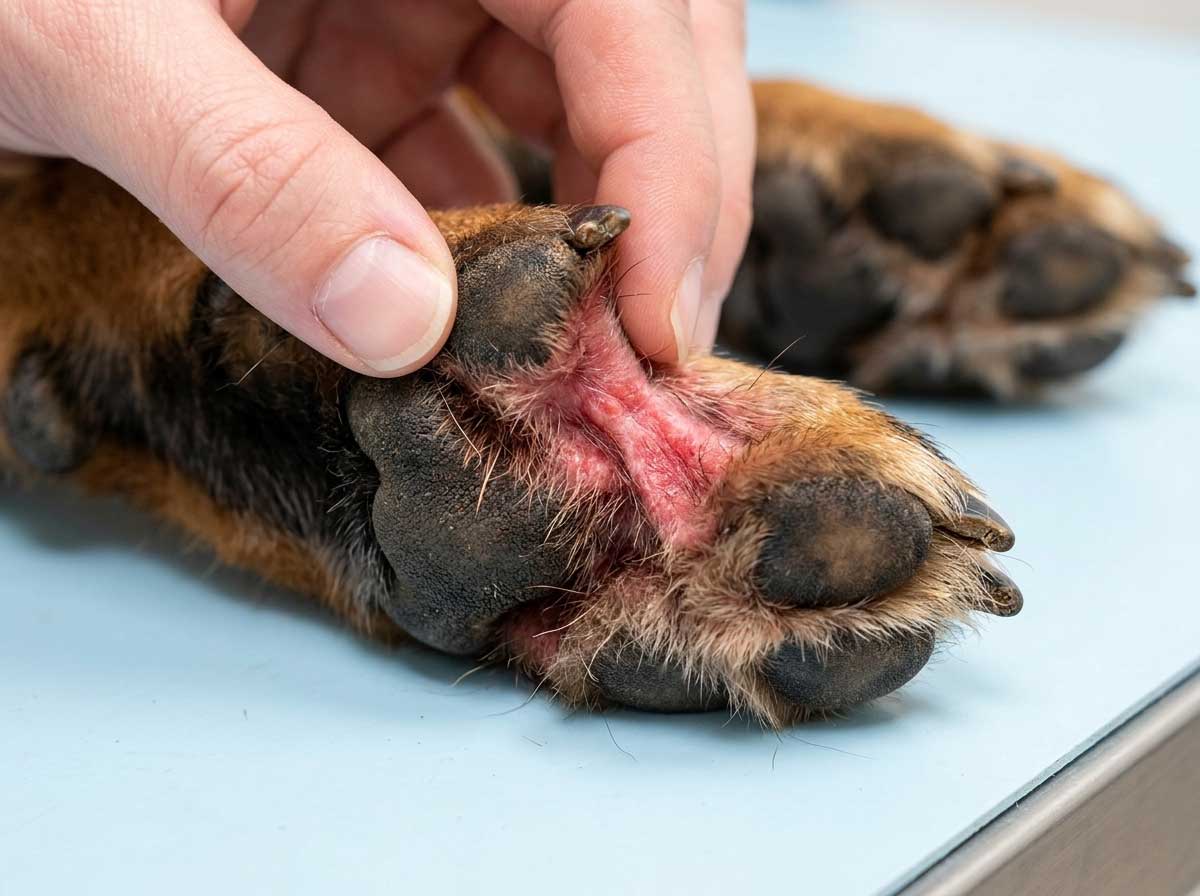
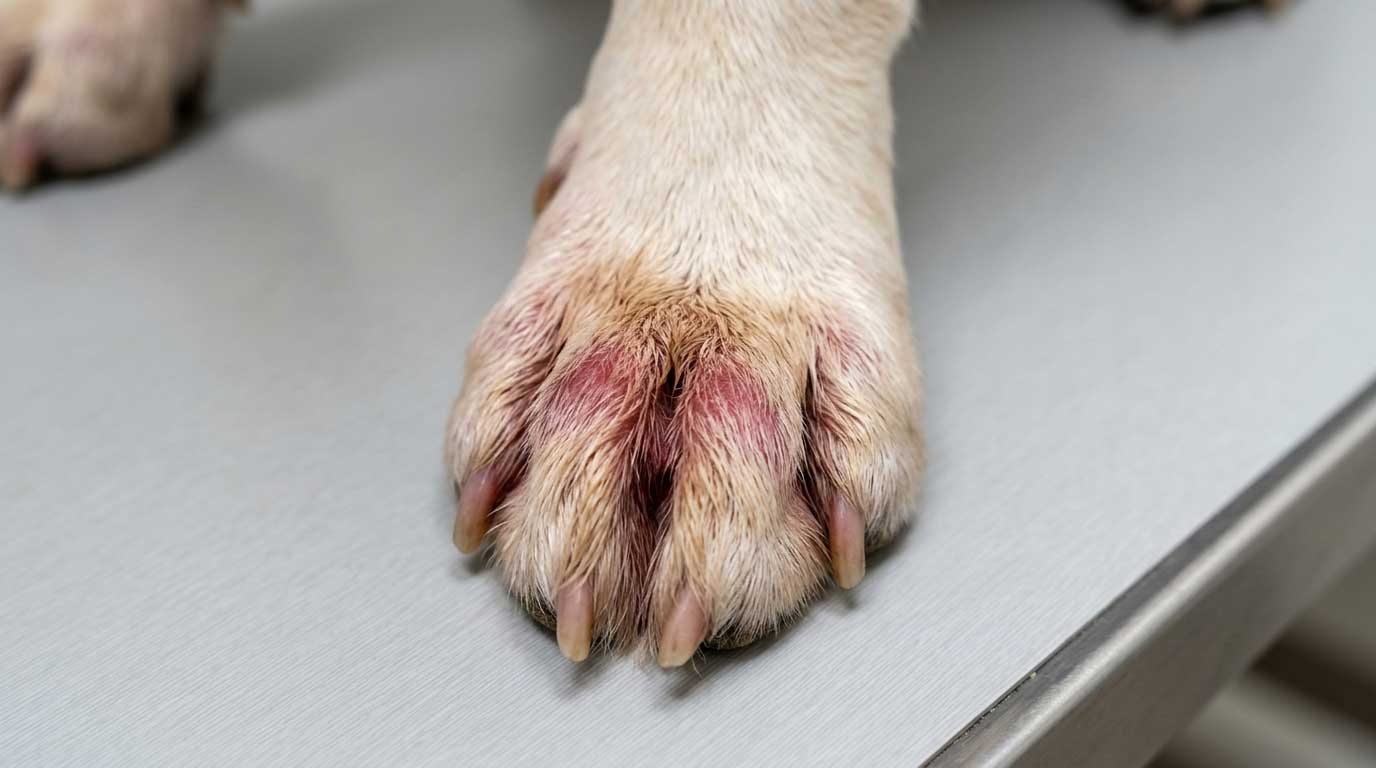
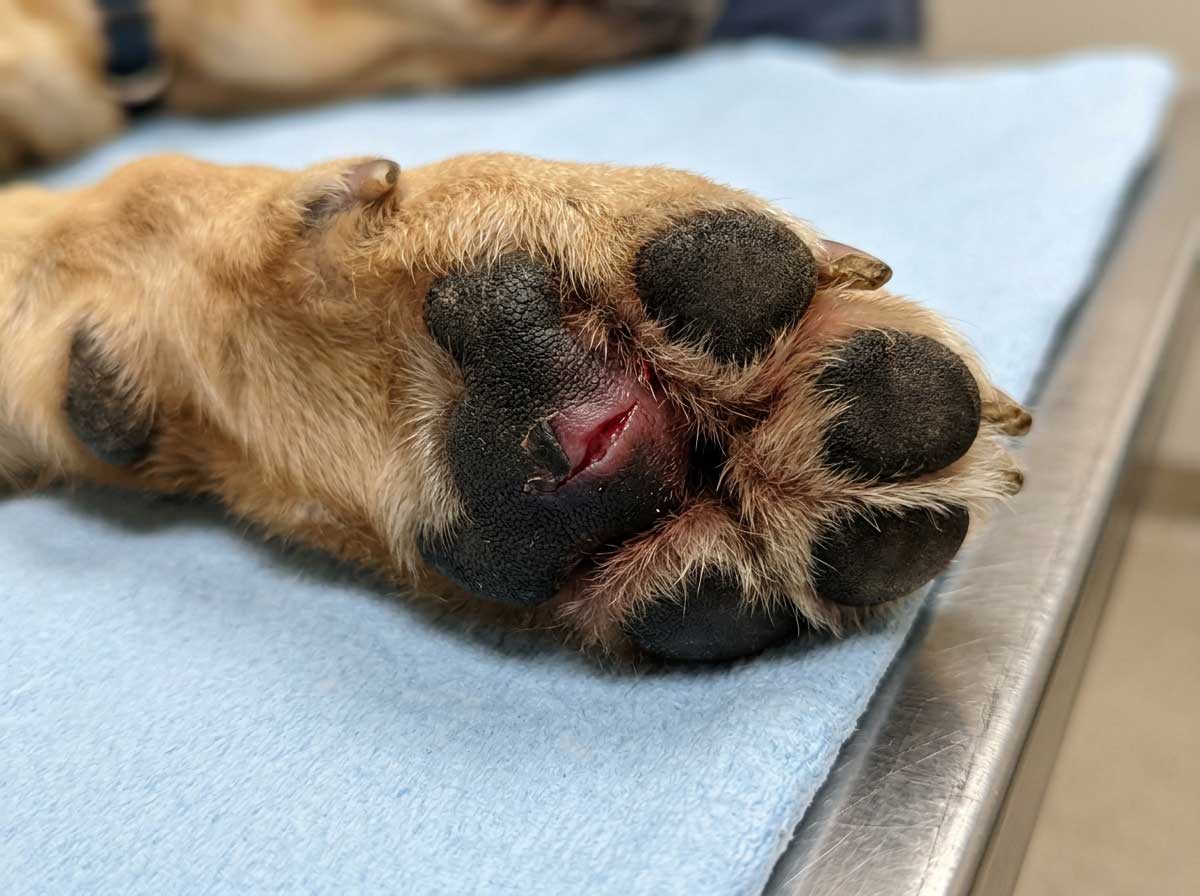
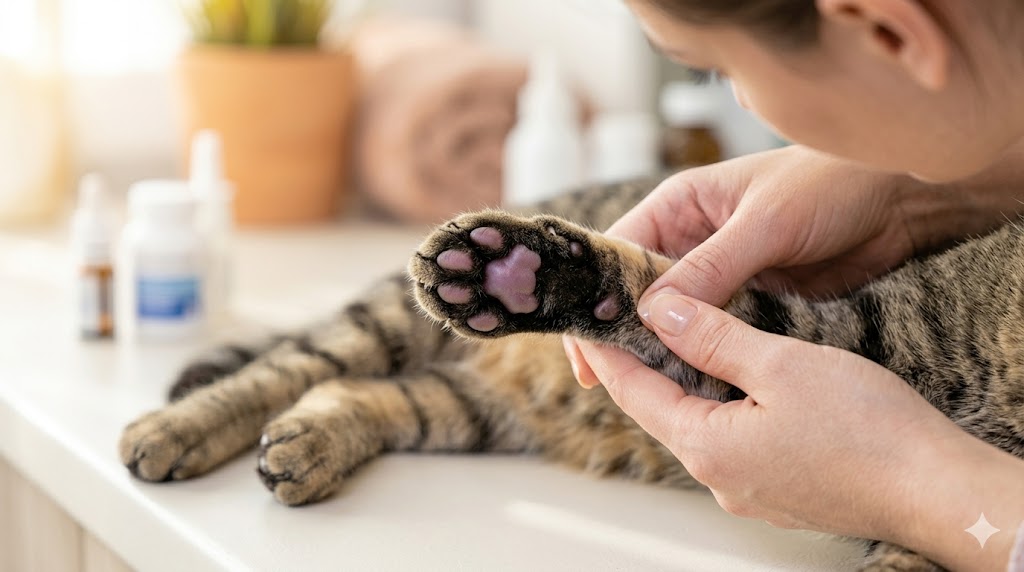
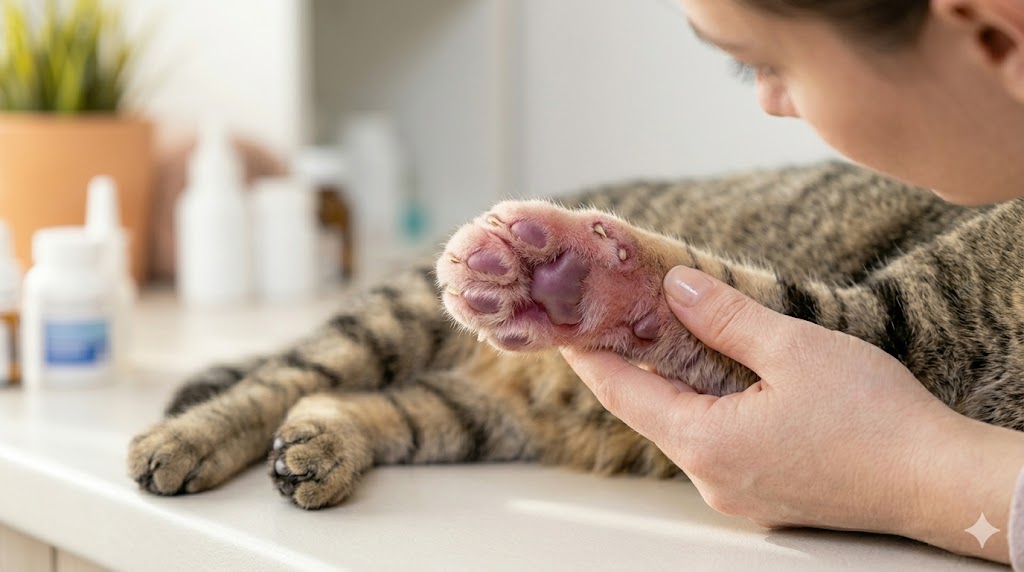
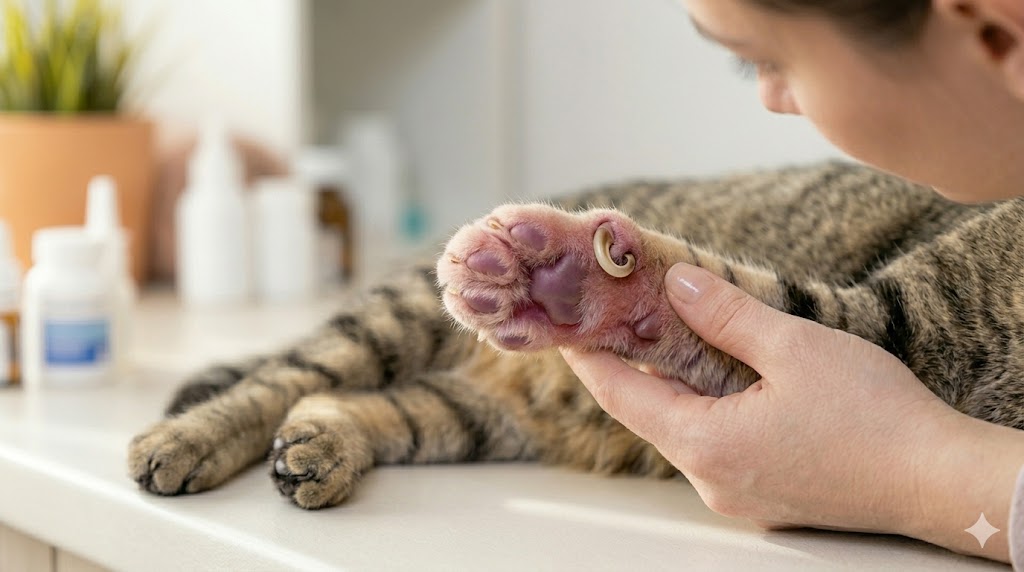
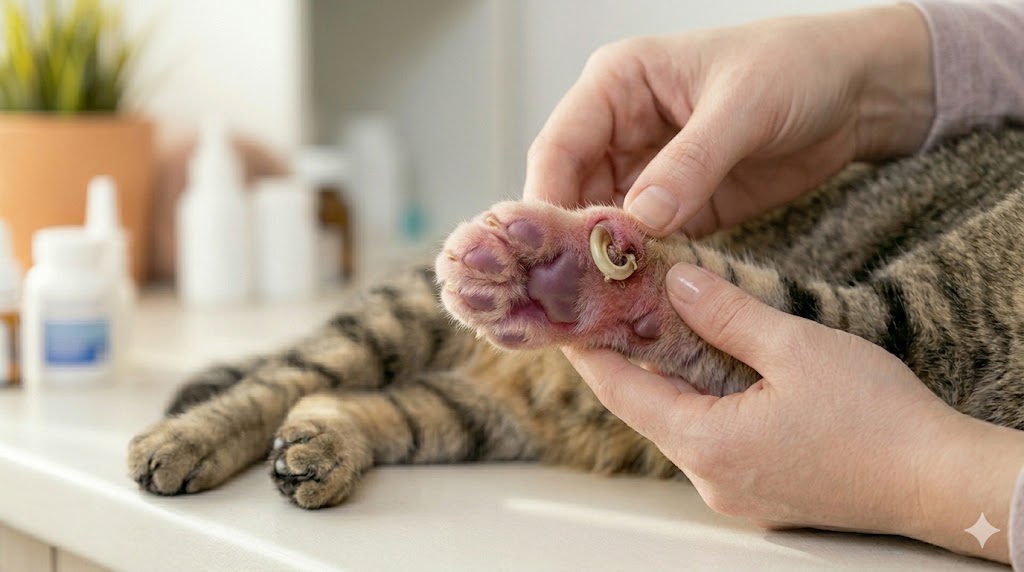
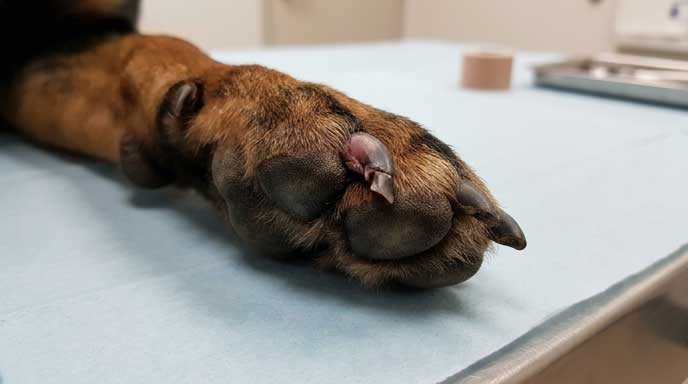
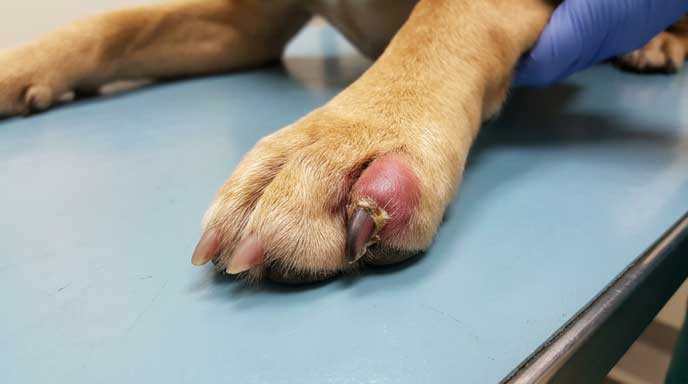
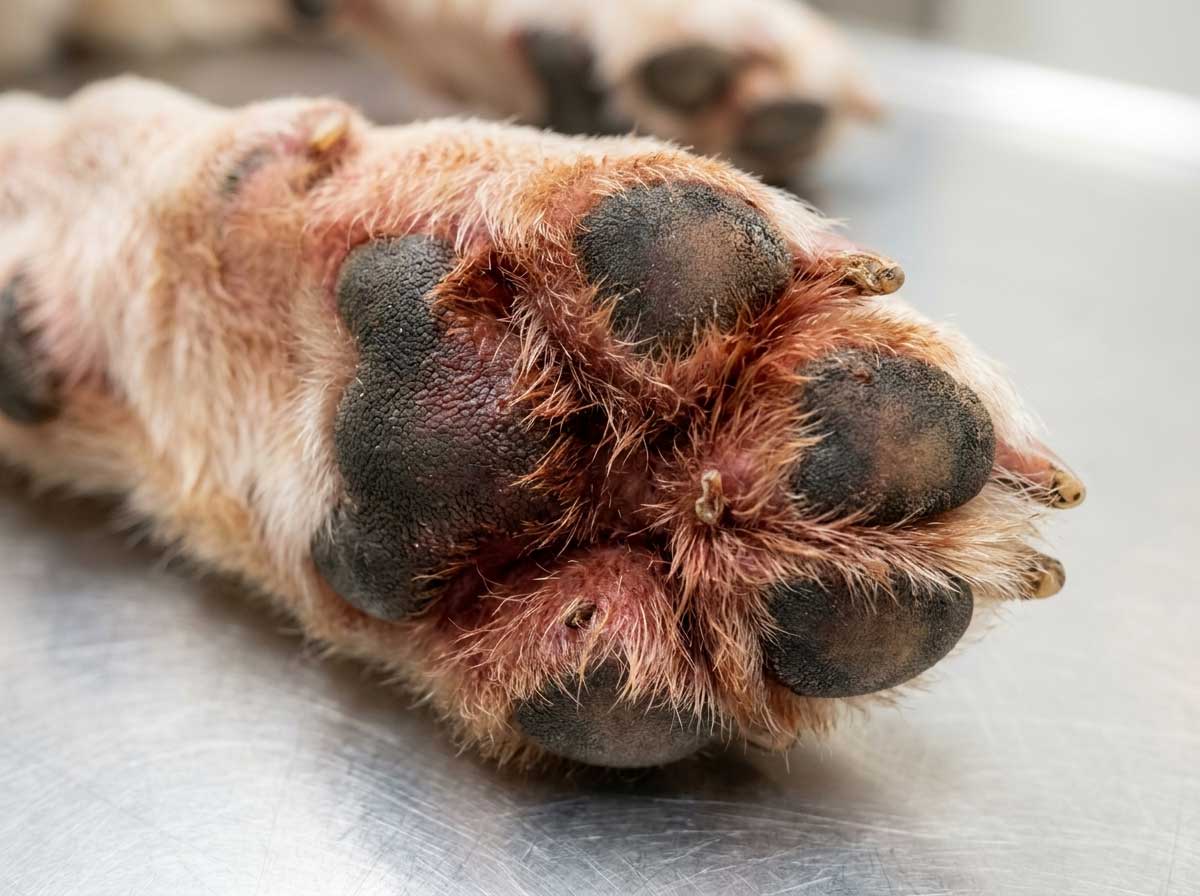
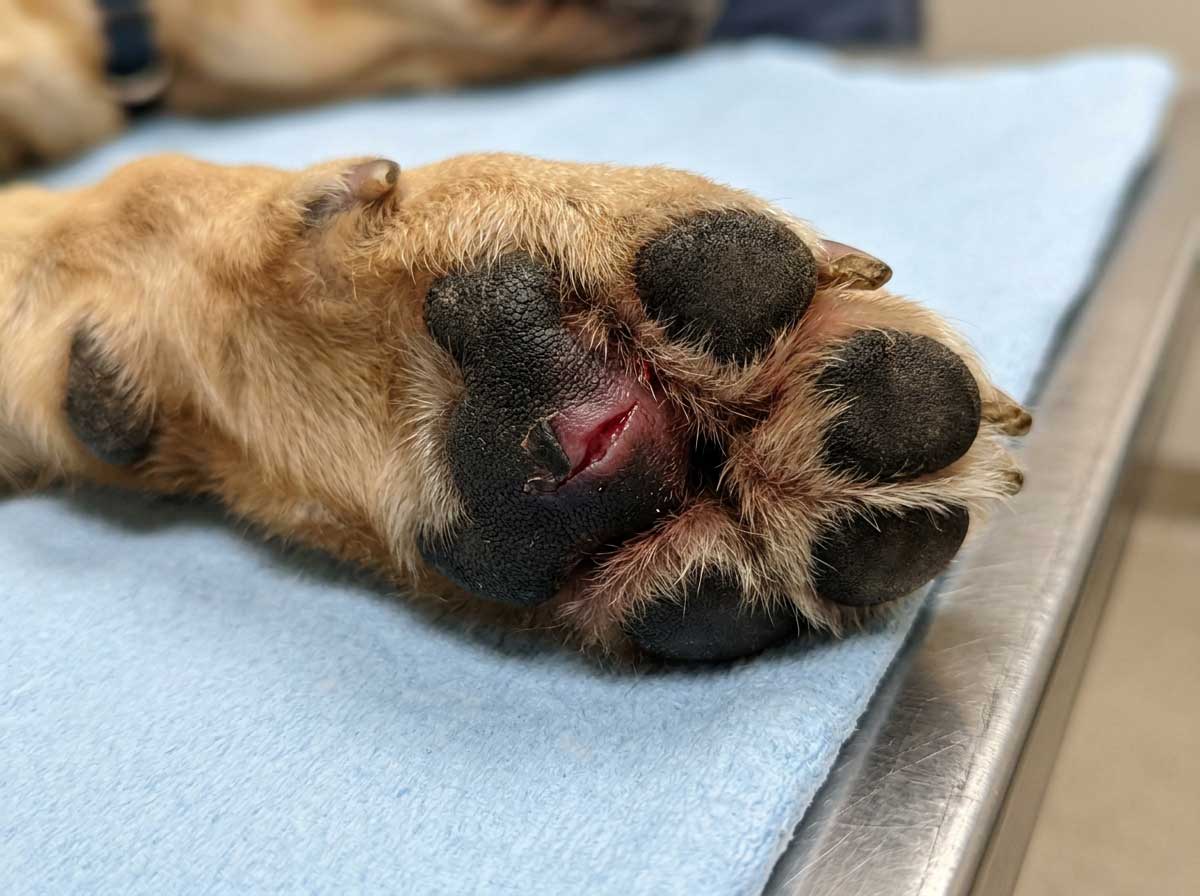
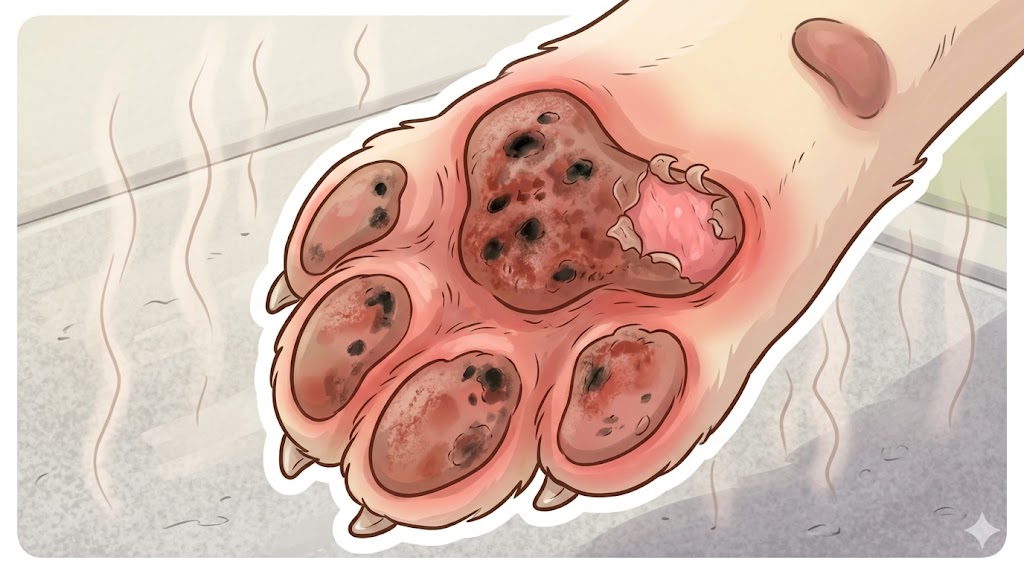
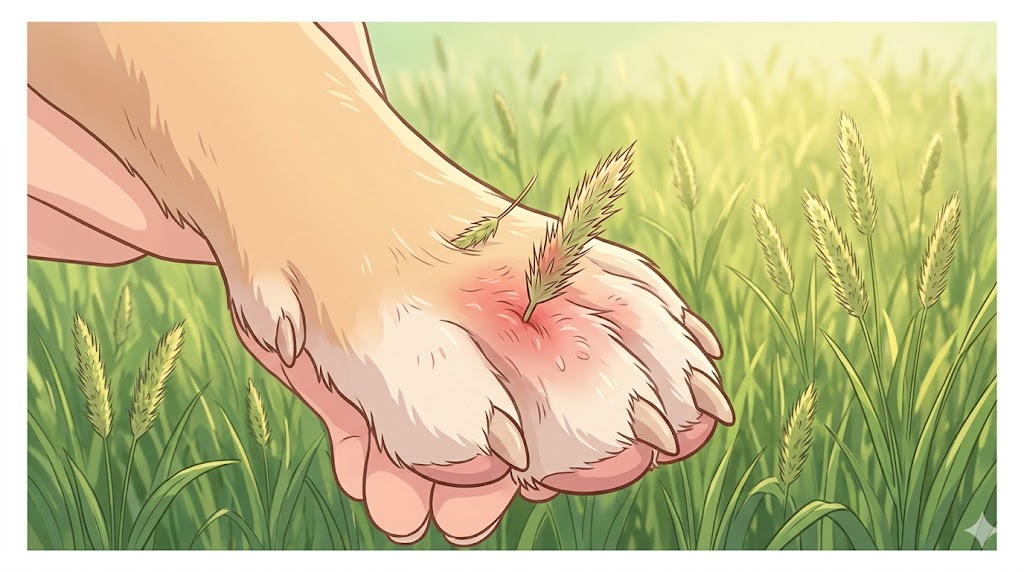
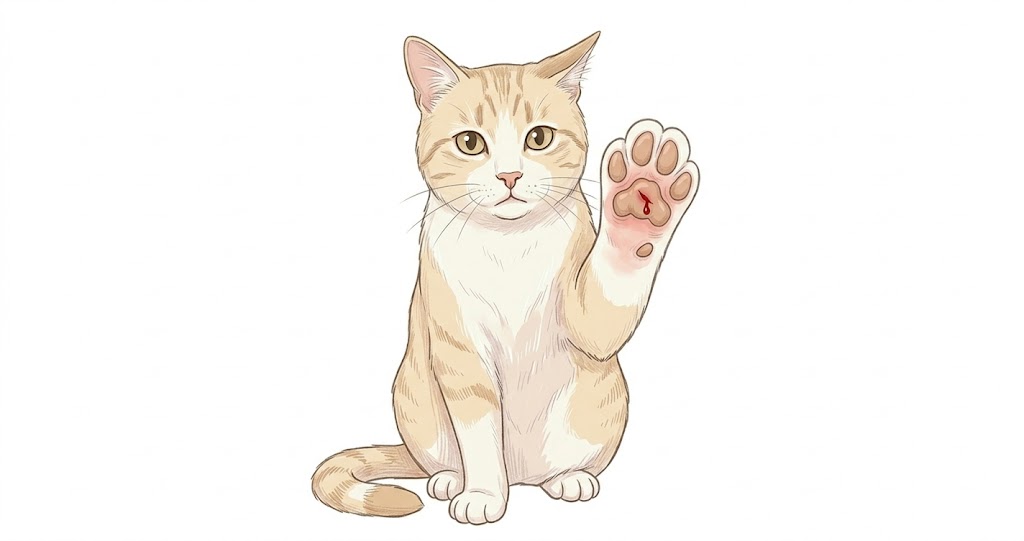
If your cat's paw behavior has shifted — more licking, chewing, visible redness, or limping — upload a clear photo and our AI compares against bacterial infection, yeast, abscess, and healthy paw patterns to flag what's likely going on.
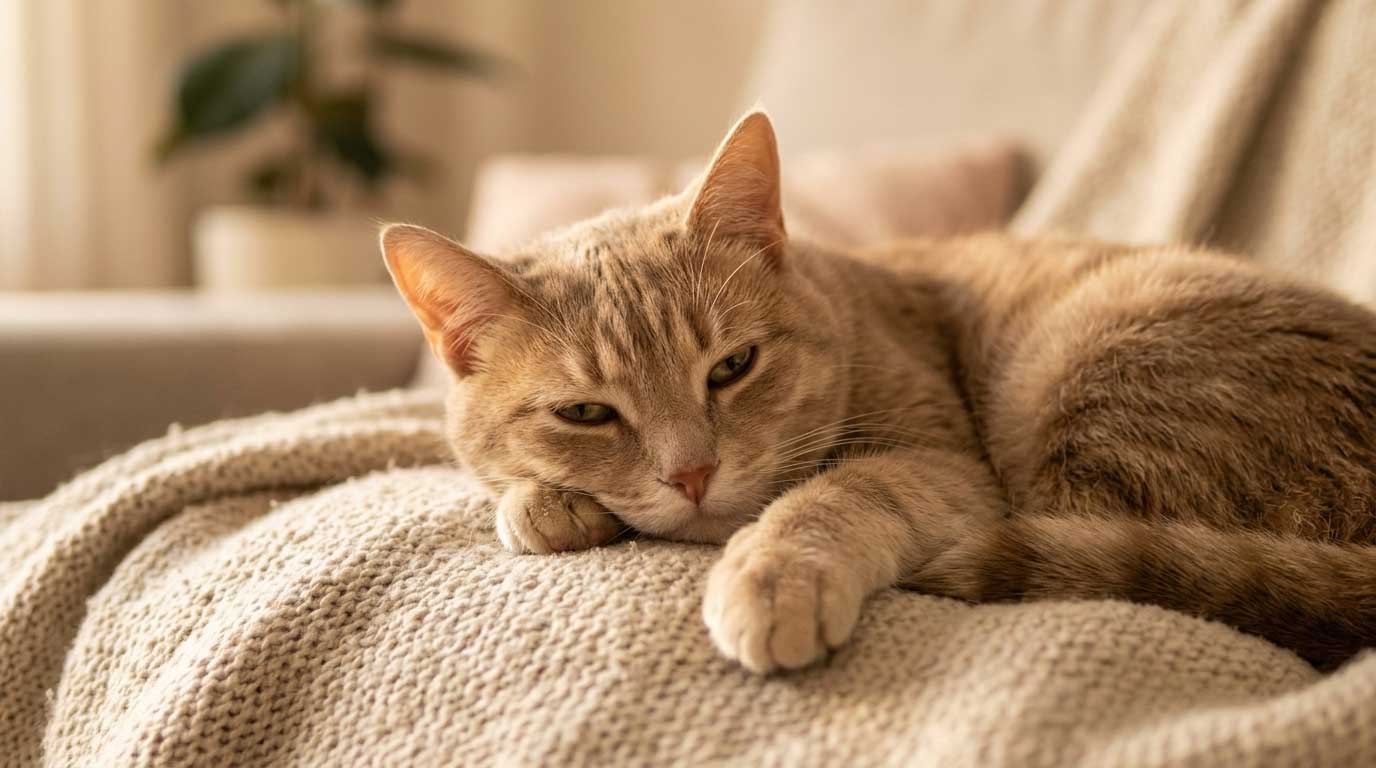
Most cat owners have noticed it: your cat climbs onto a blanket, a pillow, your lap, or even your chest at night, eyes half-closed in obvious bliss, and starts rhythmically pushing both front paws down, alternating left and right with claws slightly extended. The behavior has a name — kneading, or "making biscuits" — and it's one of the most universal cat behaviors across breeds, ages, and personalities. Why do cats push with their paws is one of the top questions new cat owners ask, and the answer combines kitten instinct, scent marking, comfort-seeking, and a deep trust signal directed at whoever the cat is kneading on. This guide explains the 4 main reasons your cat does this, when and where it happens most, what it means about your relationship with your cat, and how to redirect kneading when the claws are uncomfortable.
Worried that your cat's paw behavior might mean something more than kneading — like licking, limping, or paw swelling? Upload a clear photo of your cat's paw and our AI compares it against bacterial infection, yeast, abscess, and healthy patterns in seconds.
Check Cat Paw Now →What "Kneading" Actually Is
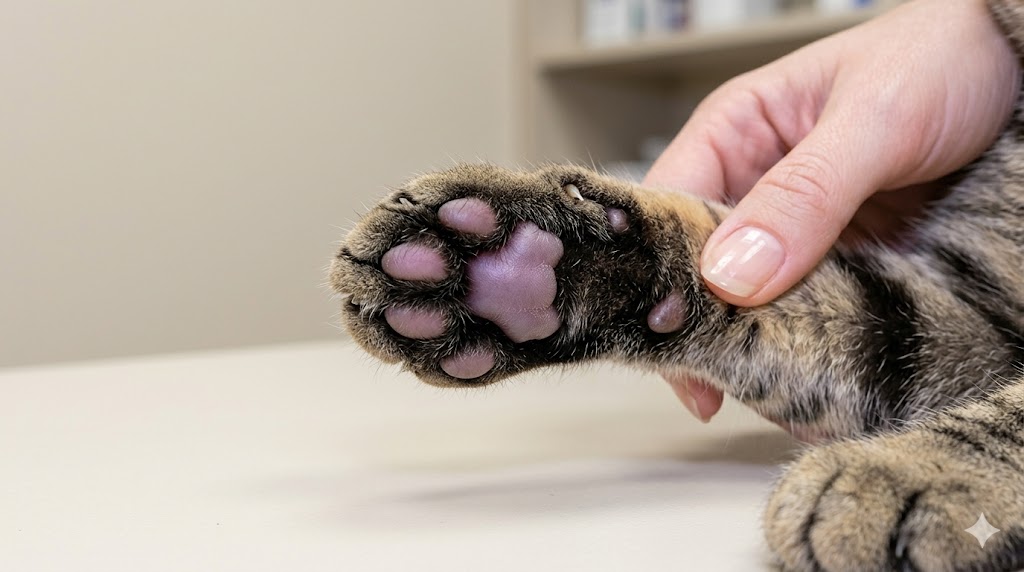
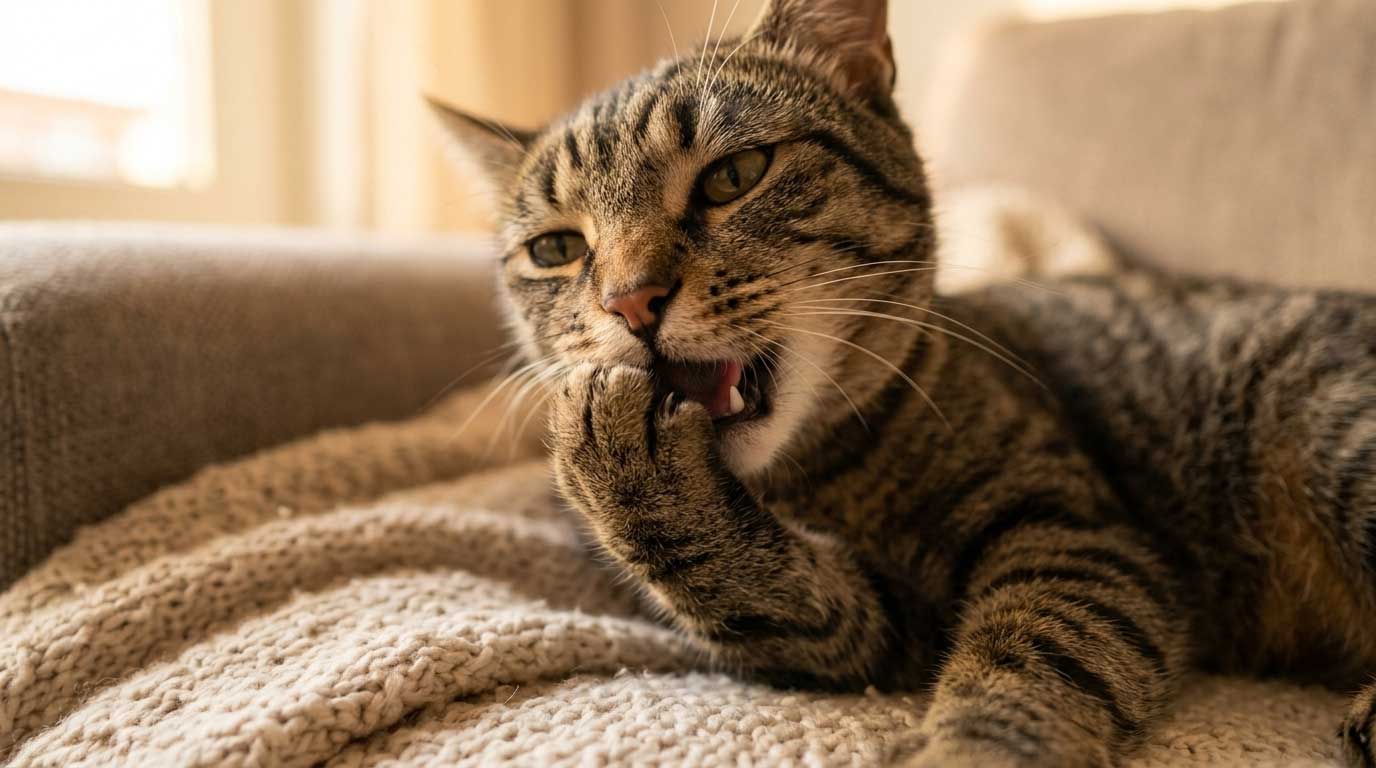
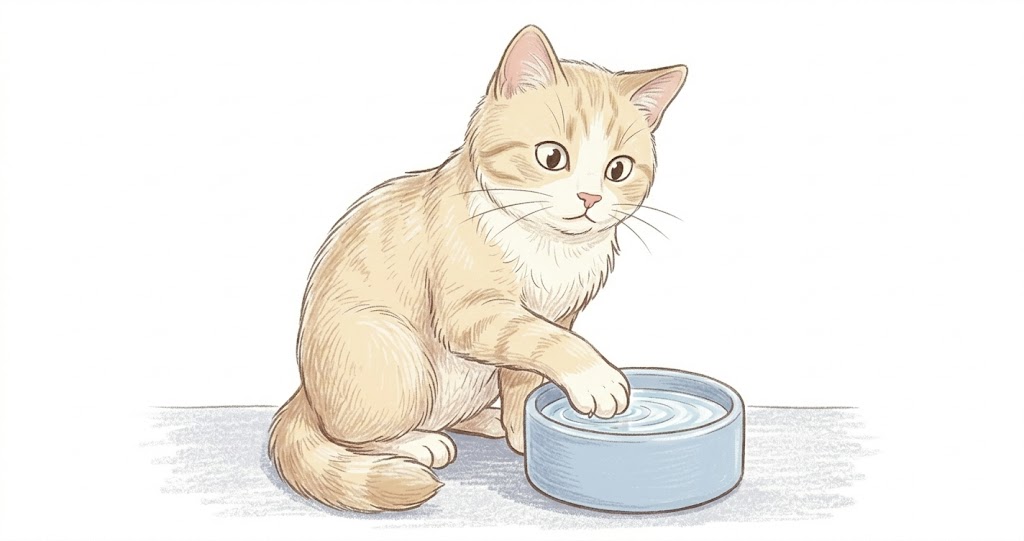
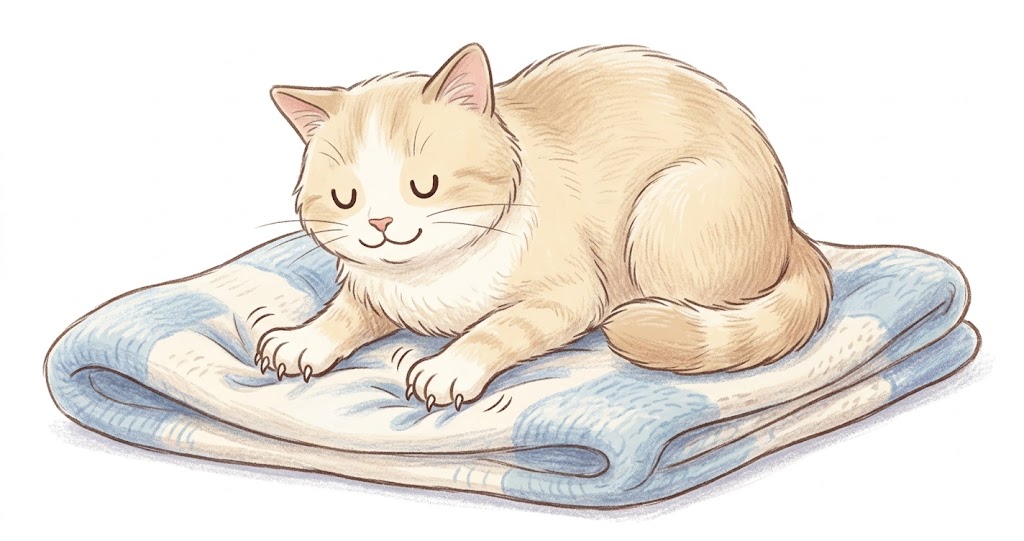
Kneading is the rhythmic, alternating push-pull motion cats make with their front paws against a soft surface. The behavior has several common names: "making biscuits" (the most popular, because the motion looks like a baker kneading dough), "milk treading" (the technical term, referring to the behavior's origin in kittenhood), and simply "pawing". Most cats use only the front paws, but some cats use all four. The claws extend slightly with each push but the cat is rarely trying to scratch — the motion is gentle, slow, and almost trance-like, often accompanied by purring, half-closed eyes, and sometimes a small amount of drooling. According to the ASPCA, kneading is normal feline behavior in healthy cats of any age, sex, or breed.
Why Do Cats Push With Their Paws? The 4 Reasons
Cat behavior researchers and veterinary behaviorists generally agree on four overlapping explanations for kneading. Any given session might be driven by one reason or several at once.
Reason 1: Kitten Nursing Instinct (Milk Treading)
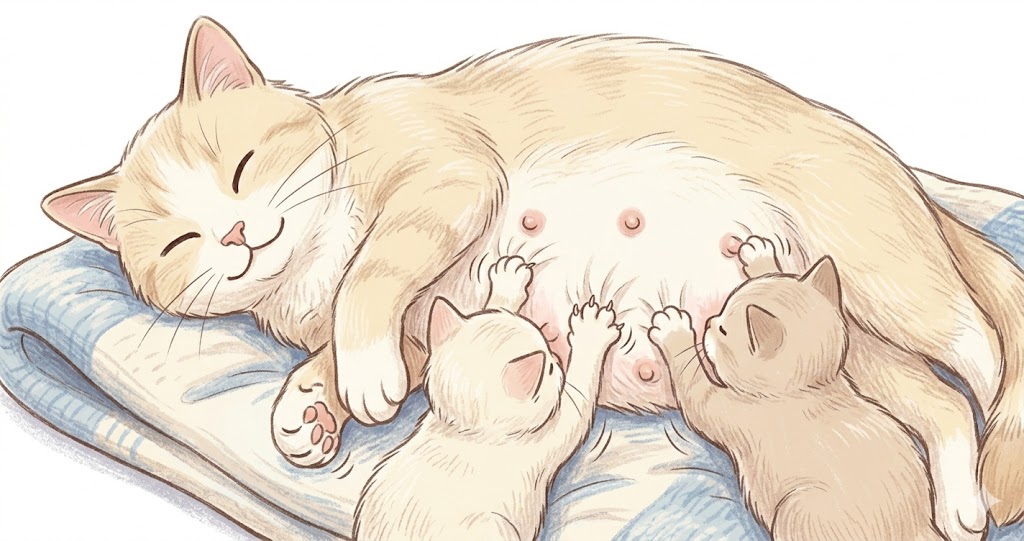
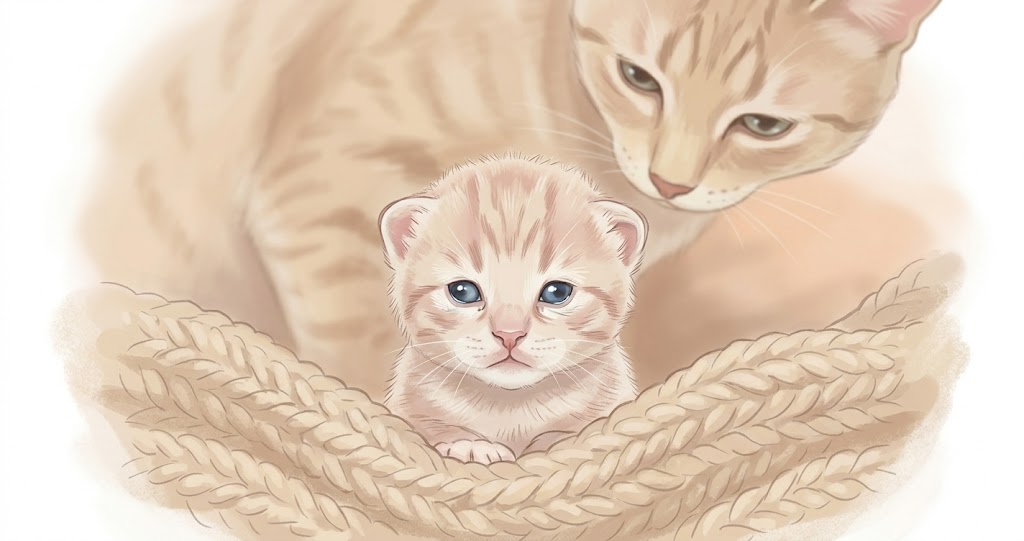
The most widely accepted explanation: newborn kittens push their front paws rhythmically against the mother cat's belly while nursing, alternating left and right. This pressure stimulates milk flow from the mammary glands, and the kitten is rewarded with food, warmth, and safety all at once. The behavior is hardwired — kittens do it within hours of birth, before their eyes even open. Adult cats who knead are essentially returning to that earliest comfort state: the soft surface, the rhythmic motion, the half-closed eyes, and the contentment all echo the nursing experience. This is why kneading is often paired with purring (another nursing-era behavior that signals "I am safe and cared for") and sometimes a small amount of drooling — the cat's brain is reliving the milk-anticipation reflex.
Reason 2: Scent Marking and Claiming Territory
Cats have scent glands on the pads of their paws. When a cat kneads a blanket, a chair, a soft toy, or your lap, the friction releases small amounts of the cat's individual scent onto the surface. To other cats — and to your cat returning to that spot later — the scent says "this is mine". This is also why cats often knead one specific spot in the house repeatedly: they're maintaining a scent territory marker. It's the same family of marking behavior as cheek-rubbing on furniture corners, but kneading goes deeper because the cat is depositing scent into the fabric weave, not just on the surface.
Reason 3: Preparing a Soft Resting Spot (Ancestral Instinct)
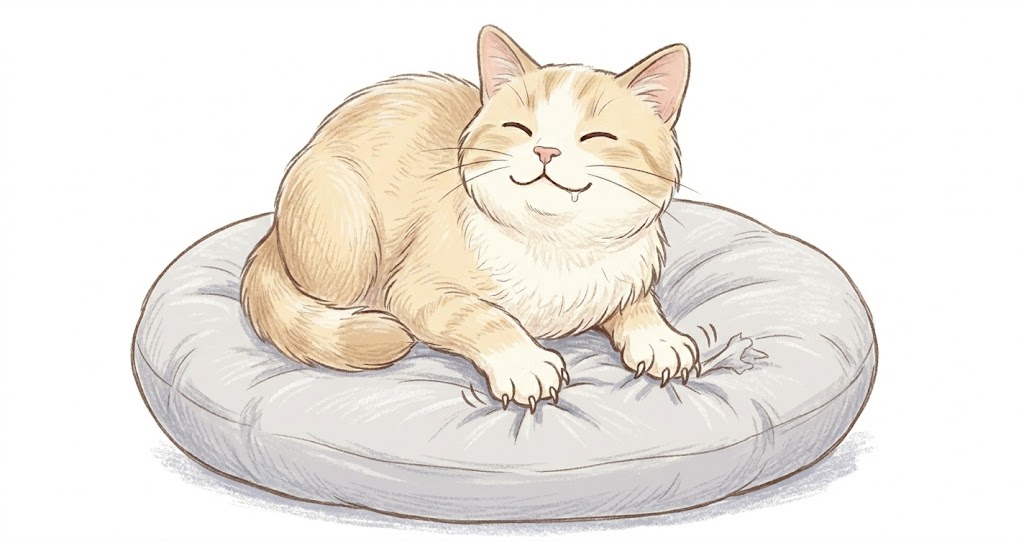
Wild cats and the modern domestic cat's ancestors slept in grass, leaves, fur, or whatever soft material was available, and they would paw and circle the spot before lying down to flatten it into a comfortable bed and to check for hidden threats (snakes, sharp objects, biting insects). Modern indoor cats don't need to flatten grass, but the instinct survived. Many cats knead a blanket or pillow for several seconds — sometimes a full minute — before settling down to sleep. Why do cats knead on blankets so much more than on hard floors? Because soft surfaces trigger the bedding-preparation circuit far more strongly than hard ones.
Reason 4: Trust, Comfort, and Bonding With You
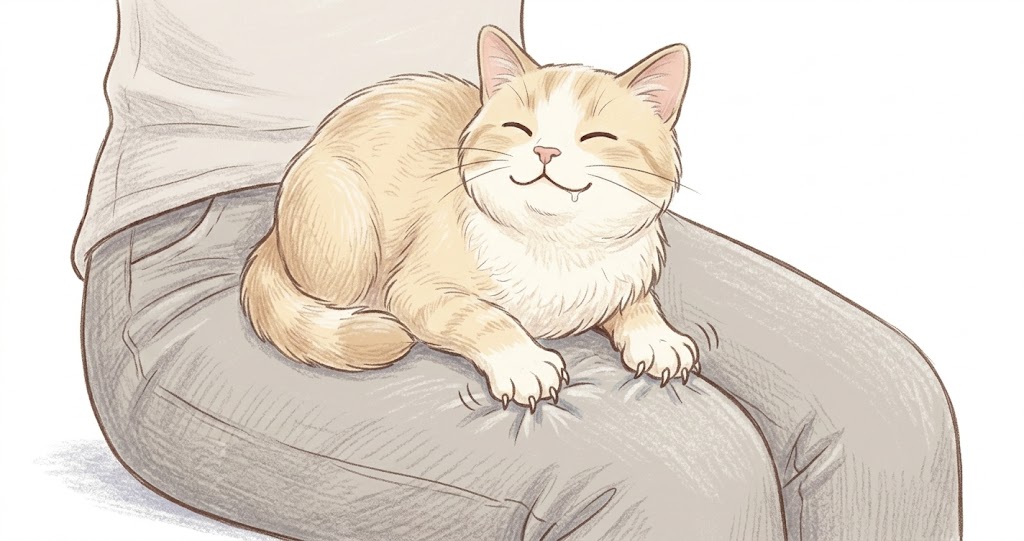
When a cat climbs onto your lap, your chest, or your stomach and starts kneading on you specifically — not on the blanket next to you — they're signaling something specific: they are choosing you as the safe, warm, mother-substitute figure. This is one of the strongest signs of bonding a cat will give, and it explains the related searches you've probably seen: why do cats knead their paws on you, and why do cats push their paws up and down on you. The answer is that you have, behaviorally speaking, replaced the mother cat. The half-closed eyes, the purring, and sometimes the drool are all expressions of profound trust. Cats do not knead on people they fear or strongly dislike.
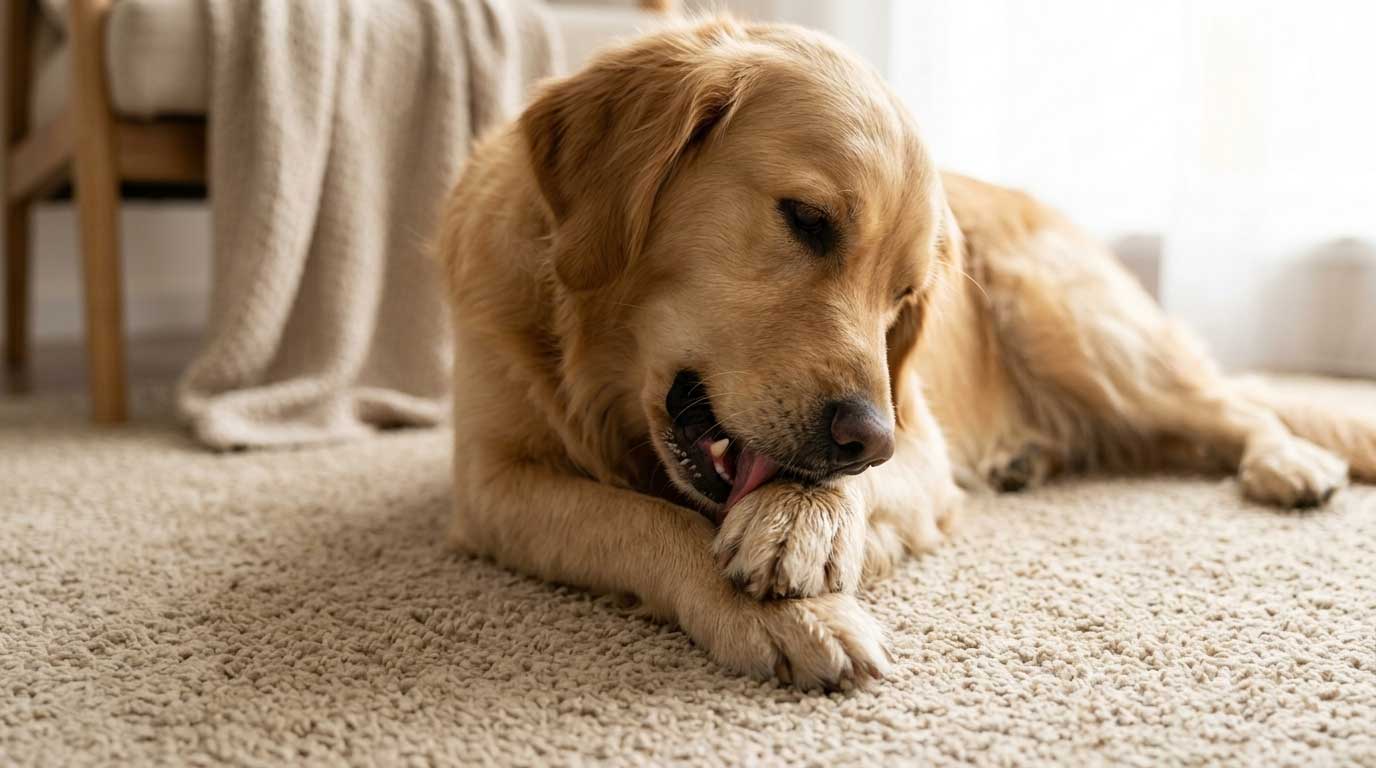
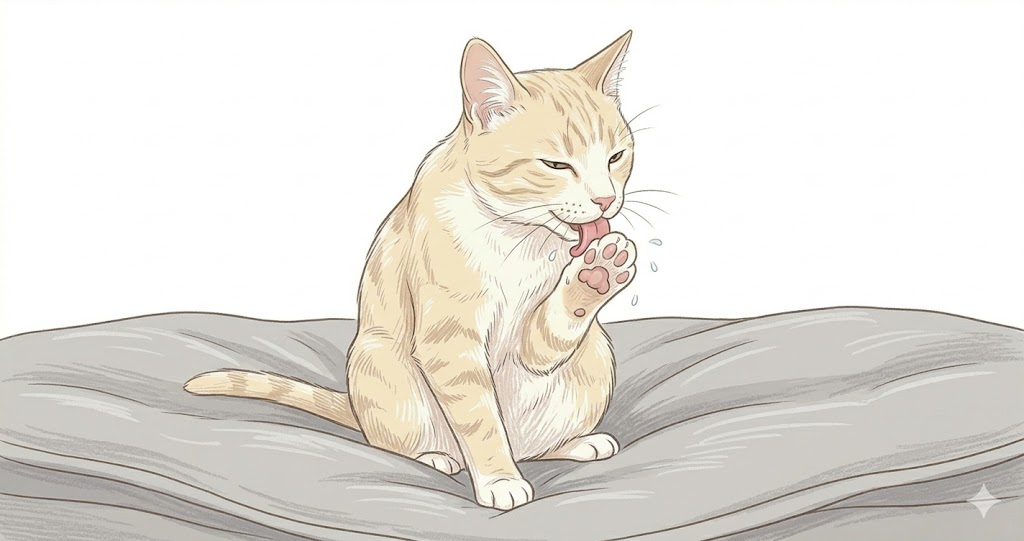
Noticed your cat kneading paws constantly on themselves rather than on objects? Persistent self-grooming can sometimes mean paw discomfort. Upload a paw photo and our AI checks for bacterial, yeast, or abscess patterns vs healthy paw skin.
Check Cat Paw Now →When and Where Do Cats Knead the Most?
Owners often notice patterns in when their cat kneads — usually around sleep transitions and high-comfort moments. Common patterns from owner reports:
- ✓**Why do cats push with their paws at night**: cats are crepuscular (most active at dawn and dusk) but settle into long sleep blocks at night. The transition from active to sleep mode triggers kneading as part of the bedding-preparation and comfort-marking routine.
- ✓**Why do cats push with their paws in the morning**: morning kneading often happens when a cat wakes up and comes to a warm human body for cuddle time — the trust-and-bonding circuit fires strongly after a night apart.
- ✓**Why do cats knead their owners at night**: same trust circuit as morning, often combined with the cat using the human as a warm bed substitute. Cats prefer body-heat sleeping spots over cold ones, and a kneading session "claims" the spot before settling down.
- ✓**Why do cats knead on blankets**: blankets are the closest available substitute for the mother cat's fur — soft, warm, and pliable enough to push into. A wool or fleece blanket triggers kneading more strongly than a smooth cotton sheet.
- ✓**Why does my cat knead my blanket and purr**: the purring confirms the kneading is comfort-driven rather than scent-marking driven. A purring kneading cat is in pure contentment mode.
Is Kneading the Cat Version of "I Love You"?
It's the closest cat behavior to a deliberate affection signal, but it's worth being precise. Cats don't have the same emotional vocabulary as humans — they don't experience "love" in our verbal sense. What kneading does communicate is profound trust, safety, and recognition of you as a comfort figure. In cat behavioral terms, that combination is the highest compliment they give. So if you've seen the "what is I love you in cat language" question floating around: slow blinks, head-butts (bunting), and kneading on you are the three behaviors most often interpreted as the feline equivalent of an affection signal. Among them, kneading takes the most context to interpret — but when it's directed at you specifically, it is meaningful.
Why Some Cats Drool or Purr While Kneading
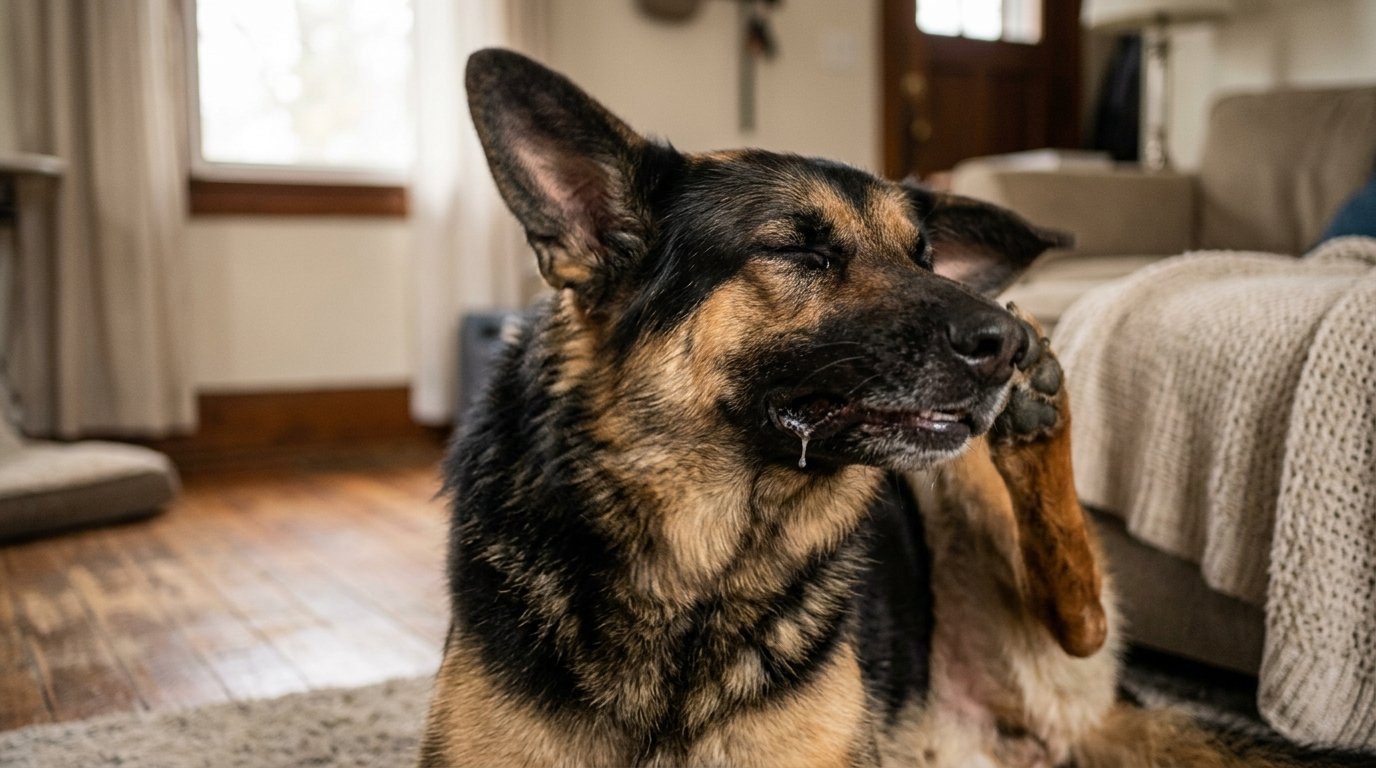
If your cat drools, purrs, or even briefly suckles on fabric while kneading, you're seeing the full kittenhood comfort circuit firing. Drooling specifically is a leftover from the nursing-reflex — the brain anticipates milk, salivary glands respond, and a small amount of drool appears. This is most common in cats who were weaned slightly early, but plenty of normally-weaned cats do it too. It is not a sign of illness, dental problems, or distress as long as: the drool is small in amount, only happens during the kneading/purring state, and stops when the cat stops kneading. If a cat is drooling constantly outside kneading sessions, that's a different signal and worth a vet check — but kneading-drool itself is completely normal.
When Kneading Hurts (and How to Redirect Without Punishing)
Cats knead with their claws slightly extended, which means kneading on bare skin can leave small scratches or hook in clothing. The instinct to knead is hardwired, so punishing the behavior doesn't work and can damage the trust the cat is signaling. Better approaches:
- ✓Place a thick folded blanket or pillow on your lap before the cat settles — this gives the cat the same soft surface but protects your skin.
- ✓Keep claws trimmed regularly (every 2-3 weeks). Trimmed claws still allow the kneading motion but don't hook fabric or skin.
- ✓Gently move the cat's paws onto the blanket if they start on your skin — cats often accept the redirection without losing the comfort state.
- ✓Never yell, push the cat away forcefully, or squirt water during kneading. These responses break the trust signal the cat is sending and can create anxiety around future contact.
- ✓If a cat suddenly starts kneading harder, longer, or in unusual locations along with paw licking, paw chewing, or limping, the behavior change might be linked to paw discomfort rather than emotion. According to the [Cornell Feline Health Center](https://www.vet.cornell.edu/departments-centers-and-institutes/cornell-feline-health-center), any abrupt behavior shift warrants observation and a vet check if it persists.
Do All Cats Knead? What If Mine Doesn't?
Most cats knead, but not all do — and that's normal. Cats weaned very late or hand-raised away from a mother sometimes never develop the behavior. Cats with arthritis or paw pain may also stop kneading because the motion hurts. A cat that has never kneaded is not less affectionate or less bonded; some cats express trust through slow blinks, head-butts, or sitting close instead. If a cat that always kneaded suddenly stops, that's worth noticing — paw or joint discomfort is a common cause of behavior change in older cats.
Reddit and Online Discussion Threads on Cat Kneading
Why do cats push with their paws reddit is a common search because Reddit's r/cats and r/CatAdvice subreddits get the kneading question constantly. The thread answers usually circle back to the same four reasons covered above (nursing instinct, scent marking, bedding preparation, trust). What Reddit discussions add is the variety of personalities: some cats knead silently and stop within 30 seconds, others knead for 5+ minutes with full drool and purr, and some only knead on specific blankets or specific people. The variety is normal — kneading style is shaped by the cat's individual history, weaning age, and personality. Some related searches end with incomplete fragments — for example why do cats push with their paws while (typically completed with "sleeping", "purring", or "being held") — but all those timing variants share the same comfort-state explanation covered in this guide.
The Bottom Line
When a cat pushes with their paws rhythmically on a soft surface — a blanket, a pillow, or you — they're combining a kittenhood comfort reflex, scent marking, bedding-preparation instinct, and a trust signal all in one behavior. If the kneading is directed at you specifically, take it as a compliment: you are being categorized in the cat's mind as a safe, warm, mother-figure. Don't punish kneading, redirect to a folded blanket if claws hurt, and watch for sudden behavior changes that could mean paw discomfort.
If your cat's paw behavior has changed — more licking, chewing, limping, or visible redness between toes — upload a photo of your cat's paw and our AI flags bacterial, yeast, abscess, and healthy paw patterns in seconds.
Check Cat Paw Now →Frequently Asked Questions
What is "I love you" in cat language?
+
Why do cats push their paws up and down on you?
+
Do cats knead when they are happy or stressed?
+
Why do cats knead on soft blankets but not hard floors?
+
Should I stop my cat from kneading me?
+
What is the 3-3-3 rule for cats?
+
Worried about your cat's paw behavior?
If your cat's paw behavior has shifted — more licking, chewing, visible redness, or limping — upload a clear photo and our AI compares against bacterial infection, yeast, abscess, and healthy paw patterns to flag what's likely going on.
Disclaimer: This article is for informational purposes only and is not a substitute for professional veterinary advice. Always consult a licensed veterinarian for diagnosis and treatment of your pet's health conditions.