Why Do Cats Lick Their Paws? Normal vs Warning Signs
Cat licking paw — when is it normal grooming and when does it mean a problem? 5 causes (grooming, allergies, yeast, pain, anxiety) plus when to see the vet.
Published 2026-06-22
Cat paw licking crossed into a problem?
If you see red skin between toes, brown rust-colored saliva staining, swelling, or any open wound on your cat's paw, upload a clear photo and our AI compares against bacterial infection, yeast, abscess, and healthy paw patterns in seconds.
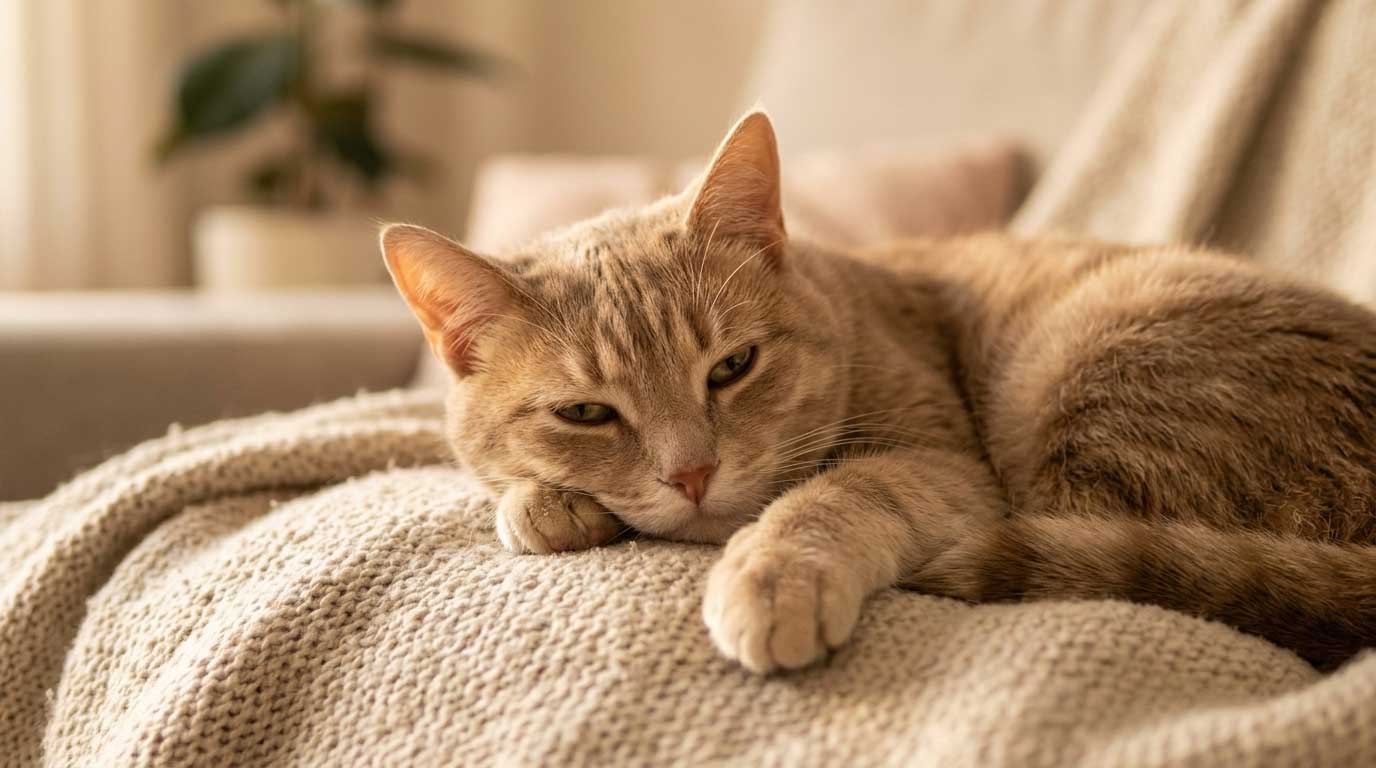
Cats spend roughly 30-50% of their waking hours grooming, and a big share of that time is cat licking paw activity — wetting the paw and using it as a washcloth across the face, ears, head, and body. For most cats, paw licking is completely normal and one of the cleanest behaviors in the animal kingdom. But there's a line where normal grooming crosses into a signal: licking one specific paw constantly, licking until the fur is wet for hours, licking until the skin between the toes turns red or bleeds. Cat licking paws meaning depends entirely on which side of that line your cat is on. This guide explains what normal grooming looks like, the 5 causes of excessive licking, the severity ladder from "fine" to "vet today", and how to tell the difference.
Worried that your cat's paw licking has crossed from grooming into a problem — redness between toes, swelling, or licking one paw obsessively? Upload a clear paw photo and our AI compares against bacterial infection, yeast, abscess, and healthy paw patterns in seconds.
Check Cat Paw Now →What Normal Cat Paw Licking Looks Like (Grooming)
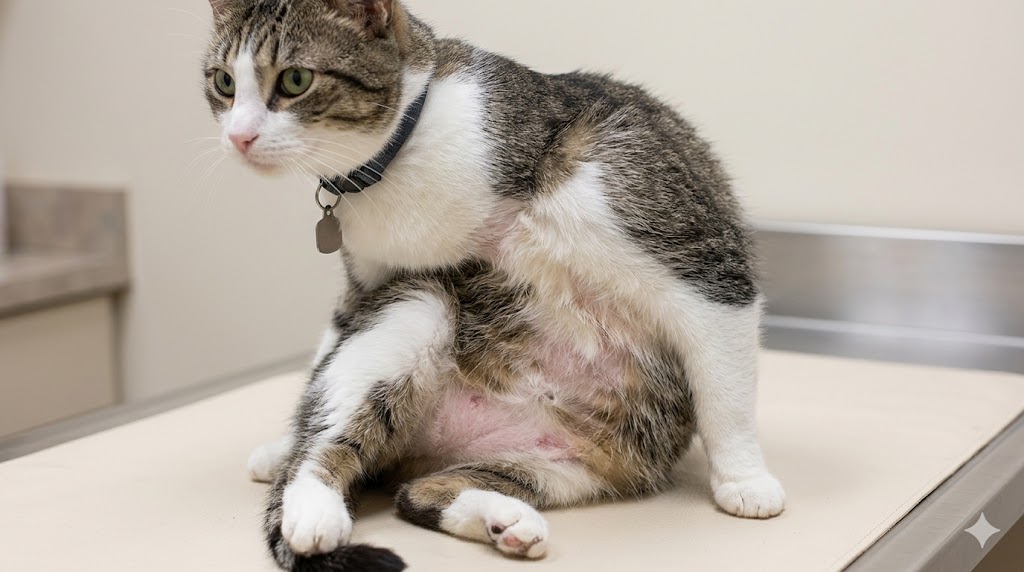
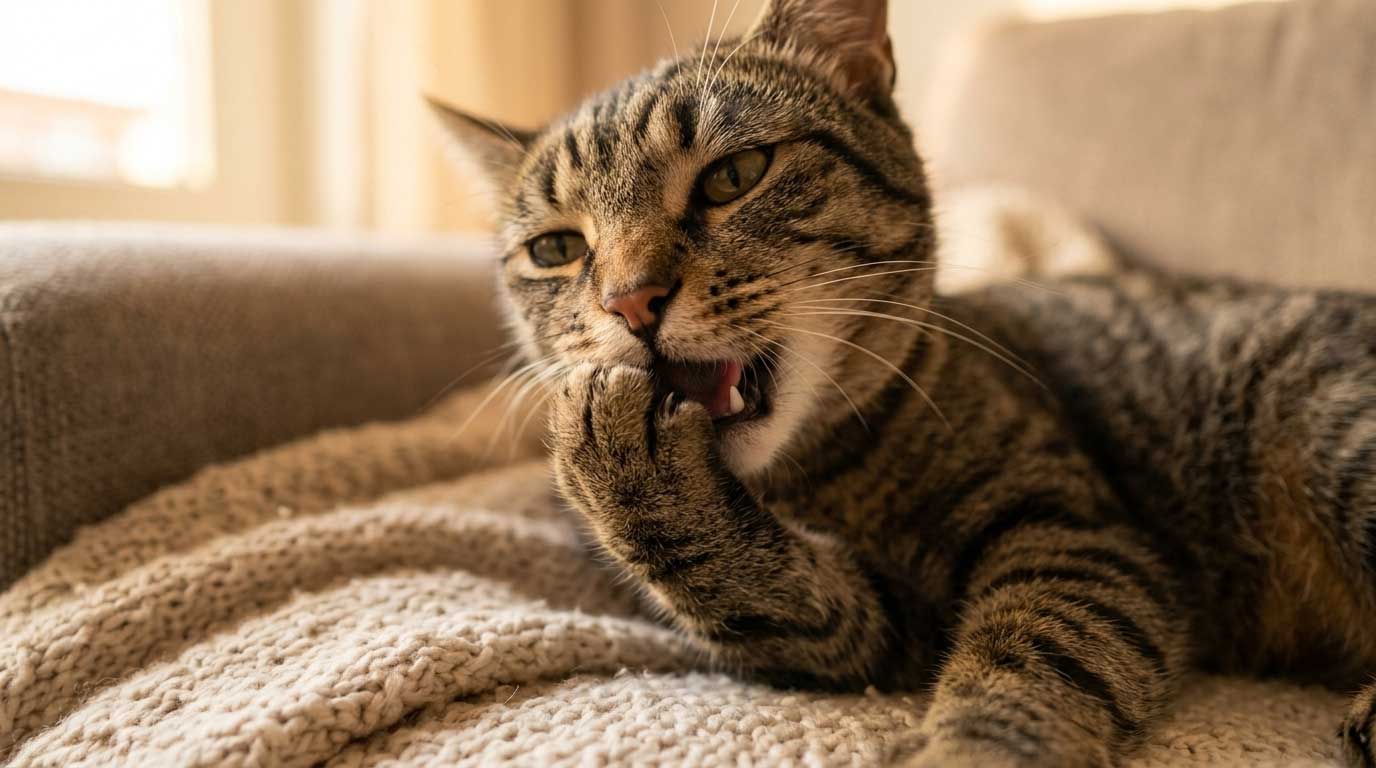
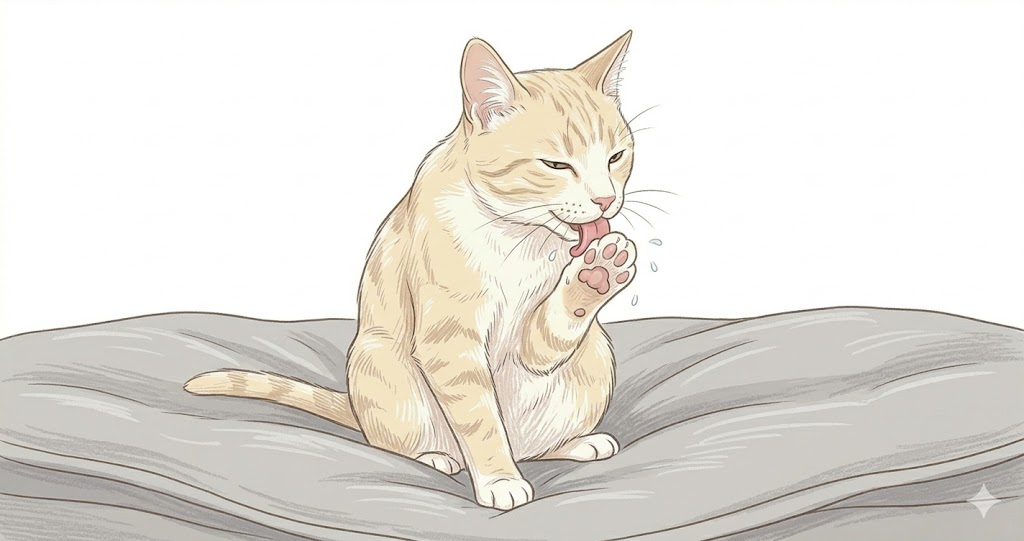
A cat grooming with its paw is doing one of the most-evolved cleaning routines in mammals. The tongue is covered in tiny backward-facing barbs (papillae) that act as a comb. The cat licks a paw to wet the paw fur with saliva, then drags the wet paw across the face, ears, eyes, head, and the parts of the body the tongue cannot reach directly. Cat licking paws meaning in this normal grooming context is simply "I am keeping myself clean". A typical grooming session takes 2-10 minutes and involves all four paws in turn. According to the ASPCA, grooming bouts happen multiple times a day and are tied to waking, eating, and napping cycles — completely normal.
The Grooming Sequence: Lick Paw, Rub Face, Rub Ear
The classic feline grooming pattern is so consistent that it has a name in animal behavior literature: the "head-foot grooming sequence". The cat licks the paw repeatedly to wet it, then uses the wet paw to stroke the face, head, and ear in stroking motions. This is why cat licking paw and rubbing face and cat licking paw and rubbing ear show up as common owner observations — they're the second and third steps of the same routine. If your cat is doing this calmly after waking up, after eating, or before settling for a nap, it's normal. Cats also self-groom socially with other cats they trust ("allogrooming"), which is why two bonded cats sometimes lick each other's heads — the same paw-to-wet, paw-to-stroke motion borrowed for friendship.
When Paw Licking Becomes a Problem: 5 Causes
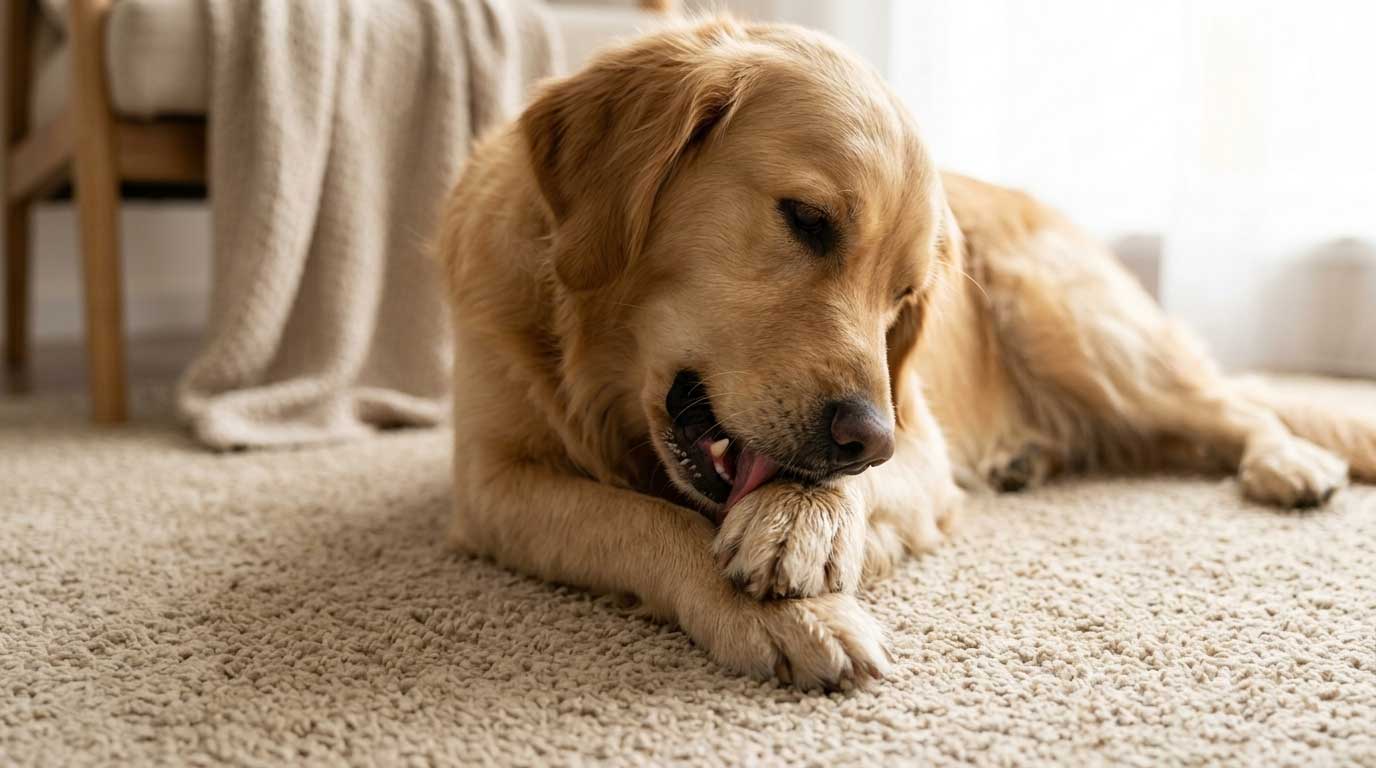
Excessive paw licking — defined as licking one paw repeatedly outside of normal grooming bouts, licking until the fur is visibly wet for extended periods, or licking with a focus on the paw rather than the face/body — usually has one of five causes.
Cause 1: Allergies (Food or Environmental)
Just like dogs, cats can react to food proteins (chicken, beef, fish, dairy) or environmental allergens (pollen, dust mites, mold) with itchy skin. The paws are one of the first places allergic itch shows up because the paw pads have dense sensory nerves and the cat redirects scratching into licking (cats lick instead of scratch with claws). Allergy-driven paw licking is usually on all four paws roughly equally, often paired with belly licking, ear scratching, or face rubbing.
Cause 2: Yeast or Bacterial Skin Infection
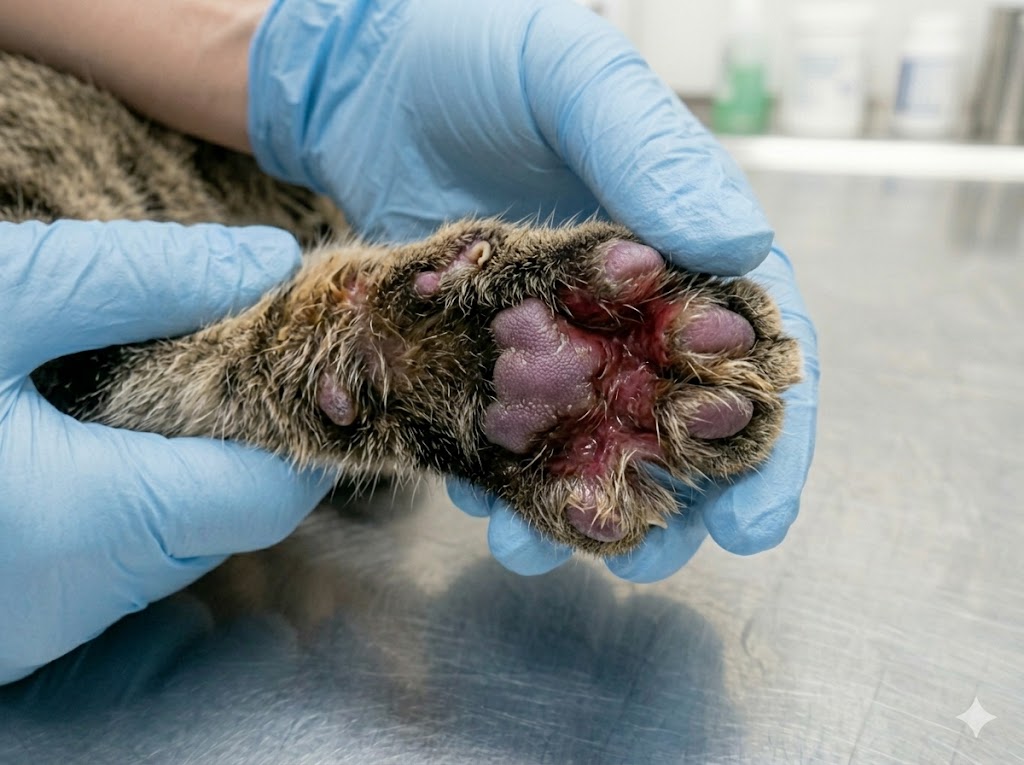
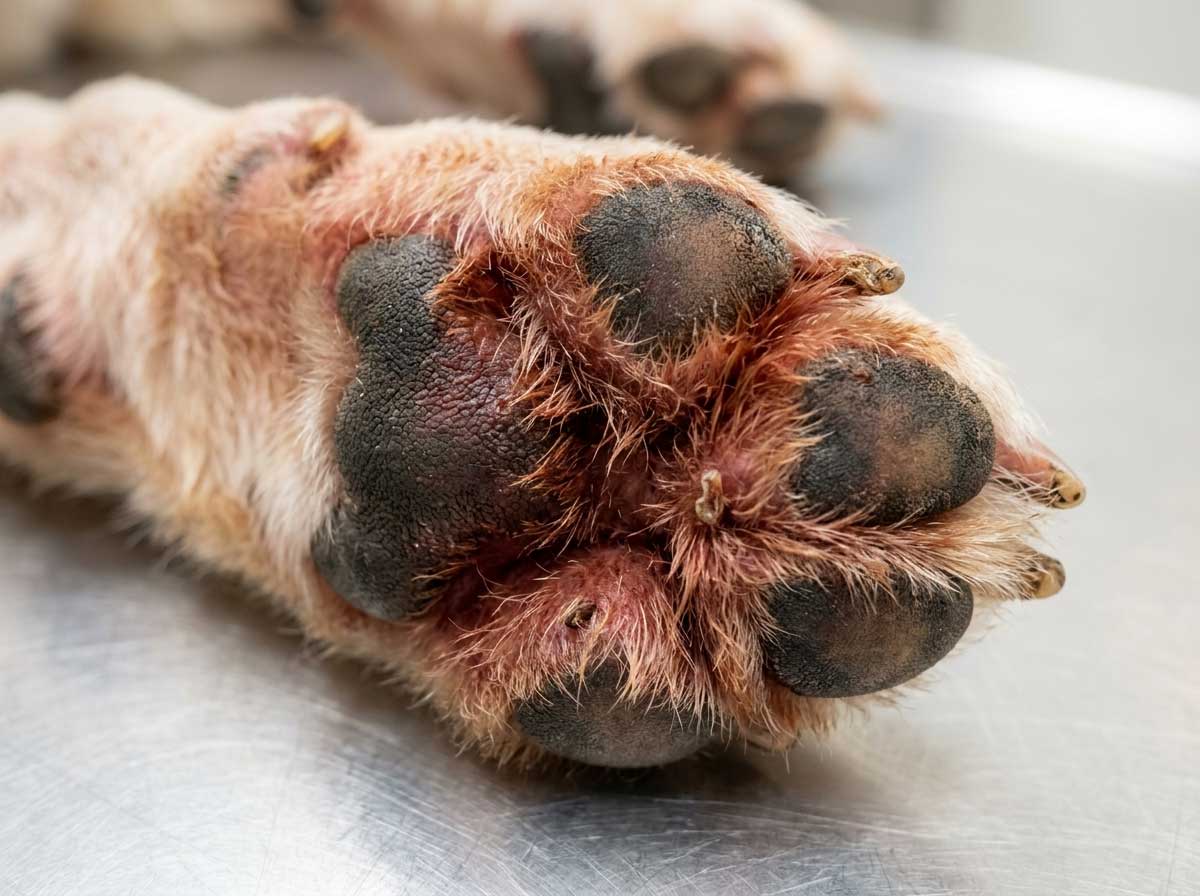
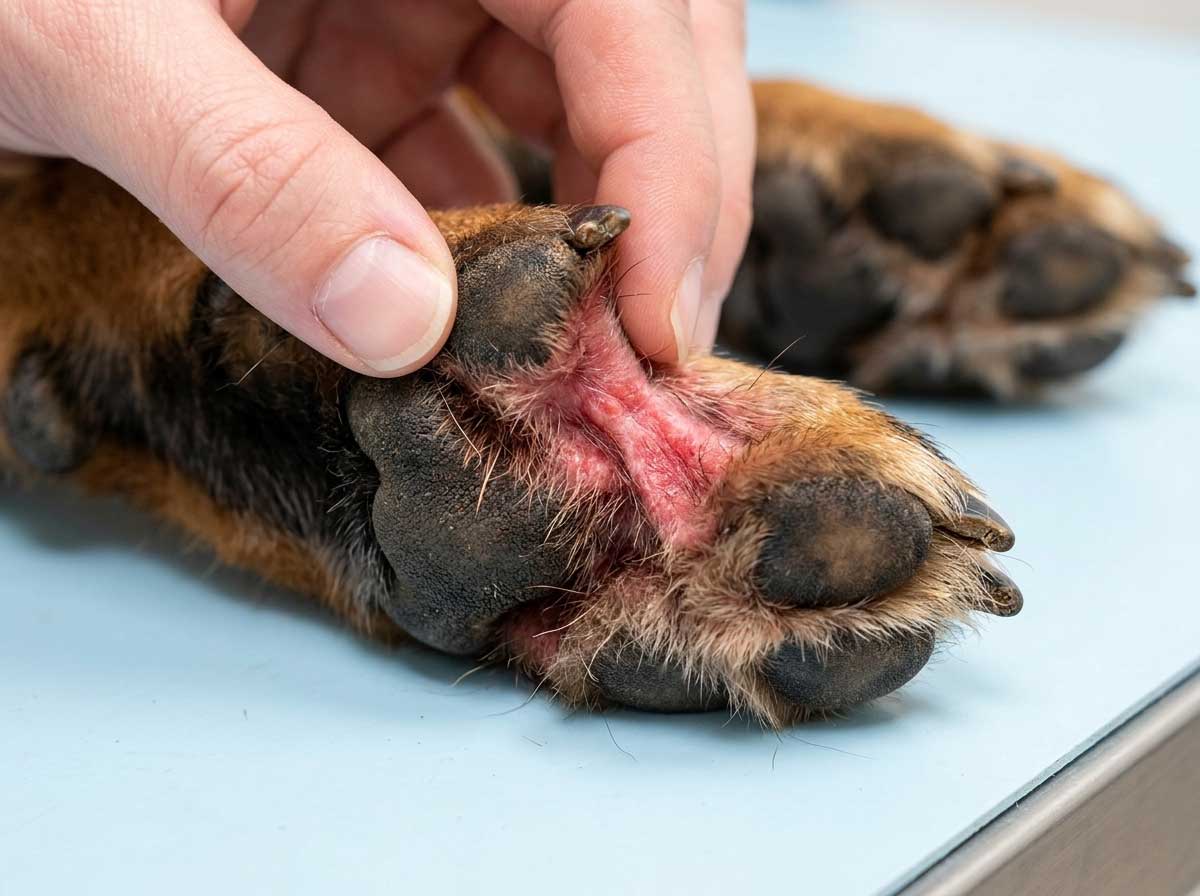
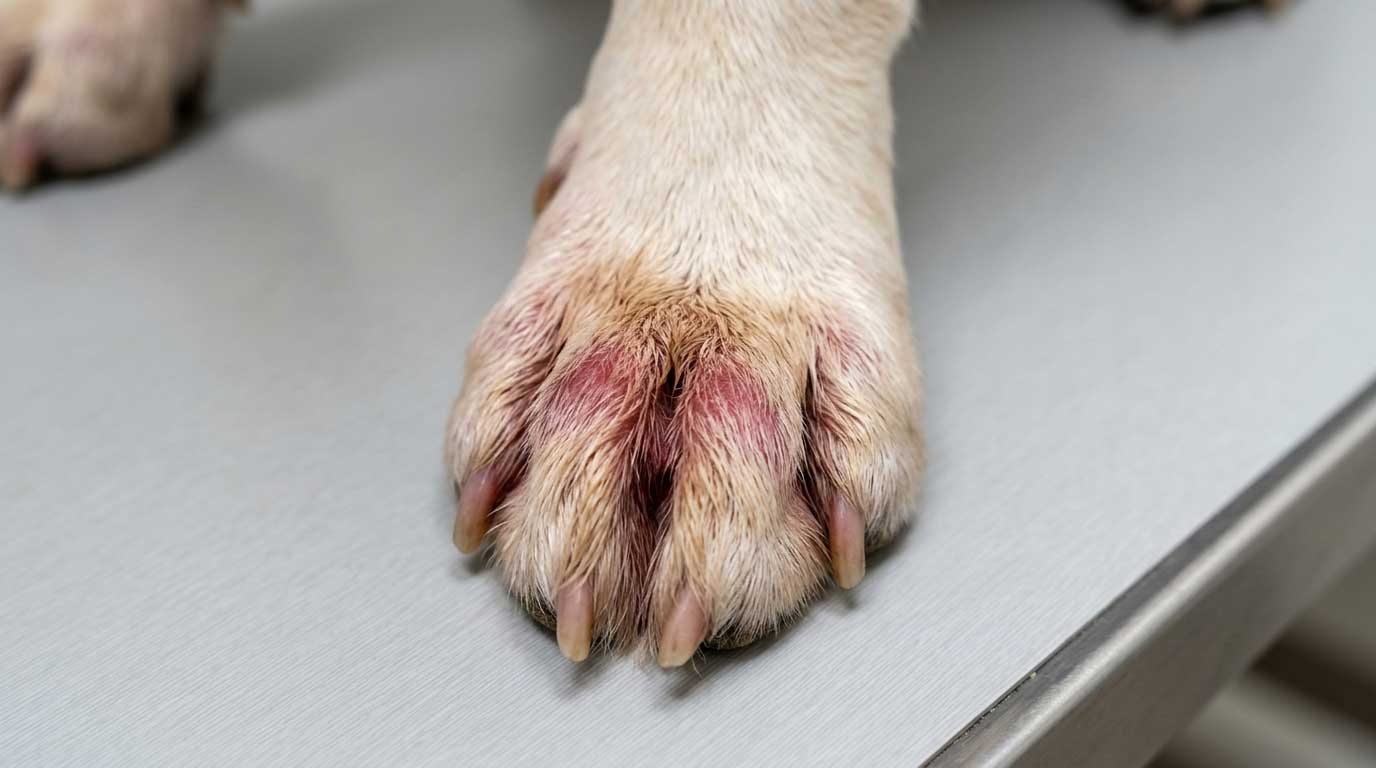
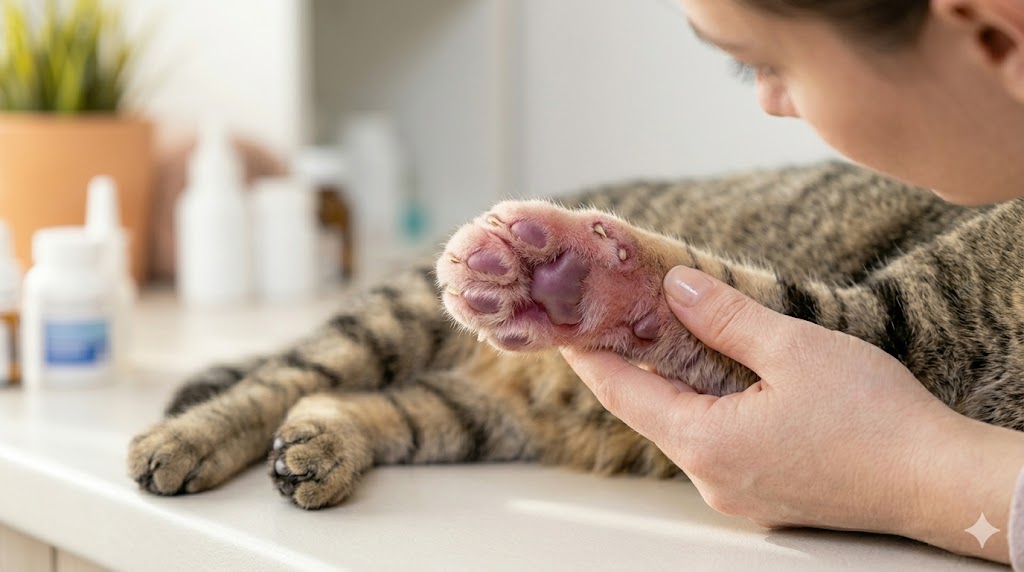
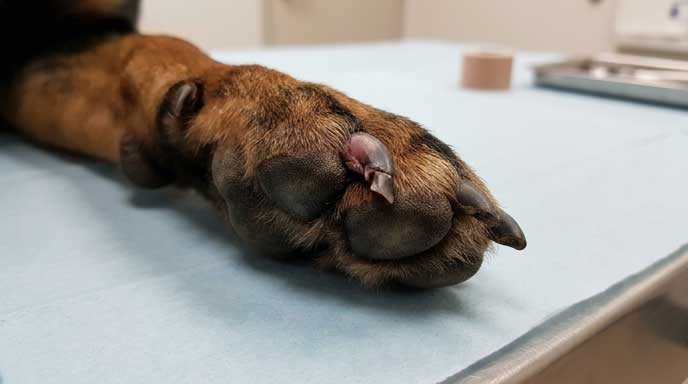
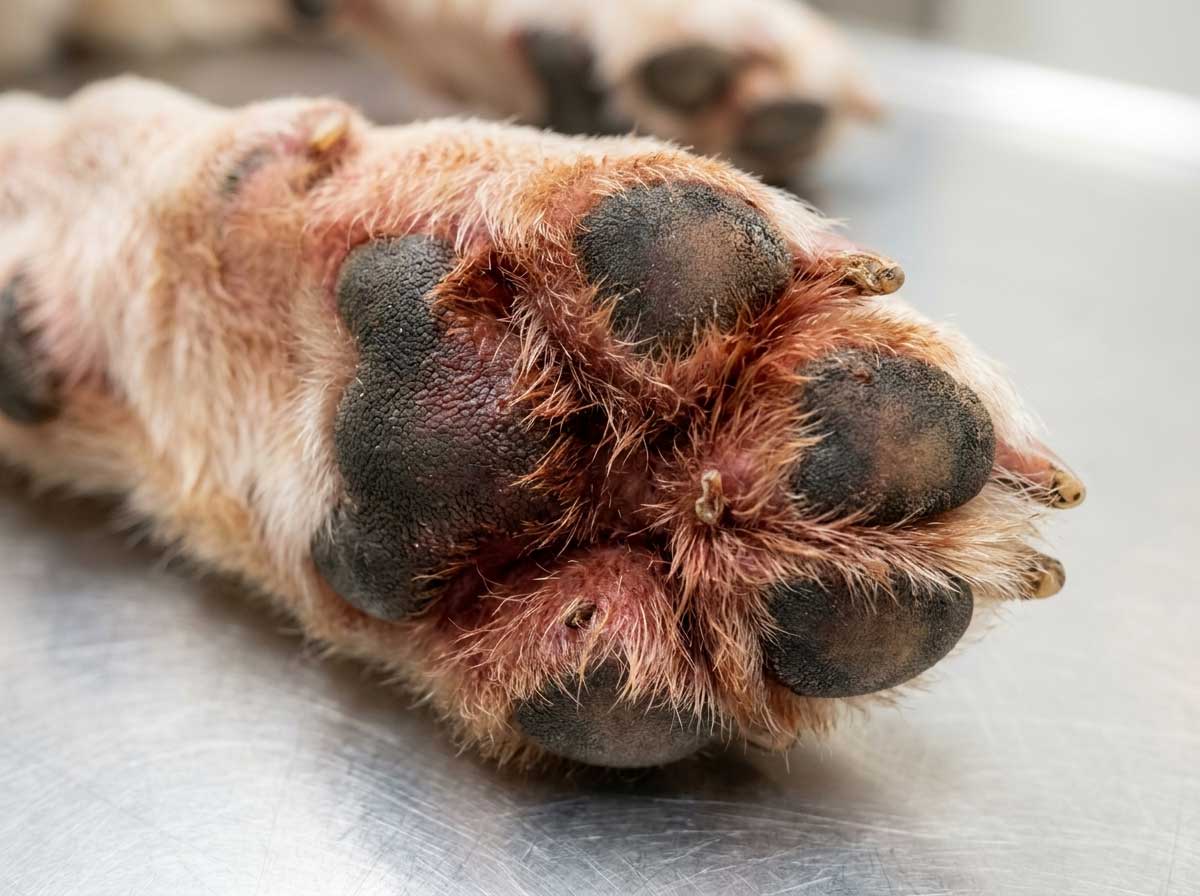
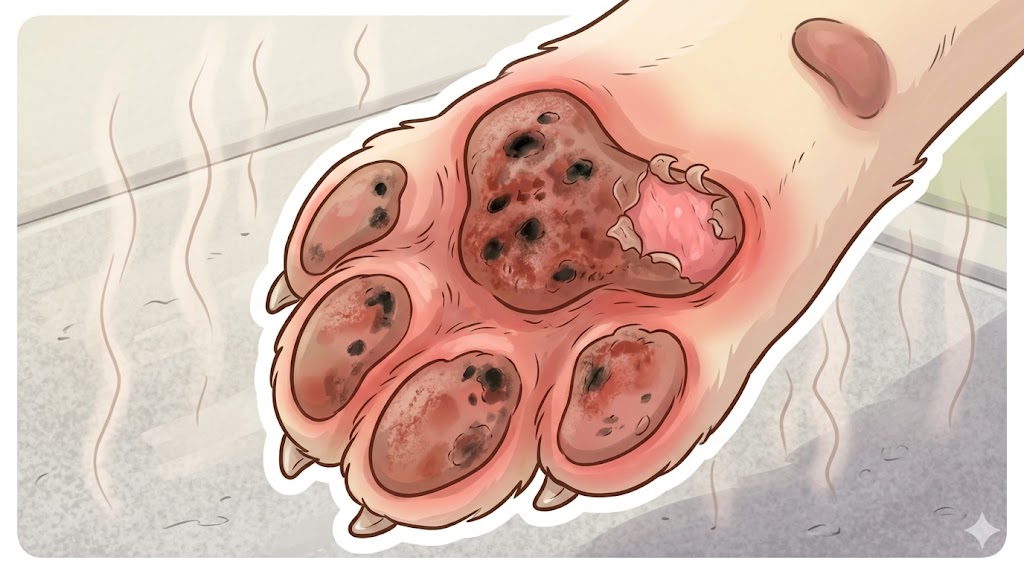
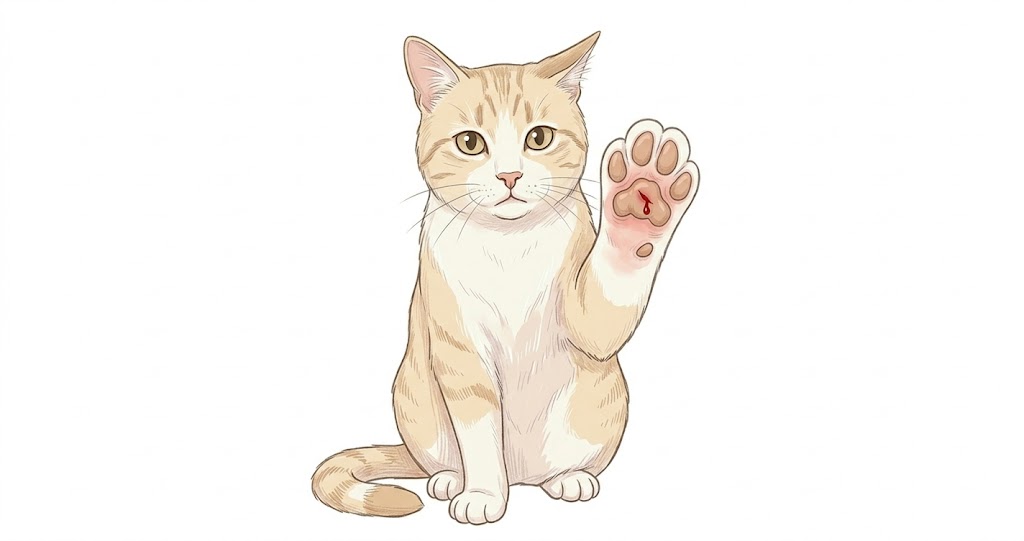
If a cat licks one paw constantly, the constant moisture and warmth between the toes creates a perfect environment for Malassezia yeast or bacterial overgrowth. The infection then itches, which makes the cat lick more, which makes the infection worse — a vicious cycle. Visible signs: red skin between the toes, brown or rust-colored saliva staining on the paw fur, sometimes a mild yeasty smell. According to the Cornell Feline Health Center, persistent moisture between the toes is one of the most common entry points for feline paw skin disorders.
Cause 3: Pain (Injury, Nail Problem, Arthritis)
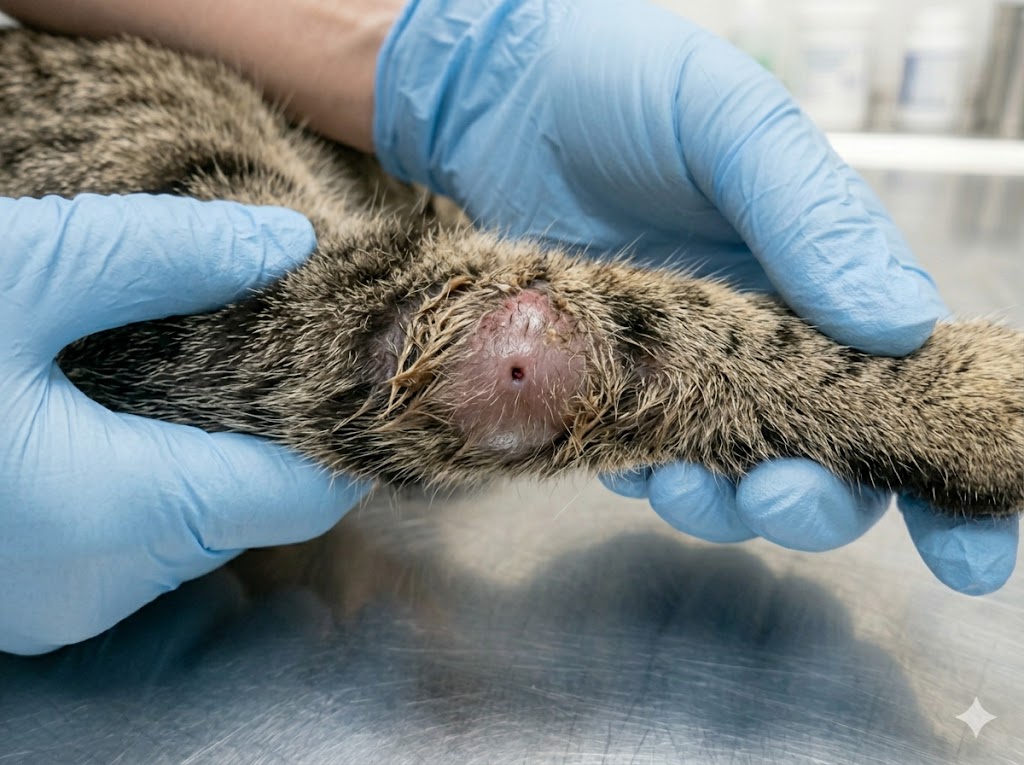
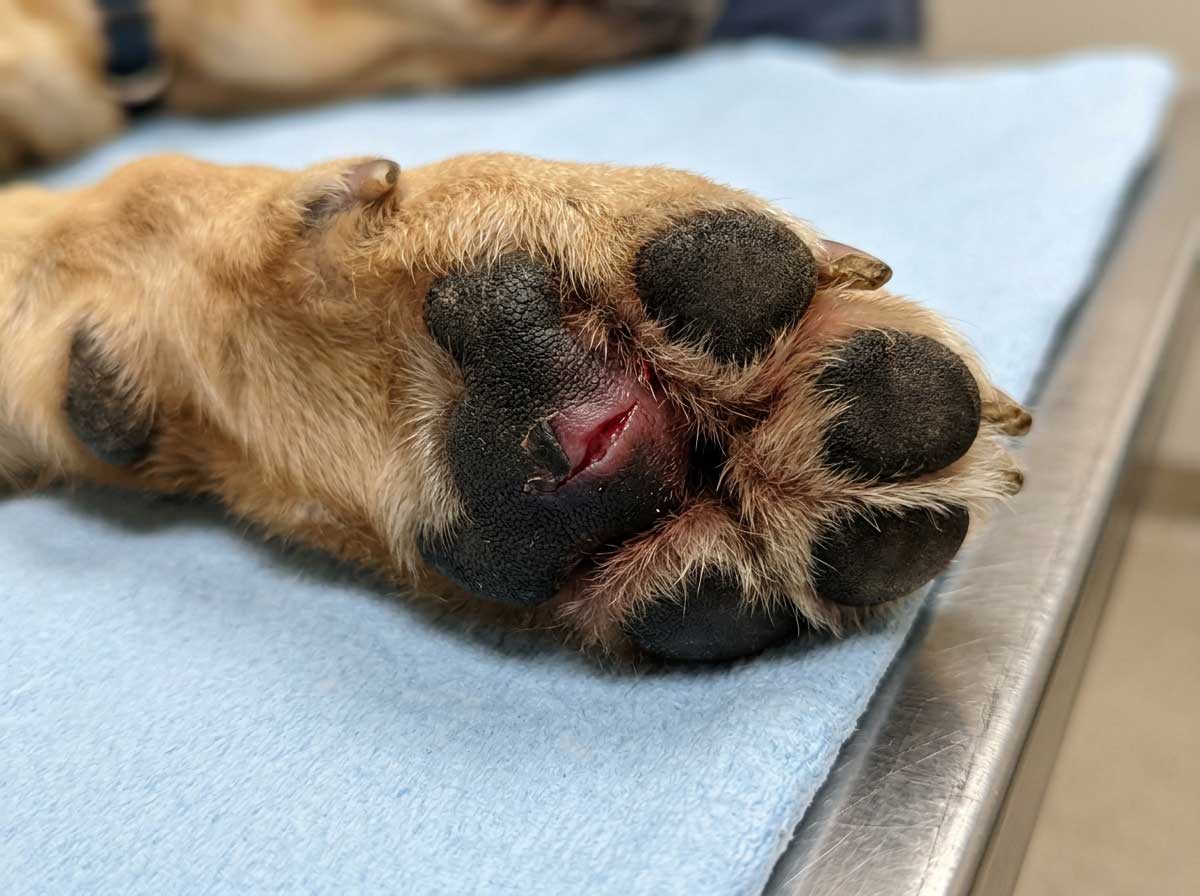
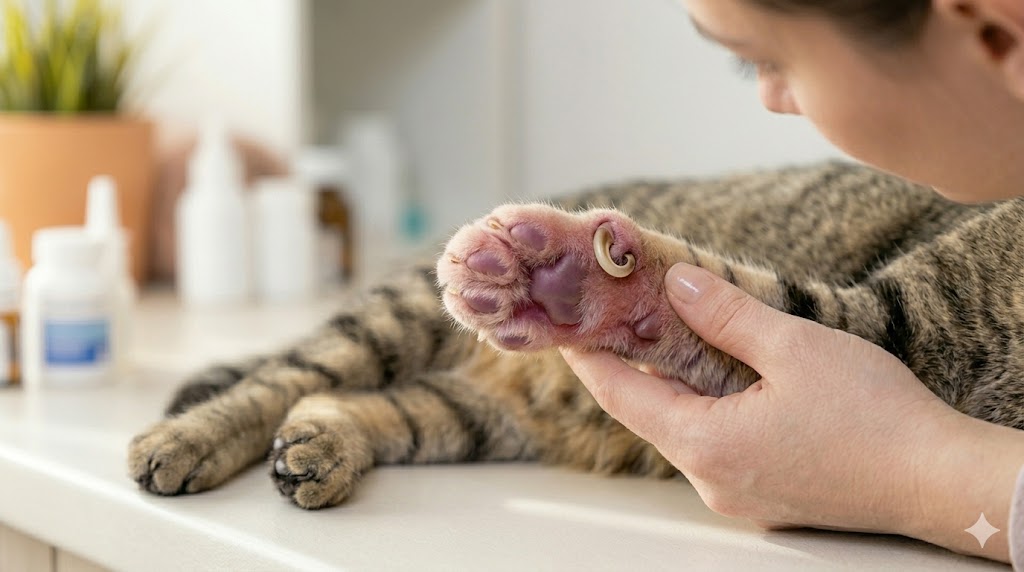
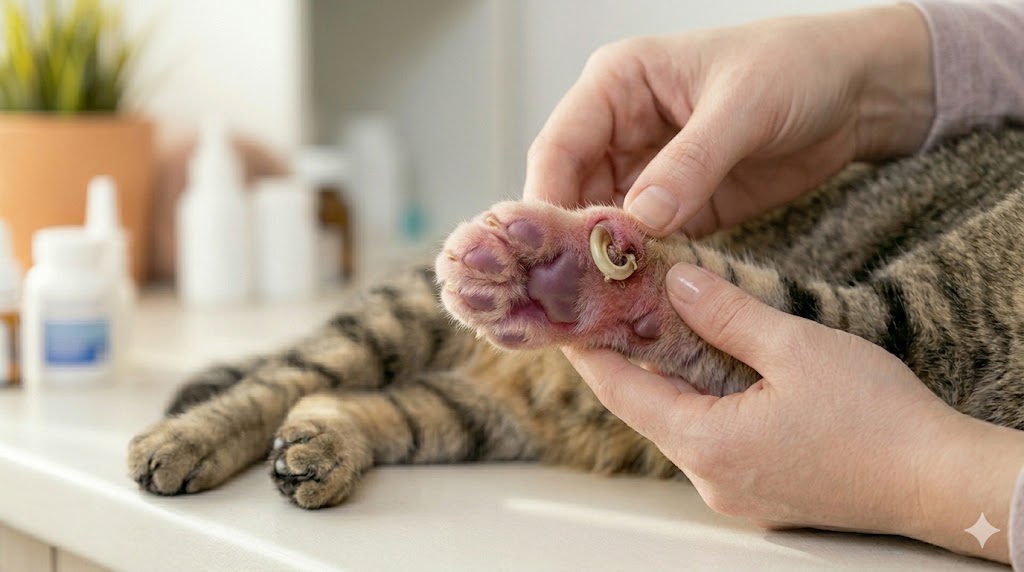
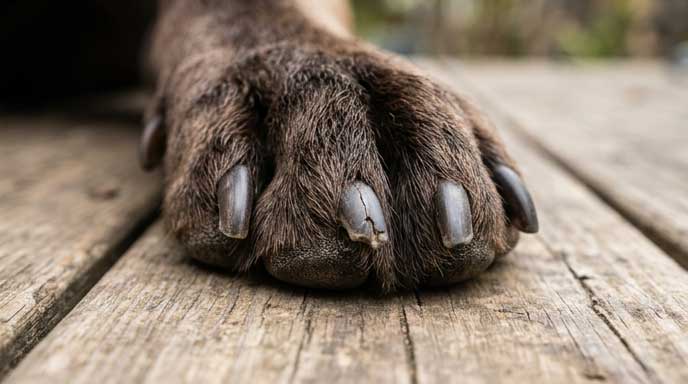
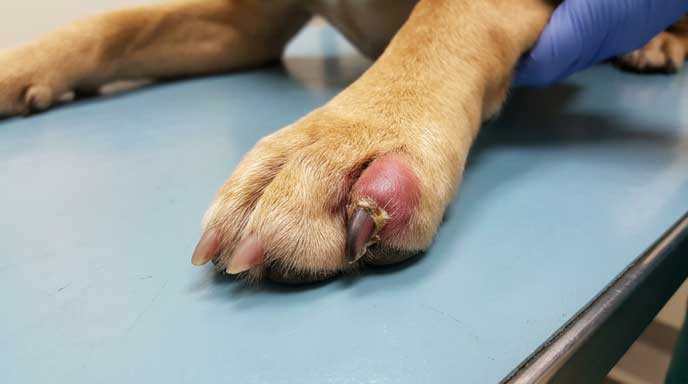
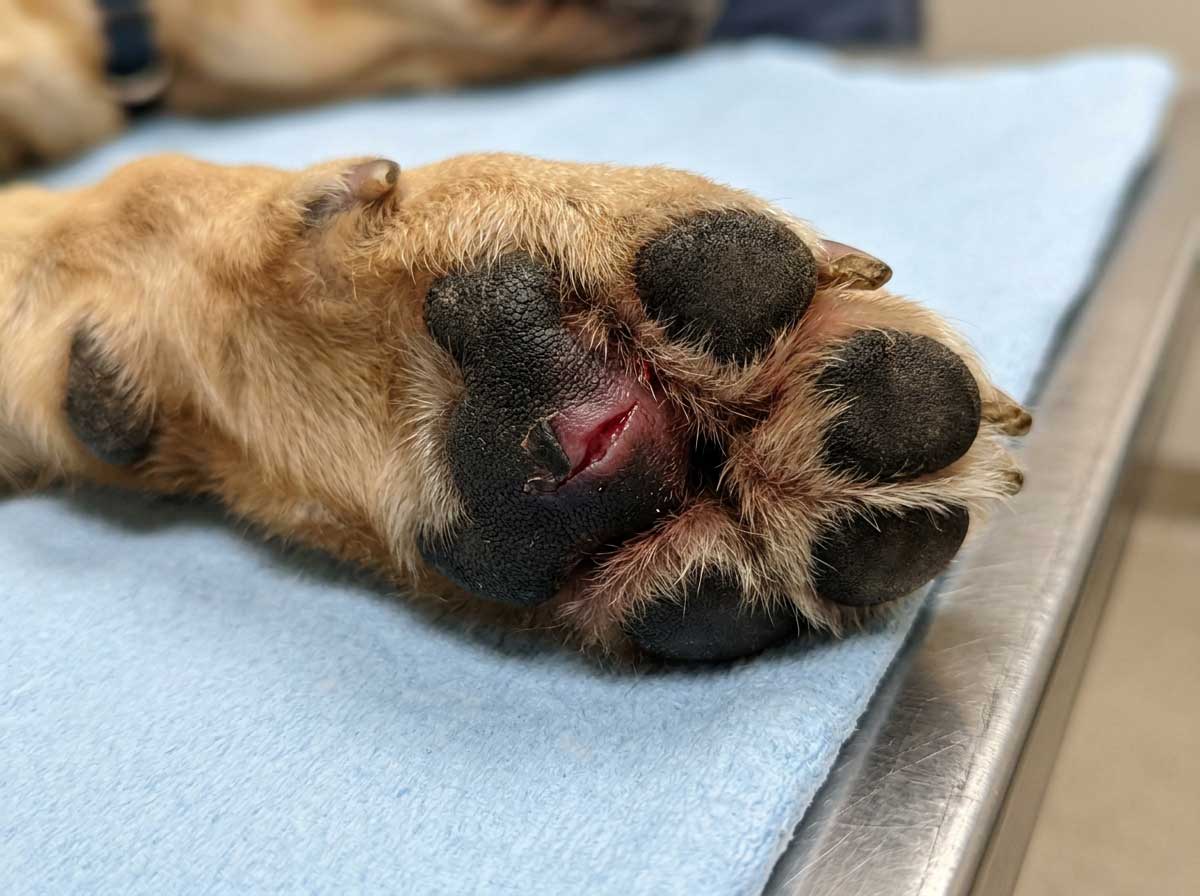
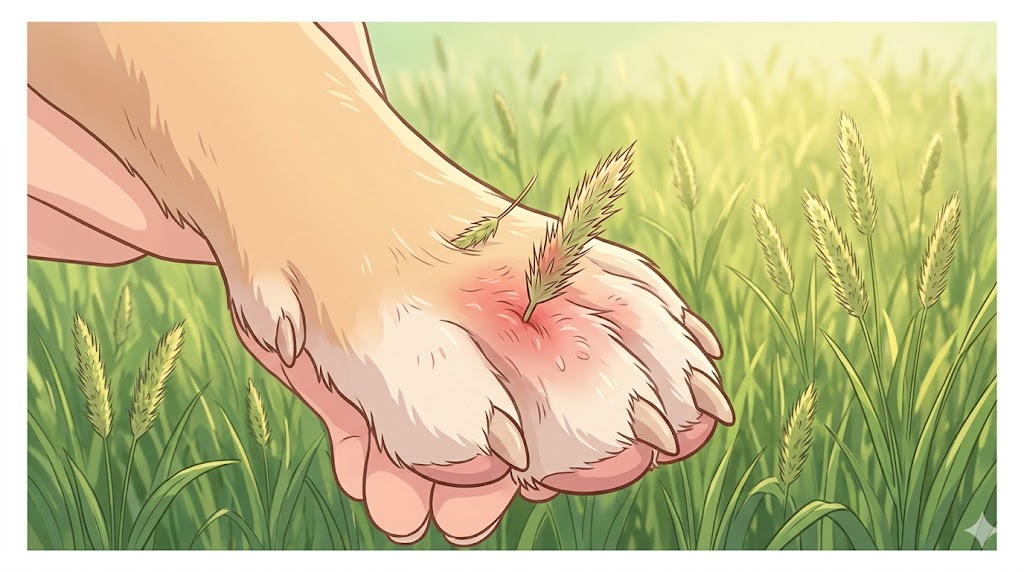
Cats with paw pain — a small cut, an ingrown claw, a torn nail, a splinter, an abscess from a hidden bite, or arthritis in an older cat — often lick the painful paw obsessively as a self-soothing response. The licking gives the cat a slight sensory relief but doesn't fix the underlying problem. A clue this is the cause: the cat is licking one specific paw almost exclusively, while ignoring the other three. Check the paw between the toes, on the pads, and around the nails for redness, swelling, or visible injury.
Cause 4: Anxiety, Stress, or Compulsive Behavior
Some cats lick their paws compulsively when stressed — a new pet in the house, a move, a missing family member, an unfamiliar smell, or a long absence. The behavior is called "psychogenic alopecia" when it progresses to actual fur loss. Stress-driven licking often spreads beyond paws to the belly, inner thighs, and forelegs (overgrooming pattern). According to behavior researchers, this category is more common in indoor-only cats, Siamese, Burmese, and Abyssinian breeds, and in cats with under-stimulating environments. The licking itself isn't the problem — it's a coping signal.
Cause 5: Fleas or Skin Parasites
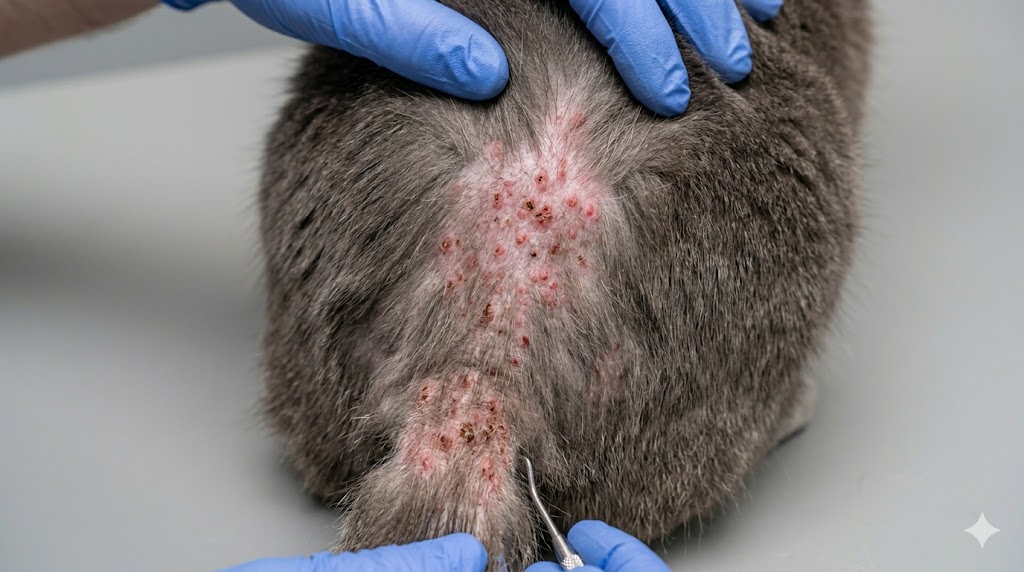
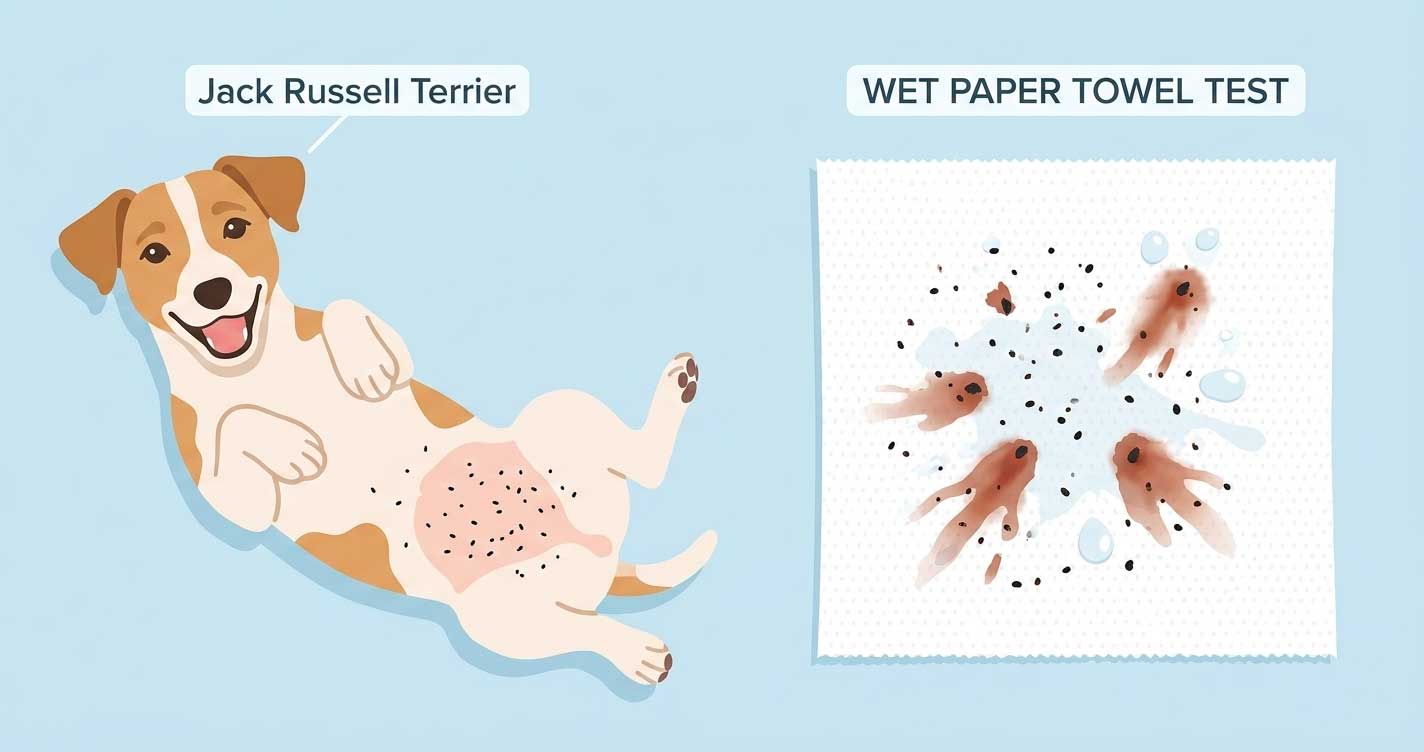
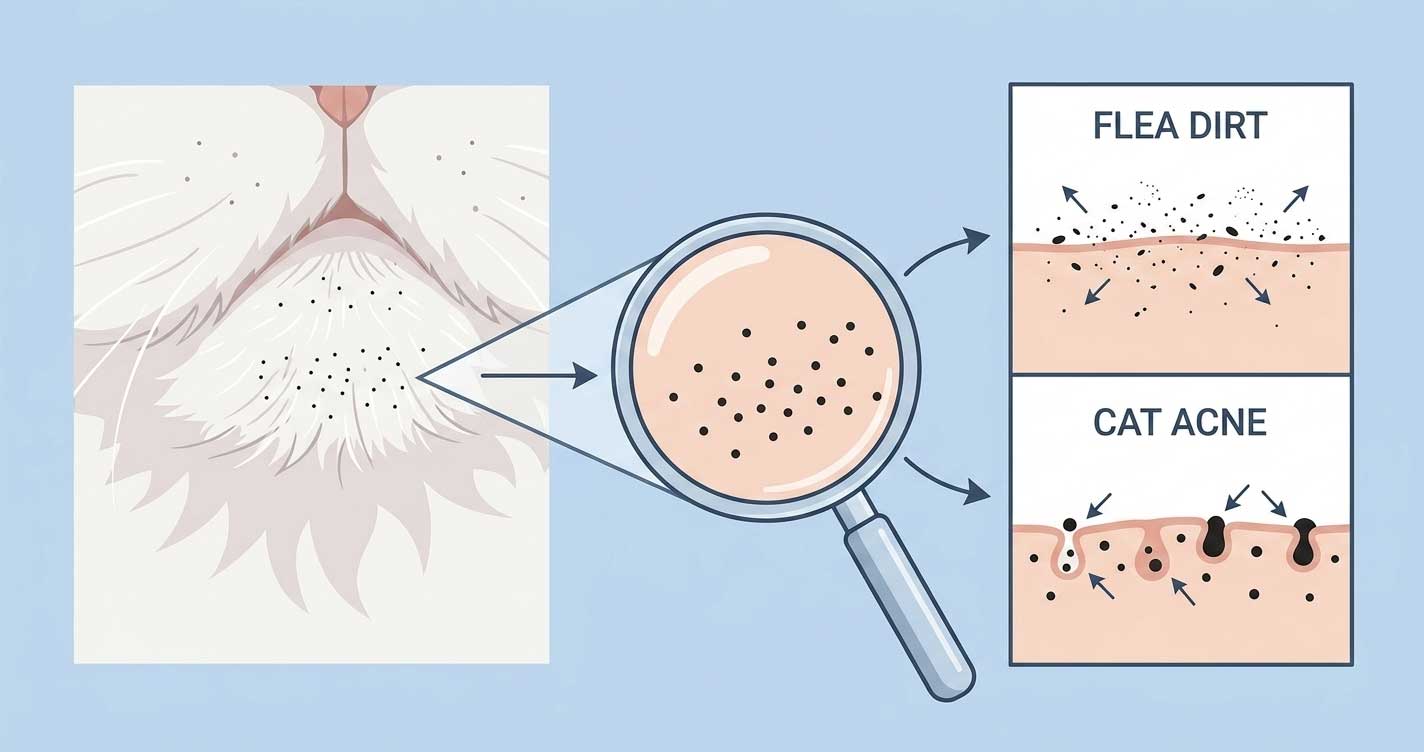
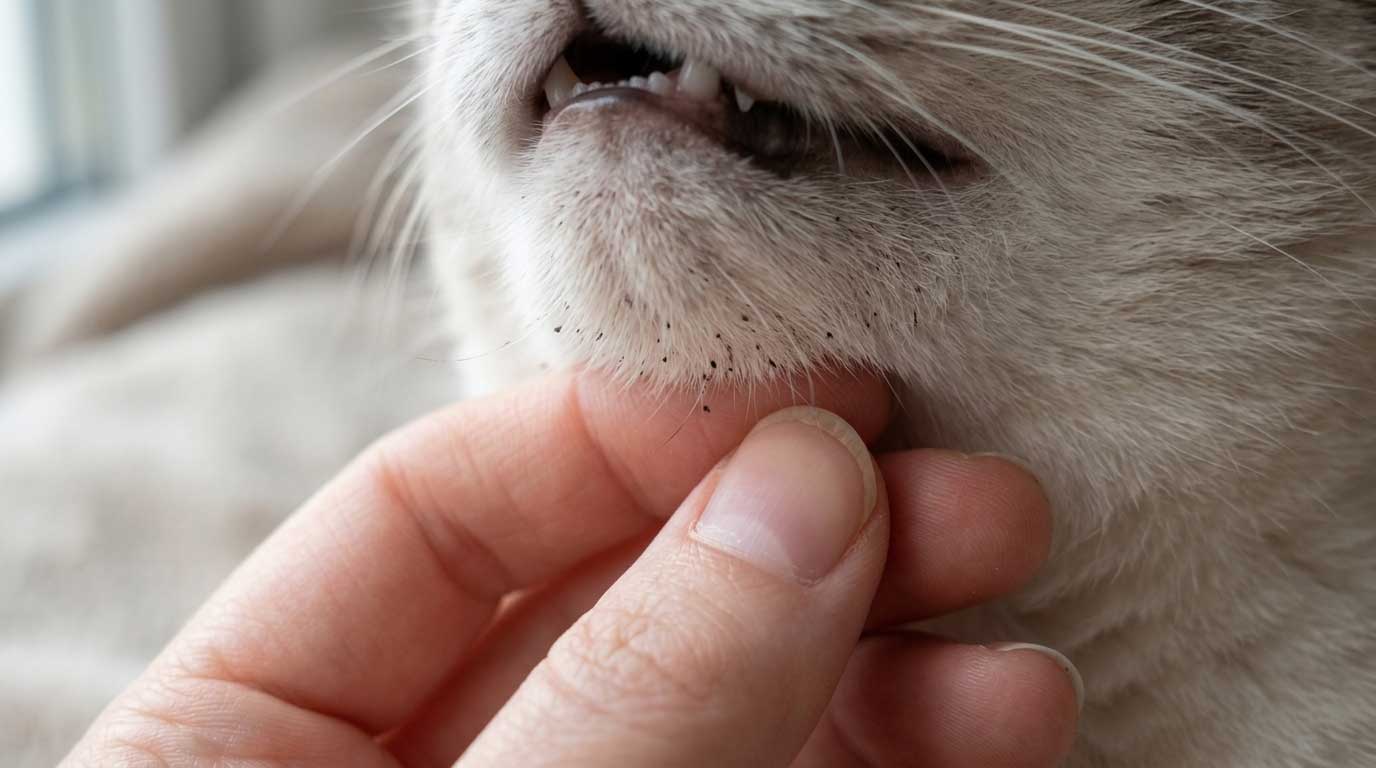
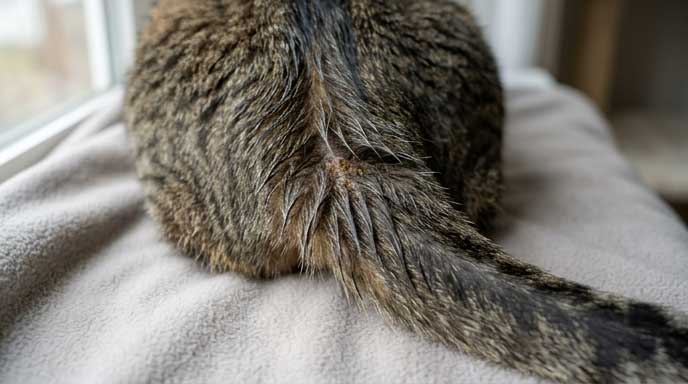
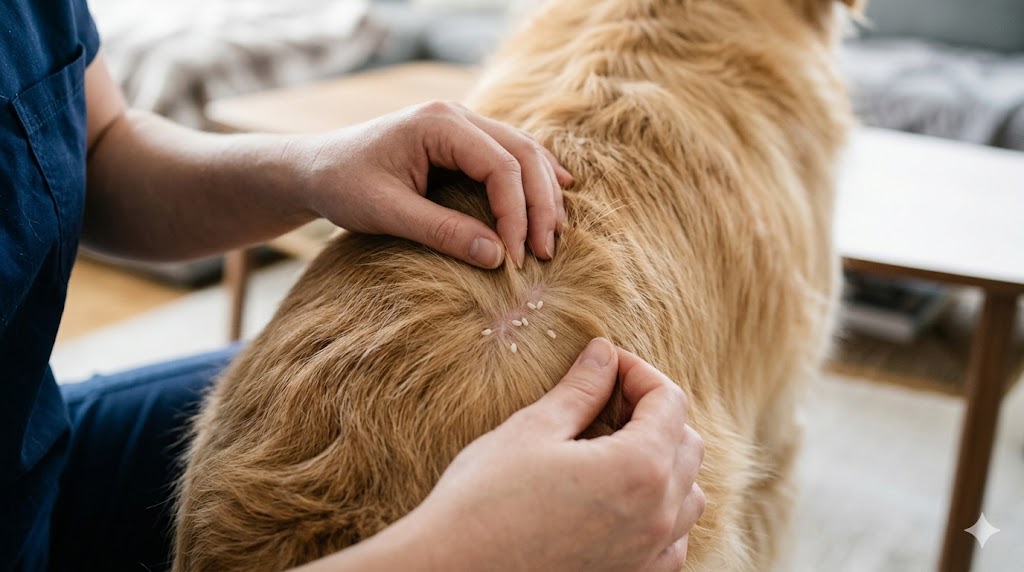
Fleas don't usually settle on the paws specifically, but flea bites anywhere on the body trigger an allergic skin reaction (flea allergy dermatitis) that makes the cat itchy all over — and cats redirect the itch into paw licking. Check the base of the tail and along the spine for "flea dirt" (small black grit that looks like pepper). Skin mites or biting lice can cause similar itch-driven paw licking. If you see flea dirt anywhere on the cat, address the parasite problem and the paw licking often resolves on its own.
Not sure which of the 5 causes is driving your cat's paw licking — allergies, yeast, pain, anxiety, or parasites? Upload a paw photo and our AI flags the visible bacterial, yeast, abscess, and healthy paw patterns in seconds.
Check Cat Paw Now →The Severity Ladder: From Normal to Bleeding
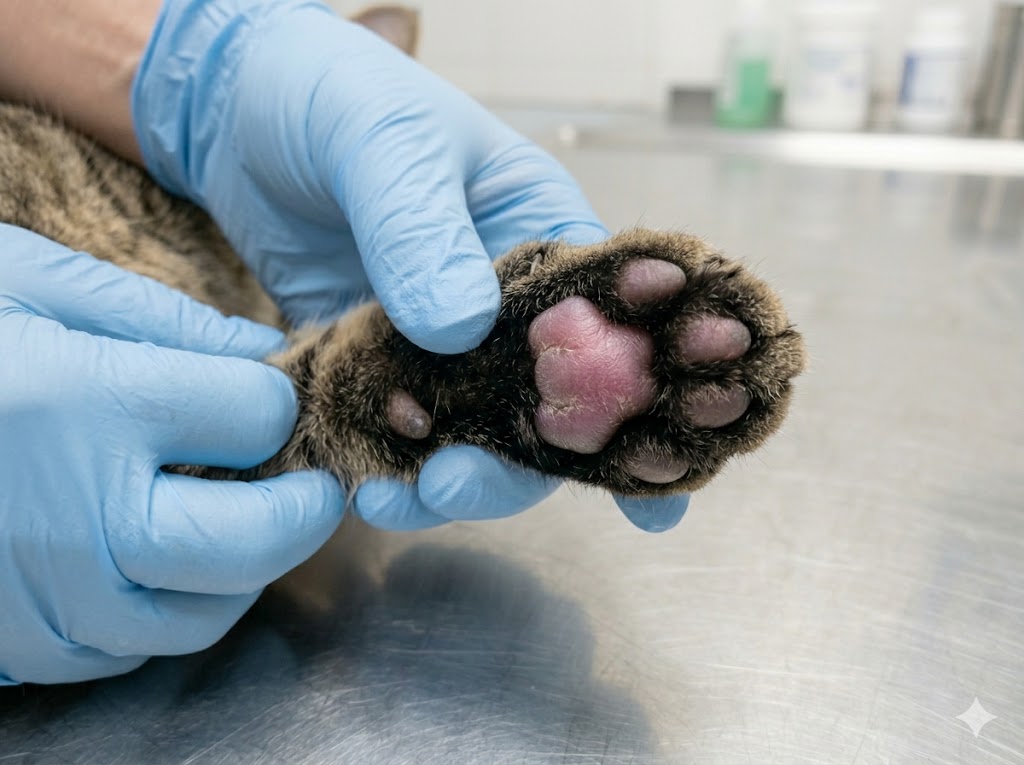
Owners often ask "when is the licking bad enough to do something". This severity ladder maps the visible signs to action levels:
- ✓**Level 1 — Routine grooming**: 2-10 minute sessions, all four paws, after waking/eating/napping. Cat moves on to other activity afterward. **Action**: none, this is normal.
- ✓**Level 2 — Slightly increased licking**: cat licks one paw a bit more than the others over a day or two. Skin still looks normal. **Action**: watch for 2-3 more days. If it clears, fine.
- ✓**Level 3 — Persistent focused licking**: cat licks one paw repeatedly for days, the paw fur stays visibly wet, skin between toes starts to look pink. **Action**: inspect the paw closely (look between toes, check for nail problems, smell for yeast). Consider a photo check.
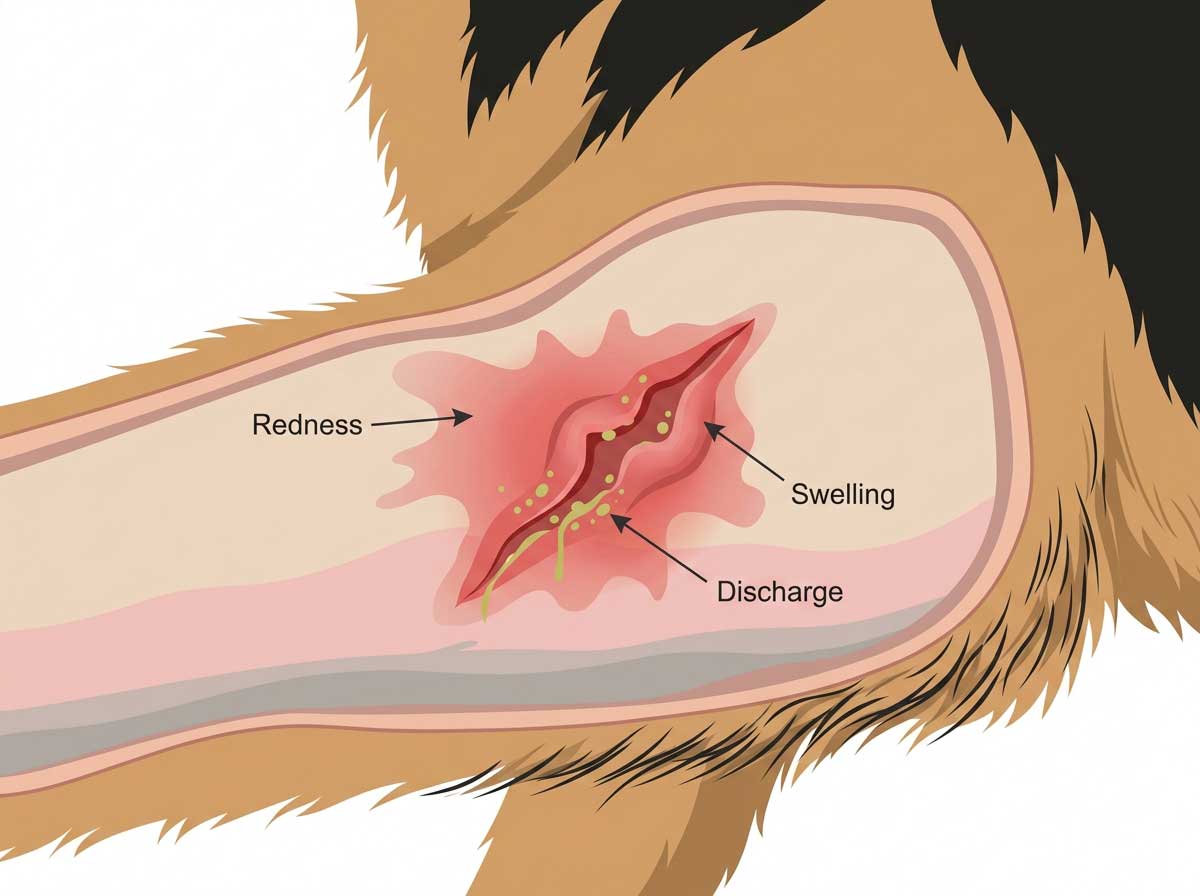
- ✓**Level 4 — Visible irritation**: red skin between toes, rust-colored saliva staining on the fur, swelling, smell. **Action**: see a vet within a week. The cycle won't break on its own at this point.
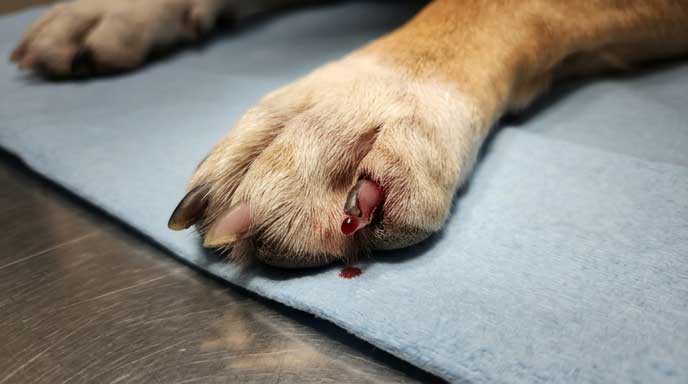
- ✓**Cat licking paw until it bleeds**: open wound, raw skin, fresh blood, or scabs from repeated licking. **Action**: vet visit today. The cat has crossed into self-injury and the underlying cause (likely allergy, infection, or compulsive behavior) needs a workup.
How to Tell if Licking Is Normal or a Signal
Three quick checks separate normal grooming from a problem:
- ✓**Distribution check**: normal grooming uses all four paws roughly equally. Problem licking focuses on one paw far more than the others.
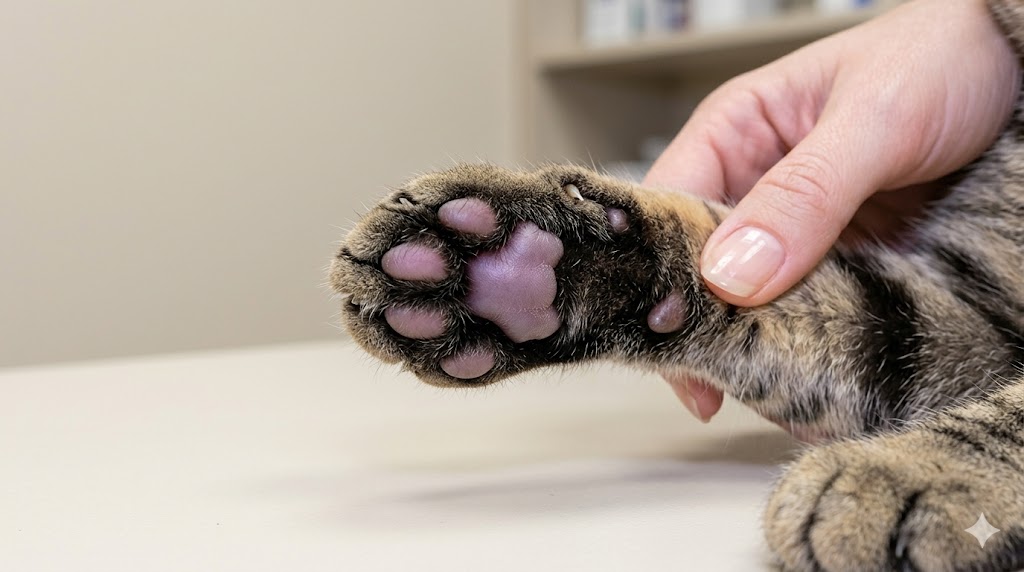
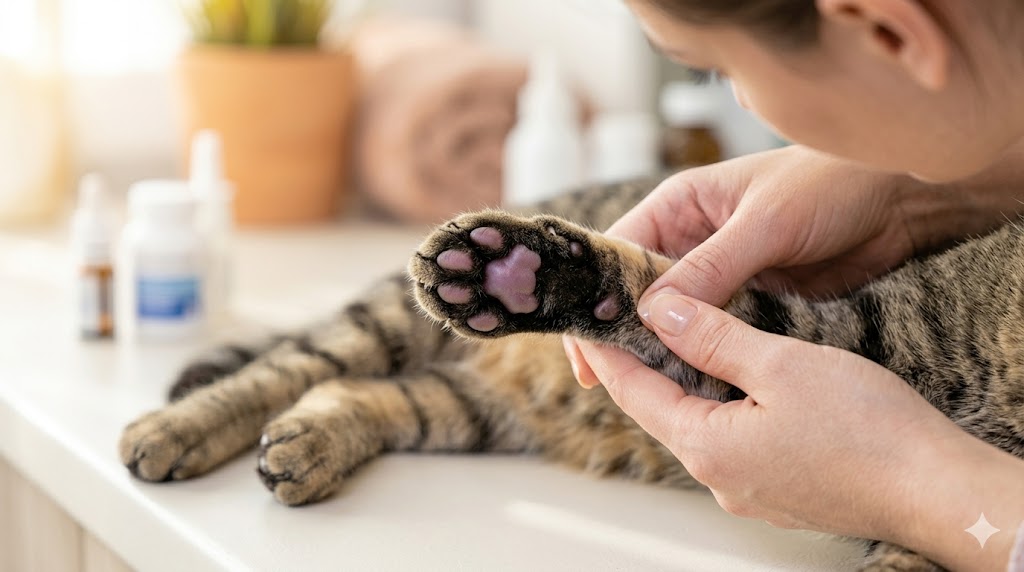
- ✓**Visible skin check**: pink, dry, healthy skin between the toes is fine. Red, wet, swollen, brown-stained skin is a signal.
- ✓**Behavior context check**: grooming after eating/waking/napping is normal. Licking during anxious moments (loud noise, after a stressor) suggests a coping pattern. Licking that interrupts other normal behaviors (eating, playing) is more serious.
Why Image Searches Show Up: Drawing, GIF, Cartoon References
When you search "cat licking paw" on Google, the image and video tabs surface a lot of art and meme content — for example a Cat licking paw drawing search returns digital art references, and a related search like Cat licking paw GIFCat licking paw cartoon turns up animated meme reactions and cartoon stickers. Most of those image-search results are about visual fan content, not feline health. If you arrived here looking for a drawing reference, the head-foot grooming pose described above (head tilted slightly, tongue extended onto paw pad, one paw raised) is the classic anatomical pose that artists draw.
Related Cat Paw Behaviors That Show Up Together
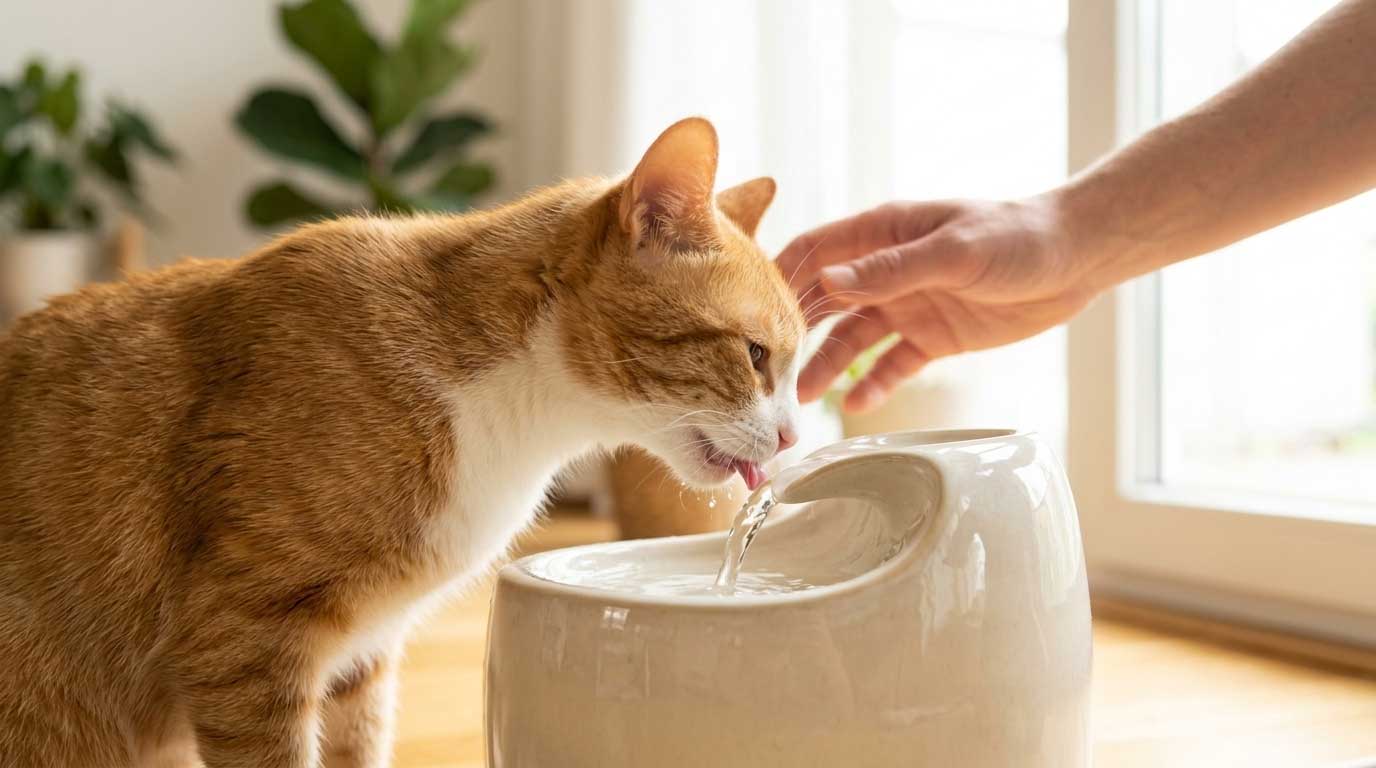
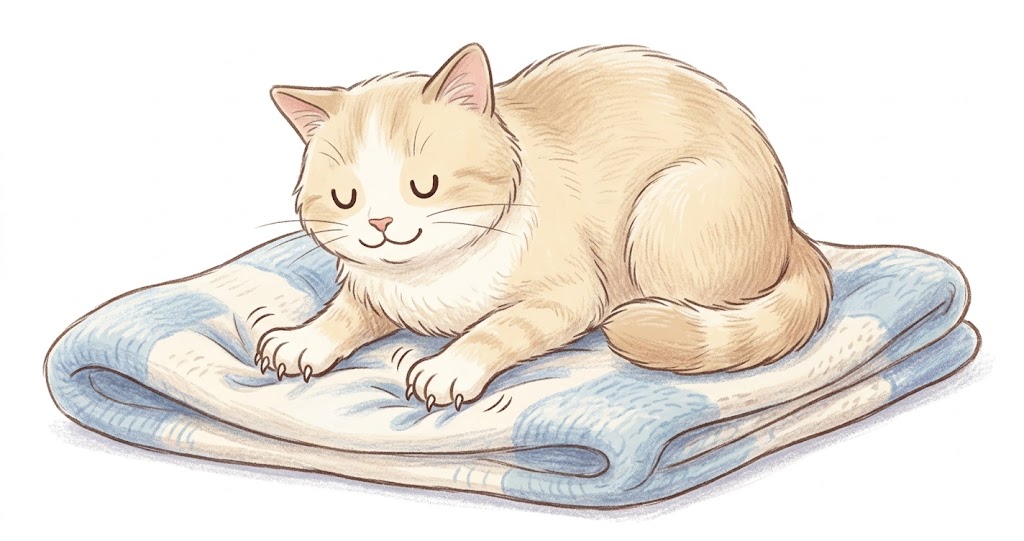
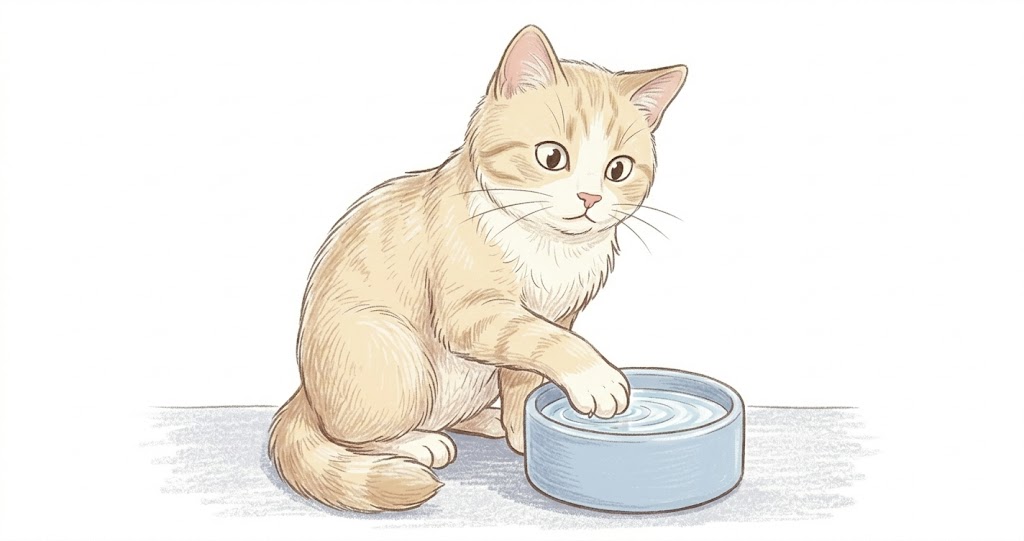
Paw licking sits alongside two other paw-driven behaviors many cats do, and the three are sometimes confused. If you're also noticing your cat kneading (rhythmic paw pushing on a soft surface), that's the comfort/trust signal covered in our companion article on why do cats push with their paws. If you're noticing your cat putting paws in the water bowl before drinking, that's the depth-perception and freshness check covered in our why does my cat put her paws in water bowl guide. All three behaviors involve paws but mean completely different things — paw licking is grooming or signal, kneading is comfort, and water-pawing is sensory checking.
What to Do at Home Before a Vet Visit
If your cat is licking a paw more than normal but hasn't crossed into bleeding or visible infection, a few non-medical steps are worth trying first:
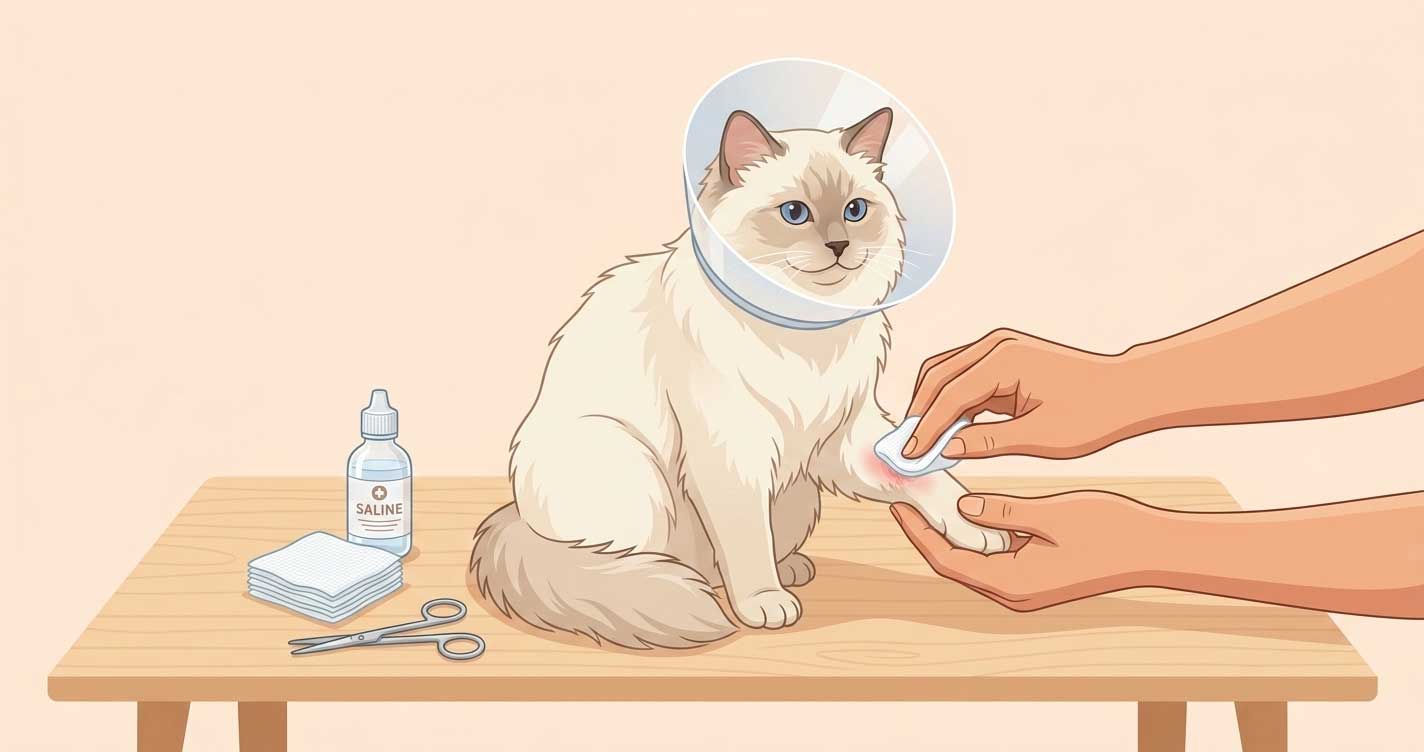
- ✓**Check the paw visually**: between toes, on pads, around nails. Look for splinters, redness, swelling, or trapped debris.
- ✓**Check for fleas**: look at the base of the tail and along the spine for flea dirt.
- ✓**Check the cat's stress level**: any recent changes — new pet, move, family member away, schedule change?
- ✓**Photograph the paw**: a clear photo helps you compare day-to-day to see if the redness is increasing or decreasing.
- ✓**Watch the distribution**: if it's still all four paws, it's more likely a systemic issue (allergy, stress). If it's one paw, it's more likely a localized issue (injury, infection).
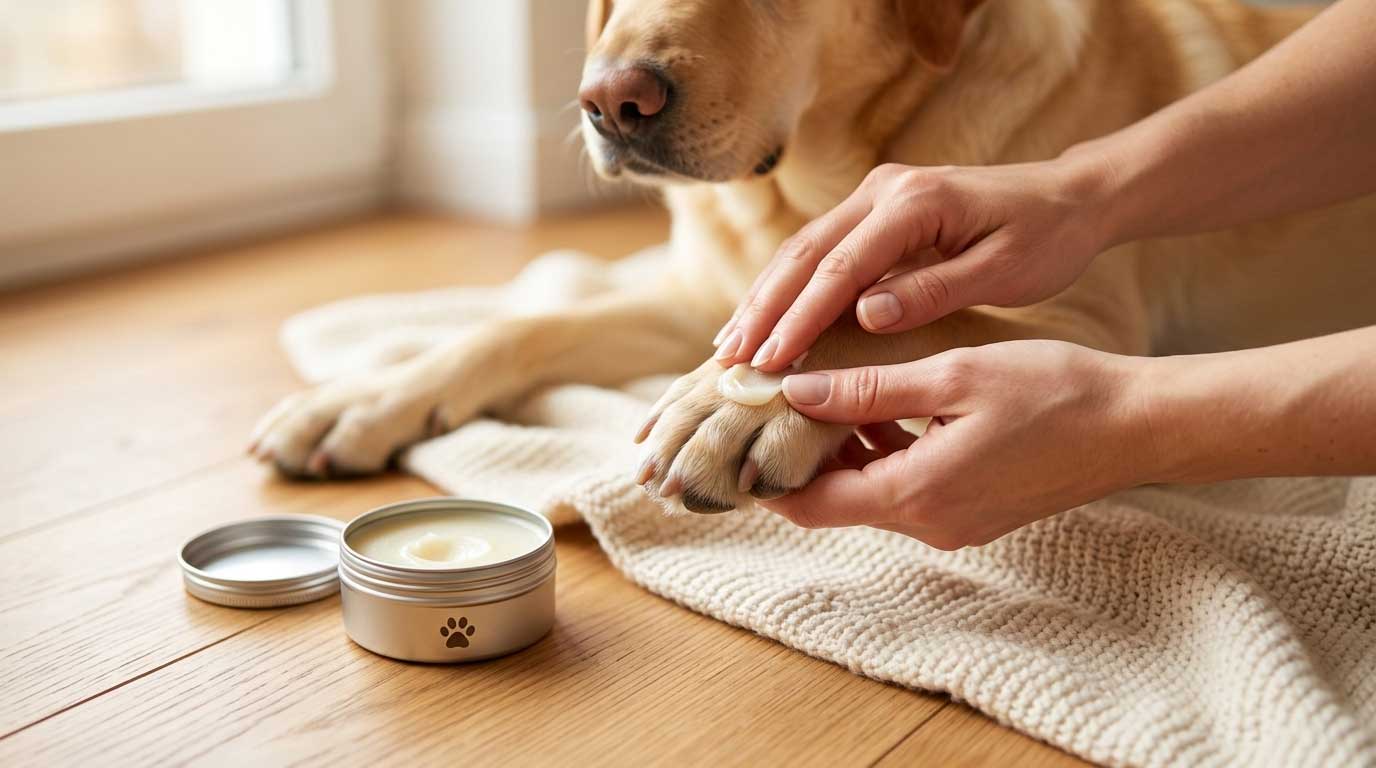
Avoid the urge to apply human ointments, alcohol, hydrogen peroxide, or topical products without vet guidance — cats lick them off and many human products are toxic to cats.
When to See a Vet
Book a vet visit if any of the following apply: licking one specific paw obsessively for more than 5-7 days, visible redness or swelling, brown rust-colored saliva staining, any open wound or bleeding, swelling extending up the leg, the cat is limping or holding the paw up, or the licking is paired with other signs (decreased appetite, hiding, fever feeling). Earlier is better — the licking-itch cycle is much easier to break in the first week than after a month of chronic skin damage.
The Bottom Line
Cat licking paw is almost always normal grooming — quick 2-10 minute sessions across all four paws as part of the head-foot grooming sequence. It becomes a signal when it focuses on one paw, runs longer than usual, leaves the fur visibly wet, or shows visible skin changes. The 5 causes of problem licking are allergies, yeast or bacterial infection, paw pain or injury, anxiety, and fleas/parasites. If the paw skin still looks normal, watch for a few days. If it looks red, swollen, brown-stained, or has crossed into bleeding, see a vet — the cycle won't break on its own at that point.
Not sure if what you're seeing is normal grooming or the start of a paw infection? Upload a clear cat paw photo and our AI compares against bacterial infection, yeast, abscess, and healthy paw patterns in seconds.
Check Cat Paw Now →Frequently Asked Questions
What does it mean when a cat licks its paw?
+
Why does my cat lick her paw and then rub her face?
+
Is excessive cat paw licking a sign of allergies?
+
Why is my cat licking her paws until they bleed?
+
Can stress cause cats to lick paws excessively?
+
Should I stop my cat from licking her paws?
+
Cat paw licking crossed into a problem?
If you see red skin between toes, brown rust-colored saliva staining, swelling, or any open wound on your cat's paw, upload a clear photo and our AI compares against bacterial infection, yeast, abscess, and healthy paw patterns in seconds.
Disclaimer: This article is for informational purposes only and is not a substitute for professional veterinary advice. Always consult a licensed veterinarian for diagnosis and treatment of your pet's health conditions.