Foxtail in Dog Paw: Signs, How to Spot, When to Vet [2026]
Foxtail in dog paw? Spot the barbed-seed signs (limping, licking, swelling between toes) plus the vet decision tree — emergency niche guide for dog owners.
Published 2026-06-21
Suspect a foxtail in your dog paw? Let AI take a quick first look.
Upload a clear close-up of your dog paw — our AI compares against foreign-object signs, yeast, allergic patterns, and healthy paws to help you decide whether a vet visit is needed today.
If you suspect a foxtail in dog paw — or any spike-shaped grass seed lodged between the toes — this is an emergency-niche problem that needs to be taken seriously fast. Foxtails are the spiky seed heads of certain wild grasses, designed by evolution to burrow one direction (in) and resist coming back out. Once embedded in a dog paw, a foxtail can migrate through soft tissue over days, set up serious infection, and in rare cases travel into the chest or abdomen. Use the page navigation above to jump to the visible signs, the at-home check, when to extract yourself vs head straight to the vet, and the seasonal prevention guide. According to the American Kennel Club foxtail safety guide, the typical foxtail season runs late spring through fall and varies by US region. This guide walks through the 5 visible signs of foxtail in dog paw, what the limp pattern reveals, the safe at-home check, and exactly when the foxtail needs vet extraction not home extraction.
Not sure if what you see between the toes is a foxtail, an interdigital cyst, or just irritation? Upload a clear photo of your dog paw — our AI compares against foreign-object, yeast, and healthy patterns in seconds.
Check Dog Paw Now →What a Foxtail in Dog Paw Looks Like
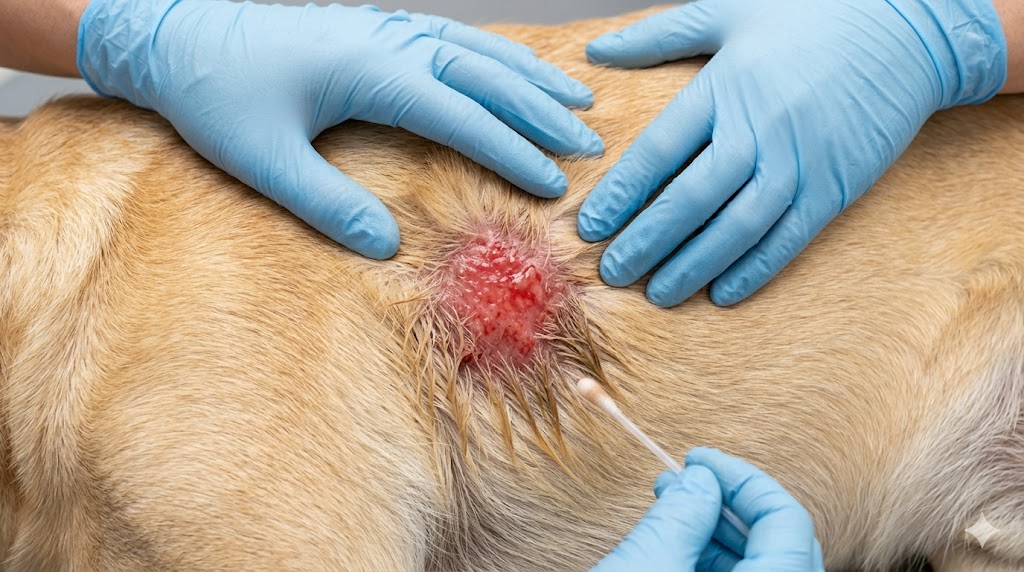
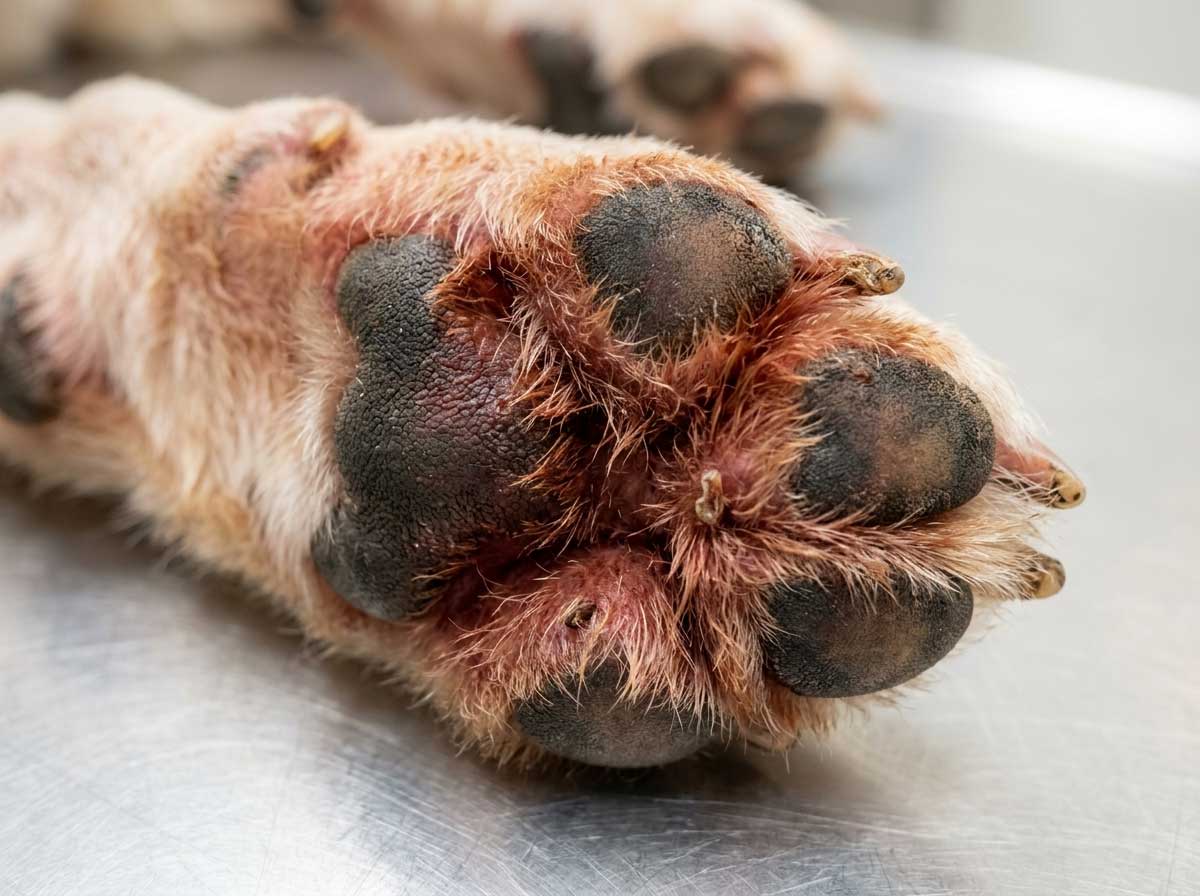
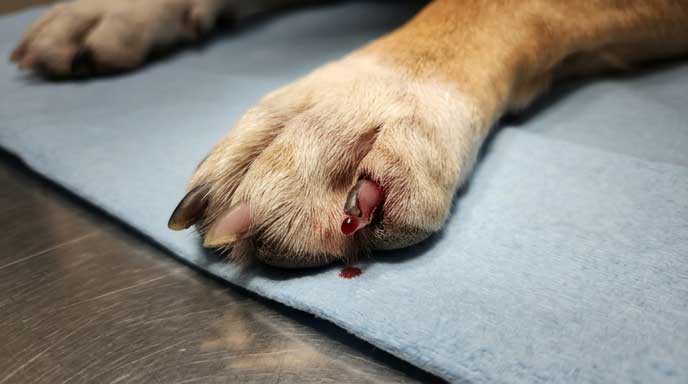
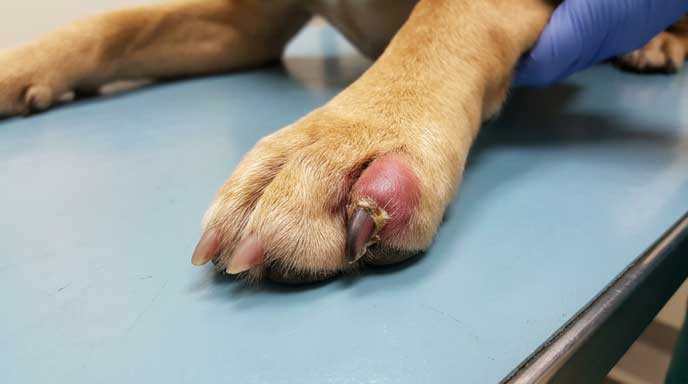
The most common Foxtail in dog paw symptoms owners notice are sudden one-paw limp, focused licking, and a red entry-point bump between two toes. Without action, Foxtail in dog paw infection sets up around the embedded barb within days — pus, foul smell, swelling that spreads beyond the original entry point. The longer the foxtail stays in, the higher the infection rate.
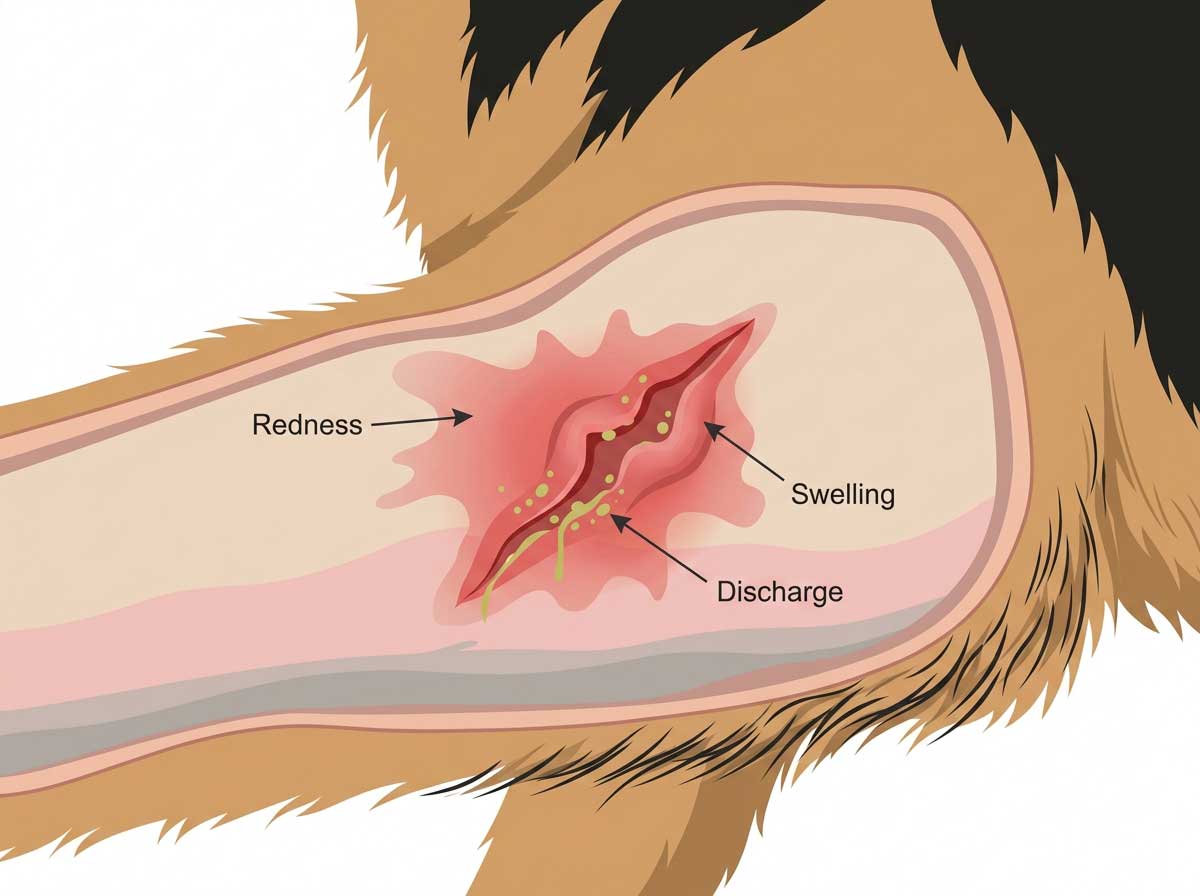
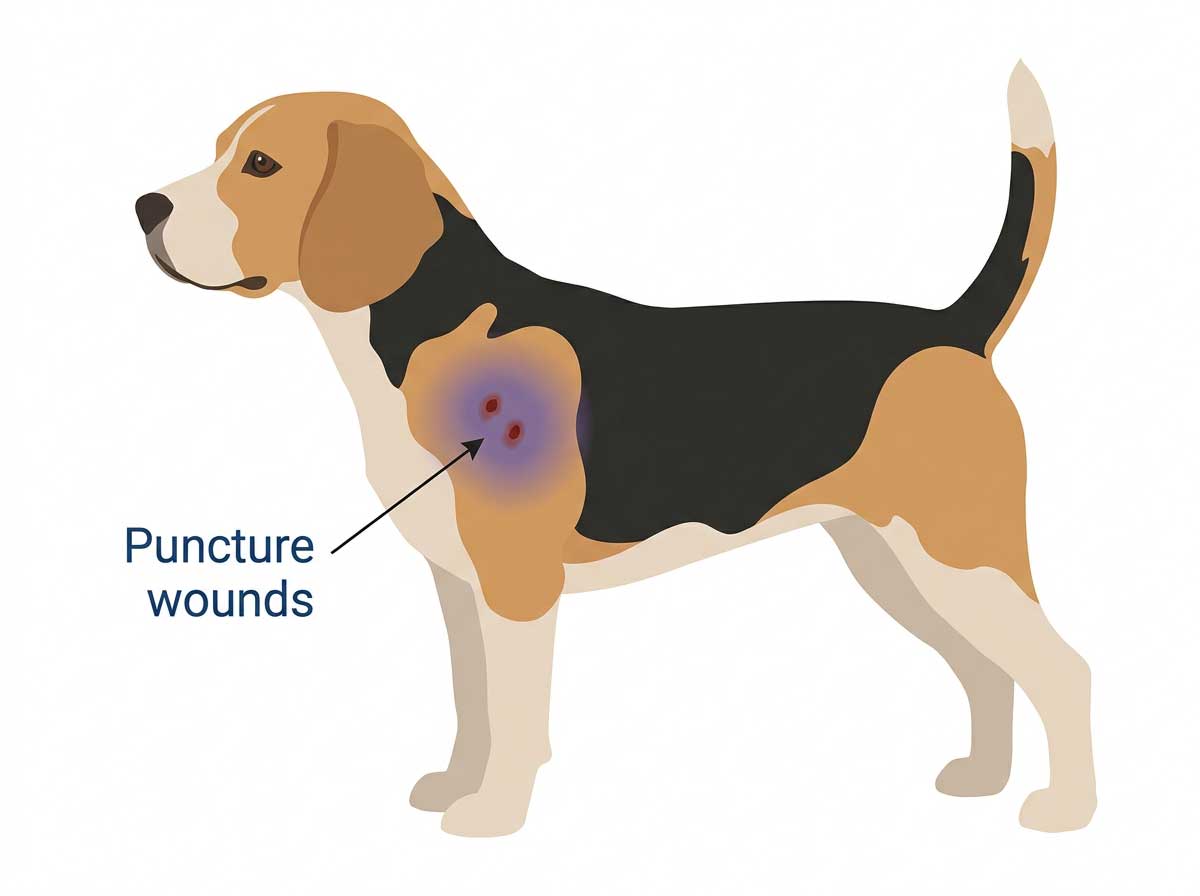
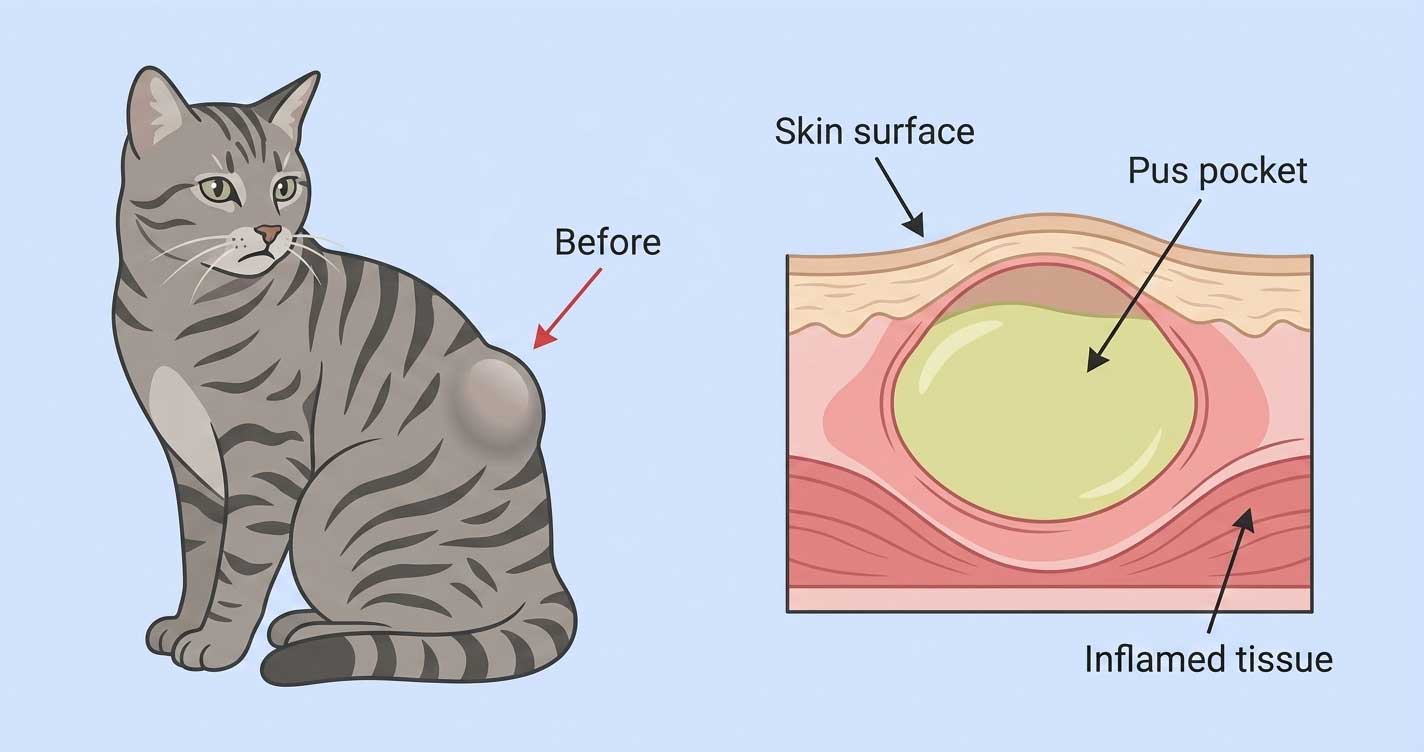
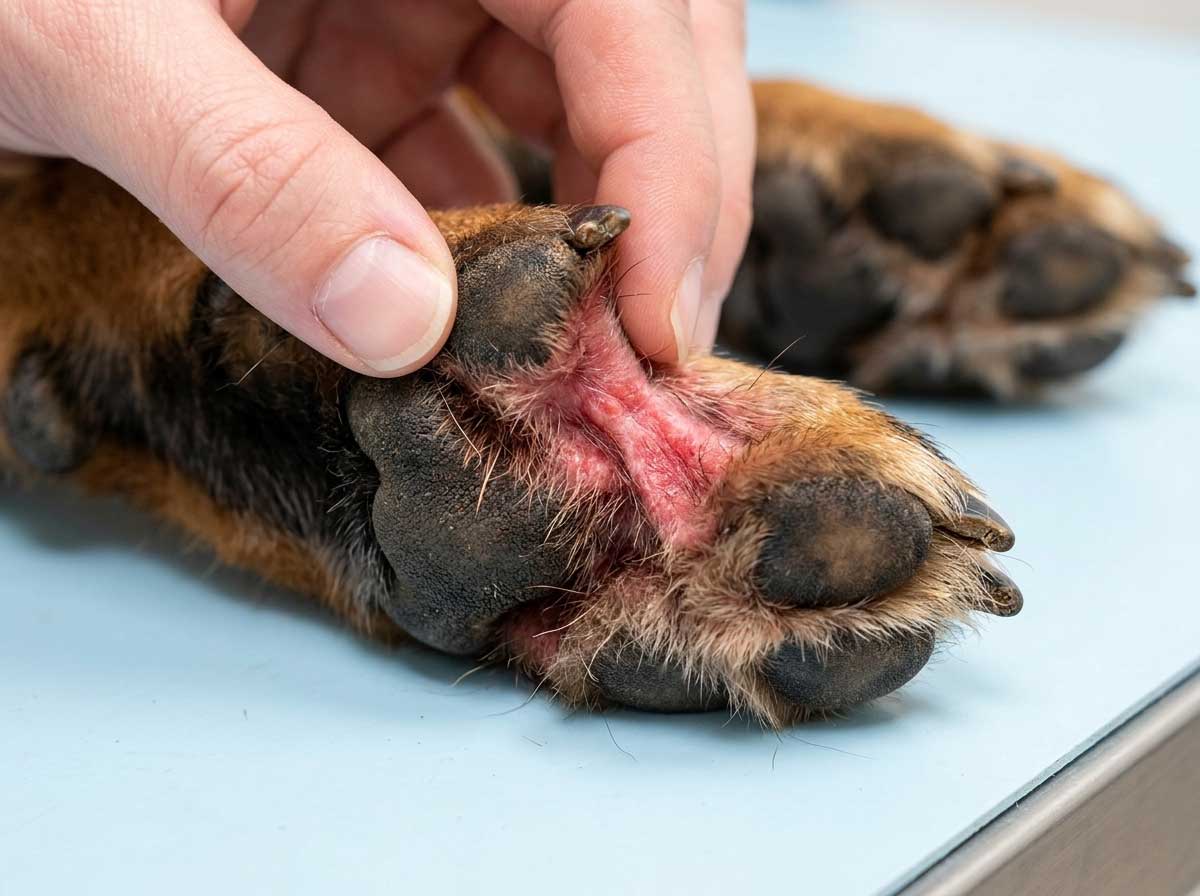
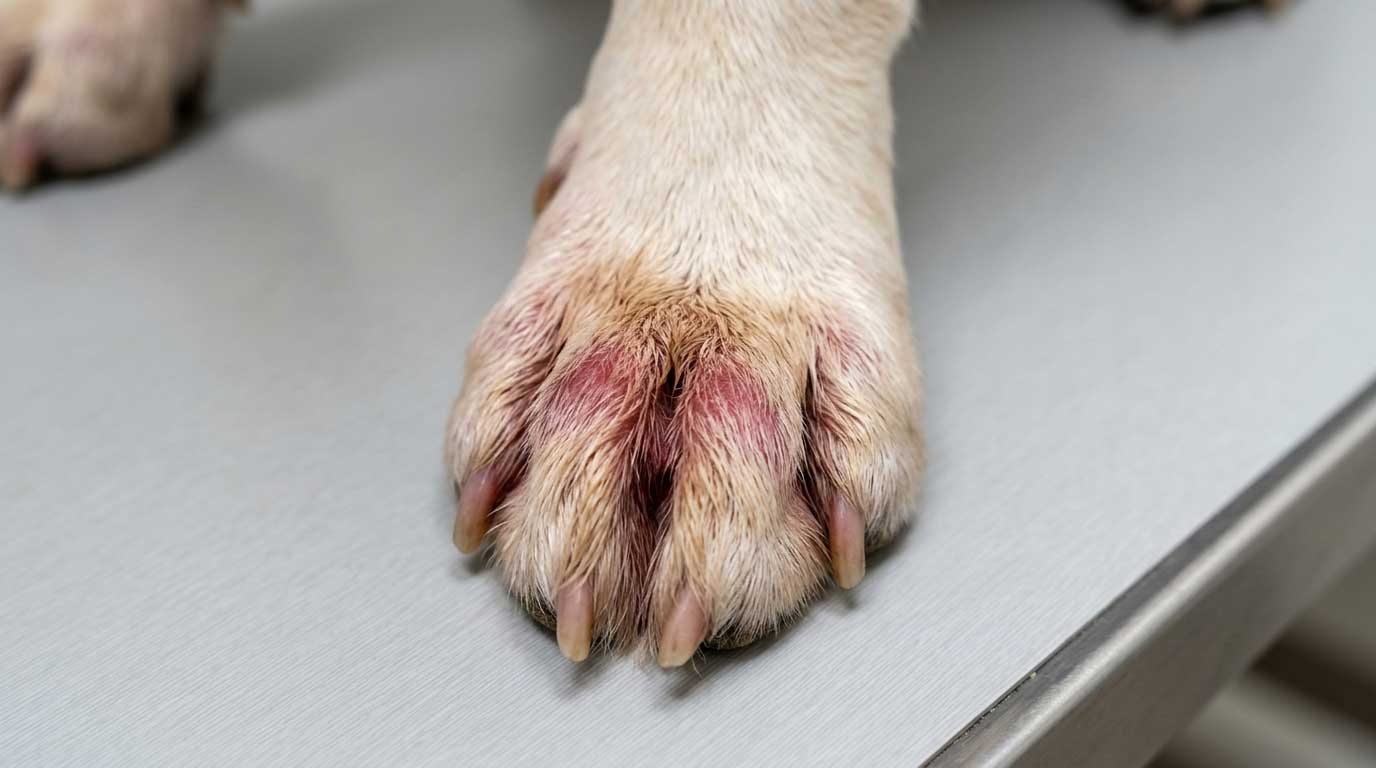
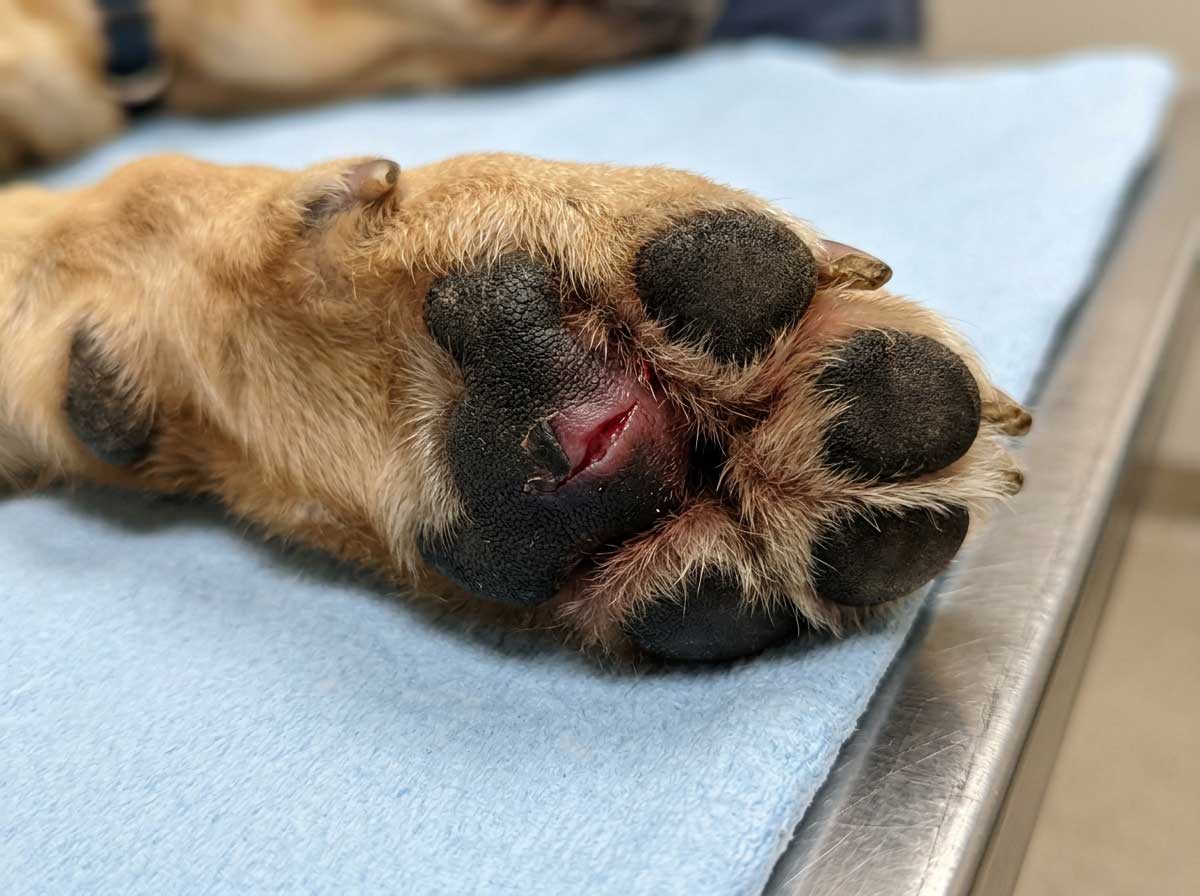
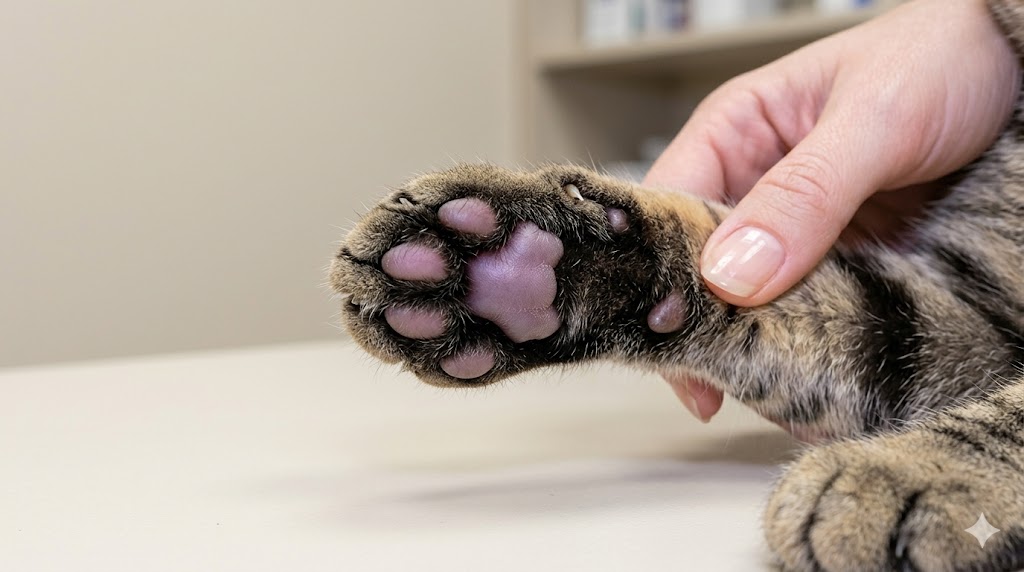
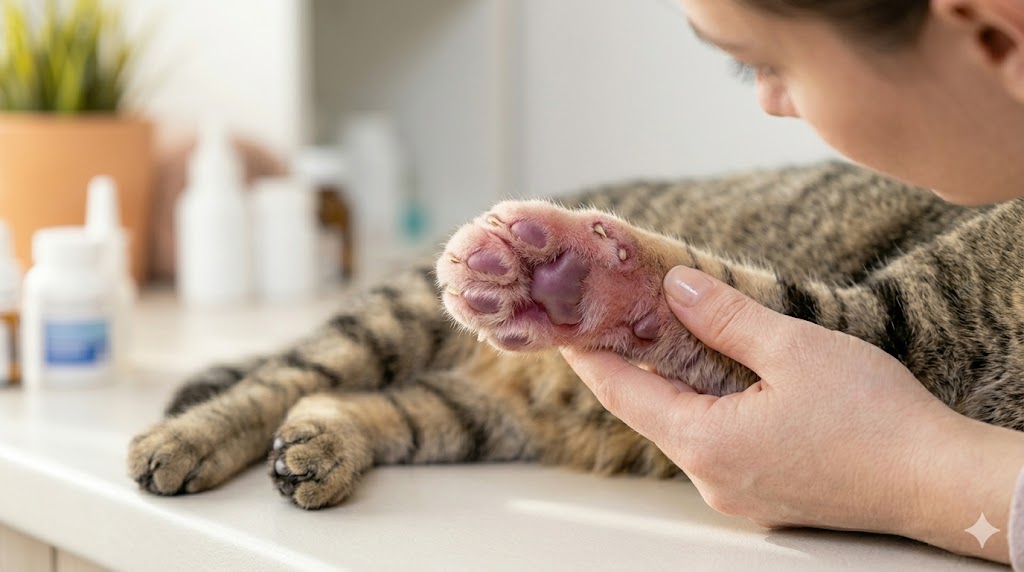
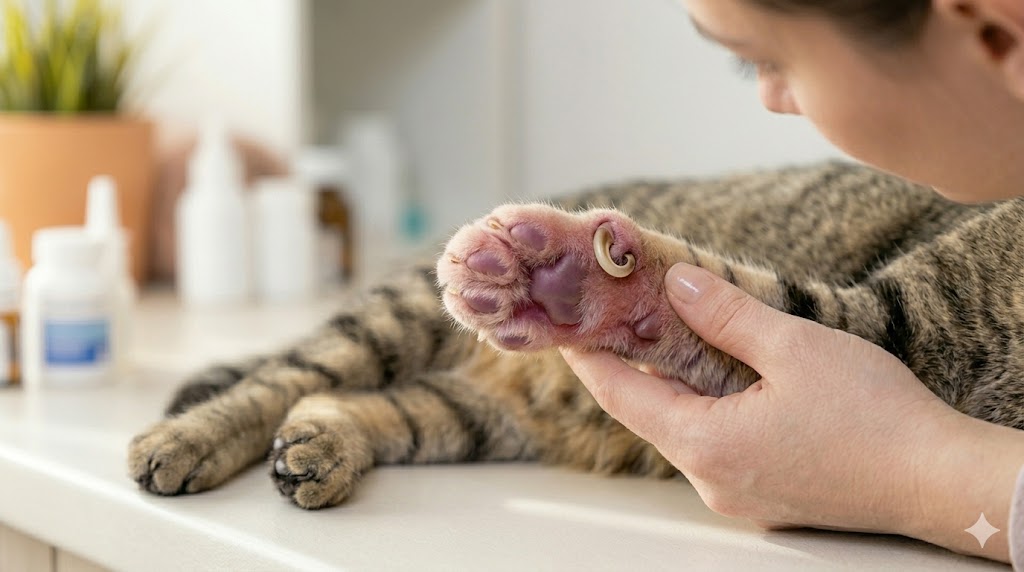
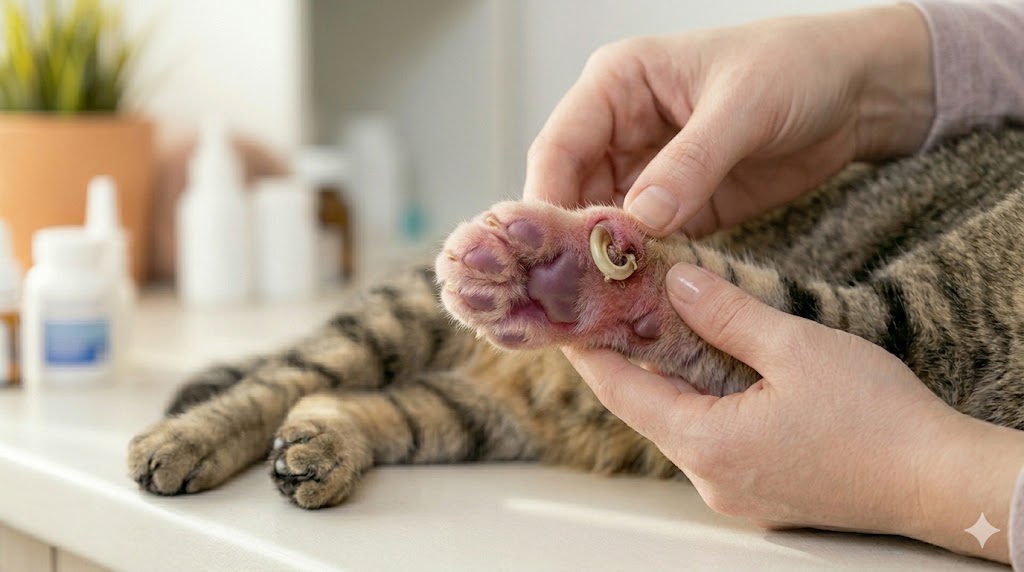
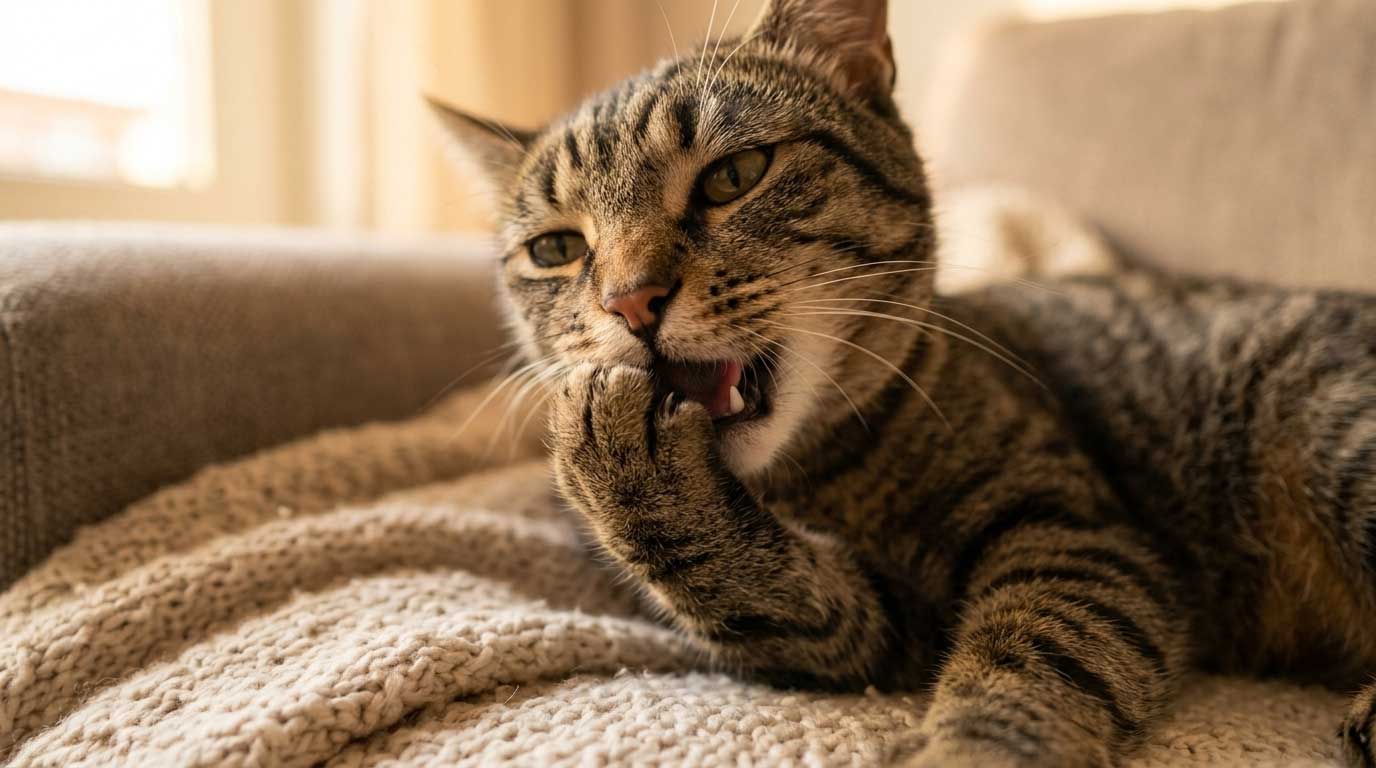
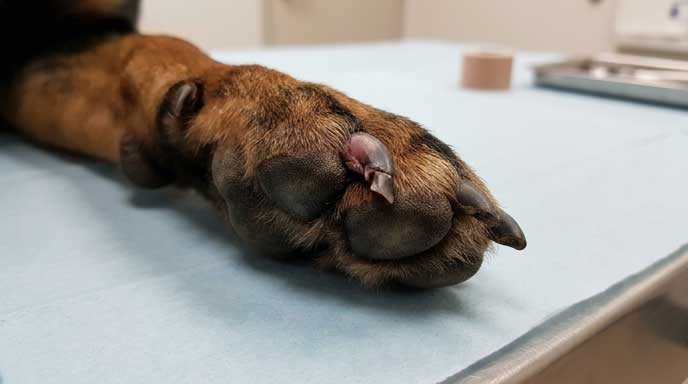
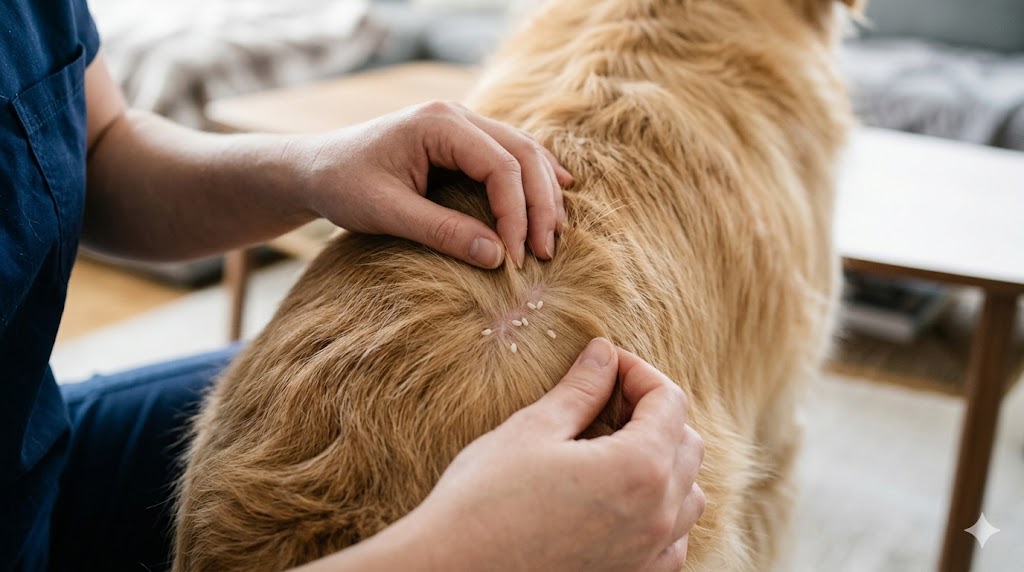
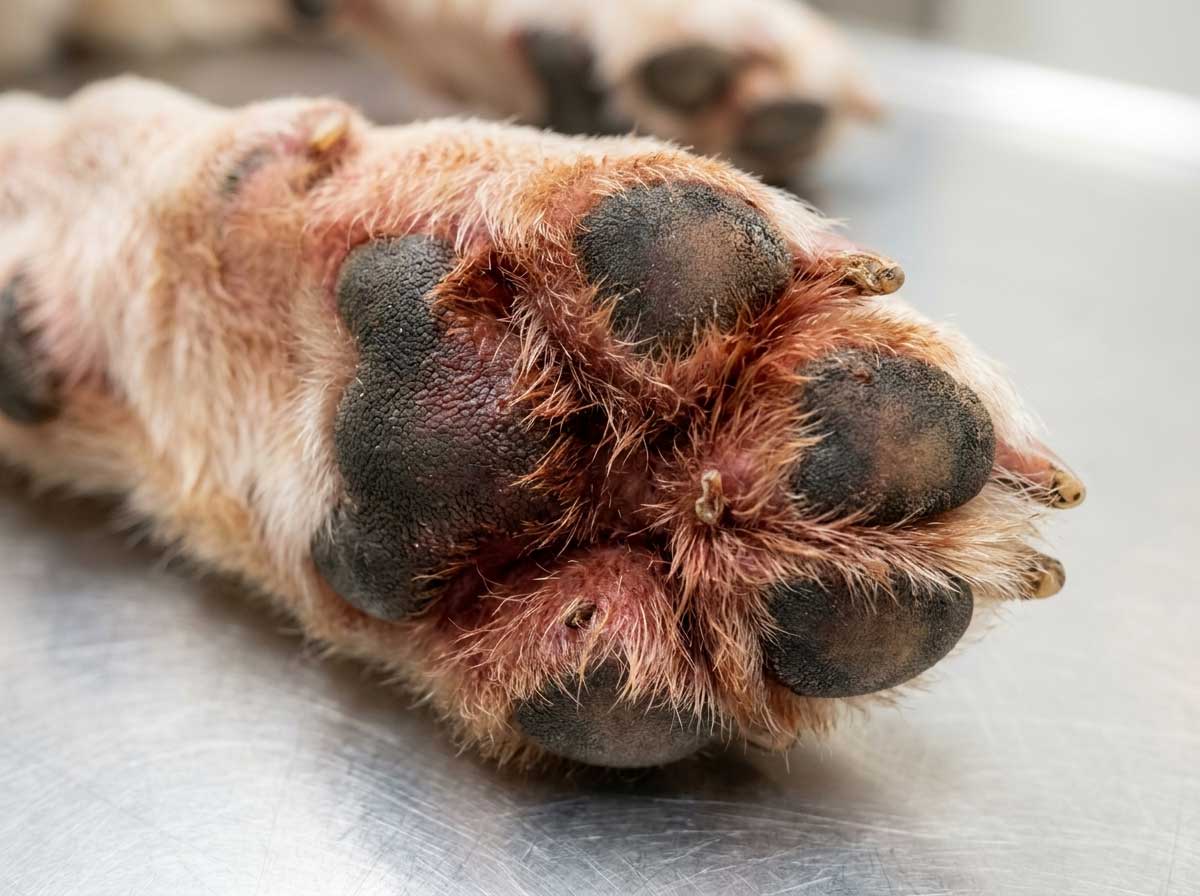
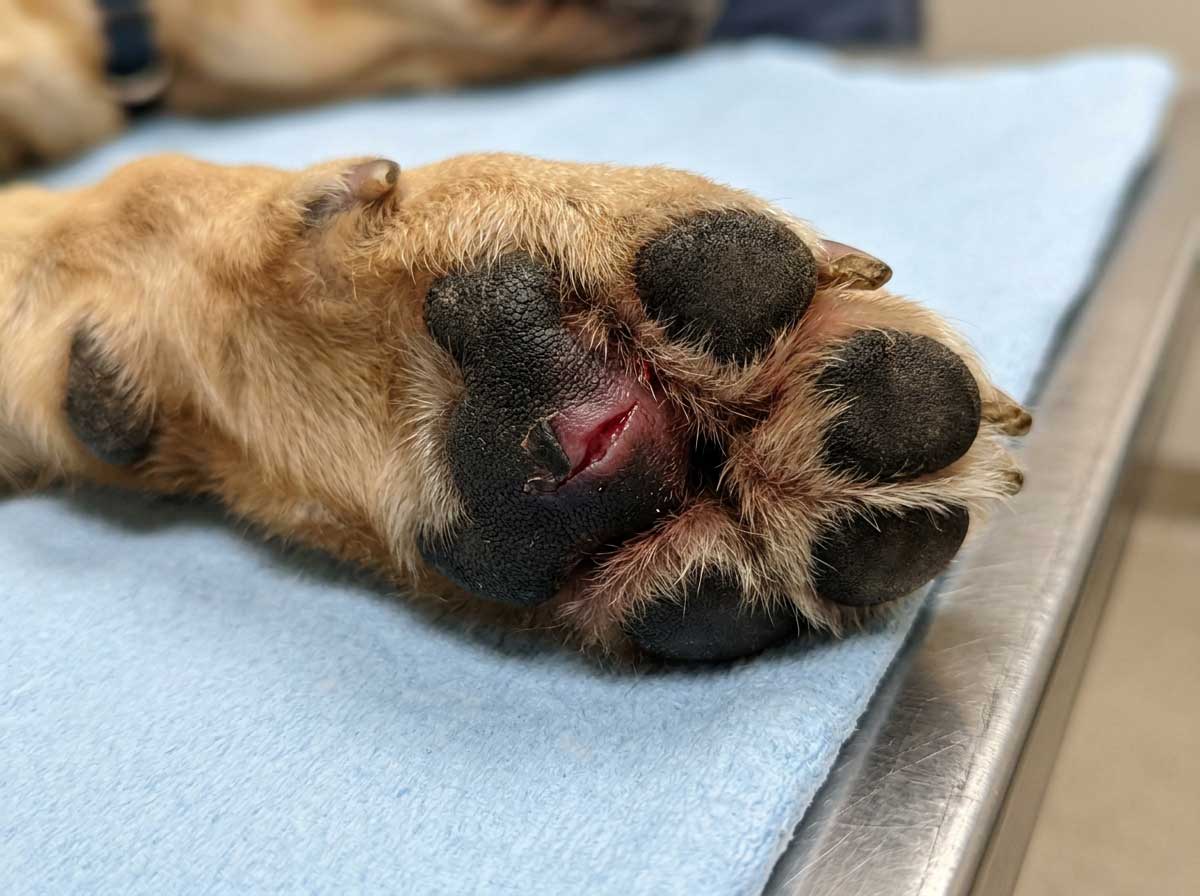
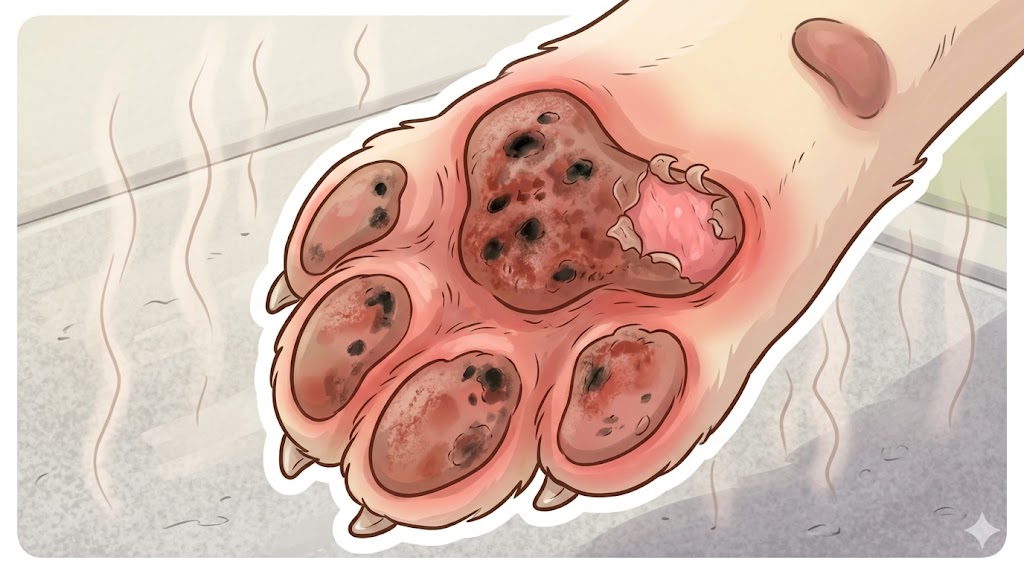
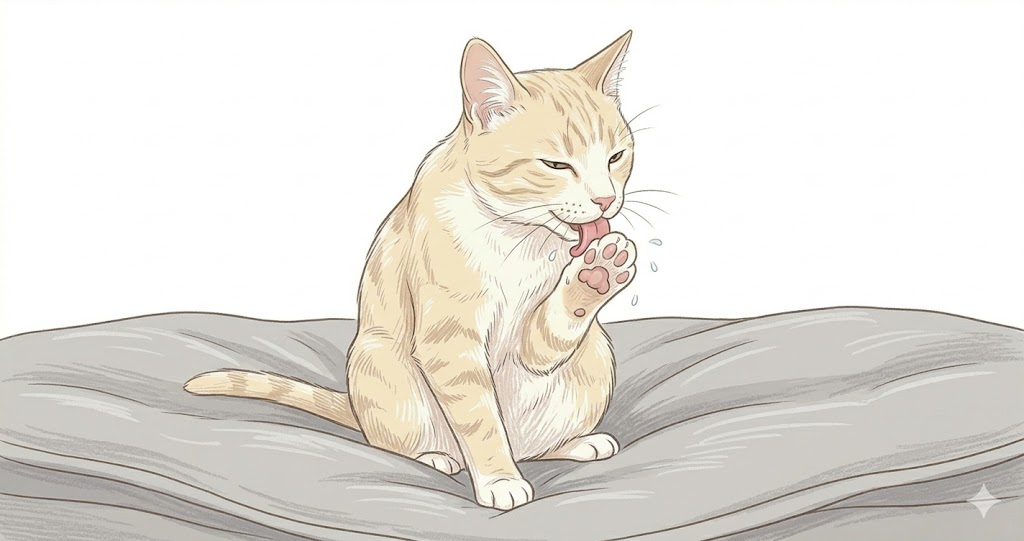
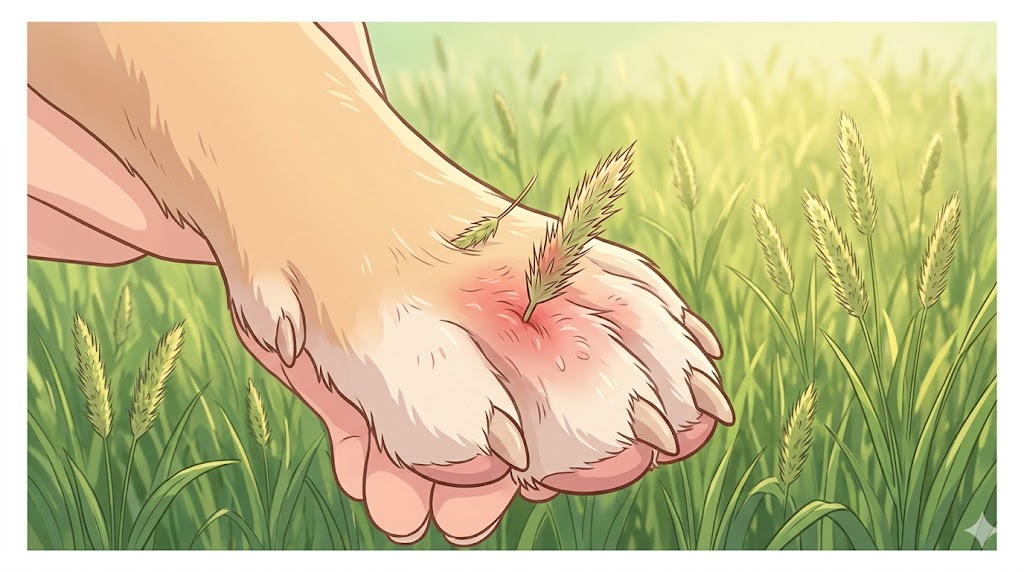
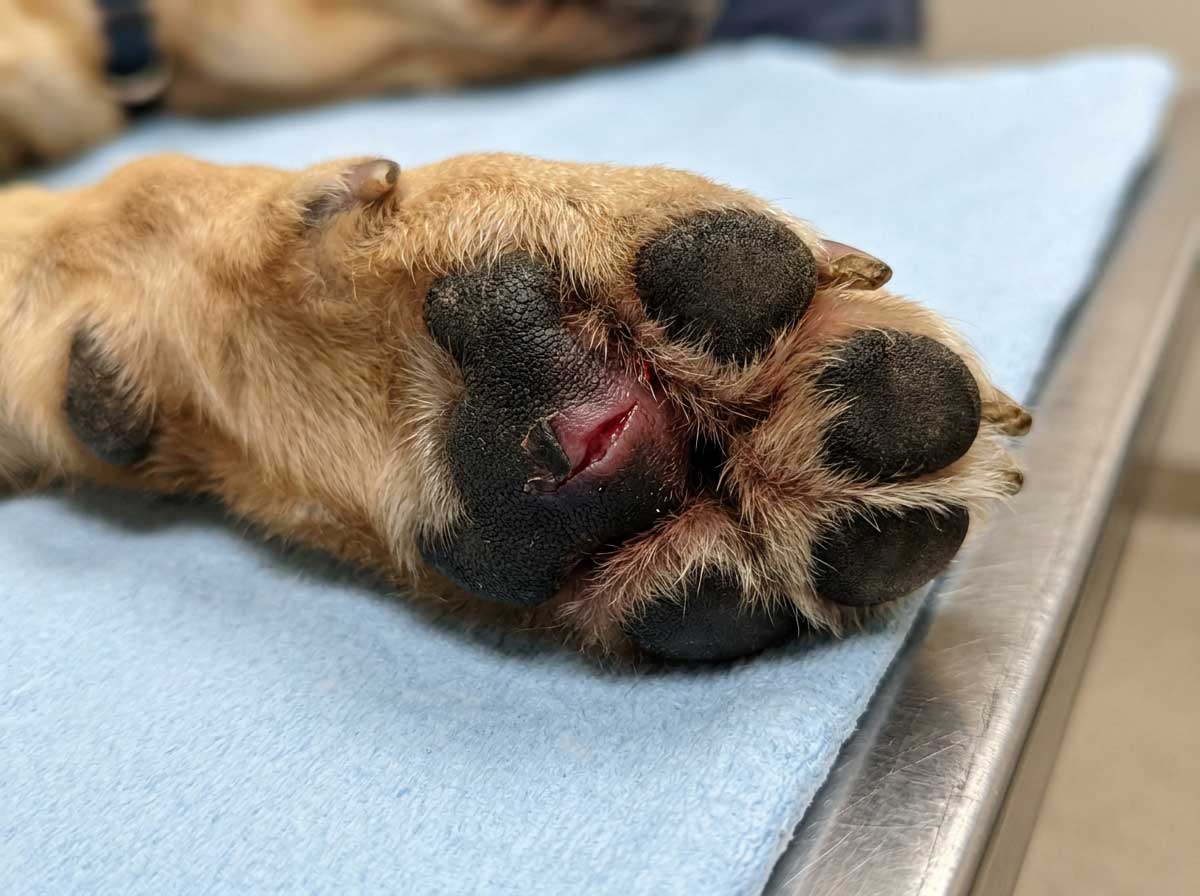
A foxtail in dog paw has 5 visible signs you can spot at home. (1) Sudden limp on one specific paw — usually starts within hours of an outdoor walk through dry grass. (2) Constant licking or chewing of one specific paw — dogs target the affected paw obsessively, not all four. (3) Small puncture-like hole or red swollen spot between two specific toes — the foxtail entry point. (4) A visible protruding piece of grass seed sticking out of the skin (only sometimes — many foxtails fully embed within minutes). (5) Pus or discharge from a swollen bump days after the initial limp — late-stage signal of infection setting up around the embedded foxtail.
Foxtail Limp Pattern — Why This One Matters
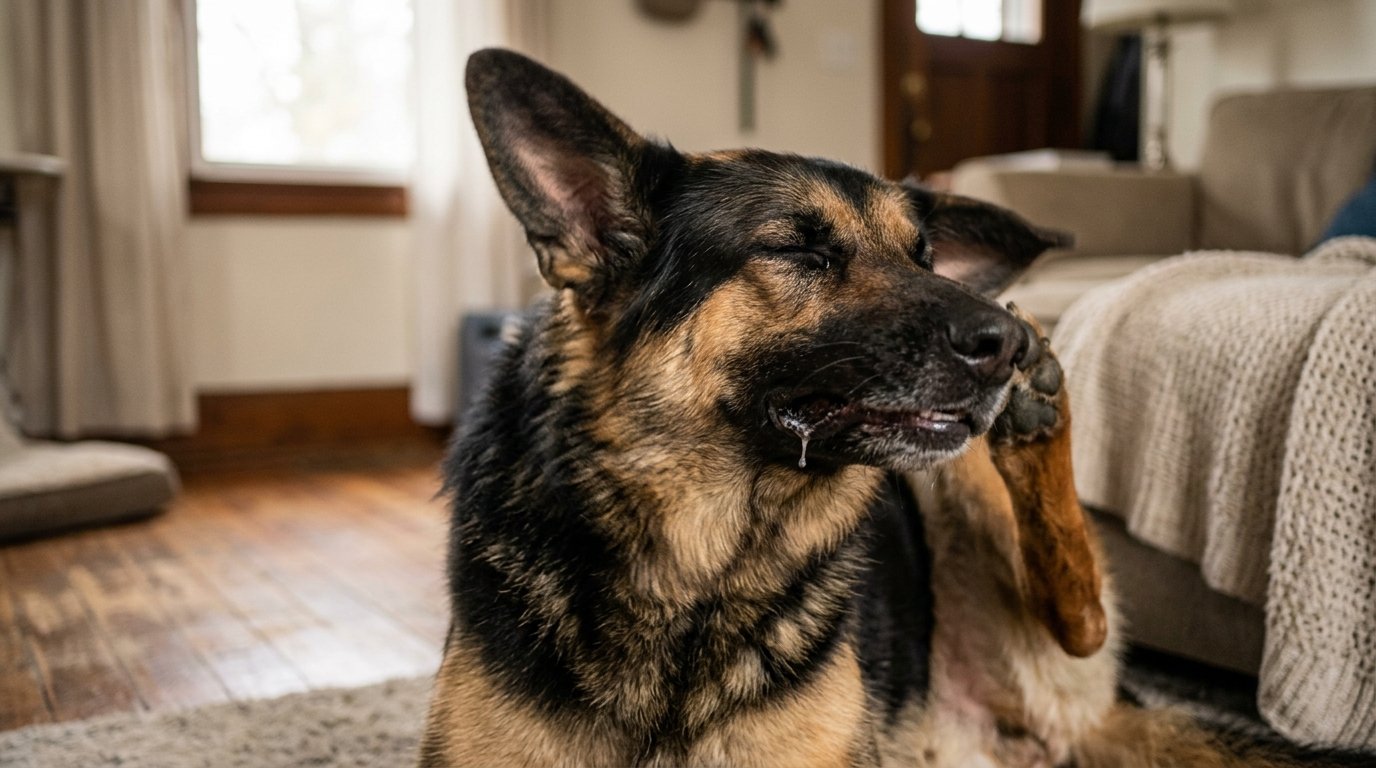
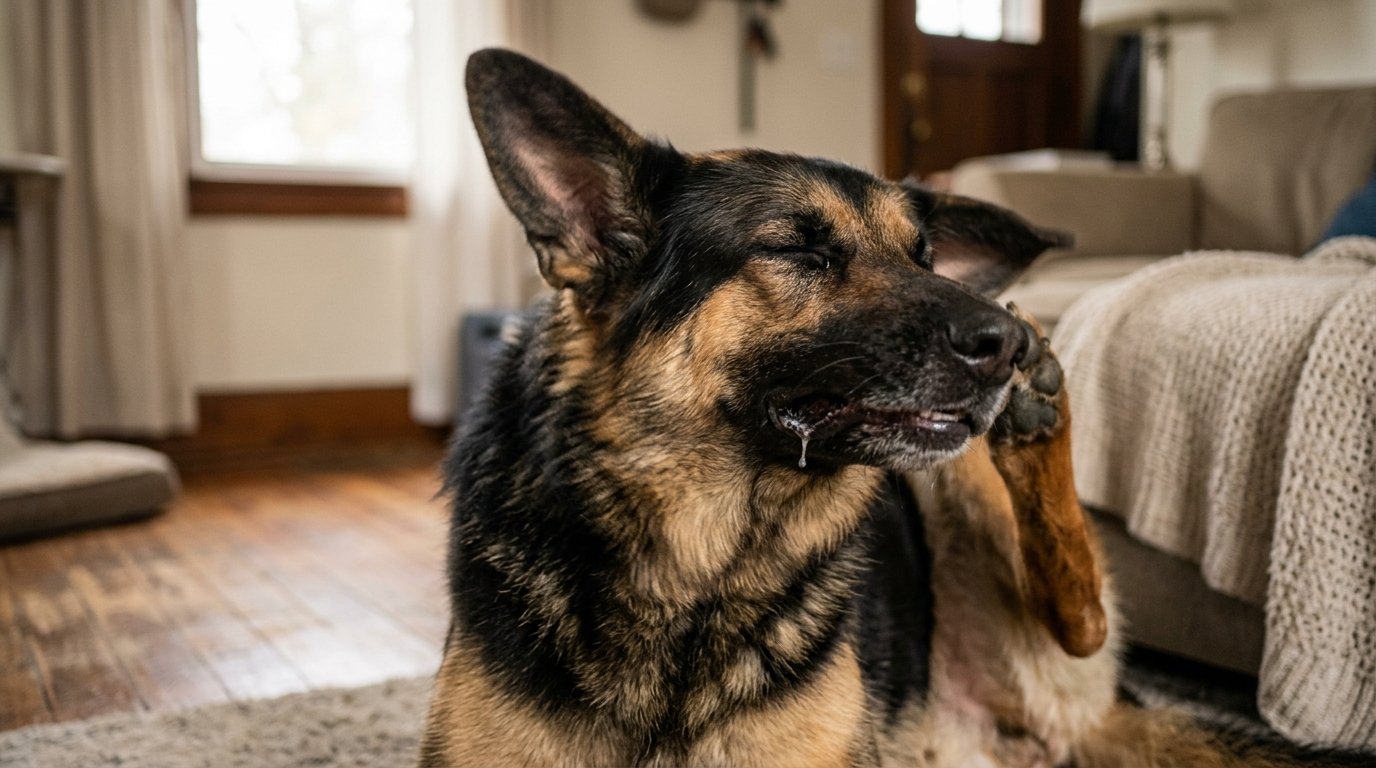
The foxtail in dog paw limp pattern is distinct from a sprain or cut limp. Sudden onset (no slow build), affects one specific paw (not bilateral), gets worse with weight-bearing (the foxtail pushes deeper), and is paired with focused licking of one specific spot between two toes. Dogs with sprains usually limp on a leg with no licking; dogs with cuts limp and may lick but the visible cut is obvious. If your dog suddenly starts limping on one paw after a walk through dry summer grass — and you cannot see an obvious cut — assume foxtail until proven otherwise. The window to extract a foxtail at home (when extraction is safe at all) is in the first few hours before it migrates deeper.
Safe At-Home Check for Foxtail in Dog Paw
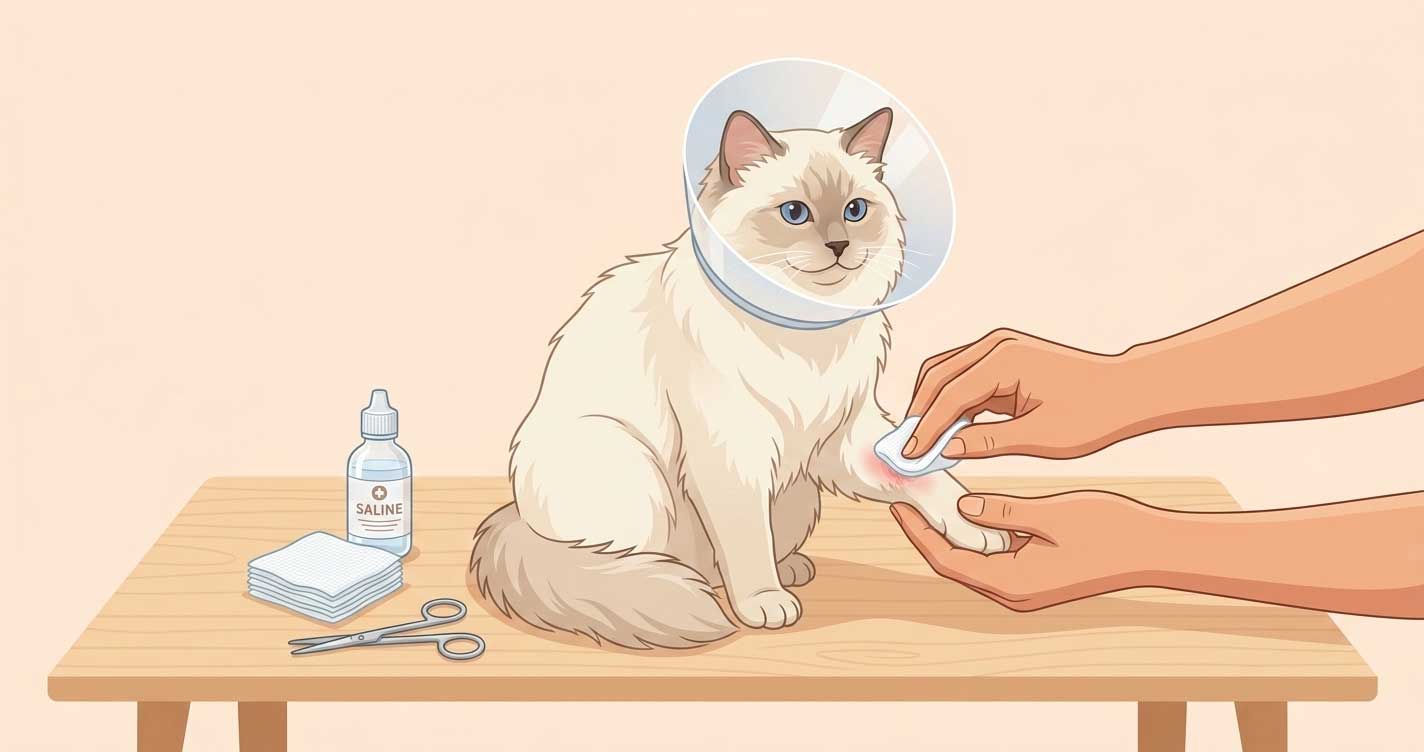
If you suspect a foxtail in the first hour after a walk and the dog is calm, a careful at-home check is reasonable as a first step. Steps:
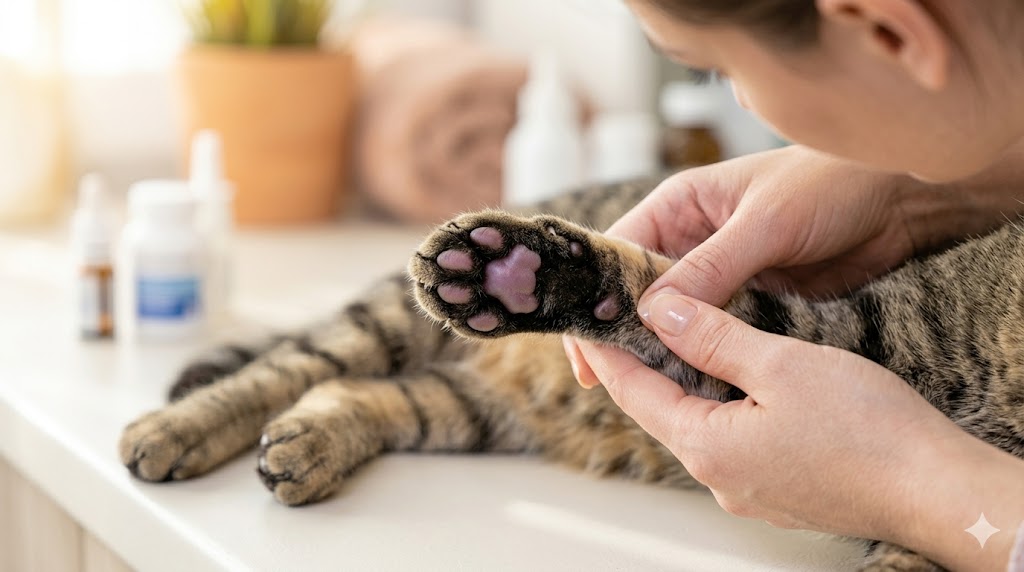
- ✓Sit the dog on its side in a well-lit area with the affected paw facing up.
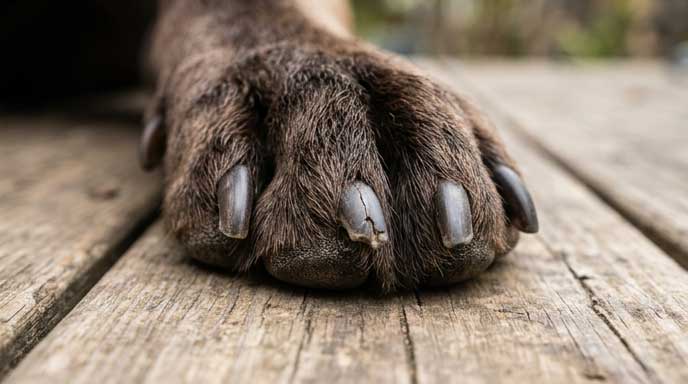
- ✓Gently part the fur between each pair of toes — foxtails almost always lodge in the soft web between two toes, not on the pad.
- ✓Look for a small red dot, puncture mark, swollen patch, or visible spike of grass seed protruding.
- ✓Smell the suspected entry point — early foxtail infection has a slightly sweet rotten smell distinct from normal paw smell.
- ✓If you can clearly see the foxtail protruding more than half an inch AND the dog tolerates touch AND the foxtail is fresh (within first 1-2 hours), gentle extraction with clean tweezers in one straight motion is acceptable — but stop the moment the dog yelps or the foxtail does not slide out smoothly.
- ✓If the foxtail is fully embedded with no visible protrusion, OR has been in for more than a few hours, OR your dog will not tolerate handling — head straight to the vet for sedated extraction under proper lighting.
When to Skip At-Home Extraction and Go Straight to the Vet
Foxtail in dog paw extraction at the vet is far safer than at home in any of these situations:
- ✓You cannot see the foxtail clearly (fully embedded) — vet uses sedation plus magnification to find migrating barbs.
- ✓The foxtail has been in for more than 2-3 hours — likely already migrated beyond the entry point.
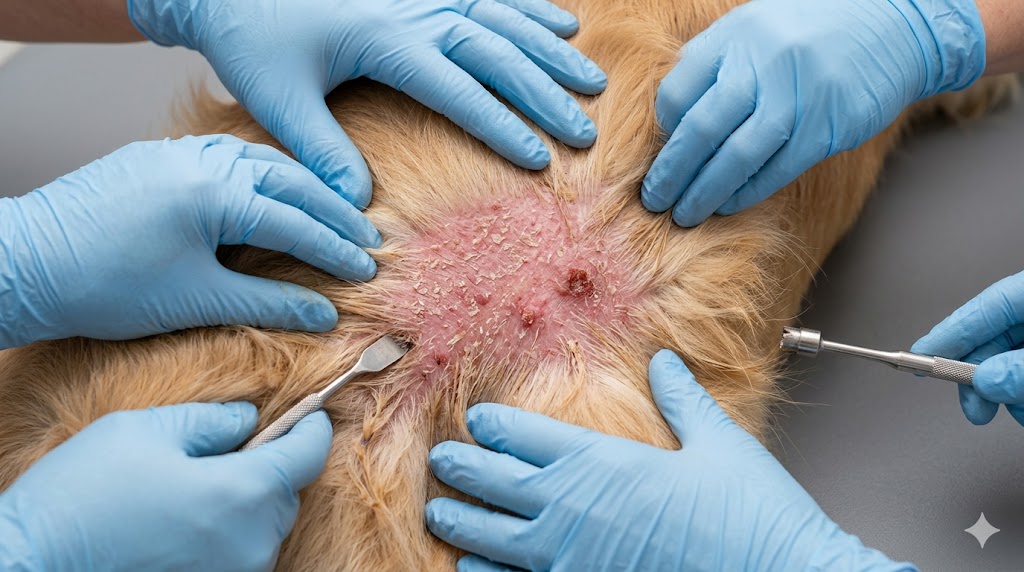
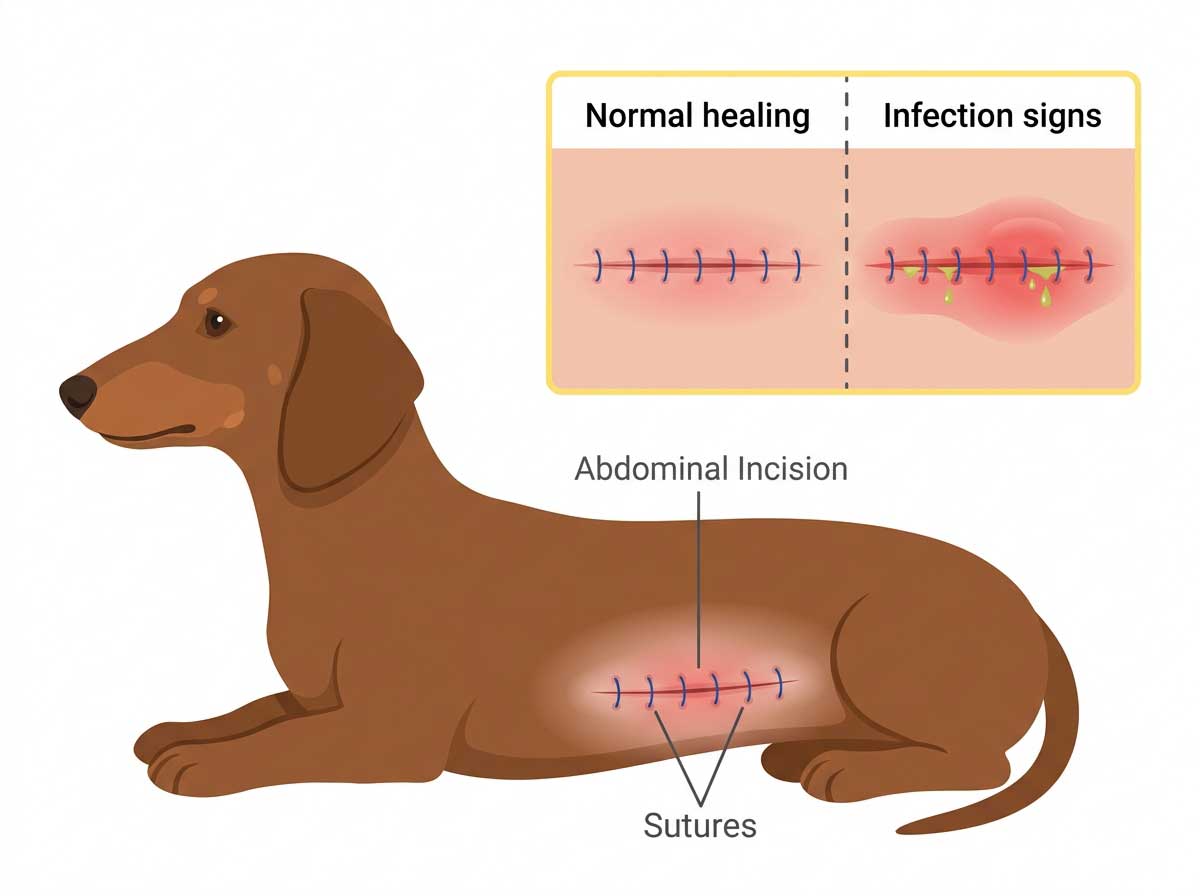
- ✓There is visible swelling, pus, or a foul smell — infection has already set up and needs vet-led cleaning.
- ✓The dog will not tolerate handling — fighting risks breaking off barbs inside the wound, making extraction much harder.
- ✓You attempted home extraction and the foxtail snapped or did not come out cleanly — broken barbs in soft tissue need vet exploration.
- ✓The puncture is on the underside of the paw pad (very rare but possible) — pad foxtails go deep and need vet exploration of the tract.
Want a quick photo opinion on whether the paw is showing early foxtail signs vs something else? Upload a clear photo — our AI compares against foreign-object, allergic, and healthy patterns.
Photo Triage Now →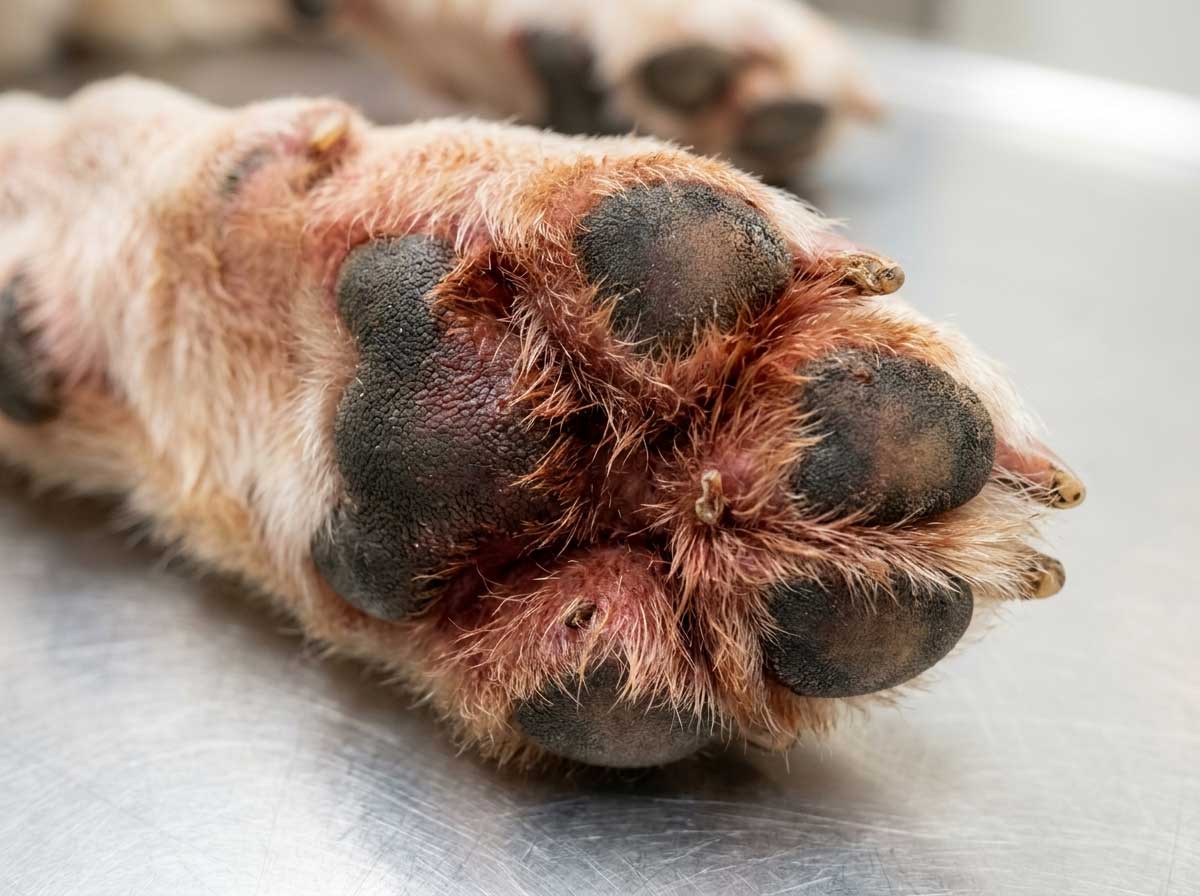
After-Extraction Watch List — What to Watch For 1-2 Weeks
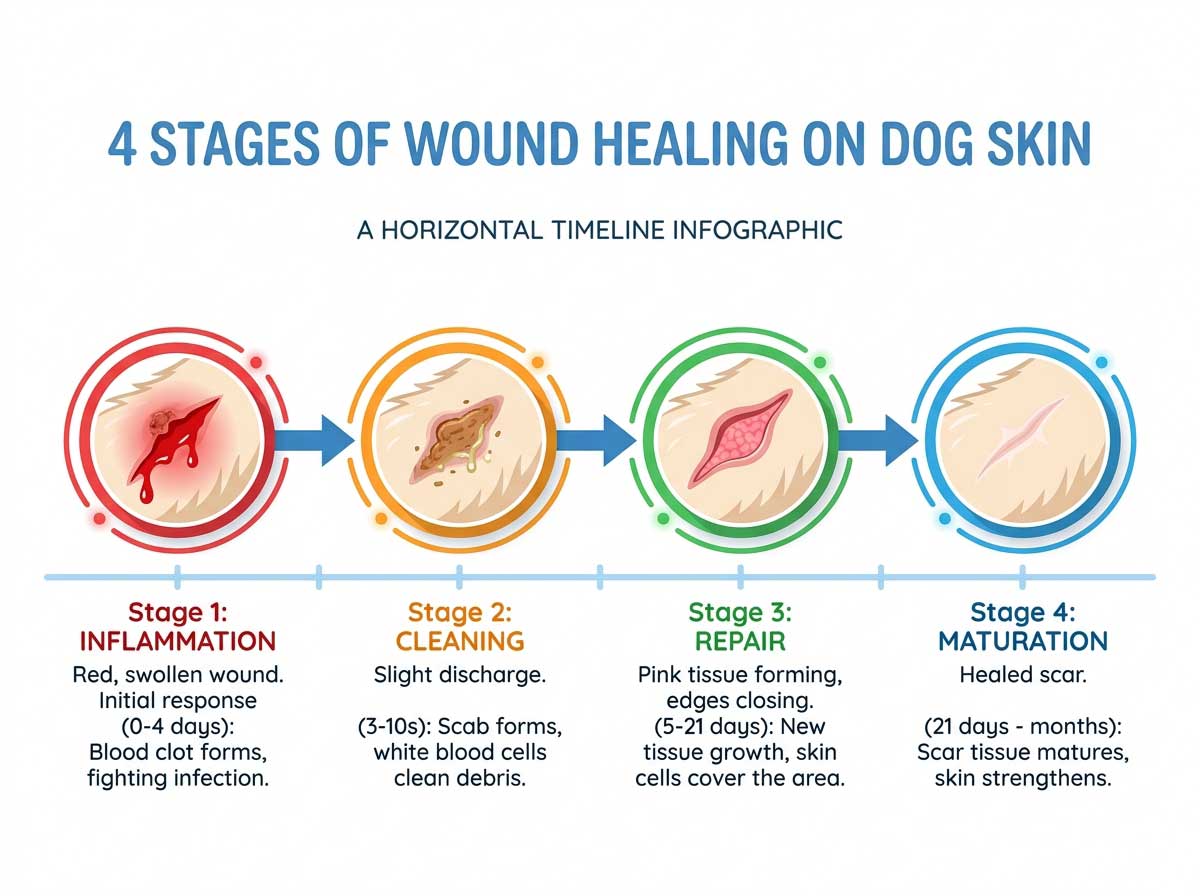
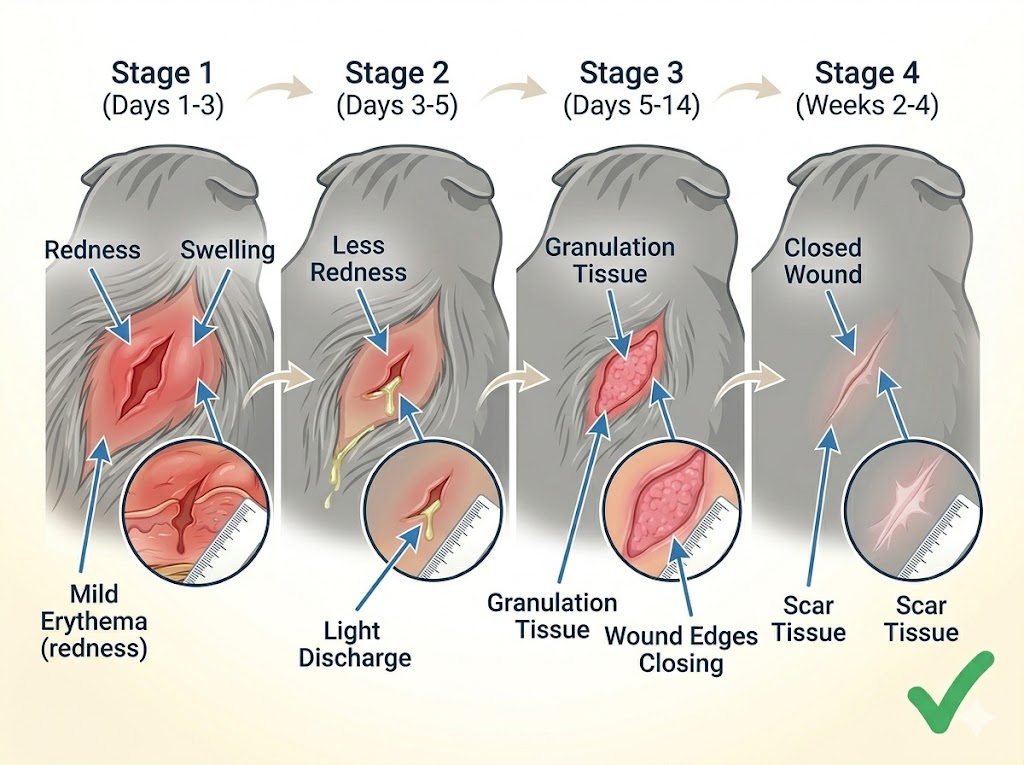
Even after the foxtail is extracted (whether at home for a fresh case or at the vet), the entry point needs watching for 1-2 weeks. Signs that the foxtail left fragments behind or migrated further before extraction: returning limp days later, new swelling at or above the entry point, a fistula or weeping hole appearing at a different location on the paw or leg, lethargy, fever signs. Any of these means a follow-up vet visit for imaging (sometimes ultrasound, sometimes surgical exploration) to find migrating fragments. Most clean foxtail extractions are uneventful but the small percentage with retained barbs are worth catching early.
Foxtail Prevention — Seasonal Habits That Help
Foxtails are seasonal — dry from late spring through fall depending on your region. Prevention habits that meaningfully reduce risk:
- ✓Avoid walking through dry brown grass during foxtail season — stick to mowed lawns, paved paths, and indoor exercise.
- ✓After every outdoor walk in foxtail season, run your hand through the dog fur from head to tail, checking ears, between toes, and armpits — the 4 most common foxtail entry sites.
- ✓Keep paw fur trimmed short during foxtail season — long fur catches seeds more readily.
- ✓In high-risk areas (California, Western US, anywhere with dry grass), consider mesh booties for walks through unmowed grass.
- ✓Identify and extract foxtail plants from your own yard — they have a distinctive arrowhead-shaped seed head that points one direction.
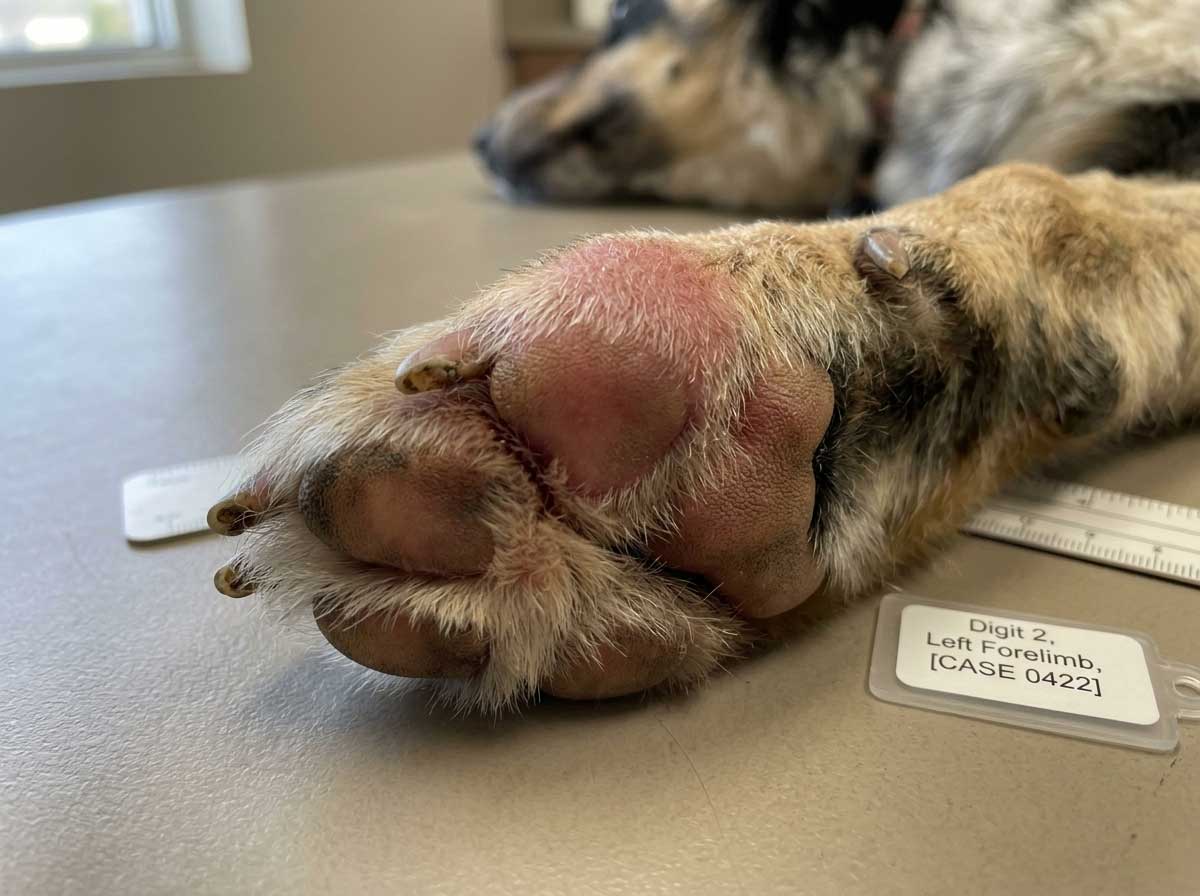
Spotted a sudden bump or limp on one paw after a summer walk in dry grass? Upload a paw photo — our AI compares against foreign-object, cyst, and healthy patterns in seconds.
Photo Triage Now →Foxtail Risk Across Body Parts — Not Just Paws
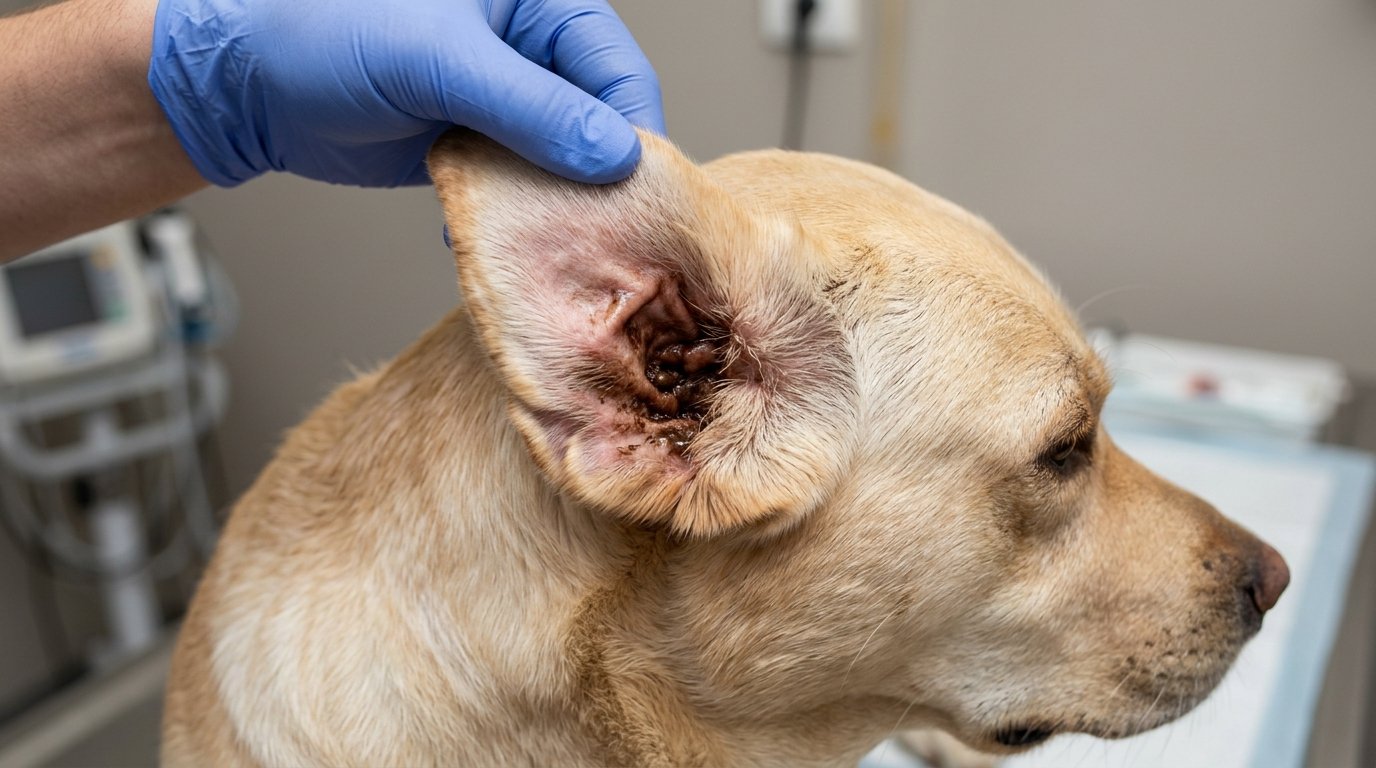
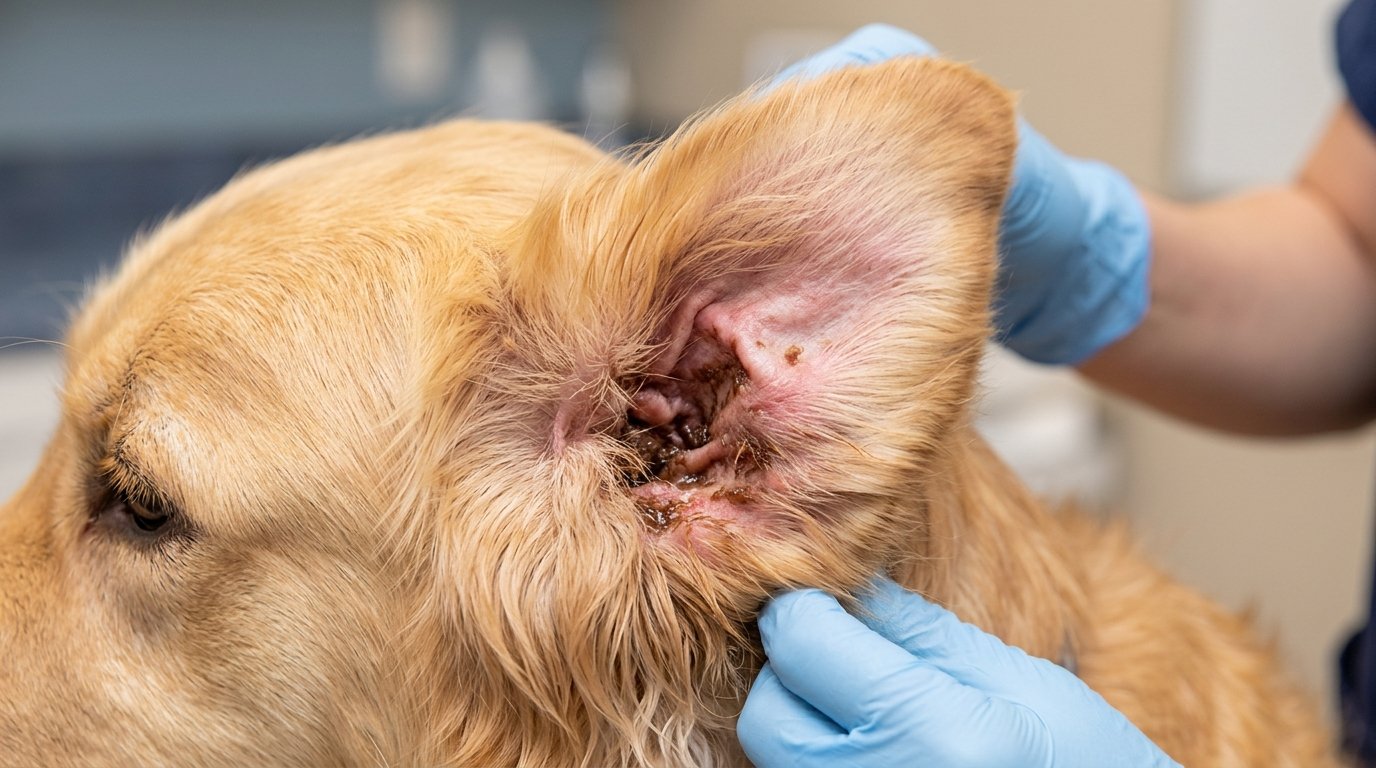
Foxtails embed across multiple dog body sites — paws are one of the top three but Foxtail dog nose symptoms (violent sneezing, nose bleed, head shake) and Foxtail in dogs ear (sudden head-tilt, ear-scratching, head-shake) are equally serious because of how close those entry points are to the airway and brain. Some owners ask how many dogs die from foxtails each year — the answer is rare but non-zero, mostly from migrating barbs reaching chest or abdomen organs before owners noticed the initial entry. Can a dog survive with a foxtail? Specifically in the body indefinitely — no, embedded foxtails reliably trigger chronic infection over time, and the longer they stay the further they migrate. Detection and vet extraction is the goal.
Foxtail in Dog Paw vs Other Foreign Objects
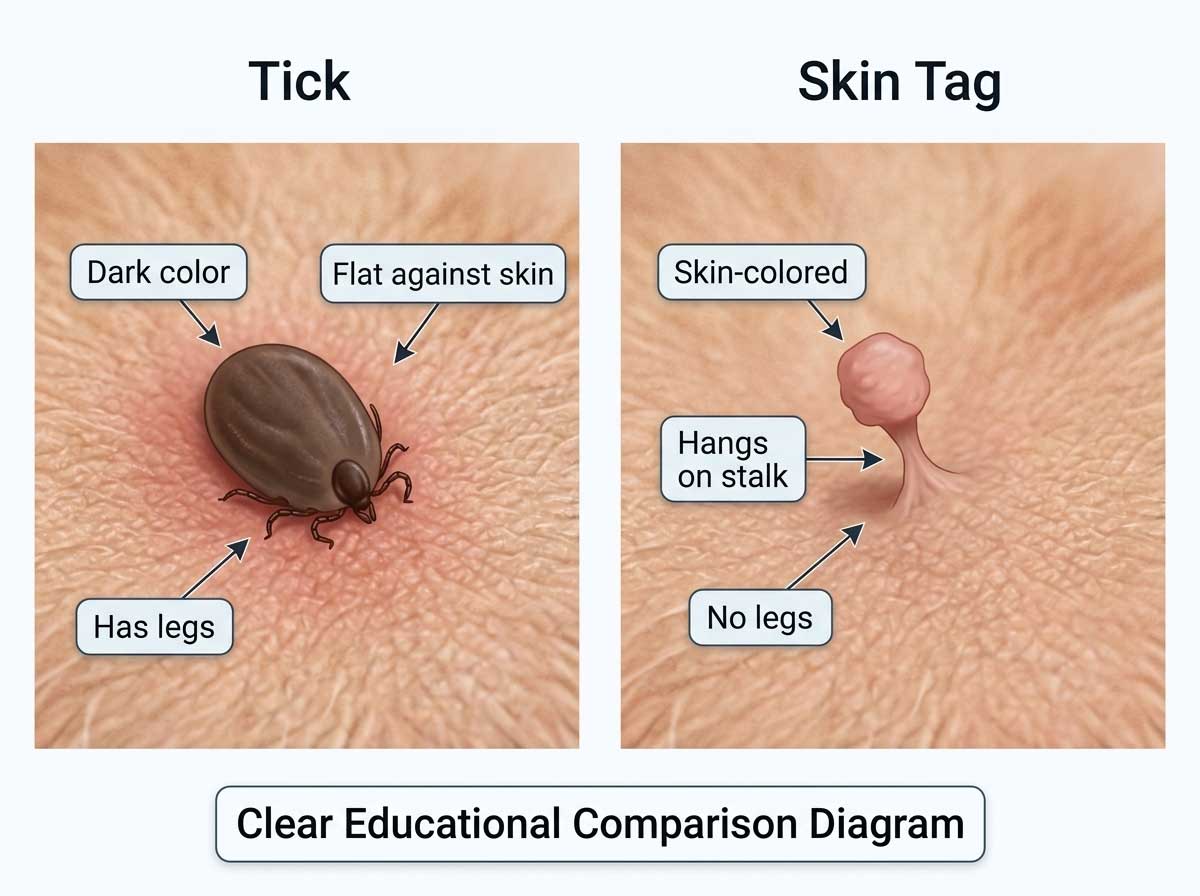
Foxtail in dog paw is different from a thorn, splinter, or rock — foxtails have one-way barbs that resist extraction once they enter. Thorns are usually visible and easy to extract with tweezers. Splinters do not migrate the way foxtails do. Rocks lodged between toes usually fall out when the dog walks. If you see a clearly visible spike-shaped object with barbs pointing one way, handle as a foxtail; if you see a smooth object with no barbs, it is probably a thorn or splinter. When uncertain, lean toward vet visit — the cost of unnecessary vet visit for a thorn is far less than the cost of an unrecognized foxtail migrating into deeper tissue. For the broader emergency dog paw context, see the PetMD foxtail dangers reference.
If your dog also licks paws aggressively year-round (separate from any single foxtail incident), see our companion paw licking causes guide for the 5-cause framework that drives recurring paw licking behavior. For the dog-ear version of the same emergency — foxtail lodged in the ear canal — see foxtail in dog ear which covers the head-shake and ear-canal signs.
Frequently Asked Questions
What does a foxtail in dog paw look like?
+
My dog suddenly started limping after a walk in dry grass — could it be a foxtail?
+
Can I extract a foxtail from my dog paw at home?
+
How dangerous is a foxtail in dog paw if it goes unnoticed?
+
When is foxtail season for dogs?
+
How do I tell if my dog has a foxtail in his paw?
+
Can a foxtail come out on its own?
+
Foxtail in dog paw vs interdigital cyst — how to tell them apart?
+
Suspect a foxtail in your dog paw? Let AI take a quick first look.
Upload a clear close-up of your dog paw — our AI compares against foreign-object signs, yeast, allergic patterns, and healthy paws to help you decide whether a vet visit is needed today.
Disclaimer: This article is for informational purposes only and is not a substitute for professional veterinary advice. Always consult a licensed veterinarian for diagnosis and treatment of your pet's health conditions.