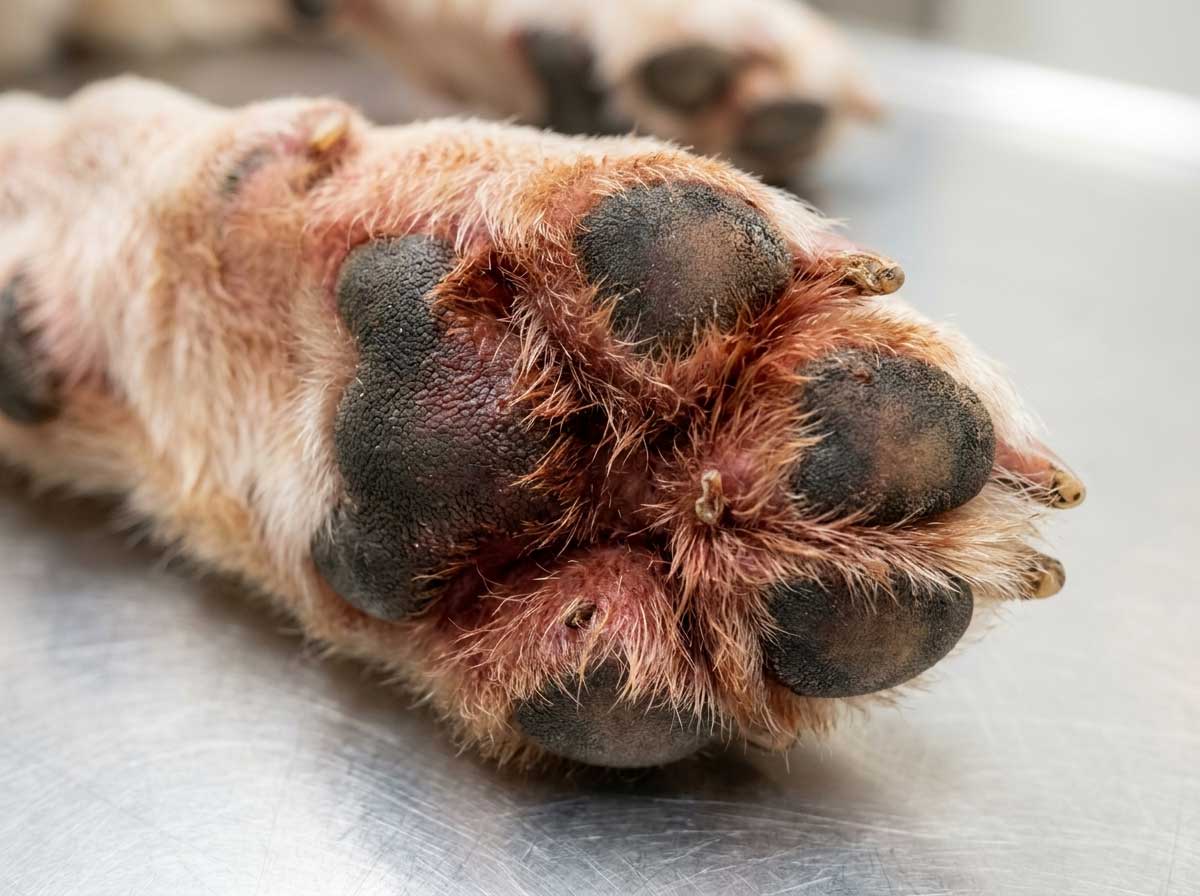
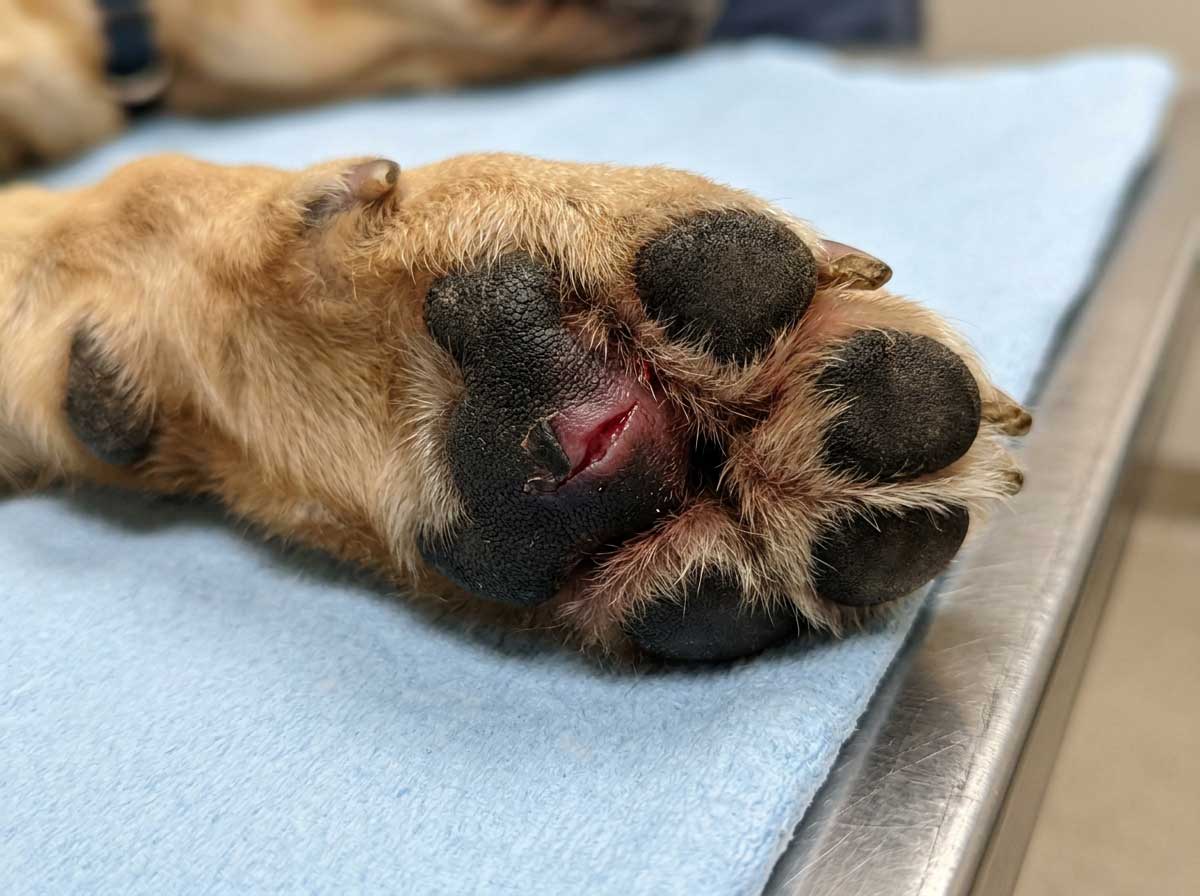
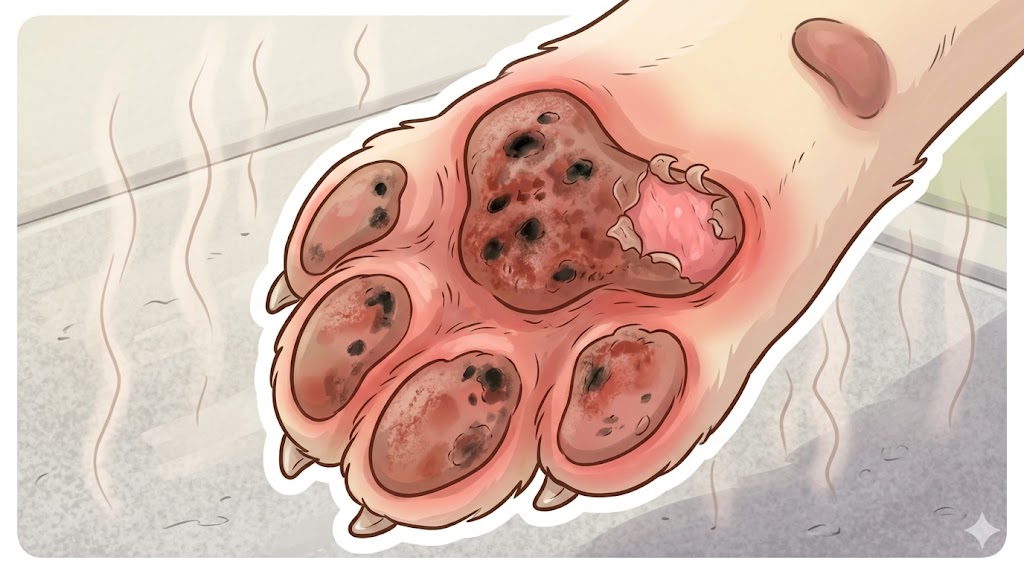
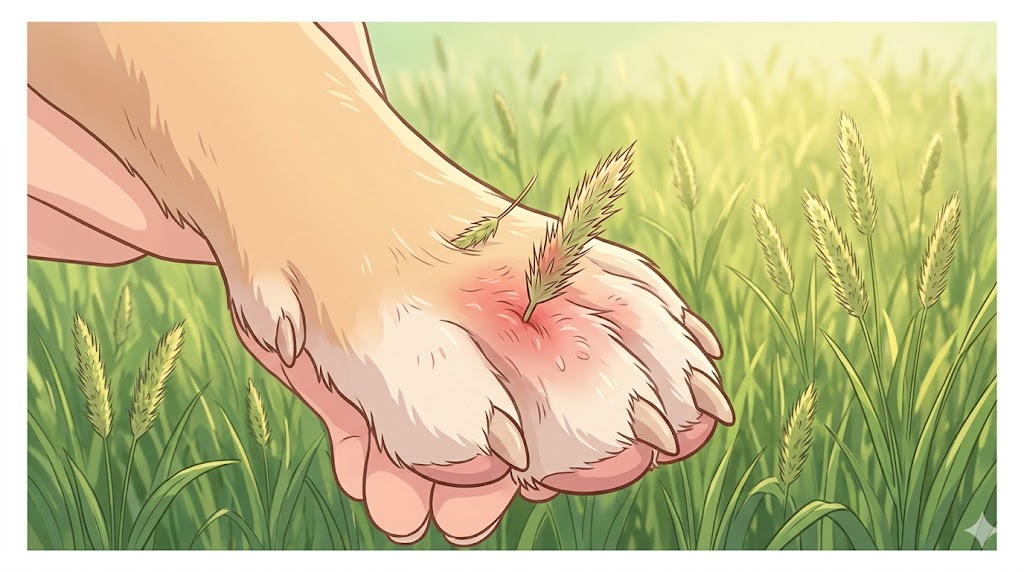
Dog Wound Healing Stages: 4 Phases with Pictures
See the 4 stages of dog wound healing with pictures — what to expect on Day 1, 3, 7, 21+. Spot infection early and get an instant AI photo check.
Published 2026-06-18
Worried About Your Dog's Wound?
Upload a clear photo for an instant AI assessment of healing stage, possible infection signs, and recommended next steps.
Your dog has a wound and you keep checking it — is it healing the way it should, or is something wrong? Every dog wound goes through the same 4 healing stages, whether it's a scrape from rough play, a bite, or a surgical incision. Knowing what each stage looks like — and how long it should take — is the difference between catching a problem in time and missing it until it's serious.
Quick Answer: The 4 Stages of Dog Wound Healing
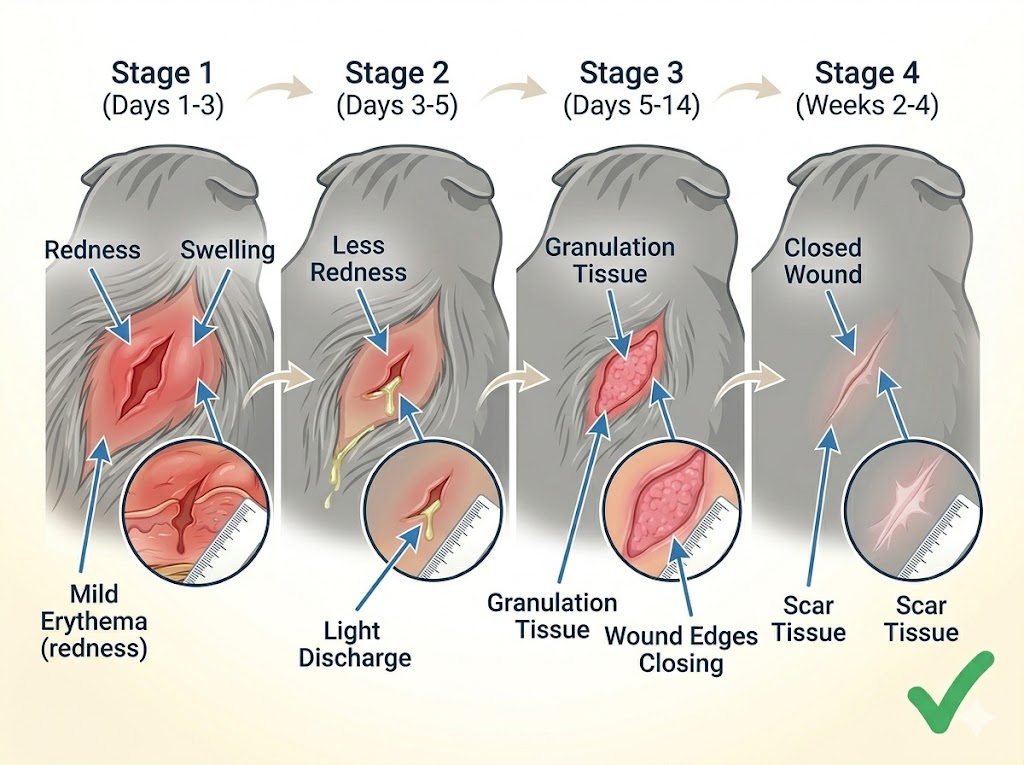
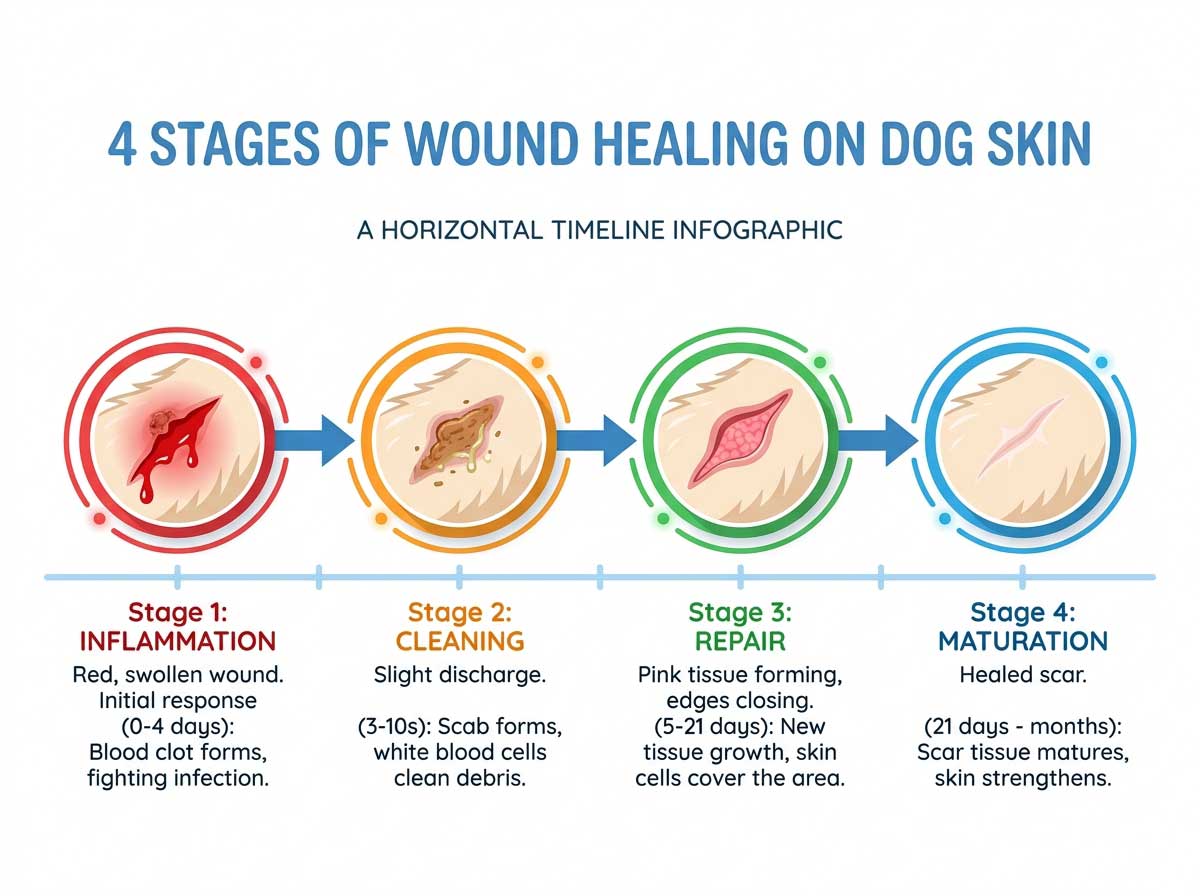
A dog wound heals through 4 distinct phases:
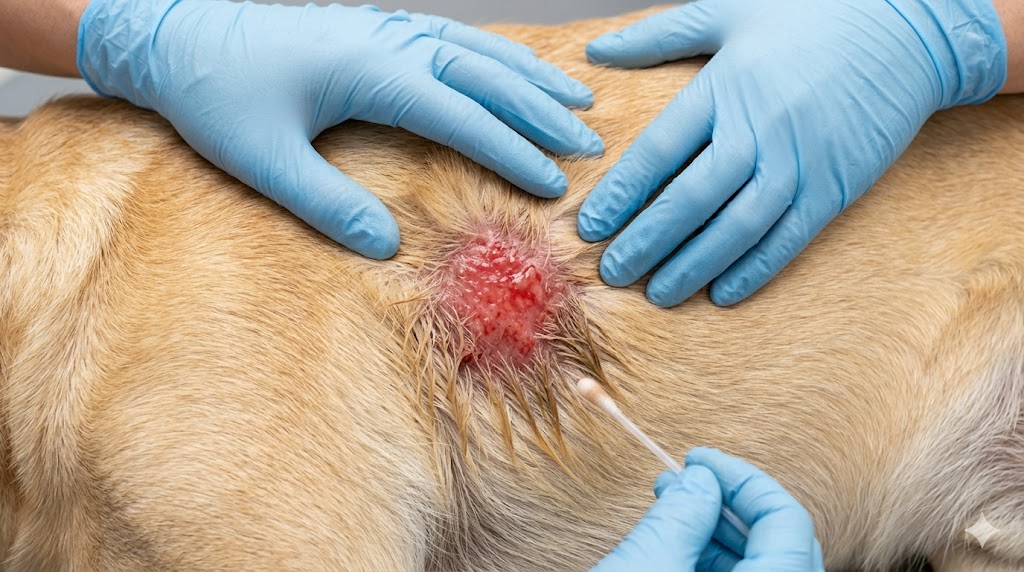
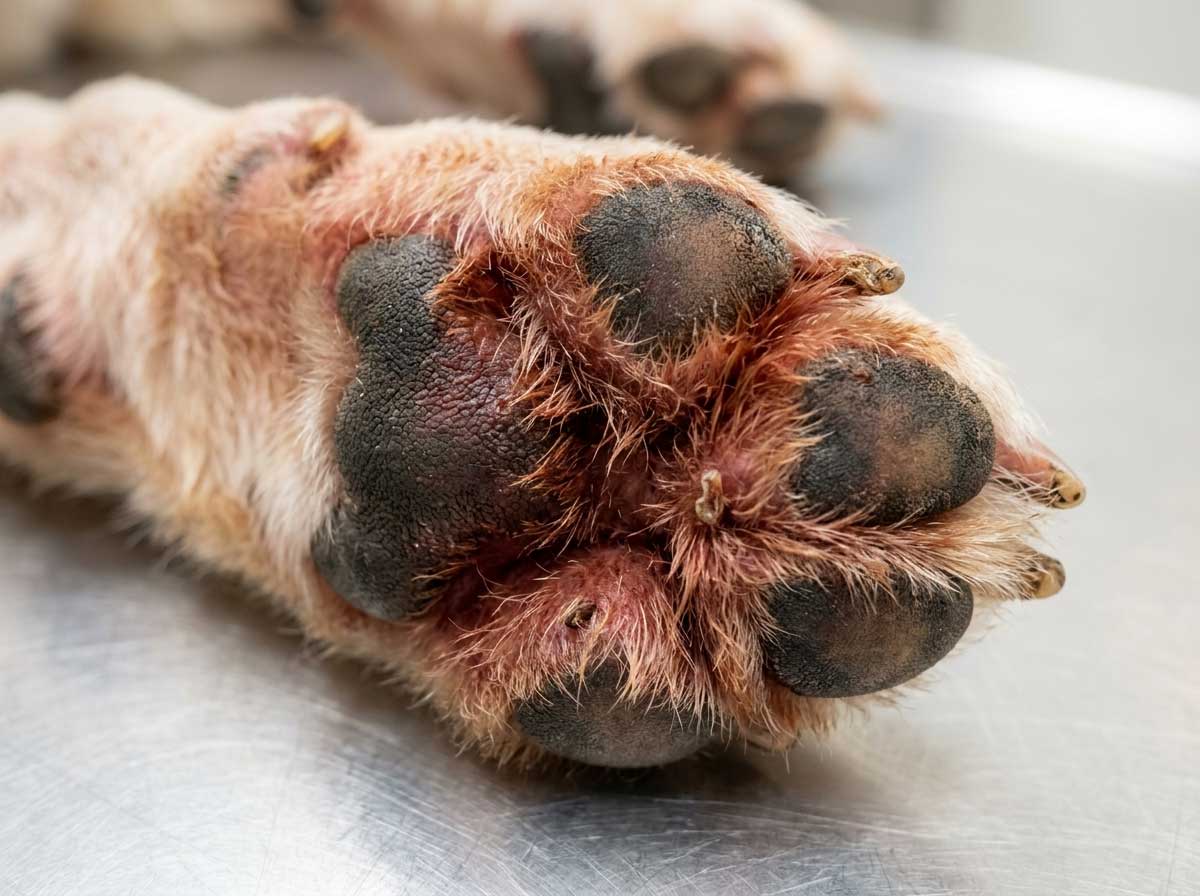
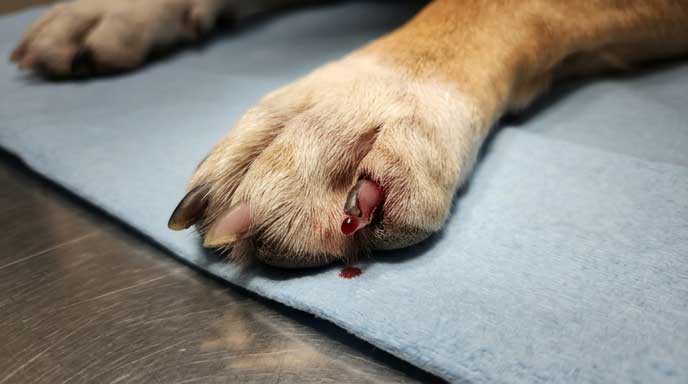
- ✓🔴 Stage 1 — Inflammation (Days 1-3): Redness, swelling, light bleeding or clotting
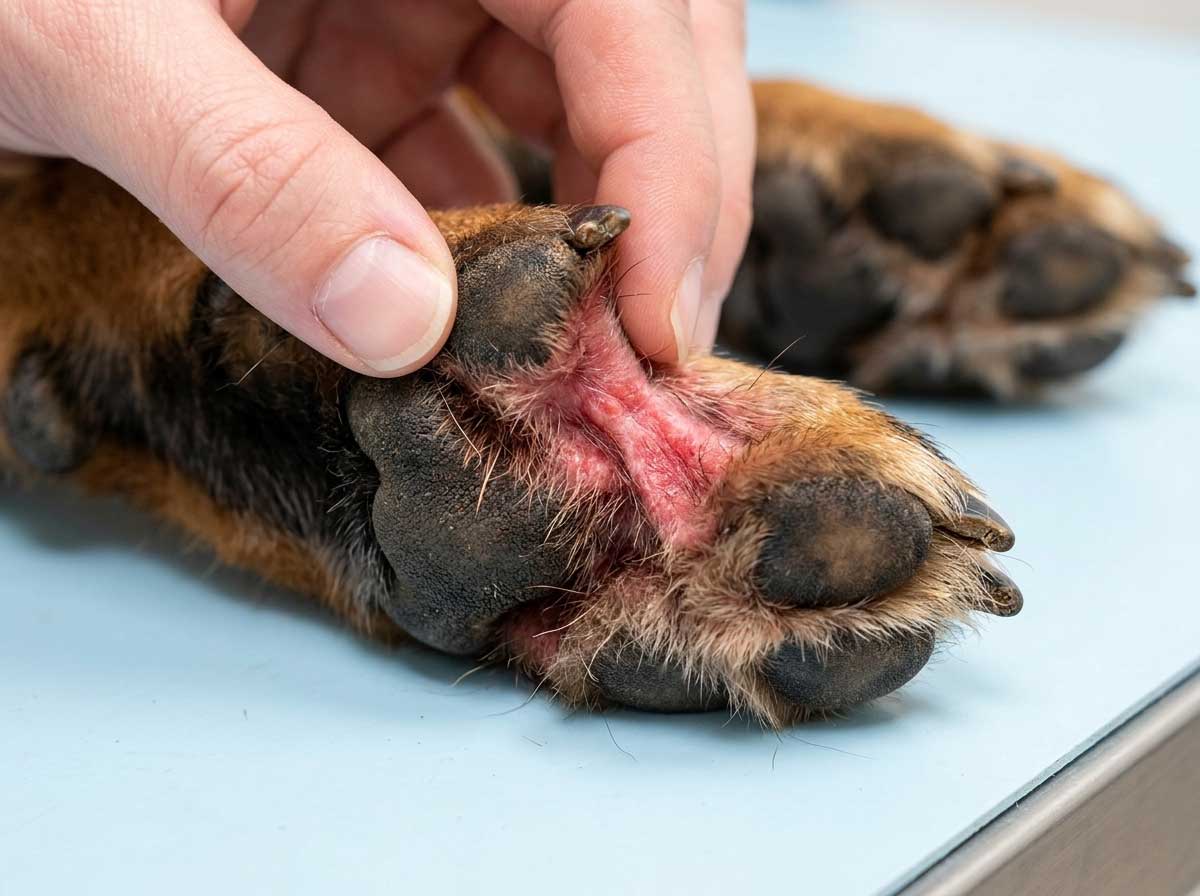
- ✓🟡 Stage 2 — Debridement (Hours to Days): The body clears bacteria and dead tissue with white blood cells
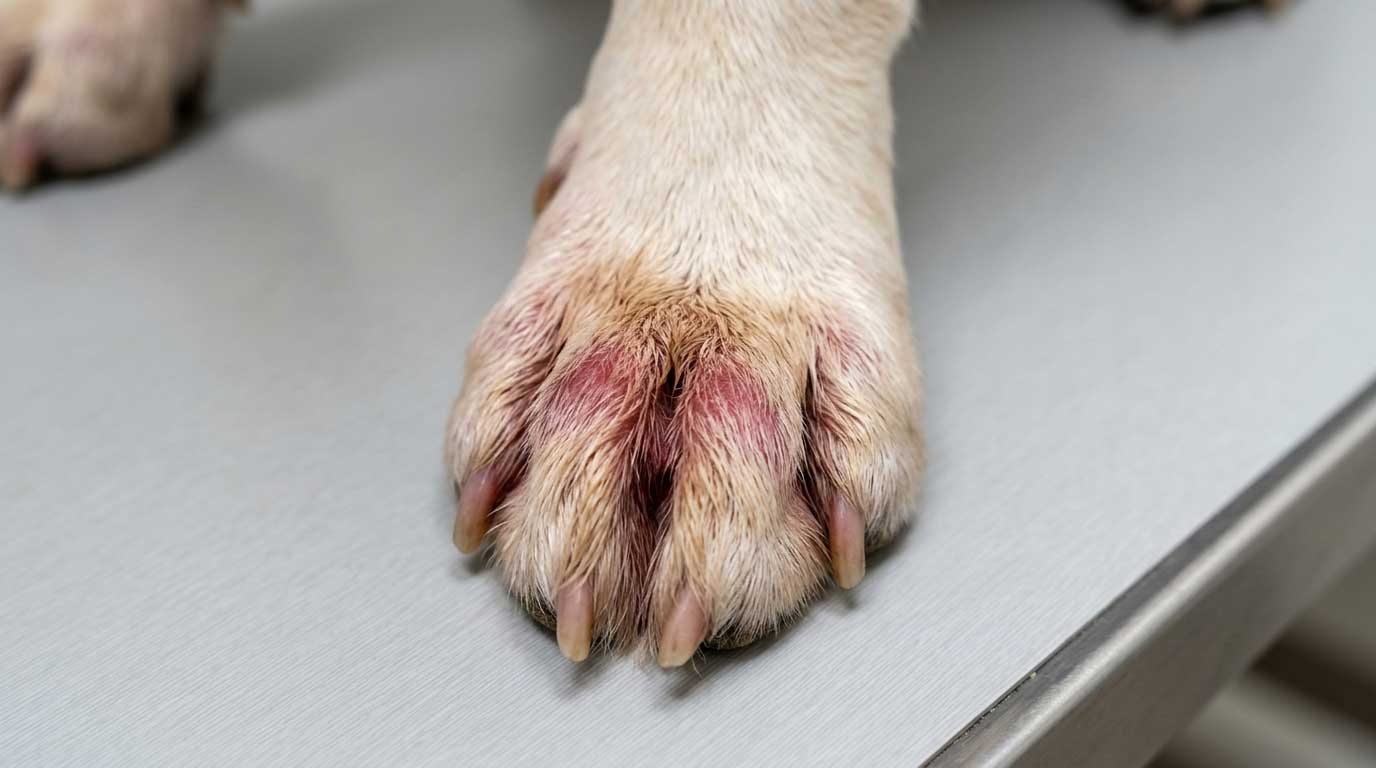
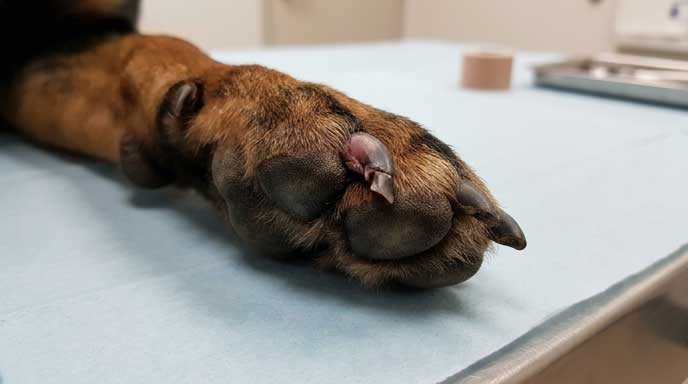
- ✓🟢 Stage 3 — Repair / Proliferation (Days 4-20): New pink granulation tissue forms, wound visibly shrinks
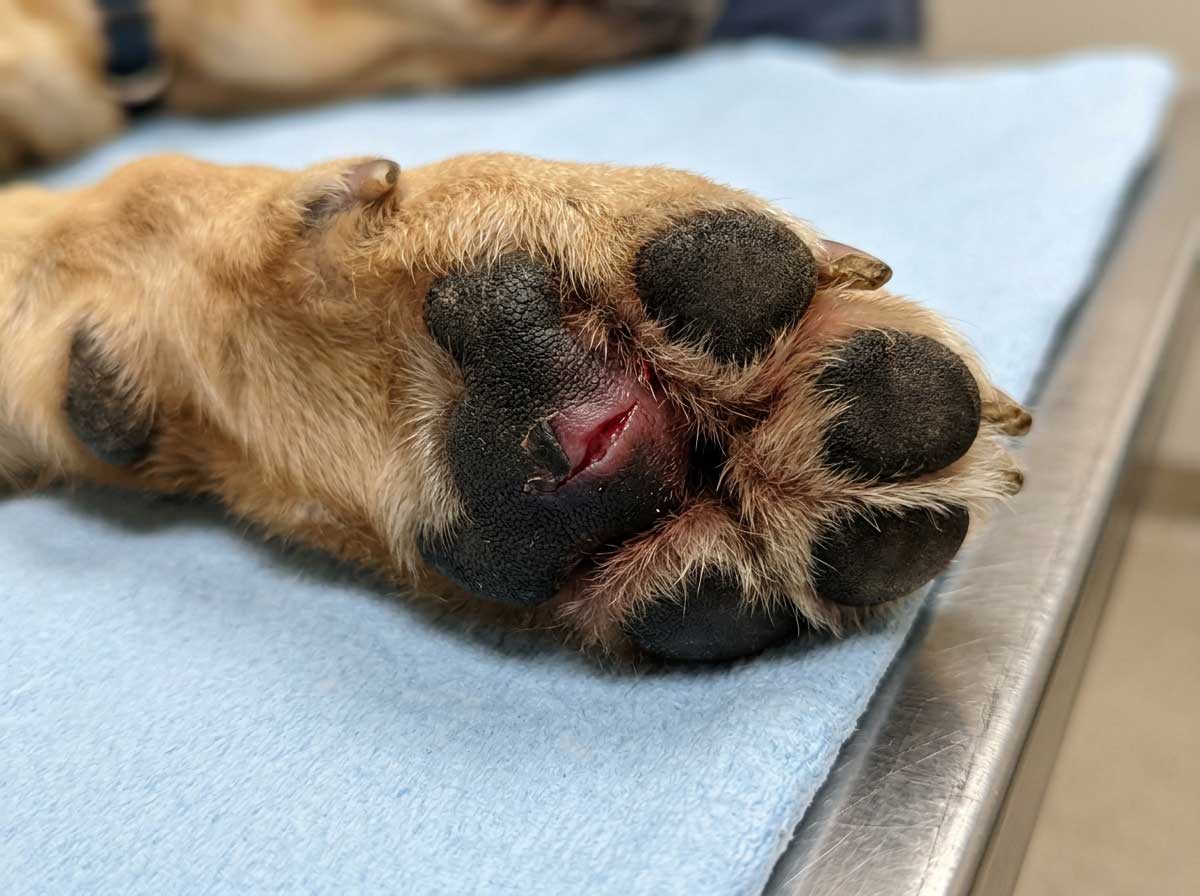
- ✓⚪ Stage 4 — Maturation (Weeks to Months): Scar tissue reorganizes and strengthens
Not sure which stage your dog is in? Upload a clear photo for an AI assessment.
Check Dog WoundStage 1: Inflammation (Days 1-3) 🔴
What you'll see
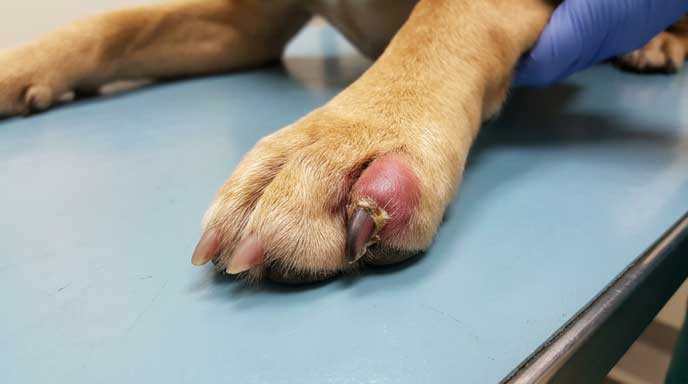
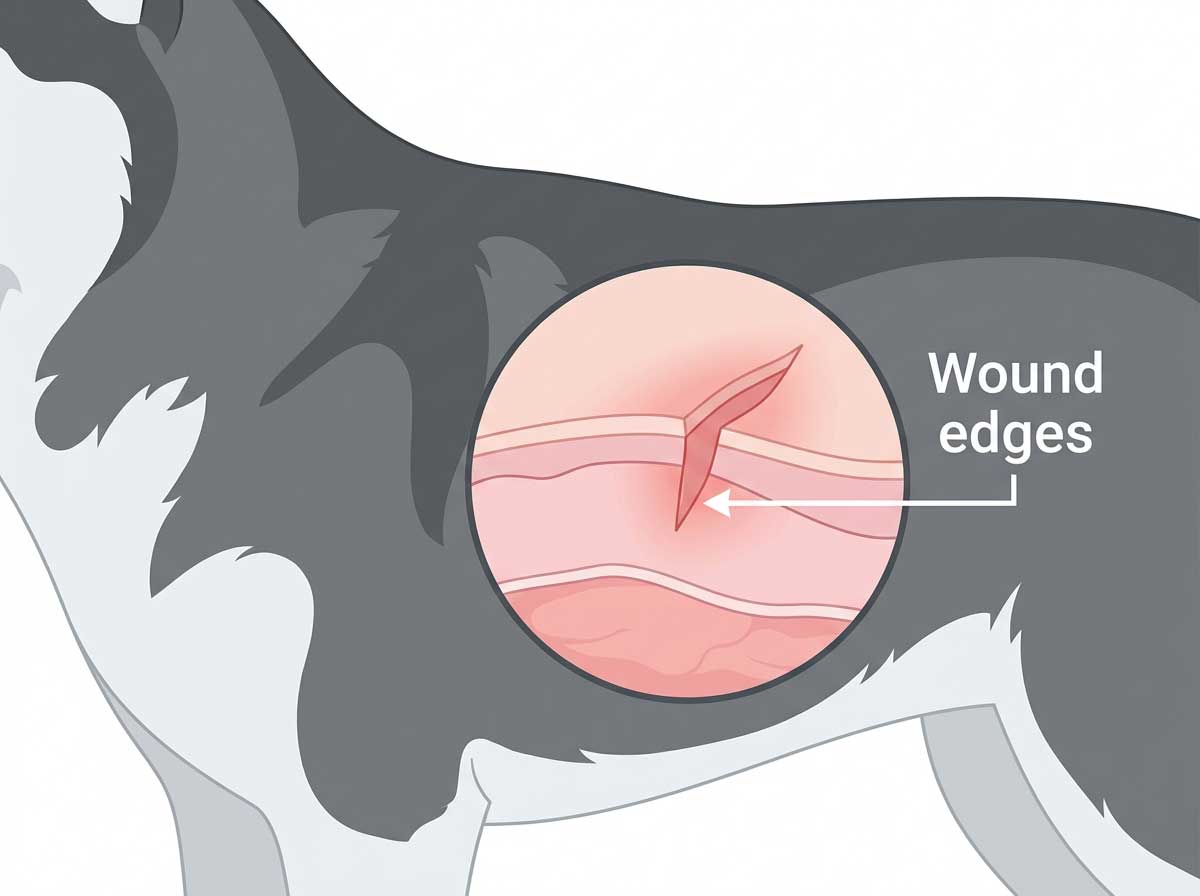
- ✓Redness around the wound edge
- ✓Mild to moderate swelling
- ✓Light bleeding or clot formation in the first few hours
- ✓Tenderness when the area is touched
- ✓Slight warmth around the wound
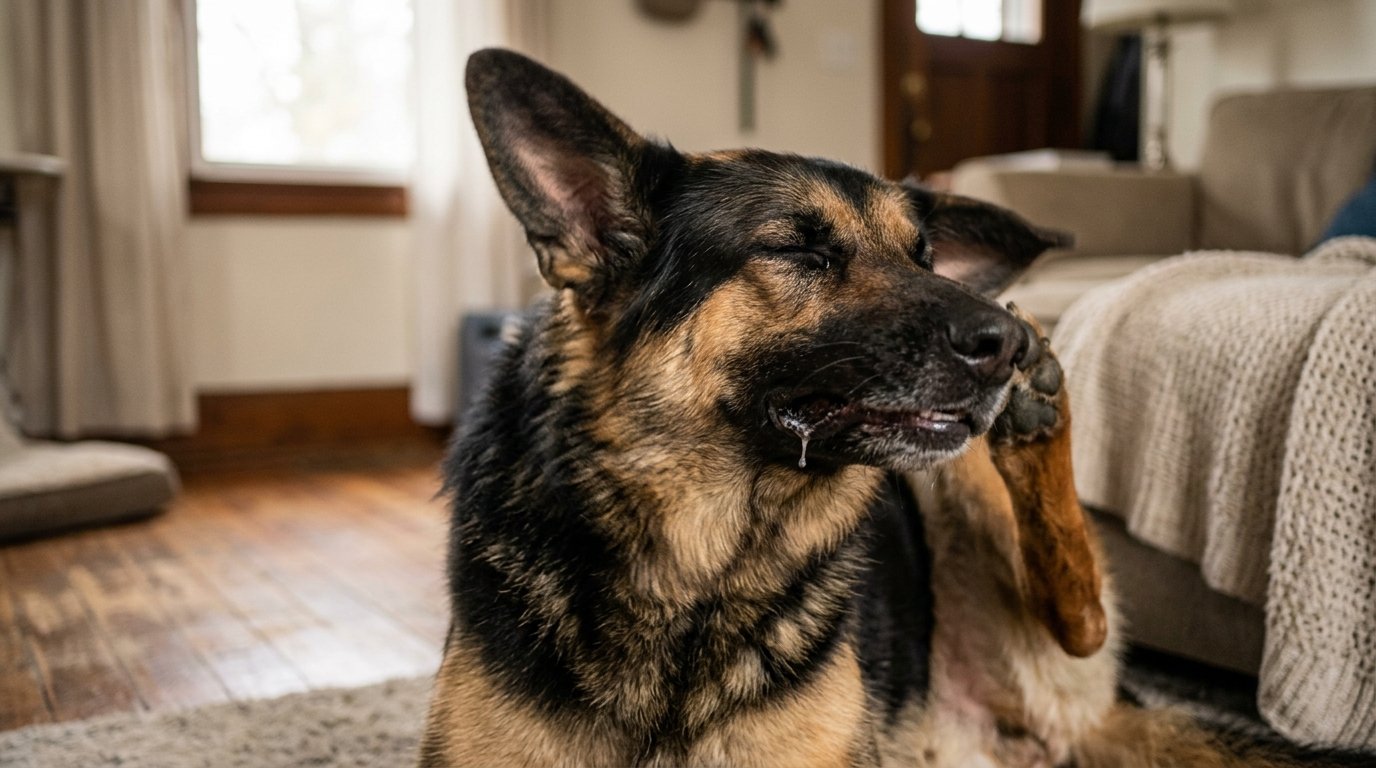
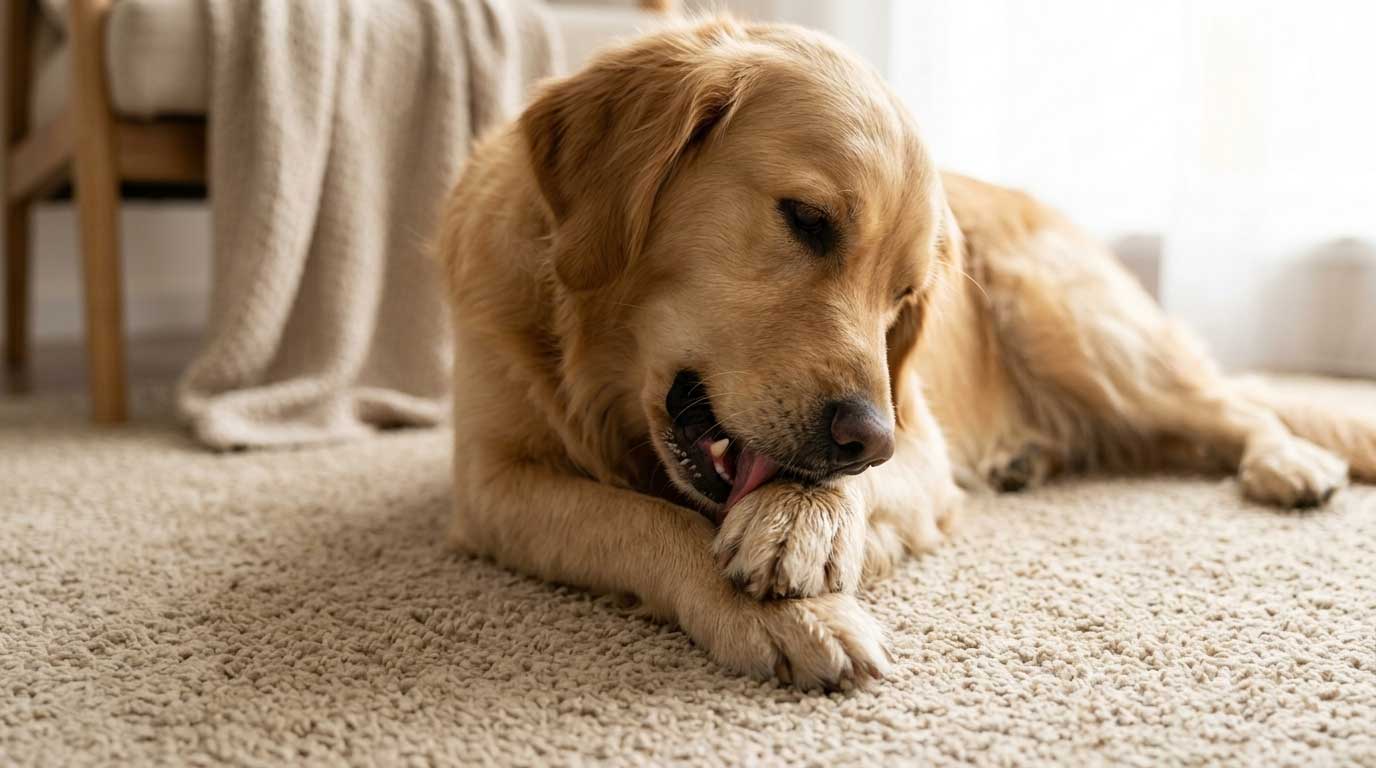
- ✓Your dog may favor or lick the area
Timeline
Inflammation starts the moment the wound happens. Blood vessels constrict, platelets form clots, and the body sends inflammatory cells to the area. This stage peaks in the first 24-72 hours and is completely normal — it's a sign your dog's body is responding correctly.
What to do at home
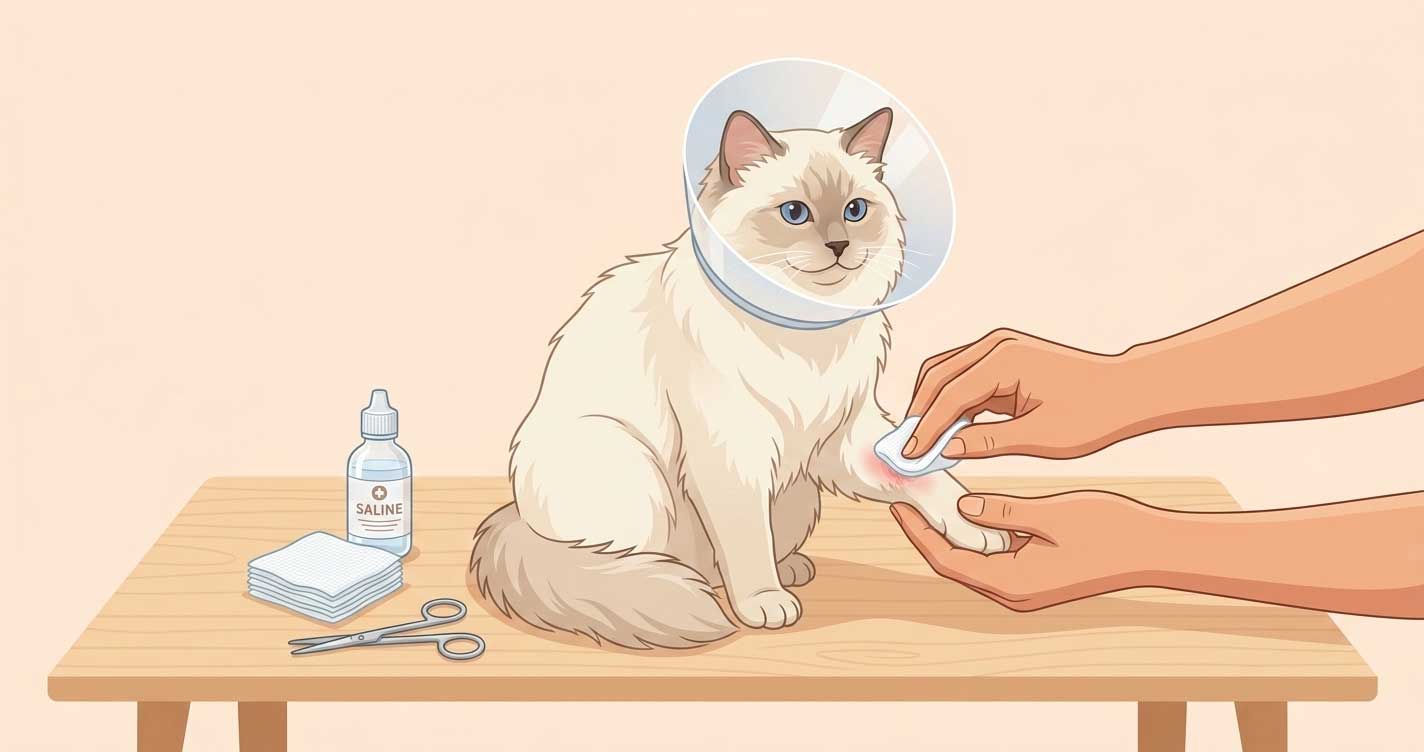
- ✓Gently flush the wound with lukewarm sterile saline (1 tsp salt per 2 cups boiled, cooled water)
- ✓Pat the area dry with clean gauze — never rub
- ✓Prevent your dog from licking with an e-collar (cone) or recovery suit
- ✓Keep your dog calm and limit running or jumping
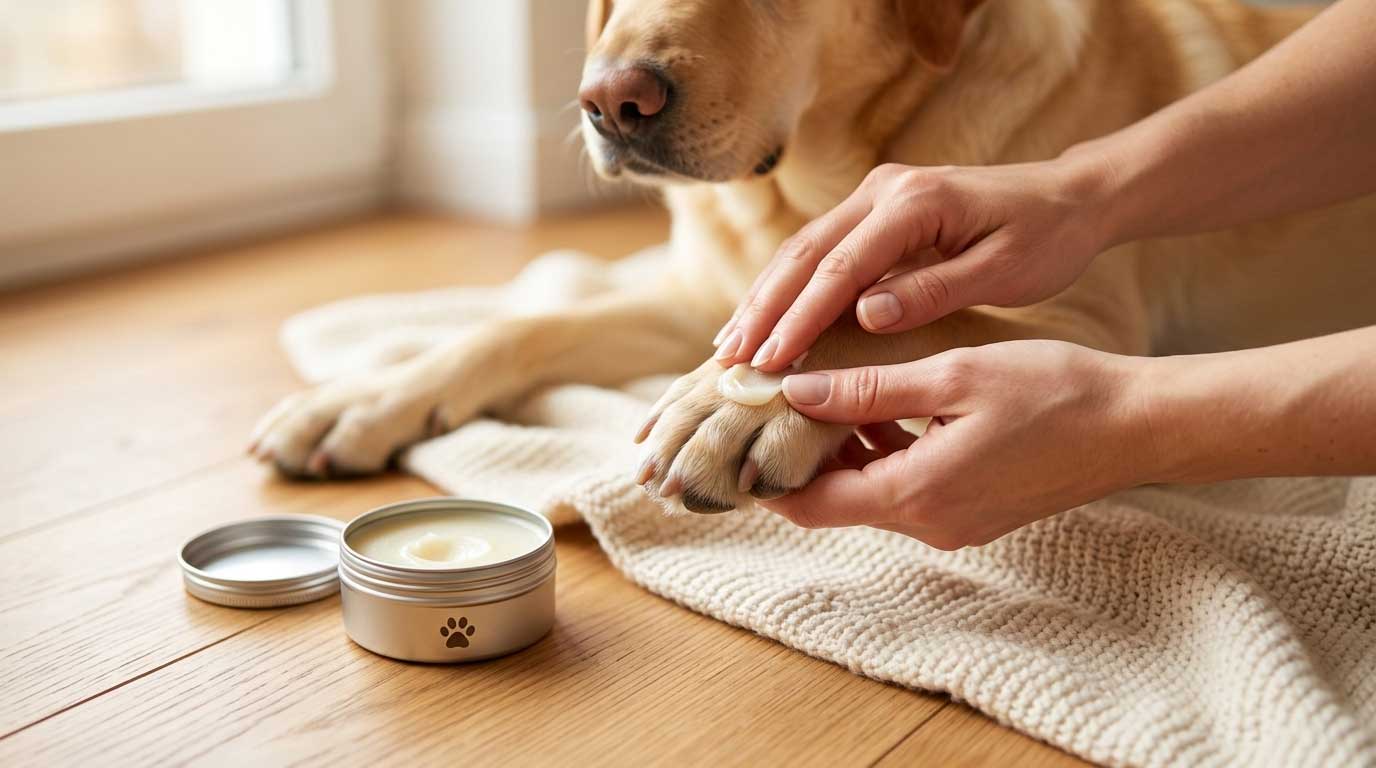
- ✓Do not use hydrogen peroxide, alcohol, or human ointments unless your vet says so
Red flags — call your vet immediately if you see
- ✓Heavy bleeding that does not stop after 15 minutes of direct pressure
- ✓A wound deep enough to expose fat, muscle, or bone
- ✓Any bite wound (from another animal — high infection risk, always needs a vet)
- ✓A puncture wound (small entry, potentially deep)
- ✓Your dog is lethargic, refusing food, or in obvious pain
Stage 2: Debridement (Hours to Days) 🟡
What you'll see
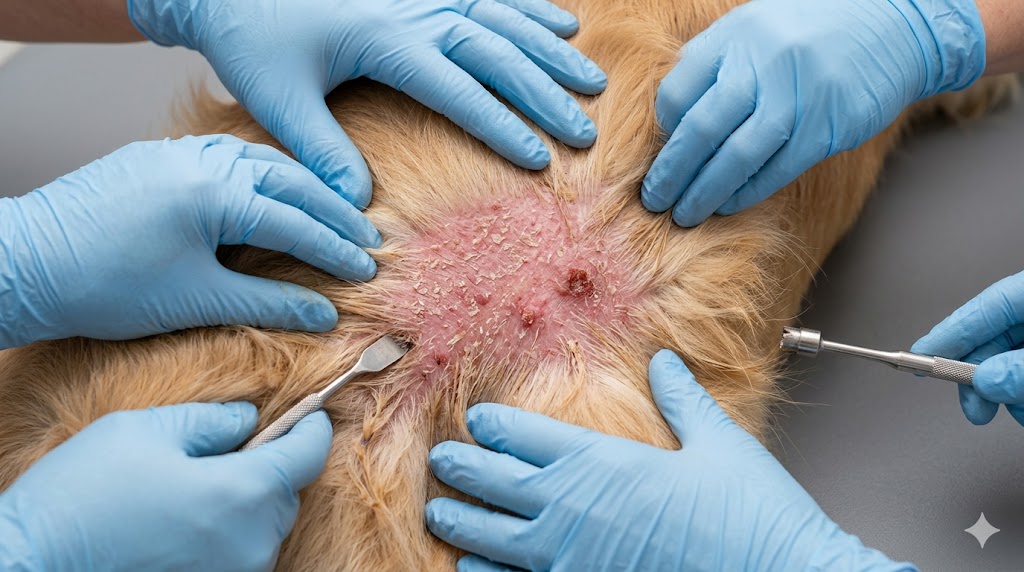
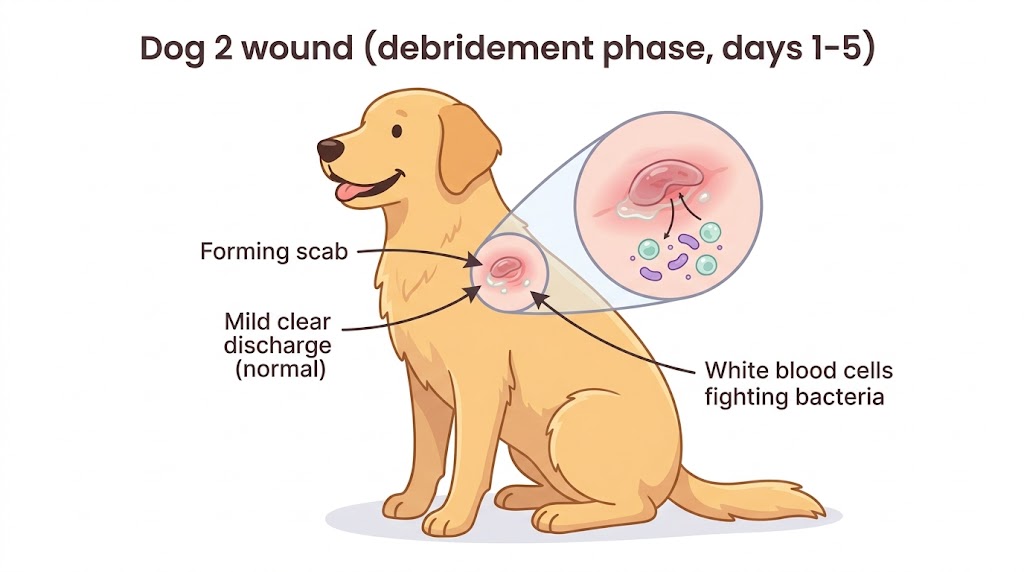
- ✓A slight clear or pale yellow discharge (not pus)
- ✓Scab beginning to form at the surface
- ✓Wound surface looks slightly "wet" or sticky
- ✓Mild discoloration as old blood clears
Timeline
Debridement overlaps with inflammation and continues for several days. White blood cells flood the area to kill bacteria, dissolve damaged tissue, and clear debris. A small amount of clear or pale-tinted fluid is normal — it's the body's way of "rinsing" the wound from the inside.
What to do at home
- ✓Continue gentle saline flushing once or twice daily
- ✓Keep the area clean and dry between flushes
- ✓Do not pick at or pull off the early scab
- ✓Maintain the e-collar — this is when dogs most want to lick
Red flags
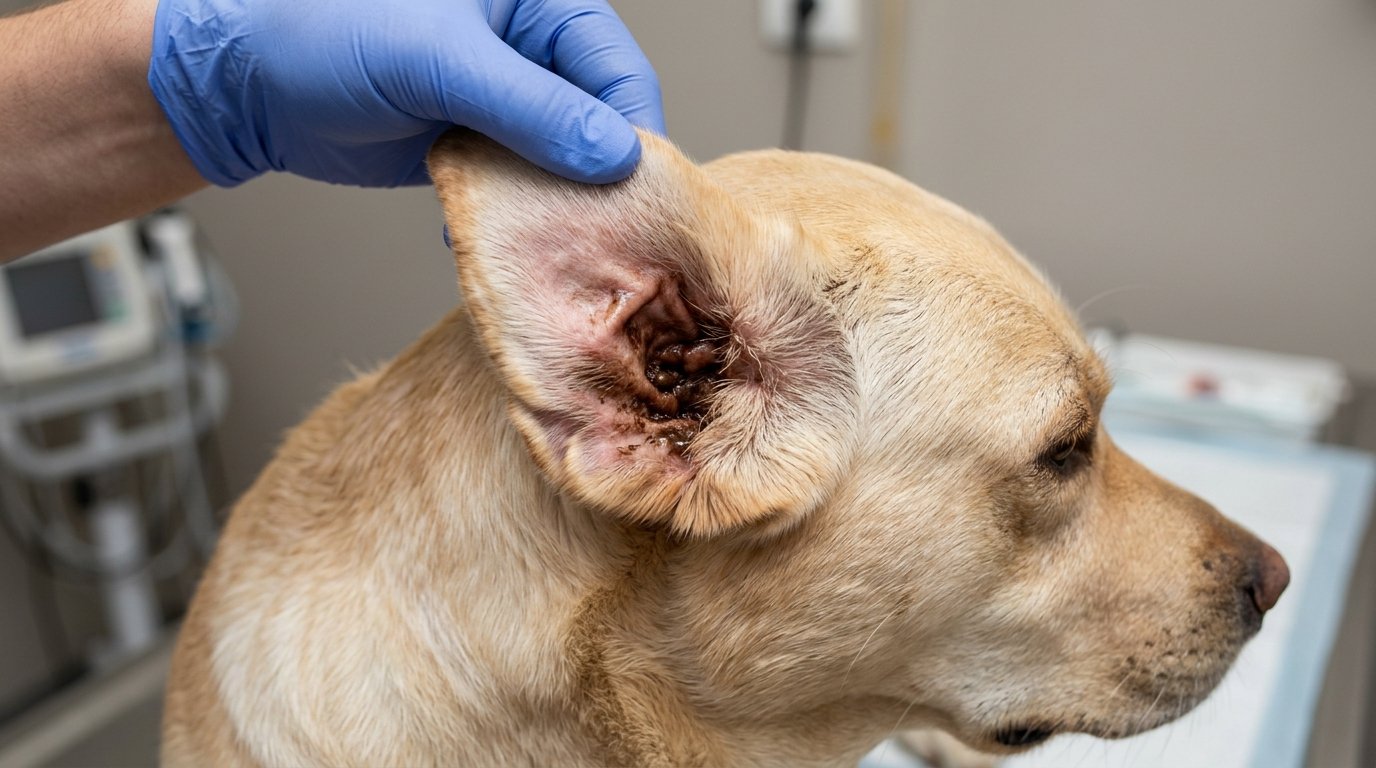
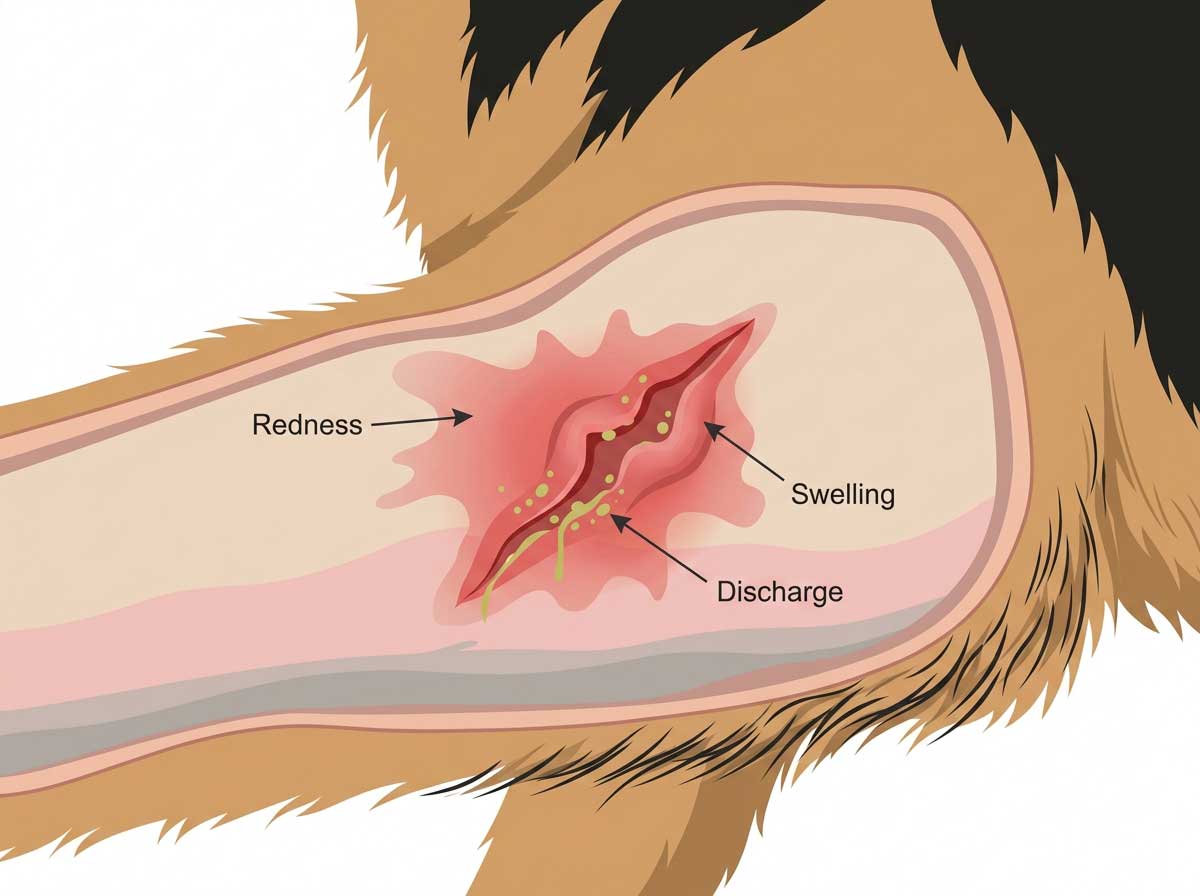
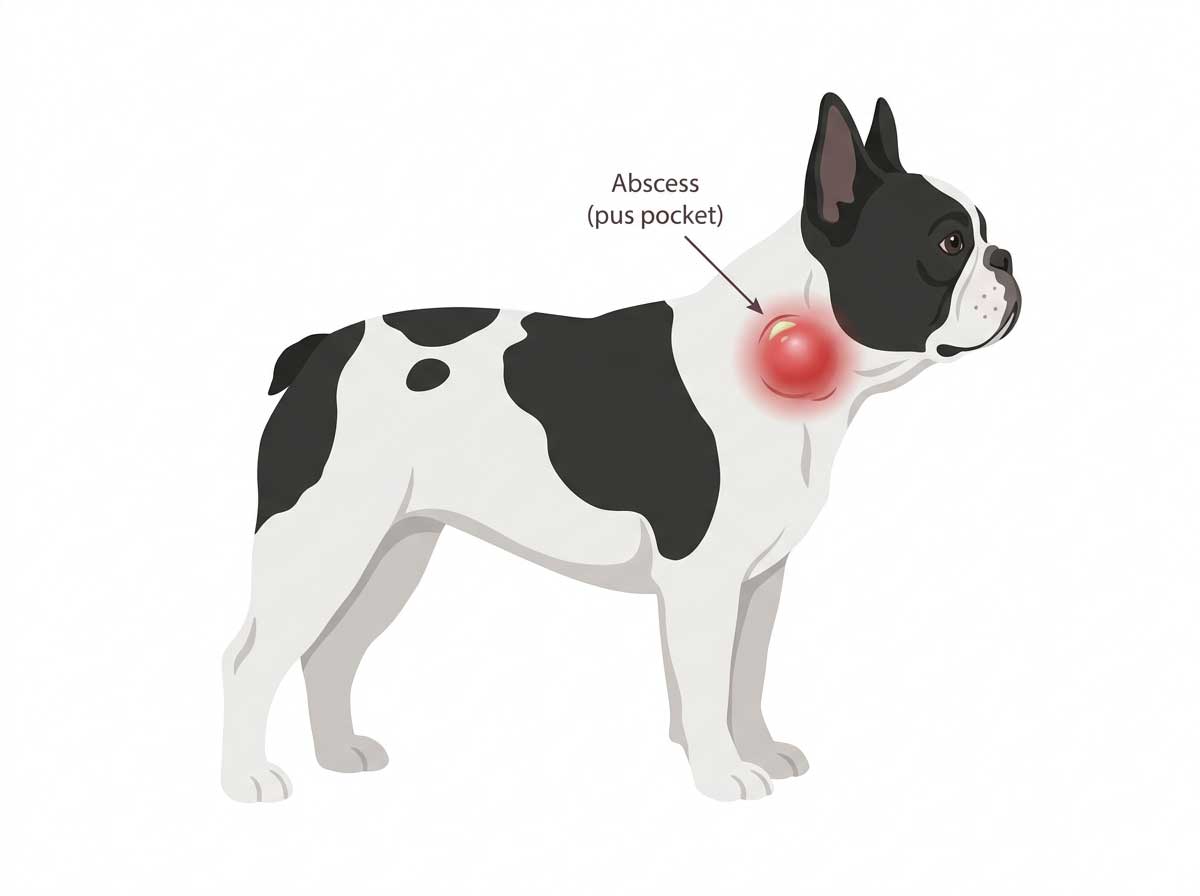
- ✓Thick yellow, green, or cloudy discharge (pus, not normal fluid)
- ✓Foul or rotten odor
- ✓Discharge increasing in volume over time
- ✓Swelling getting worse instead of better
Stuck between "normal" and "concerning"? Get an AI second opinion on your dog's wound.
Check Dog WoundStage 3: Repair / Proliferation (Days 4-20) 🟢
What you'll see
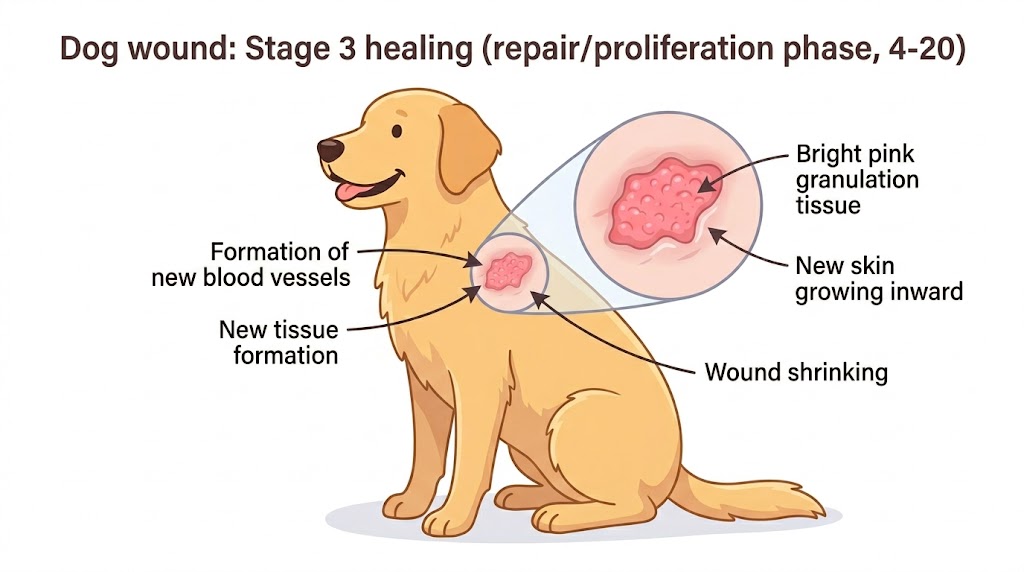
- ✓Bright red or pink granulation tissue forming across the wound bed
- ✓Visible shrinking of the wound over days and weeks
- ✓New skin (epithelial tissue) creeping in from the edges
- ✓Swelling decreasing daily
- ✓Less tenderness — your dog tolerates touch better
Timeline
This is the "growing" phase. New tissue rich in blood vessels (called granulation tissue) fills in the wound bed. Skin cells slowly migrate from the edges inward. Smaller wounds may complete this phase in a week; larger ones can take 3 weeks or more. Bright pink or red tissue is healthy — pale gray, white, or black tissue is not.
What to do at home
- ✓Reduce flushing to once daily as the wound closes
- ✓Continue preventing licking and chewing
- ✓Allow short, calm leash walks to support circulation
- ✓Feed extra protein and ensure good hydration — both speed tissue repair
- ✓Do not apply ointments to dried, healing tissue unless directed by your vet
Red flags
- ✓New redness spreading outward from the wound
- ✓Granulation tissue turning pale, gray, white, or black (necrosis)
- ✓Wound size not decreasing or starting to widen
- ✓Fresh discharge returning after the surface had dried
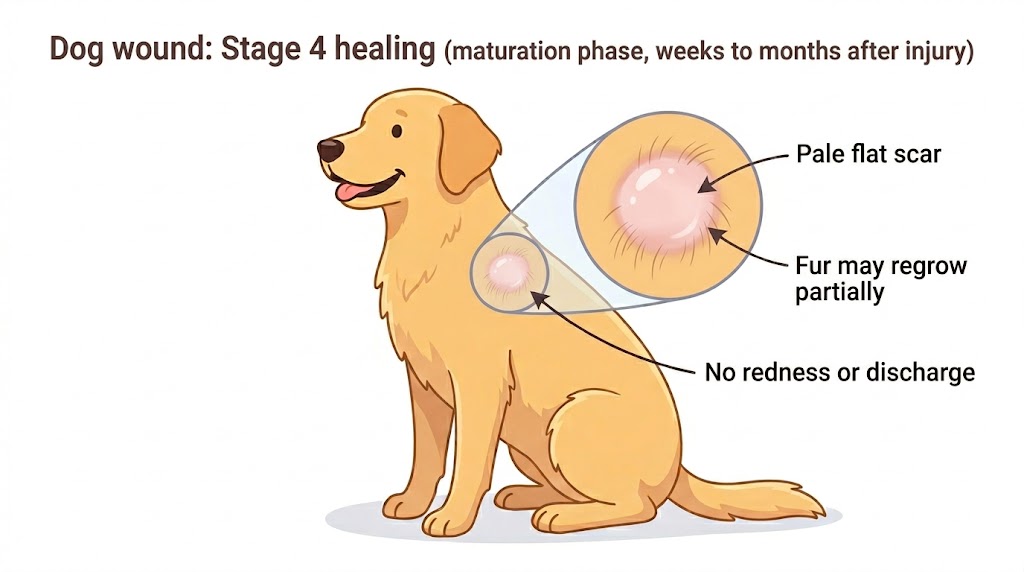
Stage 4: Maturation (Weeks to Months) ⚪
What you'll see
- ✓A pale, flat scar where the wound used to be
- ✓Fur may grow back partially or not at all over the scar
- ✓No more sensitivity to touch
- ✓No swelling, redness, or discharge
Timeline
Maturation can last 6 weeks to many months. During this time, collagen fibers reorganize and strengthen the new tissue. The scar may stay pink for a while, then fade. Fur regrowth depends on the wound depth — superficial wounds usually regrow fur, deeper ones may leave a permanent bare patch.
What to expect
- ✓The scar may appear thicker than surrounding skin at first, then flatten
- ✓Strength of healed tissue is about 80% of original skin — never quite the same
- ✓Some scars remain pink permanently; most fade to gray or skin tone
- ✓Itchiness during this stage is normal — discourage scratching
How to Tell If Your Dog's Wound Is Healing Properly
Across all 4 stages, here's the simplest way to read what you're seeing:
✓ Signs of healthy healing
- ✓Bright pink or red granulation tissue (not pale or dark)
- ✓Wound size shrinking week over week
- ✓Decreasing swelling and redness over time
- ✓No new discharge or only minimal clear fluid
- ✓Your dog is acting normally — eating, drinking, moving
- ✓Mild scab formation that stays in place
✗ Signs of infection (book a vet visit)
- ✓Redness or warmth spreading outward from the wound
- ✓Thick yellow, green, or cloudy discharge
- ✓Foul or rotten smell
- ✓Pale, gray, white, or black (necrotic) tissue
- ✓Wound widening or deepening instead of closing
- ✓Your dog frequently licking, chewing, or guarding the wound
- ✓Fever, lethargy, or loss of appetite
Special Case: Dog Bite Wounds
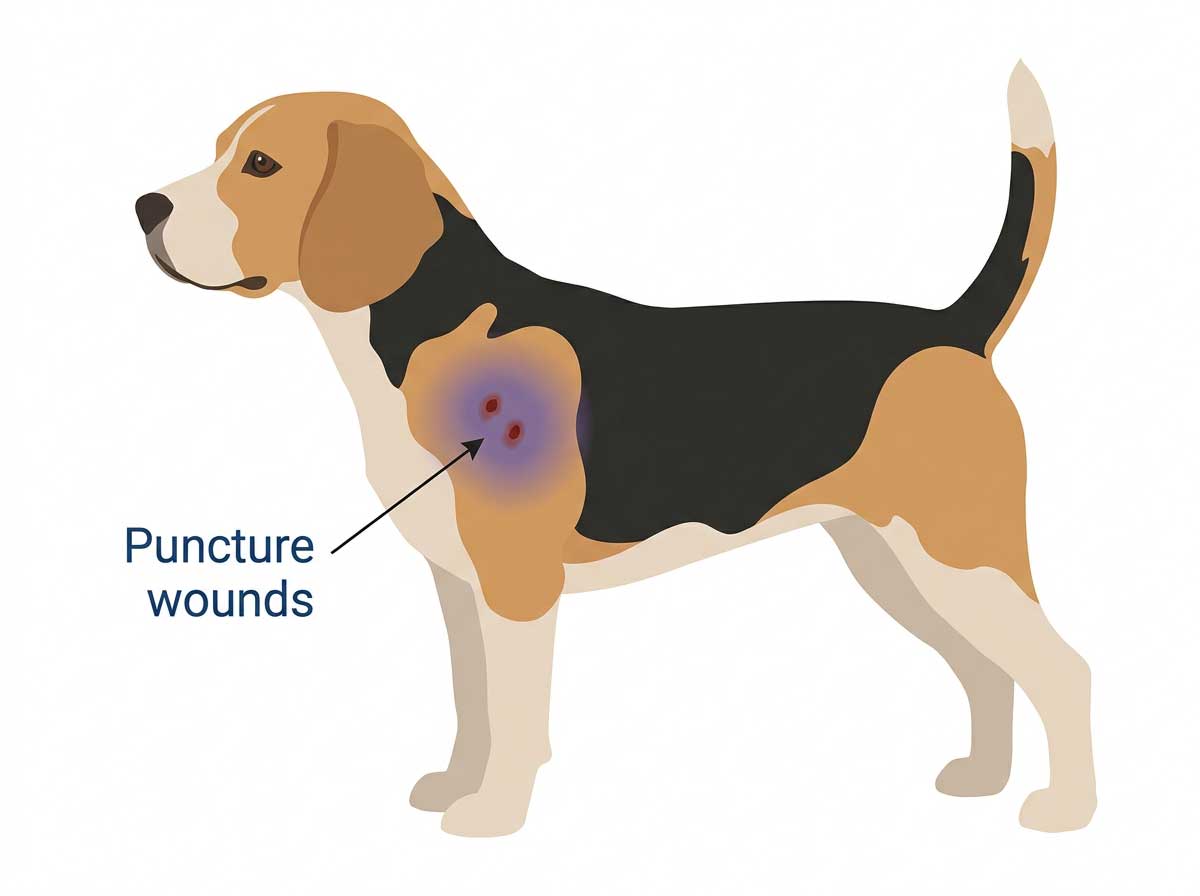
Bite wounds from another animal follow the same 4 healing stages but carry a much higher infection risk. The puncture marks may look small on the surface, but bites inject bacteria deep into muscle and tissue. Always see a vet for bite wounds, even if your dog seems fine — many infections from bites don't show until Stage 2 (days 2-3), when it's already advanced.
- ✓Most bite wounds need professional cleaning and often antibiotics
- ✓The visible wound is usually a fraction of the actual tissue damage
- ✓Infection rates for untreated bite wounds are 50-70%
- ✓Cat bites on dogs are especially high-risk (cat mouths carry Pasteurella bacteria)
Special Case: Surgical Incisions & Spay Wounds
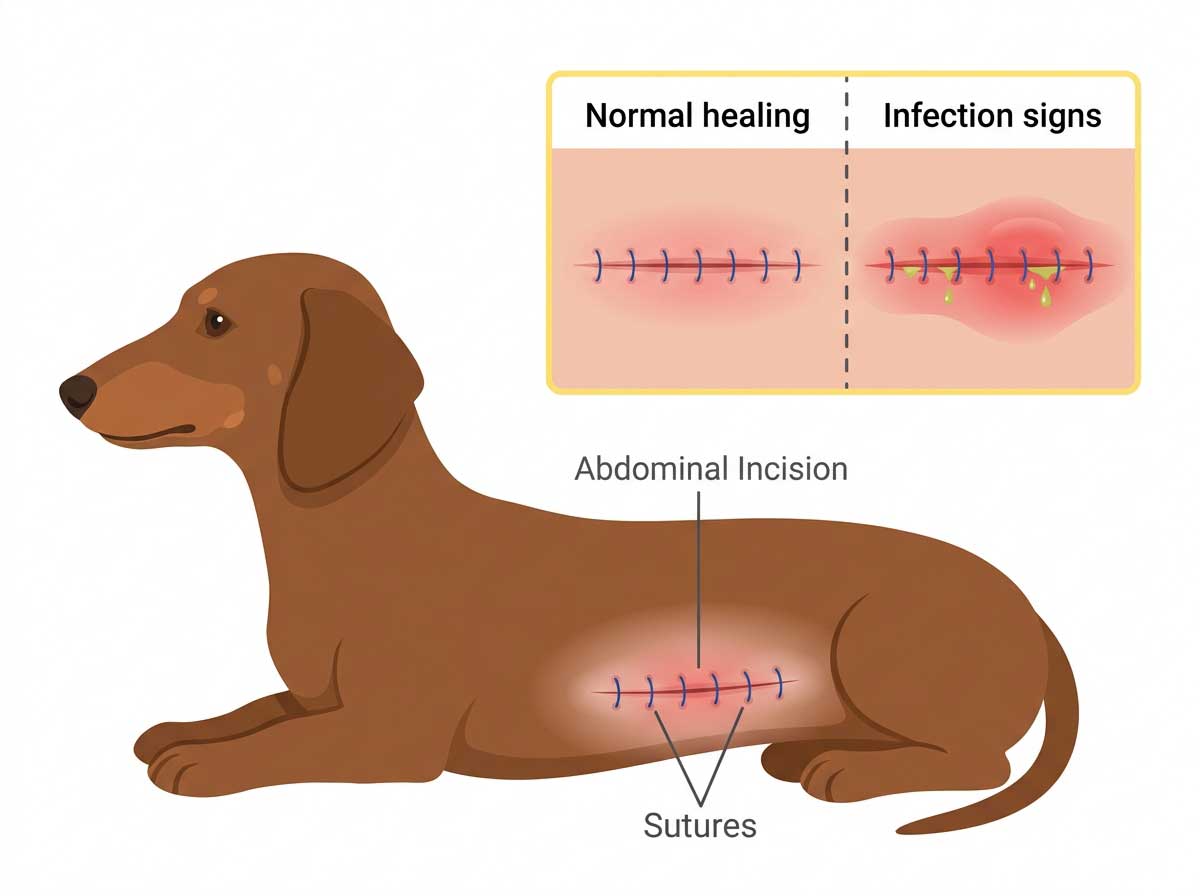
Surgical wounds (spay, neuter, or other procedures) heal through the same 4 stages, but the timeline is more predictable because the cut is clean and surgically closed. Expect mild redness and slight swelling for the first 3-5 days (Stage 1-2), with the incision fully sealing by day 10-14. Sutures are usually removed at days 10-14, or dissolvable sutures dissolve on their own over weeks.
What's normal after surgery
- ✓Mild redness along the incision line (first 3-5 days)
- ✓Slight swelling, especially in the first 48 hours
- ✓A thin pink or pale scar forming by day 7-14
- ✓Some bruising around the incision (especially after spay)
When to call your surgeon (not just any vet)
- ✓Incision starting to gap or open
- ✓Discharge increasing instead of decreasing
- ✓Hot, swollen, or hard area around the incision
- ✓Your dog's belly looks distended after spay surgery
- ✓Vomiting or refusing food past day 2
Special Case: Wounds on the Face or Head
Face and head wounds (eyelid cuts, lip lacerations, ear tears) heal faster than wounds on other parts of the body — the face has rich blood supply that speeds tissue repair. But they also need extra care because of proximity to eyes, mouth, and brain.
- ✓Wounds near the eye should always be checked by a vet (risk of vision loss)
- ✓Ear flap tears often need stitching to prevent permanent ear deformity
- ✓Lip and mouth wounds heal fast (3-7 days) due to high blood flow
- ✓Keep your dog from rubbing the face on furniture — use an e-collar
- ✓Don't use ointments near the eyes — anything that gets into the eye can cause irritation
When to Call Your Vet Immediately
- ✓Heavy bleeding lasting more than 15 minutes with direct pressure
- ✓Any sign of infection from the list above
- ✓Wound is near the eye, joint, genitals, or chest
- ✓Any bite wound from another animal
- ✓Surgical incision starting to open
- ✓Your dog seems sicker overall, not better
Wound healing varies — based on the size, location, your dog's age, breed, and overall health. If something feels off, trust your gut. A quick vet visit is always better than waiting and finding a serious infection later.
For step-by-step cleaning instructions, see our dog wound care guide. Got a cat with a similar wound? See our cat wound checker. These 4 healing stages are the same framework veterinary references use — for further reading see Vetericyn's healing stages guide and PetMD's incision check guide.
Want an instant assessment before deciding? Upload a clear photo of your dog's wound for AI analysis.
Check Dog WoundLump on dog (not open wound)? Different framework — cyst vs lipoma vs concerning mass uses different visual signals. Our new AI tool covers lump identification.
Try Tail Lump Pictures AI ToolFrequently Asked Questions
How long does it take for a dog wound to fully heal?
+
Should I cover my dog's wound or leave it uncovered?
+
Can I use hydrogen peroxide on my dog's wound?
+
When should I worry about my dog's wound?
+
Worried About Your Dog's Wound?
Upload a clear photo for an instant AI assessment of healing stage, possible infection signs, and recommended next steps.
Disclaimer: This article is for informational purposes only and is not a substitute for professional veterinary advice. Always consult a licensed veterinarian for diagnosis and treatment of your pet's health conditions.