Cat Tongue Color Chart: 6 Colors with Pictures (What Each Means)
6 cat tongue colors — pink, pale, red, blue, yellow, black/brown — with pictures, what each means, plus lentigo (black spots) vs concerning marks and when to call the vet.
Published 2026-06-19
Worried About Your Cat's Tongue Color?
Upload a clear photo of your cat's tongue for an instant AI color match against the 6-color chart — including telling lentigo apart from a concerning lesion.
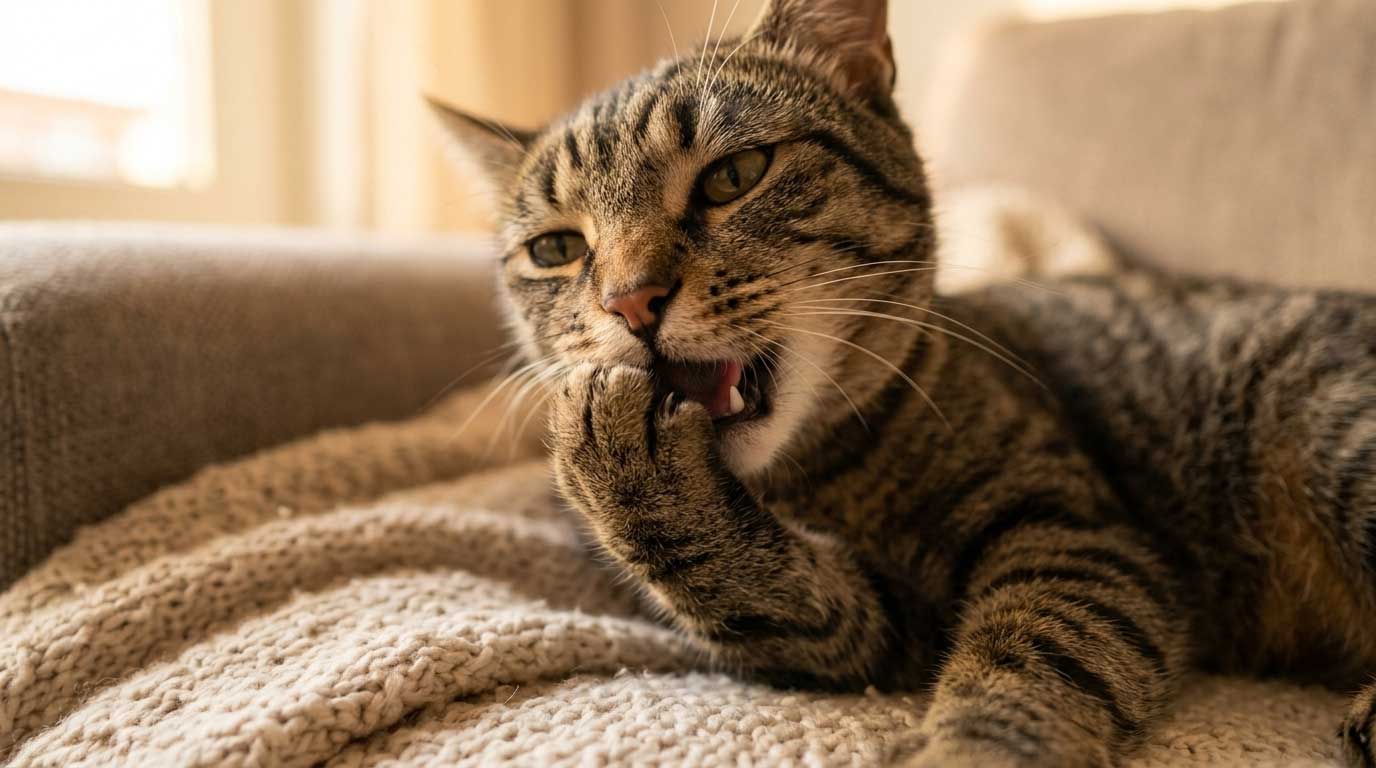
A cat's tongue tells you almost as much about their health as the gums do, and it's often easier to see — most cats stick their tongue out briefly while grooming, drinking, or just after a yawn. A healthy cat tongue is bright pink, has a sandpaper texture from tiny white spines called papillae, and feels moist. Any other base color — pale white, bright red, blue, yellow, or muddy brown — is a signal worth decoding. This chart shows the 6 colors you might see, what each one means, and the one exception (cat lentigo, harmless black freckles) that gets mistaken for trouble all the time.
What a Healthy Cat Tongue Looks Like
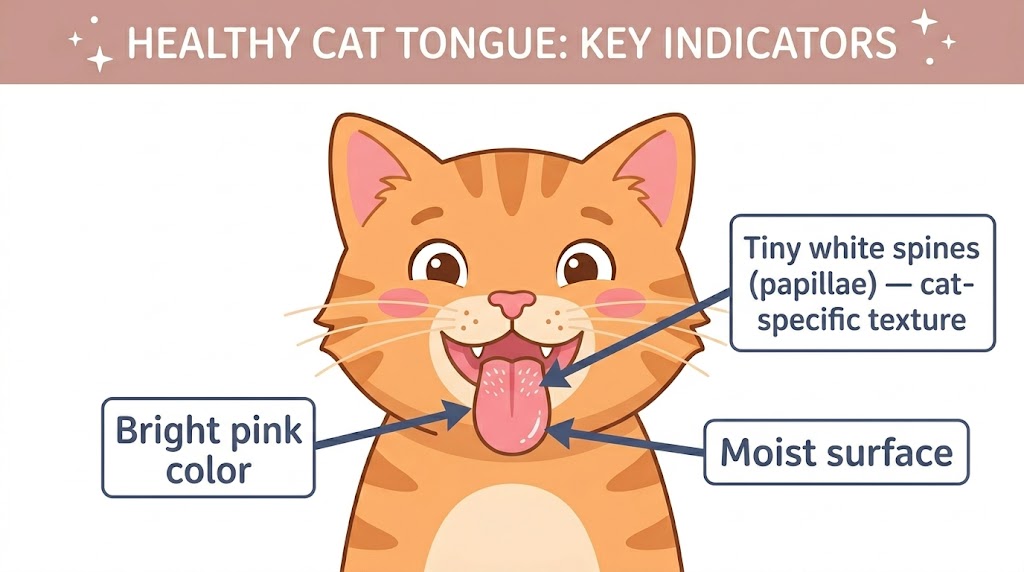
A healthy cat tongue is bright pink (sometimes called bubblegum pink) on the base color, with hundreds of tiny backwards-facing white spines called filiform papillae covering the surface. Those papillae are what give cat tongues that famous sandpaper feel — they're made of keratin (the same protein as fingernails) and serve as a built-in comb for grooming. Hill's Pet Nutrition has a good explainer on why cats evolved this structure. Dogs, humans, and most other mammals don't have papillae like this.
What you want to see when your cat opens their mouth: even pink color across the surface (some natural pigment variation is fine, see the lentigo section below), moist not dry, and no swelling, sores, or growths. If the tongue color shifts from your cat's normal — that's the signal worth checking.
Cat Tongue Color Chart: 6 Colors Explained
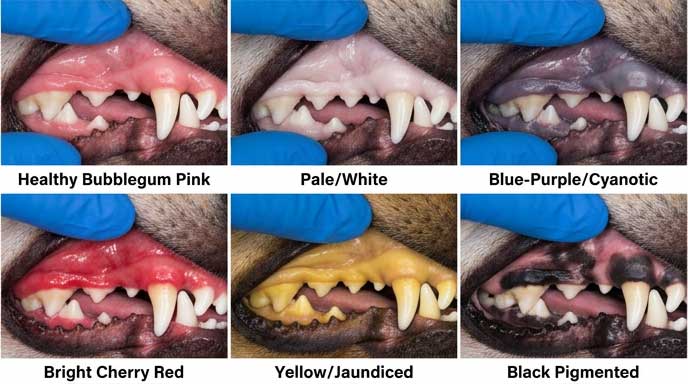
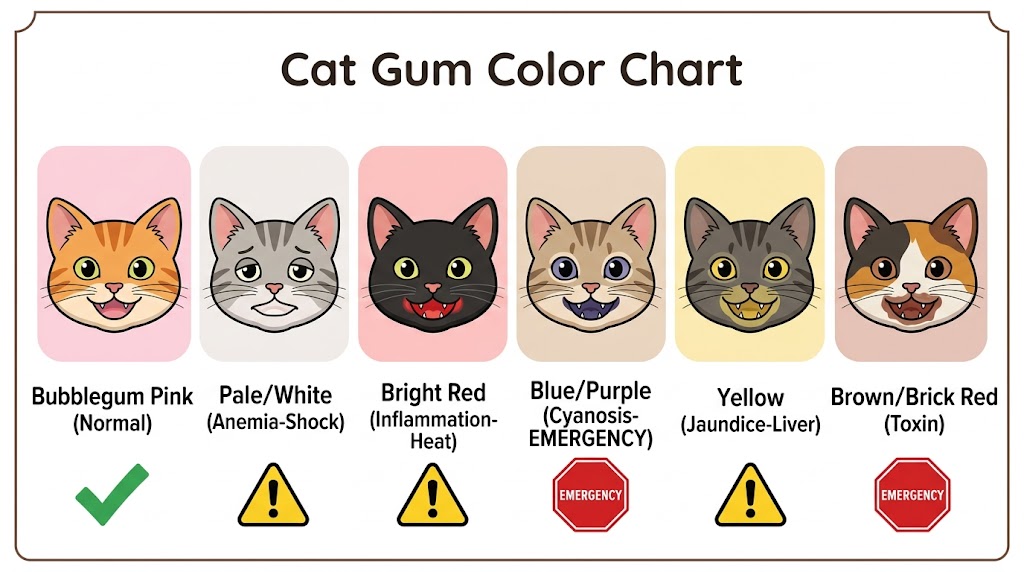
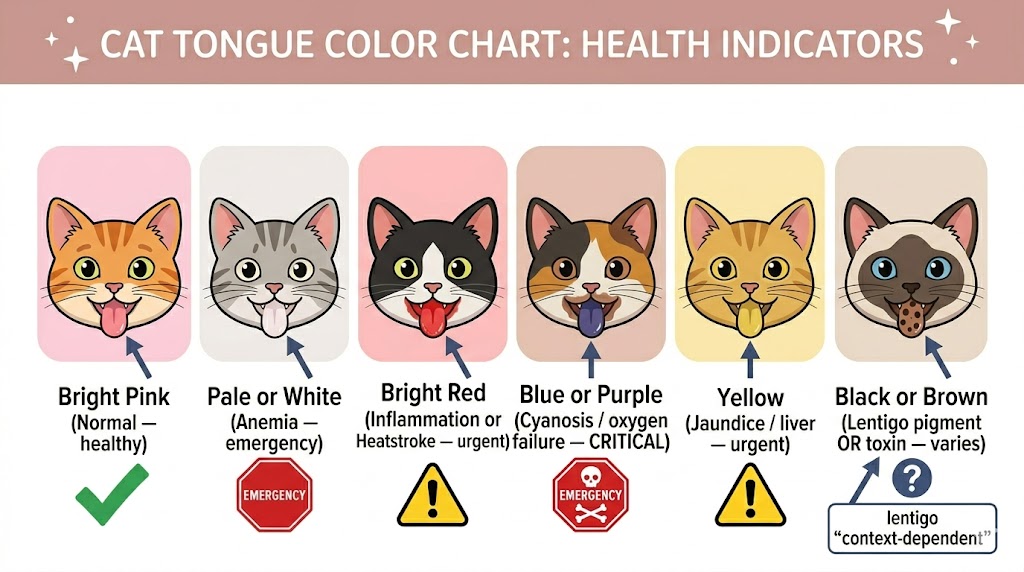
Use the chart above to match what you're seeing. Here's the detail for each.
1. Bright Pink — Normal
This is the healthy baseline. Even pink across the visible tongue surface, moist, with normal sandpaper papillae texture. No action needed — your cat is well-oxygenated, hydrated, and circulating blood normally.
2. Pale or White — Emergency
A washed-out pink, almost white, or chalky tongue points to the same problems as pale gums: anemia (low red blood cells from blood loss, parasites like fleas in kittens, autoimmune disease, or kidney disease), shock from trauma, severe dehydration, or hypothermia. A pale tongue plus lethargy, cold ear tips, or fast breathing is a same-day vet emergency. Don't wait overnight — cats decompensate faster than dogs once anemia is visible.
3. Bright Red — Urgent
Cherry-red or deeply flushed tongue surface means inflammation, infection, or heat overload. Common causes: stomatitis (a severe cat-specific mouth inflammation that can spread across the tongue, gums, and back of throat — very common in cats over 5), heatstroke (often paired with open-mouth panting, which is itself abnormal for cats and warrants a vet call), high fever, or a chemical/plant burn from licking something irritating. If the redness is paired with panting and your cat feels hot, treat it as heatstroke and call the vet immediately.
4. Blue or Purple — Critical Emergency
A blue, purple, or dusky tongue (cyanosis) means the blood is not carrying enough oxygen to the tissues. This is the most urgent color on the chart. Causes include congestive heart failure, severe asthma attack, lung disease, fluid in the lungs (pulmonary edema), or certain poisonings — acetaminophen (Tylenol) and onion or garlic toxicity both destroy the cat's ability to carry oxygen on red blood cells. Cats with blue tongues often breathe open-mouth, hide, refuse to move, or collapse. This is a drive-to-the-emergency-vet-NOW situation. Minutes matter.
5. Yellow — Urgent
Yellow-tinted tongue (and usually yellow gums + yellow whites of the eyes) means jaundice — bilirubin buildup in the bloodstream from liver disease, hemolytic anemia (red blood cells being destroyed), or a blocked bile duct. In cats specifically, hepatic lipidosis ("fatty liver") in cats who have stopped eating for more than 48-72 hours is a common and rapidly progressing cause. This is a vet visit within 24 hours, sooner if your cat has also stopped eating or seems weak.
6. Black or Brown — Depends Entirely on Pattern
This is the trickiest color and the one most cat owners misread. Flat black freckles scattered across the tongue or lips in an older cat (especially orange, calico, or ginger cats) is almost always lentigo simplex — a benign age-related pigment accumulation. It's harmless and grows in number slowly over years. The next section covers exactly how to tell lentigo apart from something concerning. The Animal Medical Center of New York has a clinical photo gallery of all the tongue colors including lentigo and acute discoloration. A muddy brown or brick-red tongue, on the other hand, can signal acetaminophen or onion toxicity (which destroys red blood cells), severe sepsis, or temporary food/medication dye staining. If you can rule out food/dye and your cat seems unwell, call ASPCA Poison Control (1-888-426-4435) and your vet.
Rare: Green Tongue in Cats
A truly green tongue in cats is rare but worth mentioning because it does show up in searches. The most common harmless cause is dye staining from grass nibbling, certain wet foods or treats with green coloring, or chlorophyll supplements — this fades within hours and rubs off. The non-harmless versions are: a greenish-yellow tinge that signals advanced jaundice (when bilirubin oxidizes, it can take a green cast — vet within 24 hours), heavy bile reflux in cats with chronic GI disease, or a dense green-tinted oral biofilm from severe periodontal disease. If the green color is paired with bad breath, drooling, or refusing to eat, treat it as a same-day vet visit. If it rubs off and your cat just ate something green, it's almost always the food.
Not sure if your cat's tongue color matches a normal or concerning shade? Snap a photo for an instant AI color check.
Check Cat Tongue Color →Black Spots on Cat Tongue: Lentigo vs Concerning
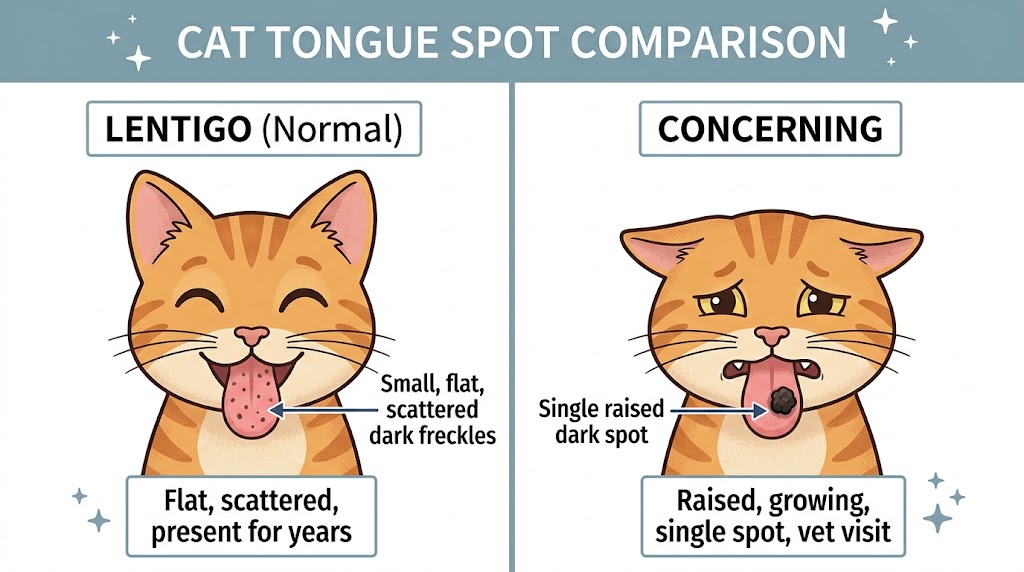
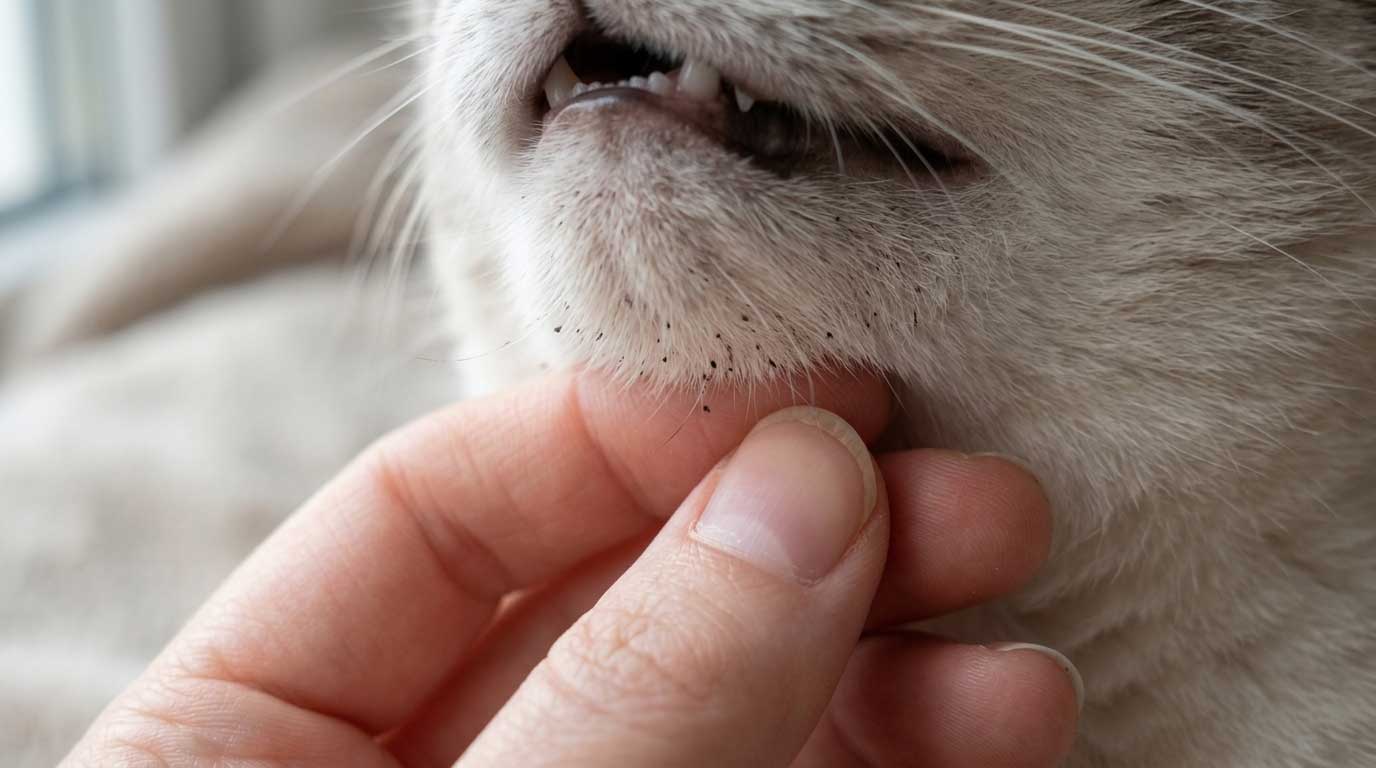
Lentigo simplex is the single most common reason cat owners search "black spots on cat tongue" — and the vast majority of the time, it's harmless. Lentigo is age-related pigment cell (melanocyte) accumulation that shows up as small, flat, freckle-like dark spots on the tongue, lips, gums, nose, and eyelid margins. Orange, calico, and tortoiseshell cats are most prone. It usually starts appearing after age 1 and slowly accumulates over the rest of the cat's life. The Cornell Feline Health Center lists lentigo as a normal aging finding.
The pattern that is concerning — and worth a vet exam — is a single dark spot that: (1) appeared suddenly within weeks, (2) is raised above the tongue surface (not flat like lentigo), (3) is growing measurably bigger month over month, (4) bleeds easily, (5) is paired with bad breath, drooling, or changes in eating. That pattern can point to oral melanoma or a squamous cell carcinoma, both of which need early diagnosis. The rule of thumb: long-standing, flat, scattered = lentigo (harmless). New, raised, growing single spot = vet visit.
Worried a spot on your cat's tongue might be more than lentigo? Upload a photo for an instant size + shape comparison.
Compare Tongue Spot →When the Color Means Something Serious
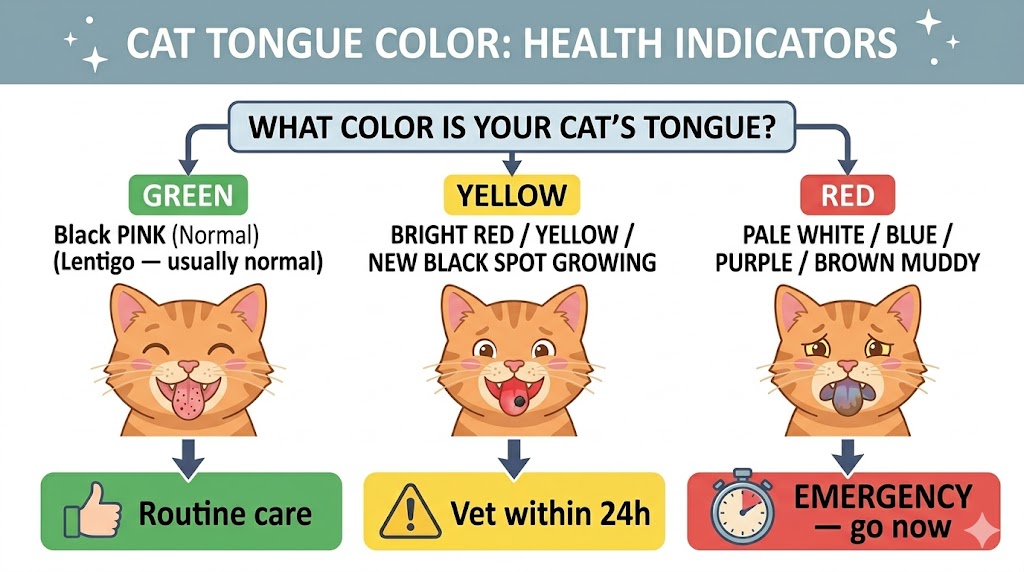
Match what you see against this urgency ladder:
| Tongue Color | Urgency | Action |
|---|---|---|
| Bright pink | Normal | Routine care |
| Flat black freckles (long-standing) | Normal — lentigo | No action — usually age-related |
| Bright red (whole tongue + panting) | Same day | Possible heatstroke or stomatitis — call vet |
| Yellow | Within 24 hours | Jaundice / liver issue — vet today |
| Single dark spot, raised + growing | Within 1 week | Vet exam — rule out melanoma |
| Brown / muddy (food ruled out) | Same day | Possible toxin — ASPCA + vet |
| Pale or white | Emergency | Anemia or shock — drive to ER |
| Blue or purple | Critical — minutes matter | Oxygen failure — emergency vet NOW |
A note on cats specifically: cats are masters at hiding illness — much better than dogs. By the time you can see a tongue color shift, the underlying problem has usually been building for days, sometimes weeks. So even a "within 24 hours" reading shouldn't be pushed to "next week."
Related: for the matching gum color guide see our Cat Gum Color Chart (gums and tongue often shift together), for the dog version see the Normal vs Unhealthy Dog Gum Color Chart, and for black tongue spots in dogs see the Black Spots on Dog Tongue Lentigo article — many of the same rules apply across species.
Your cat's tongue looks off but you can't tell how urgent? Get an instant AI second opinion in 30 seconds.
Get Instant Check →Frequently Asked Questions
What is a healthy tongue color for a cat?
+
What color is an unhealthy tongue in a cat?
+
What are the signs of an unhealthy cat tongue?
+
Are black spots on a cat's tongue normal?
+
Why is my cat's tongue turning brown or black?
+
How can I check my cat's tongue without getting bitten?
+
Worried About Your Cat's Tongue Color?
Upload a clear photo of your cat's tongue for an instant AI color match against the 6-color chart — including telling lentigo apart from a concerning lesion.
Disclaimer: This article is for informational purposes only and is not a substitute for professional veterinary advice. Always consult a licensed veterinarian for diagnosis and treatment of your pet's health conditions.