Dog Skin Smell? 5 Smells (Not Just Yeast) + Vet Decision
Yeasty dog skin or other smell? 5 distinct smells (musty / fishy / sour / sweet fruity / foul) point to different causes. Differential + when to see vet.
Published 2026-06-19
Dog Skin Smell — Need a Faster Differential?
Upload a clear photo of your dog's affected skin for an instant AI rash pattern differential — works across yeast vs bacterial vs allergic vs hot spot patterns.
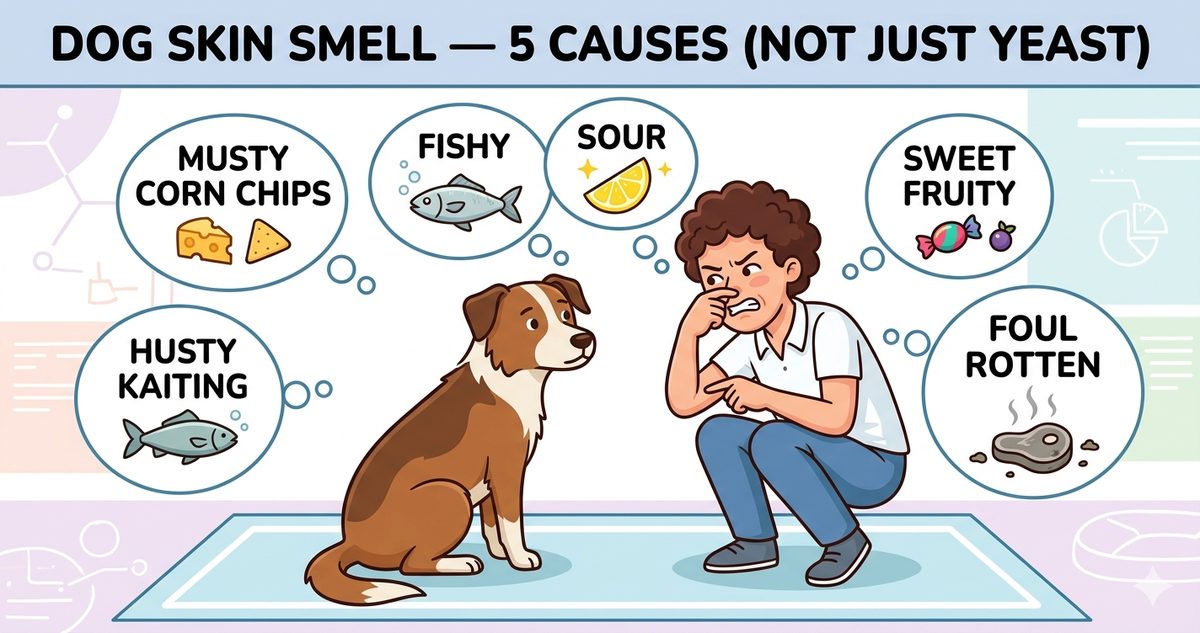
Yeasty dog skin is the most commonly searched dog skin smell complaint, and quick answers point you straight to Malassezia yeast dermatitis. Yeast is the most common cause — but it is only 1 of 5 distinct smells dog owners report. The smell you notice can actually tell you a lot about what is wrong: sweet musty corn-chip smell is yeast, fishy smell is anal glands, sour vomit-like smell is bacterial pyoderma, sweet fruity acetone-like smell is diabetic ketosis emergency, and foul rotten smell is necrotic tissue. This guide covers all 5 smells with the body location, accompanying symptoms, and vet urgency for each. For an instant AI photo check on the underlying skin pattern, our Dog Skin Rash Pictures AI tool identifies bacterial vs yeast vs allergic rash patterns from a close-up photo.
This article is for general educational purposes only and is not a substitute for professional veterinary diagnosis. A sudden new dog skin smell warrants a vet visit for proper differential workup including cytology, anal gland exam, and possibly diabetes screening.
Dog skin smell but not sure if it is yeast or something else? Our AI dog skin rash pictures tool identifies the underlying rash pattern from a close-up photo.
Try Dog Skin Rash AI ToolSweet Musty Corn-Chip Smell — Yeast Malassezia (Most Common)
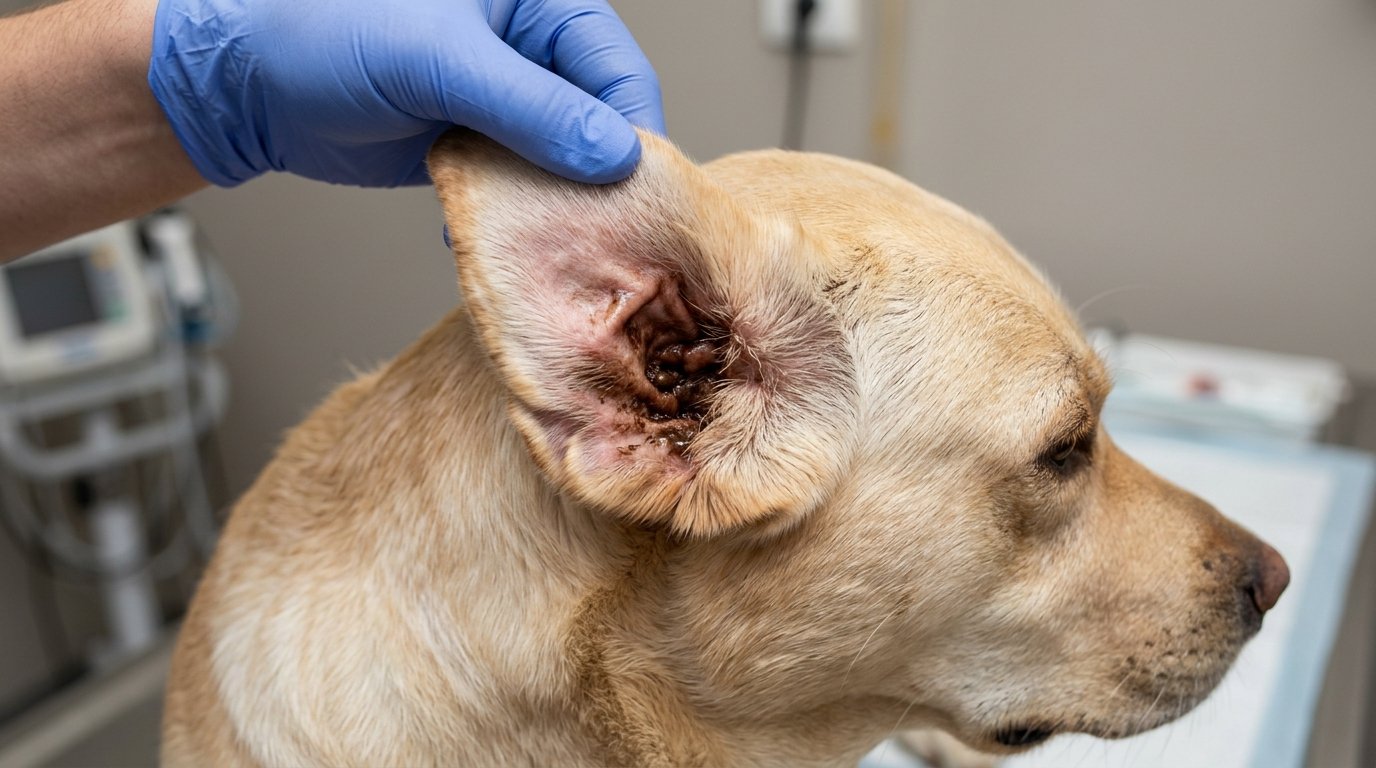
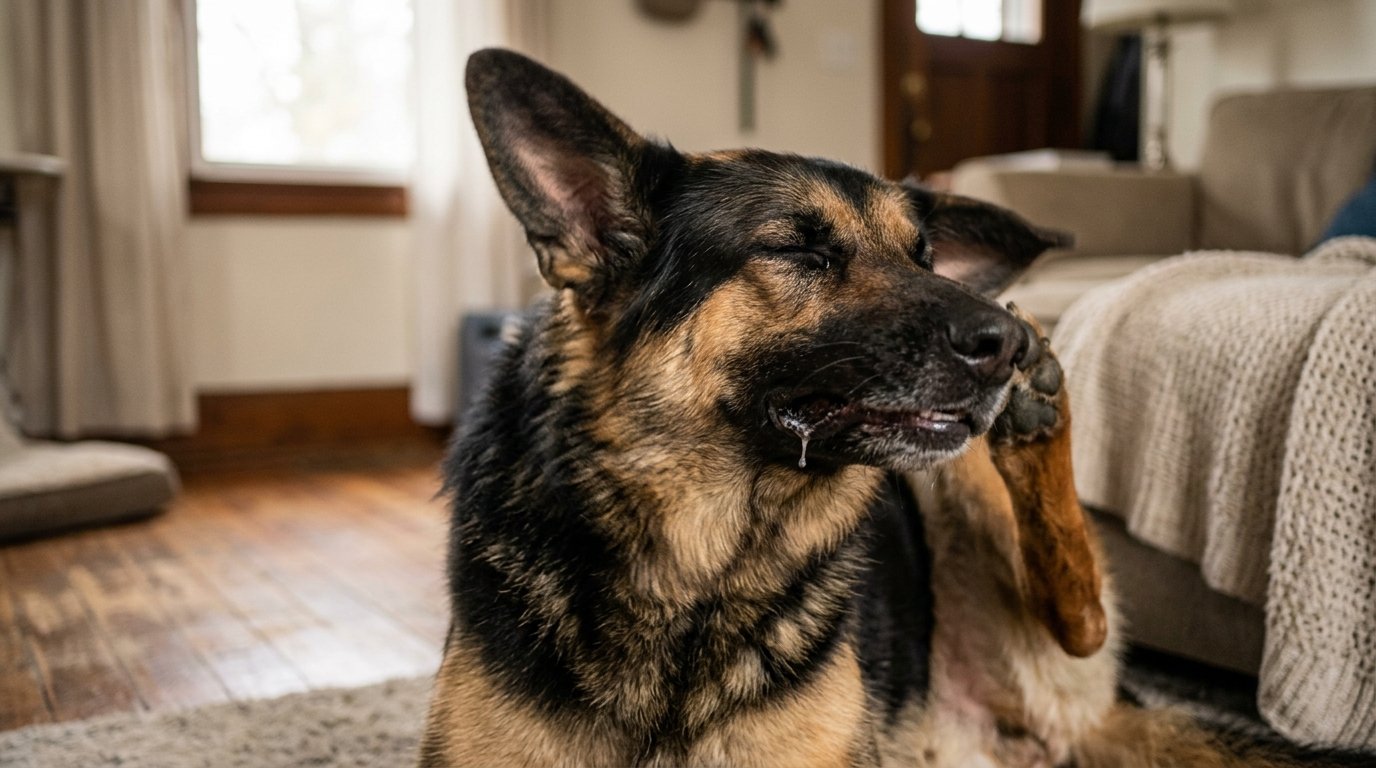
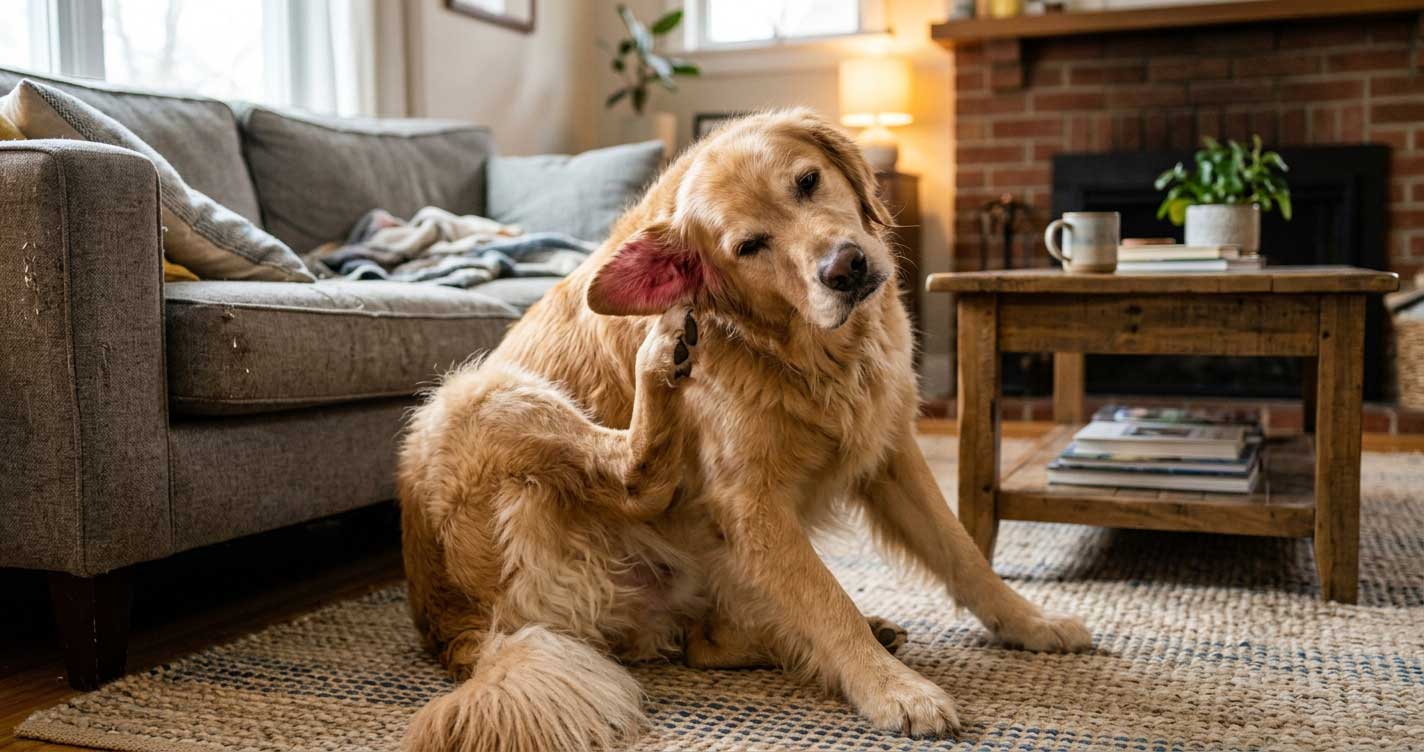
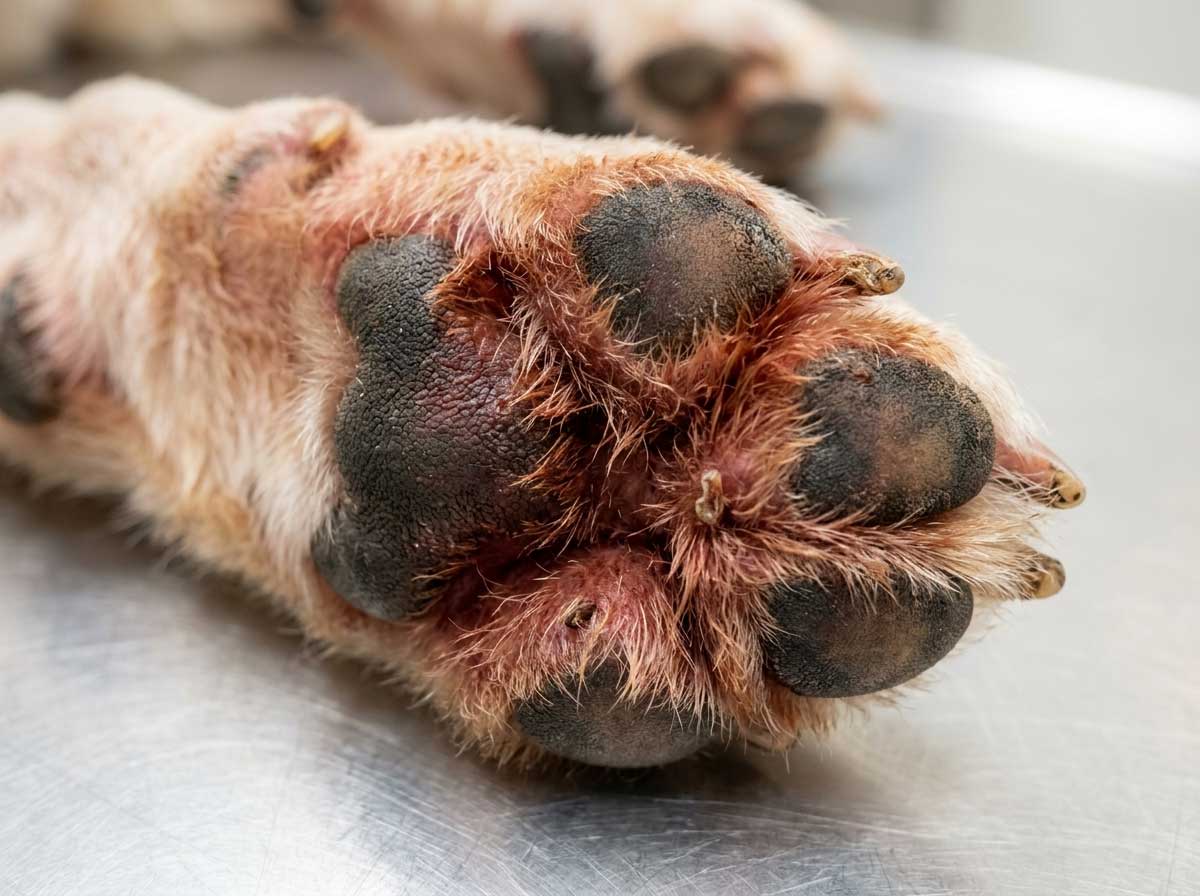
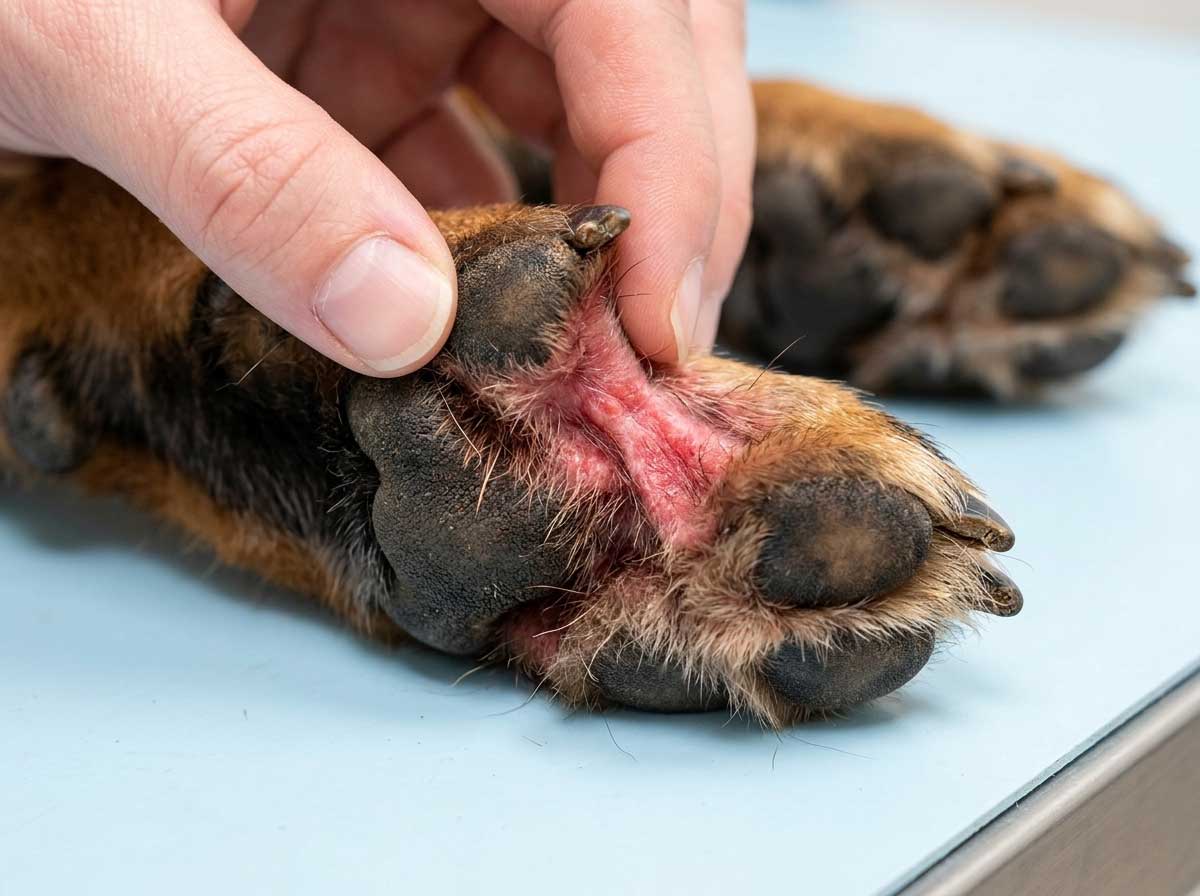
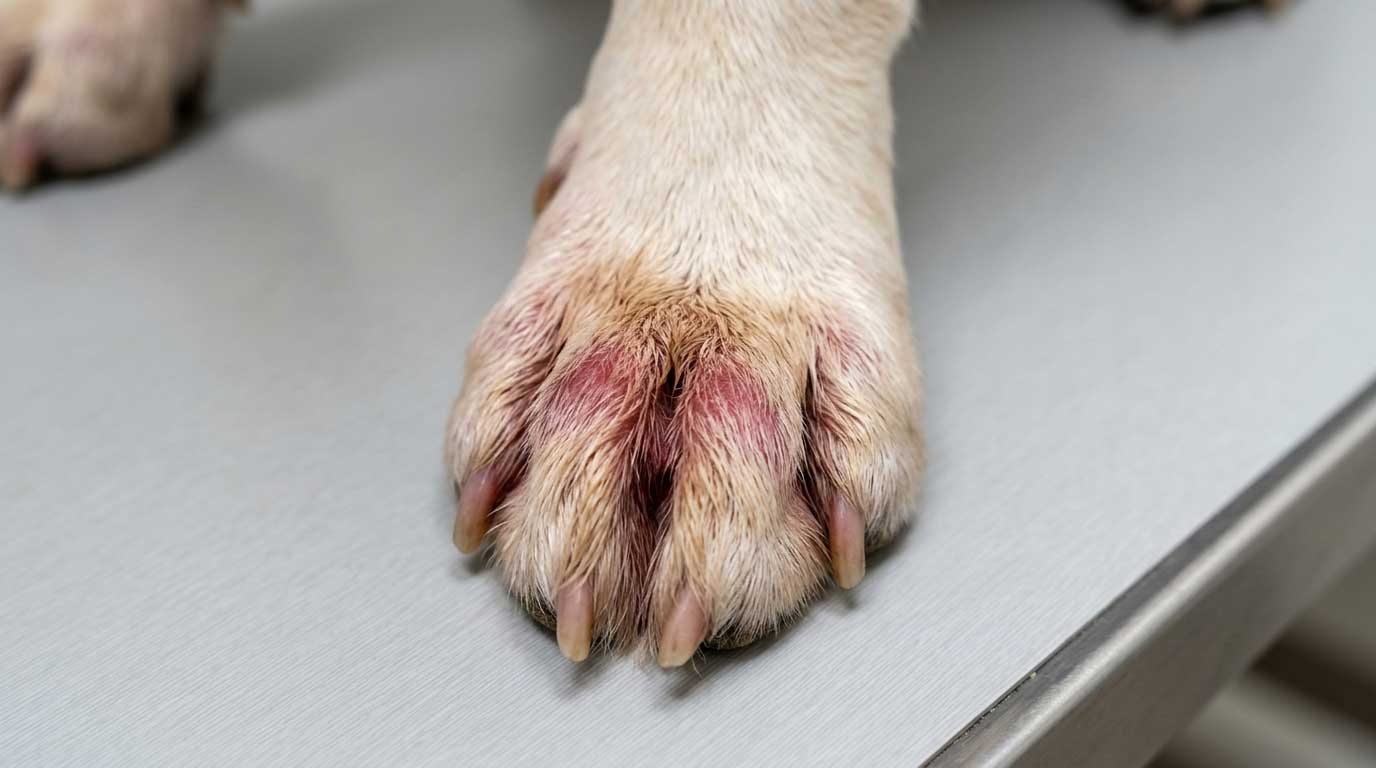
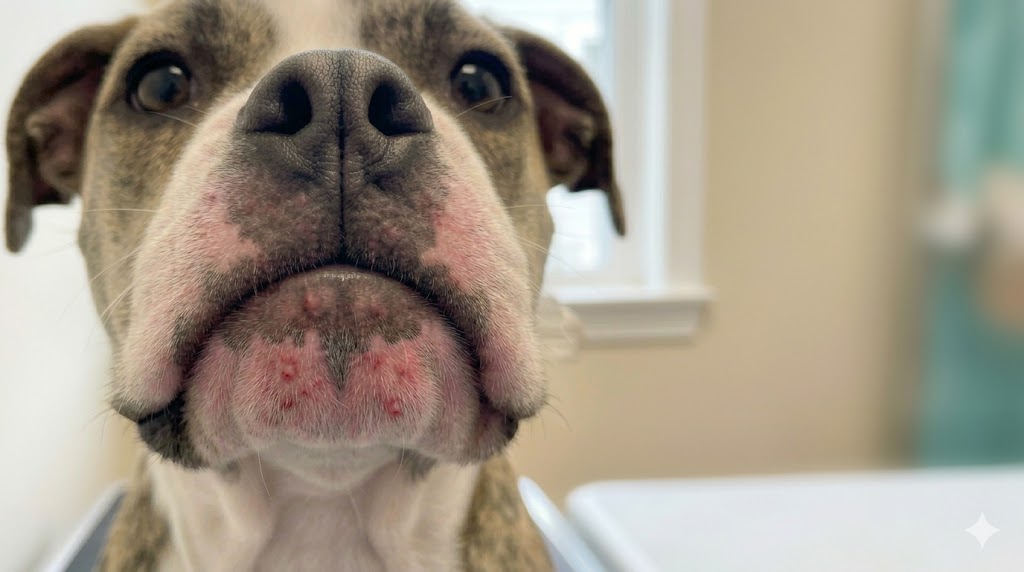
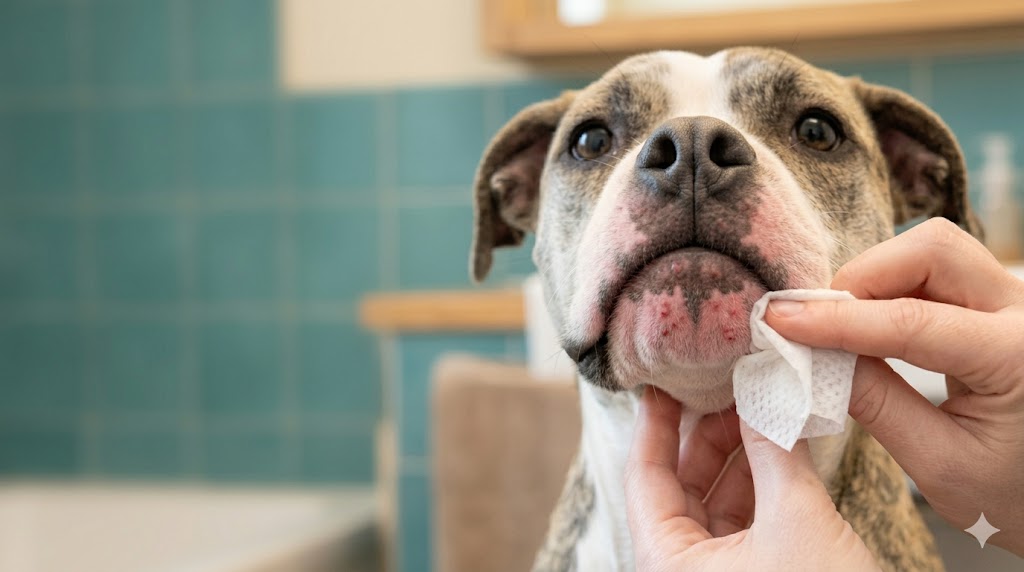
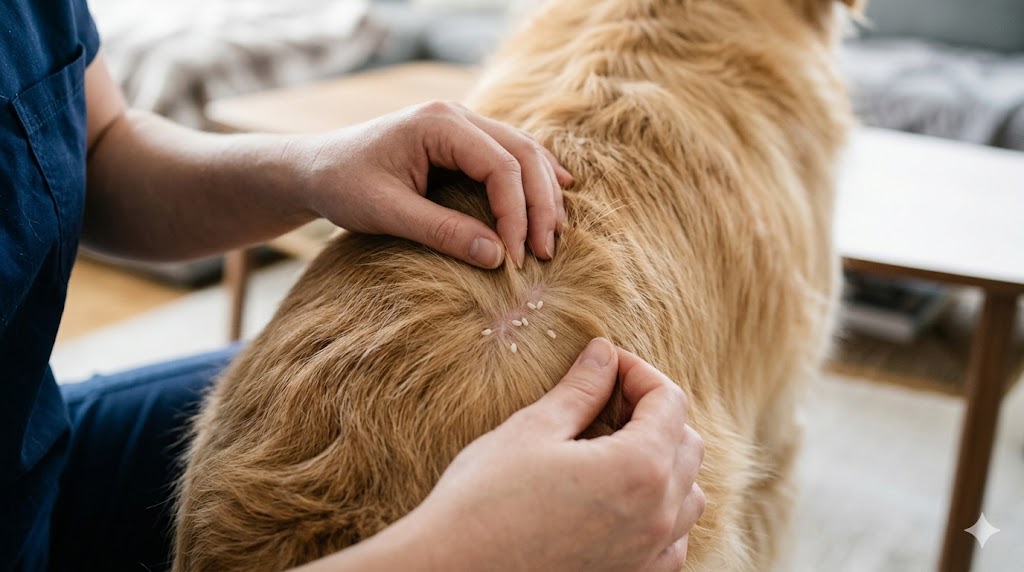
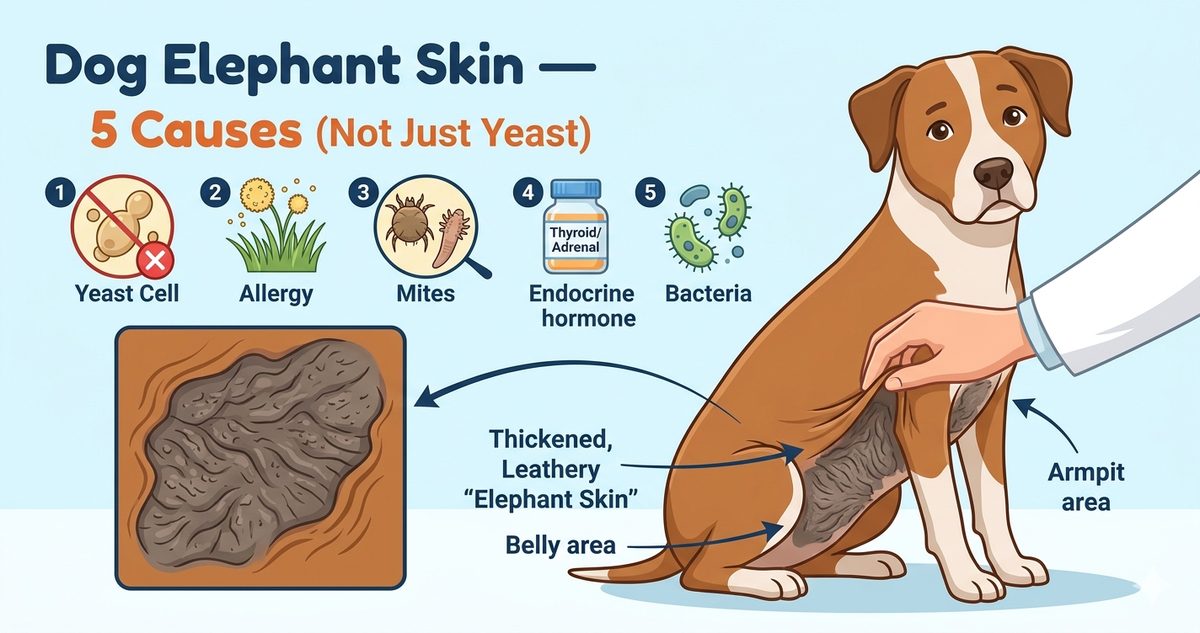
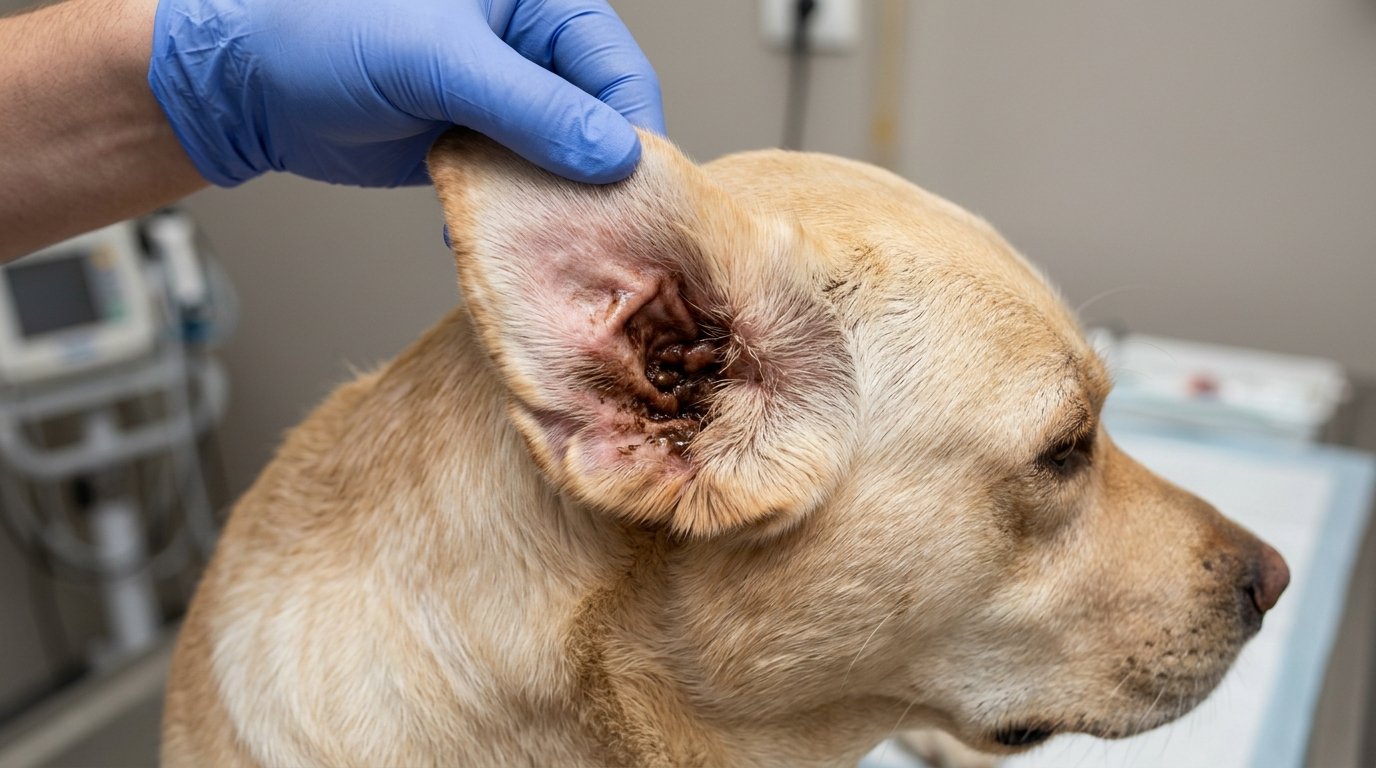
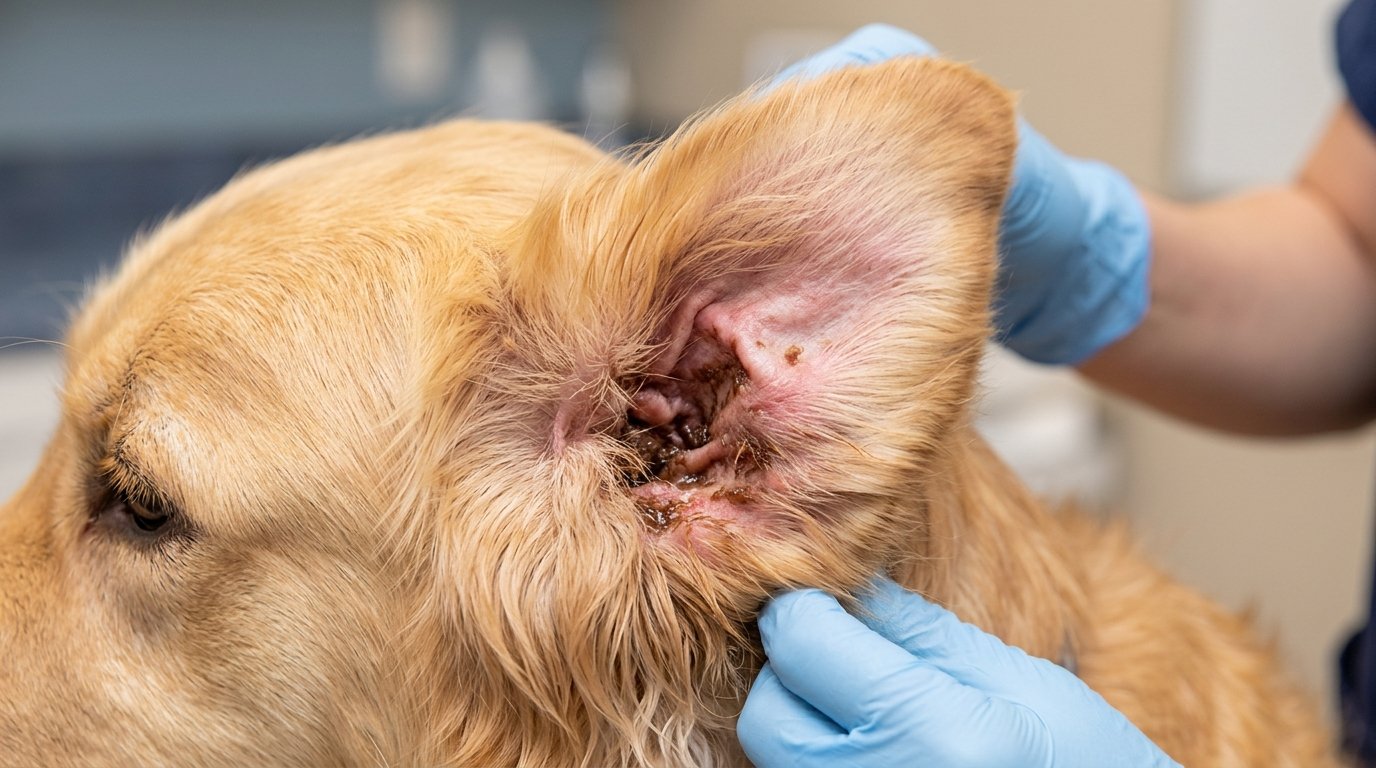
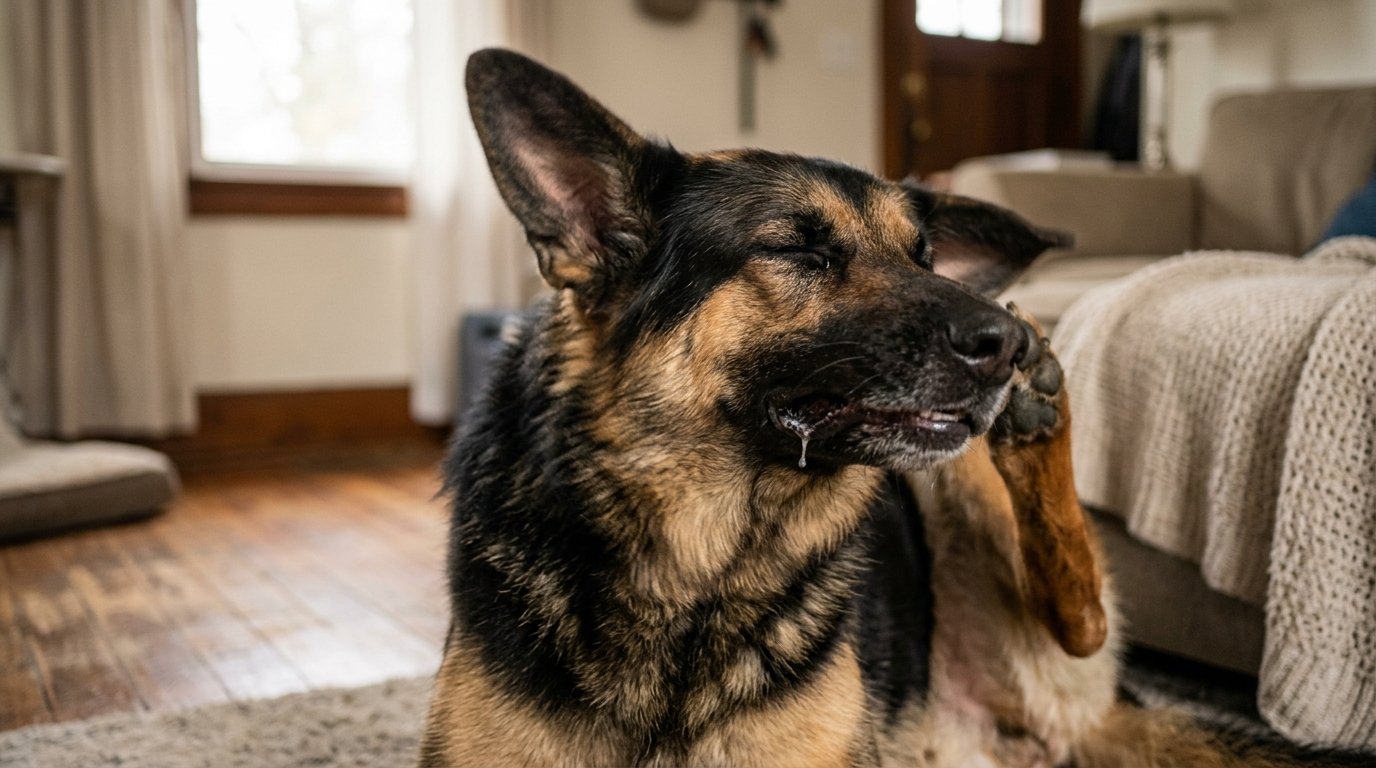
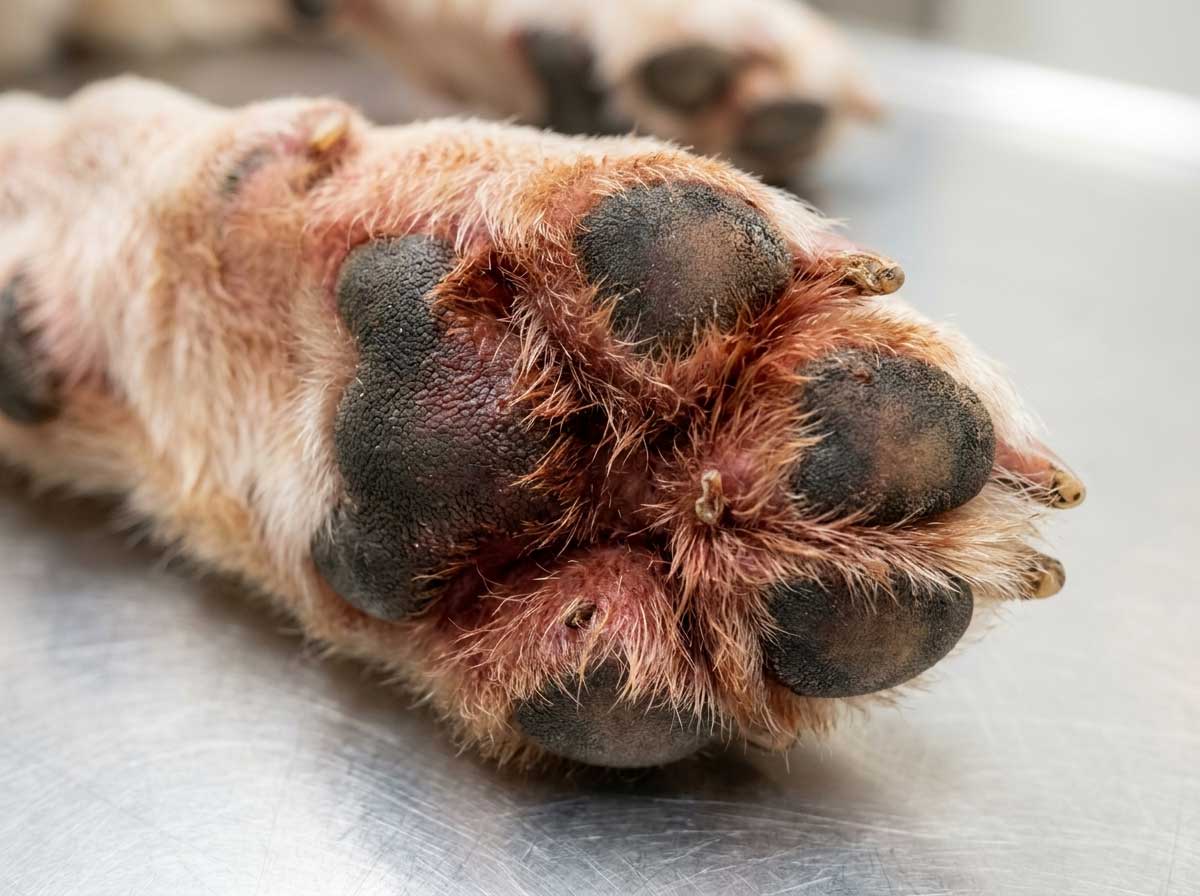
Yeasty dog skin with a distinctive sweet musty corn-chip or stale-cheese smell is the #1 most common dog skin smell complaint. Malassezia dermatitis dog smell signature: the sweet musty odor is yeast metabolism byproduct and lingers even after a bath. Dog yeasty skin shows: (1) Brown greasy patches in skin folds (armpits, belly fold, between toes, ear canals, neck folds in brachycephalic breeds). (2) Itching focused on affected areas, dog obsessively licks one specific spot. (3) Sometimes thickened "elephant skin" lichenification in chronic cases. (4) Often secondary to underlying atopic allergy — yeast is the proximate cause but allergy is the deeper root. The VCA Yeast Dermatitis in Dogs guide confirms yeast is usually a secondary problem due to underlying skin disease. How to tell if a dog has yeasty skin: the smell test is the strongest single clue — sweet musty + brown greasy + folds = yeast.
Why Does My Dog's Skin Smell Yeasty?
Why does my dog's skin smell yeasty — the underlying mechanism is Malassezia pachydermatis overgrowth on the dog's skin. Yeast is normally present on healthy dog skin in small numbers, but overgrowth happens when 3 conditions converge. (1) The skin barrier is broken by chronic allergy or scratching. (2) Warm moist environments (skin folds, between toes, floppy ears) provide ideal habitat. (3) The dog's immune balance shifts due to underlying disease, stress, or immunosuppressive drugs. Pictures of yeasty dog skin show characteristic visual signatures: brown greasy patches, thickened skin in folds, sometimes black darkening (my dogs skin is turning black and smells is a classic yeast progression to lichenification). The combination "black skin + yeasty smell" almost always points to chronic yeast Malassezia with secondary hyperpigmentation. Dog skin odor in chronic cases comes mainly from this colonization pattern. Photos of yeasty dog skin from vet clinics often show paws, belly, and skin folds together — dogs with yeasty skin tend to develop multiple body sites simultaneously in atopic patients.
Fishy Smell — Anal Glands Need Expression
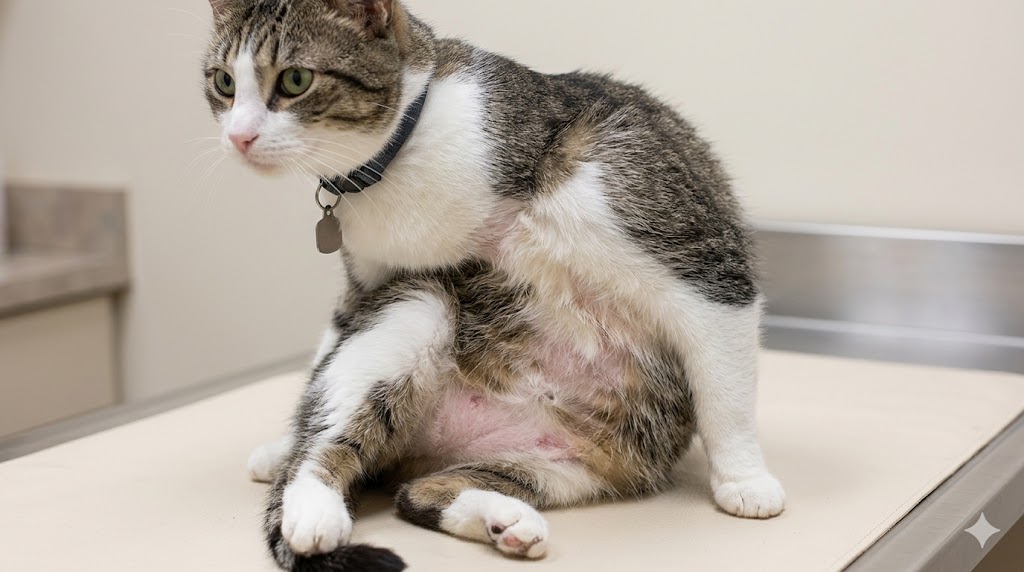
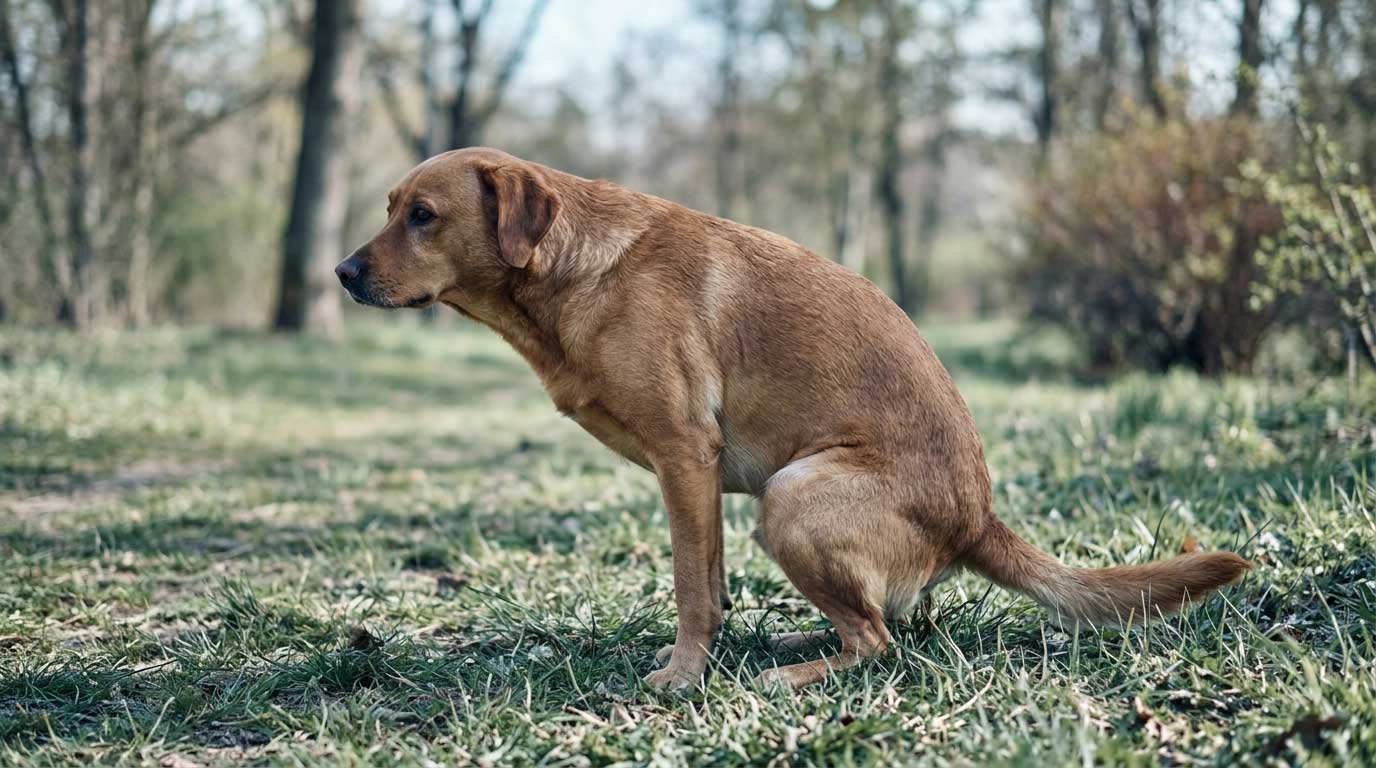
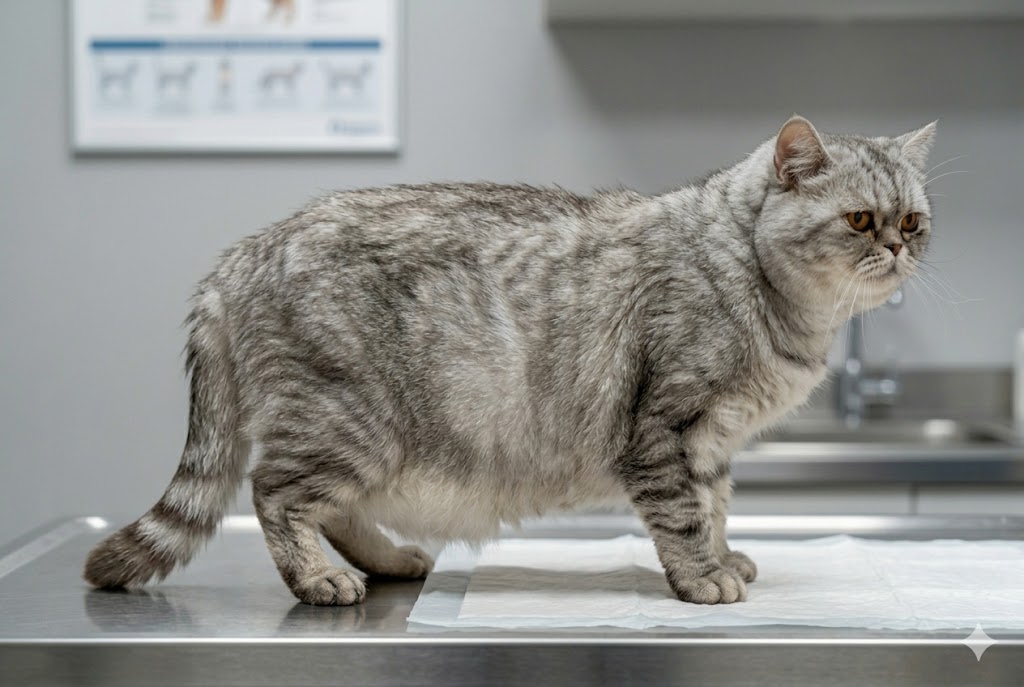
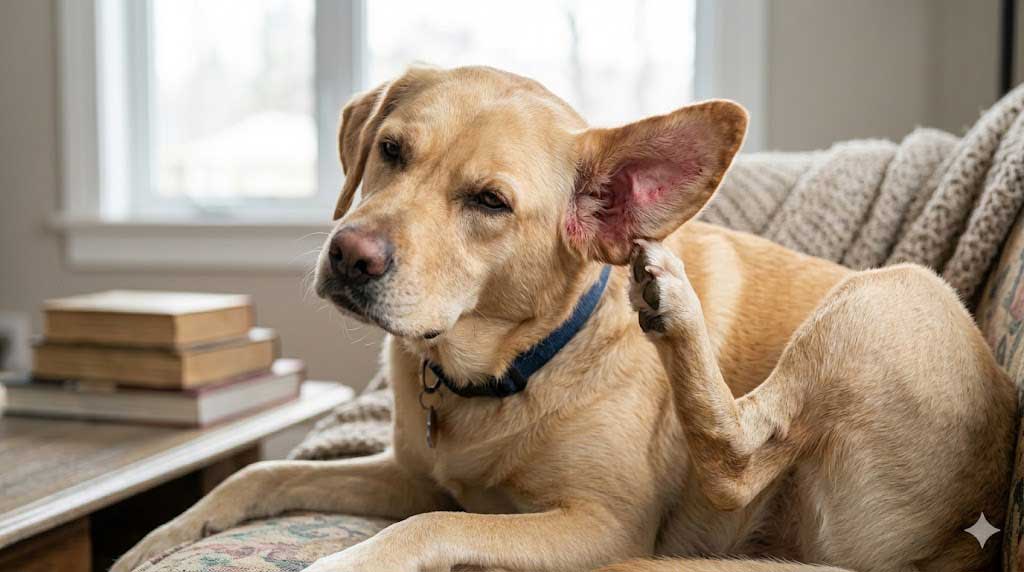
Dog anal gland fishy smell is the second most common dog skin smell complaint, and many owners mistake it for skin disease when it is actually a separate organ issue. Anal glands are small scent sacs on either side of the anus that normally express small amounts during defecation. When the glands become impacted or infected, they release a distinctive fishy odor that lingers on the dog's rear, tail, and sometimes spreads onto furniture or bedding. Dog skin conditions that smell fishy include: (1) Anal gland impaction — full glands not emptying naturally, fishy smell + dog scooting + licking rear. (2) Anal gland infection — pus + bloody discharge + smell becomes more putrid + visible swelling. (3) Anal gland abscess — emergency rupture with hemorrhage + extreme pain + immediate vet care. The key differential from yeast: fishy smell concentrates at the rear, while yeast spreads across folds and paws. If you smell fish + see scooting + see licking of the rear, anal gland impaction is the most likely cause and needs vet expression (manual emptying by your vet or a trained groomer).
Sour Vomit-Like Smell — Bacterial Pyoderma
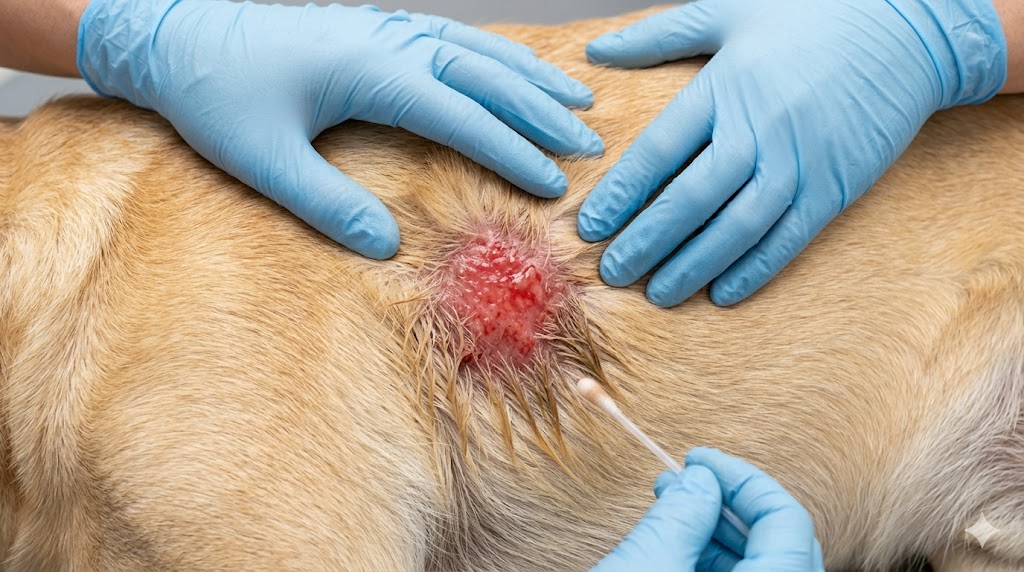
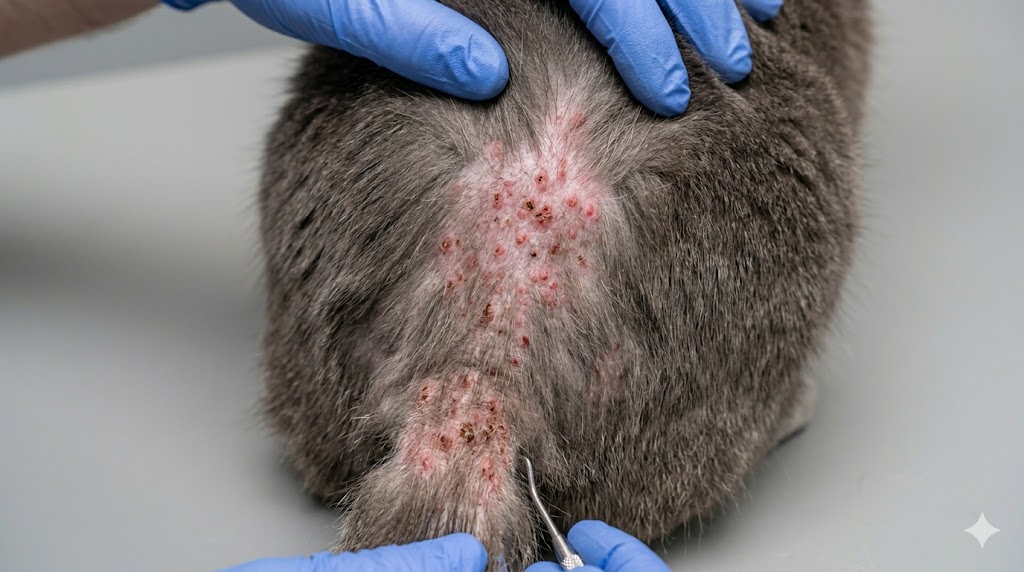
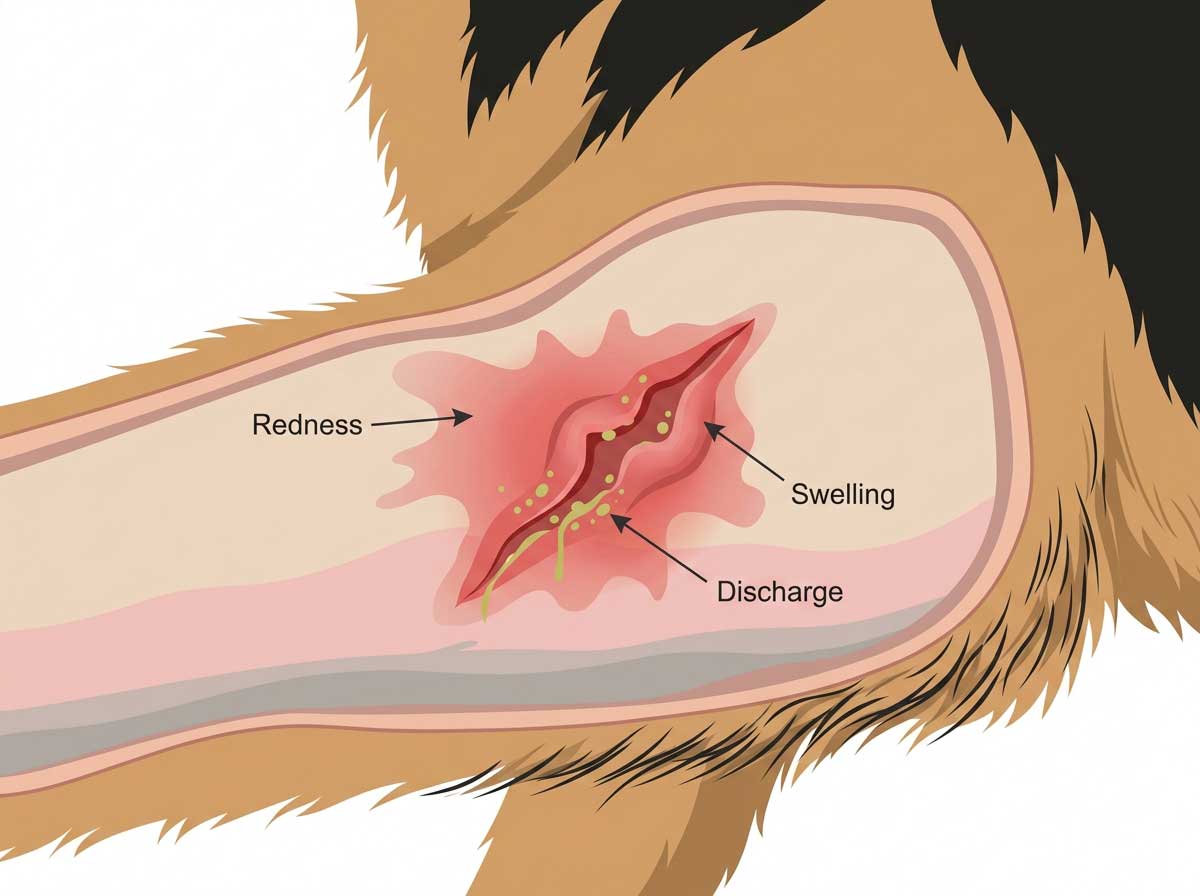
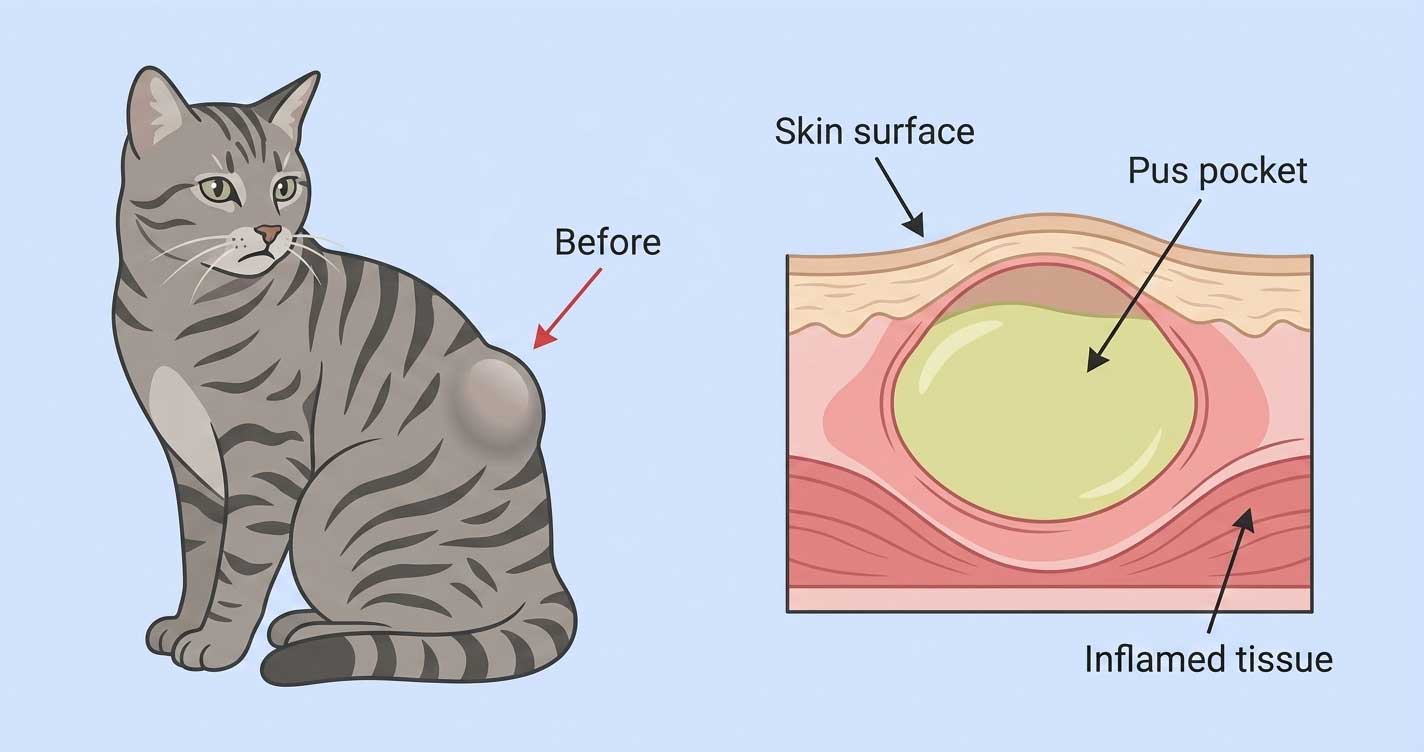
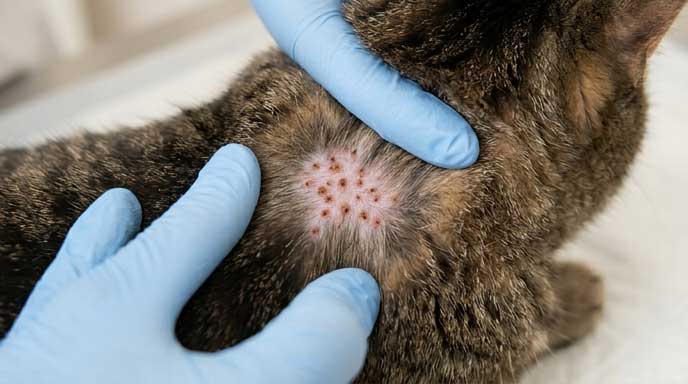
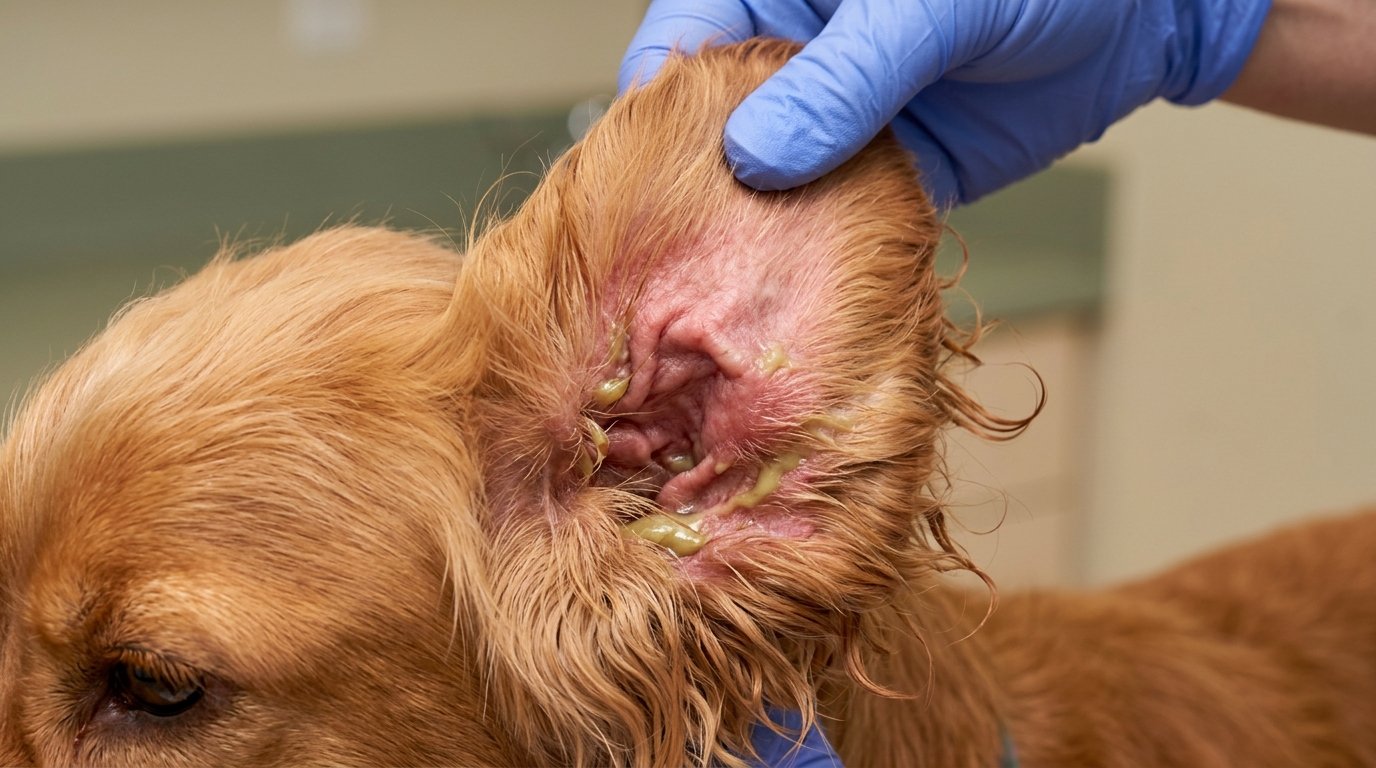
Dog bacterial pyoderma sour smell is the third smell category and signals a deeper skin infection. Bacterial pyoderma (Staphylococcus pseudintermedius is the most common pathogen) produces a sour vomit-like or putrid smell from the affected skin. Visual signs accompanying the sour smell: (1) Pus-filled bumps (pustules) on the skin. (2) Crusty yellow-green discharge over affected patches. (3) Often layered on top of pre-existing atopic dermatitis rash. (4) Sometimes mistaken for yeast initially — the sour vs sweet smell distinguishes them. Bacterial pyoderma usually develops as a SECONDARY infection on top of underlying allergic dermatitis that the dog has been scratching. The BluePearl Malassezia article notes that bacterial and yeast infections often coexist on the same dog — the smell can be a mixture. The key differential: bacterial sour smell + pus + crust = bacterial pyoderma, while yeast sweet musty smell + brown greasy + folds = yeast Malassezia. Both need vet workup with cytology.
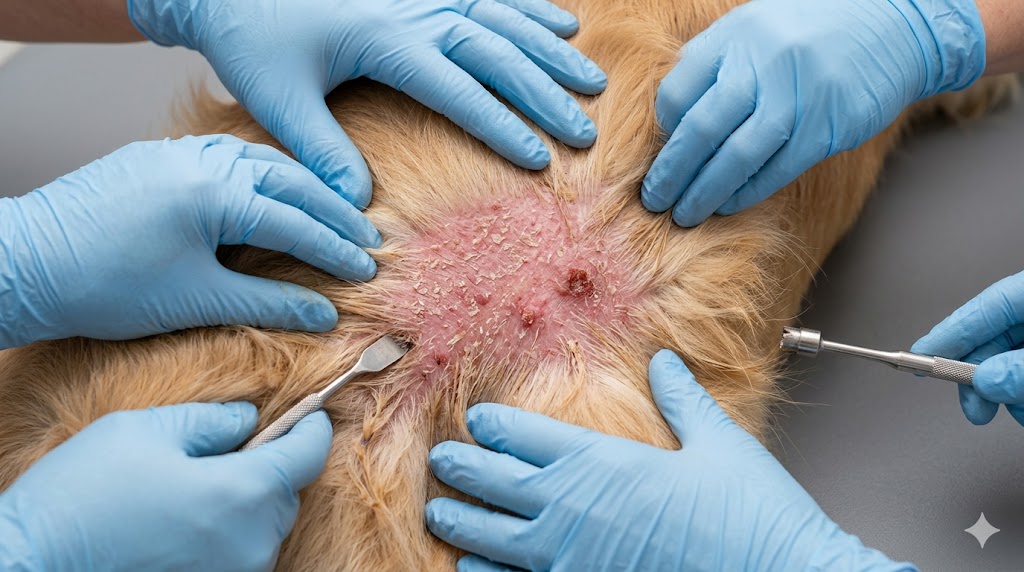
Sour-smelling dog skin with pus and crust? Our AI dog skin infection pictures tool identifies bacterial pyoderma vs yeast vs fungal ringworm vs hot spot pattern.
Try Dog Skin Infection AI ToolSweet Fruity Acetone Smell — Diabetic Ketosis EMERGENCY
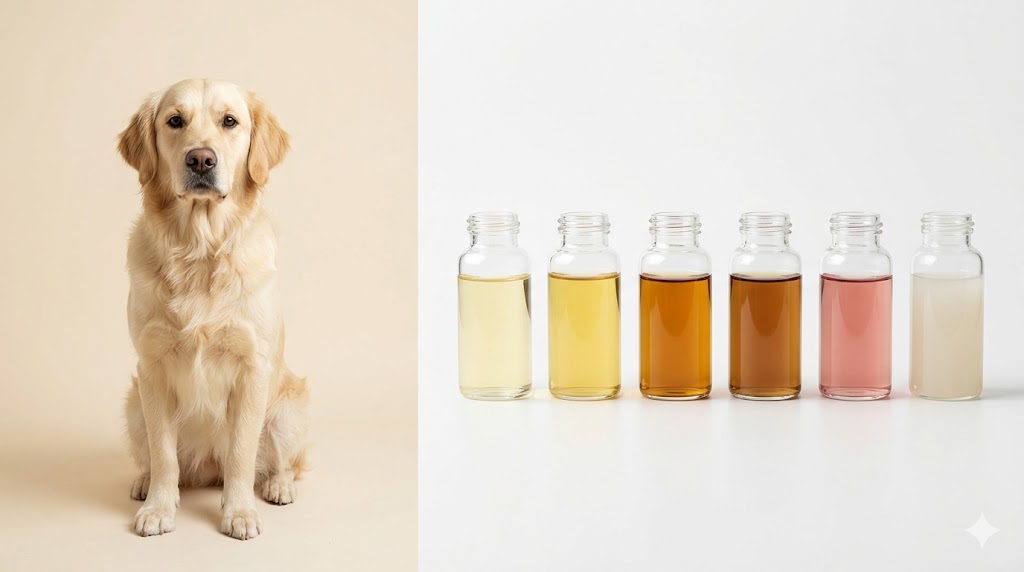
Dog diabetic ketosis fruity smell is the fourth smell category and the most urgent. A sweet fruity or acetone-like (nail polish remover) smell from your dog's breath OR skin can signal diabetic ketoacidosis (DKA), a life-threatening emergency. The smell comes from ketones produced when the diabetic dog's body cannot use glucose for energy and starts breaking down fat instead. Critical accompanying signs: (1) Drinking and urinating MUCH more than usual (polyuria + polydipsia). (2) Sudden weight loss despite normal or increased appetite, OR loss of appetite. (3) Lethargy or weakness. (4) Vomiting in advanced cases. (5) Rapid panting. (6) Sweet fruity breath or skin smell. Diabetic ketoacidosis requires emergency vet care within hours — not days. Drive to the ER. While this smell is rare compared to yeast or anal gland smells, recognizing it can save your dog's life. The Cornell University CVM canine health information covers diabetic emergencies in detail. If you smell sweet fruity + see increased thirst + see lethargy → ER NOW.
Foul Rotten Smell — Necrotic Tissue or Severe Hot Spot
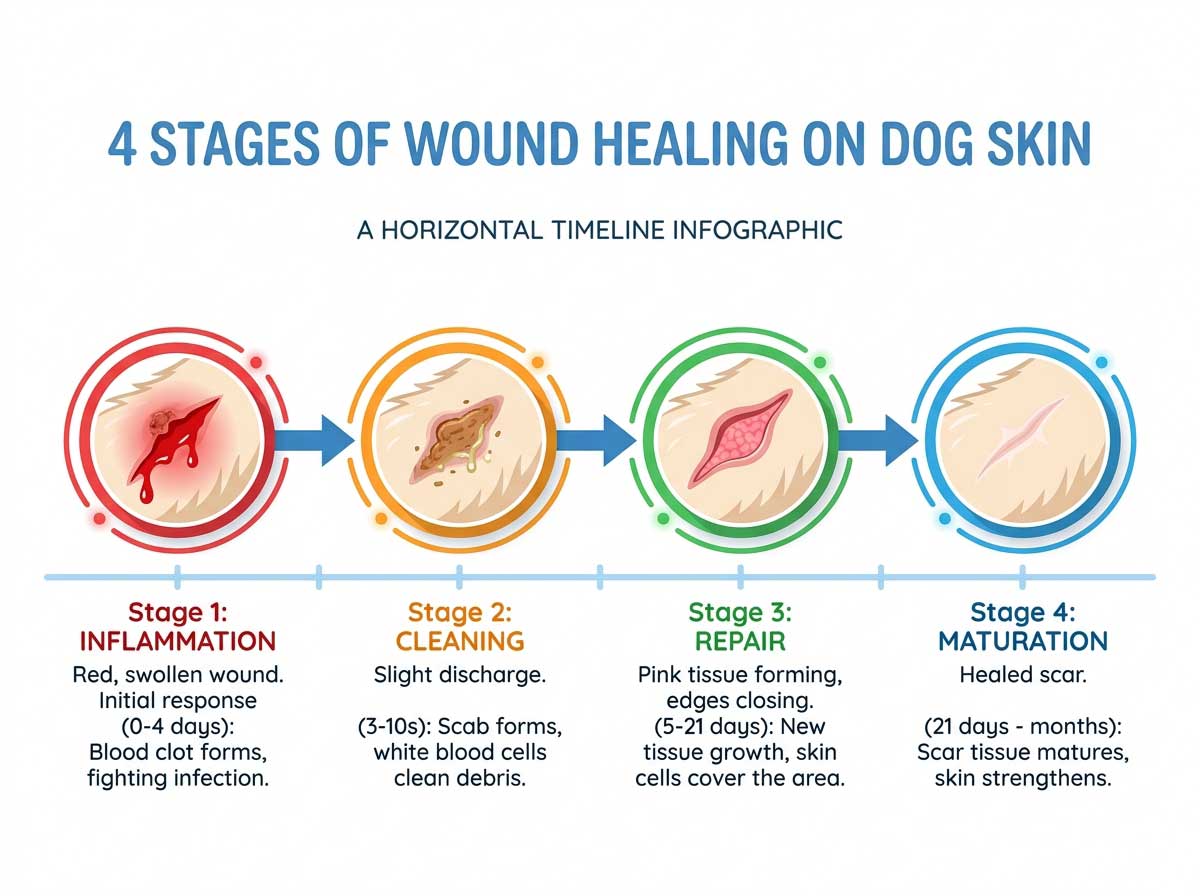
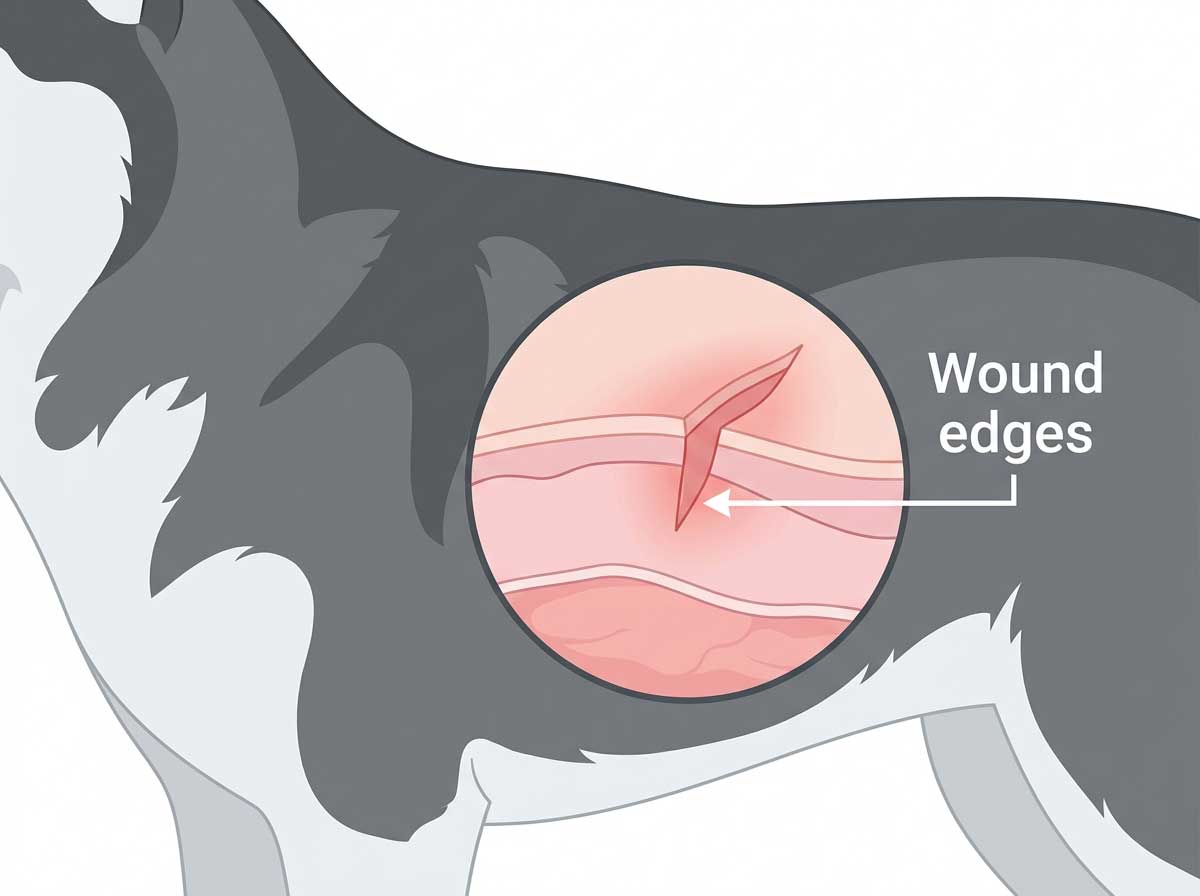
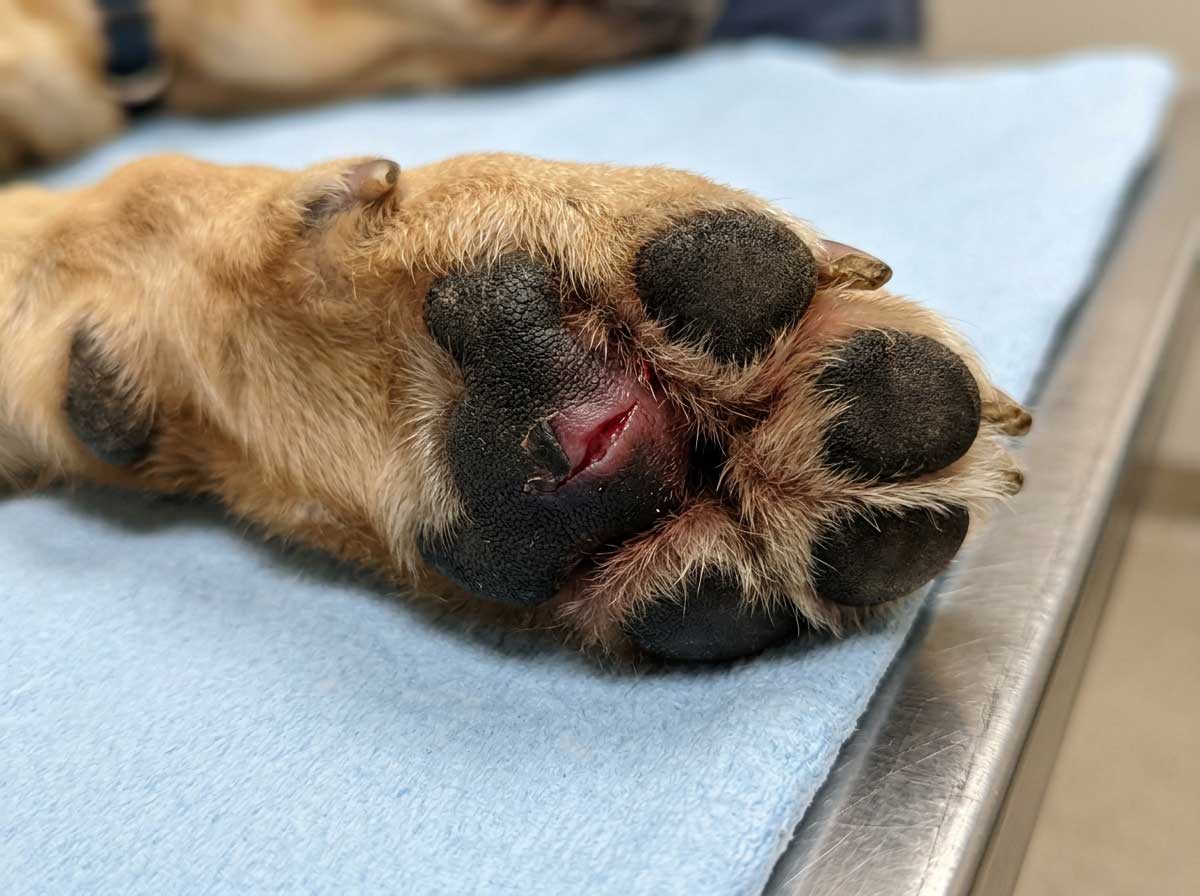
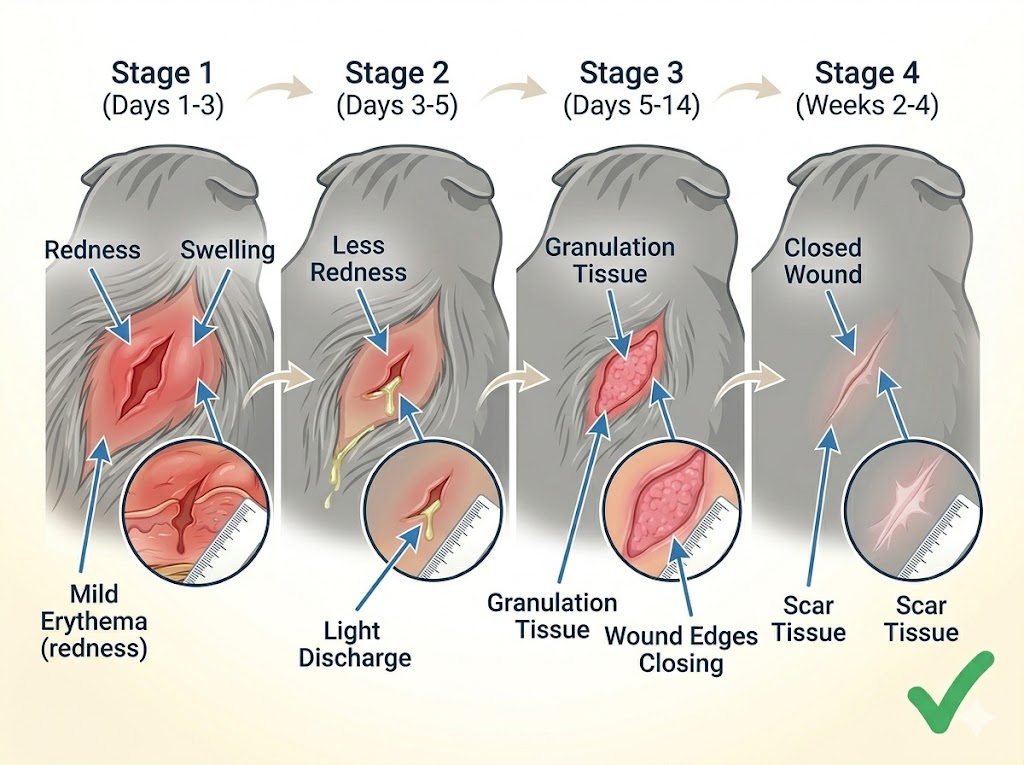
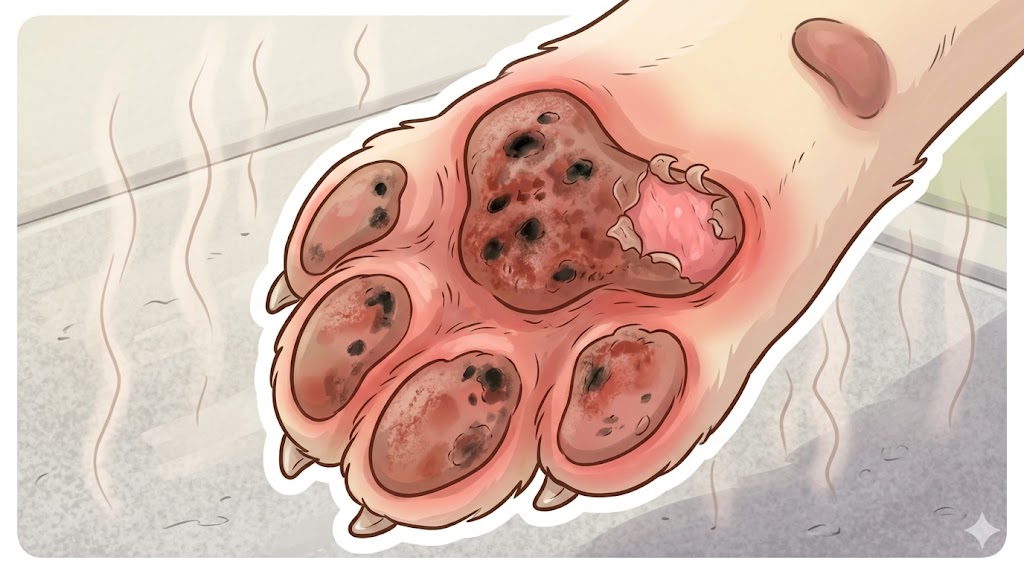
Dog hot spot necrotic foul smell is the fifth smell category. A foul rotten or "death-like" smell from a specific patch on the dog's skin signals necrotic tissue (dying skin cells), severe hot spot, or untreated severe wound. Accompanying signs: (1) Visible dead grayish-black skin in the affected area. (2) Often a deep wound, severe hot spot, or maggot infestation in extreme cases. (3) Pain when the dog is touched in the affected area. (4) Sometimes systemic signs (fever, lethargy). (5) Discharge that is bloody, pus-filled, or clear with foul smell. Necrotic tissue cannot resolve on its own and is at high risk of progressing to sepsis (whole-body infection). Vet evaluation within 48 hours is essential — sometimes surgical debridement is needed. The differential from bacterial pyoderma: bacterial smell is sour, necrotic smell is more severe rotten meat-like. The differential from yeast: yeast smells sweet musty, necrotic smells distinctly putrid. If you smell rotten + see grayish-black tissue + see pain → vet within 48h.
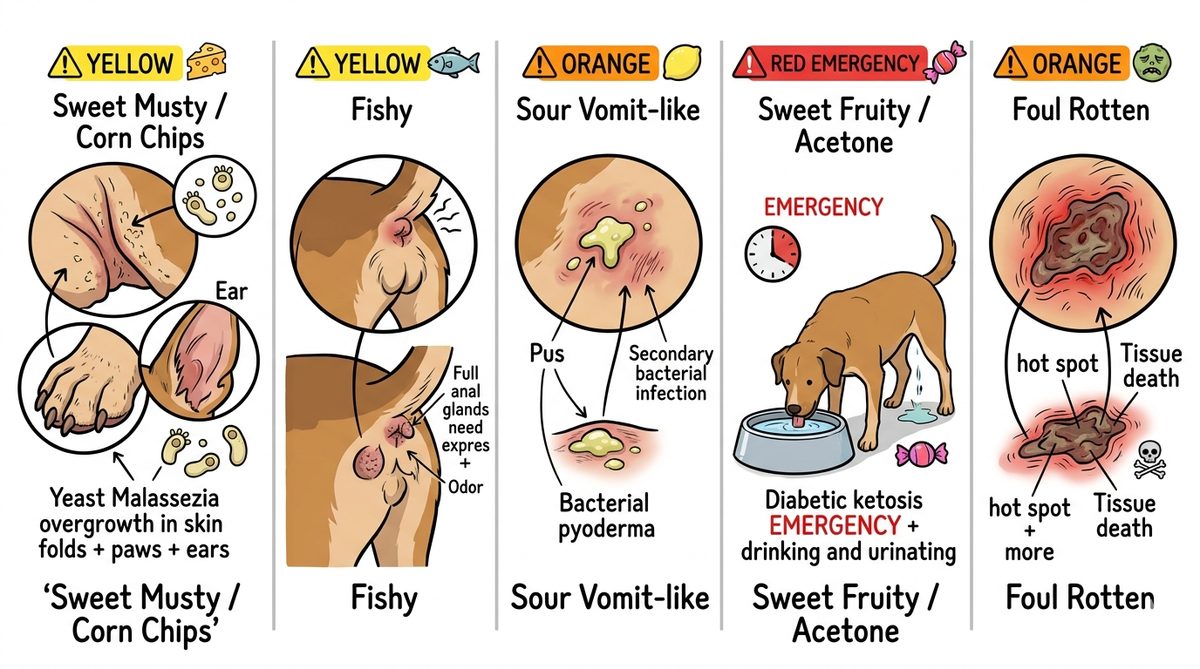
How to Tell If a Dog Has Yeasty Skin vs Other Smell Causes
How to tell if a dog has yeasty skin specifically (vs the other 4 smell causes) requires a 3-step assessment. (1) Smell type — sweet musty corn-chip lingering on the skin even after bath = yeast. Fishy at the rear = anal glands. Sour with pus = bacterial. Sweet fruity / acetone with increased thirst = diabetic emergency. Foul rotten on a specific patch = necrotic. (2) Body location — yeast colonizes folds, paws, ears together; anal glands stay at the rear; bacterial usually on top of allergic dermatitis patches; diabetic is systemic not skin-located; necrotic is a single severe patch. (3) Accompanying signs — yeast: brown greasy + thickened skin; anal glands: scooting + licking rear; bacterial: pus + crust; diabetic: drinking and urinating more + lethargy + vomiting; necrotic: dead grayish tissue + pain. Putting the smell, location, and accompanying signs together gives you the differential. For visual confirmation of yeast patches specifically, see our Dog Paw Yeast Infection guide.
When to See a Vet — Decision Framework
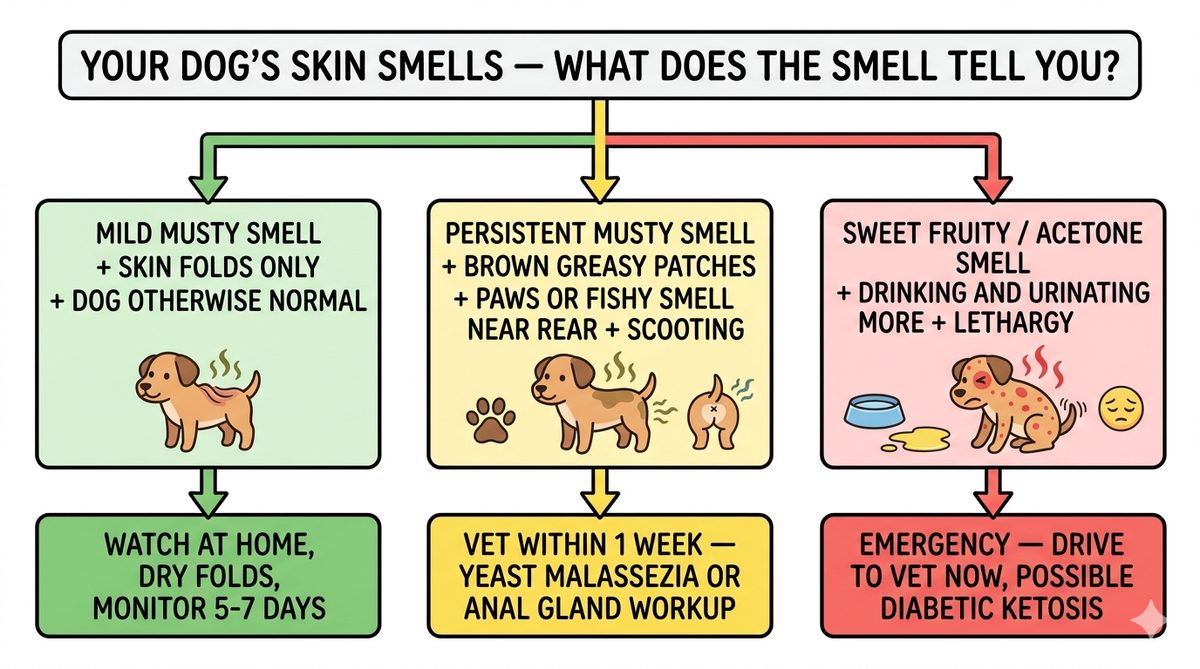
Use this dog skin smell vet decision framework based on smell type + accompanying signs:
- ✓**Watch at home 5-7 days**: Mild musty smell in skin folds only + dog otherwise comfortable + folds easily cleaned and dried
- ✓**Vet within 1 week**: Persistent musty smell + brown greasy patches on paws or belly OR fishy smell + scooting + rear licking (anal gland expression needed)
- ✓**Vet within 48 hours**: Sour vomit-like smell with pus and crust OR foul rotten smell from a specific patch with grayish-black tissue OR widespread musty smell + thickened "elephant skin" lichenification
- ✓**EMERGENCY now**: Sweet fruity / acetone smell from breath or skin + drinking and urinating much more than usual + lethargy + possible vomiting — possible diabetic ketoacidosis, drive to ER NOW
Before your vet visit, prepare these data points: (1) What does the smell remind you of? (musty / fishy / sour / sweet fruity / rotten). (2) When did you first notice it? (3) What body area smells worst? (folds / rear / specific patch / general). (4) Any visible skin changes? (brown patches / pus / dead tissue / no visible change). (5) Recent appetite, thirst, energy, urination changes? (6) Other behaviors like scooting, licking rear, or pawing at face. The smell + location + accompanying signs combination usually narrows the differential to 1-2 likely causes for your vet to confirm.
Dog skin smell with brown greasy patches that are turning black? Our AI dog skin black spots pictures tool identifies yeast progression vs hyperpigmentation vs comedones.
Try Dog Skin Black Spots AI ToolRelated Reading on Dog Skin Smell + Conditions
Deeper guides on related dog skin smell topics: Dog Paw Yeast Infection — Malassezia on Paws covers paw-specific yeast which produces classic musty smell + saliva staining; Dog Skin Allergy — 3 Types covers atopic allergy as the deeper root behind most chronic yeasty skin cases; Dog Elephant Skin Causes Lichenification covers the chronic thickening that develops in long-term untreated yeasty skin. For an instant AI photo check on the underlying skin pattern, our Dog Skin Rash Pictures AI tool identifies bacterial vs yeast vs allergic vs FAD vs contact rash patterns.
Frequently Asked Questions
Why does my dog's skin smell yeasty?
+
How to tell if a dog has yeasty skin?
+
My dog's skin is turning black and smells — what does it mean?
+
Dog skin smells fishy — is it yeast or anal glands?
+
My dog's breath smells sweet and fruity — should I worry?
+
Why do my dog's skin folds smell even after bathing?
+
Dog Skin Smell — Need a Faster Differential?
Upload a clear photo of your dog's affected skin for an instant AI rash pattern differential — works across yeast vs bacterial vs allergic vs hot spot patterns.
Disclaimer: This article is for informational purposes only and is not a substitute for professional veterinary advice. Always consult a licensed veterinarian for diagnosis and treatment of your pet's health conditions.