Cat Skin Allergy Causes: 4 Triggers + Itchy Skin Guide
Cat skin allergy causes explained — the 4 common triggers (fleas, food, environment, contact) + cat allergy itchy skin pattern by location + when to see vet.
Published 2026-06-20
Cat Skin Allergy? Get Instant AI Pattern Check
Upload a close-up photo of your cat's itchy skin — the AI compares against FAD, food allergy, atopy, and contact allergy patterns and tells you urgency + when to see a vet.
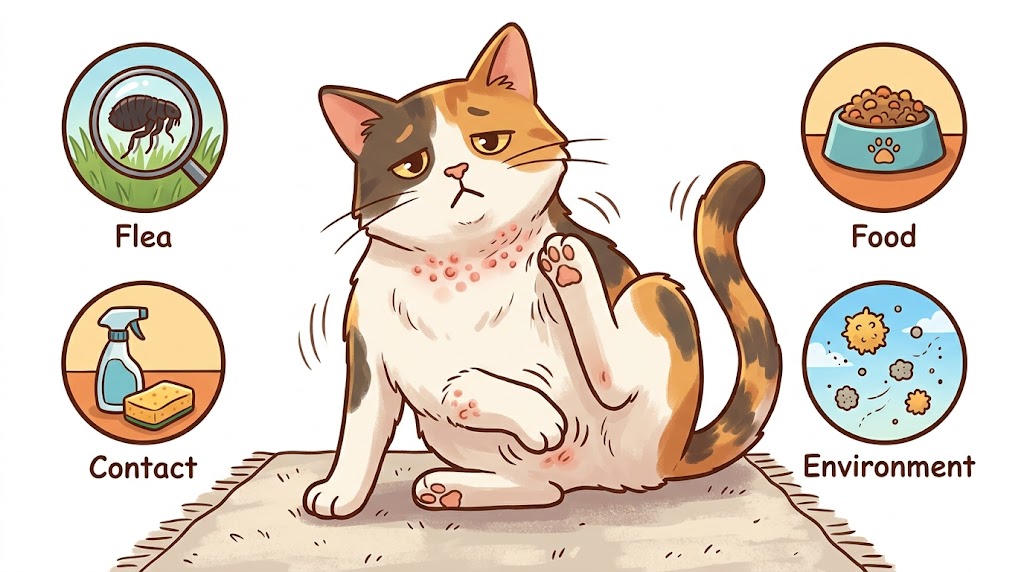
Cat skin allergy is one of the most-searched cat health concerns online — and for good reason. A cat that itches non-stop, develops bald patches from over-grooming, or breaks out in scabby red bumps is usually reacting to one of 4 specific allergy triggers. This guide covers the 4 most common cat skin allergy causes (flea allergy dermatitis, food allergy, environmental atopy, contact allergy) with visual signs for each, the cat allergy itchy skin pattern that points to one cause over another, and a clear rule for when to see the vet. By the end you should know which of the 4 your cat is most likely reacting to — and what to do next.
See cat allergy skin reaction signs and want a quick AI pattern check on the rash? Upload a close-up photo for instant identification.
Check Cat Skin Allergy Photo →Cat Skin Allergy — Why It Happens
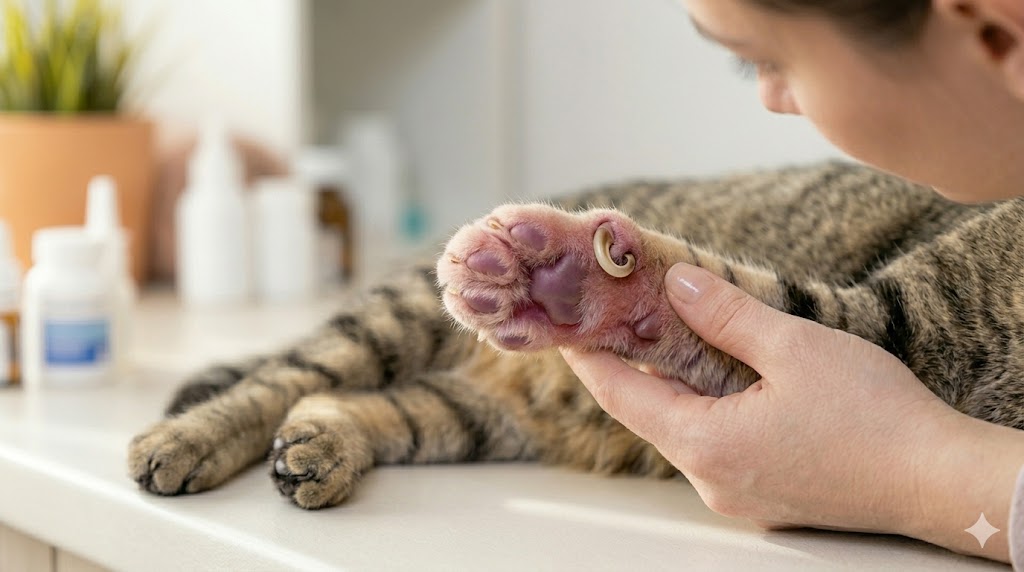
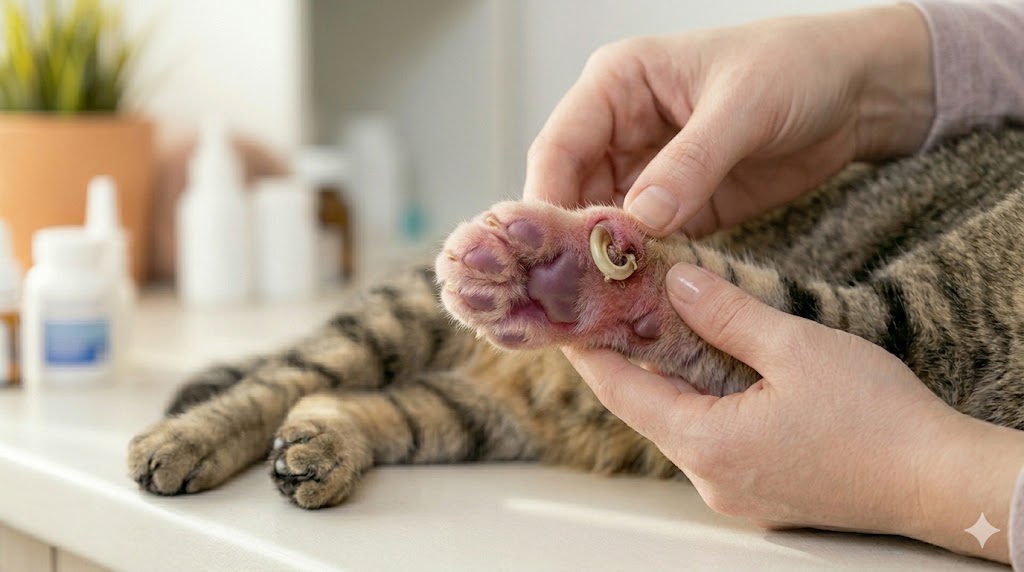
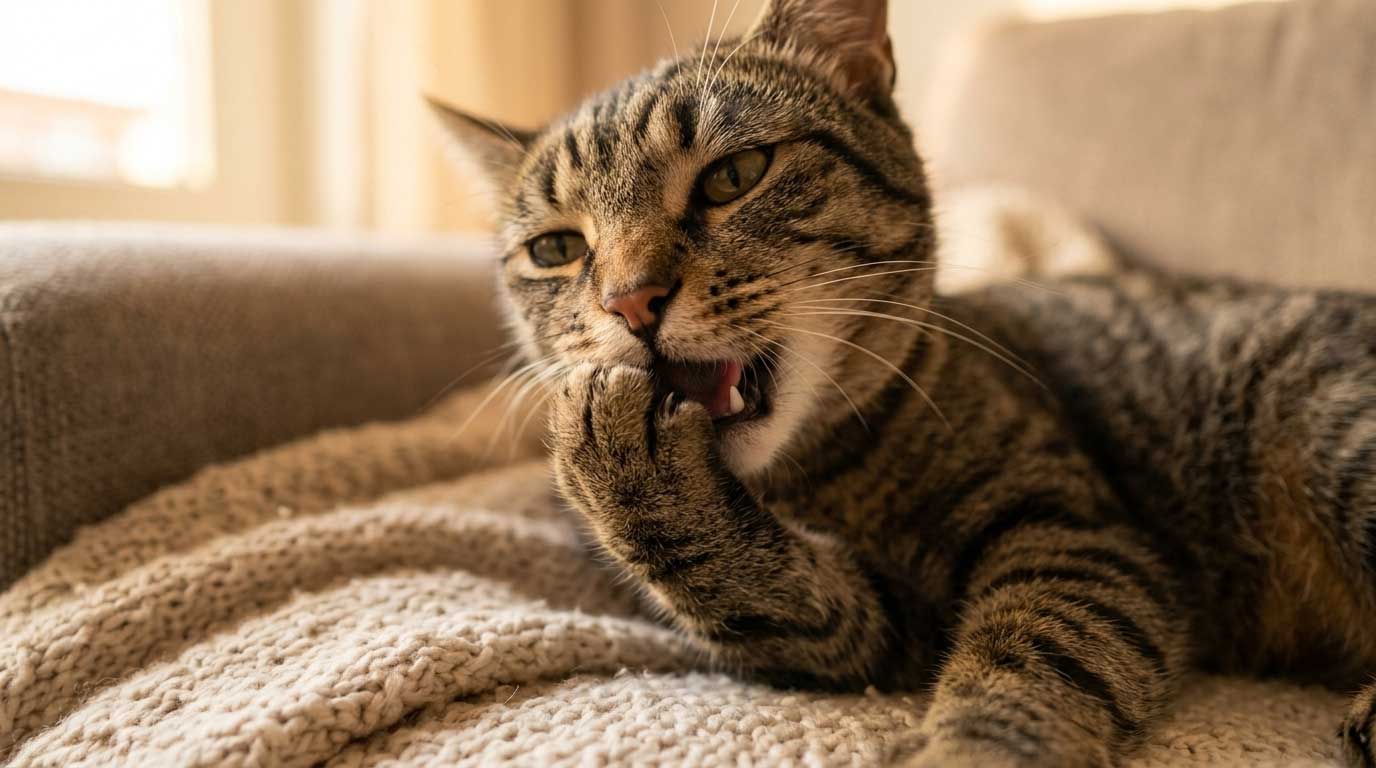
A cat skin allergy is an immune over-reaction to something the cat has been exposed to — usually a bite (flea saliva), a food ingredient, an environmental allergen (pollen, dust mite, mold), or direct skin contact with a chemical. The cat scratches, licks, or over-grooms the affected area; the skin barrier breaks down; and you see the visible result: red bumps, bald patches, scabs, or a recurrent rash. Cats hide illness well — by the time you can SEE the cat allergy skin reaction, the underlying trigger has usually been driving the over-reaction for weeks. Solving cat skin allergy is identifying WHICH of the 4 triggers + getting the right vet workup; trying to suppress the itching without addressing the trigger never works long-term.
1. Flea Allergy Dermatitis (FAD) — The #1 Cat Skin Allergy Cause
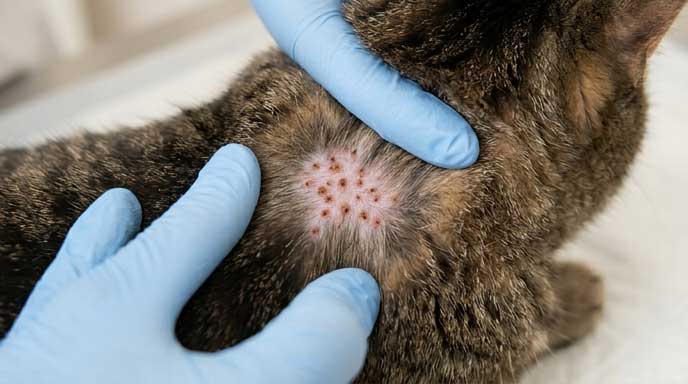
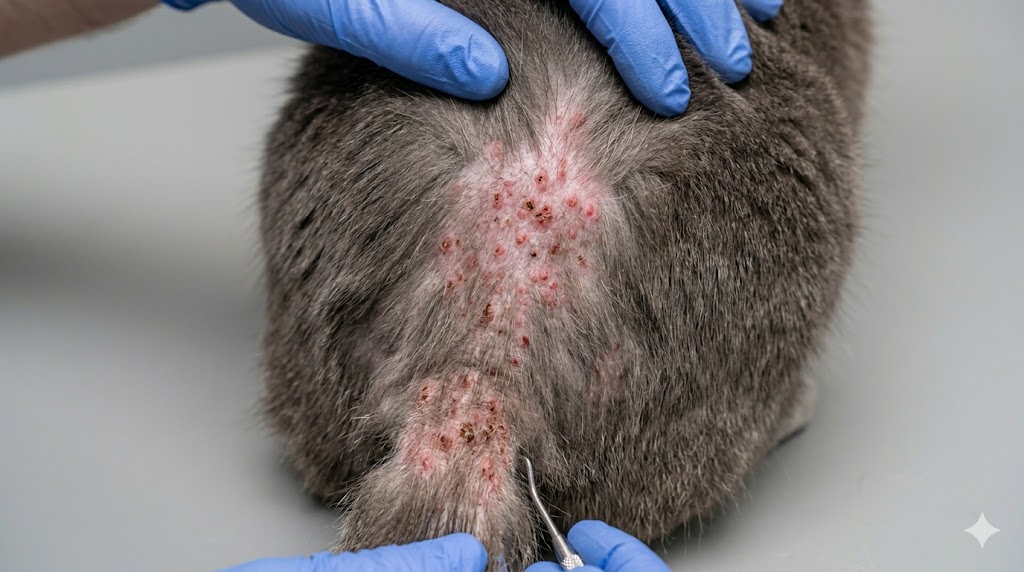
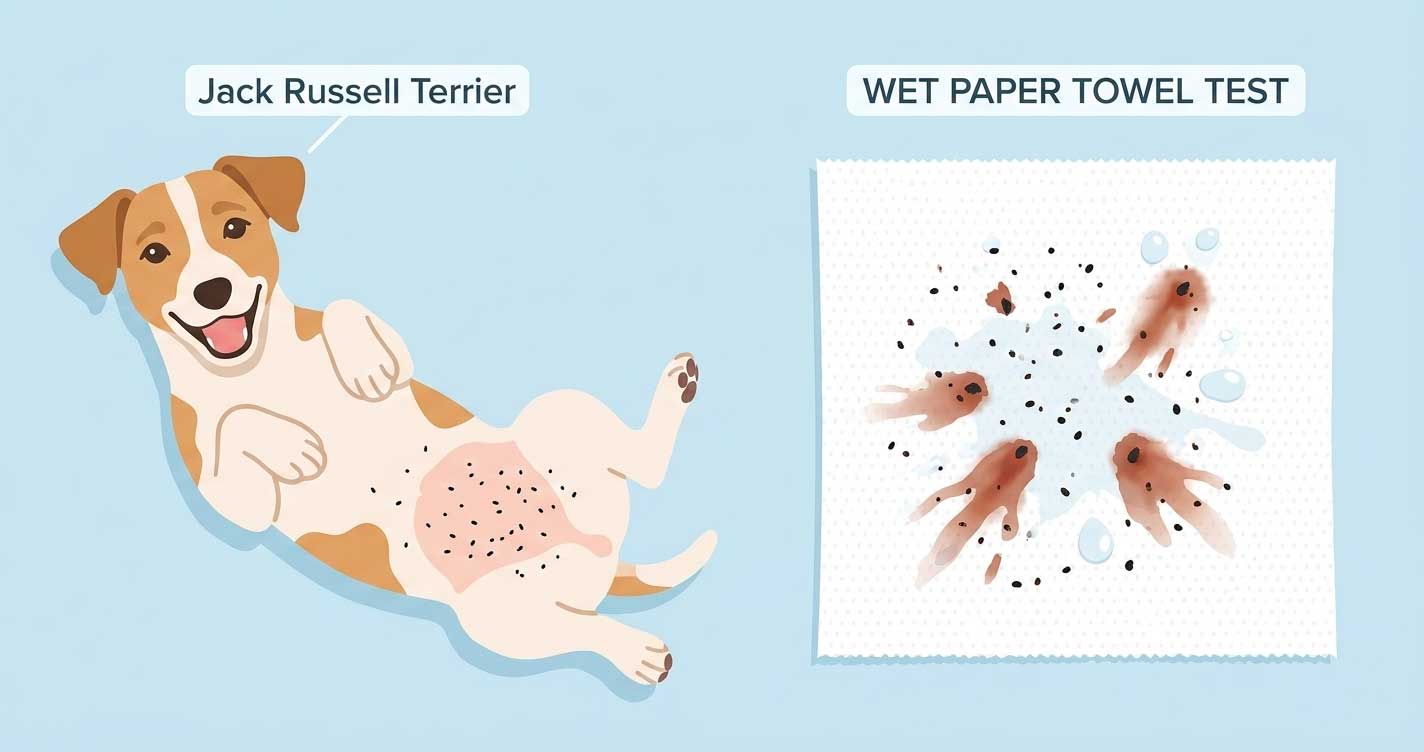
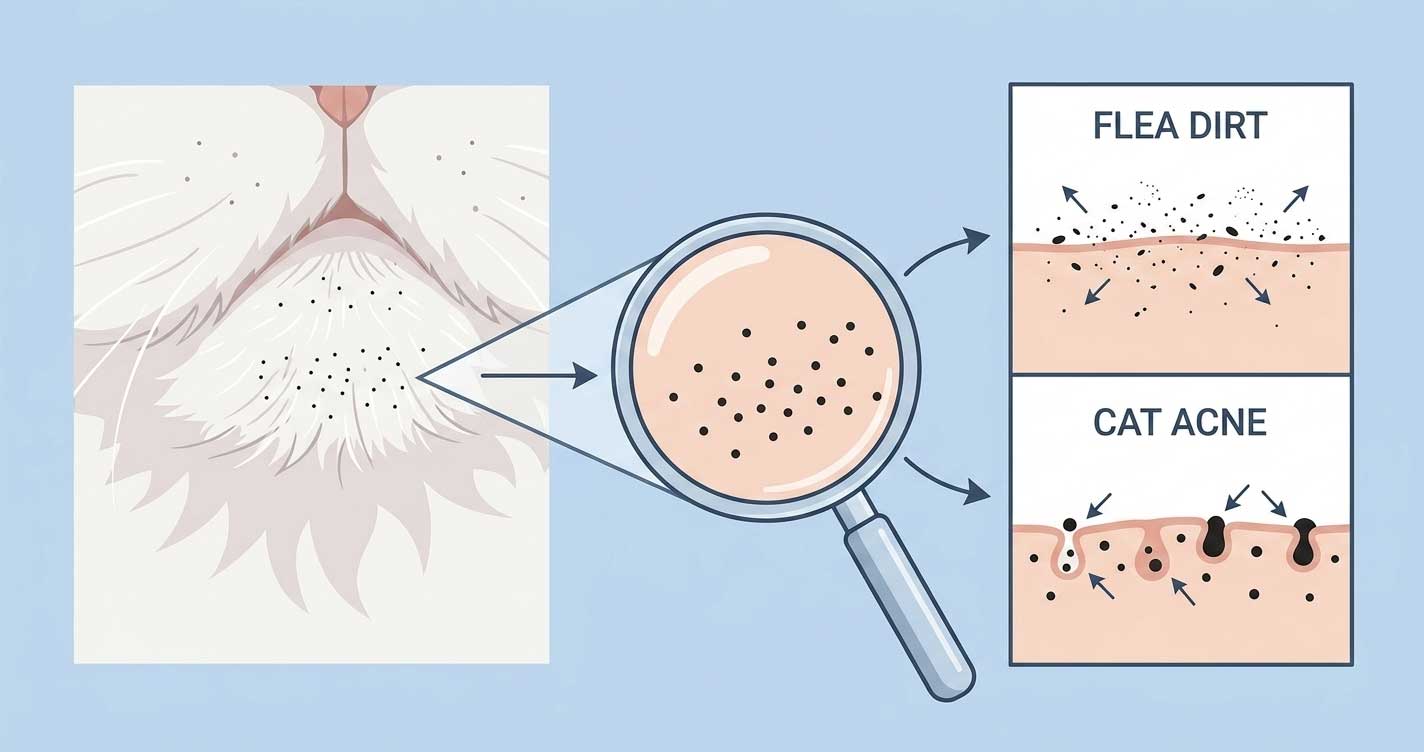
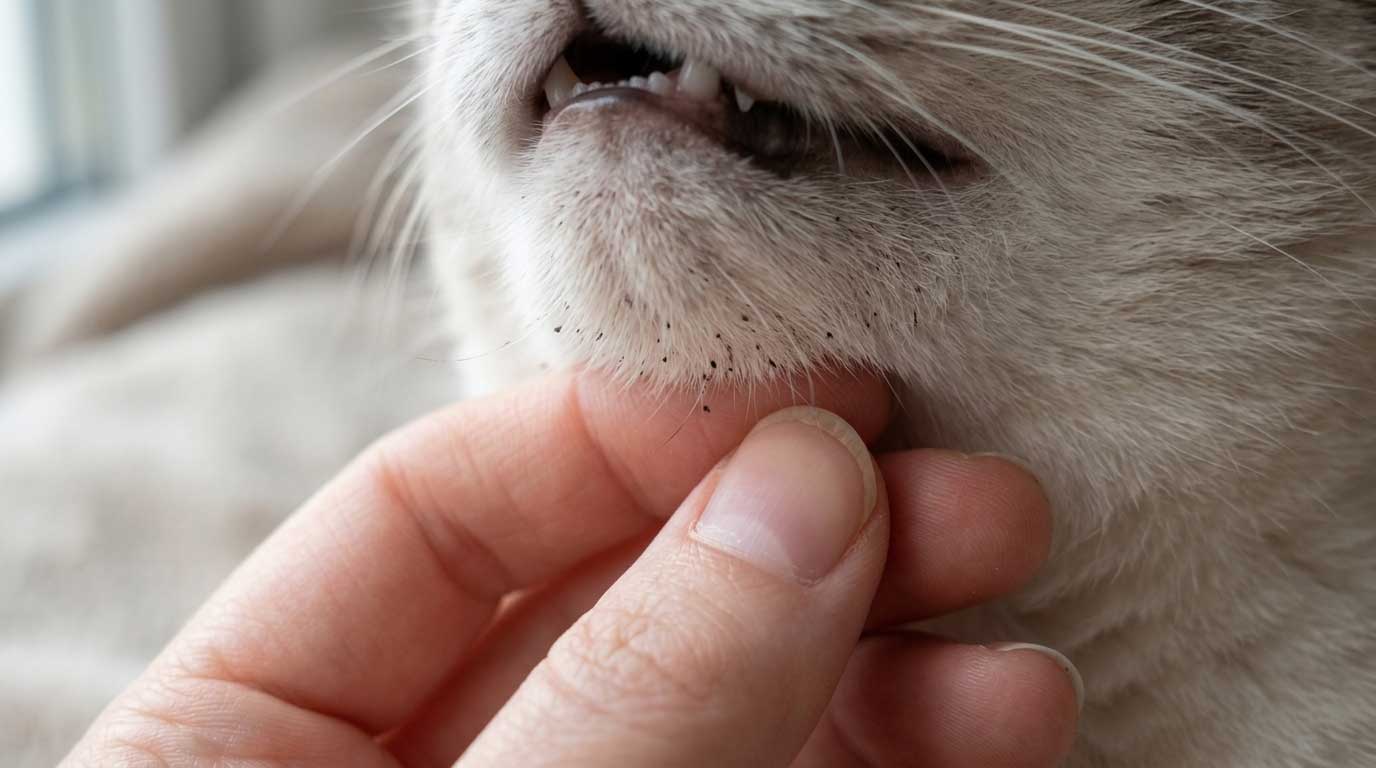
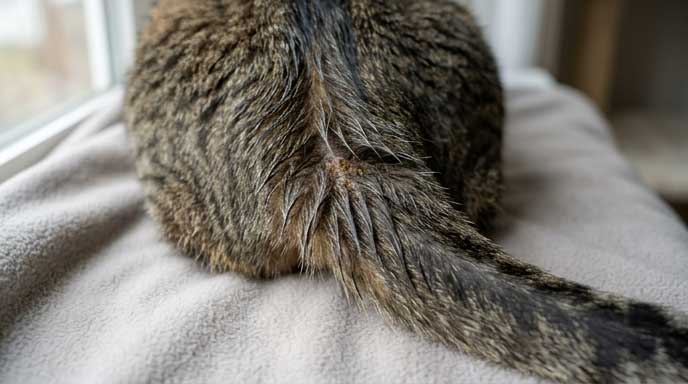
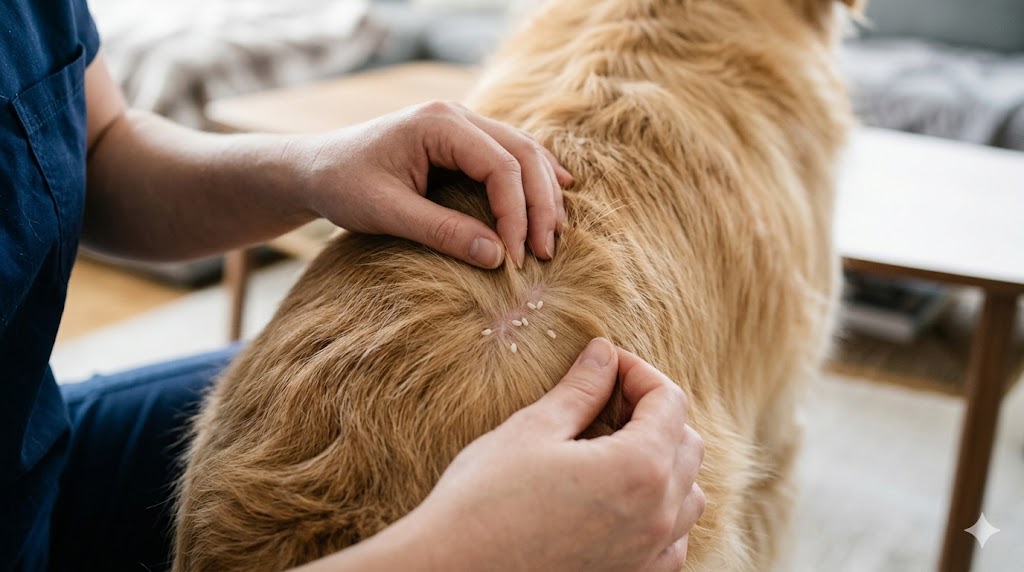
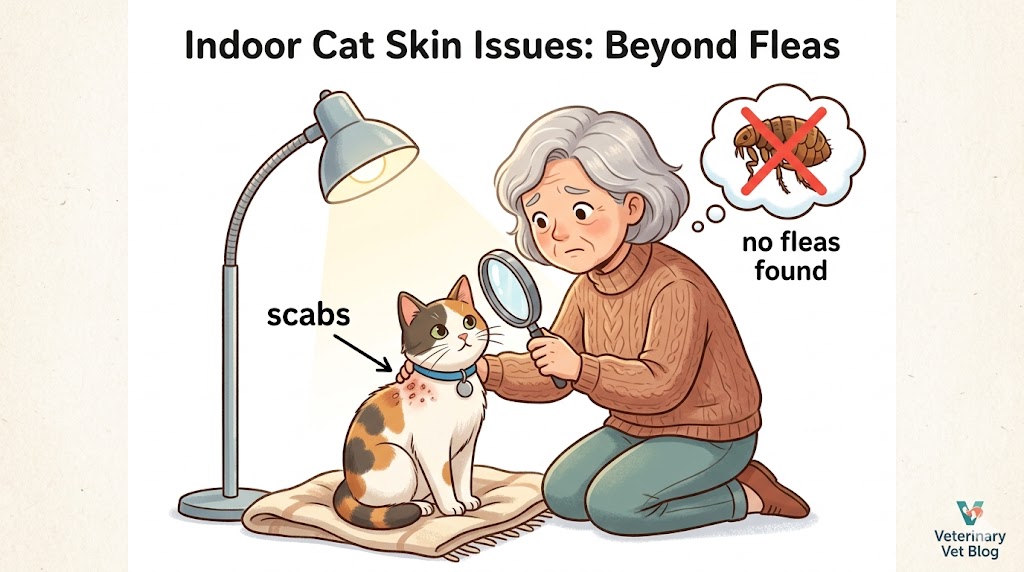
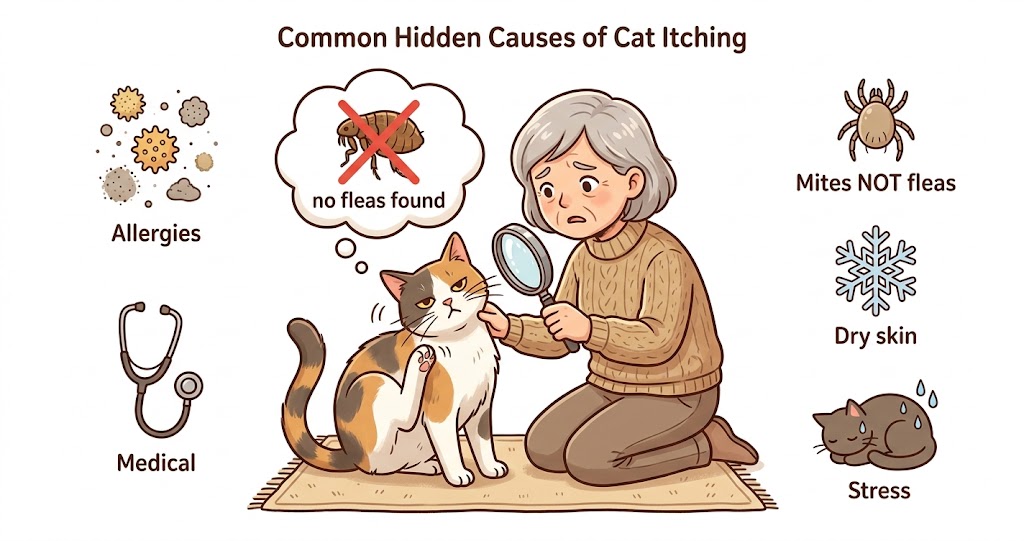
Flea allergy dermatitis (FAD) is the single most common cat skin allergy cause. Even ONE flea bite can trigger a severe reaction in a flea-allergic cat that lasts weeks. The visual signature: red itchy rash concentrated along the spine and base of the tail (the FAD diagnostic location — different from environmental allergy which is more belly / face / paws), small grain-sized bumpy scabs scattered (miliary dermatitis pattern), and over-grooming or biting at those areas. The big surprise for cat owners: a flea-allergic cat usually shows NO visible live fleas — cats are meticulous groomers and groom every flea off quickly, but the FAD reaction remains for weeks afterward. Look for flea dirt (tiny black pepper specks in the fur near the tail base) as the diagnostic clue. Cornell Feline Health Center's feline atopic syndrome reference confirms FAD is the most common cat skin allergy trigger.
2. Cat Food Skin Allergy — Top Protein Triggers
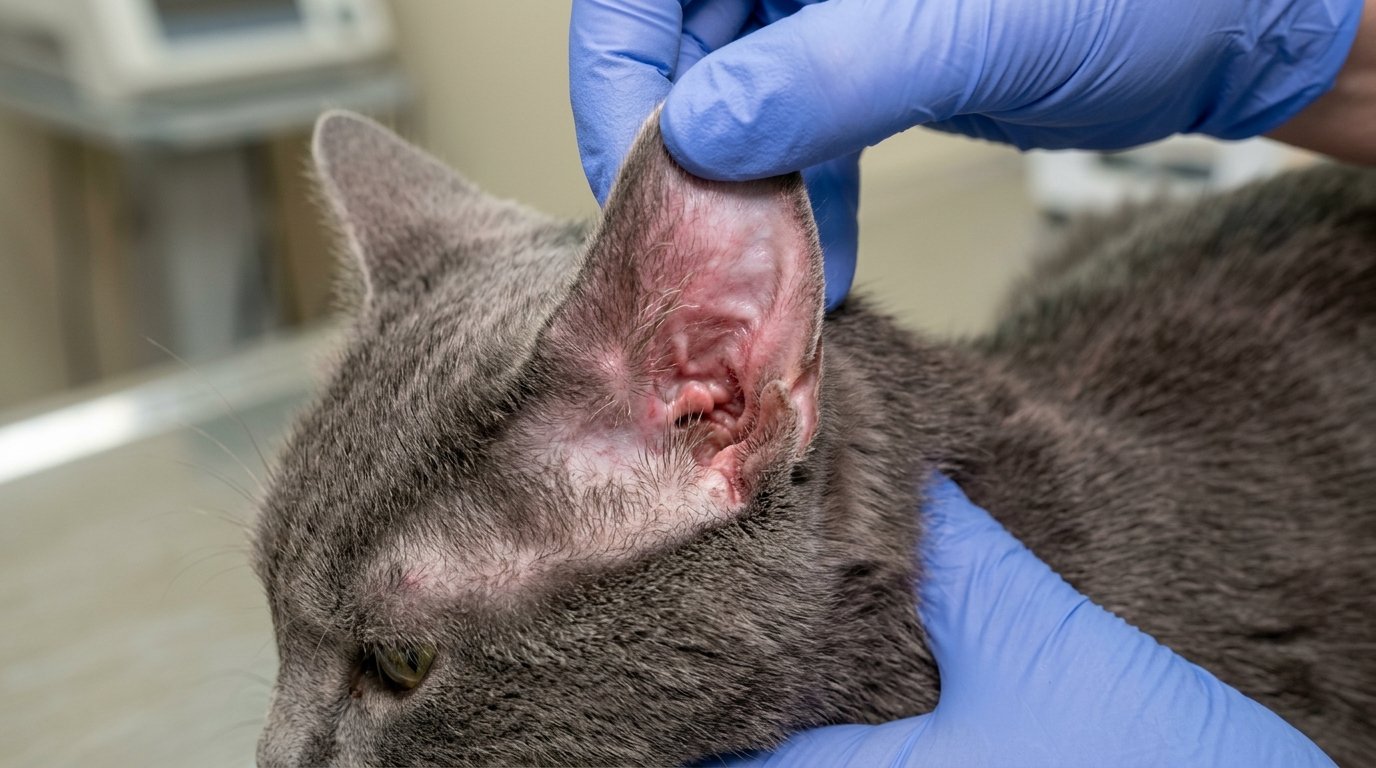
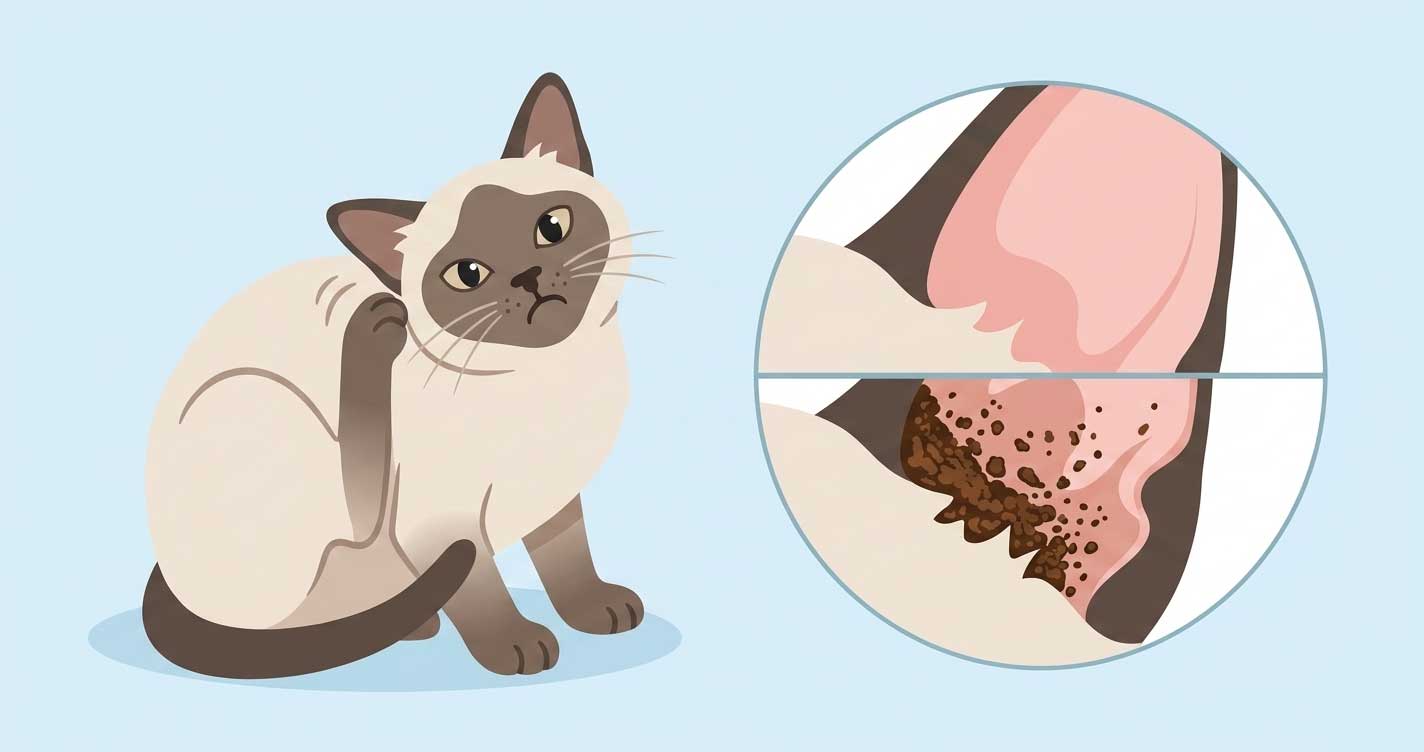
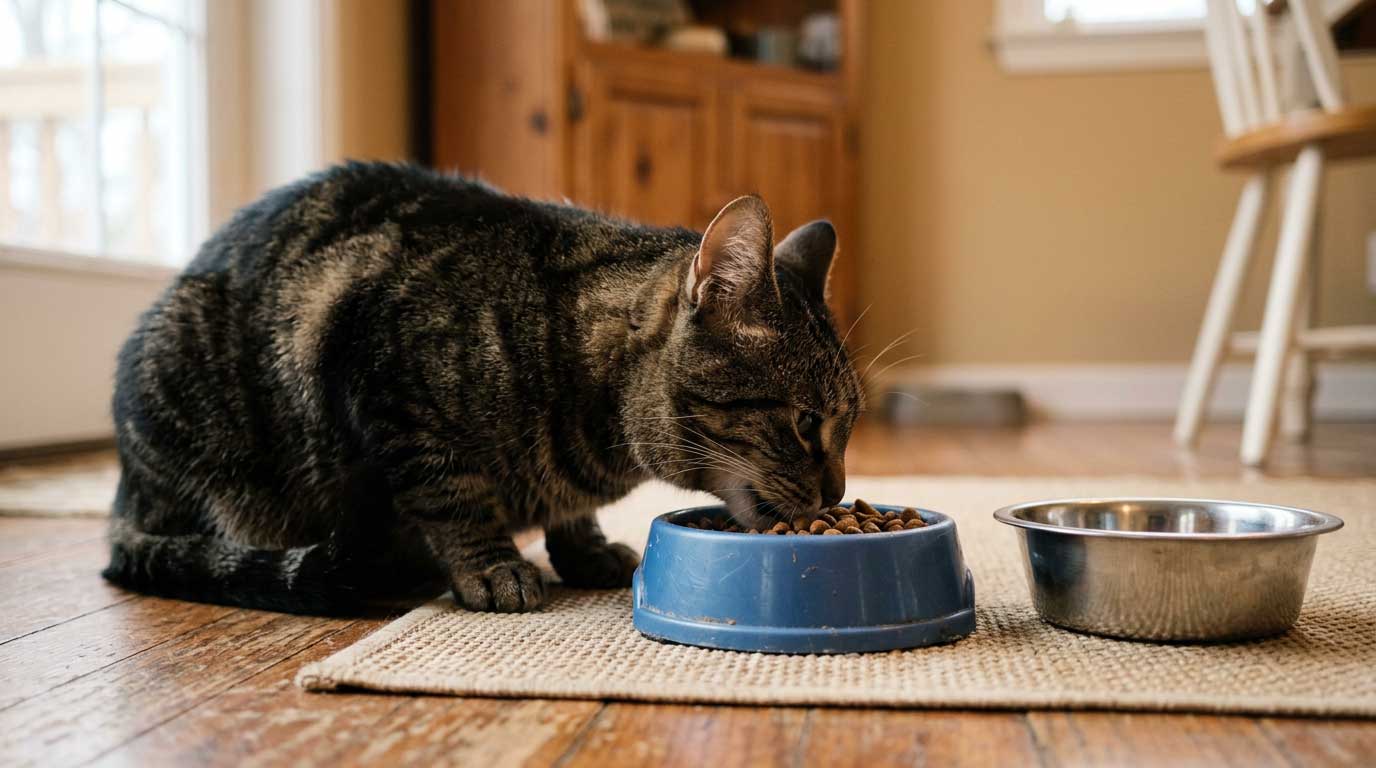
Cat food skin allergy (food allergy / cutaneous adverse food reaction) is the second-biggest cat skin allergy cause. The top protein triggers in cats: chicken, beef, fish, and dairy — these are the same proteins most cat foods are built around, which is why food allergy develops over years of exposure rather than overnight. The visual signature: cat allergy symptoms itchy skin around the face, neck, ears, and paws (different from FAD which is spine / tail base, different from atopy which is belly), often accompanied by occasional vomiting / soft stool / scooting / recurrent ear infections, and intense itching that doesn't respond to flea control. Diagnosis is by 8-12 week elimination diet trial: cat eats a single novel-protein (rabbit, venison) or hydrolyzed diet exclusively, then the suspect protein is re-introduced. If symptoms return, food allergy is confirmed. Cat food skin allergy best food choices are vet-formulated hydrolyzed-protein diets. VCA Hospitals' food allergy in cats guide walks through the elimination diet protocol.
Suspect cat food skin allergy from itchy face + ear signs? Upload a photo to compare against allergy vs infection patterns.
Check Cat Skin Allergy Pattern →3. Environmental Allergy (Atopy) — Pollen, Dust Mites, Mold
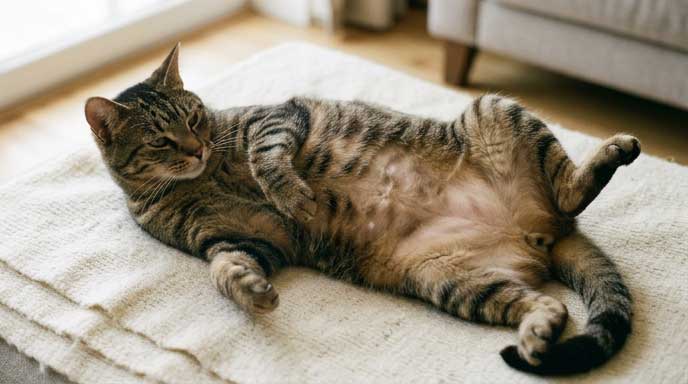
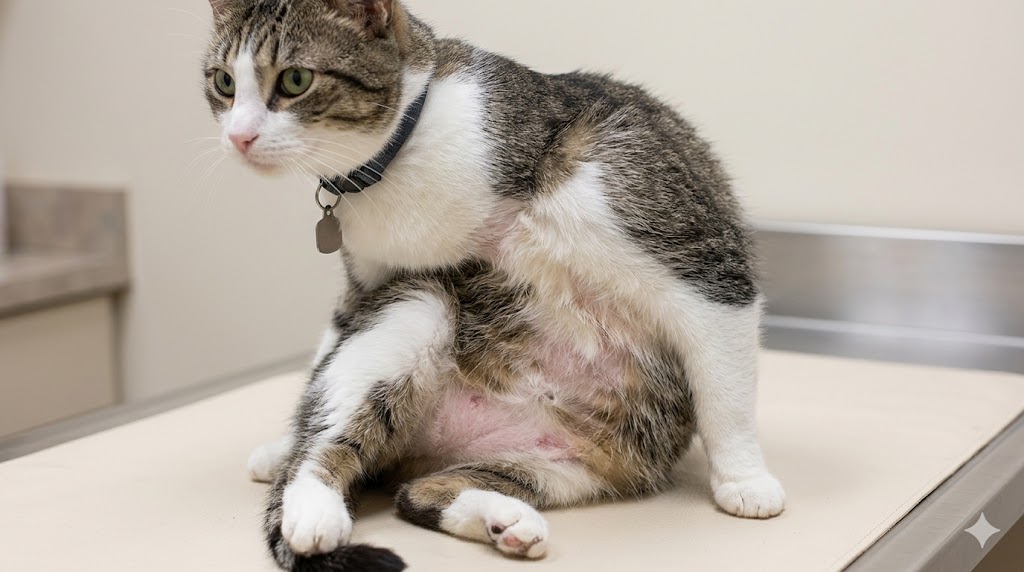
Environmental allergy (feline atopic syndrome / atopy) is the third major cat skin allergy cause. The cat is allergic to airborne or surface environmental allergens: tree / grass / weed pollen (seasonal), house dust mites (year-round), molds (humid climates), or even epithelium from other pets. The visual signature: symmetric red bumpy rash on the belly and inner thighs (the atopy diagnostic location — different from FAD's spine + tail, different from food allergy's face + ears), intense itching especially at night or after going to a sunny window, and often paired with recurrent ear infections or paw licking. Atopy is often seasonal (worse spring / fall when pollen counts are high). Vet diagnosis uses intradermal skin testing (gold standard) or blood IgE testing. Vet care plans focus on identifying the specific allergen + reducing exposure + immunotherapy in severe cases.
4. Contact Allergy — Cleaning Products, Plastic Bowls, New Litter
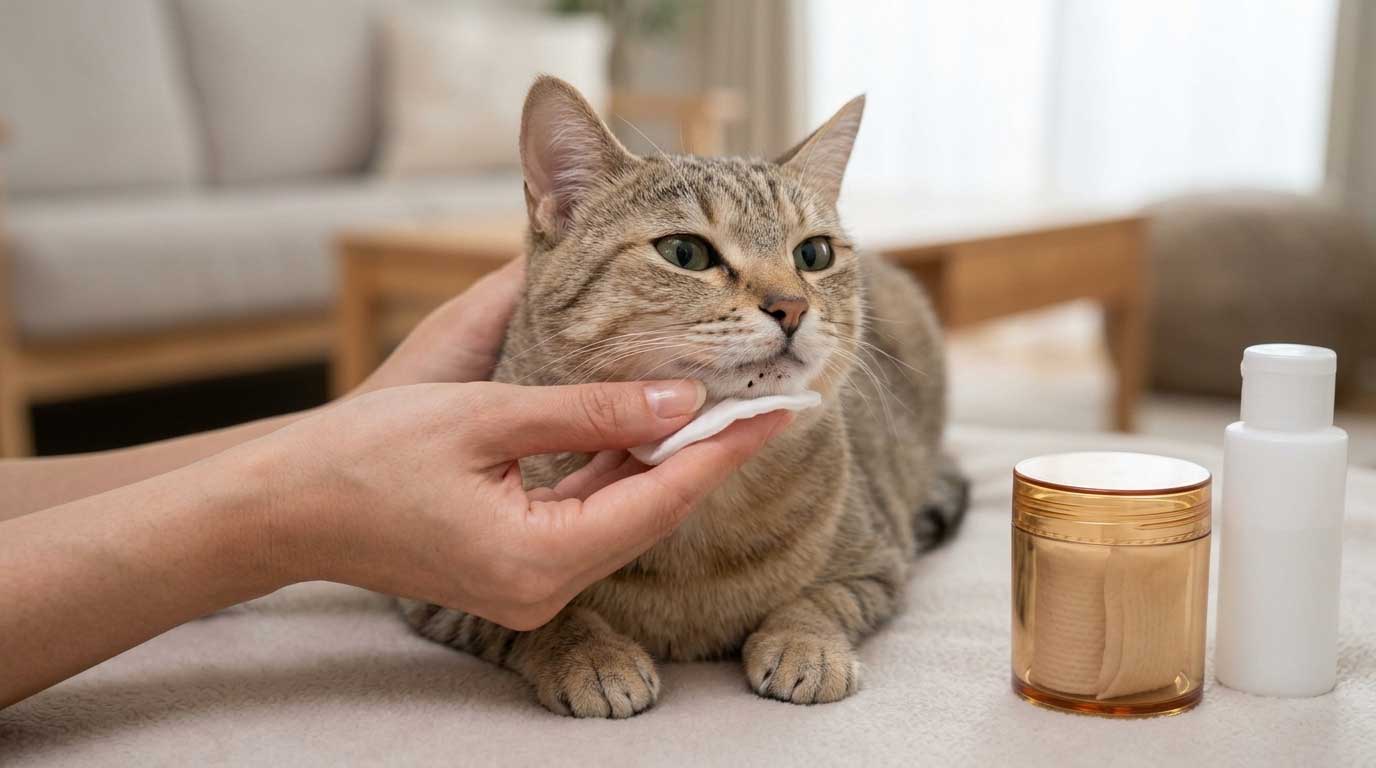
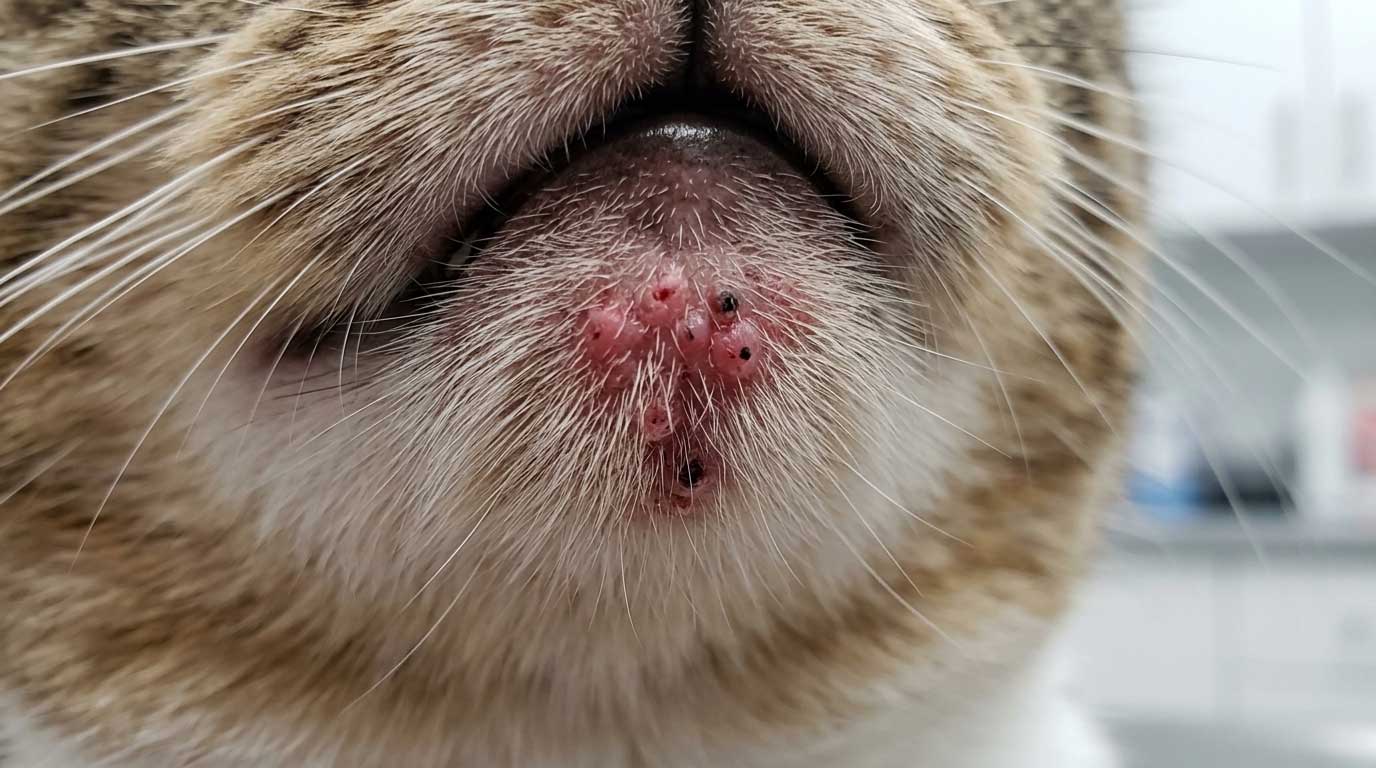
Contact allergy is the 4th cat skin allergy cause and the easiest to identify because it correlates with a recent change in the cat's environment. Common triggers: new carpet cleaner / floor cleaner, new laundry detergent on the cat bed, new plastic food bowl (chin / mouth area allergy), new litter type or scented litter (paw / belly area), new shampoo or topical product, or even a new piece of furniture treated with fabric protector. The visual signature: skin allergy in cats appearing within days of an environmental change, concentrated on the body area that contacted the trigger (paws if from litter, belly if from carpet, chin if from food bowl), and resolves within 1-2 weeks once the trigger is removed. The diagnostic trick: ask yourself what is NEW in the cat's environment in the past 1-4 weeks. If you can identify and eliminate the trigger, the skin clears without vet care.
Cat allergy itchy skin from a recent environmental change? Upload a photo for an instant AI rash pattern check.
Identify Cat Skin Reaction →Cat Allergy Itchy Skin — Visual Pattern by Cause
| Cause | Location | Other Signs |
|---|---|---|
| Flea allergy (FAD) | Spine + base of tail | Miliary dermatitis + flea dirt in fur |
| Food allergy | Face / neck / ears / paws | Recurrent ear infections + occasional GI |
| Environmental (atopy) | Belly + inner thighs (symmetric) | Seasonal pattern + paw licking |
| Contact allergy | Wherever skin touched trigger | Recent environment change + clears when removed |
Location matters more than people think. A cat that itches at the spine and tail base is almost always FAD even if you cannot find fleas. A cat that itches symmetrically on the belly is almost always atopy. Use the location pattern as the first clue, then confirm with the vet workup specific to that cause.
Cat Skin Allergy Relief — When to See a Vet
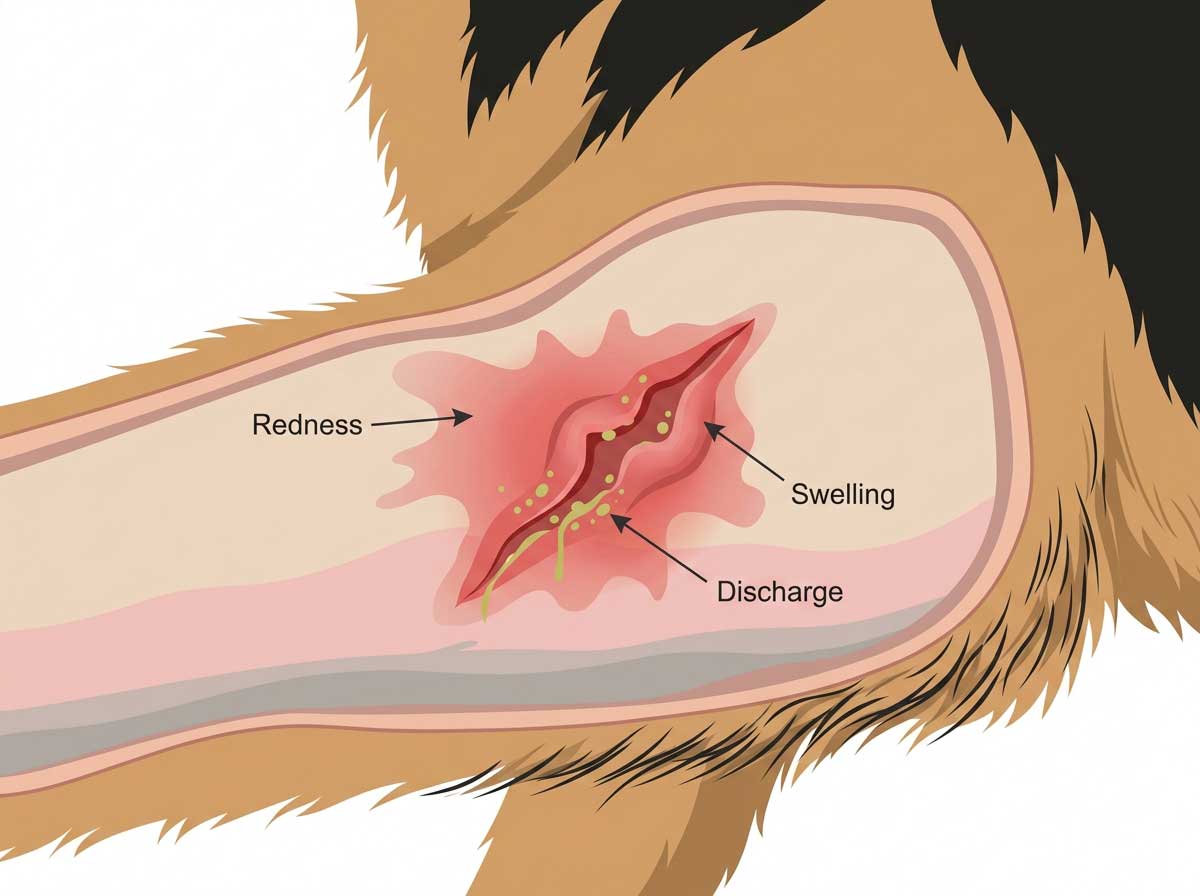
Cat skin allergy relief is not about temporarily stopping the itch — it's about identifying which of the 4 triggers + working with a vet on the right care plan. See a vet within 1-2 weeks for: any cat allergy skin reaction that has lasted more than 2 weeks despite removing suspected environmental triggers, recurrent ear infections (suggests food allergy or atopy), any cat allergy itchy skin pattern on the spine + tail (FAD likely even with no visible fleas), bald patches from over-grooming, or signs of secondary bacterial skin infection (red inflamed pustules and crusts from scratching). See a vet within 48 hours if: large swollen area, cat lethargic / not eating, fever (warm ears), or spreading rapidly within hours (possible severe reaction). The vet workup typically includes a thorough history (asking about flea control, diet, environment changes), physical exam, skin scraping (to rule out parasites), cytology (to rule out secondary infection), and may then proceed to elimination diet trial OR intradermal allergy testing depending on the suspected cause. PetMD's cat skin allergies overview covers the standard diagnostic workup in detail.
Need help triaging how urgent your cat's skin allergy looks? Upload a close-up photo for instant AI pattern + urgency check.
Check Cat Skin Allergy Now →Related Cat Skin Reading
For more cat skin visual identification, see our Cat Skin Conditions Pictures tool (covers all major cat skin conditions including the allergy patterns above), our Cat Skin Rash Pictures tool (allergic vs FAD vs fungal vs miliary differentiation), and our Cat Skin Scabs No Fleas guide (for when allergy progresses to scabby skin). Cat skin allergy causes can take 4-8 weeks of vet workup to identify definitively — patience + a clear pattern observation log makes the vet visit much more productive.
Frequently Asked Questions
What are the most common causes of cat skin allergy?
+
How do indoor cats get dermatitis?
+
Cat food skin allergy — which protein triggers it most?
+
Cat skin allergy vs ringworm vs fleas — how to tell?
+
Cat skin allergy relief — when should I see a vet?
+
Indoor cat with skin allergy — what changed in the environment?
+
Cat Skin Allergy? Get Instant AI Pattern Check
Upload a close-up photo of your cat's itchy skin — the AI compares against FAD, food allergy, atopy, and contact allergy patterns and tells you urgency + when to see a vet.
Disclaimer: This article is for informational purposes only and is not a substitute for professional veterinary advice. Always consult a licensed veterinarian for diagnosis and treatment of your pet's health conditions.